

Consumer Insights
Uncover trends and behaviors shaping consumer choices today
Procurement Insights
Optimize your sourcing strategy with key market data
Industry Stats
Stay ahead with the latest trends and market analysis.
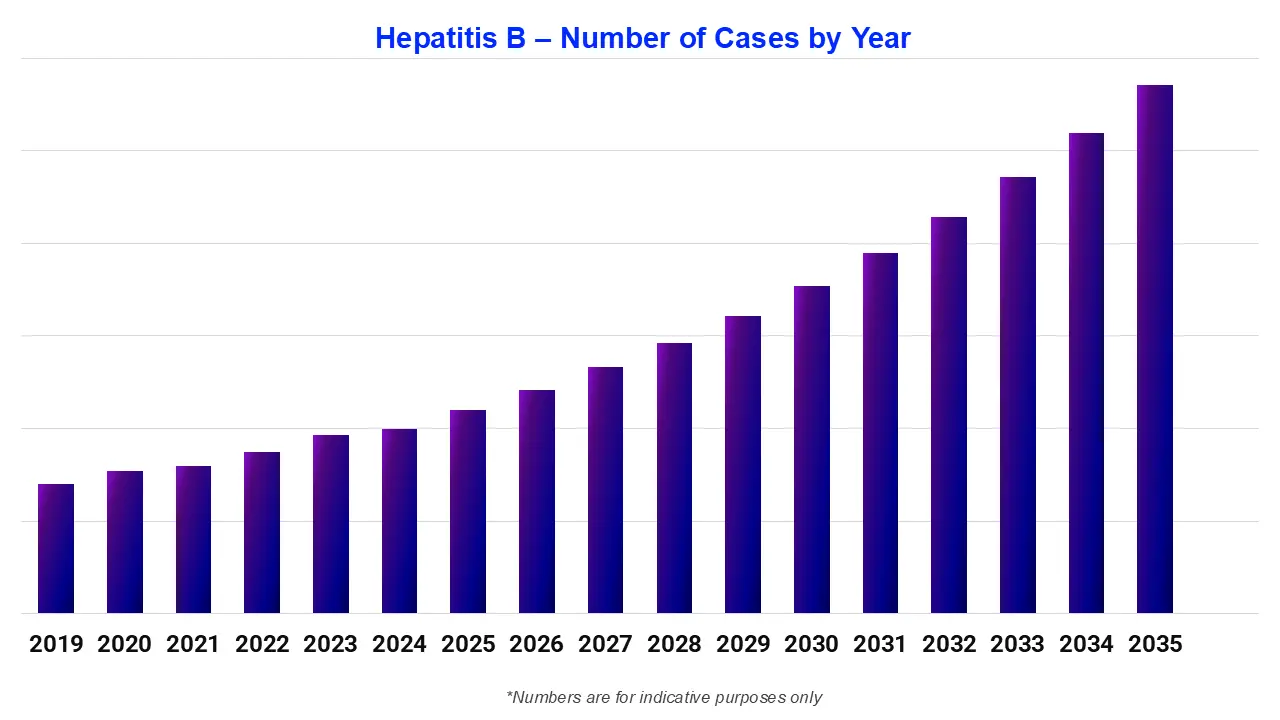
Hepatitis B (HBV) remains a major viral infectious disease of the liver caused by hepatitis B virus, a hepatotropic DNA virus capable of producing acute hepatitis, chronic infection, cirrhosis, hepatic decompensation, and hepatocellular carcinoma (HCC). According to the WHO Global Hepatitis Report 2026, approximately 240 million people were living with chronic HBV infection globally in 2024, corresponding to 2.9% of the world's population. According to the hepatitis B epidemiology forecast by Expert Market Research, HBV continues to represent a substantial clinical and healthcare burden because its large reservoir of chronically infected individuals creates continuing demand for screening, antiviral treatment, lifelong monitoring, liver-cancer surveillance, and prevention of vertical and horizontal transmission.
Base Year
Historical Period
Forecast Period
Read more about this report - Request a Free Sample
Expert Market Research's “Hepatitis B Epidemiology Forecast Report 2026-2035” offers comprehensive information on the prevalence and demographics of Hepatitis B. It projects the future incidence and prevalence rates of Hepatitis B cases across various populations. The study covers age, gender, and type as major determinants of the Hepatitis B population. The report highlights patterns in the prevalence of Hepatitis B overtime and projects future trends based on multiple variables.
The report provides a comprehensive overview of the disease, as well as historical and projected data on the epidemiology of Hepatitis B in the 8 major markets.
Regions Covered
Hepatitis B (HBV) remains a major viral infectious disease of the liver caused by hepatitis B virus, a hepatotropic DNA virus capable of producing acute hepatitis, chronic infection, cirrhosis, hepatic decompensation, and hepatocellular carcinoma (HCC). The clinical trajectory is strongly influenced by age at infection, host immune response, viral replication, viral genotype, and coexisting liver disease. Acute HBV infection is frequently asymptomatic, particularly in children, whereas adults may develop symptomatic hepatitis and, rarely, acute liver failure. Persistence of hepatitis B surface antigen (HBsAg) for more than six months defines chronic HBV infection, which may progress through dynamically changing phases characterized by differences in hepatitis B e antigen (HBeAg), HBV DNA, alanine aminotransferase activity, and hepatic inflammation.
|
Parameter |
Insight |
|
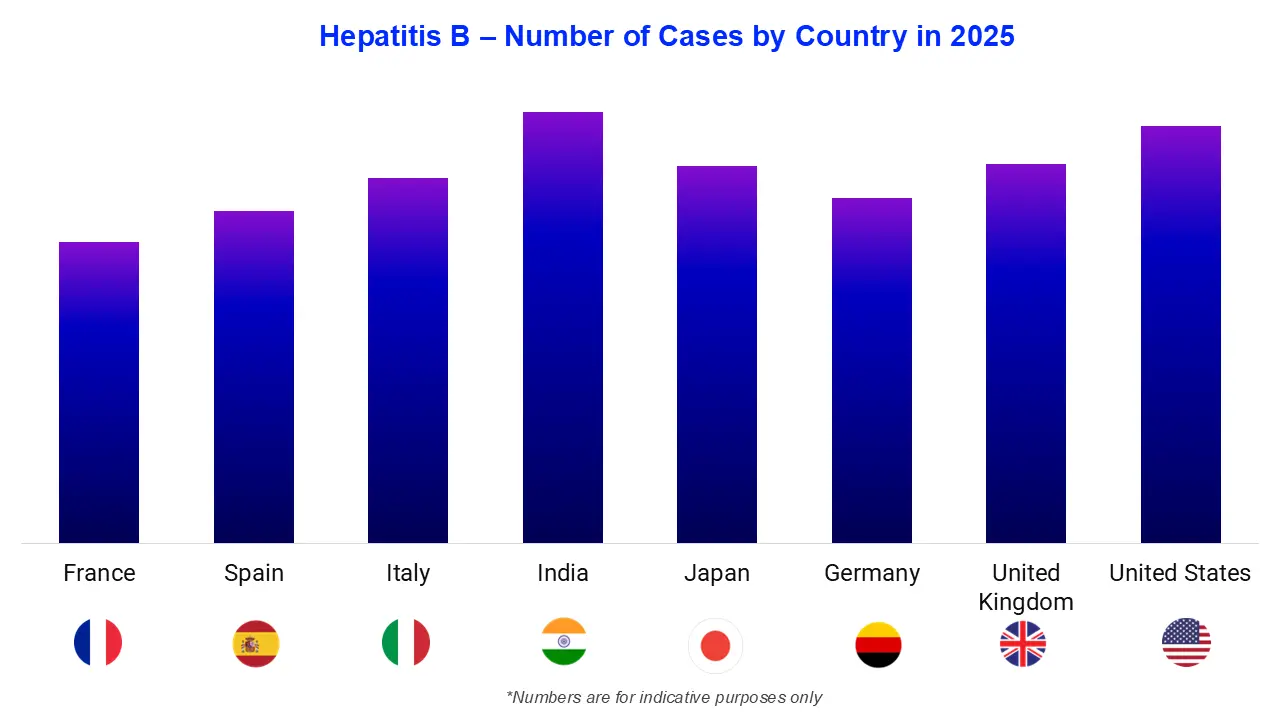
Largest Patient Pool |
United States |
|
Fastest Growing Country |
India |
|
High-Risk Population |
Infants born to HBsAg-positive mothers, people from HBV-endemic regions, household and sexual contacts of infected individuals, people who inject drugs, incarcerated populations, men who have sex with men, and immunosuppressed patients. |
|
Key Diagnostic Method |
Serological testing for HBsAg, anti-HBc and anti-HBs, supplemented by HBV DNA quantification, HBeAg/anti-HBe assessment and liver-function evaluation. |
|
Major Risk Factor |
Perinatal or early-childhood acquisition in high-endemic settings. |
|
Major gap in the market |
Underdiagnosis, inadequate linkage to care, low treatment coverage, incomplete birth-dose vaccination, limited access to HBV DNA testing, insufficient HDV screening, and the absence of a widely available curative therapy. |
The Hepatitis B epidemiology division offers information on the patient pool from history to the present as well as the projected trend for each of the 8 major markets. Expert Market Research provides both current and predicted trends for the Hepatitis B epidemiology scenario by examining a wide range of studies. Additionally, the report covers the diagnosed patient pool for Hepatitis B and their trends. The data is broken down into specific categories, such as total prevalent cases in males and females, and total diagnosed cases across different age groups and patient pools.
|
Epidemiology Segment |
Key Insights |
|
Diagnosed Prevalent Cases of the Disease |
According to the WHO Global Hepatitis Report 2026, approximately 240 million people were living with chronic HBV infection globally in 2024, equivalent to 2.9% of the global population. Approximately 0.9 million new HBV infections occurred during 2024. Despite the large global reservoir, fewer than 5% of people with chronic HBV were receiving antiviral treatment, demonstrating a substantial gap between prevalence and diagnosed or treated disease. |
|
Gender-Specific Cases of the Disease |
HBV infection frequently demonstrates a male predominance in epidemiological surveillance, although the magnitude varies by region, transmission pathway, and disease stage. ECDC surveillance for 2024 recorded more HBV cases among men than women across the EU/EEA, with an overall male-to-female ratio of 1.5:1; the difference was greater for acute infection, at 2.4:1, compared with 1.4:1 for chronic infection. |
|
Age-Specific Cases of the Disease |
The epidemiological consequences of HBV vary strongly with age at acquisition. Infection acquired during infancy or early childhood has a substantially greater probability of becoming chronic than infection acquired during adulthood. Among reported EU/EEA cases in 2024, the highest notification rates for both acute and chronic HBV were observed among adults aged 35–44 years. |
|
Ethnicity-Wise Cases of the Disease |
HBV prevalence varies substantially according to country of birth, migration history, geographic endemicity, vaccination coverage, and transmission patterns. ECDC identifies migrants from countries with higher HBV endemicity as a particularly important population in Europe, with a median prevalence of approximately 5.8% across the reviewed migrant populations. |
|
Mortality and Survival Analysis of the Disease |
HBV-associated mortality remains substantial and is principally mediated by cirrhosis, hepatic decompensation, and hepatocellular carcinoma. WHO estimates that approximately 1.1 million deaths were attributable to chronic HBV infection in 2024, representing an increase of 17% compared with 2015. Three quarters of HBV-related deaths occurred in the African and Western Pacific regions. |
|
Disease Type |
Prevalence |
|
Acute Hepatitis B |
Acute HBV infection follows recent acquisition of the virus and may range from asymptomatic infection to symptomatic acute hepatitis with jaundice. Most immunocompetent adults who acquire HBV horizontally clear the infection spontaneously, although a small proportion develop severe or fulminant hepatitis. The 2024 ECDC surveillance dataset classified 6% of reported EU/EEA HBV cases as acute infections, although substantial numbers were reported at an undetermined stage. |
|
Chronic Hepatitis B |
Chronic HBV is defined by persistent HBsAg for more than six months and represents the major long-term disease burden. It can progress through immune-tolerant, immune-active, inactive, and HBeAg-negative immune-active states, although contemporary management increasingly emphasizes dynamic assessment rather than rigid phase assignment. Chronic infection is responsible for most HBV-associated cirrhosis and hepatocellular carcinoma and accounted for the overwhelming majority of the global 2024 HBV mortality burden. |
|
Inactive / Low-Replicative HBV Infection |
Individuals with persistent HBsAg positivity, low or undetectable HBV DNA and normal ALT may enter an inactive or low-replicative state. Although the immediate risk of liver injury is lower than in active hepatitis, patients require longitudinal monitoring because HBV replication and hepatic inflammation can reactivate. Contemporary EASL guidance emphasizes dynamic reassessment rather than assuming permanent biological inactivity |
|
HBeAg-Positive and HBeAg-Negative Immune-Active Hepatitis B |
Immune-active disease is characterized by viral replication and hepatic inflammation and represents a principal group requiring antiviral treatment. HBeAg-negative disease frequently reflects precore or basal-core-promoter variants and may develop after a prolonged infection period. Contemporary treatment decisions incorporate HBV DNA, ALT, fibrosis stage, age, family history, comorbidities, and other risk factors rather than HBeAg status alone. |
Read more about this report - Request a Free Sample
The Hepatitis B epidemiology data and findings for the United States, Germany, Spain, Italy, France, the United Kingdom, Japan, and India are also provided in the epidemiology section.
|
Country |
Key Insights |
|
United States |
A contemporary 2025 state-, territorial-, and county-level modelling study estimated approximately 1.7 million HBV infections in the United States, corresponding to a prevalence of 0.50% with a wide uncertainty interval of 0.24–1.23%. California had the largest estimated number of infections at approximately 347,100, while Hawai'i had the highest state-level estimated prevalence at 1.3%. The investigators highlighted substantial geographic variation and the contribution of immigration from HBV-endemic countries. |
|
Germany |
Contemporary national prevalence estimation remains constrained by limited recent population-based serosurveillance. The 2024 ECDC evidence base identifies Germany within the low-endemicity EU/EEA setting while emphasizing higher prevalence among migrants from endemic countries and other risk groups. The 2026 ECDC surveillance report recorded HBV notifications across the EU/EEA but country-specific notification rates should not be interpreted as population prevalence because they are strongly influenced by screening and reporting practices. |
|
France |
France remains a lower-endemicity European HBV setting, with disease burden concentrated disproportionately among individuals with epidemiological risk factors, including migration from higher-endemic countries. Contemporary ECDC surveillance demonstrates ongoing acute and chronic HBV notifications across France and the broader EU/EEA, but notification rates cannot be equated directly with prevalence because detection depends on testing and surveillance intensity. |
|
Italy |
A 2025 national real-world analysis of chronic HBV and HDV in Italy estimated approximately 111,960 adults with diagnosed chronic hepatitis B, corresponding to a prevalence of 0.22% of the adult population. The investigators derived the estimate using data from 21 Regional Health Authorities and surveys across 30 specialist centres, correcting for incomplete use of disease-specific exemption codes. Approximately 9,360 adults were estimated to have chronic hepatitis D, and anti-HDV prevalence among the evaluated HBV cohort was 7.7%. |
|
Spain |
Spain provides contemporary evidence of improving HBV-related diagnostic pathways, particularly for HDV. The 2026 Spain-DDR study evaluated 65,763 HBsAg-positive individuals across 80 centres and demonstrated that HDV antibody testing increased from 55.1% in 2022 to 85.8% in 2024, while the proportion receiving confirmatory viral-load testing also increased. These data demonstrate substantial opportunity to improve detection of clinically important HBV coinfections. |
|
United Kingdom |
A 2023 UK epidemiological review identified substantial uncertainty in national chronic-HBV estimates and found considerable variation among available data sources. The review reported estimates ranging from approximately 0.27% to 0.73% depending on methodology and concluded that routine primary-care coding substantially underestimates the infected population. This finding remains important for the UK market because undiagnosed infection and incomplete linkage to specialist care can produce a considerable difference between recorded cases and the underlying infected population. |
|
Japan |
Japan represents an important HBV market because of its historically substantial burden of chronic liver disease and its ageing population, although recent nationally representative HBV prevalence data using a uniform contemporary methodology are comparatively limited. The 2024 WHO and 2025 EASL evidence emphasizes continued surveillance and antiviral management in Japan, while contemporary Japanese HBV programmes focus on preventing progression to cirrhosis and HCC and improving detection of patients requiring treatment. |
|
India |
India remains a major HBV-burden country. A 2023 systematic review and meta-analysis of the South Asian subcontinent estimated pooled HBV prevalence at 3% in India, although substantial heterogeneity and publication bias were identified, requiring cautious interpretation. More recent Indian evidence provides geographically specific estimates: a 2025 South Indian laboratory analysis found HBV seropositivity declining to 1.47% in 2023, with substantially higher positivity among older adult cohorts and the lowest positivity among individuals ≤20 years. |
According to contemporary evidence, significant gaps remain in the epidemiological characterization, diagnosis, treatment, prevention, and long-term monitoring of hepatitis B, despite the availability of highly effective vaccines and potent nucleos(t)ide analogue therapy. The WHO Global Hepatitis Report 2026 estimates that approximately 240 million people were living with chronic HBV in 2024, while fewer than 5% were receiving treatment. Approximately 0.9 million new HBV infections still occurred in 2024, and approximately 1.1 million people died from chronic HBV-associated disease. The most important epidemiological gap is therefore not simply disease incidence but the large discrepancy between the infected population and the population diagnosed, linked to care, monitored, and treated. Diagnostic decentralization represents an important opportunity: the 2024 WHO guidelines specifically support point-of-care HBV DNA testing, reflex HBV DNA strategies, simplified treatment criteria, and expanded treatment eligibility to reduce barriers to care.
The management of hepatitis B primarily focuses on preventing transmission, suppressing viral replication, preventing progression to cirrhosis and hepatocellular carcinoma, reducing HBV-related mortality, and achieving durable control of infection while minimizing treatment-related toxicity. The 2024 WHO guidelines substantially broaden and simplify treatment eligibility for adults and adolescents with chronic HBV, while also expanding antiviral prophylaxis for pregnant women to reduce mother-to-child transmission. WHO additionally recommends improved access to HBV DNA testing, including point-of-care and reflex testing approaches, and systematic assessment for hepatitis D virus infection. The principal long-term antiviral therapies include high genetic-barrier nucleos(t)ide analogues such as tenofovir disoproxil fumarate (TDF), tenofovir alafenamide (TAF), and entecavir, selected according to renal function, bone health, pregnancy considerations, comorbidities, prior antiviral exposure, and other patient-specific factors.
Hepatitis B Vaccine Market Report and Forecast
Hepatitis B Virus HBV Infection Drug Pipeline Analysis Report


Upto 15% Off
USD
$2699 $2429
$4299 $3869
$5799 $4949
$6999 $5949


*While we strive to always give you current and accurate information, the numbers depicted on the website are indicative and may differ from the actual numbers in the main report. At Expert Market Research, we aim to bring you the latest insights and trends in the market. Using our analyses and forecasts, stakeholders can understand the market dynamics, navigate challenges, and capitalize on opportunities to make data-driven strategic decisions.*
Explore our key highlights of the report and gain a concise overview of key findings, trends, and actionable insights that will empower your strategic decisions.
|
Report Features |
Details |
|
Base Year |
2025 |
|
Historical Period |
2019-2025 |
|
Forecast Period |
2026-2035 |
|
Epidemiology Statistics Provided |
|
|
Segmentation Provided |
|
|
Geographies Covered |
|
Datasheet
One User
USD 2,699
USD 2,429
tax inclusive*
Single User License
One User
USD 4,299
USD 3,869
tax inclusive*
Five User License
Five User
USD 5,799
USD 4,949
tax inclusive*
Corporate License
Unlimited Users
USD 6,999
USD 5,949
tax inclusive*
*Please note that the prices mentioned below are starting prices for each bundle type. Kindly contact our team for further details.*
Flash Bundle
Small Business Bundle
Growth Bundle
Enterprise Bundle
*Please note that the prices mentioned below are starting prices for each bundle type. Kindly contact our team for further details.*
Flash Bundle
Number of Reports: 3
20%
tax inclusive*
Small Business Bundle
Number of Reports: 5
25%
tax inclusive*
Growth Bundle
Number of Reports: 8
30%
tax inclusive*
Enterprise Bundle
Number of Reports: 10
35%
tax inclusive*
How To Order

Select License Type
Choose the right license for your needs and access rights.

Click on ‘Buy Now’
Add the report to your cart with one click and proceed to register.

Select Mode of Payment
Choose a payment option for a secure checkout. You will be redirected accordingly.
Strategic Solutions for Informed Decision-Making
Gain insights to stay ahead and seize opportunities.

Get insights & trends for a competitive edge.

Track prices with detailed trend reports.

Analyse trade data for supply chain insights.

Leverage cost reports for smart savings

Enhance supply chain with partnerships.

Connect For More Information
Our expert team of analysts will offer full support and resolve any queries regarding the report, before and after the purchase.
Our expert team of analysts will offer full support and resolve any queries regarding the report, before and after the purchase.
We employ meticulous research methods, blending advanced analytics and expert insights to deliver accurate, actionable industry intelligence, staying ahead of competitors.
Our skilled analysts offer unparalleled competitive advantage with detailed insights on current and emerging markets, ensuring your strategic edge.
We offer an in-depth yet simplified presentation of industry insights and analysis to meet your specific requirements effectively.




