

Consumer Insights
Uncover trends and behaviors shaping consumer choices today
Procurement Insights
Optimize your sourcing strategy with key market data
Industry Stats
Stay ahead with the latest trends and market analysis.
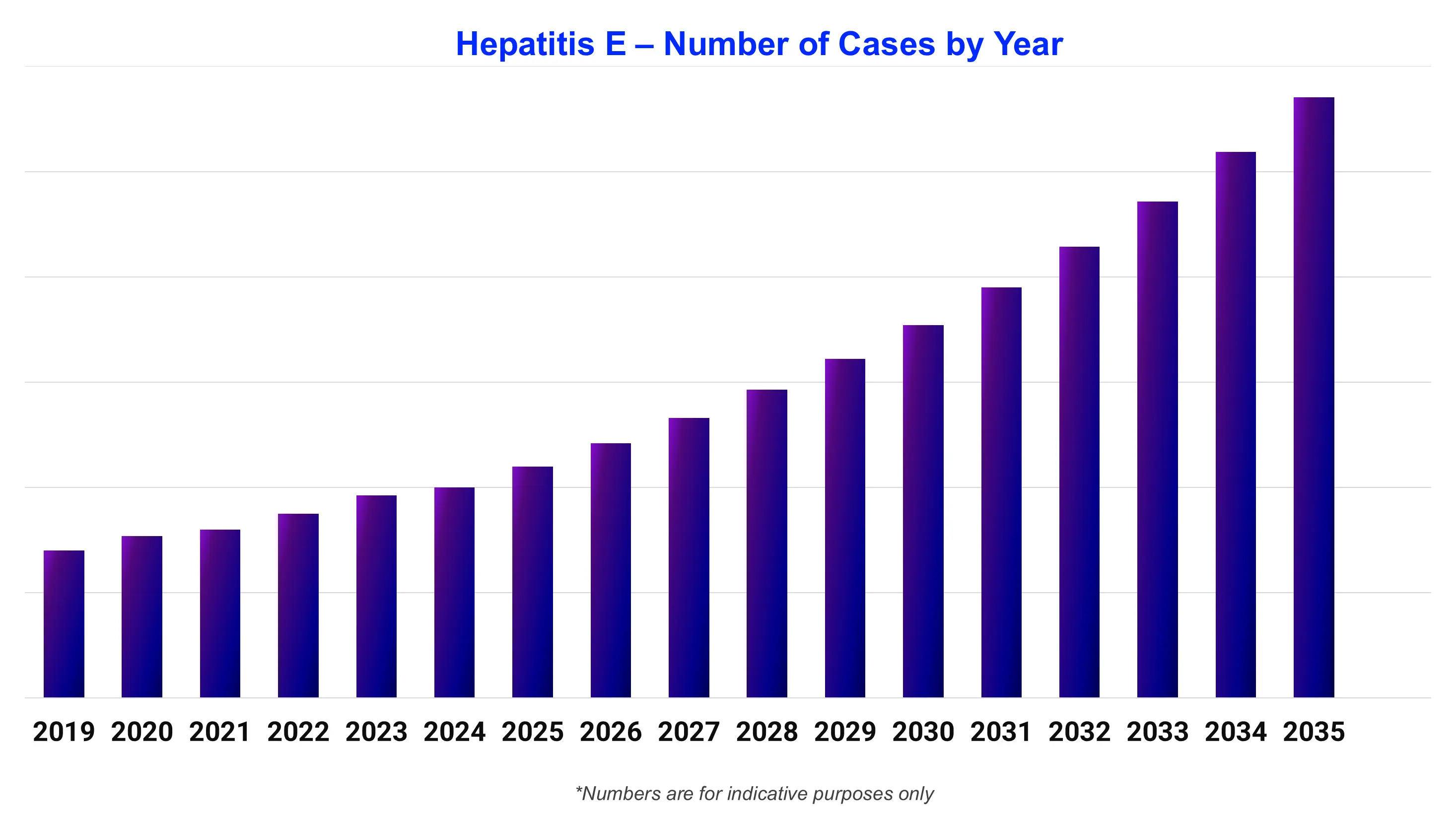
Hepatitis E is a liver infection caused by the hepatitis E virus (HEV), which can lead to acute hepatitis and chronic complications in immunocompromised individuals. According to Sidra Urooj et al. (2023), the infection results in 0.5%-3% terminal illness among young adults, rising to 30% in pregnant women. As per the hepatitis E epidemiology forecast by Expert Market Research, disease burden trends inform epidemiological assessment and viral hepatitis research.
Base Year
Historical Period
Forecast Period
Read more about this report - Request a Free Sample
Expert Market Research's “Hepatitis E Epidemiology Forecast Report 2026-2035” offers comprehensive information on the prevalence and demographics of hepatitis E. It projects the future incidence and prevalence rates of hepatitis E cases across various populations. The study covers age, gender, and type as major determinants of the hepatitis E population. The report highlights patterns in the prevalence of hepatitis E over time and projects future trends based on multiple variables.
The report provides a comprehensive overview of the disease, as well as historical and projected data on the epidemiology of hepatitis E in the 8 major markets.
Regions Covered
Hepatitis E is a liver infection caused by the hepatitis E virus (HEV), primarily transmitted through the fecal-oral route, particularly by consuming water contaminated with human waste. Infections can also occur through undercooked meat from infected animals, including pigs and wild boar. The disease is generally acute and self-limiting, although chronic infection can develop in immunocompromised individuals. Genotypes 1 and 2 primarily affect humans, whereas genotypes 3 and 4 are associated with zoonotic transmission. Viral hepatitis can cause fatigue, nausea, abdominal discomfort, and jaundice.
|
Parameter |
Insight |
|
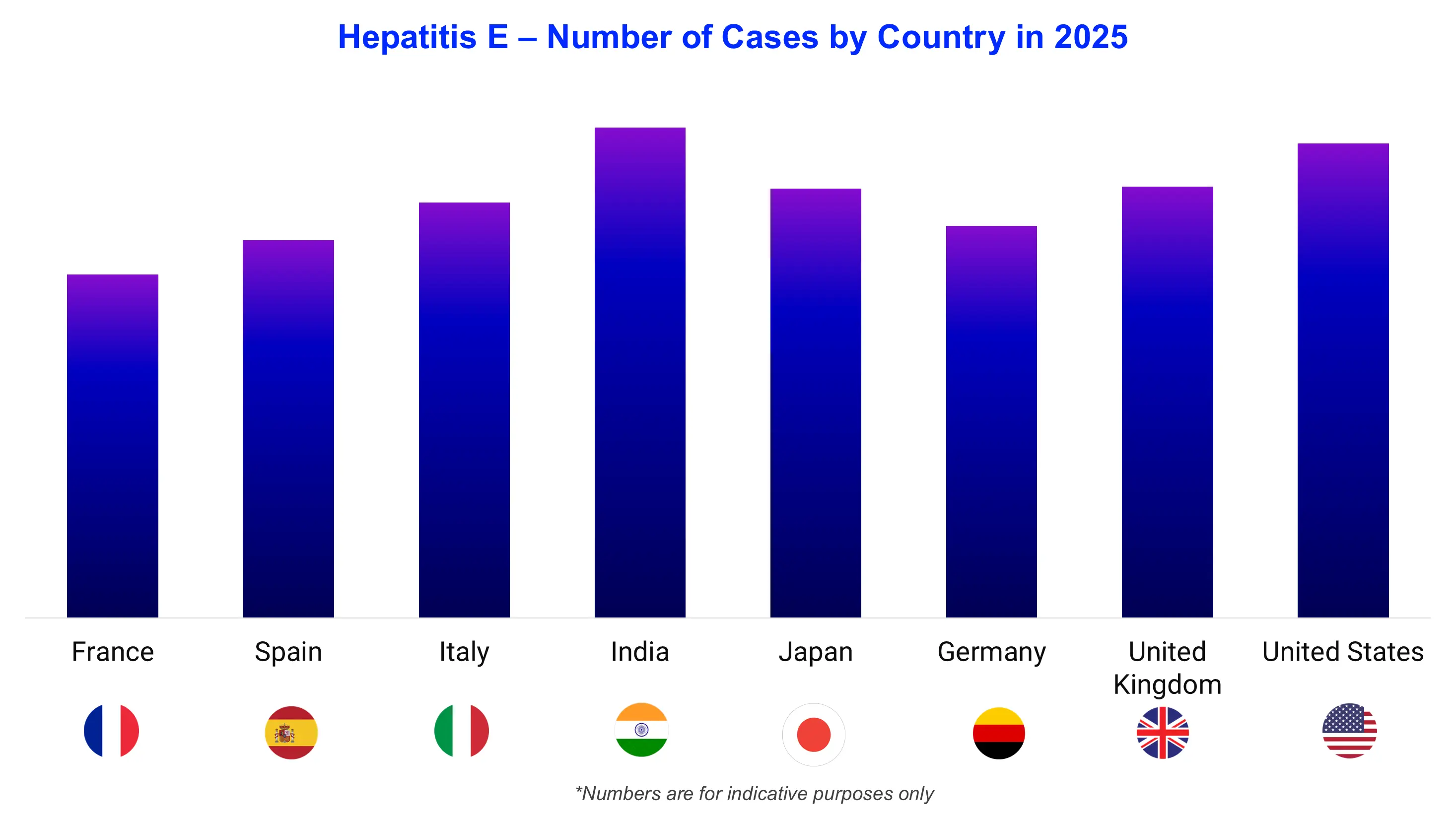
Largest Patient Pool |
India |
|
Fastest Growing Country |
India |
|
High-Risk Population |
Pregnant women, particularly those in the second or third trimester, immunocompromised individuals, and people with preexisting liver disease. |
|
Key Diagnostic Method |
Anti-HEV IgM antibody testing; HEV RNA testing can help confirm active infection, particularly in immunocompromised patients. |
|
Major Risk Factor |
Consumption of water contaminated with fecal matter, inadequate sanitation, and consumption of undercooked infected meat. |
|
Major gap in the market |
Underdiagnosis and underreporting, limited access to reliable diagnostic testing in some settings, and gaps in surveillance and preventive infrastructure. |
The hepatitis E epidemiology division offers information on the patient pool from history to the present as well as the projected trend for each of the 8 major markets. Expert Market Research provides both current and predicted trends for the hepatitis E epidemiology scenario by examining a wide range of studies. Additionally, the report covers the diagnosed patient pool for hepatitis E and their trends. The data is broken down into specific categories, such as total prevalent cases in males and females, and total diagnosed cases across different age groups and patient pools.
|
Epidemiology Segment |
Key Insights |
|
Diagnosed Prevalent Cases of the Disease |
According to K. Parameswari et al. (2025), hepatitis E virus (HEV) was detected in 2.49% of patients presenting with suspected acute viral hepatitis at a tertiary care hospital in Guntur, Andhra Pradesh, during January-June 2024. |
|
Gender-Specific Cases of the Disease |
As per the Indian Journal of Microbiology Research (2024), males accounted for 57.1% of HEV-reactive patients, compared with 42.0% among females, in a retrospective study of acute viral hepatitis cases in Himachal Pradesh, India. |
|
Age-Specific Cases of the Disease |
According to the Indian Journal of Microbiology Research (2024), HEV infection was observed only among adults in the Himachal Pradesh study, with the highest prevalence in individuals aged 21-30 years. |
|
Ethnicity-Wise Cases of the Disease |
As per María Belén Pisano et al. (2022), HEV IgG seroprevalence in the United States was higher among non-Hispanic Asian individuals and people born outside the country, indicating differences in exposure across population groups. |
|
Mortality and Survival Analysis of the Disease |
According to Sidra Urooj et al. (2023), HEV infection results in terminal illness in approximately 0.5%-3% of young adults, with the proportion increasing to 30% among pregnant women. |
|
Disease Type |
Prevalence |
|
Hepatitis E virus genotype 1 |
According to Heli Harvala et al. (2022), genotype 1 is associated with waterborne outbreaks, particularly in developing countries. |
|
Hepatitis E virus genotype 2 |
As per Heli Harvala et al. (2022), genotype 2 primarily infects humans and has been associated with large waterborne outbreaks in developing countries. |
|
Hepatitis E virus genotype 3 |
According to Heli Harvala et al. (2022), genotype 3 is associated with domestic pigs and other animal reservoirs, contributing to locally acquired human infections in Europe, North America, and Japan. |
|
Hepatitis E virus genotype 4 |
As per Heli Harvala et al. (2022), genotype 4 circulates in pigs and other animal reservoirs and is associated with human infections in China and other parts of Southeast Asia. |
Read more about this report - Request a Free Sample
The hepatitis E epidemiology data and findings for the United States, Germany, Spain, Italy, France, the United Kingdom, Japan, and India are also provided in the epidemiology section.
|
Country |
Key Insights |
|
United States |
According to María Belén Pisano et al. (2022), HEV seroprevalence in the United States was 6.1% for immunoglobulin G (IgG) and 1.02% for immunoglobulin M (IgM) during 2009-2016. IgG seroprevalence was higher among older people, females, non-Hispanic Asian individuals, and people born outside the United States. |
|
Germany |
In Germany, hepatitis E transmission is associated with locally acquired zoonotic infections involving HEV genotype 3, with domestic pigs and wild boars serving as important animal reservoirs. Consumption of undercooked pork, wild boar meat, and related meat products contributes to exposure. Increased diagnostic testing and disease surveillance may also contribute to rising reported case numbers. According to Heli Harvala et al. (2022), genotype 3 is associated with animal reservoirs and foodborne transmission in developed countries. |
|
France |
According to Marie Pellerin et al. (2022), HEV seroprevalence among individual pigs in France has been reported at 31% and 60% in separate studies. Additionally, 3%-4% of pork livers collected at slaughterhouses tested positive for HEV RNA. These findings indicate circulation of HEV in animal reservoirs and pork products. |
|
Italy |
In Italy, hepatitis E transmission is associated with consumption of undercooked pork and sausages, as well as exposure through shellfish and locally circulating HEV genotype 3. Environmental circulation of HEV has also been documented in urban wastewater. According to the Italian national surveillance study published in 2018, undercooked pork and pork sausages were prominent reported risk factors among genotype 3 cases, alongside evidence of environmental circulation. |
|
Spain |
In Spain, hepatitis E epidemiology is characterized by the circulation of HEV genotype 3, particularly subtype 3f, which has been identified across the country's autonomous communities. Animal reservoirs and potential foodborne exposure are relevant to the transmission of this zoonotic genotype. According to the Spanish Reference Laboratory surveillance study covering 2009-2019, genotype 3 was detected in 291 samples, and subtype 3f accounted for 88.3% of these detections. |
|
United Kingdom |
According to Heli Harvala et al. (2022), HEV antibody seroprevalence in the United Kingdom ranges from 5% to 13%. This range reflects previous exposure to the virus rather than the rate of new infections. The findings also highlight the importance of genotype 3 and animal-associated transmission in developed countries. |
|
Japan |
According to Tatsuo Kanda et al. (2024), anti-HEV immunoglobulin G was detected in 2.9% of 1,893 liver transplant recipients, while HEV RNA was detected in 0.12% of 1,651 tested recipients. The review also reports that nationwide nucleic acid amplification testing of blood products began in 2020 following concerns about transfusion-associated HEV infection. |
|
India |
According to the Indian Journal of Microbiology Research (2024), HEV seroprevalence was 1.8% among 784 serum samples from patients evaluated for acute viral hepatitis in Himachal Pradesh. Males accounted for 57.1% of HEV-reactive patients, and the highest prevalence occurred among adults aged 21-30 years. According to K. Parameswari et al. (2025), HEV was detected in 2.49% of suspected cases in a Guntur hospital study conducted from January to June 2024. |
Hepatitis E presents opportunities to strengthen disease surveillance, improve diagnostic access, and expand public health interventions across the United States, Germany, France, Italy, Spain, the United Kingdom, Japan, and India. A key epidemiological gap is underrecognition of sporadic and locally acquired infections, particularly where testing is not routinely performed. India offers opportunities to improve safe water access, sanitation, and outbreak monitoring, while developed countries could benefit from greater clinical awareness of zoonotic transmission and infections among immunocompromised individuals. Improved laboratory testing and standardized reporting could support earlier detection and more accurate disease burden assessment.
Hepatitis E treatment primarily involves supportive care because most acute infections resolve spontaneously without specific antiviral therapy. Patients are advised to maintain adequate hydration, consume a balanced diet, and rest as needed. Alcohol and potentially liver-toxic medications should be avoided or reviewed by a healthcare professional. Severe cases, particularly those involving acute liver failure or infection during pregnancy, require prompt medical evaluation and potentially hospital-based management. In selected cases of chronic hepatitis E among immunocompromised patients, reducing immunosuppression may help clear the infection, while ribavirin may be considered under specialist supervision.
Hepatitis E Diagnostic Tests Market
Chronic Hepatitis Delta Virus (HDV) Infection Pipeline Analysis


Upto 15% Off
USD
$2699 $2429
$4299 $3869
$5799 $4949
$6999 $5949


*While we strive to always give you current and accurate information, the numbers depicted on the website are indicative and may differ from the actual numbers in the main report. At Expert Market Research, we aim to bring you the latest insights and trends in the market. Using our analyses and forecasts, stakeholders can understand the market dynamics, navigate challenges, and capitalize on opportunities to make data-driven strategic decisions.*
Explore our key highlights of the report and gain a concise overview of key findings, trends, and actionable insights that will empower your strategic decisions.
|
Report Features |
Details |
|
Base Year |
2025 |
|
Historical Period |
2019-2025 |
|
Forecast Period |
2026-2035 |
|
Epidemiology Statistics Provided |
|
|
Segmentation Provided |
|
|
Geographies Covered |
|
Datasheet
One User
USD 2,699
USD 2,429
tax inclusive*
Single User License
One User
USD 4,299
USD 3,869
tax inclusive*
Five User License
Five User
USD 5,799
USD 4,949
tax inclusive*
Corporate License
Unlimited Users
USD 6,999
USD 5,949
tax inclusive*
*Please note that the prices mentioned below are starting prices for each bundle type. Kindly contact our team for further details.*
Flash Bundle
Small Business Bundle
Growth Bundle
Enterprise Bundle
*Please note that the prices mentioned below are starting prices for each bundle type. Kindly contact our team for further details.*
Flash Bundle
Number of Reports: 3
20%
tax inclusive*
Small Business Bundle
Number of Reports: 5
25%
tax inclusive*
Growth Bundle
Number of Reports: 8
30%
tax inclusive*
Enterprise Bundle
Number of Reports: 10
35%
tax inclusive*
How To Order

Select License Type
Choose the right license for your needs and access rights.

Click on ‘Buy Now’
Add the report to your cart with one click and proceed to register.

Select Mode of Payment
Choose a payment option for a secure checkout. You will be redirected accordingly.
Strategic Solutions for Informed Decision-Making
Gain insights to stay ahead and seize opportunities.

Get insights & trends for a competitive edge.

Track prices with detailed trend reports.

Analyse trade data for supply chain insights.

Leverage cost reports for smart savings

Enhance supply chain with partnerships.

Connect For More Information
Our expert team of analysts will offer full support and resolve any queries regarding the report, before and after the purchase.
Our expert team of analysts will offer full support and resolve any queries regarding the report, before and after the purchase.
We employ meticulous research methods, blending advanced analytics and expert insights to deliver accurate, actionable industry intelligence, staying ahead of competitors.
Our skilled analysts offer unparalleled competitive advantage with detailed insights on current and emerging markets, ensuring your strategic edge.
We offer an in-depth yet simplified presentation of industry insights and analysis to meet your specific requirements effectively.




