

Consumer Insights
Uncover trends and behaviors shaping consumer choices today
Procurement Insights
Optimize your sourcing strategy with key market data
Industry Stats
Stay ahead with the latest trends and market analysis.
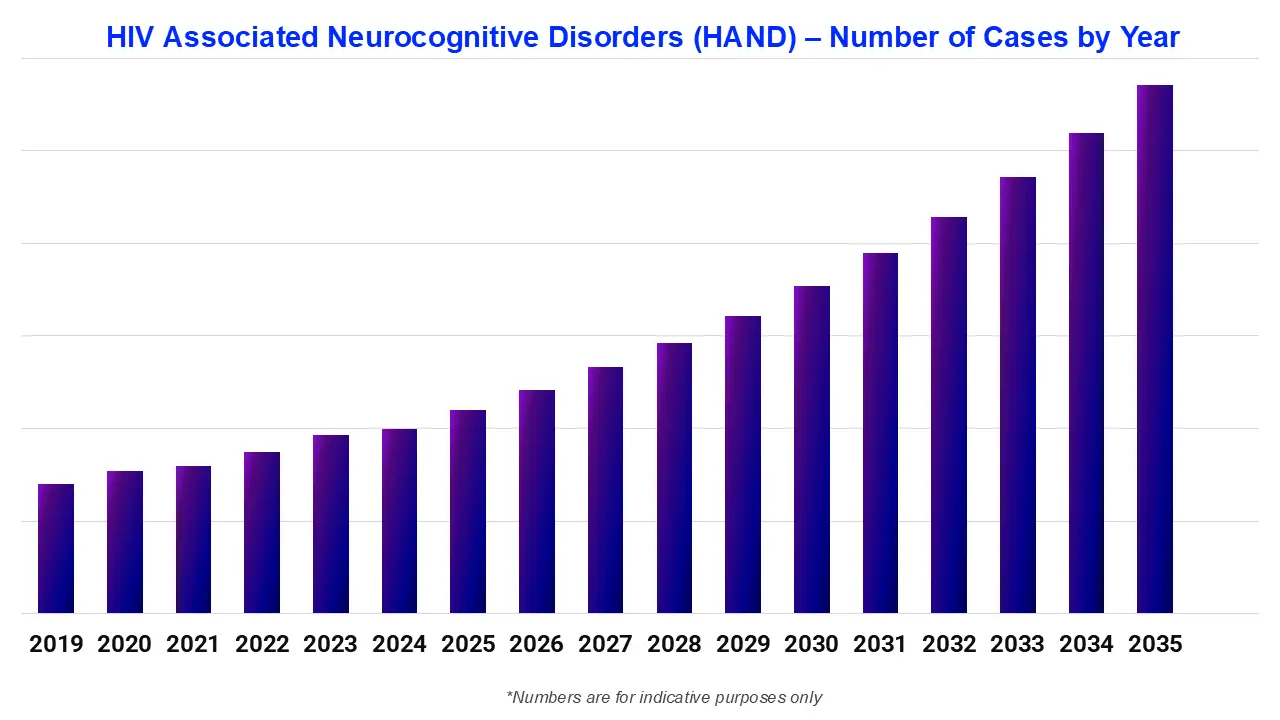
HIV-associated neurocognitive disorders (HAND) are a spectrum of cognitive, behavioral, and motor impairments caused by human immunodeficiency virus infection affecting the central nervous system. According to Aidan Flatt et al. (2023), HAND affects 20%–59% of people living with HIV worldwide, with over 35 million individuals infected globally. As per the HIV-associated neurocognitive disorders (HAND) epidemiology forecast by Expert Market Research, the growing burden of neurocognitive impairment underscores the need for early diagnosis and comprehensive disease management.
Base Year
Historical Period
Forecast Period
Read more about this report - Request a Free Sample
Expert Market Research's “HIV Associated Neurocognitive Disorders (HAND) Epidemiology Forecast Report 2026-2035” offers comprehensive information on the prevalence and demographics of HIV associated neurocognitive disorders (HAND). It projects the future incidence and prevalence rates of HIV associated neurocognitive disorders (HAND) cases across various populations. The study covers age, gender, and type as major determinants of the HIV associated neurocognitive disorders (HAND) population. The report highlights patterns in the prevalence of HIV associated neurocognitive disorders (HAND) over time and projects future trends based on multiple variables.
The report provides a comprehensive overview of the disease, as well as historical and projected data on the epidemiology of HIV associated neurocognitive disorders (HAND) in the 8 major markets.
Regions Covered
HIV associated neurocognitive disorders (HAND) comprise a spectrum of neurological complications caused by infection with the Human Immunodeficiency Virus (HIV), which affects the central nervous system. The virus triggers chronic neuroinflammation, immune activation, and neuronal injury, leading to cognitive, behavioral, and motor impairments of varying severity. HAND is generally classified into three forms: asymptomatic neurocognitive impairment (ANI), mild neurocognitive disorder (MND), and HIV-associated dementia (HAD). Although the widespread use of antiretroviral therapy has reduced severe cases, neurocognitive impairment remains a common complication among people living with HIV.
|
Parameter |
Insight |
|
Largest Patient Pool |
United States |
|
Fastest Growing Region |
India |
|
High-Risk Population |
People living with HIV, older adults (aged ≥50 years), and individuals with long-standing HIV infection |
|
Key Diagnostic Method |
Comprehensive neuropsychological assessment supported by HIV clinical evaluation and brain magnetic resonance imaging when indicated |
|
Major Risk Factor |
Long-term HIV infection, incomplete viral suppression, and chronic immune activation |
|
Major gap in the market |
Underdiagnosis due to subtle early symptoms and limited access to standardized neurocognitive screening |
The HIV associated neurocognitive disorders (HAND) epidemiology division offers information on the patient pool from history to the present as well as the projected trend for each of the 8 major markets. Expert Market Research provides both current and predicted trends for the HIV associated neurocognitive disorders (HAND) epidemiology scenario by examining a wide range of studies. Additionally, the report covers the diagnosed patient pool for HIV associated neurocognitive disorders (HAND) and their trends. The data is broken down into specific categories, such as total prevalent cases in males and females, and total diagnosed cases across different age groups and patient pools.
|
Epidemiology Segment |
Key Insights |
|
Diagnosed Prevalent Cases of the Disease |
According to Aidan Flatt et al., 2023, HIV-associated neurocognitive disorders (HAND) affect 20%–59% of people living with HIV worldwide. As per Mulualem Admasu Kelebie et al., 2024, approximately 25%–60% of HIV-infected individuals experience HAND globally. Based on Yosef Zenebe et al., 2022, the pooled global prevalence of HAND was 50.41% (95% CI: 45.56–55.26), highlighting its substantial epidemiological burden. |
|
Gender-Specific Cases of the Disease |
As reported by Ravi Krishnegowda et al., 2025, among 120 people living with HIV, 77 (64.2%) were male, 42 (35.0%) were female, and one (0.8%) was transgender, indicating a higher representation of males among individuals evaluated for HIV-associated neurocognitive disorders. |
|
Age-Specific Cases of the Disease |
According to Ravi Krishnegowda et al., 2025, the mean patient age was 41.96 ± 11.01 years, with the 36–45 years age group representing the largest proportion (28.3%), followed by the 26–35 years age group (25.8%). As highlighted by Yosef Zenebe et al., 2022, older age is associated with an increased risk of HIV-associated neurocognitive disorders. |
|
Ethnicity-Wise Cases of the Disease |
Ethnicity-wise epidemiological evaluation assesses the distribution of HIV-associated neurocognitive disorders (HAND) across different population groups. These assessments provide insights into disease patterns and contribute to a comprehensive understanding of the overall epidemiological burden. |
|
Mortality and Survival Analysis of the Disease |
As per Tingting Zhou et al., 2025, an estimated 1.3 million people were newly infected with HIV worldwide in 2022, while 30%–50% of HIV-positive individuals continue to experience HIV-associated neurocognitive disorders in the modern combination antiretroviral therapy era, demonstrating the persistent global burden of the disease. |
|
Disease Type |
Prevalence |
|
Asymptomatic Neurocognitive Impairment (ANI) |
According to Ravi Krishnegowda et al., 2025, 29% of people living with HIV were classified with asymptomatic neurocognitive impairment based on the Frascati criteria. |
|
Mild Neurocognitive Disorder (MND) |
As reported by Ravi Krishnegowda et al., 2025, 35% of the evaluated patients met the Frascati criteria for mild neurocognitive disorder, indicating a considerable burden of symptomatic cognitive impairment. |
|
HIV-Associated Dementia (HAD) |
Based on Ravi Krishnegowda et al., 2025, HIV-associated dementia accounted for 36% of cases and reached 50% among individuals with CD4 counts below 100 cells/mm³, making it the most common HAND subtype in this patient group. |
Read more about this report - Request a Free Sample
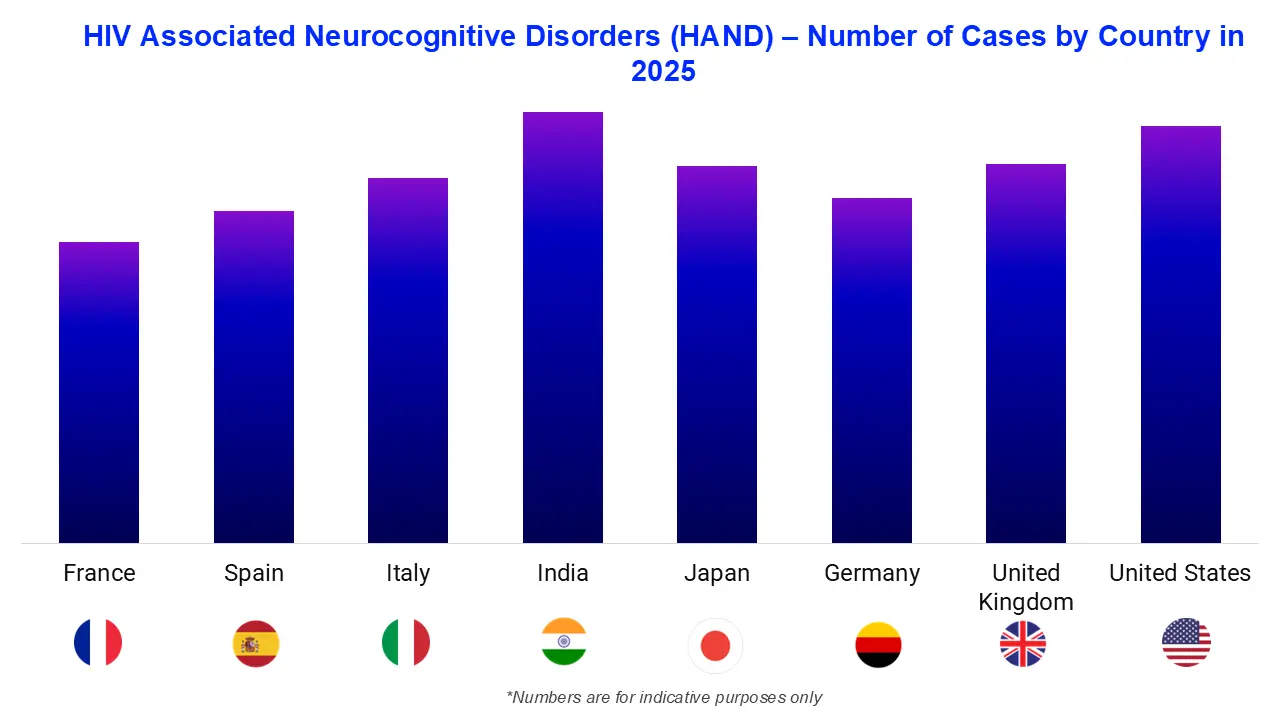
The HIV associated neurocognitive disorders (HAND) epidemiology data and findings for the United States, Germany, Spain, Italy, France, the United Kingdom, Japan, and India are also provided in the epidemiology section.
|
Country |
Key Insights |
|
United States |
According to Yosef Zenebe et al., 2022, the pooled prevalence of HIV-associated neurocognitive disorders in the United States was 50.407%, demonstrating a considerable epidemiological burden among people living with HIV. |
|
Germany |
HIV-associated neurocognitive disorders remain an important neurological complication among people living with HIV in Germany, highlighting the importance of continued epidemiological surveillance, early cognitive assessment, and long-term management as the HIV population continues to age. |
|
France |
HIV-associated neurocognitive disorders continue to contribute to the neurological burden among people living with HIV in France, emphasizing the need for sustained epidemiological monitoring and routine evaluation of cognitive health within HIV care. |
|
Italy |
HIV-associated neurocognitive disorders remain a recognized complication among people living with HIV in Italy, supporting continued epidemiological assessment of cognitive impairment and disease burden in aging HIV populations. |
|
Spain |
HIV-associated neurocognitive disorders continue to represent an important public health concern among people living with HIV in Spain, reinforcing the need for ongoing epidemiological monitoring and cognitive health evaluation. |
|
United Kingdom |
The prevalence of HIV-associated neurocognitive disorders in the United Kingdom was 7.3%, representing the lowest prevalence among the studies included in the meta-analysis while remaining a recognized neurological complication in people living with HIV. |
|
Japan |
HIV-associated neurocognitive disorders remain clinically relevant among people living with HIV in Japan, highlighting the importance of continued epidemiological evaluation and long-term cognitive monitoring alongside HIV management. |
|
India |
As per Mulualem Admasu Kelebie et al., 2024, multicenter studies reported that the prevalence of HIV-associated neurocognitive disorders (HAND) among people living with HIV in India reached 56%, indicating a substantial neurological disease burden and highlighting the importance of continued epidemiological surveillance, early cognitive assessment, and long-term disease management in the country. |
Despite advances in Human Immunodeficiency Virus (HIV) management, HIV Associated Neurocognitive Disorders (HAND) remain substantially underdiagnosed because routine neurocognitive screening is not consistently integrated into HIV care, particularly in resource-constrained settings. Expanding standardized screening programs, improving access to specialized neurological assessment, and increasing physician awareness represent significant opportunities across the United States, Europe, Japan, and India. Emerging growth areas include the development of sensitive diagnostic biomarkers, digital cognitive assessment tools, and longitudinal epidemiological studies to better characterize disease burden and support earlier intervention strategies.
The treatment of HIV associated neurocognitive disorders (HAND) primarily focuses on sustained viral suppression through combination antiretroviral therapy (ART), which helps reduce central nervous system viral replication and slows neurological deterioration. Early diagnosis, treatment adherence, and regular cognitive assessments are essential for improving long-term outcomes. Supportive interventions, including cognitive rehabilitation, mental health management, physical therapy, and treatment of comorbid conditions such as depression or substance use disorders, further enhance patient care. Ongoing research is evaluating neuroprotective therapies and anti-inflammatory strategies to address persistent cognitive dysfunction despite effective viral control.


Upto 15% Off
USD
$1999 $1799
$2999 $2699
$4399 $3739
$5799 $4929


*While we strive to always give you current and accurate information, the numbers depicted on the website are indicative and may differ from the actual numbers in the main report. At Expert Market Research, we aim to bring you the latest insights and trends in the market. Using our analyses and forecasts, stakeholders can understand the market dynamics, navigate challenges, and capitalize on opportunities to make data-driven strategic decisions.*
Explore our key highlights of the report and gain a concise overview of key findings, trends, and actionable insights that will empower your strategic decisions.
|
Report Features |
Details |
|
Base Year |
2025 |
|
Historical Period |
2019-2025 |
|
Forecast Period |
2026-2035 |
|
Epidemiology Statistics Provided |
|
|
Segmentation Provided |
|
|
Geographies Covered |
|
Datasheet
One User
USD 1,999
USD 1,799
tax inclusive*
Single User License
One User
USD 2,999
USD 2,699
tax inclusive*
Five User License
Five User
USD 4,399
USD 3,739
tax inclusive*
Corporate License
Unlimited Users
USD 5,799
USD 4,929
tax inclusive*
*Please note that the prices mentioned below are starting prices for each bundle type. Kindly contact our team for further details.*
Flash Bundle
Small Business Bundle
Growth Bundle
Enterprise Bundle
*Please note that the prices mentioned below are starting prices for each bundle type. Kindly contact our team for further details.*
Flash Bundle
Number of Reports: 3
20%
tax inclusive*
Small Business Bundle
Number of Reports: 5
25%
tax inclusive*
Growth Bundle
Number of Reports: 8
30%
tax inclusive*
Enterprise Bundle
Number of Reports: 10
35%
tax inclusive*
How To Order

Select License Type
Choose the right license for your needs and access rights.

Click on ‘Buy Now’
Add the report to your cart with one click and proceed to register.

Select Mode of Payment
Choose a payment option for a secure checkout. You will be redirected accordingly.
Strategic Solutions for Informed Decision-Making
Gain insights to stay ahead and seize opportunities.

Get insights & trends for a competitive edge.

Track prices with detailed trend reports.

Analyse trade data for supply chain insights.

Leverage cost reports for smart savings

Enhance supply chain with partnerships.

Connect For More Information
Our expert team of analysts will offer full support and resolve any queries regarding the report, before and after the purchase.
Our expert team of analysts will offer full support and resolve any queries regarding the report, before and after the purchase.
We employ meticulous research methods, blending advanced analytics and expert insights to deliver accurate, actionable industry intelligence, staying ahead of competitors.
Our skilled analysts offer unparalleled competitive advantage with detailed insights on current and emerging markets, ensuring your strategic edge.
We offer an in-depth yet simplified presentation of industry insights and analysis to meet your specific requirements effectively.




