Consumer Insights
Uncover trends and behaviors shaping consumer choices today
Procurement Insights
Optimize your sourcing strategy with key market data
Industry Stats
Stay ahead with the latest trends and market analysis.
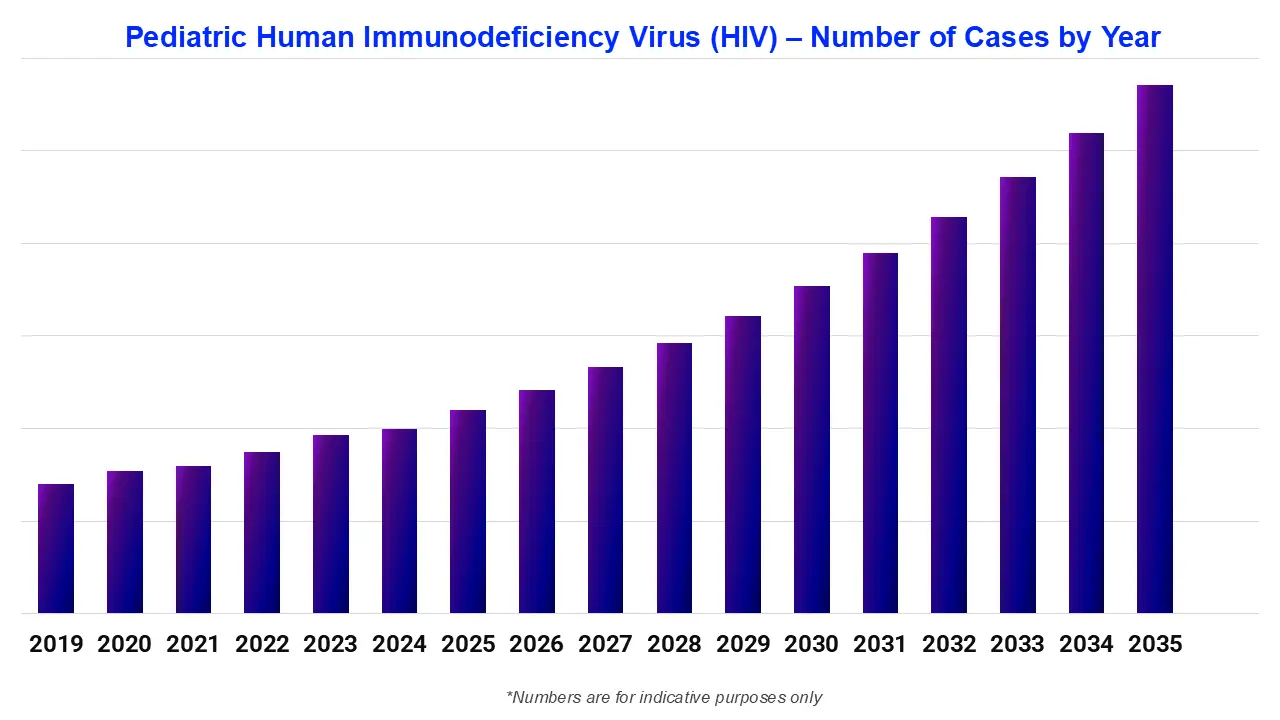
Pediatric human immunodeficiency virus (HIV) infection is a viral disease affecting the immune system and remains a significant global health concern. According to Klaudia Nowak et al. (2025), an estimated 1.4 million children aged 0–14 years were living with HIV globally at the end of 2023, highlighting the continuing burden of this infectious disease. As per the pediatric human immunodeficiency virus (HIV) epidemiology forecast by Expert Market Research, ongoing epidemiological assessment remains important for understanding disease burden and future trends.
Base Year
Historical Period
Forecast Period
Read more about this report - Request a Free Sample
Expert Market Research's “Pediatric Human Immunodeficiency Virus (HIV) Epidemiology Forecast Report 2026-2035” offers comprehensive information on the prevalence and demographics of pediatric human immunodeficiency virus (HIV). It projects the future incidence and prevalence rates of Pediatric Human Immunodeficiency Virus (HIV) cases across various populations. The study covers age, gender, and type as major determinants of the pediatric human immunodeficiency virus (HIV) population. The report highlights patterns in the prevalence of pediatric human immunodeficiency virus (HIV) over time and projects future trends based on multiple variables.
The report provides a comprehensive overview of the disease, as well as historical and projected data on the epidemiology of pediatric human immunodeficiency virus (HIV) in the 8 major markets.
Regions Covered
Pediatric human immunodeficiency virus (HIV) is an infection caused by the HIV virus that progressively damages the immune system by targeting CD4 T lymphocytes. In children, HIV is most commonly acquired through vertical transmission, occurring during pregnancy, childbirth, or breastfeeding, although transmission through infected blood or sexual exposure can also occur. Pediatric HIV may be classified as perinatally acquired or behaviorally acquired, particularly among adolescents. Without timely diagnosis and treatment, progressive immune suppression can increase susceptibility to opportunistic infections, growth and developmental complications, and HIV-related morbidity.
|
Parameter |
Insight |
|
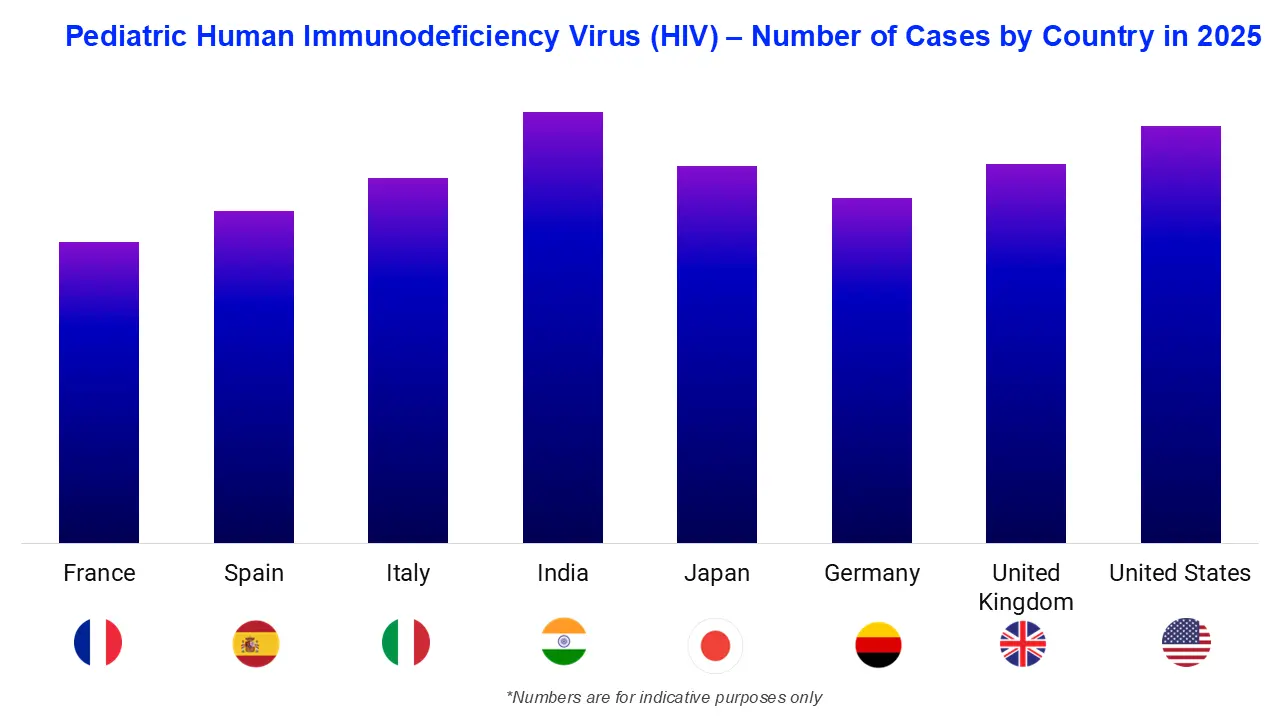
Largest Patient Pool |
United States |
|
Fastest Growing Country |
India |
|
High-Risk Population |
HIV-exposed infants, children born to mothers with HIV, and adolescents with ongoing HIV exposure risks |
|
Key Diagnostic Method |
Nucleic acid testing (NAT) / HIV virologic testing, particularly for infants and young children |
|
Major Risk Factor |
Mother-to-child (vertical) transmission |
|
Major gap in the market |
Unequal access to early infant diagnosis, pediatric formulations, and sustained treatment and viral suppression |
The pediatric human immunodeficiency virus (HIV) epidemiology division offers information on the patient pool from history to the present as well as the projected trend for each of the 8 major markets. Expert Market Research provides both current and predicted trends for the pediatric human immunodeficiency virus (HIV) epidemiology scenario by examining a wide range of studies. Additionally, the report covers the diagnosed patient pool for pediatric human immunodeficiency virus (HIV) and their trends. The data is broken down into specific categories, such as total prevalent cases in males and females, and total diagnosed cases across different age groups and patient pools.
|
Epidemiology Segment |
Key Insights |
|
Diagnosed Prevalent Cases of the Disease |
According to Klaudia Nowak et al., 1.4 million children aged 0–14 years were living with HIV at the end of 2023. As per Teodora Perger et al., approximately 2.6 million children and adolescents aged ≤19 years were living with HIV in 2022. |
|
Gender-Specific Cases of the Disease |
As per Waqar Ahmed et al., among 125 children evaluated, 12 children (9.6%) tested HIV-positive. Among these HIV-positive children, 58.3% were male and 41.7% were female, demonstrating a higher proportion of male cases within the study population. |
|
Age-Specific Cases of the Disease |
According to Klaudia Nowak et al., children aged 0–14 years accounted for 1.4 million people living with HIV in 2023. As per Teodora Perger et al., the broader population of children and adolescents aged ≤19 years reached approximately 2.6 million in 2022, reflecting continued pediatric and adolescent disease burden. |
|
Ethnicity-Wise Cases of the Disease |
The pediatric HIV burden remains particularly substantial in low- and middle-income countries, with higher numbers and prevalence concentrated in regions including Latin America, Eastern Europe, and East and Southeast Asia. Differences in healthcare access and HIV control contribute to geographic variation. |
|
Mortality and Survival Analysis of the Disease |
According to Klaudia Nowak et al., approximately 76,000 children died from AIDS-related causes in 2023. As per Teodora Perger et al., children aged ≤14 years represented 13% of AIDS-related deaths in 2022, despite accounting for 4% of people living with HIV. |
|
Disease Type |
Prevalence |
|
HIV-1 |
HIV-1 is the major and predominant type of human immunodeficiency virus globally and represents the principal type responsible for the pediatric HIV burden. |
|
HIV-2 |
HIV-2 is a less common type of human immunodeficiency virus with a more geographically limited distribution, contributing to a smaller proportion of the overall HIV burden. |
Read more about this report - Request a Free Sample
The pediatric human immunodeficiency virus (HIV) epidemiology data and findings for the United States, Germany, Spain, Italy, France, the United Kingdom, Japan, and India are also provided in the epidemiology section.
|
Country |
Key Insights |
|
United States |
According to the NIH Office of AIDS Research, perinatal transmission is very rare in the United States but remains the most common route of HIV acquisition among children younger than 13 years. Effective diagnosis during pregnancy and modern HIV medicines have reduced the likelihood of transmission to less than 1%, with 21 infants acquiring HIV through perinatal transmission in 2021. |
|
Germany |
As per the NIH Office of AIDS Research Advisory Council, Germany was included among countries represented in observational studies of breastfeeding among infants exposed to HIV. These studies generally involved mothers receiving antiretroviral therapy, with treatment commonly initiated before or during the first trimester of pregnancy and documented viral suppression. |
|
France |
According to Klaudia Nowak et al., pediatric HIV continues to require sustained prevention, diagnosis, and treatment efforts, particularly because disease burden remains concentrated in settings where healthcare access and HIV control can be challenging. These factors are relevant to ongoing pediatric HIV epidemiological monitoring across European populations. |
|
Italy |
As per the NIH Office of AIDS Research Advisory Council, Italy was among the countries represented in observational studies involving breastfeeding infants exposed to HIV. The reported populations generally included mothers receiving antiretroviral therapy and documented viral suppression, reflecting the importance of treatment and transmission-prevention practices in pediatric HIV epidemiology. |
|
Spain |
Continued advances in HIV prevention, diagnosis, and treatment have influenced the pediatric HIV burden in Spain. Epidemiological patterns are also shaped by access to age-appropriate treatment and prevention strategies, particularly those addressing transmission during pregnancy, childbirth, and breastfeeding. |
|
United Kingdom |
According to Hannah Castro et al., longitudinal data from the Collaborative HIV Paediatric Study and UK Collaborative HIV Cohort Study have enabled extended follow-up of young people with pediatric HIV through pediatric and adult HIV care. The analysis focuses on changes in CD4 measures over time and the transition from pediatric to adult HIV services. |
|
Japan |
According to Klaudia Nowak et al., pediatric HIV epidemiology is influenced by advances in prevention, diagnosis, and treatment, while continuing challenges include treatment access, age-appropriate formulations, adherence, and long-term management. These factors are relevant to maintaining disease control among children and adolescents living with HIV. |
|
India |
According to aidsmap, approximately 5,000 vertical HIV transmissions occurred in India in 2021, highlighting the continuing contribution of mother-to-child transmission to pediatric HIV burden. Prevention of vertical transmission therefore remains an important epidemiological component of pediatric HIV control in India. |
The pediatric HIV epidemiology landscape across the United States, Germany, France, Italy, Spain, the United Kingdom, Japan, and India continues to present opportunities to strengthen early diagnosis, treatment initiation, and long-term viral suppression. A major unmet need is access to age-appropriate, child-friendly formulations and simplified dosing, particularly for infants and younger children. Updated weight-band dosing recommendations and optimized antiretroviral regimens create opportunities for improved treatment delivery. Strengthening pregnancy screening, prevention of vertical transmission, early infant diagnosis, adherence support, and adolescent-focused services can further reduce pediatric HIV-related morbidity.
Pediatric HIV treatment primarily involves lifelong antiretroviral therapy (ART), which suppresses viral replication, preserves immune function, and reduces HIV-related morbidity and mortality. Current treatment approaches use age- and weight-appropriate combination antiretroviral regimens, with dolutegravir-based therapy increasingly preferred when clinically appropriate. Treatment also includes adherence support, regular viral-load and clinical monitoring, management or prevention of opportunistic infections, and nutritional and developmental care. For HIV-exposed infants, early virologic testing and postnatal prophylaxis are important components of care. Updated guidance also emphasizes simplified, weight-band-based pediatric HIV drugs.
Human Immunodeficiency Virus (HIV) Rapid Test Kits Market
Human Immunodeficiency Virus (HIV 1) Infection Pipeline
Human Immunodeficiency Virus Type 1 (HIV-1) Infection Epidemiology


Upto 15% Off
USD
$2699 $2429
$4299 $3869
$5799 $4949
$6999 $5949


*While we strive to always give you current and accurate information, the numbers depicted on the website are indicative and may differ from the actual numbers in the main report. At Expert Market Research, we aim to bring you the latest insights and trends in the market. Using our analyses and forecasts, stakeholders can understand the market dynamics, navigate challenges, and capitalize on opportunities to make data-driven strategic decisions.*
Explore our key highlights of the report and gain a concise overview of key findings, trends, and actionable insights that will empower your strategic decisions.
|
Report Features |
Details |
|
Base Year |
2025 |
|
Historical Period |
2019-2025 |
|
Forecast Period |
2026-2035 |
|
Epidemiology Statistics Provided |
|
|
Segmentation Provided |
|
|
Geographies Covered |
|
Datasheet
One User
USD 2,699
USD 2,429
tax inclusive*
Single User License
One User
USD 4,299
USD 3,869
tax inclusive*
Five User License
Five User
USD 5,799
USD 4,949
tax inclusive*
Corporate License
Unlimited Users
USD 6,999
USD 5,949
tax inclusive*
*Please note that the prices mentioned below are starting prices for each bundle type. Kindly contact our team for further details.*
Flash Bundle
Small Business Bundle
Growth Bundle
Enterprise Bundle
*Please note that the prices mentioned below are starting prices for each bundle type. Kindly contact our team for further details.*
Flash Bundle
Number of Reports: 3
20%
tax inclusive*
Small Business Bundle
Number of Reports: 5
25%
tax inclusive*
Growth Bundle
Number of Reports: 8
30%
tax inclusive*
Enterprise Bundle
Number of Reports: 10
35%
tax inclusive*
How To Order

Select License Type
Choose the right license for your needs and access rights.

Click on ‘Buy Now’
Add the report to your cart with one click and proceed to register.

Select Mode of Payment
Choose a payment option for a secure checkout. You will be redirected accordingly.
Strategic Solutions for Informed Decision-Making
Gain insights to stay ahead and seize opportunities.
Get insights & trends for a competitive edge.

Track prices with detailed trend reports.

Analyse trade data for supply chain insights.

Leverage cost reports for smart savings
Enhance supply chain with partnerships.

Connect For More Information
Our expert team of analysts will offer full support and resolve any queries regarding the report, before and after the purchase.
Our expert team of analysts will offer full support and resolve any queries regarding the report, before and after the purchase.
We employ meticulous research methods, blending advanced analytics and expert insights to deliver accurate, actionable industry intelligence, staying ahead of competitors.
Our skilled analysts offer unparalleled competitive advantage with detailed insights on current and emerging markets, ensuring your strategic edge.
We offer an in-depth yet simplified presentation of industry insights and analysis to meet your specific requirements effectively.