Consumer Insights
Uncover trends and behaviors shaping consumer choices today
Procurement Insights
Optimize your sourcing strategy with key market data
Industry Stats
Stay ahead with the latest trends and market analysis.
Marfan syndrome (MFS) is an autosomal dominant, multisystem connective tissue disorder primarily caused by pathogenic variants in the FBN1 gene, which encodes fibrillin-1, a structural glycoprotein essential for the integrity of connective tissue and the regulation of transforming growth factor-beta (TGF-β) signaling. The U.S. prevalence is commonly estimated at approximately 1 in 5,000 people, equivalent to a population prevalence of about 20 per 100,000. The U.S. Centers for Disease Control and Prevention (CDC) cites this estimate in its May 2024 overview of Marfan syndrome. According to Marfan Syndrome Epidemiology Forecast by Expert Market Research (EMR), the disease is a rare, lifelong genetic disorder with a worldwide distribution.
Base Year
Historical Period
Forecast Period
Read more about this report - REQUEST FREE SAMPLE COPY IN PDF
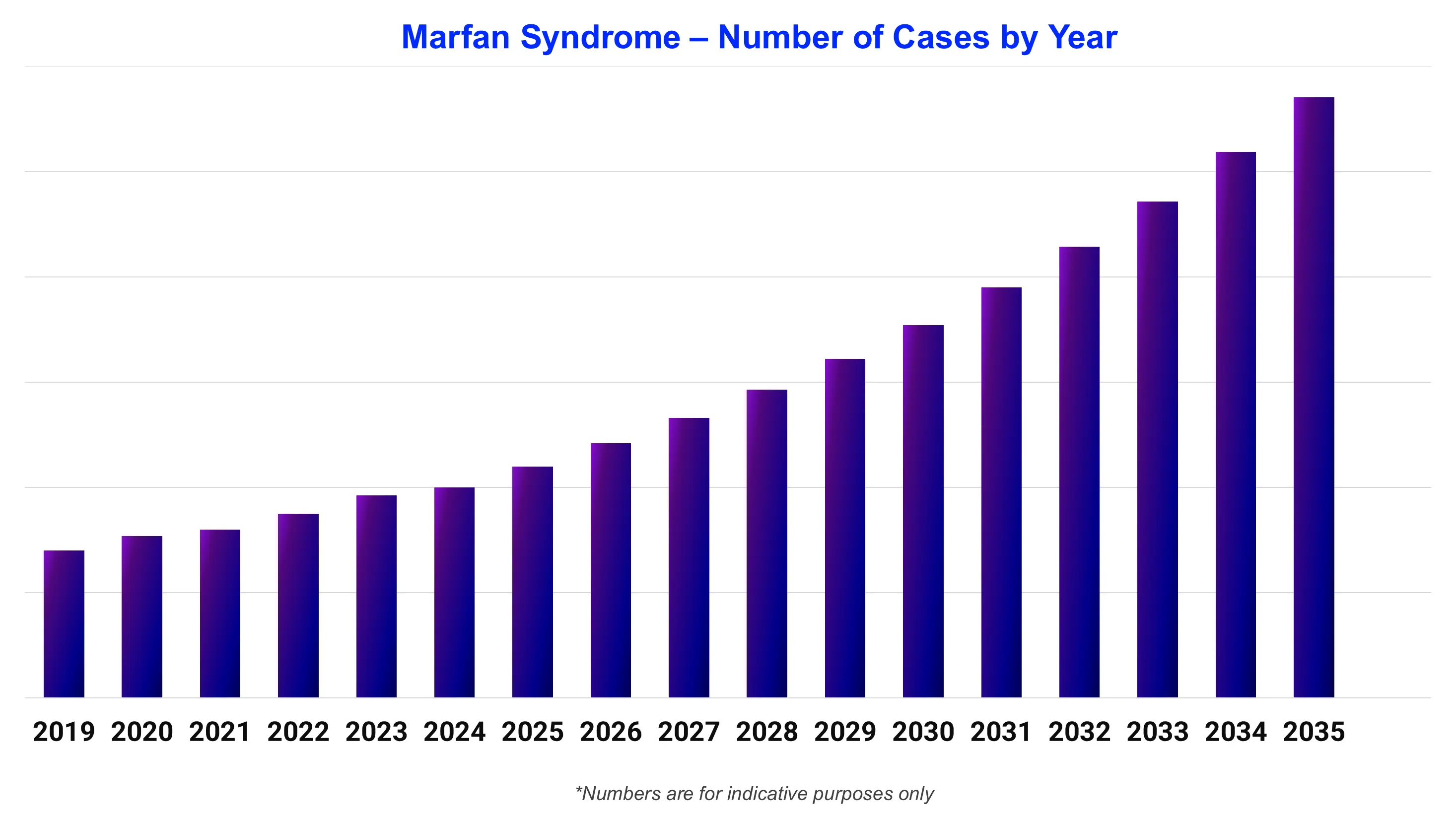
Expert Market Research's “Marfan Syndrome Epidemiology Forecast Report 2026-2035” offers comprehensive information on the prevalence and demographics of Marfan Syndrome. It projects the future incidence and prevalence rates of Marfan Syndrome cases across various populations. The study covers age, gender, and type as major determinants of the Marfan Syndrome population. The report highlights patterns in the prevalence of Marfan Syndrome over time and projects future trends based on multiple variables.
The report provides a comprehensive overview of the disease, as well as historical and projected data on the epidemiology of Marfan Syndrome in the 8 major markets.
Regions Covered
Marfan syndrome (MFS) is an autosomal dominant, multisystem connective tissue disorder primarily caused by pathogenic variants in the FBN1 gene, which encodes fibrillin-1, a structural glycoprotein essential for the integrity of connective tissue and the regulation of transforming growth factor-beta (TGF-β) signaling. The disease affects the cardiovascular, ocular, and musculoskeletal systems, with clinical severity varying substantially between individuals, including within the same family.
|
Parameter |
Insight |
|
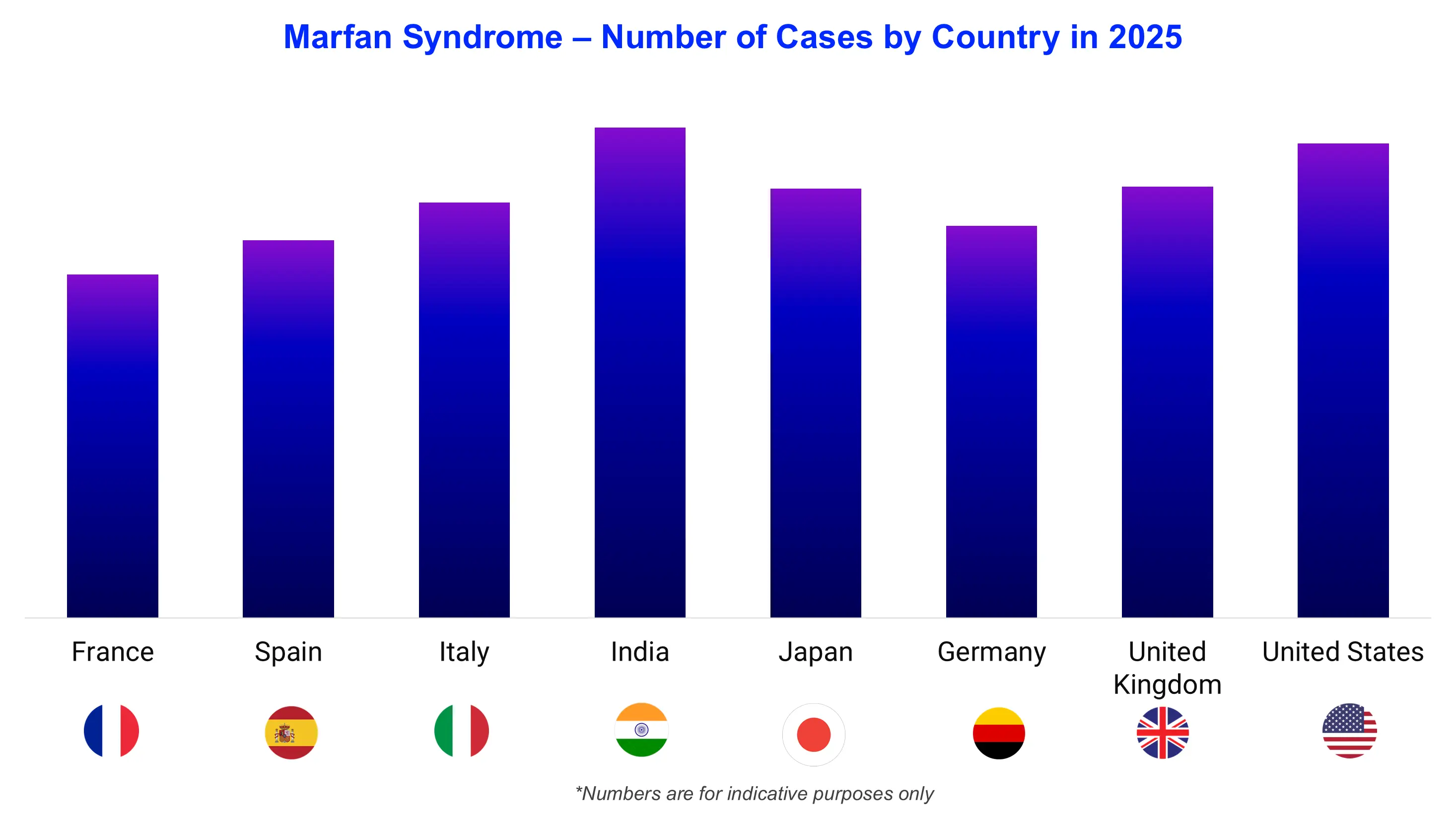
Largest Patient Pool |
United States |
|
Fastest Growing Country |
India |
|
High-Risk Population |
Individuals with a first-degree relative diagnosed with Marfan syndrome, particularly those carrying a pathogenic FBN1 variant, represent the principal genetically at-risk population. |
|
Key Diagnostic Method |
Marfan syndrome is diagnosed using the revised Ghent nosology, which integrates clinical assessment, cardiovascular imaging, family history, and molecular genetic testing. |
|
Major Risk Factor |
A family history of Marfan syndrome is the principal risk factor, as the disorder is inherited in an autosomal dominant manner, with each child of an affected heterozygous parent having a 50% chance of inheriting the pathogenic FBN1 variant. |
|
Major gap in the market |
A major unmet need in the Marfan syndrome market is the absence of disease-modifying therapies that prevent or reverse the underlying connective tissue abnormalities and reliably halt aortic aneurysm progression. |
The Marfan Syndrome epidemiology division offers information on the patient pool from history to the present as well as the projected trend for each of the 8 major markets. Expert Market Research provides both current and predicted trends for the Marfan Syndrome epidemiology scenario by examining a wide range of studies. Additionally, the report covers the diagnosed patient pool for Marfan Syndrome and their trends. The data is broken down into specific categories, such as total prevalent cases in males and females, and total diagnosed cases across different age groups and patient pools.
|
Epidemiology Segment |
Key Insights |
|
Diagnosed Prevalent Cases of the Disease |
Marfan syndrome is estimated to affect approximately 1 in 5,000–10,000 individuals worldwide, according to GeneReviews. Applying this prevalence range to the global population suggests an estimated 0.8–1.6 million potentially affected individuals worldwide. This is a model-based estimate of the total affected population, not a confirmed count of diagnosed cases. |
|
Gender-Specific Cases of the Disease |
A 2026 retrospective cohort study of 783 adults with Marfan syndrome at Mayo Clinic included 443 males (56.6%) and 340 females (43.4%). Males exhibited a higher burden of ascending aortic aneurysms (89.1% versus 71.1%) and were more likely to undergo aortic root surgery (63.4% versus 40.3%). |
|
Age-Specific Cases of the Disease |
A 2024 European multicentre cohort study published in the Journal of the American Heart Association assessed 288 patients with Marfan syndrome and found that 119 (41.3%) were diagnosed before age 21, while 169 (58.7%) received their diagnosis at age 21 or older. The mean age at diagnosis was 13.5 years in the early-diagnosis group and 39.2 years in the late-diagnosis group. |
|
Ethnicity-Wise Cases of the Disease |
A 2024 U.S. electronic health record study identified 4,347 patients with Marfan syndrome, including 2,606 White (70.2%), 384 Black or African American (10.4%), and 94 Asian (2.5%) patients; ethnicity was recorded separately, with 335 Hispanic patients (9.6%). These figures describe the composition of a clinical cohort, not ethnicity-specific prevalence, because the study did not establish population-adjusted rates for each group. |
|
Mortality and Survival Analysis of the Disease |
A 2024 study published in the Journal of Cardiothoracic Surgery, involving 50 patients with Marfan syndrome who underwent aortic surgery, reported survival rates of 89% at 5 years, 73% at 10 years, and 68% at 15 years. The cohort's in-hospital mortality was 4%, with outcomes influenced by disease severity and the urgency of surgery. |
Read more about this report - REQUEST FREE SAMPLE COPY IN PDF
The Marfan Syndrome epidemiology data and findings for the United States, Germany, Spain, Italy, France, the United Kingdom, Japan, and India are also provided in the epidemiology section.
|
Country |
Key Insights |
|
United States |
Marfan syndrome affects approximately 1 in 5,000 people in the United States, corresponding to an estimated 200,000 affected individuals. This estimate is reported by the American Association for Pediatric Ophthalmology and Strabismus and Johns Hopkins Medicine. It represents an approximate total affected population, rather than a verified count of currently diagnosed patients. |
|
Germany |
Marfan syndrome is estimated to affect approximately 1 in 5,000–10,000 individuals. Applying this prevalence range to Germany’s population yields an estimated 8,000–16,000 affected individuals. The University Hospital Münster and the Medical Genetic Center in Munich report this range, although it represents an epidemiological estimate rather than a confirmed count of diagnosed patients. |
|
France |
Marfan syndrome affects an estimated 1 in 5,000 people, corresponding to approximately 12,000 affected individuals in France. This estimate is reported by the French national reference centre for Marfan syndrome at Bichat–Claude-Bernard Hospital, updated in March 2026. It represents the estimated total affected population rather than a confirmed national count of diagnosed cases. |
|
Italy |
Marfan syndrome is estimated to affect approximately 1 in 5,000 individuals, equivalent to around 11,800 affected individuals in Italy, based on the country's population. This is a population-based estimate of the total affected population, not a verified count of diagnosed cases. Orphanet's July 2025 prevalence report lists an estimated European prevalence of 20 cases per 100,000 people for Marfan syndrome. |
|
Spain |
According to Spain’s State Registry of Rare Diseases (ReeR), the 2024 epidemiological report recorded 1,868 living patients with Marfan syndrome as of 1 January 2022, comprising 987 males and 881 females. This represents a registry-based count of identified cases rather than the estimated total affected population. The report calculated a national point prevalence of approximately 0.399 cases per 10,000 inhabitants (3.99 per 100,000) based on reported cases. |
|
United Kingdom |
Approximately 18,000 people are estimated to be living with Marfan syndrome in the United Kingdom, corresponding to a prevalence estimate of around 1 in 3,000 people, according to the Marfan Trust and the Association of Optometrists’ February 2025 report. The Marfan Trust estimates that approximately 8,000 of these individuals remain undiagnosed, meaning the estimated diagnosed population is around 10,000. These figures are estimates rather than a verified national count of diagnosed cases. |
|
Japan |
Approximately 20,000 individuals are estimated to have Marfan syndrome in Japan, corresponding to a prevalence of roughly 1 in 5,000–10,000 people. This estimate is reported by the University of Tokyo Hospital’s Marfan Syndrome Center and Japan’s National Cerebral and Cardiovascular Center. It represents the estimated total affected population rather than a confirmed count of diagnosed cases. |
|
India |
Marfan syndrome is estimated to affect approximately 1 in 5,000–10,000 individuals worldwide. Applying this prevalence range to India's population suggests an estimated 145,000–290,000 potentially affected individuals. This is a population-based projection, not a verified count of diagnosed cases. |
A major unmet need is the absence of a curative, disease-modifying treatment targeting the underlying FBN1-related pathology. Current management relies on beta-blockers, angiotensin II receptor blockers (ARBs), regular aortic imaging, and prophylactic surgery when indicated. Opportunities include expanded genetic screening of at-risk relatives, improved risk-stratification tools, and wider access to multidisciplinary specialist care. Emerging growth areas include genotype-informed risk assessment, improved imaging protocols, pediatric-specific treatment strategies, and personalized management of aortic complications. The 2024 European Society of Cardiology guidelines emphasize tailored surveillance and timely intervention, while a 2024 European pediatric consensus statement highlights persistent evidence gaps in the management of children with Marfan syndrome.
Marfan syndrome has no definitive cure, and treatment focuses on preventing life-threatening cardiovascular complications, slowing aortic enlargement, and managing ocular, skeletal, and other connective tissue manifestations. Pharmacological management typically involves beta-blockers, such as atenolol, or angiotensin II receptor blockers (ARBs), such as losartan, to reduce haemodynamic stress on the aortic wall and slow aortic root dilatation. Combination therapy with both drug classes may be considered when appropriate. Regular echocardiography and, when indicated, CT or MRI are essential for monitoring aortic dimensions and detecting progressive aneurysm formation. Surgical intervention is central to preventing aortic dissection and rupture in patients with significant aortic root enlargement.


Upto 15% Off
USD
$2699 $2429
$4299 $3869
$5799 $4949
$6999 $5949


*While we strive to always give you current and accurate information, the numbers depicted on the website are indicative and may differ from the actual numbers in the main report. At Expert Market Research, we aim to bring you the latest insights and trends in the market. Using our analyses and forecasts, stakeholders can understand the market dynamics, navigate challenges, and capitalize on opportunities to make data-driven strategic decisions.*
Explore our key highlights of the report and gain a concise overview of key findings, trends, and actionable insights that will empower your strategic decisions.
|
Report Features |
Details |
|
Base Year |
2025 |
|
Historical Period |
2019-2025 |
|
Forecast Period |
2026-2035 |
|
Epidemiology Statistics Provided |
|
|
Segmentation Provided |
|
|
Geographies Covered |
|
Datasheet
One User
USD 2,699
USD 2,429
tax inclusive*
Single User License
One User
USD 4,299
USD 3,869
tax inclusive*
Five User License
Five User
USD 5,799
USD 4,949
tax inclusive*
Corporate License
Unlimited Users
USD 6,999
USD 5,949
tax inclusive*
*Please note that the prices mentioned below are starting prices for each bundle type. Kindly contact our team for further details.*
Flash Bundle
Small Business Bundle
Growth Bundle
Enterprise Bundle
*Please note that the prices mentioned below are starting prices for each bundle type. Kindly contact our team for further details.*
Flash Bundle
Number of Reports: 3
20%
tax inclusive*
Small Business Bundle
Number of Reports: 5
25%
tax inclusive*
Growth Bundle
Number of Reports: 8
30%
tax inclusive*
Enterprise Bundle
Number of Reports: 10
35%
tax inclusive*
How To Order

Select License Type
Choose the right license for your needs and access rights.

Click on ‘Buy Now’
Add the report to your cart with one click and proceed to register.

Select Mode of Payment
Choose a payment option for a secure checkout. You will be redirected accordingly.
Strategic Solutions for Informed Decision-Making
Gain insights to stay ahead and seize opportunities.
Get insights & trends for a competitive edge.
Track prices with detailed trend reports.
Analyse trade data for supply chain insights.

Leverage cost reports for smart savings
Enhance supply chain with partnerships.

Connect For More Information
Our expert team of analysts will offer full support and resolve any queries regarding the report, before and after the purchase.
Our expert team of analysts will offer full support and resolve any queries regarding the report, before and after the purchase.
We employ meticulous research methods, blending advanced analytics and expert insights to deliver accurate, actionable industry intelligence, staying ahead of competitors.
Our skilled analysts offer unparalleled competitive advantage with detailed insights on current and emerging markets, ensuring your strategic edge.
We offer an in-depth yet simplified presentation of industry insights and analysis to meet your specific requirements effectively.