

Consumer Insights
Uncover trends and behaviors shaping consumer choices today
Procurement Insights
Optimize your sourcing strategy with key market data
Industry Stats
Stay ahead with the latest trends and market analysis.
Onychomycosis continues to represent a significant and often underestimated fungal disease burden worldwide, particularly among aging individuals and patients with metabolic comorbidities. Recent evidence indicates prevalence can reach 22.9% in clinically evaluated populations, reflecting substantial diagnostic and treatment challenges. The onychomycosis epidemiology forecast by Expert Market Research highlights growing emphasis on accurate diagnosis, improved therapeutic outcomes, and addressing persistent under recognition, especially among patients with onychomycosis and peripheral vascular disease.
Base Year
Historical Period
Forecast Period
Read more about this report - Request a Free Sample
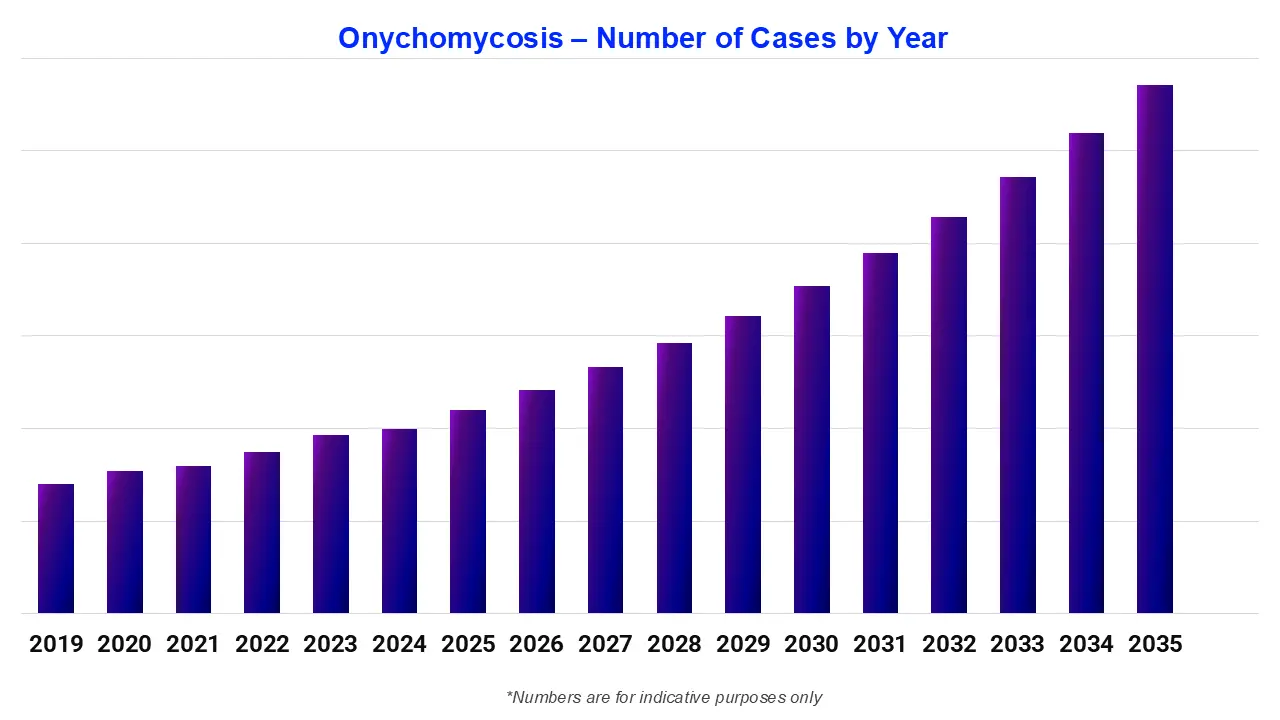
Expert Market Research's “Onychomycosis Epidemiology Forecast Report 2026-2035” offers comprehensive information on the prevalence and demographics of onychomycosis. It projects the future incidence and prevalence rates of onychomycosis cases across various onychomycosis populations. The study covers age, gender, and type as major determinants of the population. The report highlights patterns in the prevalence of onychomycosis over time and projects future trends based on multiple variables.
The report provides a comprehensive overview of the disease, as well as historical and projected data on epidemiology in the region.
Countries Covered
Onychomycosis is a chronic fungal nail infection caused primarily by dermatophytes, leading to nail discoloration, thickening, and onycholysis, with higher prevalence in older adults and immunocompromised individuals. The condition, commonly referred to as tinea unguium, often begins in toenails and progresses slowly if untreated. Epidemiological trends indicate an increasing global burden due to aging populations, diabetes prevalence, and lifestyle factors. Disease management typically requires prolonged antifungal therapy, and recurrence is common.
Key Report Insights
| Parameter | Insight |
| Largest Patient Pool | North America holds a substantial diagnosed patient pool, supported by prevalence estimates ranging from 1%-8% in the general population and significantly higher rates among elderly and diabetic individuals. |
| Fastest Growing Region | Asia-Pacific is expected to experience the fastest growth in disease burden due to aging populations, rising diabetes prevalence, urbanization, and increasing healthcare access. |
| High-Risk Population | Older adults, patients with diabetes, peripheral vascular disease, immunosuppression, and concomitant tinea pedis exhibit the highest risk of developing onychomycosis. |
| Key Diagnostic Method | Direct microscopy (KOH preparation) combined with fungal culture remains the standard diagnostic approach, while PCR-based testing is gaining adoption due to superior sensitivity. |
| Major Risk Factor | Diabetes mellitus is among the most consistently reported risk factors, contributing to increased susceptibility, recurrence, and treatment complexity. |
| Major Gap in the Market | Underdiagnosis remains a significant challenge, with community prevalence estimates substantially lower than clinically detected cases, indicating many infections remain undiagnosed or untreated. |
The onychomycosis epidemiology report provides comprehensive insights into the historical, current, and forecasted patient population trends across the regional markets. Expert Market Research provides both current and forecast trends for the onychomycosis epidemiology scenario by examining a wide range of studies. Additionally, the report covers the diagnosed patient pool for onychomycosis and its trends. The onychomycosis detailed epidemiology segmentation is broken down into specific categories, such as total prevalent cases in males and females, and total diagnosed cases across different age groups and patient pools.
| Epidemiology Segment | Key Insights |
| Diagnosed Prevalent Cases of Onychomycosis | A 2026 global meta-analysis reported a pooled onychomycosis prevalence of 22.9% among tested individuals, while community-based studies showed substantially lower prevalence (8.6%), indicating significant underdiagnosis outside healthcare settings. |
| Gender-Specific Cases of Onychomycosis | Global epidemiological analyses found comparable prevalence between men (31.5%) and women (30.1%) among evaluated populations, although earlier studies consistently reported higher disease occurrence in males, particularly involving toenail infections. |
| Age-Specific Cases of Onychomycosis | Disease burden peaks in adults aged 41-50 years, with prevalence increasing further among older individuals due to diabetes, vascular disease, and cumulative fungal exposure. Elderly populations remain disproportionately affected across most geographic regions. |
| Ethnicity-Wise Cases of Onychomycosis | Robust global ethnicity-stratified epidemiology remains limited. Available studies suggest variation is driven more by climate, footwear practices, socioeconomic conditions, and comorbidities than by ethnicity alone, highlighting a major evidence gap in current epidemiological literature. |
| Mortality and Survival Analysis of Onychomycosis | Onychomycosis is rarely associated with mortality and generally does not affect survival. However, it contributes to substantial morbidity, particularly among diabetic and immunocompromised patients, where secondary infections and foot complications can increase healthcare burden. |
| Disease Type | Subtype Distribution (%) |
| Distal Lateral Subungual Onychomycosis (DLSO) | Represents the most common subtype, accounting for 65.7% of onychomycosis cases in the region and typically affecting the distal and lateral portions of the nail. |
| White Superficial Onychomycosis (WSO/SWO) | Accounts for 15.1% of cases and is characterized by superficial white patches on the nail plate caused by fungal invasion of the nail surface. |
| Total Dystrophic Onychomycosis (TDO) | Constitutes 12.3% of cases and represents the most advanced form of the disease, involving extensive nail destruction and thickening. |
| Proximal Subungual Onychomycosis (PSO) | Makes up 6.8% of cases and is a less common subtype that begins at the proximal nail fold and progresses distally. |
Read more about this report - Request a Free Sample
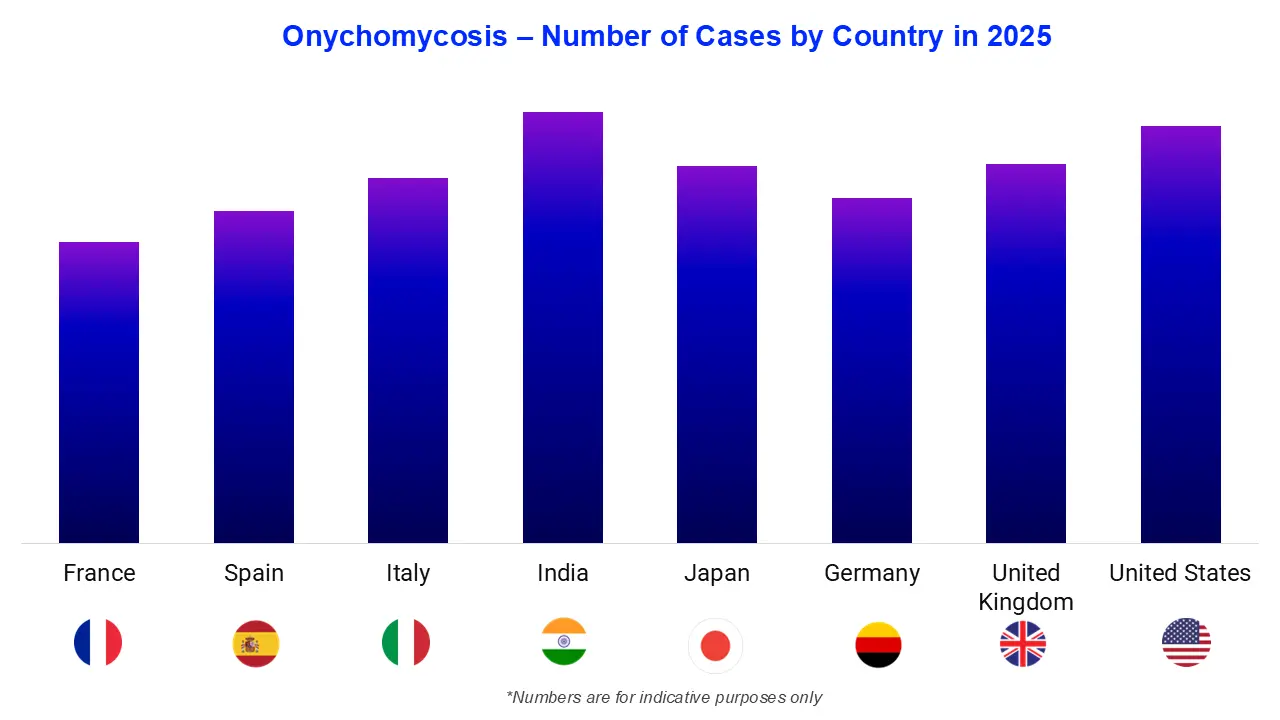
The onychomycosis epidemiology data and findings for the region-specific countries are also provided in the epidemiology section.
| Country | Key Insights |
| United States | Onychomycosis in the United States shows 1%-8% prevalence, increasing incidence, with Trichophyton rubrum dominance and higher risk in aging, diabetes, and immunocompromised populations. |
| Germany | Germany reflects the broader European onychomycosis burden, with increasing cases among older adults due to slower nail growth, diabetes, and vascular comorbidities. Updated German clinical guidelines highlight growing diagnostic and treatment needs as the population ages. |
| France | Onychomycosis represents about 30% of superficial fungal infections in France, with Trichophyton rubrum predominating and increasing recognition of non-dermatophyte mold pathogens. |
| Italy | Dermatophytes represented the majority of laboratory-confirmed fungal nail infections, with Trichophyton rubrum comprising 56.8% of isolates in Italian patients. |
| Spain | In a 2021 Spanish rural cohort, PCR confirmed fungal infection in 84.3% of suspected cases versus 76.5% by culture, highlighting substantial diagnostic improvement through molecular testing. |
| United Kingdom | Toenail onychomycosis was the most common dermatophyte infection in South-East England, with Trichophyton rubrum causing 80.5% of cases, predominantly among middle-aged males. |
| Japan | In Japan's 2021 dermatomycosis survey, tinea unguium accounted for 2,711 cases, making it the second most common dermatophytosis after tinea pedis. |
| India | India continues to experience a substantial burden of fungal nail disease, with recent epidemiological reviews identifying Trichophyton mentagrophytes in up to 97.2% of dermatophyte isolates, reflecting the widespread contribution of dermatophyte infections to clinical fungal disease burden. |
Onychomycosis shows clear diagnostic distortion, with community prevalence (8.57%) far lower than hospital detection (24.19%), indicating underdiagnosis in primary care. Combined with 6-12 months treatment duration and 20-25% recurrence rates, this creates a cycle of incomplete clearance and repeated infections.
This diagnostic gap highlights strong unmet need for earlier and more accurate detection, where PCR methods (85-95% sensitivity) significantly outperform conventional KOH/culture (50-70%). Improved point-of-care testing and adherence-focused treatment models can reduce delayed diagnosis and unnecessary prolonged antifungal exposure.
High recurrence (20-53%) and poor nail penetration of existing therapies are driving innovation in nanotechnology-based and sustained-release antifungal systems. With prevalence ranging from 2%-8% globally and up to 22.9% in tested populations, focus is shifting toward durable mycological cure rather than temporary symptom control.
Onychomycosis treatment primarily involves prolonged topical or systemic antifungal therapy due to slow nail plate penetration and high recurrence rates. Standard regimens often require extended use and show variable complete cure outcomes, especially in chronic infections. A Phase 2 interventional pipeline study (NCT07382427) is actively evaluating a novel topical terbinafine-based formulation designed to improve drug delivery into the nail bed and enhance antifungal efficacy against dermatophytes, with endpoints focused on clinical and mycological cure rates. Patients with dermatophyte onychomycosis frequently need combined pharmacologic and debridement-based approaches, reflecting ongoing unmet need for faster, more durable treatment options.


Upto 15% Off
USD
$1999 $1799
$2999 $2699
$4399 $3739
$5799 $4929


*While we strive to always give you current and accurate information, the numbers depicted on the website are indicative and may differ from the actual numbers in the main report. At Expert Market Research, we aim to bring you the latest insights and trends in the market. Using our analyses and forecasts, stakeholders can understand the market dynamics, navigate challenges, and capitalize on opportunities to make data-driven strategic decisions.*
Explore our key highlights of the report and gain a concise overview of key findings, trends, and actionable insights that will empower your strategic decisions.
|
Report Features |
Details |
|
Base Year |
2025 |
|
Historical Period |
2019-2025 |
|
Forecast Period |
2026-2035 |
|
Epidemiology Statistics Provided |
|
|
Segmentation Provided |
|
|
Geographies Covered |
|
Datasheet
One User
USD 1,999
USD 1,799
tax inclusive*
Single User License
One User
USD 2,999
USD 2,699
tax inclusive*
Five User License
Five User
USD 4,399
USD 3,739
tax inclusive*
Corporate License
Unlimited Users
USD 5,799
USD 4,929
tax inclusive*
*Please note that the prices mentioned below are starting prices for each bundle type. Kindly contact our team for further details.*
Flash Bundle
Small Business Bundle
Growth Bundle
Enterprise Bundle
*Please note that the prices mentioned below are starting prices for each bundle type. Kindly contact our team for further details.*
Flash Bundle
Number of Reports: 3
20%
tax inclusive*
Small Business Bundle
Number of Reports: 5
25%
tax inclusive*
Growth Bundle
Number of Reports: 8
30%
tax inclusive*
Enterprise Bundle
Number of Reports: 10
35%
tax inclusive*
How To Order

Select License Type
Choose the right license for your needs and access rights.

Click on ‘Buy Now’
Add the report to your cart with one click and proceed to register.

Select Mode of Payment
Choose a payment option for a secure checkout. You will be redirected accordingly.
Strategic Solutions for Informed Decision-Making
Gain insights to stay ahead and seize opportunities.

Get insights & trends for a competitive edge.

Track prices with detailed trend reports.

Analyse trade data for supply chain insights.

Leverage cost reports for smart savings

Enhance supply chain with partnerships.

Connect For More Information
Our expert team of analysts will offer full support and resolve any queries regarding the report, before and after the purchase.
Our expert team of analysts will offer full support and resolve any queries regarding the report, before and after the purchase.
We employ meticulous research methods, blending advanced analytics and expert insights to deliver accurate, actionable industry intelligence, staying ahead of competitors.
Our skilled analysts offer unparalleled competitive advantage with detailed insights on current and emerging markets, ensuring your strategic edge.
We offer an in-depth yet simplified presentation of industry insights and analysis to meet your specific requirements effectively.




