

Consumer Insights
Uncover trends and behaviors shaping consumer choices today
Procurement Insights
Optimize your sourcing strategy with key market data
Industry Stats
Stay ahead with the latest trends and market analysis.
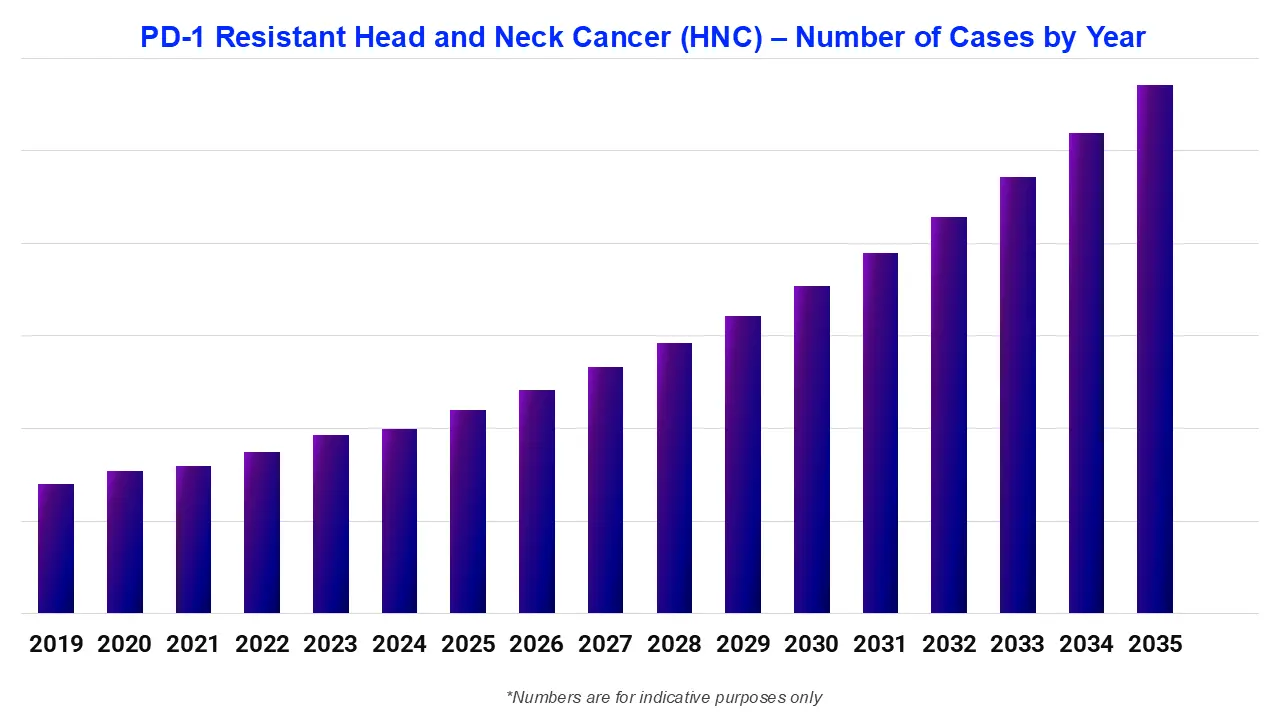
PD-1 resistant head and neck cancer is an emerging subset of recurrent/metastatic HNSCC, where only ~13%–18% patients achieve durable responses to anti–PD-1 therapy, leaving a significant non-responder burden. The PD-1 Resistant Head and Neck Cancer epidemiology forecast by Expert Market Research highlights evolving resistance patterns, rising immunotherapy exposure, and increasing need for predictive biomarkers to improve treatment stratification globally.
Base Year
Historical Period
Forecast Period
Read more about this report - Request a Free Sample
Expert Market Research's “PD-1 Resistant Head and Neck Cancer (HNC) Epidemiology Forecast Report 2026-2035” offers comprehensive information on the prevalence and demographics of PD-1 resistant head and neck cancer (HNC). It projects the future incidence and prevalence rates of PD-1 resistant head and neck cancer (HNC) cases across various PD-1 resistant head and neck cancer (HNC) populations. The study covers age, gender, and type as major determinants of the population. The report highlights patterns in the prevalence of PD-1 resistant head and neck cancer (HNC) over time and projects future trends based on multiple variables.
The report provides a comprehensive overview of the disease, as well as historical and projected data on epidemiology in the region.
Countries Covered
PD-1 resistant head and neck cancer represents a clinically challenging subset of recurrent and metastatic disease where standard immunotherapy response is limited or absent. It is primarily observed in advanced head and neck squamous cell carcinoma following exposure to immune checkpoint blockade. PD-1 refractory HNSCC is increasingly recognized due to rising use of anti-PD-1 therapies in first-line and second-line treatment settings. The condition is associated with tumor immune escape mechanisms, heterogeneous tumor microenvironments, and variable response patterns across patients. It significantly impacts survival outcomes and contributes to unmet need in advanced oncologic care.
Key Report Insights
|
Parameter |
Insight |
|
Fastest Growing Region |
Western countries are witnessing increasing HPV-associated oropharyngeal cancers, contributing to expanding recurrent/metastatic HNSCC immunotherapy populations. |
|
High-Risk Population |
Older males with extensive smoking, alcohol consumption, HPV infection, or betel quid exposure remain highest-risk populations for resistant HNSCC development. |
|
Key Diagnostic Method |
Histopathological confirmation combined with PD-L1 immunohistochemistry and radiological progression assessment remains central for resistant HNSCC evaluation. |
|
Major Risk Factor |
Tobacco smoking, alcohol exposure, HPV infection, and delayed-stage diagnosis remain major contributors to recurrent/metastatic PD-1 resistant HNSCC burden. |
|
Major Gap in the Market |
Lack of predictive biomarkers for immunotherapy resistance limits early identification and personalized treatment selection in recurrent/metastatic HNSCC patients. |
The PD-1 resistant head and neck cancer (HNC) epidemiology report provides comprehensive insights into the historical, current, and forecasted patient population trends across the regional markets. Expert Market Research provides both current and forecast trends for the PD-1 resistant head and neck cancer (HNC) epidemiology scenario by examining a wide range of studies. Additionally, the report covers the diagnosed patient pool for PD-1 resistant head and neck cancer (HNC) and its trends. The PD-1 resistant head and neck cancer (HNC) detailed epidemiology segmentation is broken down into specific categories, such as total prevalent cases in males and females, and total diagnosed cases across different age groups and patient pools.
|
Epidemiology Segment |
Key Insights |
|
Diagnosed Prevalent Cases of PD-1 Resistant HNC |
In recurrent/metastatic HNSCC, pembrolizumab demonstrated objective response rates of only 18%-23%, indicating that a substantial proportion of anti–PD-1-treated patients eventually experience resistance or disease progression. |
|
Gender-Specific Cases of PD-1 Resistant HNC |
Males represent the predominant PD-1 resistant HNC population globally, consistent with oral cavity and pharynx cancer incidence of 11.7 cases per 100,000 population annually. |
|
Age-Specific Cases of PD-1 Resistant HNC |
Older adults form the major epidemiologic pool for PD-1 resistant HNC, with oral cavity and pharynx cancers commonly diagnosed at a median age of 65 years. |
|
Ethnicity-Wise Cases of PD-1 Resistant HNC |
Ethnic incidence patterns mirror broader HNC epidemiology, with non-Hispanic White populations representing the largest diagnosed oral cavity and pharynx cancer burden. |
|
Mortality and Survival Analysis of PD-1 Resistant HNC |
Recurrent/metastatic PD-1 resistant HNSCC remains associated with poor prognosis, with real-world nivolumab studies reporting median overall survival of approximately 6.5 months following immunotherapy progression. |
|
Disease Type |
Subtype Distribution (%) |
|
Oral Cavity Squamous Cell Carcinoma |
Oral cavity cancers represent the largest share of head and neck cancers globally (~35%-40%), forming the primary pool for recurrent/metastatic disease progressing to immunotherapy exposure. |
|
Oropharyngeal Squamous Cell Carcinoma |
Oropharyngeal cancers form a major and growing HPV-associated subgroup of HNSCC, increasingly relevant in immunotherapy-treated populations. |
|
Laryngeal Squamous Cell Carcinoma |
Laryngeal cancers represent approximately 20% of global HNC burden (189,191 cases in 2022), with declining incidence in high-income countries. |
|
Hypopharyngeal Squamous Cell Carcinoma |
Hypopharyngeal cancers contribute a smaller fraction (7%-10%) of total HNC burden but remain highly aggressive with late-stage presentation patterns. |
Read more about this report - Request a Free Sample
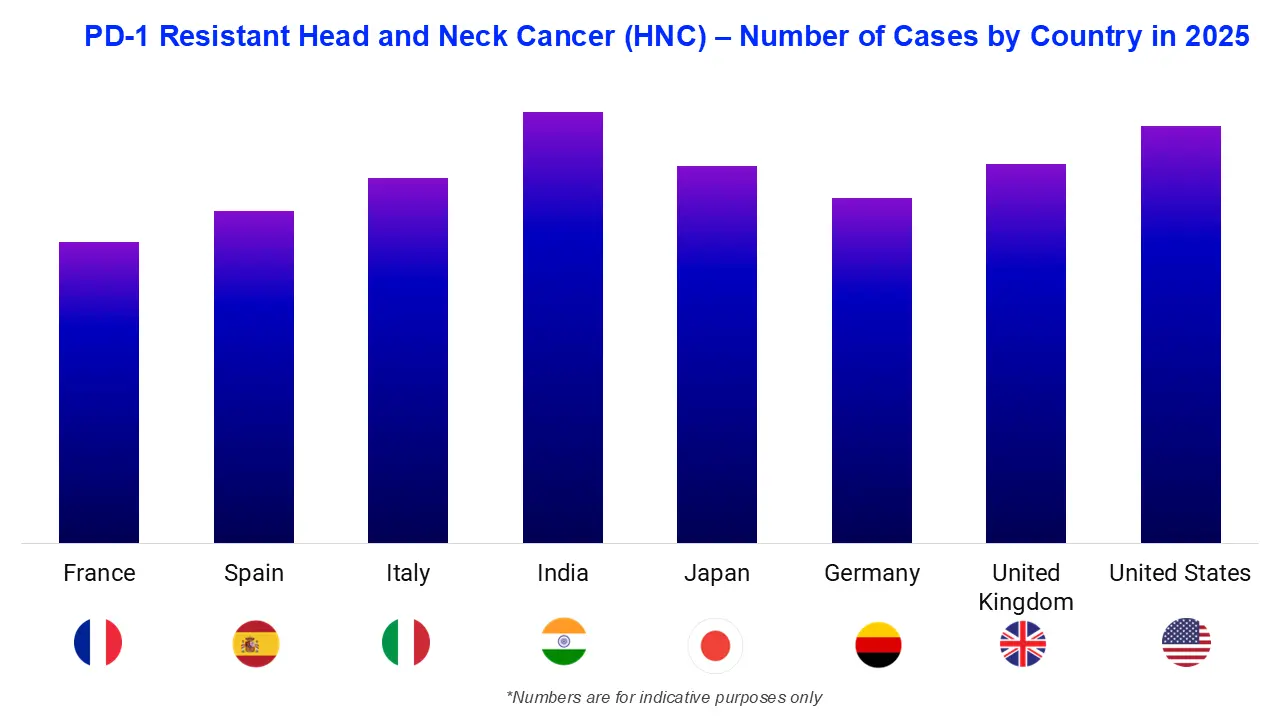
The PD-1 resistant head and neck cancer (HNC) epidemiology data and findings for the region-specific countries are also provided in the epidemiology section.
|
Country |
Key Insights |
|
United States |
HPV-associated oropharyngeal cancers continue increasing in the United States, expanding recurrent/metastatic immunotherapy-treated HNSCC populations. |
|
Germany |
Germany reports a substantial HNSCC burden associated with tobacco and alcohol exposure, contributing to increasing advanced-stage recurrent disease populations. |
|
France |
France demonstrates elevated HNSCC incidence among males, primarily linked with smoking and alcohol-related carcinogenic exposure patterns. |
|
Italy |
Italy reports increasing HPV-positive oropharyngeal cancer burden, contributing to evolving immunotherapy utilization in recurrent/metastatic HNSCC management. |
|
Spain |
Spain remains among European countries with a considerable HNSCC burden associated with tobacco smoking and alcohol consumption prevalence. |
|
United Kingdom |
The United Kingdom demonstrates an increasing incidence of HPV-driven oropharyngeal cancers, particularly among middle-aged male populations. 13,800 annual HNC cases; rising incidence particularly in HPV-associated oropharyngeal cancers contributing to immunotherapy-eligible population. |
|
Japan |
In Japan, smoking-related HNSCC remains predominant, although immunotherapy adoption has expanded management of recurrent/metastatic disease. |
|
India |
India represents one of the world’s largest HNSCC patient pools due to widespread tobacco and betel quid consumption driving oral cavity cancer burden. |
The biggest gap is that PD-1-resistant HNC is not directly captured in cancer registries, so patient counts remain modeled rather than reported. Significant uncertainty exists around country-wise resistant burden, post-PD-1 survival, treatment sequencing, and biomarker-defined non-responder groups.
The strongest opportunity is building real-world datasets that connect HNC diagnosis, recurrent/metastatic status, PD-1 exposure, progression, salvage therapy, HPV status, PD-L1 CPS, and survival. This would help separate true resistant patients from broader HNC cases and improve market sizing.
Significant growth is expected in post-PD-1 treatment pathways, especially salvage combinations, resistance biomarkers, ctDNA monitoring, and molecular profiling. As PD-1 use expands in recurrent/metastatic HNSCC, demand will increase for tools that identify resistance earlier and guide therapy selection.
Treatment approaches for PD-1 resistant head and neck cancer are increasingly focused on overcoming immune escape mechanisms and improving response durability in advanced disease settings. Current strategies include combination immunotherapies, targeted agents, and novel checkpoint modulation approaches for patients with immunotherapy-resistant HNC. A Phase Ib/II clinical trial (NCT05944237) is evaluating HTL0039732, an EP4 antagonist, in combination with atezolizumab across advanced solid tumors including head and neck squamous cell carcinoma. The study is expected to be completed in 2027 and aims to improve antitumor immune response in treatment-refractory patients.
Head and Neck Cancer Drug Pipeline Analysis Report
Recurrent or Metastatic Head and Neck Cancer Pipeline Analysis Report


Upto 15% Off
USD
$1999 $1799
$2999 $2699
$4399 $3739
$5799 $4929


*While we strive to always give you current and accurate information, the numbers depicted on the website are indicative and may differ from the actual numbers in the main report. At Expert Market Research, we aim to bring you the latest insights and trends in the market. Using our analyses and forecasts, stakeholders can understand the market dynamics, navigate challenges, and capitalize on opportunities to make data-driven strategic decisions.*
Explore our key highlights of the report and gain a concise overview of key findings, trends, and actionable insights that will empower your strategic decisions.
|
Report Features |
Details |
|
Base Year |
2025 |
|
Historical Period |
2019-2025 |
|
Forecast Period |
2026-2035 |
|
Epidemiology Statistics Provided |
|
|
Segmentation Provided |
|
|
Geographies Covered |
|
Datasheet
One User
USD 1,999
USD 1,799
tax inclusive*
Single User License
One User
USD 2,999
USD 2,699
tax inclusive*
Five User License
Five User
USD 4,399
USD 3,739
tax inclusive*
Corporate License
Unlimited Users
USD 5,799
USD 4,929
tax inclusive*
*Please note that the prices mentioned below are starting prices for each bundle type. Kindly contact our team for further details.*
Flash Bundle
Small Business Bundle
Growth Bundle
Enterprise Bundle
*Please note that the prices mentioned below are starting prices for each bundle type. Kindly contact our team for further details.*
Flash Bundle
Number of Reports: 3
20%
tax inclusive*
Small Business Bundle
Number of Reports: 5
25%
tax inclusive*
Growth Bundle
Number of Reports: 8
30%
tax inclusive*
Enterprise Bundle
Number of Reports: 10
35%
tax inclusive*
How To Order

Select License Type
Choose the right license for your needs and access rights.

Click on ‘Buy Now’
Add the report to your cart with one click and proceed to register.

Select Mode of Payment
Choose a payment option for a secure checkout. You will be redirected accordingly.
Strategic Solutions for Informed Decision-Making
Gain insights to stay ahead and seize opportunities.

Get insights & trends for a competitive edge.

Track prices with detailed trend reports.

Analyse trade data for supply chain insights.

Leverage cost reports for smart savings

Enhance supply chain with partnerships.

Connect For More Information
Our expert team of analysts will offer full support and resolve any queries regarding the report, before and after the purchase.
Our expert team of analysts will offer full support and resolve any queries regarding the report, before and after the purchase.
We employ meticulous research methods, blending advanced analytics and expert insights to deliver accurate, actionable industry intelligence, staying ahead of competitors.
Our skilled analysts offer unparalleled competitive advantage with detailed insights on current and emerging markets, ensuring your strategic edge.
We offer an in-depth yet simplified presentation of industry insights and analysis to meet your specific requirements effectively.




