

Consumer Insights
Uncover trends and behaviors shaping consumer choices today
Procurement Insights
Optimize your sourcing strategy with key market data
Industry Stats
Stay ahead with the latest trends and market analysis.
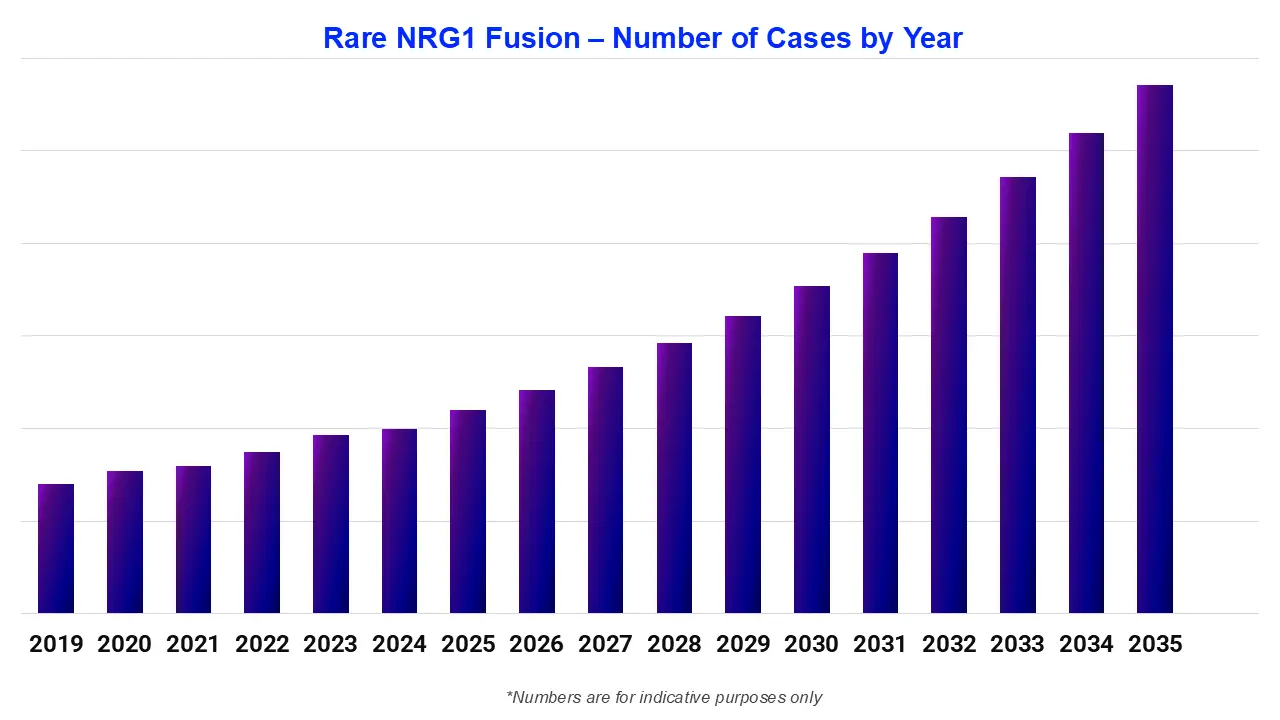
Rare NRG1 fusion is an uncommon oncogenic alteration with a global prevalence of approximately 0.2% in solid tumors and 0.19–0.27% in non-small cell lung cancer, according to J Rodon et al., 2025. Higher rates up to 0.8% are reported in RNA-based cohorts, as per Breno Jeha Araújo et al., 2026. As per rare NRG1 fusion epidemiology forecast by Expert Market Research, prevalence is expected to remain rare but clinically significant due to its therapeutic relevance as an oncogenic driver.
Base Year
Historical Period
Forecast Period
Read more about this report - REQUEST FREE SAMPLE COPY IN PDF
Expert Market Research's “Rare NRG1 Fusion Epidemiology Forecast Report 2026-2035” offers comprehensive information on the prevalence and demographics of rare NRG1 fusion. It projects the future incidence and prevalence rates of rare NRG1 fusion cases across various populations. The study covers age, gender, and type as major determinants of the rare NRG1 fusion population. The report highlights patterns in the prevalence of rare NRG1 fusion over time and projects future trends based on multiple variables.
The report provides a comprehensive overview of the disease, as well as historical and projected data on the epidemiology of rare NRG1 fusion in the 8 major markets.
Regions Covered
Rare NRG1 fusion is a molecularly defined cancer subtype characterized by gene rearrangements involving the NRG1 gene, leading to aberrant activation of the ERBB signaling pathway. It occurs most commonly in non-small cell lung cancer and invasive mucinous adenocarcinoma. The alteration functions as a gene fusion that drives uncontrolled cellular proliferation through ERBB3/ERBB4 activation. According to clinical studies, prevalence ranges from 0.2% to 0.8%, depending on sequencing methodology. It is more frequently observed in female, non-smoking patients and is associated with aggressive disease biology and poor prognosis when untreated.
|
Parameter |
Insight |
|
Largest Patient Pool |
United States |
|
Fastest Growing Region |
India |
|
High-Risk Population |
Female Non-Smokers |
|
Key Diagnostic Method |
RNA-NGS |
|
Major Risk Factor |
Gene Fusion |
|
Major gap in the market |
Underdiagnosis |
The rare NRG1 fusion epidemiology division offers information on the patient pool from history to the present as well as the projected trend for each of the 8 major markets. Expert Market Research provides both current and predicted trends for the rare NRG1 fusion epidemiology scenario by examining a wide range of studies. Additionally, the report covers the diagnosed patient pool for rare NRG1 fusion and their trends. The data is broken down into specific categories, such as total prevalent cases in males and females, and total diagnosed cases across different age groups and patient pools.
|
Epidemiology Segment |
Key Insights |
|
Diagnosed Prevalent Cases of the Disease |
According to Breno Jeha Araújo et al., 2026, NRG1 fusions were identified in 12 of 1,536 NSCLC patients (0.8%), which is higher than historical DNA-only estimates of 0.2–0.3% reported by J Rodon et al., 2025. This indicates that RNA-based sequencing significantly improves detection accuracy and reveals previously underdiagnosed cases. |
|
Gender-Specific Cases of the Disease |
As per Breno Jeha Araújo et al., 2026, 83% of patients were female, indicating strong gender enrichment. According to study observations, this aligns with the high prevalence of invasive mucinous adenocarcinoma in female NSCLC patients, suggesting a biologically driven gender bias in fusion occurrence. |
|
Age-Specific Cases of the Disease |
According to Breno Jeha Araújo et al., 2026, the median age was 66 years, indicating that Rare NRG1 Fusion primarily affects older adults. As per clinical interpretation, this reflects accumulation of somatic genomic alterations over time in lung cancer development. |
|
Ethnicity-Wise Cases of the Disease |
As per J Rodon et al., 2025, NRG1 fusions have been reported across multiple tumor types globally including lung, breast, and cholangiocarcinoma. |
|
Mortality and Survival Analysis of the Disease |
According to Breno Jeha Araújo et al., 2026, median overall survival in stage IV patients was 7.9 months. As per study findings, poor survival outcomes were associated with lack of access to HER2–HER3–directed therapy and limited treatment response to conventional regimens. |
|
Disease Type |
Prevalence |
|
CD74–NRG1 Fusion |
According to Shui Xiang et al., 2025, CD74 is the most common fusion partner, accounting for 29.3% of cases across NRG1 fusion-positive tumors. |
|
SLC3A2–NRG1 Fusion |
As per Breno Jeha Araújo et al., 2026, SLC3A2 is a frequent fusion partner (n = 3 cases), commonly observed in NSCLC molecular profiling datasets. |
|
Other Fusion Partners (WRN, LIPE, VAMP2, SDC4) |
According to Breno Jeha Araújo et al., 2026, these were observed as single-case events, reflecting molecular heterogeneity of NRG1 fusion tumors. |
|
Overall Fusion Landscape |
As per Shui Xiang et al., 2025, a total of 36 fusion partners have been identified across cancers, indicating high genomic diversity. |
Read more about this report - REQUEST FREE SAMPLE COPY IN PDF
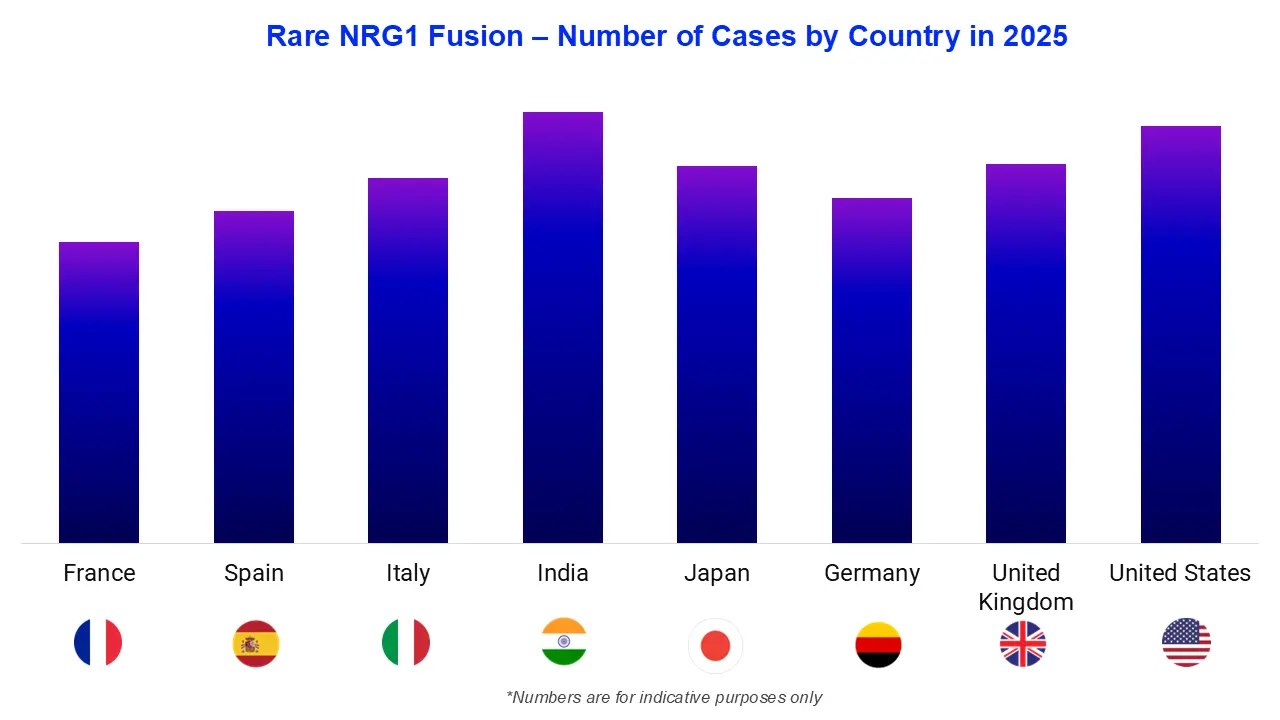
The rare NRG1 fusion epidemiology data and findings for the United States, Germany, Spain, Italy, France, the United Kingdom, Japan, and India are also provided in the epidemiology section.
|
Country |
Key Insights |
|
United States |
NRG1 fusion is a rare oncogenic alteration in NSCLC (~0.2–0.3%, according to J Rodon et al., 2025). The United States shows relatively higher identification due to extensive use of large-scale genomic profiling platforms, leading to better recognition of rare fusion-driven tumors in clinical practice. |
|
Germany |
In Germany, NRG1 fusion cases are infrequent and mainly detected through advanced molecular testing in lung cancer patients. The country benefits from structured oncology diagnostics, supporting identification of rare genomic drivers in specialized cancer centers. |
|
France |
France reports low but consistent detection of NRG1 fusion in NSCLC. Identification is primarily linked to increasing adoption of precision oncology workflows and broader use of molecular profiling in thoracic oncology units. |
|
Italy |
Italy shows frequency detection patterns, with NRG1 fusion mostly identified in adenocarcinoma subtypes of lung cancer through targeted or comprehensive genomic testing platforms. |
|
Spain |
Spain demonstrates gradual improvement in detection due to expanding next-generation sequencing access, though overall occurrence remains rare and primarily limited to advanced NSCLC cases. |
|
United Kingdom |
The United Kingdom shows rare occurrence patterns, with most cases identified through centralized molecular testing programs supporting precision oncology and biomarker-driven treatment selection. |
|
Japan |
Japan has reported low-frequency NRG1 fusion detection, with higher likelihood of identification in non-smoking adenocarcinoma patients due to stronger integration of RNA-based sequencing approaches. |
|
India |
In India, epidemiology is limited due to low widespread RNA-based sequencing. As molecular testing expands, detection of rare fusions like NRG1 is expected to increase, aligning with global rarity patterns but currently underdiagnosed in routine settings. |
The Rare NRG1 Fusion landscape presents significant regional disparities in diagnostic capability and therapeutic access. According to published studies, RNA-based sequencing remains unevenly adopted across geographies, leading to underdiagnosis in many regions. As per global evidence from J Rodon et al., 2025 and Breno Jeha Araújo et al., 2026, regions with advanced molecular infrastructure such as North America and parts of Europe demonstrate higher detection rates compared to developing healthcare systems. Emerging growth opportunities are concentrated in Asia-Pacific, Latin America, and South Asia, where expanding next-generation sequencing adoption and precision oncology programs are improving molecular identification. The absence of approved targeted therapies globally further highlights unmet need across all regions, making precision diagnostics expansion the key growth driver.
Treatment of rare NRG1 fusion primarily relies on targeted inhibition of the ERBB signaling pathway. Therapeutic approaches include pan-ERBB inhibitors, HER2/HER3-directed monoclonal antibodies, and investigational agents targeting ligand-receptor binding. The emergence of bispecific antibodies targeting HER2–HER3 heterodimerization has shown clinical promise. Current management also includes chemotherapy and chemoimmunotherapy, though responses remain limited. RNA-based diagnostics guide therapy selection by enabling accurate detection of fusion events. The treatment landscape is evolving toward precision medicine, with a strong focus on targeted therapy to improve outcomes in this rare oncogenic subset.


Upto 15% Off
USD
$2699 $2429
$4299 $3869
$5799 $4949
$6999 $5949


*While we strive to always give you current and accurate information, the numbers depicted on the website are indicative and may differ from the actual numbers in the main report. At Expert Market Research, we aim to bring you the latest insights and trends in the market. Using our analyses and forecasts, stakeholders can understand the market dynamics, navigate challenges, and capitalize on opportunities to make data-driven strategic decisions.*
Explore our key highlights of the report and gain a concise overview of key findings, trends, and actionable insights that will empower your strategic decisions.
|
Report Features |
Details |
|
Base Year |
2025 |
|
Historical Period |
2019-2025 |
|
Forecast Period |
2026-2035 |
|
Epidemiology Statistics Provided |
|
|
Segmentation Provided |
|
|
Geographies Covered |
|
Datasheet
One User
USD 2,699
USD 2,429
tax inclusive*
Single User License
One User
USD 4,299
USD 3,869
tax inclusive*
Five User License
Five User
USD 5,799
USD 4,949
tax inclusive*
Corporate License
Unlimited Users
USD 6,999
USD 5,949
tax inclusive*
*Please note that the prices mentioned below are starting prices for each bundle type. Kindly contact our team for further details.*
Flash Bundle
Small Business Bundle
Growth Bundle
Enterprise Bundle
*Please note that the prices mentioned below are starting prices for each bundle type. Kindly contact our team for further details.*
Flash Bundle
Number of Reports: 3
20%
tax inclusive*
Small Business Bundle
Number of Reports: 5
25%
tax inclusive*
Growth Bundle
Number of Reports: 8
30%
tax inclusive*
Enterprise Bundle
Number of Reports: 10
35%
tax inclusive*
How To Order

Select License Type
Choose the right license for your needs and access rights.

Click on ‘Buy Now’
Add the report to your cart with one click and proceed to register.

Select Mode of Payment
Choose a payment option for a secure checkout. You will be redirected accordingly.
Strategic Solutions for Informed Decision-Making
Gain insights to stay ahead and seize opportunities.

Get insights & trends for a competitive edge.

Track prices with detailed trend reports.

Analyse trade data for supply chain insights.

Leverage cost reports for smart savings

Enhance supply chain with partnerships.

Connect For More Information
Our expert team of analysts will offer full support and resolve any queries regarding the report, before and after the purchase.
Our expert team of analysts will offer full support and resolve any queries regarding the report, before and after the purchase.
We employ meticulous research methods, blending advanced analytics and expert insights to deliver accurate, actionable industry intelligence, staying ahead of competitors.
Our skilled analysts offer unparalleled competitive advantage with detailed insights on current and emerging markets, ensuring your strategic edge.
We offer an in-depth yet simplified presentation of industry insights and analysis to meet your specific requirements effectively.




