

Consumer Insights
Uncover trends and behaviors shaping consumer choices today
Procurement Insights
Optimize your sourcing strategy with key market data
Industry Stats
Stay ahead with the latest trends and market analysis.
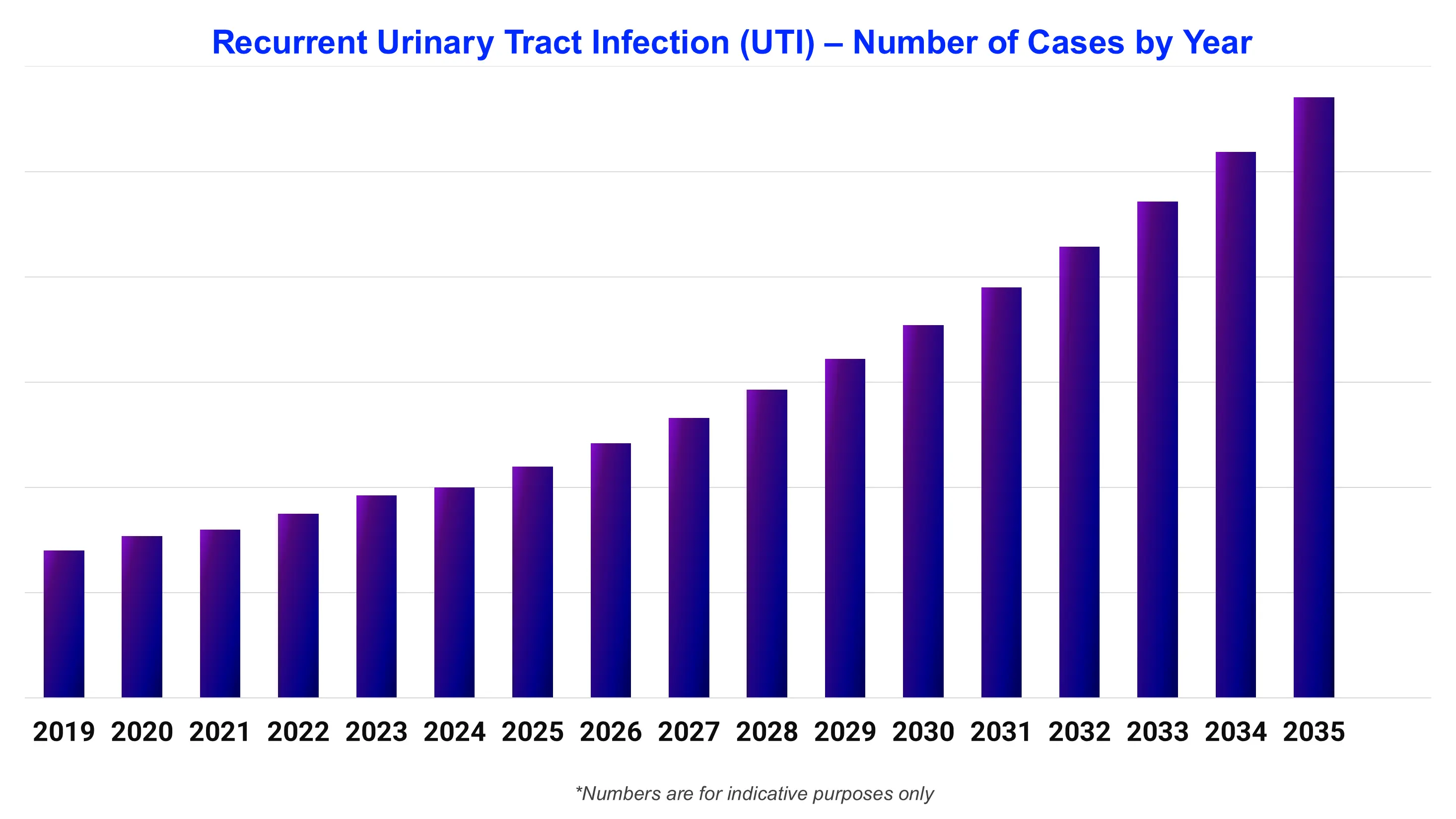
Recurrent urinary tract infection (UTI) refers to repeated episodes of urinary tract infection, representing a significant urological condition. As per Xiepeng Zuo et al. (2025), UTIs affect approximately 1.7% of boys and 8.4% of girls by 7 years of age. According to recurrent urinary tract infection (UTI) epidemiology forecast by Expert Market Research, recurrent UTI remains an important epidemiological concern.
Base Year
Historical Period
Forecast Period
Read more about this report - Request a Free Sample
Expert Market Research's “Recurrent Urinary Tract Infection (UTI) Epidemiology Forecast Report 2026-2035” offers comprehensive information on the prevalence and demographics of recurrent urinary tract infection (UTI). It projects the future incidence and prevalence rates of recurrent urinary tract infection (UTI) cases across various populations. The study covers age, gender, and type as major determinants of the recurrent urinary tract infection (UTI) population. The report highlights patterns in the prevalence of recurrent urinary tract infection (UTI) over time and projects future trends based on multiple variables.
The report provides a comprehensive overview of the disease, as well as historical and projected data on the epidemiology of recurrent urinary tract infection (UTI) in the 8 major markets.
Regions Covered
Recurrent urinary tract infection (UTI) refers to repeated episodes of infection involving the urinary tract, commonly caused by ascending bacterial infection from the periurethral region. It is generally defined as at least two UTIs within six months or at least three within 12 months. Recurrent UTI may involve the lower urinary tract, such as recurrent cystitis, or the upper urinary tract, such as recurrent pyelonephritis. It may also be classified as uncomplicated or complicated depending on underlying anatomical, functional, or systemic risk factors. Recurrent cystitis is the most common clinical presentation.
|
Parameter |
Insight |
|
Largest Patient Pool |
United States |
|
Fastest Growing Country |
India |
|
High-Risk Population |
Women with recurrent infections, older/postmenopausal women, and individuals with diabetes or other comorbidities |
|
Key Diagnostic Method |
Urinalysis and urine culture |
|
Major Risk Factor |
Previous UTI, with additional risks including sexual activity, menopause, diabetes, and certain urinary or behavioral factors |
|
Major gap in the market |
Antimicrobial resistance and inconsistent identification of patients who require preventive management |
The recurrent urinary tract infection (UTI) epidemiology division offers information on the patient pool from history to the present as well as the projected trend for each of the 8 major markets. Expert Market Research provides both current and predicted trends for the recurrent urinary tract infection (UTI) epidemiology scenario by examining a wide range of studies. Additionally, the report covers the diagnosed patient pool for recurrent urinary tract infection (UTI) and their trends. The data is broken down into specific categories, such as total prevalent cases in males and females, and total diagnosed cases across different age groups and patient pools.
|
Epidemiology Segment |
Key Insights |
|
Diagnosed Prevalent Cases of the Disease |
According to Franco Johny V et al., 2025, UTIs account for more than 400 million cases annually worldwide. Approximately 20–30% of patients with UTIs subsequently experience recurrent UTIs. Recurrent UTI is defined as at least two episodes within six months or at least three episodes within 12 months. |
|
Gender-Specific Cases of the Disease |
According to Sapna Thaker et al., 2024, UTIs affect 50–60% of the female population and 20% of males, while recurrent UTI rates of up to 54.2% and 15.7% have been documented among women and men, respectively. Hala Alghoraibi et al., 2023, reported recurrent UTI in 65.2% of their female patient population and 34% of episodes among males. |
|
Age-Specific Cases of the Disease |
According to the 2024 Kaiser Permanente study, recurrent UTI occurred in 14.5% of 374,171 US women; 19.7% were aged 18–27 years and 9.0% were aged ≥78 years. |
|
Ethnicity-Wise Cases of the Disease |
Ethnicity-specific differences have been reported in UTI risk, particularly among pediatric populations. However, comparable ethnicity-specific prevalence estimates for recurrent UTI are limited across the available data. |
|
Mortality and Survival Analysis of the Disease |
The provided data primarily describe recurrence, prevalence, morbidity, and healthcare utilization associated with UTI and recurrent UTI. The reported evidence emphasizes the recurrent burden and associated healthcare impact rather than mortality or survival outcomes. |
|
Disease Type |
Prevalence |
|
Reinfection |
Recurrent urinary tract infections (rUTIs) are medically divided into two main clinical subtypes: reinfection and relapse. Reinfection refers to a subsequent infection occurring after resolution of the previous infection. |
|
Relapse |
Recurrent urinary tract infections (rUTIs) are medically divided into two main clinical subtypes: reinfection and relapse. Relapse refers to recurrence associated with persistence or return of the previous infection. |
Read more about this report - Request a Free Sample
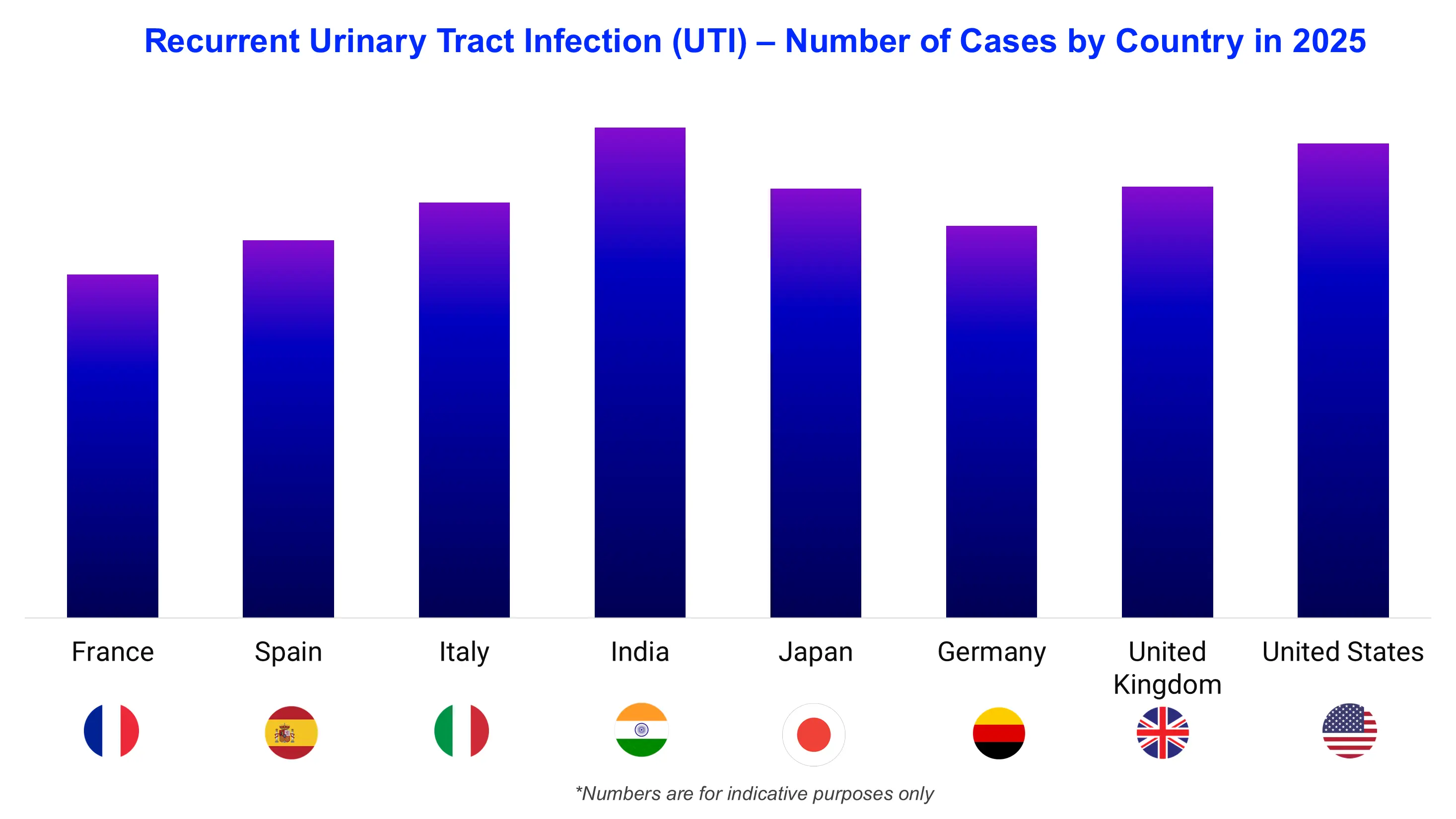
The recurrent urinary tract infection (UTI) epidemiology data and findings for the United States, Germany, Spain, Italy, France, the United Kingdom, Japan, and India are also provided in the epidemiology section.
|
Country |
Key Insights |
|
United States |
According to Hala Alghoraibi et al., 2023, the overall prevalence of uncomplicated UTI in the United States is between 8% and 11%, while prevalence among women older than 65 years is approximately 20%. According to Sapna Thaker et al., 2024, consultations for UTIs in the United States amount to approximately USD 1.6 billion, indicating a substantial healthcare burden associated with urinary infections. |
|
Germany |
According to Axel Krinner et al., 2024, 144,645 uncomplicated UTI cases among 124,971 patients were analyzed in Germany. Of these cases, 35.4% were assigned to the recommended-treatment sub-cohort and 64.6% to the non-recommended-treatment sub-cohort. Most cases were treated by general practitioners (82.3%), followed by gynecologists (13.3%) and urologists (6.8%). |
|
France |
According to Eric Farfour et al., 2022, urinary tract infections are among the most frequent infections caused by Enterobacterales. In France, 3.3% of community-acquired urinary tract infections were reported to be caused by extended-spectrum β-lactamase-producing Enterobacterales. |
|
Italy |
The burden of recurrent UTI is associated with factors including female sex, sexual intercourse, urogenital aging, pelvic organ prolapse, urinary abnormalities, urinary incontinence, menopause, pregnancy, and conditions that promote bacterial persistence. |
|
Spain |
Factors associated with recurrent UTI include female sex, sexual intercourse, urogenital aging, menopause, pregnancy, urinary incontinence, and underlying urologic abnormalities. Reduced water intake, personal hygiene, and urinary habits are also reported factors. |
|
United Kingdom |
Recurrent UTI is associated with female sex and factors including sexual intercourse, menopause, pregnancy, urinary incontinence, urologic abnormalities, urinary stones, bladder outlet obstruction, and long-term urinary catheterization. |
|
Japan |
Factors associated with recurrent UTI include female sex, sexual intercourse, pregnancy, menopause, urinary incontinence, urinary stones, bladder outlet obstruction, neurogenic bladder, diabetes, and long-term indwelling urethral or ureteral catheters. |
|
India |
According to Franco Johny V et al., 2025, a cross-sectional study among 417 female staff of reproductive age in a private medical college in central Kerala reported a recurrent UTI prevalence of 22.30% (95% confidence interval: 18.3–26.3%). According to Aarushi Mavi et al., 2024, UTI prevalence among Indian women has been reported to range from 3.14% to 19.87%. |
A major epidemiological gap is the need for more standardized, population-level surveillance of recurrent UTI across the United States, Germany, France, Italy, Spain, the United Kingdom, Japan, and India. Differences in diagnostic practices and definitions can limit direct comparison of recurrence rates. Another important opportunity involves antimicrobial-resistance surveillance and antibiotic stewardship, particularly in settings with substantial resistance among uropathogens. In India, community studies have documented high levels of extended-spectrum beta-lactamase production among uropathogenic organisms. Improved recurrence-risk identification, culture-guided treatment, and non-antibiotic prevention strategies could support more targeted disease management.
Recurrent urinary tract infection (UTI) treatment combines management of the acute infection with strategies to reduce future episodes. Acute infections are treated with antibiotics selected according to clinical presentation, urine culture results, local resistance patterns, and patient-specific factors. Preventive measures may include increased fluid intake, behavioral modifications, and addressing modifiable risk factors. For patients with frequent recurrences, clinicians may consider continuous low-dose antibiotic prophylaxis, post-coital prophylaxis, or patient-initiated therapy. In postmenopausal women, vaginal estrogen may also be considered when appropriate. Antibiotic prophylaxis requires careful assessment because repeated antibiotic exposure can contribute to antimicrobial resistance.
Uncomplicated Urinary Tract Infection Epidemiology


Upto 15% Off
USD
$2699 $2429
$4299 $3869
$5799 $4949
$6999 $5949


*While we strive to always give you current and accurate information, the numbers depicted on the website are indicative and may differ from the actual numbers in the main report. At Expert Market Research, we aim to bring you the latest insights and trends in the market. Using our analyses and forecasts, stakeholders can understand the market dynamics, navigate challenges, and capitalize on opportunities to make data-driven strategic decisions.*
Explore our key highlights of the report and gain a concise overview of key findings, trends, and actionable insights that will empower your strategic decisions.
|
Report Features |
Details |
|
Base Year |
2025 |
|
Historical Period |
2019-2025 |
|
Forecast Period |
2026-2035 |
|
Epidemiology Statistics Provided |
|
|
Segmentation Provided |
|
|
Geographies Covered |
|
Datasheet
One User
USD 2,699
USD 2,429
tax inclusive*
Single User License
One User
USD 4,299
USD 3,869
tax inclusive*
Five User License
Five User
USD 5,799
USD 4,949
tax inclusive*
Corporate License
Unlimited Users
USD 6,999
USD 5,949
tax inclusive*
*Please note that the prices mentioned below are starting prices for each bundle type. Kindly contact our team for further details.*
Flash Bundle
Small Business Bundle
Growth Bundle
Enterprise Bundle
*Please note that the prices mentioned below are starting prices for each bundle type. Kindly contact our team for further details.*
Flash Bundle
Number of Reports: 3
20%
tax inclusive*
Small Business Bundle
Number of Reports: 5
25%
tax inclusive*
Growth Bundle
Number of Reports: 8
30%
tax inclusive*
Enterprise Bundle
Number of Reports: 10
35%
tax inclusive*
How To Order

Select License Type
Choose the right license for your needs and access rights.

Click on ‘Buy Now’
Add the report to your cart with one click and proceed to register.

Select Mode of Payment
Choose a payment option for a secure checkout. You will be redirected accordingly.
Strategic Solutions for Informed Decision-Making
Gain insights to stay ahead and seize opportunities.

Get insights & trends for a competitive edge.

Track prices with detailed trend reports.

Analyse trade data for supply chain insights.

Leverage cost reports for smart savings

Enhance supply chain with partnerships.

Connect For More Information
Our expert team of analysts will offer full support and resolve any queries regarding the report, before and after the purchase.
Our expert team of analysts will offer full support and resolve any queries regarding the report, before and after the purchase.
We employ meticulous research methods, blending advanced analytics and expert insights to deliver accurate, actionable industry intelligence, staying ahead of competitors.
Our skilled analysts offer unparalleled competitive advantage with detailed insights on current and emerging markets, ensuring your strategic edge.
We offer an in-depth yet simplified presentation of industry insights and analysis to meet your specific requirements effectively.




