

Consumer Insights
Uncover trends and behaviors shaping consumer choices today
Procurement Insights
Optimize your sourcing strategy with key market data
Industry Stats
Stay ahead with the latest trends and market analysis.
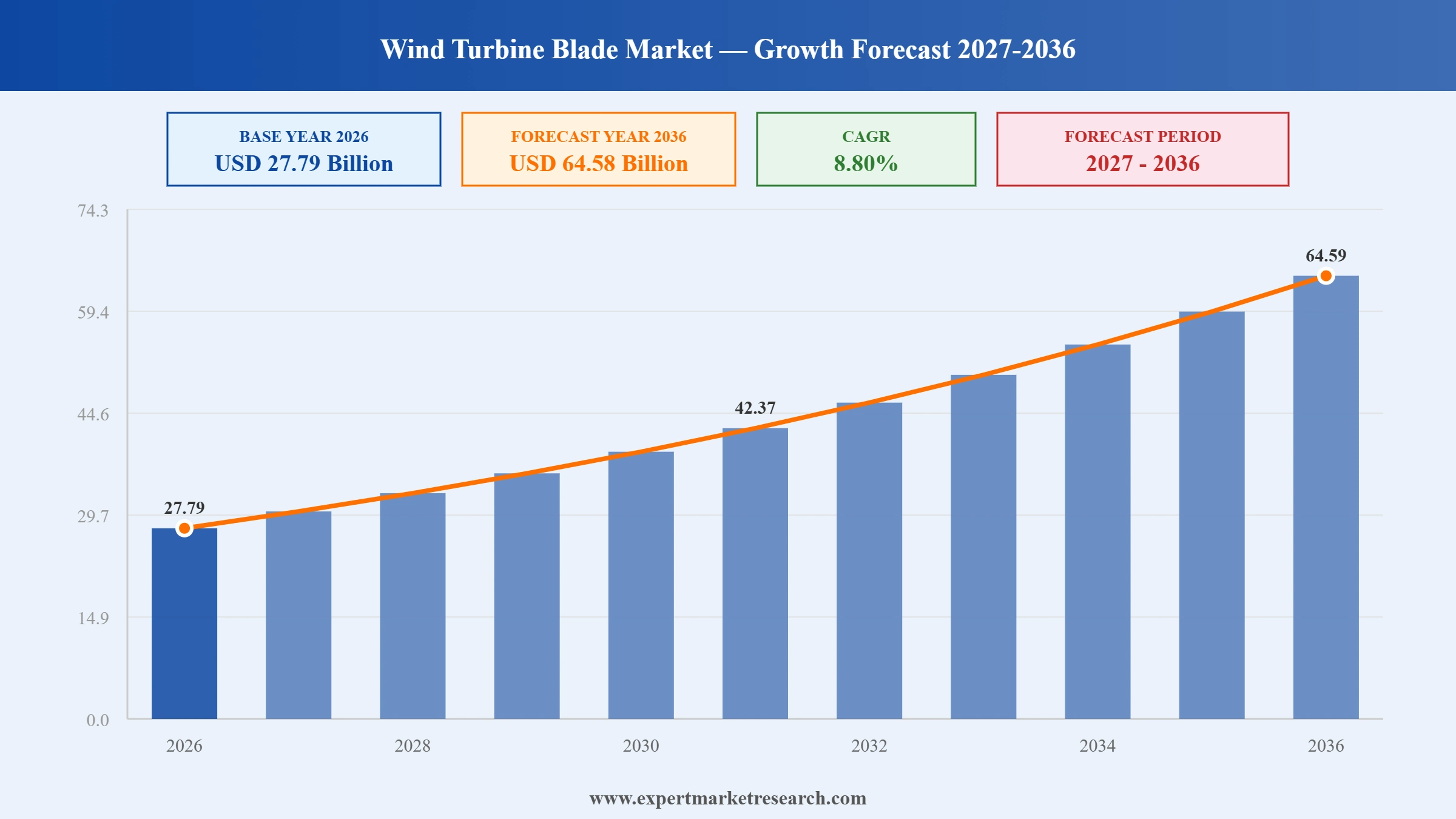
The wind turbine blade market was valued at USD 25.54 Billion in 2025. The market is expected to grow at a CAGR of 8.80% during the forecast period of 2026-2035 to reach a value of USD 59.36 Billion by 2035. Rising offshore installations, the shift toward larger rotor platforms, growing adoption of carbon fiber reinforcement, and supportive government auction frameworks are collectively driving the market growth.
The current wind turbine blade market dynamics reflect record installation volumes and a rapid shift toward larger, higher capacity turbines that require longer and more technically demanding blades. In April 2026, the Global Wind Energy Council reported that global wind additions reached 165 GW in 2025, a 40% rise on the previous record year, lifting cumulative capacity to 1,299 GW. This expansion is sustaining order books for blade manufacturers, encouraging investment in larger moulds and automated production lines, and strengthening the case for factories located close to ports and major project clusters worldwide.
The overall wind turbine blade industry dynamics through 2025 and 2026 are also being shaped by emerging economies scaling domestic manufacturing capacity alongside mature markets modernising ageing fleets. In April 2026, India's Ministry of New and Renewable Energy reported a record 6.05 GW of wind capacity added in FY2025-26, up 46% on the previous year, taking cumulative capacity beyond 56 GW. Such momentum is widening the addressable base for domestic blade suppliers, while rising attention to recyclable materials, local content requirements, and supply chain resilience is influencing sourcing decisions across regions.
Read more about this report - Request a Free Sample
|
Wind Turbine Blade Market Report Summary |
Description |
Value |
|
Base Year |
USD Billion |
2025 |
|
Historical Period |
USD Billion |
2019-2025 |
|
Forecast Period |
USD Billion |
2026-2035 |
|
Market Size 2025 |
USD Billion |
25.54 |
|
Market Size 2035 |
USD Billion |
59.36 |
|
CAGR 2019-2025 |
Percentage |
XX% |
|
CAGR 2026-2035 |
Percentage |
8.80% |
|
CAGR 2026-2035 - Market by Region |
Asia Pacific |
9.7% |
|
CAGR 2026-2035 - Market by Material |
Carbon Fiber |
10.4% |
|
CAGR 2026-2035 - Market by Application |
Offshore |
11.2% |
|
2025 Market Share by Region |
Asia Pacific |
58.4% |
The wind turbine blade market is being reshaped by ultra-long offshore blade development, growing adoption of carbon fiber spar caps, and manufacturer investment in recyclable and localised production. Record installations across Asia Pacific and expanding offshore auctions in Europe are further reshaping the competitive landscape.
TPI Composites emerged from Chapter 11 under new owner Energy Capital Partners with no debt, continuing blade manufacturing at its Newton, Iowa and Juarez, Mexico plants under chief executive Bill Siwek. The restructuring leaves the supplier with a cleaner balance sheet to serve turbine customers. Independent blade makers can leverage this by pairing flexible capacity with long term supply agreements.
Siemens Gamesa shipped the first 115-meter blades from it expanded Le Havre plant to the Thor offshore wind farm in Denmark, where 63 blades are being produced for 72 SG 14-236 DD turbines. The port-based location eases transport of oversized components. Other blade makers can leverage this by locating ultra-long blade lines directly beside the deep-water ports.
Nordex began production at its rotor blade plant in the Menemen free trade zone near Izmir, employing about 1,200 people with capacity for up to 1,200 blades annually. The site supplies N163 and N175 turbines, serving Turkish tenders first and European customers later. Turbine makers can leverage this by localising blade output to meet domestic content rules and cut costs.
Mingyang Smart Energy introduced a fully recyclable carbon fiber composite blade longer than 110 meters, whose resin can be chemically separated under mild conditions to recover the fibers. The design addresses disposal liabilities that increasingly weigh on owners of ageing fleets. Other manufacturers can leverage this by adopting recyclable resin systems to differentiate offshore tender bids and meet circularity requirements.
Blade makers are steadily moving from glass to carbon fiber spar caps because lighter, stiffer load bearing structures allow longer blades without proportionate weight and cost penalties. Supply chains for pultruded carbon planks are being localised near blade plants to secure volume and shorten lead times. For example, in September 2026, Exel Composites and Suzlon signed a multi-year agreement for pultruded carbon fiber planks through March 2029, worth over EUR 100 million reflecting growing reliance on domestically produced composite inputs.
Wind blade recycling is steadily shifting from laboratory trials toward pilot and commercial facilities as ageing fleets raise end of life volumes and owners seek disposal routes beyond landfill. Commercial success depends on reaching throughput thresholds that justify processing plants. For example, in September 2025, Gjenkraft launched what it calls the world's first commercial recycling plant dedicated to wind blades at Hoyanger, Norway, using pyrolysis technology, with 2,800 tonnes annual capacity and plans to scale toward 100,000 tonnes by 2035.
Offshore developers are specifying ever larger turbines to lower cost per megawatt hour, forcing blade designers to adopt longer, slender structures and advanced materials. These designs demand larger moulds, bigger factories, and specialised installation vessels across the supply chain. For example, in January 2026, Goldwind and China Three Gorges installed the world's first 20 MW offshore turbine off southern Fujian, fitted with 147-meter blades and a 300-meter rotor, with the project expected to supply roughly 44,000 households annually.
Original equipment manufacturers are building blade plants close to project sites to satisfy local content rules, reduce transport costs, and secure supply for national tenders. Regional factories also create local jobs that governments increasingly expect in exchange for market access. For example, in May 2026, Enercon announced a EUR 50 million blade factory at Bergama in western Turkiye, planning about 700 direct jobs and up to 150 blade sets annually in its first phase for its E-175 EP5 E2 turbine.
Large government offshore auctions are giving manufacturers multi-year visibility, encouraging investment in dedicated offshore blade lines and quayside finishing. Long dated contracts for difference reduce revenue uncertainty for developers and their suppliers alike, easing financing decisions across projects. For example, in January 2026, the United Kingdom awarded 8.4 GW in its seventh allocation round, with RWE securing 6.9 GW and SSE winning 1.4 GW at Berwick Bank B, including 200 MW of floating wind at a much higher strike price.
The Expert Market Research's report titled "Wind Turbine Blade Market Report and Forecast 2026-2035" offers a detailed analysis of the market based on the following segments:
Market Breakup by Material
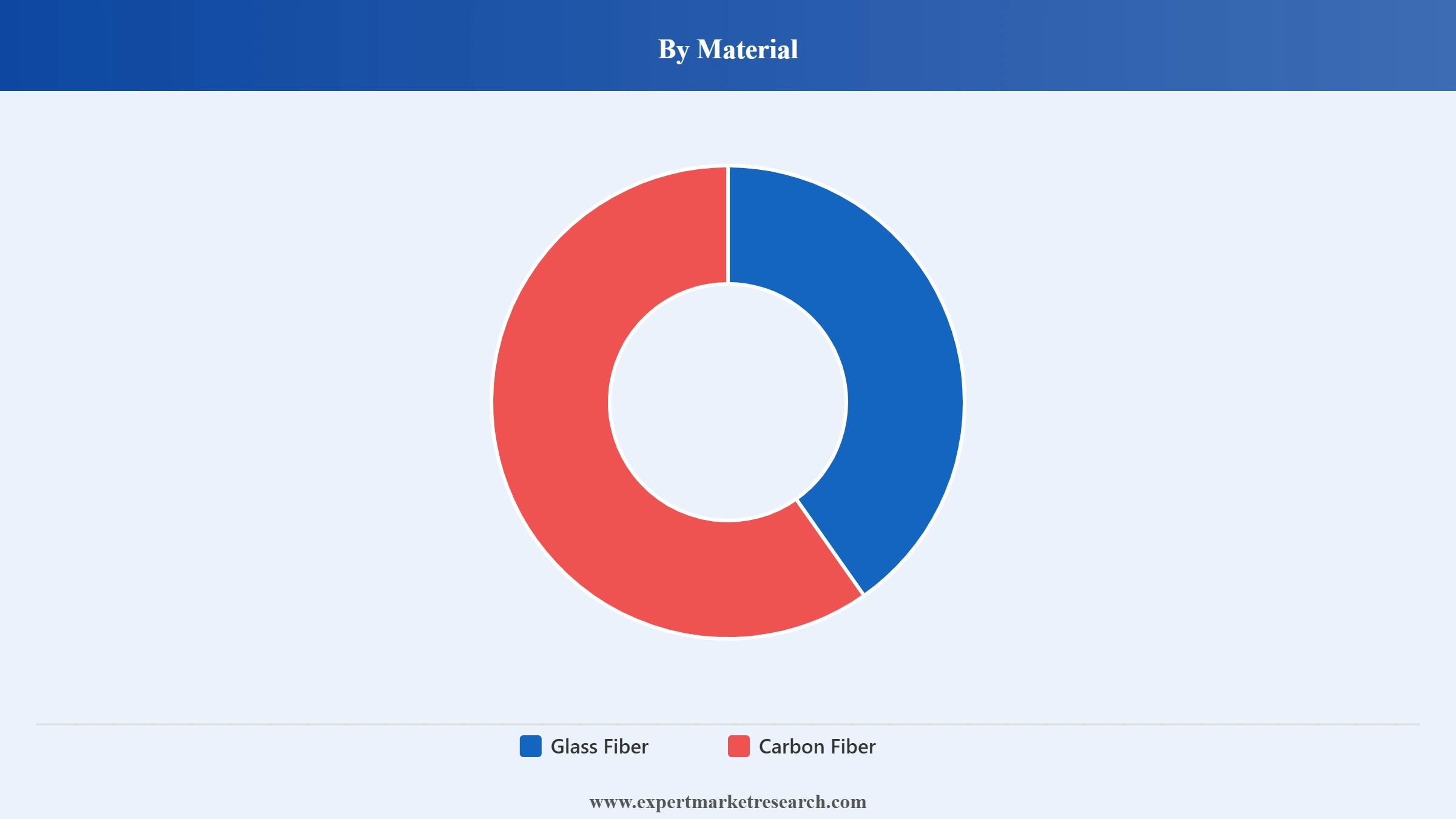
Key Insight: Glass fiber accounts for the largest share of the wind turbine blade market by material, reflecting its low cost, mature infusion processing, and long record of reliable performance in blades of most sizes. Carbon fiber is the fastest-growing material as longer blades require stiffer, lighter spar caps, while other materials such as thermoplastics and bio-based resins remain small but gain interest for recyclability. Demonstrating this shift, in June 2026, Sinoma Science and Technology rolled off its first over 100-meter onshore blade, using new generation carbon fiber pultruded plates to raise compressive strength and cut weight.
Market Breakup by Blade Length
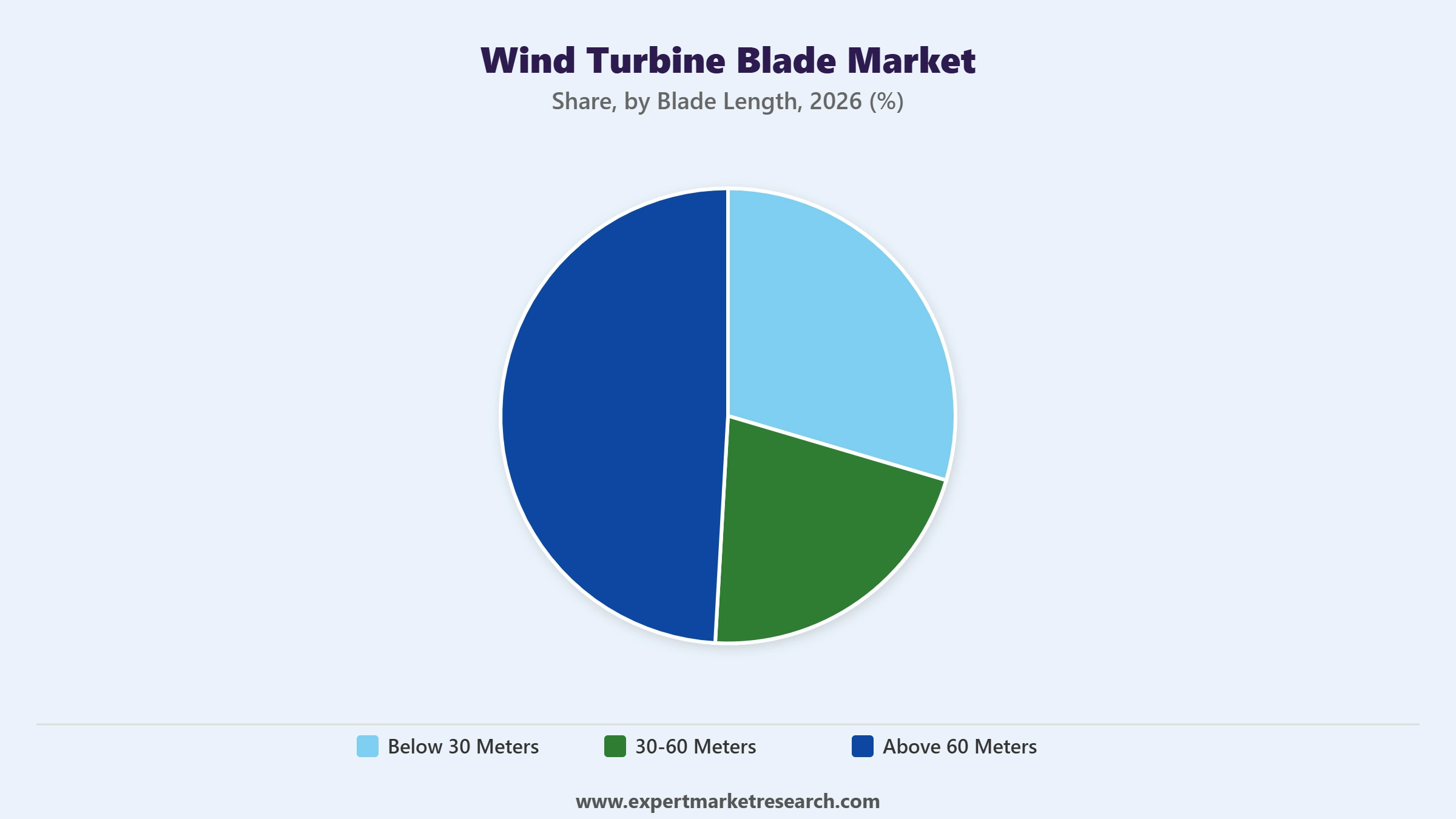
Key Insight: Blades above 60 meters dominate the market by blade length and are growing fastest, as developers adopt higher capacity onshore and offshore turbines. The 30-60 meters segment retains steady demand from smaller onshore turbines in emerging markets, while blades below 30 meters serve distributed and small-scale installations with modest growth. Reflecting this length race, in September 2025, Dongfang Electric installed a 26 MW offshore test turbine at Dongying, Shandong, fitted with 153-meter blades and a 310-meter rotor.
Market Breakup by Application
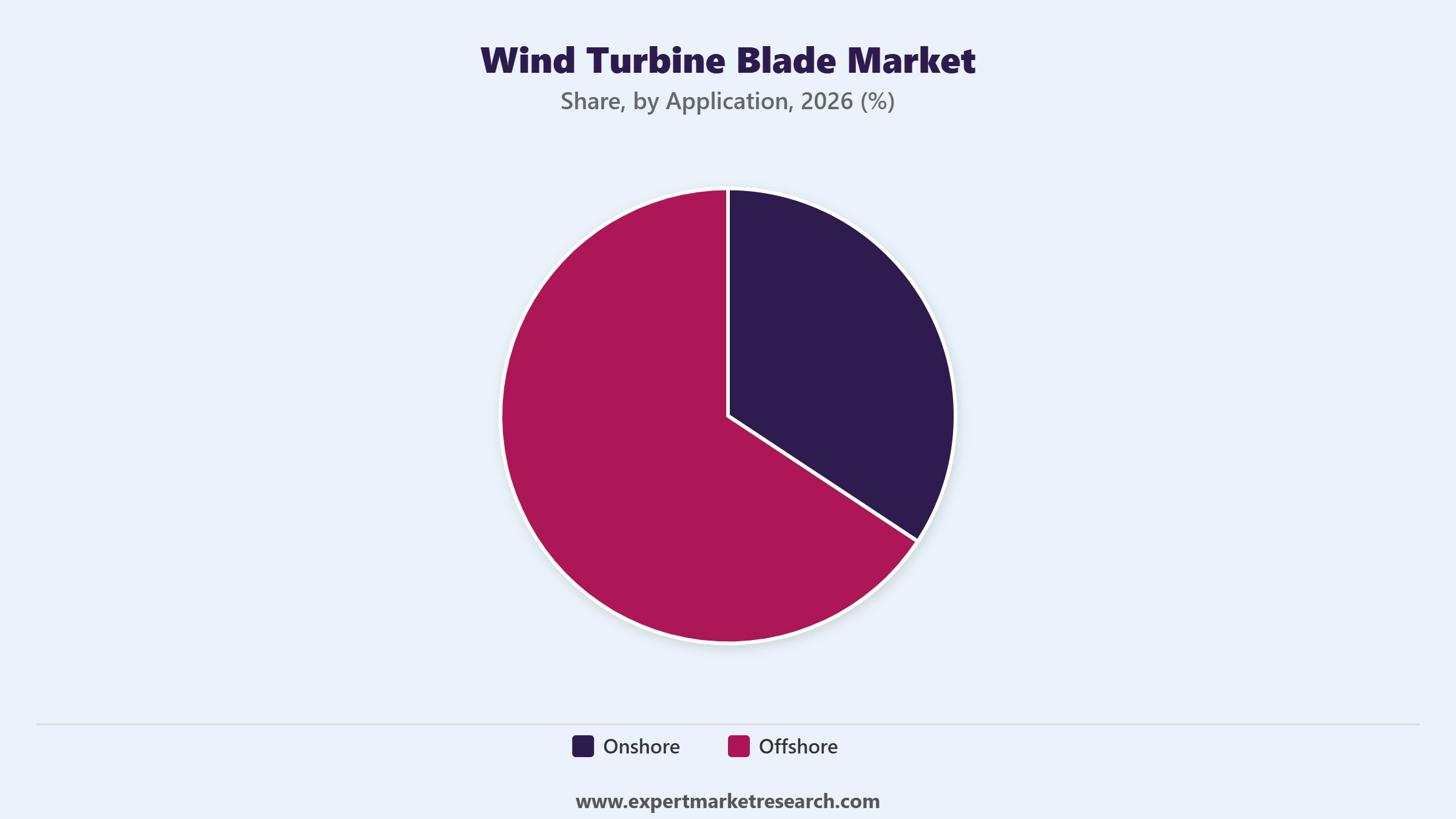
Key Insight: Onshore dominates the wind turbine blade market by application, supported by a larger installed base, lower project costs, and rapid deployment in China, India, and the United States. Offshore is the faster-growing application as turbine ratings and auction volumes rise. Illustrating offshore scale, in August 2026, Vattenfall won Denmark's tender for two new offshore wind sites totalling at least 1.8 GW, expanding the pipeline for offshore blade suppliers.
Market Breakup by Region
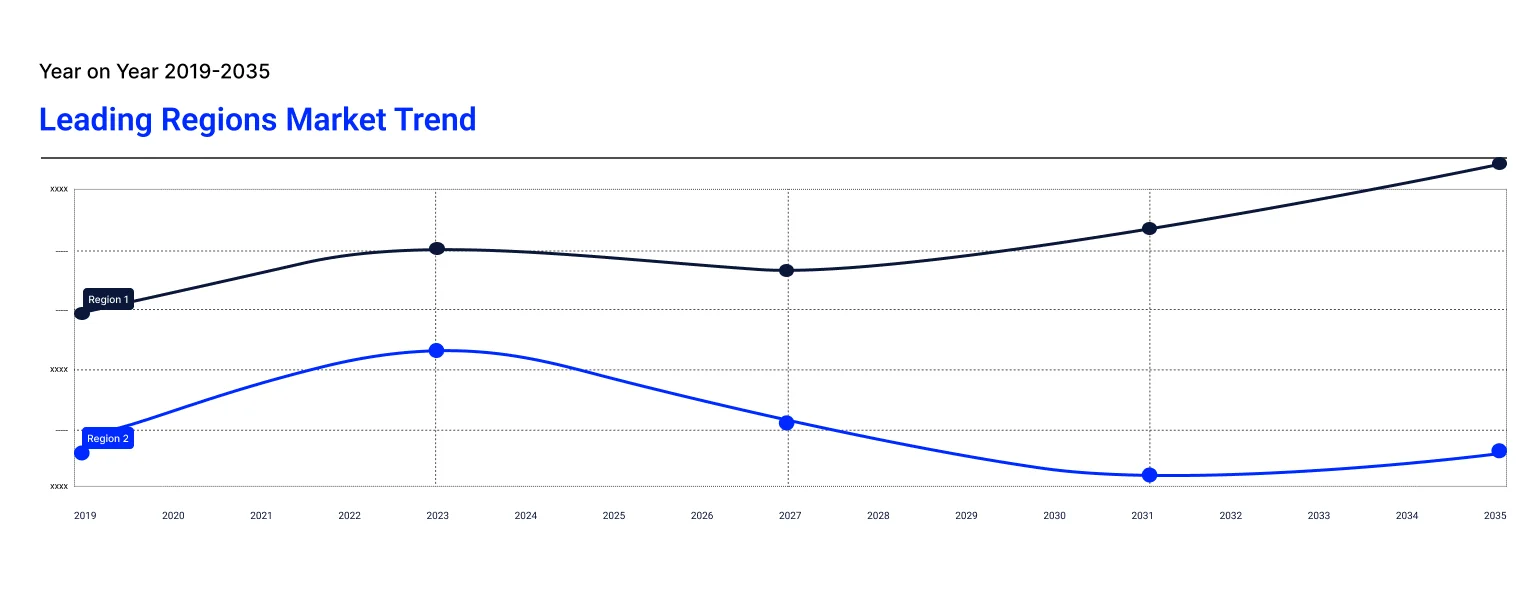
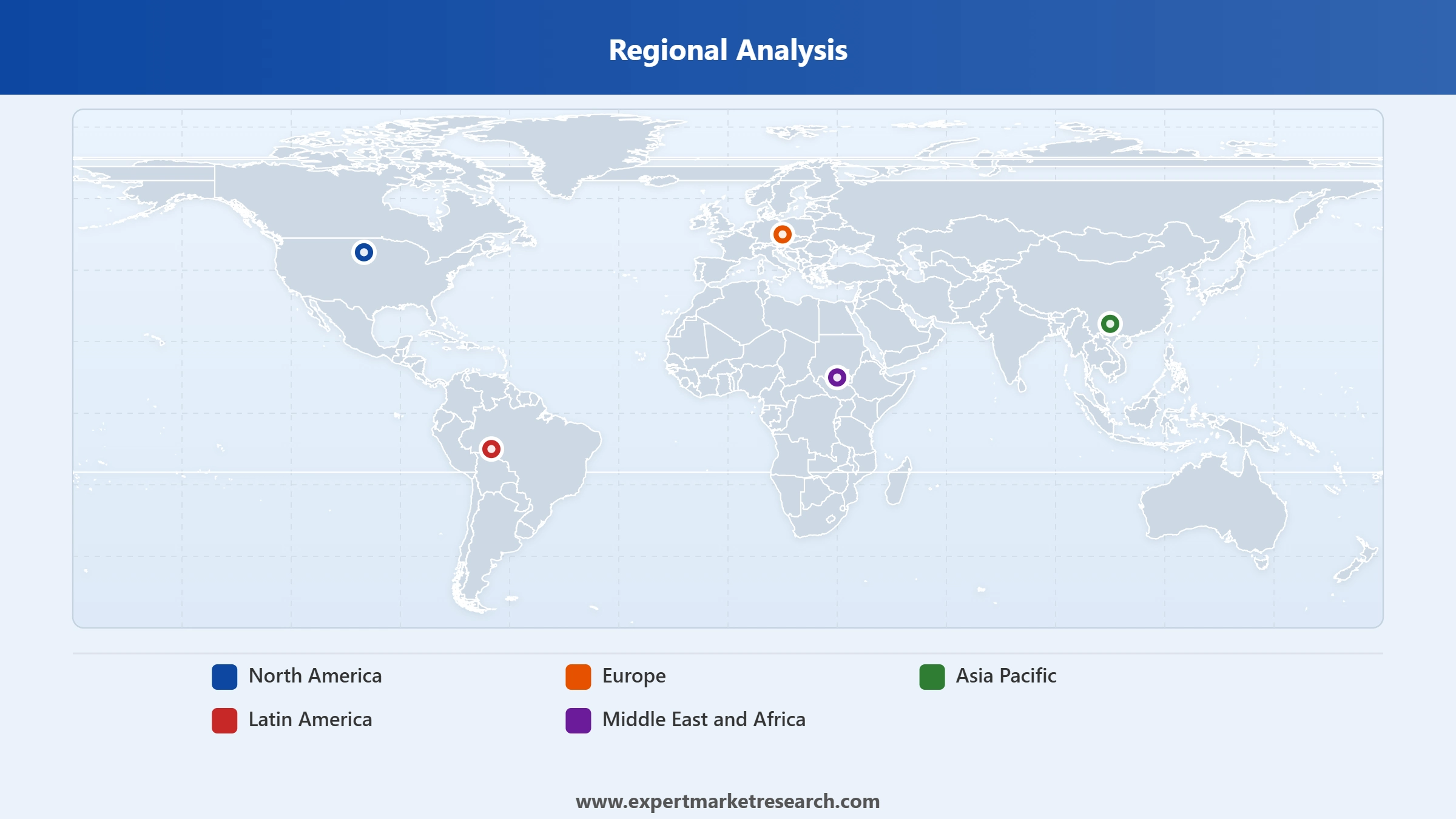
Key Insight: Asia Pacific dominates the wind turbine blade market, supported by China's large annual installations and an integrated blade supply chain, and it is also the fastest-growing region as India and Southeast Asia expand. Europe is a mature, offshore driven market with ongoing capacity upgrades. North America is influenced by shifting federal policy, Latin America is supported by project pipelines in Brazil and Mexico, and the Middle East and Africa benefit from emerging utility scale programmes in Saudi Arabia and South Africa.
Read more about this report - Request a Free Sample
By material, glass fiber dominates the market due to low cost and mature manufacturing processes
Glass fiber accounts for the largest share of the wind turbine blade market, supported by low material costs, mature infusion manufacturing processes, and proven fatigue performance across onshore and offshore blades. For example, in July 2026, the TNO led CIRCLE4WIN project reclaimed about 60 kilograms of glass fiber from two blade sources in a pilot thermolysis run, underlining how heavily existing fleets rely on the material, and reinforcing the segment's central production role across global blade manufacturing and supply chains.
Read more about this report - Request a Free Sample
Carbon fiber is the fastest-growing material as manufacturers adopt it for spar caps and main load bearing structures in ever longer blades, where its stiffness and lower weight reduce loads on towers, hubs, and foundations. Falling pultruded plate costs, rising production volumes in China and India, and demand from offshore projects with larger rotors are broadening adoption, while recyclable resin systems further improve the appeal among developers facing end of life requirements. Consequently, carbon fiber demand is rising across regions.
By blade length, blades above 60 meters lead the market due to the shift toward high-capacity turbines
Blades above 60 meters account for the largest share of the market, as modern onshore turbines and nearly all offshore turbines now use long blades that sweep larger areas and capture more energy per installation. For example, in June 2026, Vestas opened a new offshore blade production building in Taranto, Italy, manufacturing 116-meter blades for its V236-15.0 MW turbine, strengthening supply for large offshore projects across European markets. Such investments reinforce the dominance of long blades within segment revenue.
Read more about this report - Request a Free Sample
Within this category, ultra-long blades beyond 100 meters are expanding fastest, as developers of 15 MW and larger offshore wind turbines and the largest onshore platforms seek higher capacity factors and lower cost per megawatt hour. These blades require larger moulds, carbon fiber reinforcement, and specialised transport, which favours manufacturers with port side facilities and advanced engineering capabilities. Consequently, the premium pricing of ultra-long blades is lifting segment revenue faster than volume across both onshore and offshore turbine platforms globally.
By application, onshore leads the market due to a large installed base and lower project costs
Onshore applications hold the largest share of the market, reflecting the much larger installed base, lower project costs, and faster permitting compared with offshore developments in most countries. For example, in September 2025, Envision Energy broke ground on a blade plant at Kalyangadh, Gujarat, rated at 2 GW annually, producing about 1,500 blades a year from six moulds for 3.3 MW and 5 MW platforms, reinforcing onshore supply in India, where annual wind additions keep setting new records across states.
Read more about this report - Request a Free Sample
Offshore is the fastest-growing application as governments award large seabed leases, turbine ratings climb beyond 15 MW, and developers pursue higher capacity factors in deeper waters. Each offshore turbine uses substantially longer and costlier blades than an onshore unit, so growth in installations translates into disproportionate blade revenue gains. Expanding port infrastructure, dedicated blade finishing facilities, and installation vessels are also reducing logistics barriers across Europe, Asia Pacific, and North America. Supportive auction frameworks continue to strengthen the segment's outlook.
Asia Pacific dominates the market due to large scale installations and an integrated blade manufacturing base
Asia Pacific dominates the wind turbine blade market, anchored by China's enormous annual installations and a dense domestic supply chain spanning blade makers, fiber producers, and turbine assemblers. For example, in January 2026, China's National Energy Administration data showed about 119 GW of wind capacity installed during 2025, taking cumulative capacity to roughly 640 GW, which sustains steady blade orders from regional manufacturers and developers. Competitive pricing from regional manufacturers and favourable government support further reinforces the region's leading position.
Read more about this report - Request a Free Sample
India and Southeast Asian economies are accelerating growth through supportive auctions, rising local manufacturing of blades, and expanding offshore pilots in Vietnam, Taiwan, South Korea, and Japan. Government targets for non-fossil capacity and improving transmission connectivity are widening the project pipeline, while turbine makers localise blade plants to meet domestic content expectations. As a result, the region is expected to post the fastest growth through the forecast period. Rising offshore blade factory investment across Asia is supporting this trajectory.
|
CAGR 2026-2035 - Market by |
Region |
|
North America |
6.4% |
|
Europe |
7.9% |
|
Asia Pacific |
9.7% |
|
Latin America |
7.2% |
|
Middle East and Africa |
8.4% |
The global wind turbine blade companies are moderately consolidated, with dedicated blade specialists and vertically integrated turbine manufacturers competing on blade length, material expertise, manufacturing scale, and proximity to project sites. Wind turbine blade companies like LM Wind Power, Siemens Gamesa Renewable Energy, TPI Composites, and Vestas Wind Systems compete through large scale production networks, while Suzlon Energy, Nordex SE, Goldwind, Mingyang Smart Energy, and Sinoma Science and Technology strengthen regional positions.
Leading wind turbine blade market players are focusing on longer offshore blades, carbon fiber reinforcement, recyclable resin systems, and localised manufacturing to strengthen their competitive position. Increasing emphasis on automation, digital quality inspection, and long-term supply agreements is also enabling manufacturers to improve consistency, reduce rework, and secure order visibility across global manufacturing networks while supporting long term market growth.
LM Wind Power, headquartered in Kolding, Denmark, is the blade manufacturing business of GE Vernova, which acquired the company in 2017. It designs and produces rotor blades for onshore and offshore turbines, including some of the longest blades in operation, from factories across several regions, supplying a broad range of turbine manufacturers and developers.
Siemens Gamesa Renewable Energy, headquartered in Zamudio, Spain, was formed through the 2017 merger of Siemens Wind Power and Gamesa and is majority owned by Siemens Energy. It supplies onshore and offshore wind turbines and manufactures its own blades at plants across Europe, including Aalborg in Denmark, serving customers worldwide.
TPI Composites, headquartered in Scottsdale, Arizona, United States, was founded in 1968 and specialises in composite wind blade manufacturing for turbine makers. The company builds blades under long term supply agreements, operating production sites in the United States and Mexico, and has extensive experience supporting large blade programmes for leading global customers.
Vestas Wind Systems, headquartered in Aarhus, Denmark, has manufactured wind turbines since 1979 and is listed on Nasdaq Copenhagen. It produces its own blades alongside nacelles and towers, with factories across Europe, the Americas, and Asia, and offers EnVentus platform turbines for onshore and offshore projects, backed by a large global service fleet.
Other key players in the market report include Suzlon Energy, Nordex SE, Goldwind, Mingyang Smart Energy, and Sinoma Science and Technology, among others.
*Please note that this is only a partial list; the complete list of key players is available in the full report. Additionally, the list of key players can be customized to better suit your needs.*
Explore the latest trends shaping the wind turbine blade market 2026-2035 with our in-depth report. Gain strategic insights to support your business decisions. Get in touch with our analysts today. Download a free sample report or contact our team for customized consultation on the market trends 2026.


Upto 15% Off
USD
$2499 $2249
$3999 $3599
$4999 $4249
$5999 $5099


*While we strive to always give you current and accurate information, the numbers depicted on the website are indicative and may differ from the actual numbers in the main report. At Expert Market Research, we aim to bring you the latest insights and trends in the market. Using our analyses and forecasts, stakeholders can understand the market dynamics, navigate challenges, and capitalize on opportunities to make data-driven strategic decisions.*
In 2025, the wind turbine blade market reached an approximate value of USD 25.54 Billion.
The market is projected to grow at a CAGR of 8.80% between 2026 and 2035.
The key players in the market include LM Wind Power, Siemens Gamesa Renewable Energy, TPI Composites, Vestas Wind Systems, Suzlon Energy, Nordex SE, Goldwind, Mingyang Smart Energy, and Sinoma Science and Technology, among others.
Leading manufacturers are pursuing longer offshore blade development, carbon fiber reinforcement, recyclable resin adoption, and localised factory expansion close to key project markets.
Key challenges include volatile raw material and resin costs, policy and permitting uncertainty, transport limits for ultra-long blades, and quality risks as blade sizes increase.
Explore our key highlights of the report and gain a concise overview of key findings, trends, and actionable insights that will empower your strategic decisions.
|
Report Features |
Details |
|
Base Year |
2025 |
|
Historical Period |
2019-2025 |
|
Forecast Period |
2026-2035 |
|
Scope of the Report |
Historical and Forecast Trends, Industry Drivers and Constraints, Historical and Forecast Market Analysis by Segment:
|
|
Breakup by Material |
|
|
Breakup by Blade Length |
|
|
Breakup by Application |
|
|
Breakup by Region |
|
|
Market Dynamics |
|
|
Competitive Landscape |
|
|
Companies Covered |
|
Datasheet
One User
USD 2,499
USD 2,249
tax inclusive*
Single User License
One User
USD 3,999
USD 3,599
tax inclusive*
Five User License
Five User
USD 4,999
USD 4,249
tax inclusive*
Corporate License
Unlimited Users
USD 5,999
USD 5,099
tax inclusive*
*Please note that the prices mentioned below are starting prices for each bundle type. Kindly contact our team for further details.*
Flash Bundle
Small Business Bundle
Growth Bundle
Enterprise Bundle
*Please note that the prices mentioned below are starting prices for each bundle type. Kindly contact our team for further details.*
Flash Bundle
Number of Reports: 3
20%
tax inclusive*
Small Business Bundle
Number of Reports: 5
25%
tax inclusive*
Growth Bundle
Number of Reports: 8
30%
tax inclusive*
Enterprise Bundle
Number of Reports: 10
35%
tax inclusive*
How To Order

Select License Type
Choose the right license for your needs and access rights.

Click on ‘Buy Now’
Add the report to your cart with one click and proceed to register.

Select Mode of Payment
Choose a payment option for a secure checkout. You will be redirected accordingly.
Strategic Solutions for Informed Decision-Making
Gain insights to stay ahead and seize opportunities.

Get insights & trends for a competitive edge.

Track prices with detailed trend reports.

Analyse trade data for supply chain insights.

Leverage cost reports for smart savings

Enhance supply chain with partnerships.

Connect For More Information
Our expert team of analysts will offer full support and resolve any queries regarding the report, before and after the purchase.
Our expert team of analysts will offer full support and resolve any queries regarding the report, before and after the purchase.
We employ meticulous research methods, blending advanced analytics and expert insights to deliver accurate, actionable industry intelligence, staying ahead of competitors.
Our skilled analysts offer unparalleled competitive advantage with detailed insights on current and emerging markets, ensuring your strategic edge.
We offer an in-depth yet simplified presentation of industry insights and analysis to meet your specific requirements effectively.




