

Consumer Insights
Uncover trends and behaviors shaping consumer choices today
Procurement Insights
Optimize your sourcing strategy with key market data
Industry Stats
Stay ahead with the latest trends and market analysis.
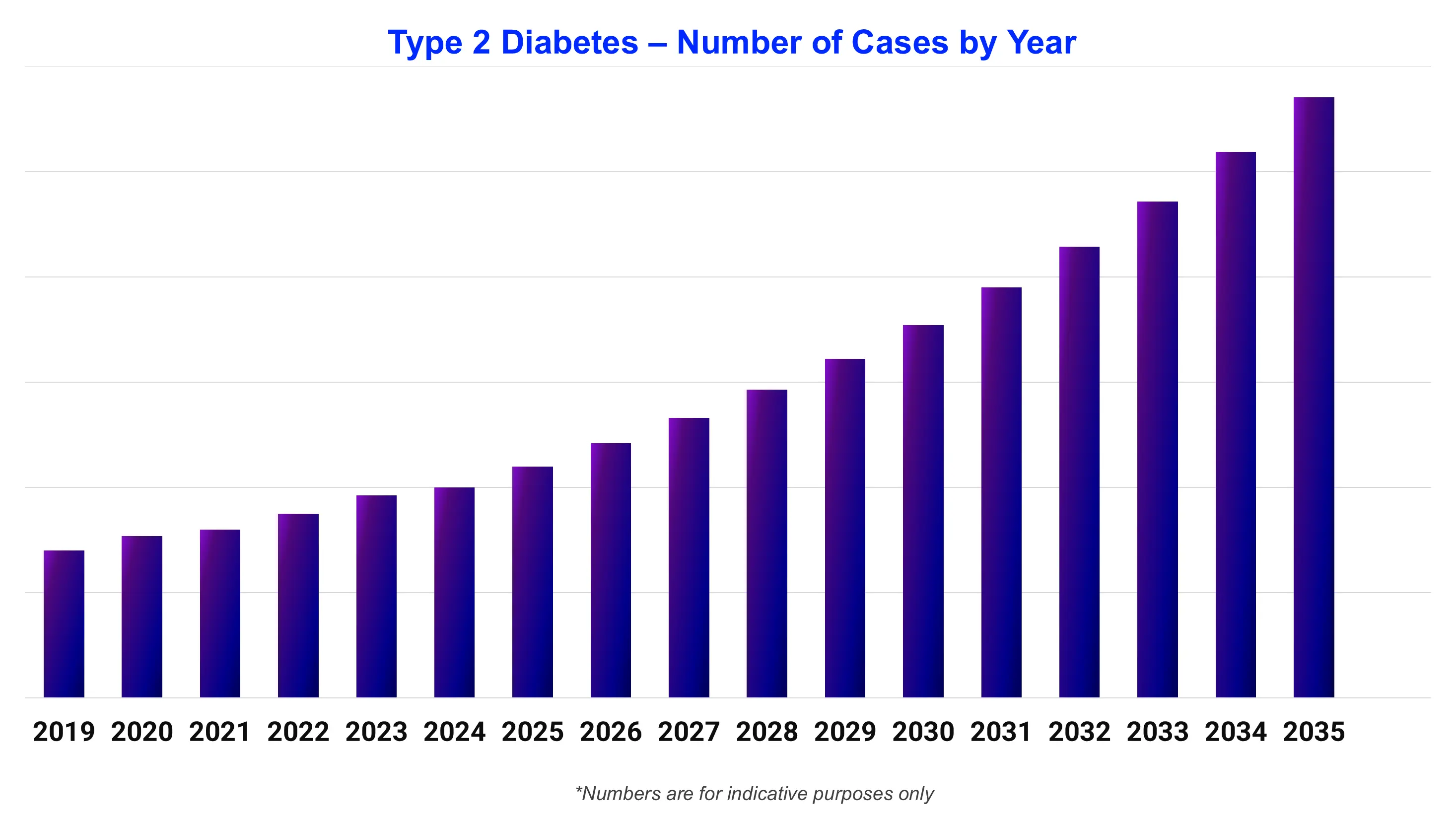
Type 2 diabetes mellitus is a chronic metabolic disorder characterized by impaired insulin action and elevated blood glucose levels. According to Xiao Yu et al. (2025), 9.18 million type 2 diabetes cases occurred globally among individuals aged 55 years and older in 2021. As per the type 2 diabetes epidemiology forecast by Expert Market Research, the global burden is expected to continue increasing, highlighting the need for effective disease management.
Base Year
Historical Period
Forecast Period
Read more about this report - Request a Free Sample
Expert Market Research's “Type 2 Diabetes Epidemiology Forecast Report 2026-2035” offers comprehensive information on the prevalence and demographics of type 2 diabetes. It projects the future incidence and prevalence rates of type 2 diabetes cases across various populations. The study covers age, gender, and type as major determinants of the type 2 diabetes population. The report highlights patterns in the prevalence of type 2 diabetes over time and projects future trends based on multiple variables.
The report provides a comprehensive overview of the disease, as well as historical and projected data on the epidemiology of type 2 diabetes in the 8 major markets.
Regions Covered
Type 2 diabetes is a chronic metabolic disorder characterized by persistently elevated blood glucose levels resulting from insulin resistance and progressive impairment of pancreatic beta-cell function. The condition develops when the body does not use insulin effectively and, over time, cannot produce sufficient insulin to maintain normal glucose levels. Type 2 diabetes accounts for the majority of diabetes cases and is associated with obesity, physical inactivity, genetic predisposition, and increasing age. The disease progresses gradually and may remain undiagnosed for years.
|
Parameter |
Insight |
|
Largest Patient Pool |
United States |
|
Fastest Growing Country |
India |
|
High-Risk Population |
Older adults, individuals with obesity, and people with a family history of type 2 diabetes |
|
Key Diagnostic Method |
Hemoglobin A1c (HbA1c), fasting plasma glucose, and oral glucose tolerance testing |
|
Major Risk Factor |
Overweight and obesity, particularly when combined with physical inactivity |
|
Major gap in the market |
Underdiagnosis and delayed diagnosis, particularly among individuals with limited access to routine screening |
The type 2 diabetes epidemiology division offers information on the patient pool from history to the present as well as the projected trend for each of the 8 major markets. Expert Market Research provides both current and predicted trends for the type 2 diabetes epidemiology scenario by examining a wide range of studies. Additionally, the report covers the diagnosed patient pool for type 2 diabetes and their trends. The data is broken down into specific categories, such as total prevalent cases in males and females, and total diagnosed cases across different age groups and patient pools.
|
Epidemiology Segment |
Key Insights |
|
Diagnosed Prevalent Cases of the Disease |
According to Fagherazzi et al. (2025), type 2 diabetes accounted for 96.5% of an estimated 5.5 million people with diabetes in France in 2019. In the United States, type 2 diabetes constituted 90%–95% of diabetes cases according to Endocrinology Advisor (2023). |
|
Gender-Specific Cases of the Disease |
According to Hara et al. (2024), type 2 diabetes prevalence among Japanese working professionals aged 20–69 years was 8.0% in men and 3.3% in women in 2014. Perng et al. (2023) reported higher prevalence among U.S. female youth than male youth. |
|
Age-Specific Cases of the Disease |
According to Yu et al. (2025), 9,179,347 type 2 diabetes cases occurred globally among individuals aged 55 years and older in 2021. Perng et al. (2023) reported higher U.S. youth prevalence among those aged 15–19 years than those aged 10–14 years. |
|
Ethnicity-Wise Cases of the Disease |
According to Perng et al. (2023), type 2 diabetes prevalence among U.S. youth in 2017 was highest among Black or African American youth at 1.80 per 1,000, followed by American Indian youth at 1.63 per 1,000 and Hispanic youth at 1.03 per 1,000. |
|
Mortality and Survival Analysis of the Disease |
According to Yu et al. (2025), global type 2 diabetes-related mortality among people aged 55 years and older increased from 81.55 per 100,000 in 1990 to 96.19 per 100,000 in 2021. Radcliffe Department of Medicine reported substantially higher mortality among UK individuals diagnosed before age 40. |
|
Disease Type |
Prevalence |
|
Severe Autoimmune Diabetes (SAID) |
A subtype of adult-onset diabetes characterized by autoimmune features, early disease onset, reduced insulin production, and the presence of glutamic acid decarboxylase antibodies. |
|
Severe Insulin-Deficient Diabetes (SIDD) |
Characterized by marked hyperglycemia, severely impaired insulin secretion, and increased susceptibility to diabetes-related nerve and eye complications. |
|
Severe Insulin-Resistant Diabetes (SIRD) |
Characterized by severe insulin resistance and high body weight or obesity, with greater susceptibility to diabetic kidney disease and fatty liver disease. |
|
Mild Obesity-Related Diabetes (MOD) |
Generally associated with obesity and development of diabetes at a younger age, with a comparatively moderate metabolic profile. |
|
Mild Age-Related Diabetes (MARD) |
Generally associated with older age at diabetes onset and comparatively milder metabolic abnormalities than severe insulin-deficient or insulin-resistant subtypes. |
Read more about this report - Request a Free Sample
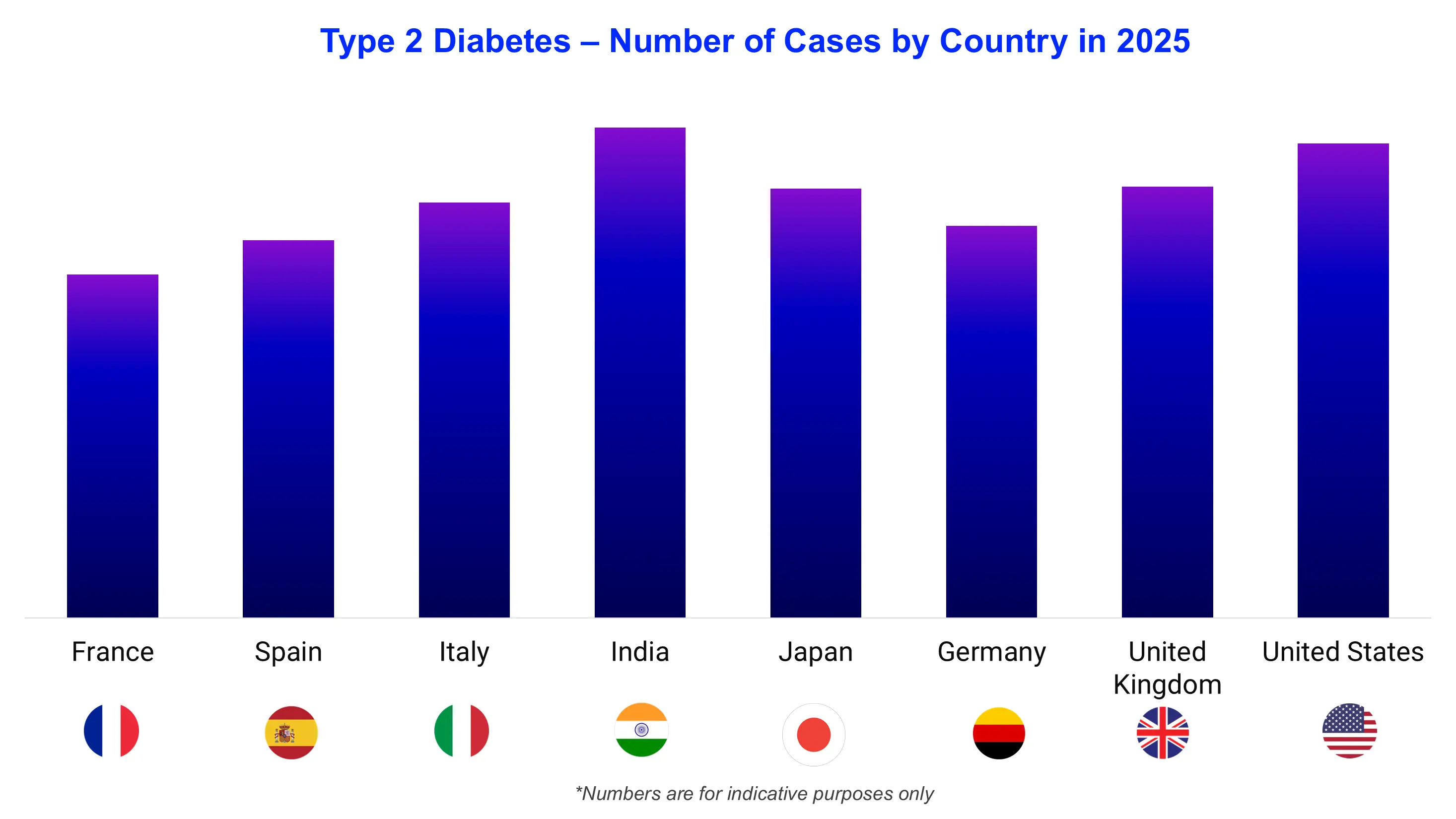
The type 2 diabetes epidemiology data and findings for the United States, Germany, Spain, Italy, France, the United Kingdom, Japan, and India are also provided in the epidemiology section.
|
Country |
Key Insights |
|
United States |
According to Endocrinology Advisor (2023), 38.4 million people in the United States had diabetes in 2021, with 90%–95% estimated to have type 2 diabetes. In 2021, 1.2 million new diabetes cases were diagnosed. |
|
Germany |
According to Lehner et al. (2024), diabetes prevalence in Germany was 7.2% among individuals aged 18–79 years. The increasing burden of type 2 diabetes is associated with rising prevalence and substantial mortality, with 16% of all deaths attributed to type 2 diabetes. |
|
France |
According to Fagherazzi et al. (2025), type 2 diabetes prevalence in France increased from 6.2% in 2010 to 8.0% in 2019, indicating its predominant contribution to the national diabetes burden. |
|
Italy |
According to Giandalia et al. (2024), type 2 diabetes prevalence in Italy increased from 4.1% to 5.9% over the preceding 20 years. The increasing prevalence contributes to a growing healthcare burden, including greater demands on healthcare systems, payers, providers, and affected populations. |
|
Spain |
The epidemiological burden of type 2 diabetes in Spain is shaped by demographic and population-level factors associated with the increasing occurrence of the disease. Age-related risk and broader metabolic and lifestyle-related factors contribute to the continuing type 2 diabetes burden. |
|
United Kingdom |
According to the Diabetes Research and Wellness Foundation (DRWF), 4.3 million people in the United Kingdom were living with diagnosed diabetes in 2021–22, an increase of 148,951 from 2020–21. More than 2.4 million people were at high risk of developing type 2 diabetes, supporting continued growth in the affected population. |
|
Japan |
According to Hara et al. (2024), type 2 diabetes prevalence in Japan increased from 6.6% in 1990 to 7.9% in 2010 and was estimated to reach 9.8% by 2030. Among Japanese working professionals aged 20–69 years, prevalence was 8.0% in men and 3.3% in women in 2014. |
|
India |
According to Sinha et al. (2024), the burden of type 2 diabetes in India is increasing, with projections indicating approximately 134 million cases by 2045. The expanding affected population is associated with the increasing overall burden of type 2 diabetes and its long-term health consequences. |
Type 2 diabetes continues to present substantial epidemiological challenges across the United States, Germany, France, Italy, Spain, the United Kingdom, Japan, and India. A major gap is the identification of undiagnosed and high-risk individuals, particularly among older adults and populations affected by obesity and limited access to preventive care. Opportunities exist for expanding risk-based screening, improving early diagnosis, and strengthening long-term disease monitoring. India also presents significant opportunities for scalable diabetes prevention and screening programs because of its large and diverse population. Digital health, remote monitoring, and personalized disease-management approaches represent additional emerging growth areas.
Type 2 diabetes treatment focuses on achieving and maintaining individualized blood glucose targets while reducing the risk of cardiovascular, renal, neurologic, and other complications. Initial management generally includes healthy eating, regular physical activity, weight management, and other lifestyle modifications. Pharmacological treatment may involve metformin, sodium-glucose cotransporter-2 inhibitors, glucagon-like peptide-1 receptor agonists, dipeptidyl peptidase-4 inhibitors, sulfonylureas, or insulin, depending on patient characteristics and treatment goals. Glucose-lowering therapy is selected according to factors such as cardiovascular and kidney disease, hypoglycemia risk, weight considerations, and treatment response.
Type 2 Diabetes Pipeline Analysis


Upto 15% Off
USD
$2699 $2429
$4299 $3869
$5799 $4949
$6999 $5949


*While we strive to always give you current and accurate information, the numbers depicted on the website are indicative and may differ from the actual numbers in the main report. At Expert Market Research, we aim to bring you the latest insights and trends in the market. Using our analyses and forecasts, stakeholders can understand the market dynamics, navigate challenges, and capitalize on opportunities to make data-driven strategic decisions.*
Explore our key highlights of the report and gain a concise overview of key findings, trends, and actionable insights that will empower your strategic decisions.
|
Report Features |
Details |
|
Base Year |
2025 |
|
Historical Period |
2019-2025 |
|
Forecast Period |
2026-2035 |
|
Epidemiology Statistics Provided |
|
|
Segmentation Provided |
|
|
Geographies Covered |
|
Datasheet
One User
USD 2,699
USD 2,429
tax inclusive*
Single User License
One User
USD 4,299
USD 3,869
tax inclusive*
Five User License
Five User
USD 5,799
USD 4,949
tax inclusive*
Corporate License
Unlimited Users
USD 6,999
USD 5,949
tax inclusive*
*Please note that the prices mentioned below are starting prices for each bundle type. Kindly contact our team for further details.*
Flash Bundle
Small Business Bundle
Growth Bundle
Enterprise Bundle
*Please note that the prices mentioned below are starting prices for each bundle type. Kindly contact our team for further details.*
Flash Bundle
Number of Reports: 3
20%
tax inclusive*
Small Business Bundle
Number of Reports: 5
25%
tax inclusive*
Growth Bundle
Number of Reports: 8
30%
tax inclusive*
Enterprise Bundle
Number of Reports: 10
35%
tax inclusive*
How To Order

Select License Type
Choose the right license for your needs and access rights.

Click on ‘Buy Now’
Add the report to your cart with one click and proceed to register.

Select Mode of Payment
Choose a payment option for a secure checkout. You will be redirected accordingly.
Strategic Solutions for Informed Decision-Making
Gain insights to stay ahead and seize opportunities.

Get insights & trends for a competitive edge.

Track prices with detailed trend reports.

Analyse trade data for supply chain insights.

Leverage cost reports for smart savings

Enhance supply chain with partnerships.

Connect For More Information
Our expert team of analysts will offer full support and resolve any queries regarding the report, before and after the purchase.
Our expert team of analysts will offer full support and resolve any queries regarding the report, before and after the purchase.
We employ meticulous research methods, blending advanced analytics and expert insights to deliver accurate, actionable industry intelligence, staying ahead of competitors.
Our skilled analysts offer unparalleled competitive advantage with detailed insights on current and emerging markets, ensuring your strategic edge.
We offer an in-depth yet simplified presentation of industry insights and analysis to meet your specific requirements effectively.




