Virtual Mirrors Are Transforming the Beauty and Cosmetics Shopping Experience
The beauty and cosmetics industry have been dependent on the testing of physical products for a long time. Customers have always relied on trying out different things such as makeup shades, skincare products, or hair colors in the store before purchasing. However, the emergence of digital commerce has made beauty brands evolve and modernize their processes. One of the most powerful innovations that made this change possible is virtual mirror technology.
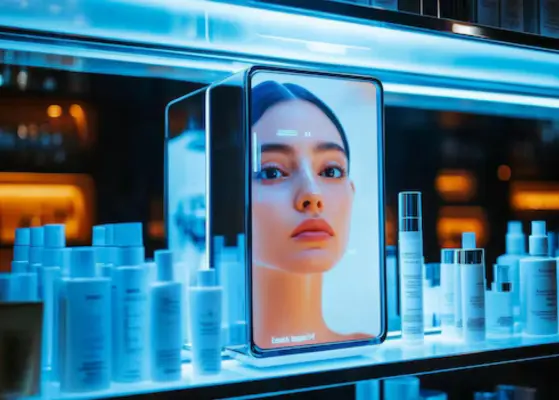
Virtual mirrors enable buyers to try makeup products through digital means with the help of augmented reality and artificial intelligence. These devices first detect the customer's face and then accurately superimpose different makeup shades on the face to help the customer see how the product will look on their skin. For the brands that are trying to increase their digital retail sales, this technology is turning out to be an effective engagement tool.
Global Beauty Companies Invest in AI-Powered Try-On Platforms
Some of the top cosmetics companies have already utilized virtual mirror features as part of their digital strategies. L’Oreal, which is one of the most prominent producers of beauty products globally, has been consistently broadening its augmented reality features via its ModiFace platform. The company has rolled out this technology across different brands and store channels.
With such platforms, users are able to try out a variety of makeup products via their phone cameras. The system recognizes the shape of the face and changes the positioning of the makeup in real time, offering a believable preview. L’Oreal has stated that the implementation of digital try-on tools substantially boosts user interaction on their web platforms.
On the other hand, Sephora has also adopted virtual mirror features through its immensely popular Virtual Artist application. This app gives buyers the chance to digitally try lipsticks, eyeshadows, and other makeup products on their phones. The app has gained rapid popularity especially among the millennials who like to try out new styles of beauty digitally and then decide the store visit.
Driving Higher Conversion Rates in E-Commerce
Virtual mirror technology's foremost benefit is its capacity to boost conversion rates in online retail channels. For example, cosmetics shoppers may be reluctant to purchase products online due to the problem of a certain shade or formula suitability to their skin tone. Virtual try-on tools can remove this uncertainty by giving users a virtual and realistic preview.
Analysis of e-commerce statistics from various beauty retailers reveals that visitors who use virtual try-on tools dedicate considerably more time to browsing product catalogs. This higher level of engagement generally leads to improved buying percentages and larger average order values.
Among the various applications of artificial intelligence, beauty brands are using virtual mirrors to personalize product recommendations based on a customer’s facial features and past preferences. So, a virtual mirror system can identify a user's skin tone and highlight the ideal foundation shades. Another feature is the ability for customers to check out several lipstick shades at once, which spotlights the evaluation of different options.
Explore comprehensive insights on technology trends, market dynamics, and strategies in the Virtual Mirror Market Report.
Technology Innovation Is Expanding the Future of Beauty Retail
The rapid evolution of artificial intelligence and augmented reality is unveiling new prospects for virtual mirror technology in the beauty industry. Companies that provide technological solutions are developing sophisticated software that mimic lighting conditions, skin textures, and even factors affecting how makeup is seen in different places through virtual mirrors.
Such enhancements have become increasingly critical as they are at the core of determining the extent to which consumers will place their trust in technology. Virtual try-on systems that generate highly realistic and precise images are expected to be trusted by customers, encouraging them to rely on these tools when making purchase decisions. Consequently, companies developing such technologies are investing heavily in machine learning models trained on diverse facial datasets.
Besides makeup, the use of virtual mirrors is being extended by beauty companies to include hair color changes and skin condition analysis. Certain platforms can visually examine skin and propose the most appropriate products for skincare treatments. Such features make virtual mirrors position themselves as elaborate digital beauty consultants instead of a simple beauty product tester tool.










Share