

Consumer Insights
Uncover trends and behaviors shaping consumer choices today
Procurement Insights
Optimize your sourcing strategy with key market data
Industry Stats
Stay ahead with the latest trends and market analysis.
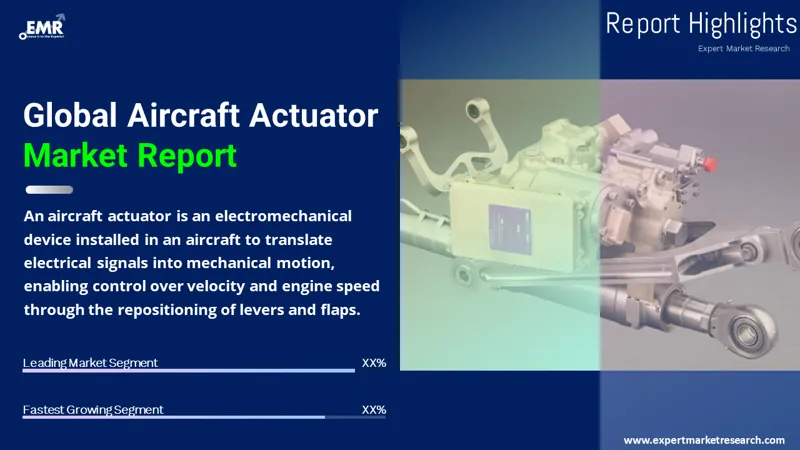
The global aircraft actuator market size was valued at USD 17.15 Billion in 2025. The industry is expected to grow at a CAGR of 6.30% during the forecast period of 2026-2035 to reach a value of USD 31.59 Billion by 2035. The shift from traditional hydraulic systems to electromechanical actuation, along with the overall trend of aircraft electrification, is the most significant factor that drives the market growth.
The aviation actuator market is expanding due to the growing use of fly-by-wire flight control systems and the desire for lightweight, dependable components in modern aircraft. Fly-by-wire systems need highly precise and responsive actuators, while at the same time, weight-saving efforts are leading manufacturers to develop compact electromechanical designs that result in improved efficiency, increased payload capacity, and better aircraft performance overall.
Various categories of modern aircraft, such as hybrid and electric platforms, new-generation narrow-body models, and urban air vehicles, are gradually increasing the use of electromechanical actuators primarily for weight reduction, energy efficiency enhancement, and integration of advanced diagnostics for predictive maintenance. These changes have offered new growth opportunities in the aircraft actuator market for manufacturers to develop more efficient, sustainable, and reliable aircraft that comply with strict regulatory and environmental requirements. For instance, in June 2025, Curtis-Wright provided Airbus UpNext compressed Nano Motion Controllers and electromechanical actuation components for the eXtra Performance WING (XP, wing) demonstration, allowing for enhanced wing control and fuel savings. Similarly, in March 2025, Honeywell participated in a collaboration to equip an eSTOL aircraft with state-of-the-art electromechanical actuators that are both highly reliable and less dependent on hydraulics.
Compound Annual Growth Rate
6.3%
Value in USD Billion
2026-2035
| Global Aircraft Actuator Market Report Summary | Description | Value |
| Base Year | USD Billion | 2025 |
| Historical Period | USD Billion | 2019-2025 |
| Forecast Period | USD Billion | 2026-2035 |
| Market Size 2025 | USD Billion | 17.15 |
| Market Size 2035 | USD Billion | 31.59 |
| CAGR 2019-2025 | Percentage | XX% |
| CAGR 2026-2035 | Percentage | 6.30% |
| CAGR 2026-2035 - Market by Region | Asia Pacific | 7.1% |
| CAGR 2026-2035 - Market by Country | India | 7.3% |
| CAGR 2026-2035 - Market by Country | Brazil | 6.8% |
| CAGR 2026-2035 - Market by Type | Rotary | 6.9% |
| CAGR 2026-2035 - Market by System | Electrical Actuators | 6.7% |
| Market Share by Country 2025 | Mexico | 2.5% |
AUMA unveiled the RSTX 100, an explosion-proof remote-control device, ATEX, and IECEx, certified, that enables operators to control actuators safely from 20 meters. The RSTX 100 is for hazardous, hard-to-reach areas, and it works with the PROFOX, TIGRON, SAEx, and SQEx actuators by AUMA. This enables a user to operate valves, run diagnostics, and update firmware with less manual intervention. Such an innovation in field operation will make industrial applications safer and more efficient, further supporting the aircraft actuator market progress.
DRDO India's Technology Development Fund tasked the sector with producing a jam-tolerant geared rotary actuator for advanced aerospace applications. The actuator will be capable of producing bi-directional motion at high torque while also being jamming resistant, which are critical attributes for stealth aircraft, flight controls, and internal weapons storage. Apart from focusing on high-tech characteristics, the project includes a significant amount of local content, precise engineering, and fault-tolerant designs.
Wisk Aero and Liebherr Aerospace have entered into an agreement in which the latter will supply the former with the Generation 6 electro-mechanical actuation system for its autonomous, all-electric eVTOL aircraft. The system is expected to improve flight control safety and reliability, among other benefits, through features such as built-in redundancy to the flight surface and tilt propulsion control, which are key factors in the appeal of advanced electric actuators for the urban air mobility sector, further fueling the global aircraft actuator market revenue.
Rollon extended its E-SMART and R-SMART linear actuator product lines, introducing more sizes and the pioneering model R-SMART, R-equipped with hardened prismatic rails for greater load capability. The E-SMART collection now includes products up to 144 mm in width, whereas the R-SMART series features 230 mm as well as 280 mm models, suitable for compact, high-load applications. Furthermore, these upgrades make a robust contribution to Rollon’s range of products for industrial automation, aerospace, and medical sectors, offering multifunctional, sturdy, and high-performance solutions for multi-axis setups and challenging operational conditions.
By merging with and acquiring other businesses, the aircraft actuator market is witnessing a transformation as the prime players are diversifying their product lines and reinforcing their global presence. The consolidation of companies allows them to combine the latest technologies, make research and development more efficient, and raise production capacity, which in turn helps to address the increasing demand from the commercial and defense sectors. For instance, in July 2025, Safran acquired Collins Aerospace's flight control and actuation division, expanding its global network and technological capabilities.
Long-term agreements with aircraft OEMs serve as a reliable source of revenue and promote the development of new actuator designs. They provide suppliers with the means to not only increase their production but also to make their products compatible with modern platforms, including commercial and regional aircraft. In April 2025, Parker Aerospace strengthened its position in the global supply chain by entering a contract with COMAC to supply flight control actuation systems for the C919 aircraft.
Military modernization programs drive demand for high-performance actuators for fighters, helicopters, and unmanned platforms, contributing to the growth of the aircraft actuator market. When such projects drive manufacturers to build equipment, they are under pressure to innovate constantly while providing mission-critical reliability. For instance, in June 2025, Curtiss Wright improved its actuation capabilities for advanced demonstrator platforms by providing electromechanical systems that comply with very strict defense requirements.
As a result of increasing worldwide demand for high-end actuators, manufacturers are expanding production capacity as well as research and development facilities in strategic aerospace hubs. Such investments not only improve efficiency and lead times but also enhance the capability to support complex defense and commercial programs. For instance, in 2025, Moog Inc. finalized a significant building expansion integrating development, testing, and manufacturing for electromechanical and electrohydraulic actuators at its East Aurora headquarters. This development was intended to serve the aerospace and defense applications, including launch vehicles, satellites, and missiles.
Ongoing innovations in actuator technology are boosting the aircraft actuators market growth, driven by the high demand for high-performance and hybrid applications. Manufacturers are developing actuators with increased force, improved efficiency, integrated control systems, and sophisticated position sensing to address evolving aerospace, defense, and industrial needs. The new generation of products is thus capable of providing precise, reliable, and scalable solutions that can be used on various platforms. For instance, Parker Hannifin exhibited its Force Command electrohydraulic actuator, which included a brushless DC motor, absolute position sensing, and military-grade reliability, thus meeting the most difficult requirements.
Read more about this report - REQUEST FREE SAMPLE COPY IN PDF
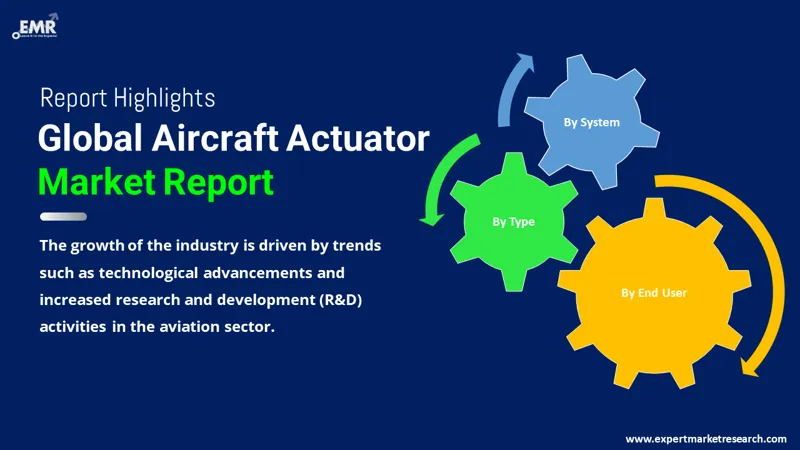
The EMR’s report titled “Global Aircraft Actuator Market Report and Forecast 2026-2035” offers a detailed analysis of the market based on the following segments:
Market Breakup by Type
Key Insights: The aircraft actuators market scope comprises two different types, including linear and rotary actuators. Linear actuators are widely used in airplane parts such as landing gear, cargo doors, and flight control surfaces. Safran specializes in lightweight, high-precision designs for modern airliners. Rotary actuators are the major components for thrust vectoring and steering, with Curtiss, Wright, and Moog Inc. coming up with innovative compact, high-reliability rotary units for advanced commercial and defence aircraft. This makes the aircraft lighter, more maneuverable, and energy efficient.
Market Breakup by System
Key Insights: The aircraft actuators market features systems that differ significantly, ranging from hydraulic, electrical, pneumatic, and mechanical lines, thus fulfilling unique aerospace needs in respective ways. Eaton's hydraulic actuators provide the highest force to control surfaces and landing gear. Whereas Moog is at the forefront of energy-efficient electrical actuators for more electric aircraft designs. Bosch Rexroth's pneumatic actuators still play an important role in the auxiliary systems, and Parker Hannifin's mechanical actuators continue to serve simple, rugged motion applications. However, in recent years, the whole market has been pushed towards electrification and hybrid actuator adoption through partnerships and technology upgrades.
Market Breakup by End User
Key Insights: Based on end-users, the aircraft actuators market caters to the requirements for commercial and military aircraft. Kongsberg Gruppen provides innovative flight control actuators embedded with sensors for commercial aviation, improving aircraft efficiency and simplifying maintenance. Military aircraft manufacturers collaborate with Rolls-Royce and Triumph Group, suppliers of electro-mechanical and electro-hydraulic actuators for fighters, helicopters, and UAVs, to ensure maximum durability under extreme conditions. These products not only provide mission-critical reliability, but they also open the possibility of larger defense acquisition and re-equipment projects, as well as the development of high-performance commercial aircraft fleets.
Market Breakup by Region
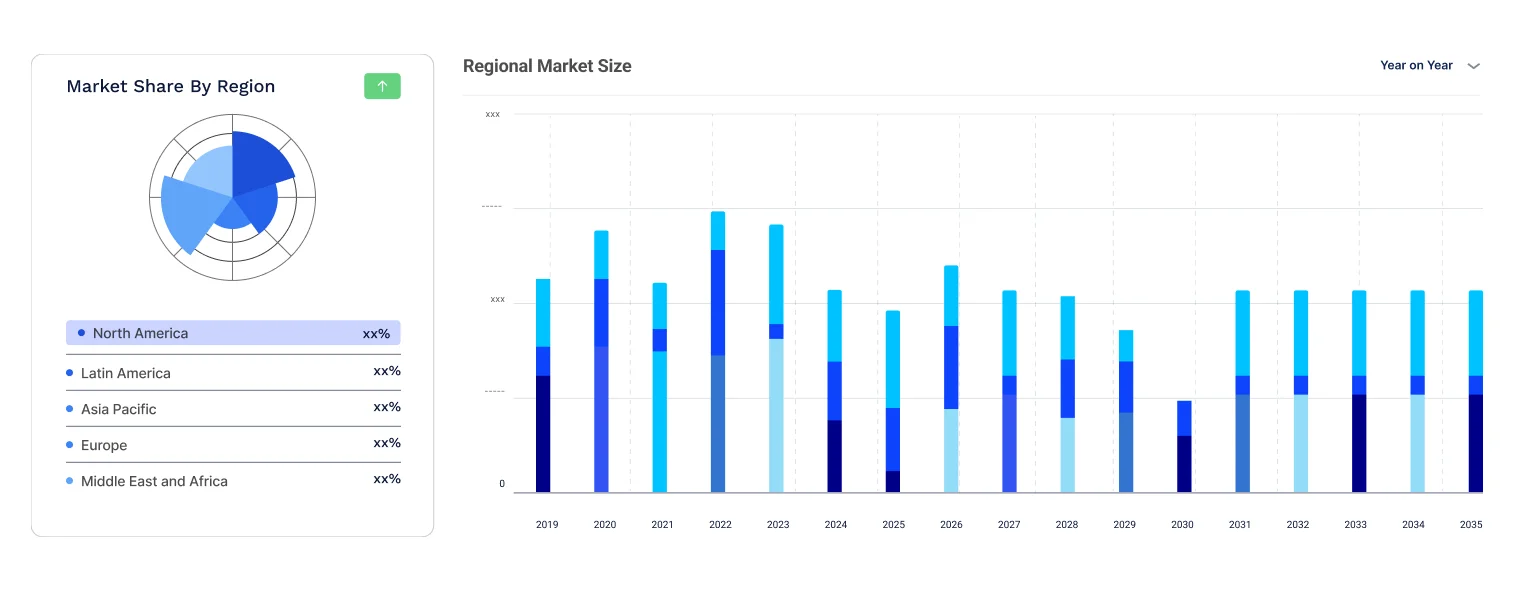
Key Insights: Regionally, the aircraft actuators market landscape is dominated by North America, which is home to prominent industry giants like Triumph Group and Curtiss Wright, both of whom are helping to supply OEMs and defense programs with high-performance actuation systems. The strongest players in Europe are Safran and Rolls-Royce, who are developing integrated and electrified actuator solutions for the next-generation aircraft. The Asia Pacific area is in a phase of rapid development, where COMAC and Hindustan Aeronautics Limited are actively investing in local manufacturing and research and development to match the requirements of the continuously increasing fleet. Latin America and the Middle East & Africa show strong growth potential via regional carrier network expansions, consequently restricting the actuator products to local service networks with tailored offerings and localized service provisions.
Read more about this report - REQUEST FREE SAMPLE COPY IN PDF
By type, Linear Actuators gain preference attributed to precision, compactness, and scalability
Linear actuators are an important component in the accurate movement and control of systems such as cargo doors, flight surfaces, and unmanned aerial aircraft, where precision and reliability are critical. Compact, intelligent designs with integrated control and feedback improve performance, save integration time, and enable high-volume production. For instance, in December 2025, New Scale Technologies' DART Smart Linear Actuator and Stage platform offers long stroke travel, high force, and embedded control for UAV imaging, photonics, and life science applications. This demonstrates the market demand for high-precision and scalable electromechanical solutions.
On the other hand, the aircraft actuators market is witnessing strong demand for rotary actuators due to their increasing use in precisely controlled angular motion, e.g., in aerospace applications such as thrust vectoring, control surfaces, and ram air doors. Manufacturers try to focus on high-torque, compact, and scalable designs to make the weight reduction and mechanical structure simplification possible while keeping the level of reliability. For instance, in October 2025, Kinitics Automation teamed up with Boeing to develop a high-torque rotary actuator based on shape memory alloy technology for ram air doors, thus presenting scalable, lightweight, and efficient actuation that is suitable for next-generation aerospace systems.
By system, electrical actuators show robust uptake owing to efficiency and reliability
The rising trend in the aircraft actuators market in the aerospace and military sectors, driven by the replacement of hydraulic systems with electromechanical ones, has increased demand for electrical actuators. For example, Regal Rexnord Aerospace Solutions creates fully integrated EMA subsystems that excel in difficult situations. They enable future air mobility, eVTOL, and commercial aircraft applications by using lighter, more sustainable designs and streamlined supply networks. In May 2025, Regal Rexnord launched its new electro-mechanical actuator subsystem capabilities for aerospace and defense, thus reinforcing its commitment to high-performance, mission-critical EMA solutions.
Hydraulic actuators are picking up significant momentum in the aircraft actuators market growth trajectory by steadily attracting attention in the aviation and military sectors due to their capability to provide extremely powerful force, precise motion control, and performance reliability even in very tough environments. Major players like Parker Hannifin, Moog Inc. and Eaton are leading the innovation of next-generation hydraulic systems for components such as landing gears, flight wings, and heavy cargo doors of both military and commercial airplanes. To preserve safety and adhere to the stringent aircraft rules, these firms have been concentrating on improving the products' efficiency, extending their lifespan, and making the integration process easier.
By end-user, commercial aircraft drive growth with smart, efficient actuator adoption
Commercial aircraft have surged the demand in the aircraft actuators market owing to the growing need for actuators that can improve fuel efficiency, reduce weight, and increase reliability while supporting the development of advanced flight control systems. Manufacturers are concentrating on the combination of smart sensors, predictive maintenance features, and energy-efficient designs to reduce lifecycle costs and increase operational performance. Such innovations allow for exact motion control of flaps, cargo doors, and other essential parts, thus ensuring a safer and more comfortable flight. For instance, in July 2024, Honeywell was chosen by Electra. aero to equip their hybrid, electric eSTOL aircraft with electromechanical actuation systems and flight control computers, which is yet another step forward in commercial aerospace capability.
The military aircraft sector contributes significantly to the aircraft actuators market revenue, driven by the accelerated deployment of high-tech mission computing solutions to improve operational readiness, mission reliability, and efficiency. Updating programs demands durable, scalable systems that can support cockpit upgrades, technology insertion, and aircraft lifecycle extensions. Such features allow the armed forces to keep the fleet performance at a high level while smoothly integrating new functionalities. For example, in February 2026, Curtiss-Wright was chosen by Boeing to provide MOSA-compliant mission computers for the United States Air Force's C-17 Fleet Modernization program, thus reinforcing the market expansion.

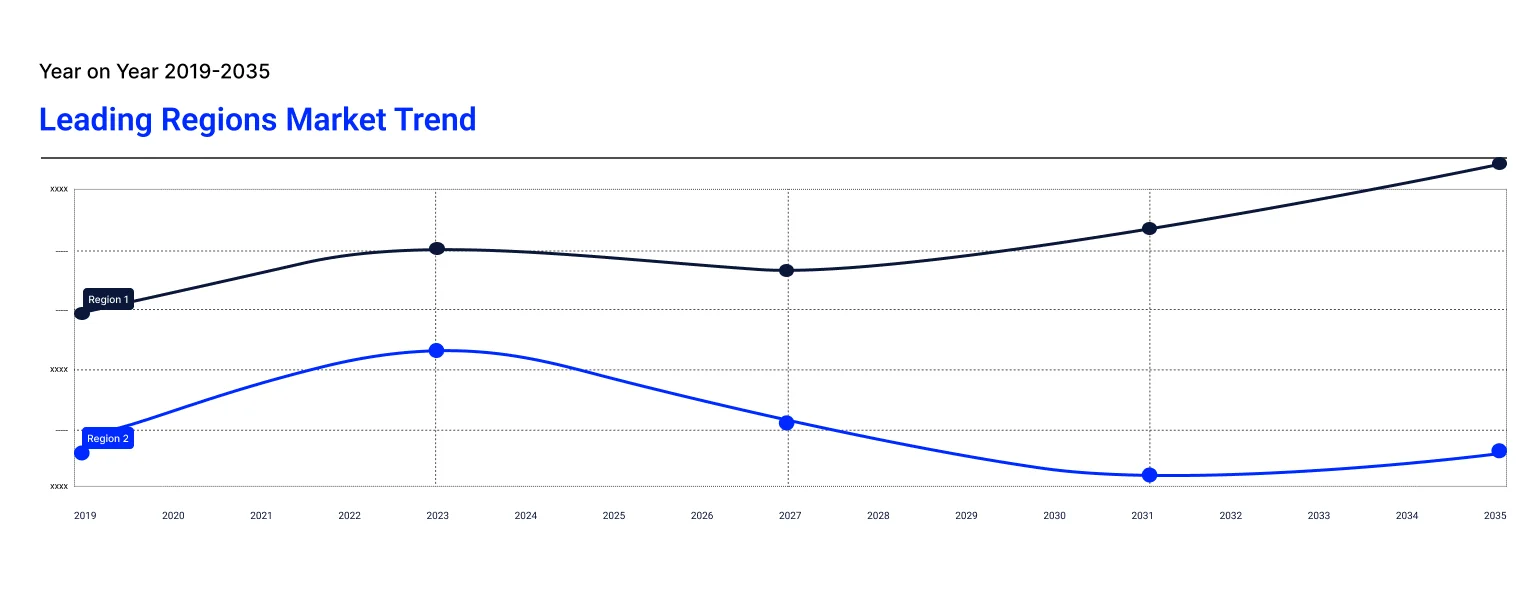
By region, Asia-Pacific leads the market growth, driven by aerospace localization
Asia Pacific is evolving as a high-growth aerospace manufacturing region, aided by increased aircraft deliveries, expanded MRO infrastructure, and more localization of electric and actuation systems. Regional governments and OEMs are targeting sustainable aviation, enhanced air mobility, and domestic supply chains, pushing global suppliers to set up production facilities closer to end customers. This aircraft actuators market trend improves component availability and reduces lead time for aircraft development. Safran announced a new electric aircraft systems factory in Singapore in February 2026, boosting Asia Pacific's leadership in next-generation aerospace development.
The aerospace and defense industry in North America is witnessing a surge in demand for electromechanical actuation and sensor technologies, which is mainly due to the military aircraft modernization initiatives and the introduction of advanced vertical lift platforms, which is contributing to the aircraft actuators market revenue. On account of their expertise, companies such as Woodward and Moog are offering high-precision position sensors and actuators that are essential for flight control and improve operational agility and system reliability. Their products have been integrated into cutting-edge platforms like the FLRAA (Future Long Range Assault Aircraft) of the United States Army, thus making the operations more secure and efficient. For instance, in April 2025, Woodward announced that it would provide position sensors for Moogs Pylon Conversion Actuators utilized in the FLRAA program, confirming its presence in the sector of advanced military aircraft.
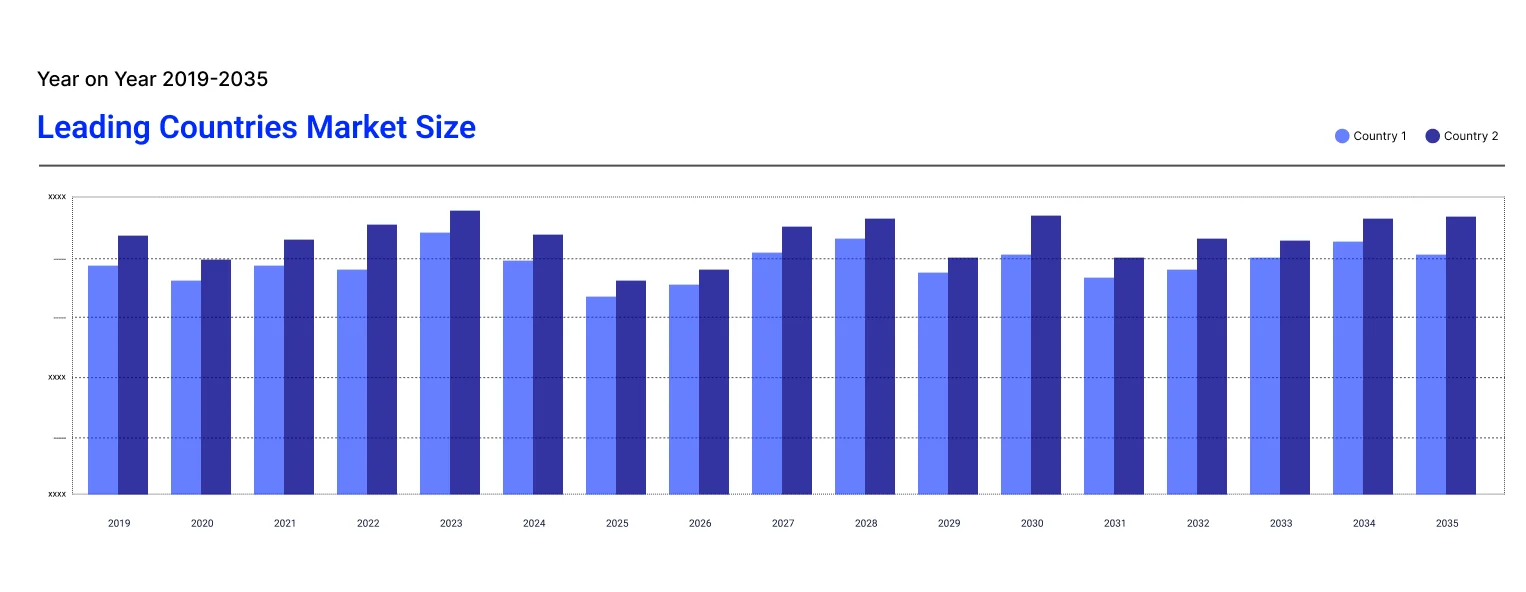
| CAGR 2026-2035 - Market by | Country |
| India | 7.3% |
| Brazil | 6.8% |
| China | 6.8% |
| USA | 6.7% |
| UK | 6.4% |
| Canada | XX% |
| France | XX% |
| Italy | XX% |
| Japan | XX% |
| Australia | XX% |
| Saudi Arabia | XX% |
| Mexico | 6.3% |
| Germany | 5.8% |
Major aircraft actuators market players are actively investing in advanced actuator technologies and have been concentrating on electromechanical systems, embedded diagnostics, and lightweight designs to keep up with aircraft performance standards that are changing. Along with strengthening research and development capabilities, companies are also focusing on next-generation platforms for product development, which in turn will improve efficiency, reliability, and integration between commercial and defense aviation sectors.
Besides these moves, top aircraft actuator companies are also enhancing their global footprint and streamlining their supply chain through strategic partnerships, capacity expansions, and targeted acquisitions. Collaborating tightly with OEMs and regional suppliers, the organizations have been able to accelerate the market launch of their products, increase customization capability, and support long-term programs, all of which boost the aircraft actuators market development for technological advancement and sustainability growth.
Honeywell International Inc. is a diversified technology and manufacturing company that creates systems and products for the aerospace and automation industries. The company was established in 1906 and has its main office in Charlotte, North Carolina, United States. By introducing innovative technologies in actuation, avionics, and propulsion, the company has been a partner of worldwide aviation programs.
Collins Aerospace is a leading supplier of aerospace and defense products and systems that cater to commercial and military aircraft. The company was established in 2018 and is based in North Carolina, United States. Collins Aerospace offers upgraded actuation, flight control, and cabin solutions across global aviation platforms and has emerged as a prominent firm in the global aircraft actuators market landscape.
Parker Hannifin Corporation is a global leader in motion and control technologies that was established in 1917 and is presently located in Cleveland, Ohio, United States. The company is a provider of hydraulic and electromechanical actuator solutions for commercial, military, and general aviation markets.
Moog Inc. is a global provider of aerospace and defense precision motion control systems that was established in 1951 and is in East Aurora, New York, United States. The firm produces state-of-the-art actuation systems that improve aircraft performance, dependability, and fuel efficiency.
*Please note that this is only a partial list; the complete list of key players is available in the full report. Additionally, the list of key players can be customized to better suit your needs.*
Other players in the market include Eaton, among others.
Explore the latest trends shaping the Global Aircraft Actuator Market 2026-2035 with our in-depth report. Gain strategic insights, future forecasts, and key market developments that can help you stay competitive. Download a free sample report or contact our team for customized consultation on global aircraft actuator market trends 2026.


Upto 15% Off
USD
$2499 $2249
$3999 $3599
$4999 $4249
$5999 $5099


*While we strive to always give you current and accurate information, the numbers depicted on the website are indicative and may differ from the actual numbers in the main report. At Expert Market Research, we aim to bring you the latest insights and trends in the market. Using our analyses and forecasts, stakeholders can understand the market dynamics, navigate challenges, and capitalize on opportunities to make data-driven strategic decisions.*
In 2025, the global aircraft actuator market reached an approximate value of USD 17.15 Billion.
The market is projected to grow at a CAGR of 6.30% between 2026 and 2035.
The market is estimated to witness healthy growth in the forecast period of 2026-2035 to reach USD 31.59 Billion by 2035.
The market is broken down into North America, Europe, Asia Pacific, Latin America, the Middle East, and Africa.
Key strategies driving the market include continuous product innovation in electromechanical and smart actuators, strategic partnerships with aircraft OEMs, expansion of manufacturing and R&D facilities across key regions, mergers and acquisitions to strengthen technological capabilities, and increased investment in electrification and lightweight systems to support next-generation aircraft platforms.
The key market trends guiding the growth of the industry include the growing technological advancements and the increasing R&D activities in the aviation industry.
Based on the type, the market is divided into linear and rotary.
Hydraulic actuators, electrical actuators, pneumatic actuators, and mechanical actuators are the major segments based on system, considered within the market report.
Commercial aircraft and military aircraft are the different end users of the product.
The key players in the market include Honeywell International Inc., Collins Aerospace, Parker-Hannifin Corporation, Moog Inc., and Eaton, among others.
The major challenges that aircraft actuator market players face includes high development and certification costs, complex regulatory compliance requirements, supply chain disruptions, pricing pressure from OEMs, and the technical complexity involved in integrating advanced actuator systems into modern aircraft architectures.
Explore our key highlights of the report and gain a concise overview of key findings, trends, and actionable insights that will empower your strategic decisions.
| REPORT FEATURES | DETAILS |
| Base Year | 2025 |
| Historical Period | 2019-2025 |
| Forecast Period | 2026-2035 |
| Scope of the Report |
Historical and Forecast Trends, Industry Drivers and Constraints, Historical and Forecast Market Analysis by Segment:
|
| Breakup by Type |
|
| Breakup by System |
|
| Breakup by End User |
|
| Breakup by Region |
|
| Market Dynamics |
|
| Competitive Landscape |
|
| Companies Covered |
|
| Report Price and Purchase Option | Explore our purchase options that are best suited to your resources and industry needs. |
| Delivery Format | Delivered as an attached PDF and Excel through email, with an option of receiving an editable PPT, according to the purchase option. |
Datasheet
One User
USD 2,499
USD 2,249
tax inclusive*
Single User License
One User
USD 3,999
USD 3,599
tax inclusive*
Five User License
Five User
USD 4,999
USD 4,249
tax inclusive*
Corporate License
Unlimited Users
USD 5,999
USD 5,099
tax inclusive*
*Please note that the prices mentioned below are starting prices for each bundle type. Kindly contact our team for further details.*
Flash Bundle
Small Business Bundle
Growth Bundle
Enterprise Bundle
*Please note that the prices mentioned below are starting prices for each bundle type. Kindly contact our team for further details.*
Flash Bundle
Number of Reports: 3
20%
tax inclusive*
Small Business Bundle
Number of Reports: 5
25%
tax inclusive*
Growth Bundle
Number of Reports: 8
30%
tax inclusive*
Enterprise Bundle
Number of Reports: 10
35%
tax inclusive*
How To Order

Select License Type
Choose the right license for your needs and access rights.

Click on ‘Buy Now’
Add the report to your cart with one click and proceed to register.

Select Mode of Payment
Choose a payment option for a secure checkout. You will be redirected accordingly.
Strategic Solutions for Informed Decision-Making
Gain insights to stay ahead and seize opportunities.

Get insights & trends for a competitive edge.

Track prices with detailed trend reports.

Analyse trade data for supply chain insights.

Leverage cost reports for smart savings

Enhance supply chain with partnerships.

Connect For More Information
Our expert team of analysts will offer full support and resolve any queries regarding the report, before and after the purchase.
Our expert team of analysts will offer full support and resolve any queries regarding the report, before and after the purchase.
We employ meticulous research methods, blending advanced analytics and expert insights to deliver accurate, actionable industry intelligence, staying ahead of competitors.
Our skilled analysts offer unparalleled competitive advantage with detailed insights on current and emerging markets, ensuring your strategic edge.
We offer an in-depth yet simplified presentation of industry insights and analysis to meet your specific requirements effectively.




