

Consumer Insights
Uncover trends and behaviors shaping consumer choices today
Procurement Insights
Optimize your sourcing strategy with key market data
Industry Stats
Stay ahead with the latest trends and market analysis.
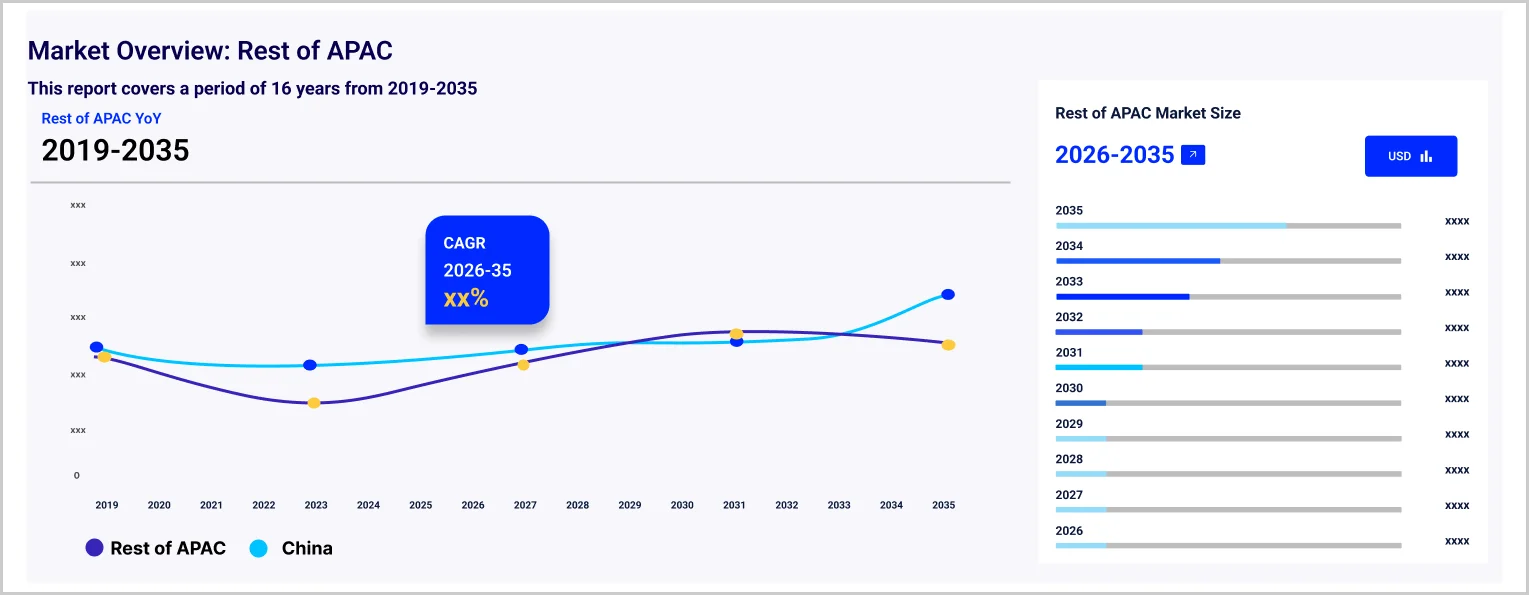
The Asia Pacific pharmaceutical packaging market attained a value of USD 30.80 Billion in 2025 and is projected to expand at a CAGR of 8.60% through 2035. The market is further expected to achieve USD 70.28 Billion by 2035. The shift toward high-performance primary packaging for sensitive biologics is creating specialized demand across Asia Pacific. Biologics can interact with packaging materials, making extractables, leachables, particles, and container compatibility critical considerations. SCHOTT Pharma’s 2026 launch of its cartriQ® BioPure sterile glass cartridge, designed for complex biologics, illustrates this packaging shift. Additionally, China’s pharmaceutical packaging-material GMP requirements, effective January 2026, strengthen supplier qualification, batch inspection, and change-control requirements, encouraging manufacturers to adopt higher-specification packaging systems.
Expansion of serialization and traceability requirements is increasing demand for packaging with variable-data printing, QR codes, inspection systems, and serialization compatibility. In India, June 2026 amendments expanded QR-code-based traceability to vaccines, antimicrobials, narcotic and psychotropic medicines, and anti-cancer drugs, requiring codes on primary packaging or secondary packaging where space is inadequate. This regulatory expansion encourages pharmaceutical manufacturers to upgrade packaging lines and integrate digital authentication capabilities. Furthermore, the increase in complexity of biologics has created demand for container systems tailored to such biologics. Biologics which are temperature sensitive and expensive need to be packed using containers designed specifically for container closure integrity, compatibility of materials, sterility, and controlled temperature distribution. With the rise in manufacturing facilities for biologics in Asia Pacific, especially in China, India, South Korea, and Singapore, there exist many possibilities for such packaging, thereby boosting the Asia Pacific pharmaceutical packaging market value.
Intelligent primary packaging with inherent traceability capability is evolving as a dedicated innovation for the pharmaceutical industry of the Asia Pacific region, which manages high-value injectable drugs and biologics. SCHOTT Pharma's intelligent vials named EVERIC® have built-in DataMatrix code printed with a laser on the glass material itself, and it enables the identification of each package during the filling process without introducing any foreign substance. This innovative technology offers automated inspection, automated recall, segregation of batches, and clearing of the line while ensuring container integrity. It is reported by SCHOTT that this intelligent vial system has achieved readability of 1,000 containers per minute. Such packaging can strengthen supply-chain visibility while reducing mix-ups and supporting increasingly digitalized manufacturing environments.
As pharmaceutical pipelines move towards biologicals and injectables among other formulations, ensuring that the container is compatible with the drug becomes increasingly complex. The packaging must be able to mitigate issues associated with extractables and leachables, adsorption, and interaction between container-closure systems. Guidelines from WHO indicate the need to perform compatibility testing for container-closure systems with the emphasis on extractables and leachables. Packaging suppliers can set up compatibility testing for individual formulations, improve the extractables and leachables screening process and work with pharmaceutical organizations during the early stages of package development. They should also have strong supplier qualification and change control systems, especially since GMPs for China will require this starting January 2026, thereby boosting the Asia Pacific pharmaceutical packaging market developments.
Compound Annual Growth Rate
8.6%
Value in USD Billion
2026-2035
Nipro Corporation established its Asia Pacific Regional Headquarters in Singapore in September 2026 through the incorporation of Nipro Asia Pacific Group. The new regional hub brings together Nipro’s operations across more than 20 Asia Pacific markets under a coordinated structure. The company stated that the initiative is intended to enable faster decision-making, strengthen regional governance, and improve execution across its healthcare businesses. For pharmaceutical packaging, the regional consolidation supports Nipro’s broader strategy of providing locally responsive solutions while coordinating its pharmaceutical container and packaging activities across the region.
Amcor expanded its healthcare packaging production capabilities at its Sira facility in Karnataka, India, through a multi-million-dollar investment in June 2026. The expansion adds a new manufacturing line with automated online vision systems for products including ophthalmic containers and injectable vials. The investment is designed to increase output, improve production flexibility, shorten delivery times, and strengthen supply continuity for pharmaceutical customers across India and South Asia. The facility also supports the company’s development of high-performance healthcare packaging and patient-centric drug-delivery solutions.
DS Smith showcased pharmaceutical packaging innovations at Pharmapack Europe in January 2026, highlighting solutions aimed at improving pharmaceutical supply-chain visibility, product protection, and temperature management. The company presented its TailorTemp solution, designed to maintain controlled temperatures for up to 72 hours, alongside technologies providing real-time supply-chain insights. DS Smith also highlighted traceability capabilities that help pharmaceutical manufacturers and logistics providers monitor sensitive products throughout distribution. These developments demonstrate the company’s focus on combining fibre-based packaging with digital monitoring and temperature-control technologies for pharmaceutical logistics.
Nipro PharmaPackaging participated in CPHI Japan in April 2025, showcasing its pharmaceutical packaging capabilities to the Japanese and wider Asia Pacific pharmaceutical industry. Its portfolio includes glass tubes, vials, syringes, rubber stoppers, and integrated packaging solutions. The company operates pharmaceutical packaging facilities in Japan, India, and China, supporting its strategy of localised production and regional supply. Nipro’s participation highlighted its focus on customised pharmaceutical container solutions and technologies designed to meet evolving requirements for drug safety, quality, and efficient pharmaceutical manufacturing.
The application of the EU Packaging and Packaging Waste Regulation in August 2026 is moving pharmaceutical packaging discussions beyond broad sustainability claims toward documented recyclability, material composition, and technical compliance. The Asia Pacifican Commission states that mandatory recycled-content measures and requirements for recyclable packaging will apply from 2030, while medicinal-product packaging can receive specific exemptions where product quality or safety requires them. For packaging manufacturers, this creates a more segmented procurement environment: secondary and transport packaging can face stronger circularity pressure, whereas primary packs must balance recyclability with extractables, barrier performance, sterility, and drug compatibility. Suppliers that can provide regulatory dossiers, material declarations and design-for-recycling evidence will therefore become more valuable to pharmaceutical buyers.
As per the Proposal of the Critical Medicines Act by the Asia Pacifican Commission, the initiative is clearly aimed at boosting manufacturing resilience, diversification of supplier sources, and investment in strategic pharma projects in the EU region. These have implications for packaging procurement, as any investments in drug production in the region would require the availability of vials, bottles, closures, labels, cartons and transport formats. The Commission's supporting analysis states that strategic projects could involve building new facilities or upgrading existing production lines. Packaging suppliers therefore have an opportunity to align capacity expansion with pharmaceutical manufacturing clusters, establish dual-source production and offer validated alternatives for critical components. The resulting market opportunity is increasingly tied to supply assurance rather than packaging volume alone.
The structure of Asia Pacific's demographics leads to an increased need for packaging solutions for administering drugs in unsupervised clinical settings. In 2025, Eurostat reported 99 million people aged 65 or older in the Asia Pacifican Union, which comprised 22% of the population and a median age of 44.9 years. Such demographics increase the importance of easy-open and child-proof closures, dosage instructions legible, adherence packs and packaging that minimizes handling complexity. For B2B suppliers, the opportunity is not simply to redesign containers but to integrate ergonomic testing, information hierarchy, opening-force specifications and patient-use validation into packaging development. Packaging engineering is consequently becoming more closely connected with drug-delivery and patient-support programs, thus shaping the demand of the Asia Pacific pharmaceutical packaging market.
Industrial pharmaceutical output remains an important demand indicator for packaging converters and primary-container manufacturers. France's official industrial production index for pharmaceutical preparations reached 125.16 in July 2026, compared with a 2021 base of 100. Germany also maintains a substantial pharmaceutical manufacturing base, with official structural statistics identifying 700 enterprises within the pharmaceutical-products manufacturing classification in the latest dataset. These manufacturing footprints support recurring demand for validated primary packaging and associated secondary formats. Suppliers can capitalize by maintaining local technical service teams, shortening qualification timelines, and offering packaging platforms that can be transferred across multiple manufacturing sites without extensive revalidation.
The Asia Pacifican Critical Medicines Alliance identified geographical concentration of APIs and raw materials, erosion of parts of Asia Pacific's manufacturing base, and limited investment as vulnerabilities in critical-medicine supply chains. Packaging procurement is consequently becoming more closely connected with business-continuity planning. Pharmaceutical manufacturers increasingly need qualified alternate sources for packaging components, standardized specifications across plants, safety stocks for critical items and suppliers capable of supporting rapid qualification. For packaging producers, this favors multi-site manufacturing and standardized product platforms. Companies able to combine regulatory documentation with geographic redundancy can reduce the qualification burden associated with switching suppliers during shortages, transportation disruptions or unexpected manufacturing interruptions.
The Expert Market Research’s report titled "Asia Pacific Pharmaceutical Packaging Market Report and Forecast 2026-2035” offers a detailed analysis of the market based on the following segments:
Market Breakup by Materials
Key Insight: Plastics and polymers, glass, paper and paperboard, aluminum foil, and other materials are gaining traction simultaneously because pharmaceutical packaging requirements vary significantly by formulation, route of administration, stability profile, regulatory specification, and distribution environment. Plastics remain important for lightweight containers, closures, specialty bags, and flexible structures, while glass remains essential where chemical resistance and high containment performance are required. Paper and paperboard support secondary and tertiary formats, while aluminum foil provides high barrier protection in blister and laminate structures. Japan’s packaging industry recorded ¥6.136 trillion in shipment value for packaging materials and containers in 2025, illustrating the scale of the broader packaging manufacturing ecosystem supporting pharmaceutical supply chains.
Market Breakup by Product Type
Key Insight: Plastic bottles, specialty bags, parenteral containers, blister packs, closures, labels, and other products are developing as interconnected components of pharmaceutical packaging systems rather than isolated product categories. Oral solid-dose medicines continue to require efficient bottles and blister formats, while sterile products create demand for technically controlled containers and specialty bags. Closures increasingly incorporate child resistance, tamper evidence, and dispensing functions, while labels are becoming more data-intensive through serialization and traceability requirements. The interaction between these components is particularly important for pharmaceutical manufacturers because changing one component can trigger compatibility testing, line validation, stability assessment, and regulatory documentation.
Market Breakup by Packaging Type
Key Insight: Primary packaging is becoming increasingly popular in the Asia Pacific region as pharmaceutical production rises, and packaging that guarantees the safety and shelf-life of drugs becomes essential for pharmaceutical manufacturers. There has been increased use of vials, ampoules, blister packs, pre-filled syringes, and other packaging solutions, especially for injectables, biological drugs, and medicines sensitive to temperature changes. Secondary packaging has become important as pharmaceutical companies look for ways of ensuring better tamper evidence, product identification, patient information, and compliance with regulations. There is an increased use of folding cartons, labels, and protection solutions that include serialization and other means of authentication to reduce counterfeiting of medicines. Meanwhile, tertiary packaging is benefiting from expanding pharmaceutical distribution networks and cross-border trade across Asia Pacific. Corrugated cases, pallets, protective packaging, and temperature-controlled transport systems are being adopted to minimise damage during warehousing and transportation, particularly for sensitive medicines requiring controlled logistics conditions, thus driving the demand in the Asia Pacific pharmaceutical packaging market.
Market Breakup by Drug Delivery Mode
Key Insight: In Asia Pacific, oral drug packaging continues to see strong demand, with WHO procurement evidence showing that tablets represented 96.6% of procurement volume for selected access medicines in low- and middle-income countries, highlighting the importance of solid-dose formats. Injectable packaging is gaining importance with the expansion of vaccines and biotherapeutics; WHO’s prequalification database currently includes 649 finished pharmaceutical and biotherapeutic products, including injectable formulations. Topical and other delivery formats are also supported by increasingly diverse pharmaceutical formulations, while specialised packaging requirements are becoming more important for temperature-sensitive products. WHO’s 2025 vaccine-shipping guidance specifically incorporates ultra-low-temperature shipments, reinforcing demand for packaging capable of maintaining product integrity across complex regional supply chains.
Market Breakup by End Use
Key Insight: Pharma manufacturing, contract packaging, retail pharmacies, and institutional pharmacies are all contributing to packaging demand, but their procurement priorities differ. Pharmaceutical manufacturers emphasize validated packaging, high-volume production, regulatory documentation, and line compatibility. Contract packagers prioritize flexibility, rapid changeovers, multiple customer specifications, and smaller production runs. Retail pharmacies require packaging optimized for dispensing, identification, and patient handling, while institutional pharmacies emphasize unit-dose formats, aggregation, traceability, and hospital workflow integration. These differences are creating opportunities for packaging companies to segment their portfolios by procurement environment rather than relying solely on material or container type.
Market Breakup by Country
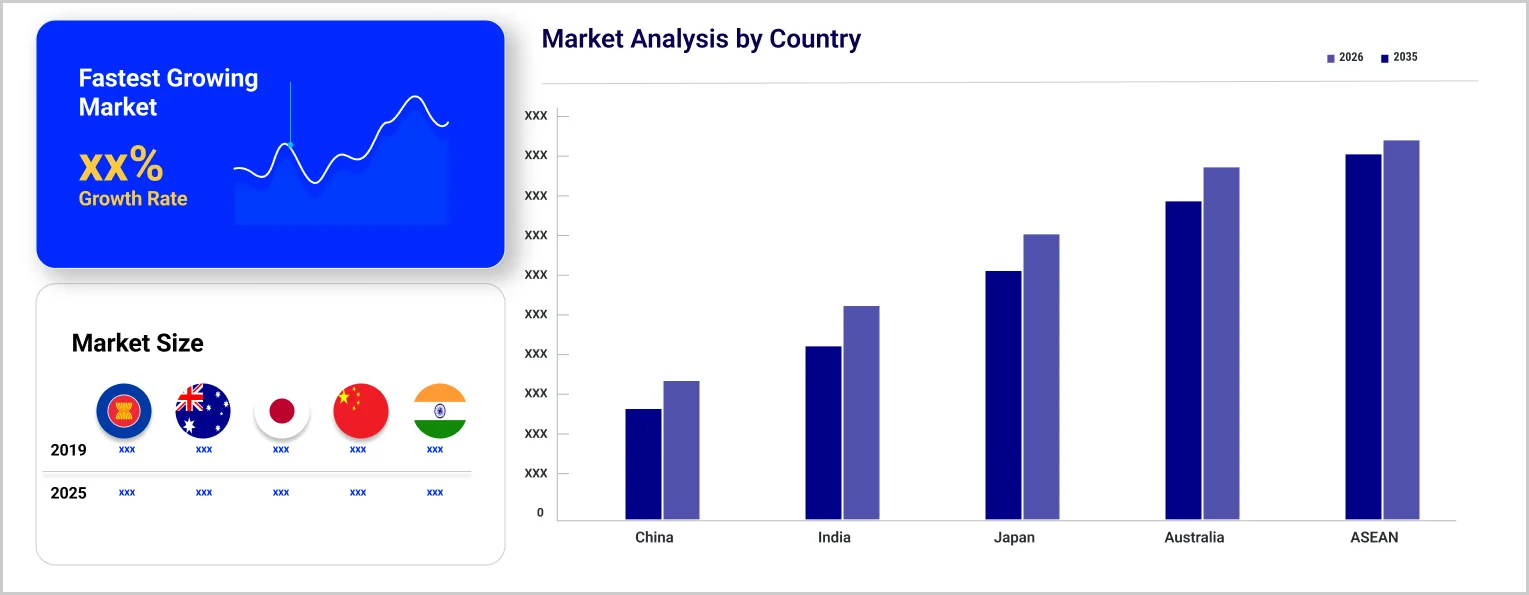
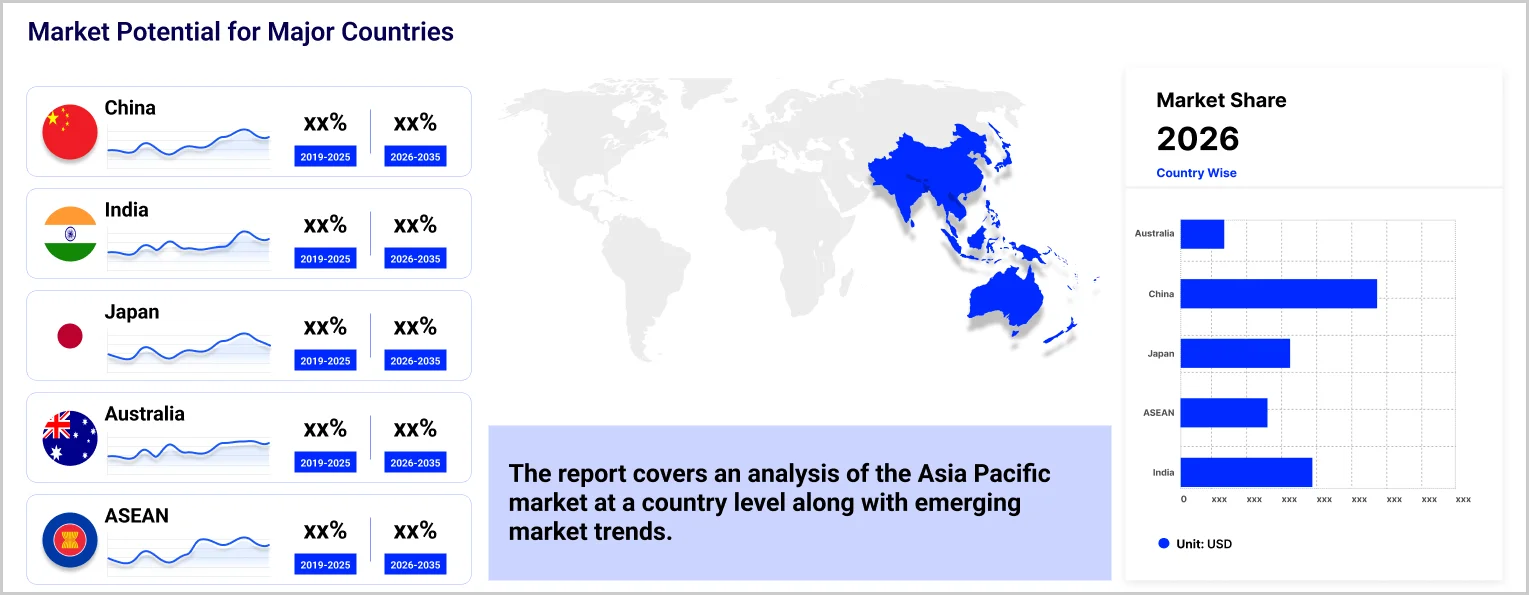
Key Insight: China, Japan, India, ASEAN, Australia, and other Asia Pacific markets are progressing through different pharmaceutical-manufacturing models, creating a diversified packaging demand base. China combines large-scale industrial capacity with increasingly formalized packaging-material and contract-manufacturing oversight. Japan provides a mature pharmaceutical and packaging ecosystem with strong quality requirements. India is expanding manufacturing and exports, while ASEAN is attracting multinational pharmaceutical investment. Australia is emphasizing sovereign manufacturing capacity for critical medicines. Packaging suppliers therefore need country-specific strategies covering regulatory approval, local content, technical service, logistics, and customer qualification rather than treating Asia Pacific as a single procurement market.
By material, plastics and polymers dominate due to format versatility and scalability
Plastics and polymers represent a major material category because they combine lightweight construction with flexibility across bottles, blister components, closures and other formats. Eurostat reported that 19.8% of EU packaging waste was plastic in 2023, equivalent to 35.3 kg per person. Of this waste, 14.8 kg per person was recycled, demonstrating the scale of plastic packaging flows and the growing importance of recyclable pharmaceutical-grade polymer solutions. Such developments will thus boost Asia Pacific pharmaceutical packaging market trends in the long run.
Glass is anticipated to record the fastest growth as Asia Pacific pharmaceutical production shifts toward biologics, injectables, vaccines, and other sensitive formulations requiring high-performance primary containment. The scale of this opportunity is visible in India, where pharmaceutical-sector turnover reached ₹4.72 lakh crore in FY2024-25, supporting demand for packaging across conventional and higher-value medicines. In parallel, SCHOTT Pharma's development of specialized vial systems for sensitive biologics demonstrates increasing investment in pharmaceutical-grade glass technologies. The shift toward high-value injectable products is increasing requirements for Type I glass, ready-to-use vials, cartridges, and other specialized formats.
By product type, plastic bottles dominate, while parenteral containers expand fastest
Plastic bottles account for a substantial share of pharmaceutical packaging demand because they serve multiple oral solid and liquid formulations while supporting high-volume automated production. Their compatibility with different closures, barrier requirements, capacities, and labeling systems allows pharmaceutical manufacturers to use bottle platforms across multiple product lines. India’s pharmaceutical industry supplies approximately 20% of global generic medicines by volume, creating a sizable manufacturing base requiring standardized packaging formats for domestic and export markets. This export orientation also increases demand for containers capable of meeting different destination-market specifications.
Parenteral containers are expected to experience faster expansion as pharmaceutical companies increase production of injectable medicines, biologics, vaccines, and other complex therapies. India alone has manufacturing capacity for 218 APIs, key starting materials, and drug intermediates under its pharmaceutical production-linked initiatives, demonstrating the expanding industrial base behind higher-value pharmaceutical manufacturing. For packaging suppliers, this supports opportunities for vials, cartridges, prefillable syringes, and specialized polymer containers. The segment also benefits from the increasing requirement for ready-to-use components that can reduce preparation and handling requirements at fill-finish facilities.
By packaging type, primary packaging dominates, while tertiary packaging gains momentum
Primary packaging maintains the dominant position because it directly protects pharmaceutical products and must meet strict compatibility, containment, stability, and quality requirements. China’s pharmaceutical packaging-material GMP framework requires manufacturers to maintain comprehensive quality systems, inspect each production batch, qualify raw-material suppliers, and manage manufacturing changes through formal risk assessment. Such requirements directly reinforce the strategic importance of primary packaging because failures in containers, closures, films, or other product-contact components can affect drug quality. Pharmaceutical manufacturers consequently prioritize qualified suppliers with validated production and consistent material performance, thereby shaping the demand in the Asia Pacific pharmaceutical packaging market.
Tertiary packaging is gaining momentum as pharmaceutical manufacturing becomes more geographically distributed and medicines move through longer regional supply chains. The expansion of India's pharmaceutical exports, which exceeded ₹2.43 lakh crore under the sector's three PLI schemes, is increasing the importance of transport protection, aggregation, palletization, and shipment identification. Pharmaceutical suppliers increasingly require tertiary systems that protect finished packs against compression, vibration, moisture, handling damage, and unauthorized opening. Packaging manufacturers can therefore differentiate through stronger transport configurations, serialized logistics labels, temperature-monitoring integration, and optimized pallet designs.
By delivery mode, oral drugs dominate, while injectable packaging expands faster
Oral drugs remain the dominant delivery mode because tablets and capsules constitute a major portion of pharmaceutical manufacturing across Asia Pacific, particularly within India's large generic-drug ecosystem. India supplies around 20% of the world's generic medicines, creating sustained requirements for bottles, blister structures, closures, desiccant systems, and labeling formats. Oral medicines also benefit from established packaging machinery and standardized filling processes, allowing manufacturers to achieve high throughput with relatively mature packaging technologies. Export-oriented pharmaceutical companies further require formats capable of satisfying multiple market-specific labeling, serialization, and tamper-evidence requirements.
Injectable packaging is expected to register faster growth as pharmaceutical manufacturing increasingly incorporates biologics, vaccines, complex generics, and other products requiring sterile delivery. India's pharmaceutical PLI programs have attracted more than ₹51,997 crore in investment, supporting expansion across the country's pharmaceutical manufacturing ecosystem. This industrial expansion creates additional opportunities for vials, ampoules, cartridges, prefilled syringes, and specialized closures. Suppliers that combine high-quality containment with ready-to-use delivery formats can address growing requirements for efficient fill-finish operations, particularly where manufacturers seek to reduce component preparation and improve line productivity.
By end use, pharma manufacturing dominates, while contract packaging expands faster
Pharma manufacturing represents the dominant end-use segment because packaging is embedded directly within drug-production, filling, labeling, inspection, and release workflows. India ranked third globally by pharmaceutical production volume and generated ₹4.72 lakh crore in pharmaceutical-sector turnover during FY2024-25, illustrating the scale of regional drug manufacturing that directly requires packaging inputs. Manufacturers increasingly procure packaging based on validated performance, regulatory documentation, production consistency, and supply continuity. This favors packaging companies with dedicated pharmaceutical facilities and technical teams capable of supporting qualification and change-control requirements.
Contract packaging is expected to expand faster as pharmaceutical companies seek greater manufacturing flexibility and outsource selected packaging, labeling, assembly, and market-specific customization activities. China's strengthened pharmaceutical contract-manufacturing oversight in 2026 is formalizing responsibilities between marketing authorization holders and manufacturing partners. At the same time, the expansion of India's pharmaceutical manufacturing ecosystem is creating a wider customer base for external packaging specialists. The model enables smaller pharmaceutical companies, specialty-drug manufacturers, and export-oriented producers to access qualified packaging capacity without building every packaging capability internally.
By country, China dominates through manufacturing scale, regulation, and pharmaceutical industrial depth
China represents the largest established pharmaceutical manufacturing opportunity within Asia Pacific, supported by a deep industrial base and increasingly sophisticated regulatory infrastructure. Its 2025 industrial sector value added increased 5.8%, while the pharmaceutical and medical industry accounted for a substantial component of patent-intensive industrial value added. Japan represents a mature, technically demanding packaging environment; its packaging materials and containers generated ¥6.136 trillion in shipment value in 2025, while pharmaceutical domestic production reached ¥10.25 trillion in 2024. These markets favor suppliers capable of maintaining high specification consistency, documentation quality, and automated production compatibility, thereby directly boosting the Asia Pacific pharmaceutical packaging market regional growth.
India and ASEAN are emerging as important expansion areas as pharmaceutical manufacturing becomes increasingly distributed across the region. India combines large-scale generic manufacturing with expanding complex-drug production, while ASEAN is attracting multinational investment into regional manufacturing networks. The ASEAN Investment Report 2025 documented major pharmaceutical investments in Singapore by AstraZeneca, Pfizer, Novartis, and AbbVie, including a US$1.5 billion AstraZeneca expansion. Australia represents a more specialized opportunity centered on supply resilience and advanced manufacturing, with new investment in IV fluids and vaccine production. Its 2024-25 PBS and RPBS medicines spending reached A$23.1 billion across 335.1 million prescriptions, demonstrating the scale of its pharmaceutical consumption ecosystem.
Leading Asia Pacific pharmaceutical packaging market players are increasingly aiming to develop safer, sustainable, and technologically advanced packaging solutions that address pharmaceutical manufacturers’ requirements for product protection, stability, traceability, and regulatory compliance. Companies are investing in recyclable and lightweight materials, high-barrier packaging, tamper-evident systems, child-resistant formats, and patient-friendly designs. There is also greater emphasis on packaging solutions for biologics, injectable drugs, and temperature-sensitive medicines, where packaging performance directly affects product integrity. Manufacturers are also strengthening regional production capabilities to improve supply-chain resilience and respond to the expanding pharmaceutical manufacturing base across Asia Pacific.
Asia Pacific pharmaceutical packaging companies are developing serialization, track-and-trace, authentication, and digital monitoring solutions to help pharmaceutical companies address counterfeit medicines and improve supply-chain visibility. They are also pursuing strategic partnerships, capacity expansions, and product innovation to serve diverse regulatory environments across countries such as China, India, Japan, South Korea, and Australia. Sustainability remains central, with companies targeting lower material consumption, improved recyclability, and reduced packaging waste without compromising pharmaceutical safety.
Established in 1860 and headquartered in Zurich, Switzerland, Amcor Plc provides a broad pharmaceutical and healthcare packaging portfolio across Asia Pacific, including sterile barrier packaging, thermoformed solutions, flexible packaging, rigid containers, and high-barrier formats. Its portfolio includes blister packaging, bottles, and specialised solutions designed to support drug protection, product integrity, and patient safety. The company also develops recyclable packaging formats and healthcare packaging technologies for pharmaceutical manufacturers, supporting regulatory requirements and supply-chain needs across the Asia Pacific region.
Established in 1967 and headquartered in Evansville, Indiana, United States, Berry Global Group Inc. offers pharmaceutical packaging across Asia Pacific through bottles, vials, caps and closures, jars, tubes, dispensing systems, containers, and drug-delivery components. Its healthcare portfolio also includes ophthalmic packaging, nasal and throat spray systems, dry powder inhaler components, and metered-dose inhaler solutions. The company focuses on patient-centric packaging, drug-delivery technologies, circular-design solutions, and packaging systems that support pharmaceutical manufacturers in meeting quality, safety, and regulatory requirements across regional markets.
Established in 1954 and headquartered in Osaka, Japan, Nipro Corp. provides pharmaceutical primary packaging and drug-delivery solutions throughout Asia Pacific, including glass containers, glass tubing, rubber stoppers, vials, ampoules, cartridges, and prefillable glass syringes. Its packaging portfolio is designed for injectable and sensitive pharmaceutical products, with solutions supporting reliable filling, storage, and administration. Nipro also develops specialised packaging such as ready-to-use glass vials and silicone-oil-free syringe systems, serving pharmaceutical manufacturers seeking integrated primary packaging and drug-delivery solutions.
Established in 1940 and headquartered in London, United Kingdom, DS Smith Plc provides pharmaceutical and medical packaging focused primarily on secondary, transport, and protective applications across Asia Pacific. Its portfolio includes folding cartons with braille, tamper-evident features, child-resistant and senior-friendly designs, alongside corrugated cases, temperature-controlled packaging, and protective transport solutions. The company also provides track-and-trace and supply-chain monitoring capabilities. These solutions are designed to protect pharmaceutical products during storage and distribution while supporting packaging efficiency, product security, regulatory requirements, and sustainability objectives.
Other key players in the Asia Pacific pharmaceutical packaging market include Gerresheimer AG, Sonoco Products Co., Sealed Air Corp., Schott AG, WestRock Co., AptarGroup, Inc., and OPTIMA packaging group GmbH, among others.
*Please note that this is only a partial list; the complete list of key players is available in the full report. Additionally, the list of key players can be customized to better suit your needs.*
Access the sample report to understand the latest Asia Pacific Pharmaceutical Packaging Market trends 2026, regulatory developments, competitive strategies, and segment-level opportunities. The Asia Pacific Pharmaceutical Packaging Market forecast 2026-2035 provides a structured basis for evaluating packaging materials, product formats, drug-delivery applications, end uses, and country opportunities. Download the sample to assess market dynamics and identify actionable growth areas across Asia Pacific.


Upto 15% Off
USD
$2499 $2249
$3999 $3599
$4999 $4249
$5999 $5099


*While we strive to always give you current and accurate information, the numbers depicted on the website are indicative and may differ from the actual numbers in the main report. At Expert Market Research, we aim to bring you the latest insights and trends in the market. Using our analyses and forecasts, stakeholders can understand the market dynamics, navigate challenges, and capitalize on opportunities to make data-driven strategic decisions.*
In 2025, the market reached an approximate value of USD 30.80 Billion.
The market is projected to grow at a CAGR of 8.60% between 2026 and 2035.
The market is assessed to witness a healthy growth in the forecast period to reach around USD 70.28 Billion in 2035.
The different materials used in pharmaceutical packaging include plastics and polymers, glass, paper and paperboard, and aluminium foil, among others.
The different product types in the market include plastic bottles, speciality bags, parenteral container, blister packing, closures, and labels, among others.
The different end uses of pharmaceutical packaging are pharma manufacturing, contract packaging, retail pharmacy, and institutional pharmacy.
The major regions in the market include China, Japan, India, ASEAN, and Australia, among others.
Key players in the market are Amcor Plc, Berry Global Group Inc., Nipro Corp., DS Smith Plc, Gerresheimer AG, Sonoco Products Co., Sealed Air Corp., Schott AG, WestRock Co., AptarGroup, Inc., and OPTIMA packaging group GmbH, among others.
Key challenges include stringent regulatory requirements, rising costs of raw materials, complex supply chains, counterfeit medicines, sustainability pressures, limited recycling infrastructure, and the need for advanced packaging technologies that ensure product stability, tamper resistance, serialization, and compliance across diverse regional markets.
Key strategies include investing in sustainable and smart packaging, expanding local manufacturing capacity, adopting serialization and track-and-trace technologies, developing patient-friendly formats, strengthening supply-chain resilience, and forming strategic partnerships to meet evolving pharmaceutical regulations and rising demand across Asia Pacific.
Explore our key highlights of the report and gain a concise overview of key findings, trends, and actionable insights that will empower your strategic decisions.
| REPORT FEATURES | DETAILS |
| Base Year | 2025 |
| Historical Period | 2019-2025 |
| Forecast Period | 2026-2035 |
| Scope of the Report |
Historical and Forecast Trends, Industry Drivers and Constraints, Historical and Forecast Market Analysis by Segment:
|
| Breakup by Materials |
|
| Breakup by Product Type |
|
| Breakup by Packaging Type |
|
| Breakup by Drug Delivery Mode |
|
| Breakup by End Use |
|
| Breakup by Region |
|
| Market Dynamics |
|
| Competitive Landscape |
|
| Companies Covered |
|
Datasheet
One User
USD 2,499
USD 2,249
tax inclusive*
Single User License
One User
USD 3,999
USD 3,599
tax inclusive*
Five User License
Five User
USD 4,999
USD 4,249
tax inclusive*
Corporate License
Unlimited Users
USD 5,999
USD 5,099
tax inclusive*
*Please note that the prices mentioned below are starting prices for each bundle type. Kindly contact our team for further details.*
Flash Bundle
Small Business Bundle
Growth Bundle
Enterprise Bundle
*Please note that the prices mentioned below are starting prices for each bundle type. Kindly contact our team for further details.*
Flash Bundle
Number of Reports: 3
20%
tax inclusive*
Small Business Bundle
Number of Reports: 5
25%
tax inclusive*
Growth Bundle
Number of Reports: 8
30%
tax inclusive*
Enterprise Bundle
Number of Reports: 10
35%
tax inclusive*
How To Order

Select License Type
Choose the right license for your needs and access rights.

Click on ‘Buy Now’
Add the report to your cart with one click and proceed to register.

Select Mode of Payment
Choose a payment option for a secure checkout. You will be redirected accordingly.
Strategic Solutions for Informed Decision-Making
Gain insights to stay ahead and seize opportunities.

Get insights & trends for a competitive edge.

Track prices with detailed trend reports.

Analyse trade data for supply chain insights.

Leverage cost reports for smart savings

Enhance supply chain with partnerships.

Connect For More Information
Our expert team of analysts will offer full support and resolve any queries regarding the report, before and after the purchase.
Our expert team of analysts will offer full support and resolve any queries regarding the report, before and after the purchase.
We employ meticulous research methods, blending advanced analytics and expert insights to deliver accurate, actionable industry intelligence, staying ahead of competitors.
Our skilled analysts offer unparalleled competitive advantage with detailed insights on current and emerging markets, ensuring your strategic edge.
We offer an in-depth yet simplified presentation of industry insights and analysis to meet your specific requirements effectively.




