


Consumer Insights
Uncover trends and behaviors shaping consumer choices today
Procurement Insights
Optimize your sourcing strategy with key market data
Industry Stats
Stay ahead with the latest trends and market analysis.
The Asia Pacific water and wastewater treatment market was valued at USD 176.06 Billion in 2025. The market is expected to grow at a CAGR of 7.70% during the forecast period of 2026-2035 to reach a value of USD 369.67 Billion by 2035. Rapid industrial expansion in sectors like chemicals, textiles, and food processing is driving demand for advanced wastewater treatment solutions, particularly zero-liquid discharge systems, across Asia Pacific’s fast-growing economies.
The market growth is being propelled by regulatory reforms and sustainability mandates. One major driving factor is the surge in water reuse initiatives. For instance, China introduced its first national-level Regulations on Water Conservation in May 2024, which sets sector-specific water quotas and recycling targets, accelerating the Asia Pacific water and wastewater treatment market growth. Meanwhile, Indonesia’s national water strategy aims for 100% urban coverage by 2030, supported by large-scale infrastructure like the Buaran III Water Treatment Plant, expected to add 260,000 cubic meters of clean water per day to communities in Jakarta by 2025. These developments highlight the region’s dual focus on urban resilience and industrial compliance.
The region is also benefitting from multilateral backing. Programs like the Asian Development Bank’s Water Resilience Initiative and the 2025–2034 Regional 3R and Circular Economy Declaration are channeling funds toward advanced treatment and reuse systems, reshaping the Asia Pacific water and wastewater treatment market dynamics. In Cambodia, the Livable Cities Investment Project supported by a USD 180 million loan is expanding wastewater networks and flood control for fast-growing cities such as Kampot and Poipet. These projects emphasize how international partnerships are bridging funding gaps.
Compound Annual Growth Rate
7.7%
Value in USD Billion
2026-2035
Australian infrastructure company Downer announced more than AUD 900 million in contract renewals, extensions and new agreements across Australia and New Zealand, covering water, wastewater and electricity networks. The water-related work includes a renewal with Watercare for maintenance across Auckland’s northern water and wastewater network, continued work under Logan City Council’s Water Infrastructure Program Alliance, and a new Invercargill City Council contract covering water, wastewater and stormwater networks. The contracts reinforce demand for outsourced network maintenance, wastewater operations and infrastructure renewal across Australia and New Zealand.
Downer secured a new contract with Invercargill City Council to operate and maintain the city's drinking-water, wastewater and stormwater networks. The operations and maintenance component is worth approximately NZD 45 million or more over a 5+5+5-year structure, while potential capital-renewal works could exceed NZD 75 million. The scope includes leak and blockage repairs, emergency response, asset inspections, condition monitoring and network upgrades. The agreement creates sustained demand for network rehabilitation, asset monitoring and wastewater maintenance services in New Zealand.
The World Bank Group approved the Philippines Accelerated Water and Sanitation Project in Selected Areas, with a total project cost of US$268.62 million, including US$250.87 million in World Bank financing. The programme will expand climate-resilient water supply, sanitation, storage and distribution infrastructure in Bohol, Siargao and Jolo. The project is expected to generate approximately 8,700 jobs within five years of completion and around 46,500 over 25 years. The investment is expected to generate opportunities for water-treatment, sanitation infrastructure and climate-resilient utility projects in the Philippines, thus boosting the trends of the Asia Pacific water and wastewater treatment.
Veralto Corporation acquired India-based Alfaa UV, strengthening its portfolio of ultraviolet water-treatment technologies. Alfaa UV provides UV-based disinfection systems for water-treatment applications, while Veralto said the acquisition would expand its capabilities for industrial and commercial customers. The transaction gives Veralto a stronger presence in India's water-treatment technology ecosystem and adds locally developed UV expertise to its international portfolio. The acquisition increases consolidation in Asia Pacific water-treatment technology and strengthens access to UV disinfection solutions for industrial and commercial applications.
Water utilities in Asia Pacific are increasingly looking beyond simple wastewater disposal towards resource recovery and energy-efficient reuse. In June 2026, the PUB of Singapore was allocated close to S$100 million of RIE2030 funds, S$85 million of which was allocated towards municipal water solutions. PUB intends to construct an energy positive used-water treatment validation plant, whose development will commence in 2027. Industrial wastewater reuse research has also been conducted in Singapore, focusing on such technologies as membrane bioreactor and reverse osmosis, capable of generating reusable process water.
Japan is increasingly examining a mix of centralised and decentralised wastewater systems as population decline and ageing infrastructure put pressure on conventional networks. In 2026, Japan's Ministry of Land, Infrastructure, Transport and Tourism initiated a programme across several ministries aimed at formulating guidelines to optimize their wastewater treatment facilities based on the “best mix” of centralized and decentralized treatment options. The government pointed out falling populations, staffing shortages, and aging infrastructure as some of the drivers. This creates opportunities for compact treatment plants and distributed wastewater technologies in smaller municipalities where maintaining large conventional networks is increasingly difficult.
Digital technologies are moving from pilot concepts towards practical wastewater infrastructure maintenance in Japan. As per the FY2026 AB-Cross demonstrations from the Ministry of Land, Infrastructure, Transport and Tourism, there are projects involving drones equipped with AI to inspect sewers, floating inspection robots, digital modeling for preventive maintenance along with cavity detection in sewers through autonomous robots. These technologies focus on the aging underground infrastructure and shortage of skilled labor, thereby propelling the Asia Pacific water and wastewater treatment demand. The development indicates that the regional wastewater market is expanding beyond treatment equipment into automated inspection, predictive maintenance and infrastructure intelligence, creating a new technology layer around existing sewer networks.
Water treatment requirements are becoming increasingly specialised as Asia Pacific expands water-intensive digital and advanced-manufacturing industries. In June 2026, Singapore announced an additional S$12 million in funding through the RIE2030 scheme towards industrial water technology that will cater to wafer fabrication and data centers. According to the Public Utilities Board (PUB), these two sectors are among the heaviest consumers of water in Singapore. The industrial water programme of the PUB also encourages the treatment and recycling of industrial wastewater. This is creating demand for high-purity treatment, recycling and process-water systems rather than conventional municipal treatment alone.
Asian water-treatment technology suppliers are receiving greater institutional support to demonstrate their systems in overseas markets. Japan's WOW TO JAPAN program in FY2026 was not limited only to wastewater technologies but was extended to water supply technologies due to its increased emphasis on exporting water infrastructural know-how to other countries. This program finances demonstration projects abroad to test technology efficiency in a foreign environment, and each project can be funded up to ¥23 million, or ¥45 million for two years. This creates opportunities for Japanese treatment, monitoring, rehabilitation and water-supply technology providers to establish references in other Asia Pacific markets.
Read more about this report - REQUEST FREE SAMPLE COPY IN PDF
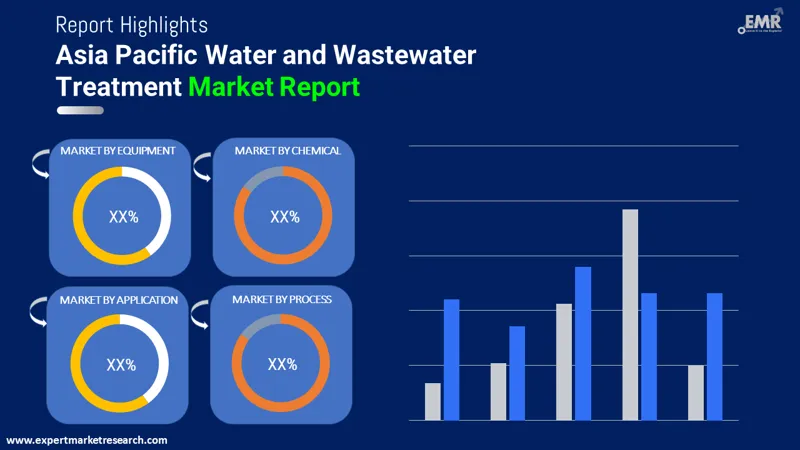
The EMR’s report titled “Asia Pacific Water and Wastewater Treatment Market Report and Forecast 2026-2035” offers a detailed analysis of the market based on the following segments:
Market Breakup by Equipment
Key Insight: Membrane, biological, disinfection, sludge and niche equipment categories are evolving as clear, distinct driving factors of the surging Asia Pacific water and wastewater treatment market value. Membranes dominate for high-quality reuse and foul-resistant properties. Biological systems remain crucial for bulk organic removal and lower operational cost. Disinfection growth is spurred by stricter hygiene standards and portable modular solutions. Sludge equipment is shifting toward energy-positive digestion and resource recovery, turning waste into revenue.
Market Breakup by Chemical
Key Insight: Chemical categories including pH conditioners, coagulants, disinfectants, antifoams, inhibitors and others, are responding to different operational and regulatory needs. Coagulants and flocculants dominate clarification and sludge handling, often coupled with predictive dosing systems, driving the Asia Pacific water and wastewater treatment market revenue. Disinfectants are adapting to stricter hygiene expectations with UV and advanced oxidants. pH conditioners and antifoams are optimizing reactions and preventing process upsets, while scale and corrosion inhibitors are protecting capital equipment in thermal and saline contexts.
Market Breakup by Process
Key Insight: Primary, secondary and tertiary processes are being reimagined to support reuse and resource recovery priorities. Primary treatment remains essential for solids removal and grit management in new and upgraded plants, accelerating the water and wastewater treatment consumption in Asia Pacific. Secondary biological processes are optimized with sensor-driven aeration, bioaugmentation and membrane integration to lower energy use and footprint. Tertiary systems are expanding for microcontaminant removal, nutrient recovery and potable reuse readiness.
Market Breakup by Application
Key Insight: Municipal, industrial and agricultural applications are contributing to the Asia Pacific water and wastewater treatment market growth with distinct innovations. Municipal systems are focusing on decentralized reuse, tertiary upgrades, and water-as-a-service contracts to expand coverage affordably. Industrial users are prioritizing ZLD, modular skids and integrated chemistry-plus-O&M bundles to meet strict discharge norms while recovering value.
Market Breakup by Region
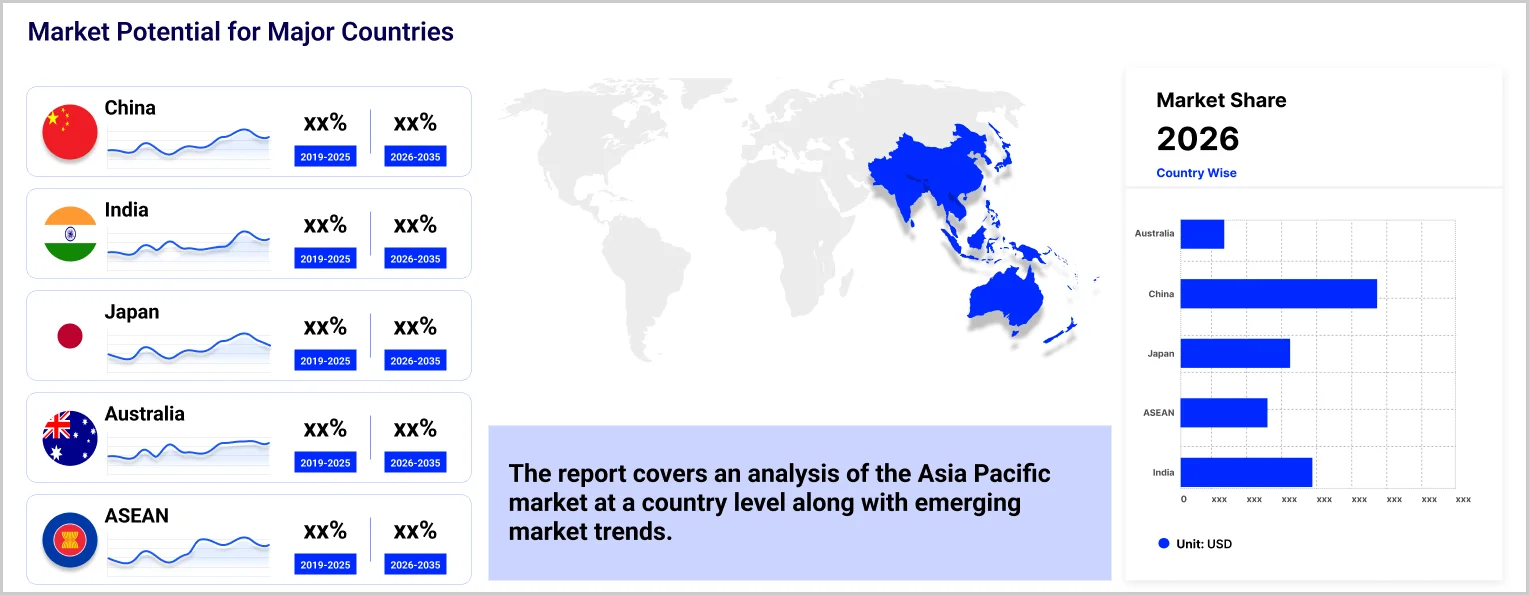
Key Insight: As per the Asia Pacific water and wastewater treatment market report, China is prioritizing scale, strict enforcement and membrane-heavy reuse projects. Japan is leading in automation, material science and compact, high-efficiency process design for industrial customers. India is rapidly scaling modular plants, PPP financing and local manufacturing to accelerate urban coverage. ASEAN countries are favoring hybrid desalination and reuse for coastal urban centers, while Australia is focusing on nutrient recovery and aquifer recharge.
Read more about this report - REQUEST FREE SAMPLE COPY IN PDF
By equipment, membrane separation registers the largest market share due to superior contaminant removal
Membrane separation is the pillar of advanced water treatment in Asia Pacific, favored for its ability to remove micropollutants, viruses, and salts without chemical overuse. Recent nanocomposite membranes are reducing fouling and energy intensity, extending run-times and shrinking lifecycle costs for operators. Municipal utilities in dense cities prefer ultrafiltration and reverse osmosis hybrids for potable reuse, while industrial users select nanofiltration for targeted separation and resource recovery.
Disinfection equipment is expanding its share in the Asia Pacific water and wastewater treatment market, driven by public health priorities and industrial hygiene demands. Other than legacy chlorination, new UV-LED, advanced oxidation, and plasma-based units are being deployed for compact, energy-efficient pathogen control. Portable and modular disinfection skids enable emergency response and decentralized treatment.
By chemical, coagulants and flocculants accounts for the leading market share due to essential clarification role
Coagulants and flocculants, delivering reliable solids capture and enabling efficient sludge dewatering for downstream processing, represent the dominant share of the market. In rapidly industrializing regions, suppliers are introducing polymer blends tailored to high-strength industrial effluents, reducing chemical dosages and improving filterability.
Scale and corrosion inhibitors are experiencing fast-paced growth in the Asia Pacific water and wastewater treatment market as industrial operators seek to protect high-value assets. Advanced inhibitor chemistries are being formulated to withstand high-temperature, high-salinity streams typical in ZLD and thermal concentration units. Vendors are offering tailored inhibitor packages paired with remote monitoring to signal scaling thresholds and trigger automated dosing, preventing downtime and costly manual interventions.
Secondary treatment clocks in the maximum share of the market due to efficient biological removal
Secondary treatment, with activated sludge and biofilm reactors, removes organic load and nutrients across APAC municipal and industrial plants. Operators are optimizing aeration with sensor-driven dissolved oxygen control, variable-speed blowers, and intermittent aeration strategies to reduce energy intensity. Packaged biofilm systems are being favored in space-constrained urban retrofits, delivering robust nitrification-denitrification in compact footprints. Integration with membrane polishing units is enabling direct reuse applications, boosting demand in the Asia Pacific water and wastewater treatment market.
Tertiary treatment is the fastest-growing process category as regulators and utilities demand reuse-grade effluent and nutrient recovery. Advanced membrane filtration, activated carbon polishing, and targeted ion exchange are being combined into compact tertiary trains capable of removing microcontaminants and emerging pollutants. Operators are integrating nutrient recovery modules that extract phosphorus and ammonia for fertilizer markets, creating circular revenue streams.
Municipal applications secure the largest share of the market due to urbanization and regulation
Municipal wastewater treatment continues to dominate the Asia Pacific water and wastewater treatment demand forecast as cities expand and sanitation targets tighten. Beyond centralized plants, innovation is focused on decentralized containerized units, neighborhood reuse hubs, and resource recovery to serve peri-urban communities. Municipalities are increasingly contracting private operators under water-as-a-service models to avoid capex burdens while accessing advanced treatment technology.
Growth of industrial applications are driven by stricter effluent norms and the need for circular water use in sectors like chemicals, textiles, semiconductors and food processing. Industries are deploying ZLD, MBRs and hybrid desalination-reuse trains to reclaim process water and recover salts and chemicals as revenue streams. Suppliers are offering integrated chemistry, membrane modules and O&M packages under long-term contracts to guarantee compliance and uptime.
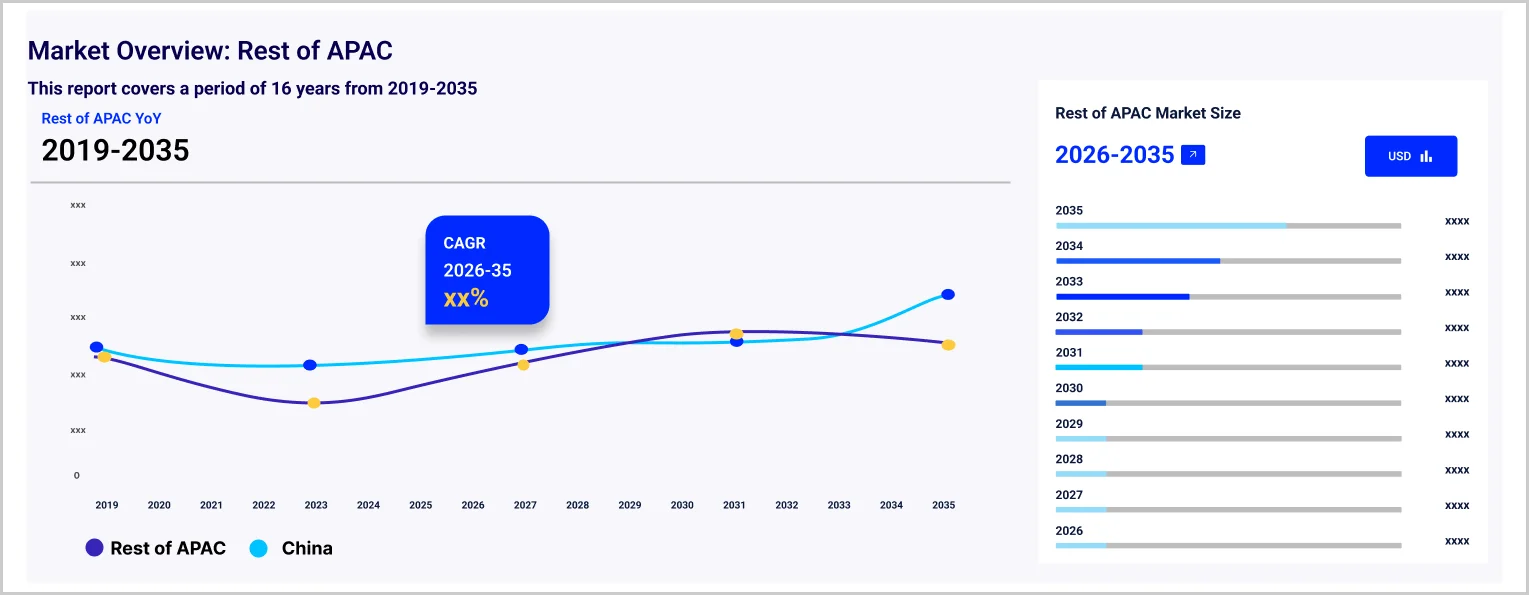
China leads the market due to vast infrastructure and enforcement
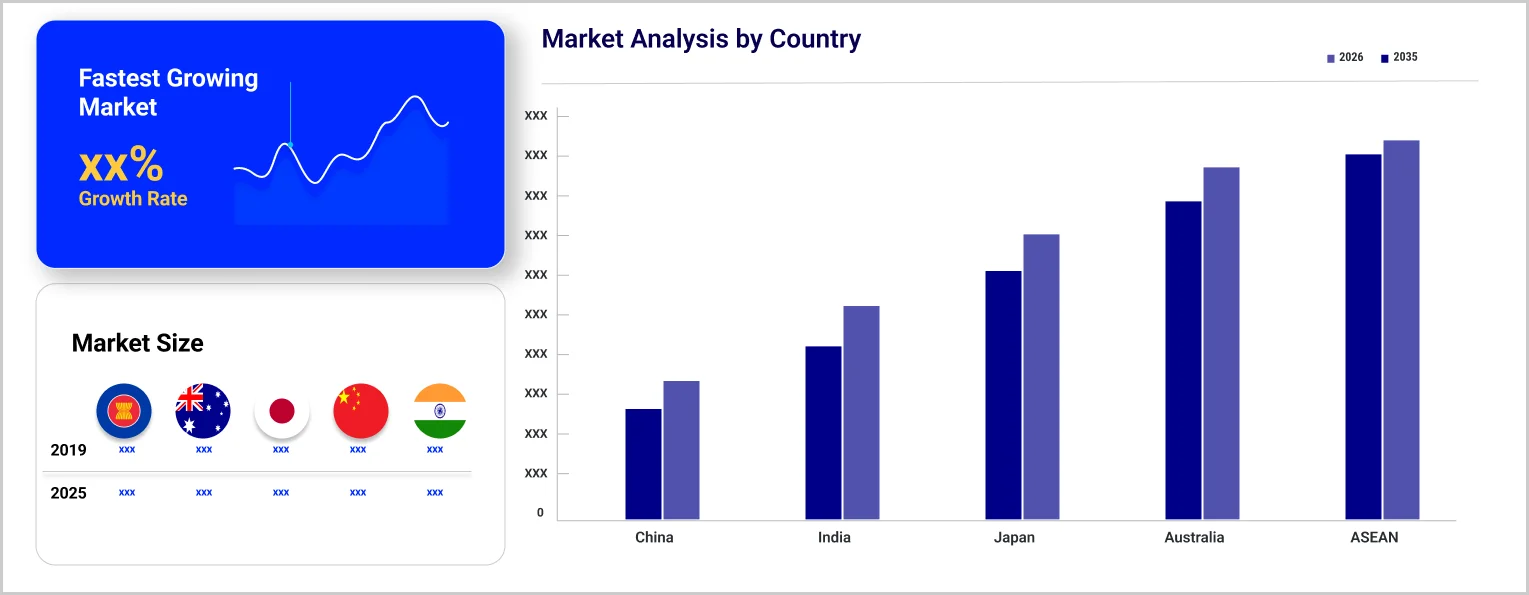
China leads the Asia Pacific market with expansive municipal upgrades, aggressive reuse mandates, and major industrial retrofits. The country is deploying membrane-heavy trains, PFAS-targeted treatment units, and large-scale nutrient recovery projects to meet national targets. Local firms are pairing modular process skids with national digital platforms for compliance reporting, enabling faster approvals and replicable deployment across provinces.
India represents the fastest-growing water and wastewater treatment market in Asia Pacific, driven by urbanization, national missions and funding for sewage networks and treatment plants. Smart city programs are favoring modular, plug-and-play solutions for rapid deployment in mid-sized cities and peri-urban zones. Industrial ZLD adoption is accelerating in textiles and pharmaceuticals where compliance penalties are increasing, and suppliers are offering compact ZLD skids coupled with remote monitoring to cut OPEX.
Leading Asia Pacific water and wastewater treatment market players are leveraging scale, integrated service offerings and digital platforms to win large urban and industrial clients, while regional firms are competing on cost, fast localization and bundled O&M. Key opportunities lie in modularization, ZLD, membrane-as-a-service, and sensor-enabled predictive maintenance where suppliers can differentiate on speed-to-deploy and lifecycle economics. Mid-sized engineering firms are moving into subscription models and partnering with chemical suppliers to offer turnkey compliance packages.
Private investors and multilateral banks are prioritizing projects with measurable circularity outcomes, creating financing channels for resource recovery projects. Asia Pacific water and wastewater treatment companies that combine modular hardware, validated digital operations and creative financing to convert capex-heavy projects into recurring revenue streams. Players that can offer proven pilot outcomes, performance guarantees, and local O&M capacity are winning priority access to tenders and PPPs.
Founded in 1872, with its headquarters located in Germany, Huber SE is supplying robust mechanical equipment and compact process plants tailored to municipal and industrial needs across Asia Pacific. The firm is pushing automated screening, grit removal, and modular sludge systems that reduce energy use in dense cities.
Founded in 1869 and based in Paris, France, SUEZ combines large-scale engineering with digital water platforms to serve cities and factories across Asia Pacific. The company offers seawater desalination, industrial water reuse, and data-driven network management.
Based in 1853 and founded in the year 1870, Veolia delivers end-to-end treatment plants and specialty processes for heavy industry and utilities in Asia Pacific. It is scaling advanced membrane solutions, energy-recovery sludge lines and PFAS mitigation packs for industrial clients.
Founded in 1949 and based in Japan, Kurita is concentrating on industrial water management, chemical dosing, and zero-liquid-discharge (ZLD) solutions for Asia Pacific manufacturers. The company is commercializing compact ZLD trains, on-site recycling packages, and process chemicals formulated to reduce fouling and downtime in textile, power and semiconductor plants.
*Please note that this is only a partial list; the complete list of key players is available in the full report. Additionally, the list of key players can be customized to better suit your needs.*
Other key players in the market are Thermax Limited, SWA Water Australia, and MattenPlant Pte Ltd., among others.
Explore the latest trends shaping the Asia Pacific water and wastewater treatment market 2026-2035 with our in-depth report. Gain strategic insights, future forecasts, and key market developments that can help you stay competitive. Download a free sample report or contact our team for customized consultation on Asia Pacific water and wastewater treatment market trends 2026.
Digital Water Platforms In Asia Pacific
Urban Stormwater Management In Asia Pacific
Urban Sludge And Septage Management In Asia Pacific
Industrial Water Reuse In Asia Pacific
Membrane Filtration in Asia Pacific
Containerized Water Treatment In Asia Pacific
Asia Pacific PPP Models In Water Infrastructure
Smart Water Meters In Asia Pacific


Upto 15% Off
USD
$2499 $2249
$3999 $3599
$4999 $4249
$5999 $5099


*While we strive to always give you current and accurate information, the numbers depicted on the website are indicative and may differ from the actual numbers in the main report. At Expert Market Research, we aim to bring you the latest insights and trends in the market. Using our analyses and forecasts, stakeholders can understand the market dynamics, navigate challenges, and capitalize on opportunities to make data-driven strategic decisions.*
In 2025, the Asia Pacific water and wastewater treatment market reached an approximate value of USD 176.06 Billion.
The market is projected to grow at a CAGR of 7.70% between 2026 and 2035.
The key players in the market include Huber SE, SUEZ SA, Veolia Water Solutions and Technologies, Kurita Water Industries Ltd., Thermax Limited, SWA Water Australia, and MattenPlant Pte Ltd., among others.
Prioritizing pilot projects, partnering with local utilities, adopting modular ZLD and membrane packages, offering O&M contracts, and integrating sensor-driven compliance dashboards are strengthening market entry and scale-up.
Rising raw material costs, fragmented procurement, stringent local regulations, financing gaps for municipal projects, and workforce shortages are constraining rapid deployment of advanced treatment systems across diverse Asia Pacific water and wastewater treatment markets.
Explore our key highlights of the report and gain a concise overview of key findings, trends, and actionable insights that will empower your strategic decisions.
| REPORT FEATURES | DETAILS |
| Base Year | 2025 |
| Historical Period | 2019-2025 |
| Forecast Period | 2026-2035 |
| Scope of the Report |
Historical and Forecast Trends, Industry Drivers and Constraints, Historical and Forecast Market Analysis by Segment:
|
| Breakup by Equipment |
|
| Breakup by Chemical |
|
| Breakup by Process |
|
| Breakup by Application |
|
| Breakup by Region |
|
| Market Dynamics |
|
| Competitive Landscape |
|
| Companies Covered |
|
Datasheet
One User
USD 2,499
USD 2,249
tax inclusive*
Single User License
One User
USD 3,999
USD 3,599
tax inclusive*
Five User License
Five User
USD 4,999
USD 4,249
tax inclusive*
Corporate License
Unlimited Users
USD 5,999
USD 5,099
tax inclusive*
*Please note that the prices mentioned below are starting prices for each bundle type. Kindly contact our team for further details.*
Flash Bundle
Small Business Bundle
Growth Bundle
Enterprise Bundle
*Please note that the prices mentioned below are starting prices for each bundle type. Kindly contact our team for further details.*
Flash Bundle
Number of Reports: 3
20%
tax inclusive*
Small Business Bundle
Number of Reports: 5
25%
tax inclusive*
Growth Bundle
Number of Reports: 8
30%
tax inclusive*
Enterprise Bundle
Number of Reports: 10
35%
tax inclusive*
How To Order

Select License Type
Choose the right license for your needs and access rights.

Click on ‘Buy Now’
Add the report to your cart with one click and proceed to register.

Select Mode of Payment
Choose a payment option for a secure checkout. You will be redirected accordingly.
Strategic Solutions for Informed Decision-Making
Gain insights to stay ahead and seize opportunities.

Get insights & trends for a competitive edge.

Track prices with detailed trend reports.

Analyse trade data for supply chain insights.

Leverage cost reports for smart savings

Enhance supply chain with partnerships.

Connect For More Information
Our expert team of analysts will offer full support and resolve any queries regarding the report, before and after the purchase.
Our expert team of analysts will offer full support and resolve any queries regarding the report, before and after the purchase.
We employ meticulous research methods, blending advanced analytics and expert insights to deliver accurate, actionable industry intelligence, staying ahead of competitors.
Our skilled analysts offer unparalleled competitive advantage with detailed insights on current and emerging markets, ensuring your strategic edge.
We offer an in-depth yet simplified presentation of industry insights and analysis to meet your specific requirements effectively.




