

Consumer Insights
Uncover trends and behaviors shaping consumer choices today
Procurement Insights
Optimize your sourcing strategy with key market data
Industry Stats
Stay ahead with the latest trends and market analysis.
The Australia animal protein market attained a value of USD 105.48 Million in 2025 and is projected to expand at a CAGR of 3.80% through 2035. The market is further expected to achieve USD 153.16 Million by 2035. The expansion of high-value protein extraction from animal by-products is opening niche opportunities in Australia, with collagen, gelatin, whey, and specialized protein ingredients finding applications across nutraceutical, functional food, and sports-nutrition formulations. Australia’s established livestock and dairy processing base provides a strong raw-material foundation, while increasing value addition can improve utilization of processing streams beyond conventional meat products.
Rising health consciousness is strengthening demand for nutrient-dense animal proteins, while premiumisation is encouraging consumers to choose higher-quality, differentiated products. Australian beef, lamb, dairy, seafood, and egg producers are responding with products positioned around nutrition, provenance, quality, and convenience. At the same time, international demand is creating substantial opportunities for Australian suppliers, particularly across Asian markets where consumers increasingly seek safe, natural, and premium proteins. MLA reports that Australian beef exports reached a record 1.5 million tonnes in 2025, while premium grainfed and highly marbled beef gained traction across Japan, China, Southeast Asia, and the Middle East. These trends are encouraging processors and exporters to strengthen product differentiation, develop convenient formats, and expand higher-value offerings across domestic and international channels, thereby boosting the Australia animal protein market value.
Commercial cultivated animal protein has entered Australia following the regulatory approval of Vow Group’s cell-cultured Japanese quail. On 18 June 2025, Food Standards Australia New Zealand gazetted amendments permitting cultured quail as a food, allowing Vow to develop products such as logs, rolls, and patties. The Sydney-based company uses animal cells grown in bioreactors and has positioned its Forged products toward premium culinary applications. Vow’s technology platform currently has a reported 40,000-litre capacity, supporting efforts to move cultivated protein beyond laboratory development toward commercial food production. The approval establishes a new category within Australia’s animal protein industry and provides a regulatory pathway for future cultivated-protein products.
Labour constraints and high costs associated with labour continue to pose a problem for the Australian animal protein industry, especially in meat processing firms. These meat processors have been dealing with this issue by automating processes and incorporating automation robotics and AI systems, which will increase efficiency and reduce reliance on manual work. As an example, the firm known as V&V Walsh located in Perth has implemented AI cameras from the company known as BlueSync in order to count sheep automatically, thus aiming more towards the Australia animal protein market developments.
Compound Annual Growth Rate
3.8%
Value in USD Million
2026-2035
Read more about this report - REQUEST FREE SAMPLE COPY IN PDF
Chief Nutrition has expanded its Australian beef-based nutrition portfolio, using secondary beef and lamb cuts to produce high-protein, ambient-stable snack products. The company’s range includes freeze-dried savoury protein bars and collagen-based products. Market context: The development demonstrates how Australian processors and food innovators are converting secondary animal-protein materials into premium nutrition products, improving carcase utilisation while targeting growing demand for convenient, natural, high-protein foods.
Chobani Australia launched its Chobani 20G Greek yoghurt range in April 2026, delivering 20 grams of naturally occurring protein per serve. Made from 100% fresh milk without added milk powders, the product became the company’s highest-protein yoghurt range in Australia. The launch demonstrates how dairy processors are increasing protein density in convenient, everyday formats to capture growing consumer interest in animal-derived protein and high-protein nutrition.
Australia’s goatmeat production reached a record 63,672 tonnes carcase weight in 2025, rising 17% from approximately 54,400 tonnes in 2024. More than 4 million goats were processed, including 3.95 million adult goats, marking the highest throughput on record. The December 2025 quarter alone produced a record 18,316 tonnes. Stronger processing demand, limited sheep availability, improved goat supply, and export opportunities supported this expansion
Food Standards Australia New Zealand approved Vow’s cultivated Japanese quail for commercial sale after a two-year assessment, allowing the company to develop products including cultured quail foie gras. The approval established cultivated animal protein as a regulated commercial category in Australia, creating a new avenue for protein innovation while encouraging food manufacturers and conventional protein companies to evaluate cellular agriculture as an emerging complementary technology.
Australian animal-protein firms are increasingly diversifying away from commodities and toward higher value protein ingredients and nutrition. CSIRO has found possibilities for transforming low-value red meat into high-value protein powders and nutraceuticals, thus assisting in enhancing the bottom line through improved efficiencies from existing operations. The 2025 acquisition of Oceania Meat Processors by Ridley will further increase its capacity to gain access to mechanically deboned meat products for global pet food use, thus affecting the Australia animal protein market dynamics and trends.
Protein enrichment is moving further into mainstream Australian food and beverage categories, including dairy products, nutritional beverages, snacks, and supplements. Recent consumer behaviour indicates growing preference for high-protein products, with protein-enhanced yoghurt and milk becoming increasingly mainstream. Companies such as Noumi are positioned within this trend through brands including Vital Strength and UPROTEIN, which target sports nutrition and protein-focused consumption. This shift is encouraging manufacturers to develop convenient, higher-protein formats that combine everyday consumption with functional nutritional benefits.
Australian producers are increasingly targeting international markets for premium animal proteins and specialised protein ingredients. CSIRO’s protein roadmap specifically identifies expansion of Australian red-meat exports into new geographic markets as a strategic growth opportunity. This approach is encouraging producers and processors to strengthen product integrity, traceability, quality assurance, and differentiated offerings suited to overseas buyers. The emphasis is shifting from simply exporting bulk protein commodities toward capturing greater value through premium products, specialised ingredients, and markets where Australian provenance and quality provide competitive advantages, thereby boosting the trends in the Australia animal protein market.
The use of animal proteins is also increasing in more advanced uses in feed, adding another avenue of revenue generation for processors and ingredient companies. The operation of Ridley is one such example whereby the use of animal proteins and fats in stockfeed, pet food, and biofuels takes place. With the acquisition of Oceania Meat Processors by Ridley in 2025, the company was able to use more mechanically deboned meat in pet food production. This is indicative of increasing use of recycling of animal processing by-products for more specialized uses.
Sustainability has become a key component of animal protein production developments in Australia, where producers have been seeking ways of becoming more efficient and sustainable by using fewer resources, creating a closed loop, tracing their product origins, and reducing waste during the processing stage. The Future Protein Mission of the CSIRO focuses on adding value to animal protein not only in terms of making better food products but also by using animal feed and minimizing food and agriculture wastes. Digital tools that will enable them to trace the origin and promote the welfare of animals and sustainability will be critical.
The Expert Market Research’s report titled "Australia Animal Protein Market Report and Forecast 2026-2035” offers a detailed analysis of the market based on the following segments:
Market Breakup by Type
Key Insight: The listed protein types are increasingly becoming popular in Australia due to the move by producers to move away from conventional meat to nutrition and functional foods, nutraceuticals, feed, and industrial uses. Dairy protein is gaining from the high demand for protein-containing beverages and sports nutrition products, whereas collagen and gelatin are increasingly being used as ingredients in supplements, functional foods, and cosmetics. Egg protein is becoming important in protein-rich food products due to the nutritional properties of the egg protein, whereas fish protein is important in the development of possibilities related to Australia’s seafood sector, thereby opening up new opportunities and boosting the growth of the Australia animal protein market.
Market Breakup by Form
Key Insight: Liquid and solid animal protein formats are gaining traction through their suitability for different processing and consumption applications in Australia. Liquid proteins are increasingly relevant in ready-to-drink nutrition, dairy beverages, and functional formulations, where easy incorporation and processing flexibility support product development. Australia’s milk-protein industry is also seeing expanding demand for liquid formats in beverages and nutritional products. Solid proteins, particularly powders and concentrates, remain important for sports nutrition, supplements, food processing, and animal feed because of their storage stability, handling convenience, and formulation versatility.
Market Breakup by End-Use
Key Insight: Animal protein ingredients are gaining traction across food and beverages, pharmaceutical and nutraceuticals, animal feed, cosmetics and personal care, and fresh food as Australian companies increasingly seek higher-value applications beyond conventional protein products. Food and beverages benefit from demand for protein-enriched and convenient formulations, while pharmaceutical and nutraceutical applications are supported by opportunities to convert animal-protein co-products into protein powders and wellness ingredients. Animal feed remains significant, particularly for insect-derived and recovered protein ingredients used in livestock and aquaculture feeds. Cosmetics and personal care are gaining opportunities through collagen and gelatin-based formulations, while fresh food continues benefiting from Australia’s premium meat, dairy, seafood, and egg industries.
Market Breakup by Region
Key Insight: Regional animal protein demand is shaped by differences in livestock availability, processing infrastructure, dietary preferences, and proximity to domestic and export markets. New South Wales benefits from a diversified livestock and poultry base, while Victoria has a strong sheepmeat and dairy ecosystem supporting varied protein applications. Queensland is particularly suited to beef-oriented supply chains, whereas Western Australia offers opportunities linked to livestock production and expanding food-processing capabilities. The Australian Capital Territory primarily represents a concentrated consumption market, while Other regions contribute through specialised livestock, seafood, dairy, and emerging protein activities.
By type, dairy protein dominates due to established processing, availability, and nutritional applications
Protein from dairy sources is highly prevalent as a result of the well-established dairy-processing industry in Australia, good availability of dairy components, and wide-ranging applications in sports nutrition, functional beverages, dietary supplements, and processed foods. Protein whey and milk concentrates play an important role in the development of products with increased protein content but without modification of their format. Such companies as Noumi Limited are actively involved in the development of nutritional products with high protein content, which is facilitated by the capabilities of the Australian dairy component industry. Such developments will thus boost the Australia animal protein market dynamics and trends in the long run.
Insect protein is emerging as the fastest-growing segment as Australian companies explore alternative sources capable of improving protein utilisation and reducing resource intensity. Development is particularly relevant to animal feed, aquaculture, pet nutrition, and specialised food applications. Australian businesses and research organisations are investigating insect farming, insect-derived ingredients, and scalable processing technologies to commercialise these proteins. Growing interest in circular bioeconomy models, where organic by-products can support insect production, is further encouraging investment, product development, and regulatory exploration across Australia’s protein ecosystem.
By form, solid dominates due to storage stability, versatility, and processing convenience
Solid forms dominate as protein powders, concentrates, meals, and other solid forms provide the producers with high stability during storage, easy transportation, and high flexibility during formulation. All these factors make the use of solid forms of animal proteins highly convenient for applications in sports nutrition, dietary supplements, food processing, pet food, and animal feeds segments. The existing production of dairy powders, meat meals, fish meals, gelatin, and collagen in Australia is another factor that positively contributes to the segment’s development, thus propelling the Australia animal protein demand.
Liquid animal proteins are gaining momentum as manufacturers expand ready-to-drink nutrition, functional beverages, dairy-based products, and liquid food formulations. Their ability to integrate directly into beverage systems reduces additional reconstitution requirements and supports convenient product development. Growing interest in high-protein drinks and nutritional beverages is creating opportunities for liquid dairy proteins and other protein-rich formulations. Food and beverage manufacturers are also seeking ingredients that can support smooth textures and consistent formulation performance, strengthening demand for liquid protein formats across specialised nutritional applications.
By end use, food and beverages dominate due to broad protein applications.
Food and beverages dominate because animal proteins have broad functionality across mainstream and specialised food formulations. Dairy proteins, gelatin, collagen, egg proteins, and fish-derived ingredients can provide nutritional enrichment alongside textural, emulsifying, stabilising, or functional properties. Australian manufacturers are increasingly incorporating protein into beverages, snacks, nutritional products, processed foods, and convenience formats to respond to consumer interest in protein-rich diets. The wide application base provides ingredient suppliers with opportunities across both conventional food manufacturing and premium functional-nutrition categories, supporting continued segment leadership.
Applications in the pharmaceuticals and nutraceutical sectors have also grown significantly with increasing importance of protein-based ingredients in specialized nutrition, supplement, wellness products, and therapeutics. Ingredients such as collagen, gelatin, whey proteins, and other purified protein ingredients from animals may help formulate products around protein consumption, joint care, sports recovery, and nutritional supplementation. Australian producers are now also coming up with value-added products that go beyond the traditional uses of proteins. There are some promising market opportunities for specialized animal protein ingredients suppliers in this sector.

Read more about this report - REQUEST FREE SAMPLE COPY IN PDF
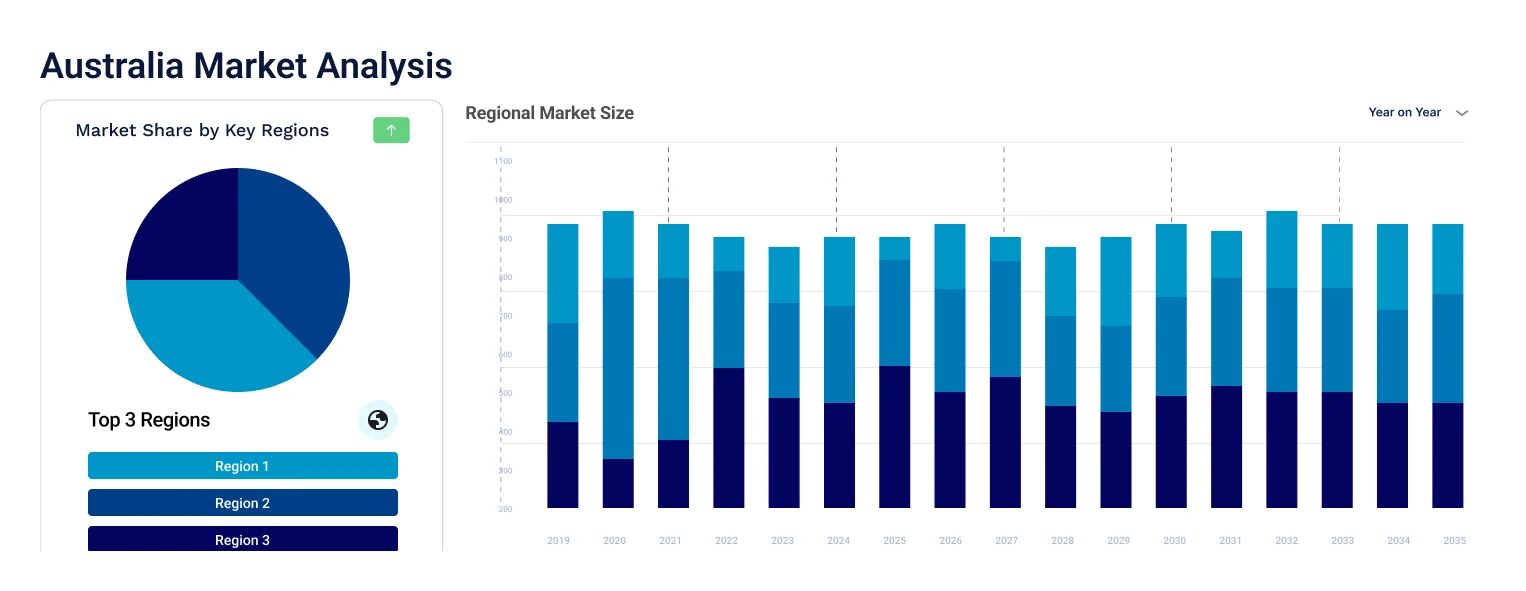
Queensland dominates Australia’s animal protein market through its leading cattle slaughter and beef production capacity
Queensland remains the dominant regional market, led by its large cattle-processing base. In the June quarter of 2026, the state processed 1.083 million cattle, accounting for 43% of Australia’s national cattle slaughter, while beef production reached 355,529 tonnes, the highest among states. Queensland also recorded its strongest June-quarter slaughter result since 2015. These figures highlight the state’s substantial livestock supply and processing capacity, reinforcing its leading position in Australia’s animal protein market. Such factors are directly boosting the Australia animal protein market regional growth.
Victoria is the fastest-growing regional market, supported by strong gains in beef production and continued importance in sheepmeat processing. In Q1 2026, Victorian beef production increased 10% year-on-year to 167,401 tonnes, marking the state’s highest quarterly output on record. Cattle slaughter also reached 552,900 head, up 2% from the previous quarter. Victoria remained Australia’s largest mutton-processing state in 2025, processing 3.79 million sheep, representing 37% of national mutton processing.
Australia animal protein market players are focusing on value-added protein products, premium formulations, and functional nutrition applications to capture higher-value demand. Companies are expanding whey, dairy protein, collagen, and specialised nutritional ingredients while strengthening product development, branding, and marketing capabilities. Noumi, for instance, is increasing investment in its Vital Strength brand and expanding value-added nutritional products, supported by rising demand for protein and healthier food choices.
Australia animal protein companies are also targeting export expansion, innovative protein applications, and greater production efficiency to diversify revenue streams. Industry strategies include developing higher-value protein ingredients, improving traceability, exploring emerging protein technologies, and entering new geographic markets. Australia’s protein roadmap particularly highlights value-added animal proteins, specialised ingredients, and new export opportunities as important avenues for future growth.
Established in 1984, Noumi Limited is headquartered in Sydney, Australia. The company offers dairy-based protein through its long-life milk portfolio and nutritional protein ingredients through Noumi Nutritionals. Its sports nutrition brands, including Vital Strength and UPROTEIN, provide whey-based protein powders and related nutritional products, supporting applications across sports nutrition, functional foods, beverages, and health-focused consumption.
Established as a listed company in 1987, Ridley Corporation Limited is headquartered in Melbourne, Australia. The company produces animal protein meals and oils through its ingredient recovery operations, including meat and bone meal, poultry meal, hydrolysed feather meal, blood meal, fish meal, and chicken protein concentrate. These ingredients serve animal feed, pet food, aquaculture, and biofuel applications.
Established in 2016, Integrity Food Co. is headquartered in Tingalpa, Queensland, Australia. The company specialises in protein powders and dry food formulations through brands including Protein Supplies Australia and Botanika Blends. Its portfolio includes whey and plant-based protein powders, protein bars, and protein beverages, supporting sports nutrition, health foods, functional nutrition, private-label, and contract-manufacturing applications.
Established in 2007, Biodome Functional Foods is headquartered in Ferntree Gully, Victoria, Australia. Operating through The Protein Factory, it manufactures nutritional and protein supplements, including whey protein products, high-protein formulations, collagen products, and protein snacks. Its vertically integrated capabilities cover formulation and manufacturing, supporting sports nutrition, wellness, functional foods, and specialised dietary applications.
Other key players in the Australia animal protein report include Glanbia plc, True Protein, and Hi-Performance Health Pty. Ltd., among others.
*Please note that this is only a partial list; the complete list of key players is available in the full report. Additionally, the list of key players can be customized to better suit your needs.*
Explore the latest trends shaping the Australia animal protein market 2026–2035 with our in-depth report. Gain strategic insights, forecasts, market segmentation, and key developments to identify emerging growth opportunities. Download a free sample or contact our team for customised consultation on Australia animal protein market trends 2026.


Upto 15% Off
USD
$2499 $2249
$3999 $3599
$4999 $4249
$5999 $5099


*While we strive to always give you current and accurate information, the numbers depicted on the website are indicative and may differ from the actual numbers in the main report. At Expert Market Research, we aim to bring you the latest insights and trends in the market. Using our analyses and forecasts, stakeholders can understand the market dynamics, navigate challenges, and capitalize on opportunities to make data-driven strategic decisions.*
The market is estimated to be valued at USD 105.48 Million in 2025.
The market is projected to grow at a CAGR of 3.80% between 2026 and 2035.
The animal protein market is expected to reach USD 153.16 Million in 2035.
The market is categorised according to its form, which includes liquid and solid.
The key market players are Noumi Limited, Ridley Corporation Limited, Integrity Food Co., Biodome Functional Foods, Glanbia plc, True Protein, Hi-Performance Health Pty. Ltd., and others.
Key strategies include productivity enhancement, livestock health and biosecurity improvements, sustainable production practices, premium product development, supply-chain efficiency, export-market diversification, traceability, and adoption of advanced farming technologies.
The animal protein market is categorised according to its end-use, which includes cosmetics and personal care, pharmaceutical and nutraceuticals, animal feed, food and beverages, fresh food and others.
Animal products with most protein content includes chicken, beef, pork, duck, quail, among others.
Established in 1984, the Animal Protein Producers Industry (APPI) was formed with the aim of implementing a cohesive program for Salmonella testing. This initiative serves to effectively manage and control the presence of the organism in rendered animal proteins.
The aquaculture sector is poised to maintain its status as the swiftest-growing animal protein-producing industry over the next decade. Anticipated growth will predominantly stem from crustacean and freshwater fish farming, particularly in emerging economies across Asia, South America, and to a lesser extent, Africa.
Key challenges include volatile feed and input costs, drought and variable seasonal conditions, livestock disease and biosecurity risks, labour constraints, processing capacity pressures, and export-market volatility from shifting trade policies and global demand.
Explore our key highlights of the report and gain a concise overview of key findings, trends, and actionable insights that will empower your strategic decisions.
| REPORT FEATURES | DETAILS |
| Base Year | 2025 |
| Historical Period | 2019-2025 |
| Forecast Period | 2026-2035 |
| Scope of the Report |
Historical and Forecast Trends, Industry Drivers and Constraints, Historical and Forecast Market Analysis by Segment:
|
| Breakup by Type |
|
| Breakup by Form |
|
| Breakup by End Use |
|
| Breakup by Region |
|
| Market Dynamics |
|
| Competitive Landscape |
|
| Companies Covered |
|
Datasheet
One User
USD 2,499
USD 2,249
tax inclusive*
Single User License
One User
USD 3,999
USD 3,599
tax inclusive*
Five User License
Five User
USD 4,999
USD 4,249
tax inclusive*
Corporate License
Unlimited Users
USD 5,999
USD 5,099
tax inclusive*
*Please note that the prices mentioned below are starting prices for each bundle type. Kindly contact our team for further details.*
Flash Bundle
Small Business Bundle
Growth Bundle
Enterprise Bundle
*Please note that the prices mentioned below are starting prices for each bundle type. Kindly contact our team for further details.*
Flash Bundle
Number of Reports: 3
20%
tax inclusive*
Small Business Bundle
Number of Reports: 5
25%
tax inclusive*
Growth Bundle
Number of Reports: 8
30%
tax inclusive*
Enterprise Bundle
Number of Reports: 10
35%
tax inclusive*
How To Order

Select License Type
Choose the right license for your needs and access rights.

Click on ‘Buy Now’
Add the report to your cart with one click and proceed to register.

Select Mode of Payment
Choose a payment option for a secure checkout. You will be redirected accordingly.
Strategic Solutions for Informed Decision-Making
Gain insights to stay ahead and seize opportunities.

Get insights & trends for a competitive edge.

Track prices with detailed trend reports.

Analyse trade data for supply chain insights.

Leverage cost reports for smart savings

Enhance supply chain with partnerships.

Connect For More Information
Our expert team of analysts will offer full support and resolve any queries regarding the report, before and after the purchase.
Our expert team of analysts will offer full support and resolve any queries regarding the report, before and after the purchase.
We employ meticulous research methods, blending advanced analytics and expert insights to deliver accurate, actionable industry intelligence, staying ahead of competitors.
Our skilled analysts offer unparalleled competitive advantage with detailed insights on current and emerging markets, ensuring your strategic edge.
We offer an in-depth yet simplified presentation of industry insights and analysis to meet your specific requirements effectively.




