

Consumer Insights
Uncover trends and behaviors shaping consumer choices today
Procurement Insights
Optimize your sourcing strategy with key market data
Industry Stats
Stay ahead with the latest trends and market analysis.
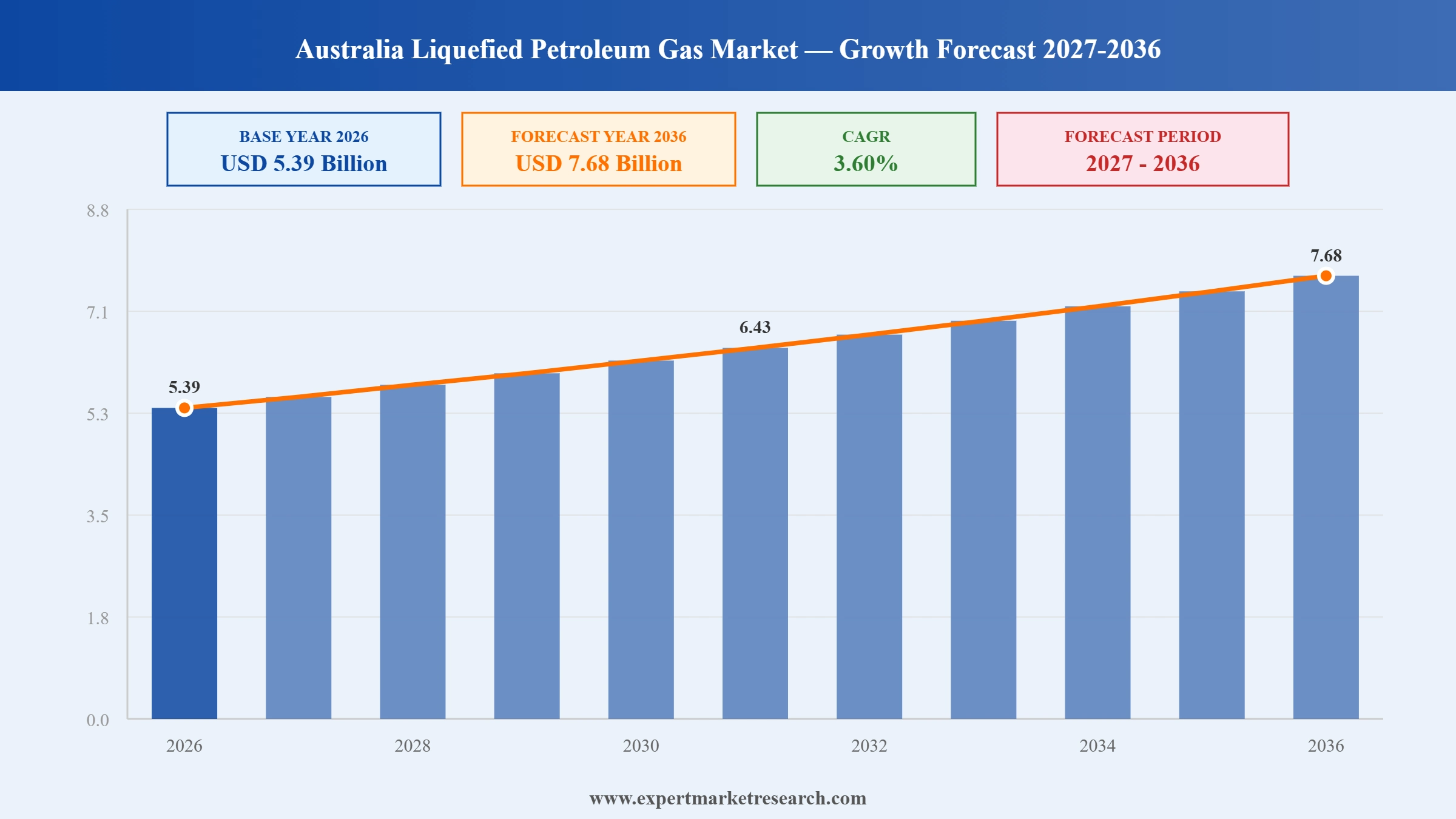
The Australia liquefied petroleum gas market attained a value of USD 5.20 Billion in 2025 and is projected to expand at a CAGR of 3.60% through 2035. The market is further expected to achieve USD 7.41 Billion by 2035. The increasing uptake of LPG-fuelled handling machinery, in particular in warehouse settings, is bolstering commercial demand where rapid refueling enables non-stop operation of fleets throughout Australia’s regional marketplaces.
Energy accessibility and heating requirements for industrial processes in regional areas are driving demand in the Australia liquefied petroleum gas market. Fuel distributors like Supagas are improving their delivery capability in order to serve those customers who cannot rely on electricity grids, even as LPG continues to have uses for forklifts, food processing, hospitality and manufacturing. Simultaneously, the need to account for carbon emissions is generating the demand for reduced carbon sources of fuel.
The Australia liquefied petroleum gas market is poised to enter a new era, as providers begin to offer reduced carbon fuel products without requiring customers to change their equipment. In June 2026, the national association Gas Energy Australia announced that amendments to the National Greenhouse and Energy Reporting scheme would allow BioLPG and co-processed LPG to be regarded as low carbon liquid fuels starting July 1st. The organization said that Viva Energy is going to offer the first co-processed LPG of Australia in distribution via Origin Energy within the next 12 months. This provides an opportunity for producers, distributors, and industrial buyers to tie LPG usage to emissions reporting.
Distributors are making investments in the service infrastructure and efficiency as LPG continues to play a significant role in off-grid, regional, commercial, and industrial sectors, widening the Australia liquefied petroleum gas market scope. Supagas is increasing its presence in the industry while updating its logistics, vehicle tracking, safety solutions, and digitization. Hence, providers are working on carbon neutral LPG products and exploring the possibilities of renewable LPG produced from the waste-derived feedstock, including the byproducts of sustainable aviation fuel production. For example, in June 2026, Origin Energy and Landis+Gyr launched smart gas technology enabling remote meter readings and near-real-time data insights across Australia.
Read more about this report - Request a Free Sample
BP is set to sell 5% equity in Australia's Browse LNG project to GS Energy worth an estimated AUD 48.7 billion. Energy firms may engage in partnerships and infrastructure services in large gas projects, boosting demand in the Australia liquefied petroleum gas market.
Gas Energy Australia backed a Western Australian government scheme worth AUD 21 million designed to enhance gas infrastructure and energy supply capacity. LPG firms may come up with infrastructural projects that enhance energy supply capabilities in the region and in industries.
The government of Australia has proposed that LNG export facilities should provide gas equal to 20% of their exports to domestic consumers starting July 2027. Companies in the LPG industry can improve their local distribution channels and enter into commercial agreements as policies shift their attention to gas supplies in the country.
INPEX evaluated redirecting supplies of Australian LPG and condensate in the Asian region in view of changed energy supply strategies and demands in the region. Firms in the Australia liquefied petroleum gas market can improve their business networks in the Asia Pacific region in view of changing energy flows.
The Australia liquefied petroleum gas market is observing significant efforts to develop renewable liquid gases within the industry as suppliers look for more eco-friendly alternatives that can be compatible with the current appliance and distribution networks. In July 206, Australia updated carbon rules to recognize co-processed fuels, including LPG, supporting lower-emission fuel reporting and renewable fuel integration.
The move away from the use of piped gas has created a unique opportunity for the supply of bottled LPGs in rural Australia. In August 2026, the Western Australian Government provided a AUD 21 million package to assist with the transition of the residents and businesses from piped gas network. Gas Energy Australia stated that there are about 8,000 customers affected by the phase out of this network, boosting demand in the Australia liquefied petroleum gas market. LPG distributors will therefore need to ensure cylinder supply and other related services.
LPG distributors are extending their geographic footprints through acquisitions as the importance of customer reach and efficiency in logistics grows. In January 2026, Supagas entered an agreement to acquire Kleenheat's LPG distribution division in Western Australia and the Northern Territory, which included its branch network and LPG import terminals in the Northern Territory. According to Supagas, this acquisition would increase its delivery range and product lines. It allows companies in the Australia liquefied petroleum gas market better access to regional customers while building up the infrastructure for storage, imports, and delivery services.
LPG distributors are investing in operations management as the requirements of customers have shifted towards dependable delivery, good service visibility, and fleet management. Supagas' growth strategy for 2026 involves improvements in operations management, geographic footprint, and efficiency in its operations. Moreover, Supagas is evaluating low emission LPG solutions as well as improving its customer service capacity. It is important for commercial customers who rely on predictable cylinder or bulk deliveries to not face any disruptions. Aligning with this trend in the Australia liquefied petroleum gas market, in June 2026, Origin Energy and Landis+Gyr launched smart gas technology enabling remote readings, accurate billing, and improved customer services across Australia.
Australia's emissions accounting approach continues to develop, resulting in increased knowledge by the industrial users of LPG about the environmental characteristics of other types of fuel. The NGER amendment of 2026 contains special rules for the accounting of BioLPG and co-processed LPG, covering eligible certificates and sustainability statements. The legislative act provides for fossil carbon fraction method for co-processed LPG, which can be consumed using eligible certification processes. The Department of Climate Change, Energy, the Environment and Water produces annually National Greenhouse Accounts Factors that aid in the accurate emissions calculation. For producers in the Australia liquefied petroleum gas market, this provides grounds for the provision of certified low-carbon fuel. In July 2025, Supagas advanced carbon-neutral LPG adoption, supporting cleaner fuels and renewable LPG integration across Australia’s energy transition.
The Expert Market Research's report titled “Australia Liquefied Petroleum Gas Market Report and Forecast 2026-2035” offers a detailed analysis of the market based on the following segments:
Market Breakup by Source
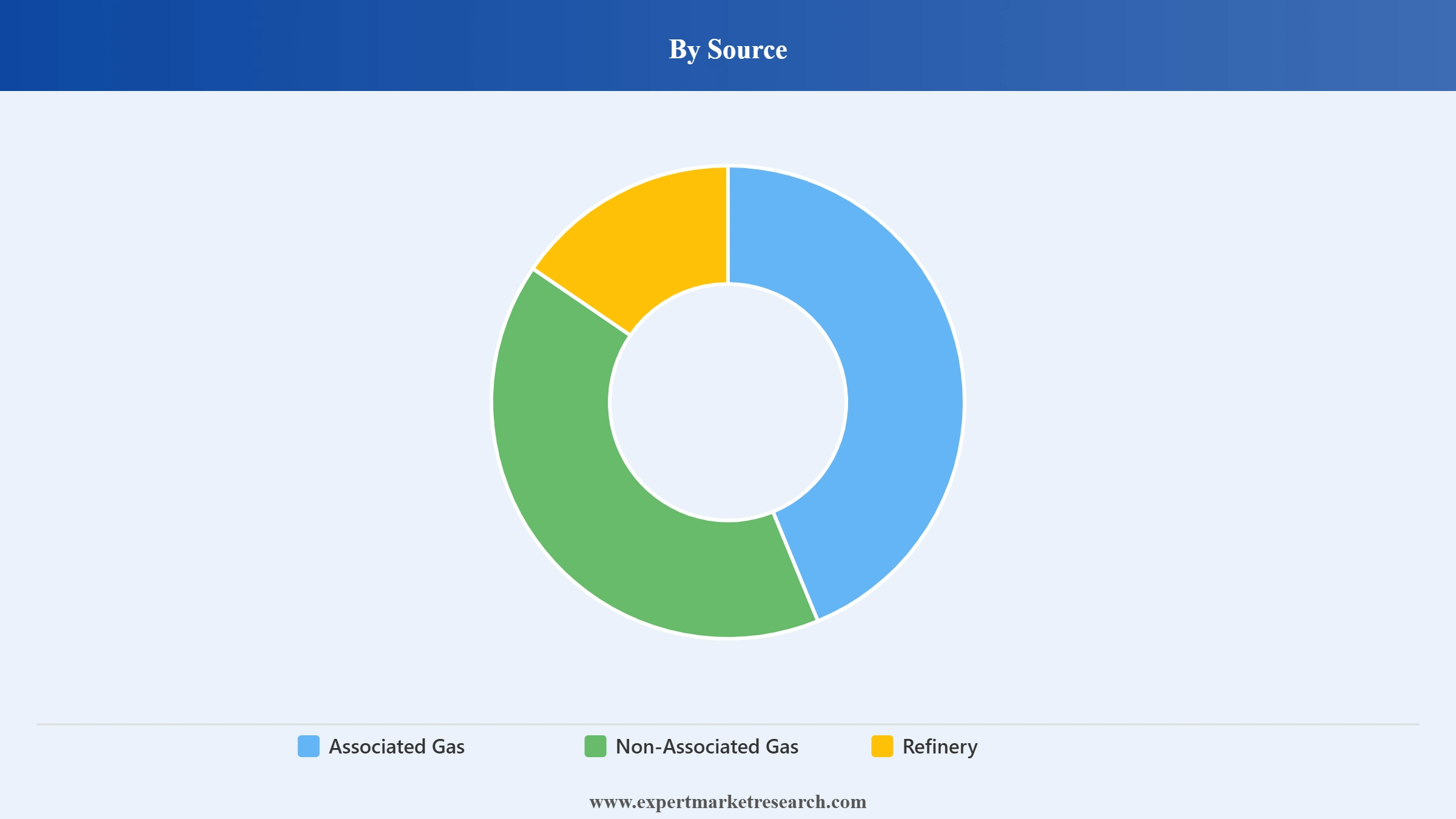
Key Insight: As per the Australia liquefied petroleum gas market report, associated gas helps to create an integrated supply chain that incorporates upstream processing. Meanwhile, refinery LPG is favored by the existence of petroleum infrastructure and efficient production process. These two sources enhance the reliability of local supply. The refinery source is especially helpful if LPG demand is clustered around the processing centers. Associated gas is provided together with natural gas and is helped by the presence of major extraction projects. The combination leads to the creation of a varied supply network instead of relying on a single way of producing it. Storage and import facilities help diversify local supplies depending on regional needs.
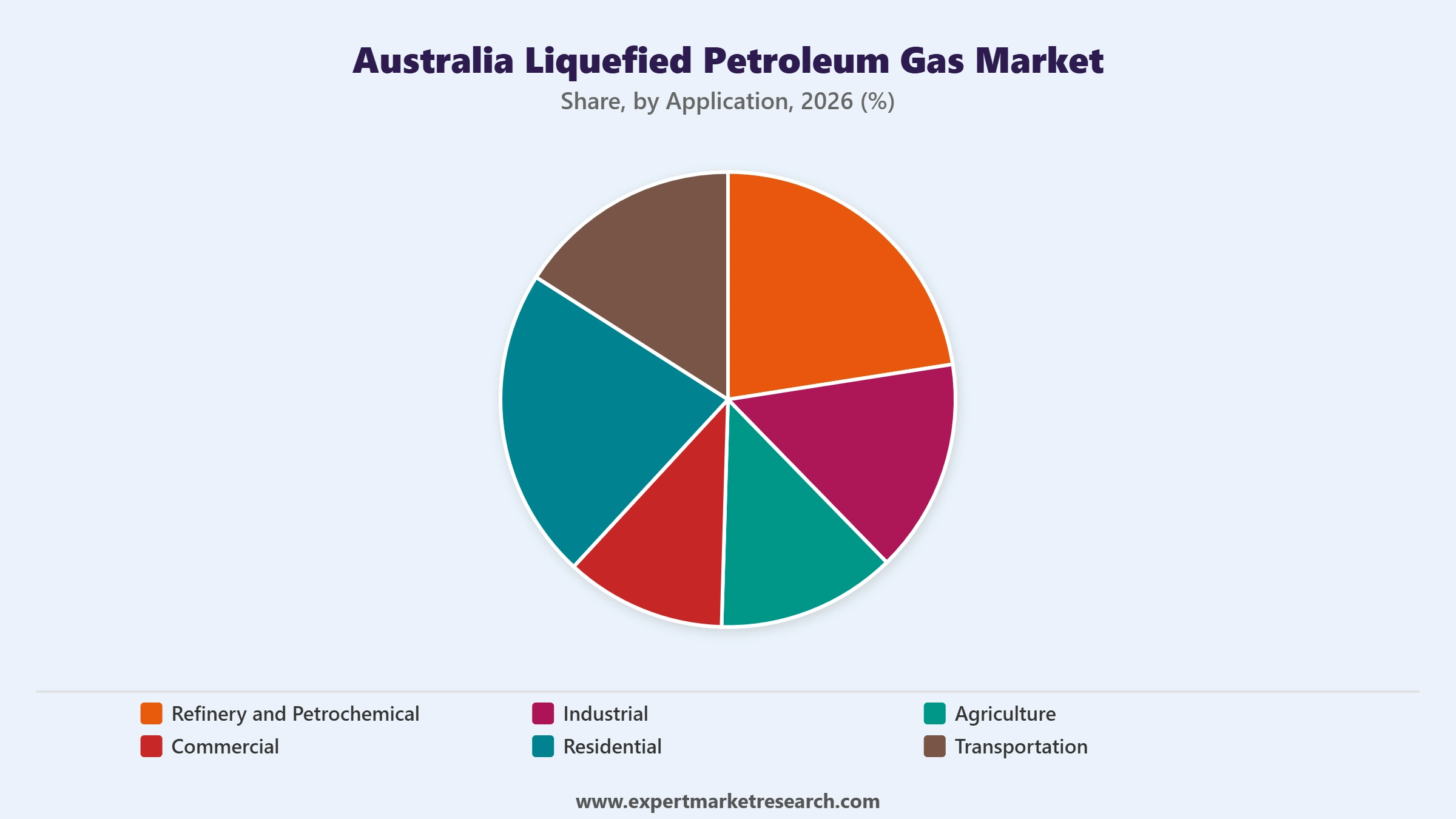
Market Breakup by Application
Key Insight: Refinery and petrochemical industries use LPG in their processes, whereas industries use it in manufacturing, heating, food processing, and equipment handling. In agriculture, it is used for drying crops, heating, and other agricultural processes involving controlled combustion, opening up several Australia liquefied petroleum gas market opportunities. Commercial consumers use it in kitchens, heating, and material handling. Residential usage is provided in cooking, water heating, and space heating especially where natural gas piping facilities are not available.
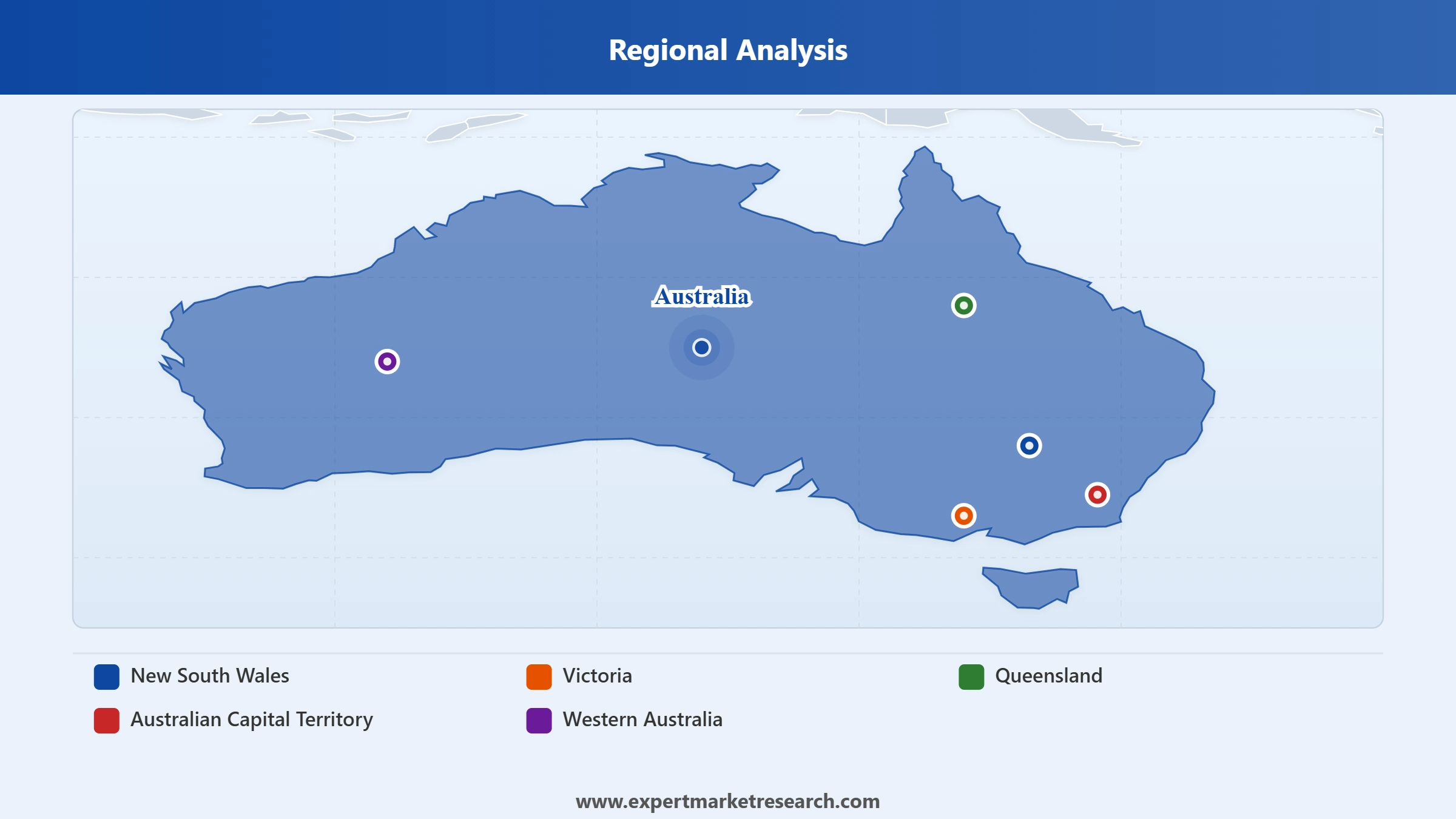
Market Breakup by Region
Key Insight: Import facilities, storage and customer base density are the key factors that are leading New South Wales to drive the Australia liquefied petroleum gas market revenue, through both residential and commercial and industrial uses. The Victorian state is provided with refining facilities combined with metropolitan and regional demand. Queensland can use gas production, refining activities and significant industries linked with energy-consuming industries. The Australian Capital Territory is a small demand area where commercial and residential demand is present to ensure local distribution. Large-scale gas supplies, resource activities and export facilities are beneficial for Western Australia. Other regions, such as the Northern Territory and Tasmania, provide unique opportunities where remote communities, mining and lack of network access require delivery of LPG.
Read more about this report - Request a Free Sample
Associated gas continues to be the main source in the Australia liquefied petroleum gas market due to the connection between the country’s gas supply chain and natural gas and crude oil. LPG is obtained during gas processing and enables producers to obtain propane and butane along with other hydrocarbons. Processing infrastructure as well as large-scale upstream operations in Western Australia, Queensland, and offshore areas also contribute to this source of LPG. Industry guidance by the government explains that LPG is extracted from propane and butane obtained during natural gas processing.
Read more about this report - Request a Free Sample
LPG produced from refineries is becoming increasingly significant in the Australia liquefied petroleum gas market as processors increase hydrocarbon extraction and refinery output. Refineries have the capacity to produce LPG as a co-product to enable producers to meet regional fuel needs through the use of existing processing facilities. Refineries in Queensland, Victoria and Western Australia have played an important part in producing LPG. Historical ACCC assessments confirm this fact. In July 2026, Australia considered a new oil refinery in Western Australia to strengthen domestic fuel security and reduce import dependence.
Refinery and petrochemicals form another key application area in the Australia liquefied petroleum gas market as propane and butane can assist in processing, heating, and providing chemicals. LPG forms a reliable source of energy, which is needed for applications that require energy with assured heating performance. It is also an area that will link fuel suppliers to major industries, which require regular and scheduled deliveries. The production of LPG in Australia has always been linked to refinery and gas processing activities forming supply relationships. In March 2026, Australia announced plans to leverage LNG exports to Asia to secure reliable-refined fuel supplies amid regional energy disruptions.
Read more about this report - Request a Free Sample
The Australia liquefied petroleum gas market observes continued opportunity in the transportation sector as it relates to autogas and LPG powered equipment. Fuel produced from propane can assist fleets with alternative energy sources in specific vehicles and materials handling equipment. Transportation is an application area that is already connected to LPG distribution infrastructure, making it easy for suppliers to serve clients through refueling and cylinder stations.
New South Wales provides an attractive opportunity for LPG imports, since it possesses not only significant LPG import infrastructure, but also a sizeable customer base in both metro and regional locations. The Port Botany has traditionally been one of the largest LPG import sites, ensuring LPG deliveries to eastern Australia. At the same time, there is considerable storage and distribution infrastructure available, such as the Elgas Sydney LPG cavern. This infrastructure will enable suppliers to cope with seasonality needs and ensure the supply of LPG to their commercial, residential, and industrial clients.
Read more about this report - Request a Free Sample
The Western Australia liquefied petroleum gas market provides ample potential opportunities due to its resource base that allows producing large amounts of LPG, along with natural gas. Indeed, the western gas region holds more than half of gas resources of Australia, which are used both for internal consumption and export. LPG producers will be able to link their LPG production with the storage, logistics and industrial customers in resource-intensive areas. In July 2026, Chevron signed a five-year agreement to supply Alinta Energy 46 petajoules of Western Australian natural gas from 2027.
Competitiveness in the market is based on factors of fuel availability, storage capacities, geographic reach, effective fleet management, and customer-specific delivery systems. Leading Australia liquefied petroleum gas market players are expanding their network by making acquisitions, accessing terminals, and increasing numbers of cylinders. At the same time, improvements are made in terms of logistics and digital fuel order placement. Fuel storage plays an important strategic role since imported or domestic LPG needs to be in close proximity to consumption centers.
Another area of business differentiation is the development of low carbon LPG fuels, such as BioLPG and co-processed LPG, which are needed by customers for achieving emissions reductions. Additionally, Australia liquefied petroleum gas companies may compete with each other through the use of automatic tankers, connection monitoring of cylinders, contract flexibility, and industry-specific services in the areas of mining, agriculture, hospitality, and manufacturing.
BP Australia, founded in 1920 and based in Victoria, Australia, operates in the energy and fuel value chain and has been involved in LPG production and distribution and automotive fuel segments. BP Australia’s market experience includes LPG sourcing associated with its refinery operations as well as fuel distribution capacities.
Shell Australia, founded in 1901 and based in Australia, operates in energy production, energy processing and fuel production activities with historical involvement in LPG production through its Geelong refinery operations. Shell Australia has relied on refining facilities and fuel networks to support Australian energy markets. The headquarters for Shell Australia is located in Perth, Western Australia.
BOC Australia was founded in New South Wales, Australia, in 1935 as Commonwealth Industrial Gases and provides industrial gases as well as specialist gases in the South Pacific region. BOC Australia is involved in the LPG sector through its relationship with Elgas, while its provision of industrial products is done using gas distribution capacity.
Elgas was formed in 1984 and is based in North Ryde, New South Wales, Australia. This organization offers LPG to residential, commercial and light industries using cylinders, refill service and bulk supply. It has large storage capacity as well as extensive nationwide branches providing services to over 350,000 homes and businesses.
Other key players in the market include Coregas Pty Ltd, among others.
*Please note that this is only a partial list; the complete list of key players is available in the full report. Additionally, the list of key players can be customized to better suit your needs.*
Unlock the latest insights with our Australia liquefied petroleum gas market trends 2026 report. Discover regional growth patterns, consumer preferences, and key industry players. Stay ahead of competition with trusted data and expert analysis. Download your free sample report today and drive informed decisions in the market.


Upto 15% Off
USD
$2499 $2249
$3999 $3599
$4999 $4249
$5999 $5099


*While we strive to always give you current and accurate information, the numbers depicted on the website are indicative and may differ from the actual numbers in the main report. At Expert Market Research, we aim to bring you the latest insights and trends in the market. Using our analyses and forecasts, stakeholders can understand the market dynamics, navigate challenges, and capitalize on opportunities to make data-driven strategic decisions.*
In 2025, the market reached an approximate value of USD 5.20 Billion.
The market is projected to grow at a CAGR of 3.60% between 2026 and 2035.
The market is estimated to witness a healthy growth in the forecast period of 2026-2035 to reach USD 7.41 Billion by 2035.
Stakeholders are expanding regional storage, developing lower-carbon LPG portfolios, improving digital delivery tracking, strengthening fleet efficiency and building sector-specific supply contracts for industrial customers.
Key trends aiding the market expansion include Australia's shift towards net-zero emissions, increasing availability of high-efficiency electrical appliances, and urbanisation and infrastructure expansion.
Regions considered in the market are New South Wales, Victoria, Queensland, Western Australia, and Australian Capital Territory, among others.
Different applications of by LPG are refinery and petrochemical, industrial, agriculture, commercial, residential, and transportation, among others.
Based on source, the market segmentations include associated gas, non-associated gas, and refinery.
The key players in the market include BP Australia Pty Limited, Shell Australia Pty Limited, BOC Australia, Elgas Ltd., and Coregas Pty Ltd, among others.
Companies face volatile feedstock availability, regional logistics costs, storage requirements, emissions pressures, infrastructure transition, safety obligations and competition from electrification across selected end-use applications.
Explore our key highlights of the report and gain a concise overview of key findings, trends, and actionable insights that will empower your strategic decisions.
| REPORT FEATURES | DETAILS |
| Base Year | 2025 |
| Historical Period | 2019-2025 |
| Forecast Period | 2026-2035 |
| Scope of the Report |
Historical and Forecast Trends, Industry Drivers and Constraints, Historical and Forecast Market Analysis by Segment:
|
| Breakup by Source |
|
| Breakup by Application |
|
| Breakup by Region |
|
| Market Dynamics |
|
| Competitive Landscape |
|
| Companies Covered |
|
Datasheet
One User
USD 2,499
USD 2,249
tax inclusive*
Single User License
One User
USD 3,999
USD 3,599
tax inclusive*
Five User License
Five User
USD 4,999
USD 4,249
tax inclusive*
Corporate License
Unlimited Users
USD 5,999
USD 5,099
tax inclusive*
*Please note that the prices mentioned below are starting prices for each bundle type. Kindly contact our team for further details.*
Flash Bundle
Small Business Bundle
Growth Bundle
Enterprise Bundle
*Please note that the prices mentioned below are starting prices for each bundle type. Kindly contact our team for further details.*
Flash Bundle
Number of Reports: 3
20%
tax inclusive*
Small Business Bundle
Number of Reports: 5
25%
tax inclusive*
Growth Bundle
Number of Reports: 8
30%
tax inclusive*
Enterprise Bundle
Number of Reports: 10
35%
tax inclusive*
How To Order

Select License Type
Choose the right license for your needs and access rights.

Click on ‘Buy Now’
Add the report to your cart with one click and proceed to register.

Select Mode of Payment
Choose a payment option for a secure checkout. You will be redirected accordingly.
Strategic Solutions for Informed Decision-Making
Gain insights to stay ahead and seize opportunities.

Get insights & trends for a competitive edge.

Track prices with detailed trend reports.

Analyse trade data for supply chain insights.

Leverage cost reports for smart savings

Enhance supply chain with partnerships.

Connect For More Information
Our expert team of analysts will offer full support and resolve any queries regarding the report, before and after the purchase.
Our expert team of analysts will offer full support and resolve any queries regarding the report, before and after the purchase.
We employ meticulous research methods, blending advanced analytics and expert insights to deliver accurate, actionable industry intelligence, staying ahead of competitors.
Our skilled analysts offer unparalleled competitive advantage with detailed insights on current and emerging markets, ensuring your strategic edge.
We offer an in-depth yet simplified presentation of industry insights and analysis to meet your specific requirements effectively.




