Consumer Insights
Uncover trends and behaviors shaping consumer choices today
Procurement Insights
Optimize your sourcing strategy with key market data
Industry Stats
Stay ahead with the latest trends and market analysis.
The Australia luxury perfume market attained a value of USD 279.66 Million in 2025 and is projected to expand at a CAGR of 5.10% through 2035. The market is further expected to achieve USD 459.89 Million by 2035. Australian perfumery is increasingly converting local landscapes and botanical identity into premium scent propositions. Goldfield & Banks, for example, builds collections around native Australian botanicals and French perfumery expertise, allowing brands to create provenance-led products that are difficult to replicate through conventional luxury positioning.
The increasing commodification of perfume as a collectible and art object, especially via limited edition sales and concentrated versions of perfume is another driving factor of the market. Luxury brands have been creating a differentiation among their products via unique bottle designs, limited editions, exclusive formulae, and collaborations, which create an incentive for people to collect rather than wearing fragrances. For instance, Maison Francis Kurkdjian's Baccarat Rouge 540 Extrait de Parfum is placed in a higher concentration level than its Eau de Parfum and its crystal-shaped red bottle enhances its objectification. This strategy creates opportunities for Australian luxury retailers to merchandise perfumes alongside designer accessories, curate exclusive launches and target collectors seeking rarity, craftsmanship and distinctive packaging rather than conventional fragrance functionality, thereby boosting the Australia luxury perfume market value.
One of the innovations that have been developed is using artificial intelligence along with digital scent selection to personalize the process of discovering the perfect fragrance. This innovation involves the analysis of consumer preferences, previously made purchases, the lifestyle of a person, and the desired scent qualities in order to provide personalized suggestions. In Australia, such technologies can be incorporated into the process of shopping online by using interactive questionnaires and recommendation engines, thus providing the consumer with an opportunity to cope with the growing complexity of luxury assortments. Moreover, it can enable the connection between digital recommendations and physical sampling so that consumers will be able to get a selected range of fragrances prior to making the purchase. For premium brands, this technology creates a data-driven method of understanding fragrance preferences while reducing product-search friction. It also provides opportunities for retailers to personalise communications, recommendations and subsequent offers around individual scent profiles and purchasing behaviour.
Counterfeit products will continue to pose a constraint since perfumes for luxury use greatly rely on the brand, consistency of formulations, and premium pricing. Unauthorized products sold via unknown online platforms can mimic the known perfumes, their branding, packaging, and brand identifiers. Consequently, it could lead consumers to be more hesitant to buy their costly perfumes through digital means. This problem should be addressed through product authentication and verification of authorized sales channels. Product manufacturers should use QR-enabled authentication technology, serial numbers, tamper-proof packaging, and batch identification to allow customers and retailers to authenticate the products before buying. Australian distributors can additionally publish authorised-retailer lists and direct consumers toward verified e-commerce channels. These measures can make genuine products easier to distinguish from imitations while providing supply-chain visibility. Combining authentication technology with retailer education and transparent after-sales support can reinforce consumer confidence without requiring brands to reduce premium positioning, thereby boosting the Australia luxury perfume market developments.
Compound Annual Growth Rate
5.1%
Value in USD Million
2026-2035
Read more about this report - REQUEST FREE SAMPLE COPY IN PDF
Shiseido launched Max Mara Le Parfum in September 2026 as the first fragrance developed under its long-term partnership with Max Mara. The fragrance began rolling out in select North American and European retailers on 24 August, followed by a global launch across more than 50 markets from 1 September. Formulated with 90% natural ingredients, the vegan fragrance combines Tuberose Absolute, Vanilla and Cedarwood. The launch brings together Max Mara’s fashion identity with Shiseido’s fragrance-development and global distribution capabilities, creating a new luxury fragrance proposition for international markets.
Estée Lauder launched Glimmer Eau de Parfum in August 2026 following its July announcement, introducing an amber-floral fragrance with a gourmand interpretation. The composition features Raspberry Mousse, Macaron Rose, vanilla, patchouli, amber, and tonka. The launch campaign features actress Hailee Steinfeld and spans digital, television, print, in-store, and out-of-home channels. Available in four sizes, including a 0.34 oz travel spray, Glimmer extends Estée Lauder’s prestige fragrance portfolio while creating opportunities for coordinated body-care, gifting, and fragrance merchandising across premium retail channels.
Gucci introduced Gucci Guilty Eau de Toilette Intense Pour Homme in 2026, expanding its men’s fragrance portfolio with a woody-aromatic composition built around Salt Accord, Lavender Oil, and Palo Santo Accord. The fragrance is presented within the Fougère Woody olfactory family and is available in 50 ml and 90 ml formats. Its bottle combines blue and black elements with Gucci’s Interlocking G emblem, reinforcing the collection’s contemporary visual identity. The launch provides retailers with another premium masculine fragrance proposition while broadening Gucci Guilty’s assortment.
Hermès introduced Un Jardin sous la Mer in 2026 as an addition to its Parfums-Jardins collection, drawing inspiration from Taha’a in Polynesia. Created by perfumer Christine Nagel, the Eau de Toilette combines tiaré flower, tamanu nut, and a mineral coral accord to evoke an underwater garden. The fragrance is offered in 30 ml, 50 ml, and 100 ml formats, with each bottle compatible with a separately sold 200 ml refill. The launch combines destination-led storytelling with refillable packaging, reinforcing Hermès’ distinctive approach to luxury fragrance design.
Australian provenance is becoming a tangible product-development differentiator as local fragrance houses translate native botanicals, landscapes, and regional identity into premium perfume collections. Goldfield & Banks currently lists 13 fragrances within its Native Collection, including Pacific Rock Moss, Bohemian Lime, Southern Bloom, Wood Infusion, and Desert Rosewood. The company states that its fragrances combine Australian native botanicals with French perfumery expertise, creating a distinct Australian-French formulation identity. Its portfolio also spans 10 ml, 50 ml, and 100 ml formats, enabling consumers to enter at different price points. For Australian manufacturers and distributors, this creates opportunities to develop native-ingredient collections, destination-inspired limited editions, Australian-origin ingredient narratives, and premium packaging that reinforces provenance at specialist retailers and online channels.
Luxury fragrance companies are using discovery formats to encourage trial before consumers commit to full-size bottles. Goldfield & Banks provides a strong Australian example through its 10 × 2 ml Discovery Sample Collection priced at AUD 90. The collection allows consumers to experience multiple fragrances before selecting a preferred composition. Importantly, the company provides 20% off a subsequent 50 ml or 100 ml fragrance purchased within 30 days, linking sampling directly with potential full-size conversion. Goldfield & Banks also offers a 3 × 10 ml Travel Spray Set, creating another entry format between samples and standard bottles. For Australian distributors, discovery sets can function as acquisition products, gifting propositions, travel-friendly formats, and e-commerce bundles, particularly for niche houses where sensory trial can introduce unfamiliar fragrance names, thus boosting the growth of the Australia luxury perfume market.
The concept of refillability is now also becoming more common within the physical design of luxury fragrances rather than just being used in environmental communications. Hermès, for instance, is one particular company that utilizes refillable designs within their range of H24 fragrances in Australia. In particular, the H24 Eau de Toilette includes a refillable glass bottle that is also made from recycled glass while the H24 Eau de Parfum is also refillable. Hermès Australia includes eight refills in its men's fragrance line-up, including refills for H24 and Terre d'Hermès. In particular, the H24 Herbes Vives refill comes in a 200 ml bottle and is used to refill 50 ml and 100 ml bottles. This approach creates opportunities for Australian packaging suppliers to develop refill-compatible bottles, cartridges, closures and dispensing components while supporting repeat fragrance purchases through replenishment.
Gourmand fragrance development is increasingly extending beyond the perfume bottle into coordinated personal-care products. Estée Lauder’s Glimmer Eau de Parfum combines an amber-floral profile with gourmand elements including Raspberry Mousse, Macaron Rose, vanilla, patchouli, amber and tonka. The fragrance is available in four sizes, including a 0.34 oz travel spray, allowing the brand to address both trial and portability. The wider Glimmer proposition includes a 6.7 oz perfumed shower gel and 6.7 oz body lotion, each listed at US$58 on Estée Lauder’s website. This illustrates how fragrance houses can create complete scented routines rather than relying on a single SKU. For Australian suppliers, this opens opportunities for coordinated fragrance, body care, travel formats and gift sets organised around the same scent identity.
Australian fragrance manufacturers and importers must increasingly account for specific ingredient requirements when developing or importing formulations. AICIS provides a current example through Tetrapleura tetraptera extract, which was added to the Australian Inventory of Industrial Chemicals following an assessment on 5 June 2026. The assessment specifies an annual import quantity of up to 25 kg, while fragrance formulations for local reformulation can contain the extract at up to 1%, and finished fine fragrances can contain it at up to 0.5%. Such defined conditions make ingredient qualification and supplier documentation important commercial processes. Australian fragrance companies can strengthen development workflows by confirming ingredient identity, permitted concentrations, sourcing records and regulatory status before commercial formulation, rather than resolving compliance requirements after product development.
The Expert Market Research’s report titled "Australia Luxury Perfume Market Report and Forecast 2026-2035” offers a detailed analysis of the market based on the following segments:
Market Breakup by Type
Key Insight: On the basis of type, the Australia luxury perfume market can be segmented into natural perfumes and synthetic fragrances. The demand for natural perfumes is increasing owing to consumer preference towards the usage of botanical ingredients and essential oils along with the use of sustainable production methods. Synthetic perfumes continue to be in demand owing to their consistency, affordability, and flexibility of composition among others. Innovative blends of natural extracts and aromatics are being experimented with luxury fragrance brands. In line with the above trends, the Australian natural skincare brand Vanessa Megan launched its range of Eau de Parfum in April 2026 that includes six fragrances made from certified organic ingredients and essential oils.
Market Breakup by Gender
Key Insight: Gender segmentation is becoming more fluid as luxury houses increasingly merchandise fragrance around olfactory profiles, personal identity, and lifestyle rather than strict demographic boundaries. Gucci's fragrance portfolio includes products positioned for both women and men, while its wider fragrance architecture also includes gender-neutral concepts. Hermès similarly provides separate men's and women's collections while offering fragrance-finder tools that guide customers according to olfactory preferences. Female fragrances continue to represent an important premium category, supported by established floral and gourmand architectures, whereas male fragrances are expanding beyond traditional fresh and woody profiles. Unisex propositions allow brands to consolidate inventory around versatile compositions and broaden gifting opportunities. For retailers, gender-neutral merchandising can also increase cross-shopping by organizing products according to fragrance families, occasions, concentration, and price rather than relying exclusively on men's and women's fixtures.
Market Breakup by Distribution Channel
Key Insight: Luxury perfume distribution in Australia is evolving toward an omnichannel structure comprising supermarkets and hypermarkets, specialty stores, online retailers, and other channels such as department stores, brand boutiques, travel retail, and selected pharmacies. Specialty stores remain particularly important because fragrance requires sensory trial, consultation, sampling, and premium presentation. Online retailers, however, benefit from Australia's established digital-shopping infrastructure. ABS data show that online retail represented 11.4% of total retail turnover in 2024, materially above the 6.3% recorded in 2019. Luxury brands can therefore use digital channels for discovery sets, replenishment, exclusive launches, and personalized recommendations, while physical locations provide testing and consultation. Direct brand websites also enable higher control over product storytelling and customer data. The resulting model favors suppliers capable of synchronizing inventory, promotions, samples, product education, and pricing across channels rather than treating e-commerce as a standalone sales outlet, thus driving the demand in the Australia luxury perfume market.
Market Breakup by Region
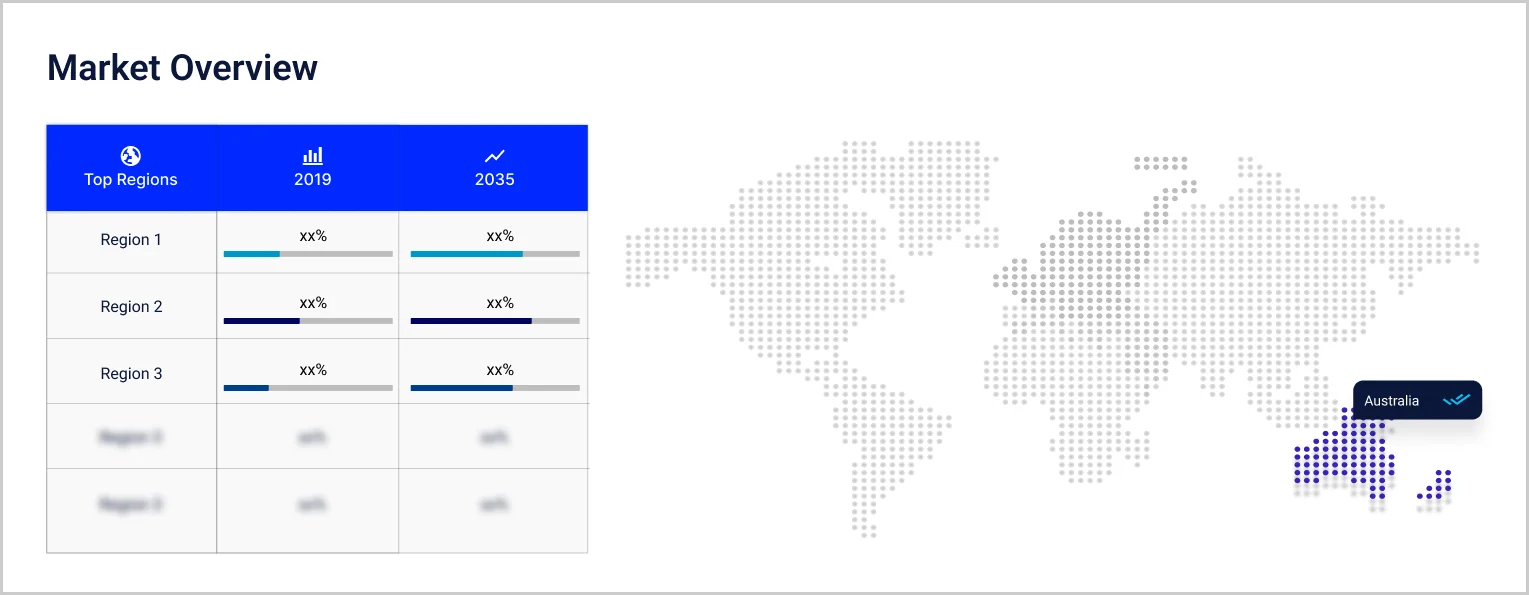
Key Insight: Regional demand is concentrated in Australia's largest population centers while growth opportunities are emerging across faster-growing states and territories. At December 2025, New South Wales had 8.64 million residents, Victoria 7.12 million, Queensland 5.71 million, Western Australia 3.08 million, and the Australian Capital Territory 487,200. These population pools provide different commercial opportunities: NSW and Victoria offer scale for luxury department stores, specialty retailers, boutiques, and corporate gifting, while Queensland combines a substantial population base with tourism-oriented consumption. Western Australia recorded Australia's fastest population growth at 2.2% in 2025, creating an expanding customer base for premium personal-care and fragrance retail. The ACT provides a smaller but concentrated metropolitan market, while South Australia, Tasmania, and the Northern Territory form the wider opportunity pool. For suppliers, regional expansion should therefore prioritize population growth, premium retail density, tourism flows, and online fulfillment economics rather than applying identical channel strategies nationwide.
Read more about this report - REQUEST FREE SAMPLE COPY IN PDF
By type, synthetic dominates due to consistency, complexity, longevity, and scalable luxury fragrance production
Synthetic fragrances dominate because luxury houses can achieve greater consistency, longevity and complex scent construction while reproducing distinctive accords at scale. Australian luxury retailers such as MECCA stock concentrated formats from Maison Francis Kurkdjian, Tom Ford, Le Labo and Maison Margiela, including EDPs and extraits with prices extending well into the premium range. This differentiates synthetic formulations through sophisticated compositions rather than simply lower-cost positioning. The availability of highly concentrated products such as Baccarat Rouge 540 Extrait demonstrates how modern synthetic aroma molecules support powerful, recognisable luxury signatures. Such developments will thus boost Australia luxury perfume market trends in the long run.
Natural perfumes are gaining momentum as consumers increasingly examine ingredient preferences, botanical positioning and conscious-beauty credentials. Australian luxury retailer MECCA specifically provides ingredient-preference and conscious-beauty filters across its fragrance assortment, creating greater visibility for formulations positioned around ingredient transparency. Fleurage further differentiates this segment through hand-crafted botanical perfumes and natural ingredients, while brands across the premium category increasingly use botanical storytelling to distinguish collections. Natural fragrance therefore competes through craftsmanship, ingredient provenance and artisanal identity, rather than attempting to replicate the broad-scale positioning of conventional fragrance houses.
By gender, females dominate due to extensive variety, launches, gifting, and consumer segmentation
Female fragrances dominate through an exceptionally broad assortment spanning floral, fruity, gourmand, woody and sophisticated evening profiles, supported by frequent launches and gift-oriented collections. Sephora Australia currently lists extensive female-focused offerings, including Kayali Vanilla 28, Kayali Yum Boujee Marshmallow, OUAI and Rare Beauty fragrances. The differentiation increasingly comes from layering, multiple sizes, limited editions and highly distinctive gourmand profiles, rather than traditional floral positioning alone. This gives luxury brands numerous opportunities to build collections around specific moods, occasions and personal identities.
Unisex fragrances are gaining momentum as luxury fragrance purchasing becomes increasingly centred on individual scent identity rather than conventional gender categorisation. Sephora Australia explicitly provides a “Unisex / Genderless Scent” filter, while MECCA describes its assortment as including “androgynous scents” alongside classic and niche fragrances. Jo Malone London also builds its Australian proposition around colognes designed for layering, enabling consumers to create personalised combinations. This segment differentiates through gender-neutral positioning, layering, niche aesthetics and personalisation, allowing one fragrance proposition to address multiple consumer groups.
By distribution channel, Speciality Stores dominate due to sensory discovery and personalised luxury retail
Speciality stores dominate because luxury perfumes require sampling, consultation, brand storytelling and sensory discovery, capabilities that general retail cannot replicate as effectively. MECCA’s Australian fragrance platform provides access to hundreds of products spanning Maison Francis Kurkdjian, Le Labo, Maison Margiela, Tom Ford and other premium houses, while offering scent samples, fragrance quizzes and multiple concentration formats. Sephora similarly combines luxury fragrance discovery with filters for accords, gender, size and limited editions. This makes speciality retailers important for premium positioning, experiential discovery and cross-selling, thereby shaping the demand in the Australia luxury perfume market.
Online retailers are expanding rapidly because luxury fragrance brands can combine broad assortment, detailed product discovery and convenient purchasing without the geographic limitations of physical stores. MECCA offers hundreds of fragrance products online alongside scent samples, minis, fragrance quizzes and filters covering ingredients, scent types and concentrations. Sephora similarly enables consumers to browse extensive luxury collections and limited-edition launches digitally. Online channels also allow brands to use discovery sets and smaller formats to reduce the barrier to trying unfamiliar fragrances, making digital retail particularly relevant to niche and emerging luxury houses.
By Region, New South Wales dominates due to Sydney’s concentrated luxury retail ecosystem, affluent consumers, and strong international brand presence
New South Wales, particularly Sydney, is witnessing a shift towards experiential luxury fragrance retail, where consumers can discover perfumes through hospitality, personalisation and immersive brand environments. In September 2025, Dior introduced its Miss Dior Café in Sydney alongside the Miss Dior Essence launch, blending fragrance discovery with a curated café experience. Dior has also pursued a dedicated Sydney Queen Victoria Building store, with a reported A$413,165 fit-out proposal. These developments demonstrate how luxury fragrance companies are using physical experiences, premium locations and product storytelling to deepen consumer engagement, thereby directly boosting the Australia luxury perfume market regional growth.
Victoria, particularly Melbourne, is developing a distinctive boutique and artisanal fragrance culture, with brands emphasising bespoke consultations, personalisation and craftsmanship. Melbourne has specialist concepts such as The Perfume Workshop, allowing customers to create personalised fragrances, while Creed’s Melbourne boutique offers private consultations, engraving and ribbon personalisation. Trudon’s Royal Arcade flagship has also introduced an exclusive fragrance wall described by the brand as a global first. Melbourne’s strong fashion ecosystem further supports fragrance discovery, with the 2026 Melbourne Fashion Festival running for 15 days, incorporating fashion, beauty and shopping experiences.
Leading Australia luxury perfume market players are focusing on portfolio expansion, wider retail penetration, digital commerce, and premiumisation to achieve greater scalability. Brands are introducing new Eau de Parfum, extrait and limited-edition collections to serve diverse consumer preferences while strengthening their presence across department stores, specialist fragrance retailers, boutiques and online platforms. Omnichannel strategies are being used to connect physical sampling and personalised consultations with convenient e-commerce purchasing.
Australia luxury perfume companies are also investing in direct-to-consumer channels, social media campaigns, influencer collaborations and immersive brand experiences to reach younger luxury consumers. Expansion into personalised and bespoke fragrances provides opportunities to increase customer engagement and encourage repeat purchases. Meanwhile, sustainable packaging, responsibly sourced ingredients and refillable formats are being incorporated to align premium products with evolving consumer expectations. Strategic partnerships with retailers, designers and hospitality businesses can further extend distribution. Collectively, these initiatives allow market participants to broaden geographic and demographic reach while preserving exclusivity, strengthening brand recognition, improving customer retention, and supporting scalable revenue growth.
Established in 2007 in Melbourne, Australia, Fleurage Pty Ltd is an independent perfume house now headquartered in Surfers Paradise, Queensland. Its portfolio includes Love Potion perfumes, Pure Botanical Natural Perfumes, Art Moderne, Scents of Milan, Master Notes, Soliflores, Whiskey Baron, Homme Chic, and Historical Colognes. Fleurage differentiates itself through small-batch, hand-crafted production, natural botanical ingredients, rare materials, and personalized perfume creation. Its Scent Design Studio also offers one-to-one fragrance fittings and perfume-making sessions, giving customers direct participation in developing bespoke scents.
Founded in 1921 by Guccio Gucci in Florence, Italy, Guccio Gucci S.p.A. has its registered headquarters at Via Tornabuoni 73/r, Florence, Italy. Its luxury fragrance portfolio includes Gucci Bloom, Gucci Flora, Gucci Guilty, Gucci Bamboo, and The Alchemist’s Garden, alongside various Eau de Parfum, Parfum and Eau de Toilette expressions. Its differentiation lies in combining Gucci’s Italian fashion heritage with distinctive olfactory storytelling, artistic design and high-fashion positioning. The Alchemist’s Garden particularly extends this proposition through sophisticated, high-priced fragrance compositions and exclusive editions.
Hermès traces its origins to 1837 in Paris, while Hermès International was incorporated in 1938; its registered headquarters are at 24, rue du Faubourg Saint-Honoré, Paris, France. Its fragrance offerings span collections such as Terre d’Hermès, Twilly d’Hermès, Eau des Merveilles and H24, covering floral, woody, citrus and aromatic profiles. The brand differentiates itself through its heritage of craftsmanship, artistic storytelling and distinctive compositions. Its Twilly range, for example, combines ginger, tuberose and sandalwood in a youthful interpretation of the Hermès identity.
Founded in 1946 by Estée and Joseph Lauder, The Estée Lauder Companies Inc. is headquartered in New York City, United States and operates a broad portfolio of prestige beauty brands. Its fragrance offerings include Estée Lauder, Jo Malone London, TOM FORD, AERIN and other licensed fragrance brands. Its key differentiator is its multi-brand luxury fragrance platform, enabling the company to address diverse consumer preferences and price positioning. Jo Malone London emphasises refined fragrance layering and gifting, while TOM FORD provides a more fashion-led, sophisticated luxury fragrance proposition.
Other key players in the Australia luxury perfume market include Goldfield & Banks Australia, others.
*Please note that this is only a partial list; the complete list of key players is available in the full report. Additionally, the list of key players can be customized to better suit your needs.*
Download the Expert Market Research report to examine the Australia luxury perfume Market Size, competitive environment, segmentation, and Australia luxury perfume Market trends 2026. The study provides detailed insights for manufacturers, luxury fragrance houses, distributors, retailers, and investors assessing the Australia luxury perfume Market forecast 2026-2035, emerging product opportunities, regional demand patterns, and evolving distribution strategies.


Upto 15% Off
USD
$2499 $2249
$3999 $3599
$4999 $4249
$5999 $5099


*While we strive to always give you current and accurate information, the numbers depicted on the website are indicative and may differ from the actual numbers in the main report. At Expert Market Research, we aim to bring you the latest insights and trends in the market. Using our analyses and forecasts, stakeholders can understand the market dynamics, navigate challenges, and capitalize on opportunities to make data-driven strategic decisions.*
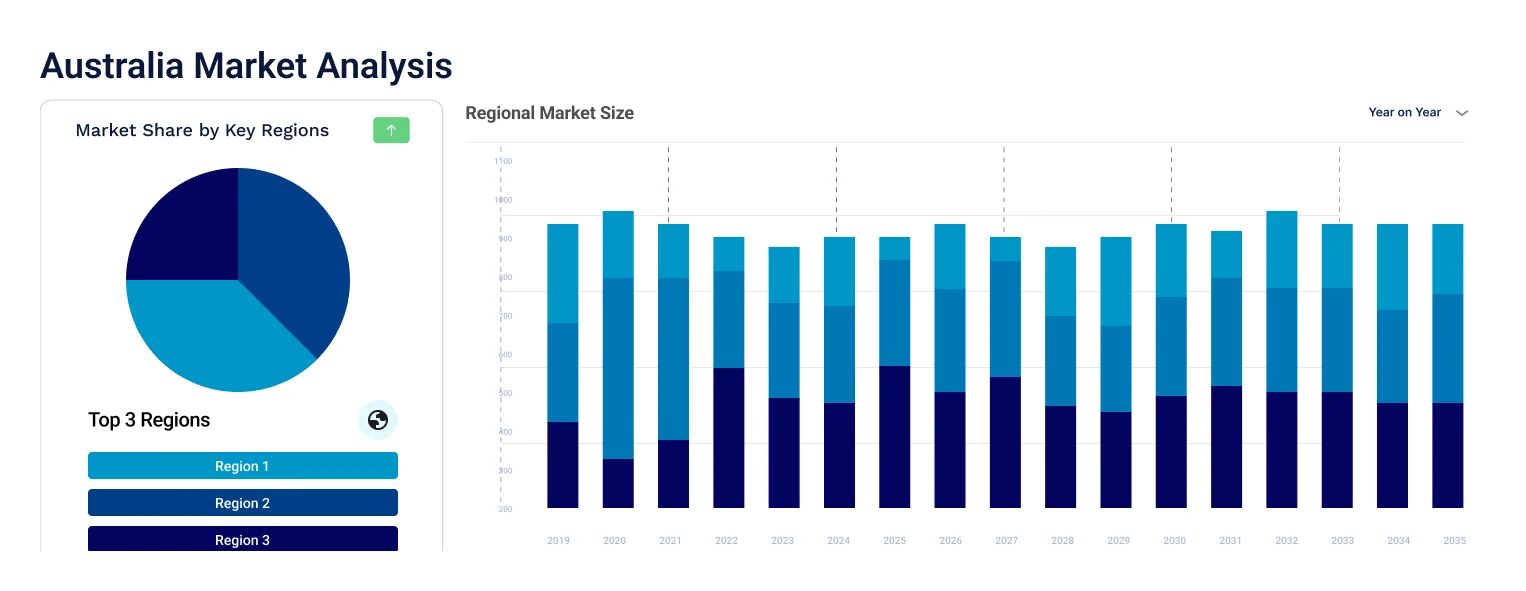
In 2025, the market reached an approximate value of USD 279.66 Million.
The market is projected to grow at a CAGR of 5.10% between 2026 and 2035.
The market is estimated to witness a healthy growth in the forecast period of 2026-2035 to reach USD 459.89 Million by 2035.
Key strategies include premium product launches, exclusive and limited-edition fragrances, personalised scent experiences, celebrity and designer collaborations, omnichannel retail expansion, digital marketing, influencer partnerships, sustainable packaging, and direct-to-consumer channels. Brands are also strengthening customer loyalty through personalised services and premium gifting.
Key trends aiding the market expansion include the growing demand for fragrances derived from natural sources like flowers and plants, the incorporation of aromatherapy elements in perfumes, and the growth of e-commerce channels for fragrance sales.
Regions considered in the market are New South Wales, Victoria, Queensland, Western Australia, and Australian Capital Territory, among others.
Based on gender, the market segmentations include unisex, female, and male.
Natural and synthetic perfumes are considered in the report.
Key players in the market are Fleurage Pty Ltd, Guccio Gucci S.p.A., Hermès International S.A., Estée Lauder Companies Inc., and Goldfield & Banks Australia, among others.
Key challenges include high product prices, intense competition from established luxury brands, counterfeit perfumes, changing consumer preferences, import costs, supply-chain disruptions, and regulatory requirements. Additionally, maintaining exclusivity while expanding accessibility across Australia’s increasingly digital and competitive retail landscape remains challenging.
Explore our key highlights of the report and gain a concise overview of key findings, trends, and actionable insights that will empower your strategic decisions.
| REPORT FEATURES | DETAILS |
| Base Year | 2025 |
| Historical Period | 2019-2025 |
| Forecast Period | 2026-2035 |
| Scope of the Report |
Historical and Forecast Trends, Industry Drivers and Constraints, Historical and Forecast Market Analysis by Segment:
|
| Breakup by Type |
|
| Breakup by Gender |
|
| Breakup by Distribution Channel |
|
| Breakup by Region |
|
| Market Dynamics |
|
| Competitive Landscape |
|
| Companies Covered |
|
Datasheet
One User
USD 2,499
USD 2,249
tax inclusive*
Single User License
One User
USD 3,999
USD 3,599
tax inclusive*
Five User License
Five User
USD 4,999
USD 4,249
tax inclusive*
Corporate License
Unlimited Users
USD 5,999
USD 5,099
tax inclusive*
*Please note that the prices mentioned below are starting prices for each bundle type. Kindly contact our team for further details.*
Flash Bundle
Small Business Bundle
Growth Bundle
Enterprise Bundle
*Please note that the prices mentioned below are starting prices for each bundle type. Kindly contact our team for further details.*
Flash Bundle
Number of Reports: 3
20%
tax inclusive*
Small Business Bundle
Number of Reports: 5
25%
tax inclusive*
Growth Bundle
Number of Reports: 8
30%
tax inclusive*
Enterprise Bundle
Number of Reports: 10
35%
tax inclusive*
How To Order

Select License Type
Choose the right license for your needs and access rights.

Click on ‘Buy Now’
Add the report to your cart with one click and proceed to register.

Select Mode of Payment
Choose a payment option for a secure checkout. You will be redirected accordingly.
Strategic Solutions for Informed Decision-Making
Gain insights to stay ahead and seize opportunities.
Get insights & trends for a competitive edge.
Track prices with detailed trend reports.
Analyse trade data for supply chain insights.
Leverage cost reports for smart savings
Enhance supply chain with partnerships.
Connect For More Information
Our expert team of analysts will offer full support and resolve any queries regarding the report, before and after the purchase.
Our expert team of analysts will offer full support and resolve any queries regarding the report, before and after the purchase.
We employ meticulous research methods, blending advanced analytics and expert insights to deliver accurate, actionable industry intelligence, staying ahead of competitors.
Our skilled analysts offer unparalleled competitive advantage with detailed insights on current and emerging markets, ensuring your strategic edge.
We offer an in-depth yet simplified presentation of industry insights and analysis to meet your specific requirements effectively.