Consumer Insights
Uncover trends and behaviors shaping consumer choices today
Procurement Insights
Optimize your sourcing strategy with key market data
Industry Stats
Stay ahead with the latest trends and market analysis.
The Australia plant protein market attained a value of USD 195.22 Billion in 2025 and is projected to expand at a CAGR of 5.64% through 2035. The market is further expected to achieve USD 337.92 Billion by 2035. Increasingly there is a need for more soluble, neutral-tasting pulse protein ingredients for allergen-aware, protein-rich convenience foods, prompting Australian companies to create pulse-based proteins with enhanced solubility and neutrality of taste for use in various commercial applications.
The Australia plant protein market observes rising demands for locally sourced protein ingredients among food manufacturers to minimize their exposure to imported sources and increase supply chain visibility. On the other hand, increasing demands from the sports nutrition, bakery, and convenience meals sectors are spurring the need for processors to create pulse proteins with increased dispersibility, neutral taste, and heat resistance.
The Australia plant protein market is going beyond conventional meat substitutes, with the emergence of ingredient manufacturers that are currently prioritizing protein isolates, functional nutrition, clean-label products, and local agricultural sources. An example of such innovation happened in April 2026, when Australian Plant Proteins launched "Nothing Else," a branded range of faba bean and yellow pea protein isolates produced in Horsham, Victoria. The protein isolates provide 26 grams of protein per serving and are made using Australian Plant Proteins' proprietary ApPro extraction method without solvent extraction. This example shows how local ingredient manufacturers can pursue vertical integration business strategies.
The growth of domestically produced pulses presents processors with chances to build more robust domestic supply chains for ingredients and export-oriented protein solutions. According to the Australia plant protein market analysis, the country exported 2.1 million tons of chickpeas in the 2024/25 season, marking a new all-time record. There are several other agricultural crops in the country, including lentils, faba beans, lupins, and field peas.
Compound Annual Growth Rate
5.64%
Value in USD Billion
2026-2035
Read more about this report - REQUEST FREE SAMPLE COPY IN PDF
Matcha and coconut chocolates were launched by COA in Australia, thereby increasing the usage of fermented soy protein ingredients into premium chocolate ranges as well as high-protein snacks. Manufacturers can incorporate fermented legume proteins in confections as well as premium product lines, boosting growth in the Australia plant protein market.
Fodbods launched Elevate plant protein powders, combining low-FODMAP certification with performance-focused formulations to target fitness enthusiasts seeking gut-friendly sports nutrition products. Protein ingredient manufacturers may formulate easily digestible blends of pea and faba bean proteins for the sports nutrition brands catering to special diets.
Plenty Foods began operations at the Kingaroy plant, offering locally produced superfine nut flour products for sports nutrition, baking, snacking, and functional food applications. Food manufacturers can also utilize locally sourced agricultural raw materials to formulate commercially viable defatted nut products with new uses.
v2food, an Australian company manufacturing plant-based foods, acquired the United States-based Daring Foods and rolled out its protein-loaded plant chicken line through Woolworths to consumers in Australia. Companies in the Australia plant protein market may look at mergers and acquisition strategies to enter the protein-rich convenient foods market.
The Australia plant protein market is increasing the use of chickpeas, lentils, faba beans, lupins, and peas in applications outside meat analogs. Diversifying into these new applications helps ingredient suppliers cater to various protein levels, sensory characteristics, and price structures. According to the Australian Bureau of Statistics, there were 733,000 tons of faba beans and 1.03 million tons of lentils in 2024-25. There are opportunities to develop crop-specific isolates and concentrates using efficient grading, cleaning, and fractionation methods that can allow preserving functionality for industrial users and exporters.
Advanced technology is becoming an increasingly important factor in competition among companies in the Australia plant protein market as they strive to increase protein yield, purity, taste, and solubility. The problem is not only in extracting protein, but in ensuring that it works well in beverages, nutrition powders, bakery mixes, and meat alternatives. Lentil production is estimated to increase by 60% to a record 2 million tons in 2025-26, reflecting a 10% increase in the area planted.
The demand for protein-enriched everyday foods is pushing manufacturers towards formulating plant proteins into convenient products such as powders that require blending, bars, bakery items, and meals. The Australian Bureau of Statistics found that there was a rise in consumption of specialty foods (including protein powders and beverages) at 13.3 percent in 2024–25, reaching 1.7 grams per person per day. This trend in the Australia plant protein market gives ingredient producers an opportunity to collaborate with nutrition product companies and food manufacturers in terms of protein formulation and digestion issues.
Pulse industry in Australia presents a strong agricultural base for production of plant proteins, while the majority of domestic pulses are marketed as whole grains to export markets. In October 2024, GRDC and Victoria's government announced a AUD 13.6 million project developing pulse varieties tailored to plant-protein market requirements. This situation brings an important business opportunity for Australia plant protein market companies to add value through their own milling, concentrating proteins, and producing protein ingredients instead of exporting grain.
The Australia plant protein market observes an increased focus among food processors on the importance of ingredient transparency, resource efficiency, and protein input footprints. Pulse crops can be used in crop rotation by their ability for nitrogen fixation, whereas processing wastes might provide ways to utilize fibers in the form of co-products. The government of Australia budget 2026-27 provides an additional AUD 387.4 million to CSIRO towards research capability in the nation, but the resource is not specifically allocated for development of plant proteins.
The Expert Market Research's report titled “Australia Plant Protein Market Report and Forecast 2026-2035” offers a detailed analysis of the market based on the following segments:
Market Breakup by Nature
Key Insight: Ingredients from the traditional range are characterized by economies of scale, well-developed production capacity, and competitiveness in terms of price, reshaping the Australia plant protein market dynamics. Organic proteins appeal to premium food brands seeking certified ingredients, transparent sourcing practices, and product differentiation through clean-label and sustainability-focused positioning. Traditional pea and soy ingredients are especially important for food production on an industrial scale, whereas organic rice and pea proteins are of significance for nutritional and clean label products. For example, in June 2026, Green Choice Proteins announced United States expansion plans, introducing Australian-made clean-label plant protein powders featuring pea, faba, and omega-3 ingredients.
Market Breakup by Type
Key Insight: As per the Australia plant protein market report, the use of concentrates is ideal for companies that need to enrich their products with protein in a cost-effective manner through various processed foods, baked goods, snacks, and animal feeds. On the other hand, isolates cater to applications where protein concentrations are needed to be higher along with precise ingredient composition and functional properties, especially sports nutrition and high-end beverages. Another type of plant-based protein includes textured, hydrolyzed, and protein flours which are helpful for applications where meat-like structure and digestion ability are required.
Market Breakup by Source
Key Insight: The advantages of pea protein include its versatility in applications such as meat alternatives, protein beverages, sports nutrition, and fortification. Rice protein is useful to those interested in creating products that do not contain dairy, are non-allergenic, and have clarity in beverages, accelerating the overall Australia plant protein market penetration. The utility of soy protein persists because of its proven performance in addition to high protein content, as well as being suitable for textured applications and meat substitutes. The wheat protein has uses in bakery products, meat alternatives made from gluten, and food texture modification.
Market Breakup by Application
Key Insight: Applications in food involve the use of protein enrichment technology in meat analogs, bakery products, dairy analogs, ready-to-eat foods, and functional snacks, propelling growth in the Australia plant protein market. On the other hand, feed applications include nutritional considerations in livestock feeds, aquaculture feed formulations, and the need to introduce diversity in protein sources. The criteria that are important to food manufacturers are flavor, solubility, texture, and nutrient content claims. In feed applications, key selection criteria include amino acid composition, digestibility, nutritional stability, and overall cost-effectiveness. In March 2024, v2food acquired ready-meal brand Soulara, expanding its plant-based portfolio and distribution channels to capture Australia's growing alternative protein demand.
Market Breakup by Region
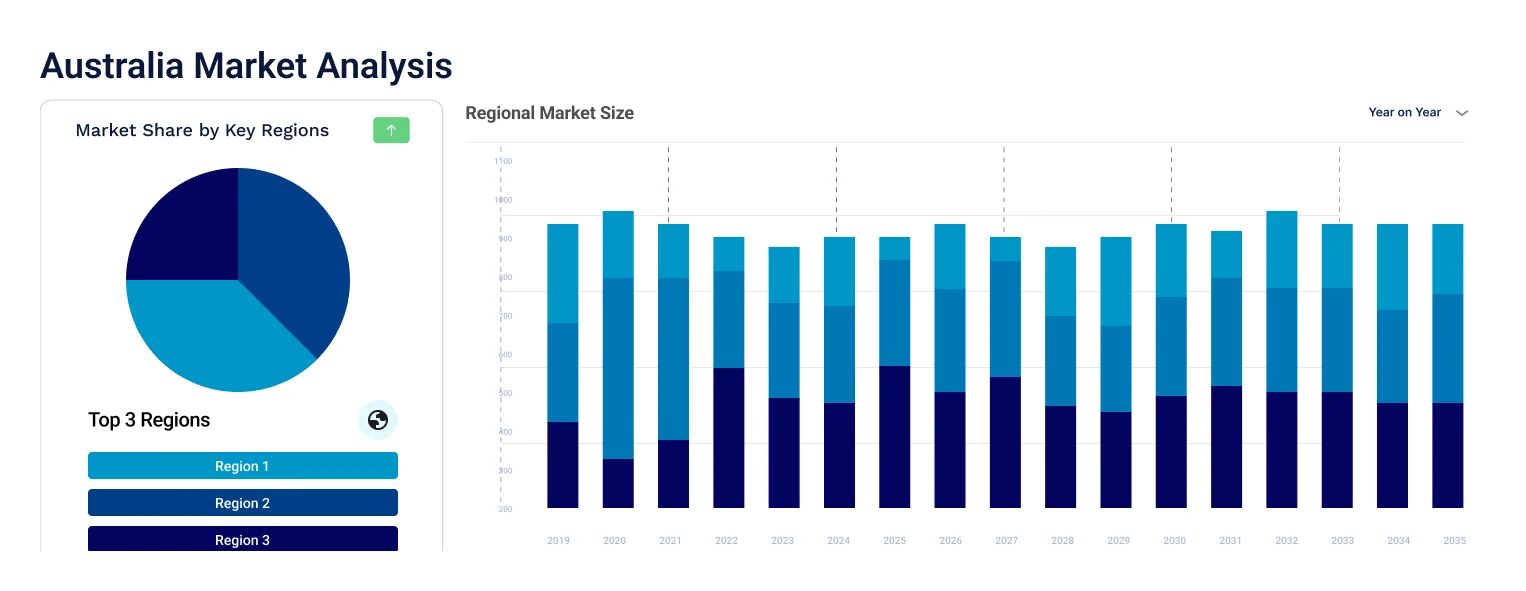
Key Insight: Victoria leverages its pulse-growing regions and processing plant protein capabilities. This makes Victoria crucial when it comes to isolate manufacture and added value ingredients. NSW is relevant due to its agriculture production and the presence of a network that processes grain and the ability to link with exporters. Queensland is relevant in chickpea farming and the pulse growing agriculture. The Western Australia plant protein market is relevant through its production of lupin and other broad-acre crops. South Australia is relevant through its lentils and faba beans farming. The ACT and other regions are relevant in research, distribution, and small agricultural supply chains.

Read more about this report - REQUEST FREE SAMPLE COPY IN PDF
By nature, conventional plant protein dominates the market due to established sourcing and wider industrial applications
The traditional plant protein reflects the existing source of ingredients on the basis of competitive ingredient sourcing, existing processing infrastructure, and availability of protein from peas, soy, wheat, and rice. Food companies prefer traditional ingredients due to flexible formulation costs and bulk purchasing, boosting growth in the Australia plant protein market. The commercial processing of local legume crops at Australian Plant Proteins Company illustrates the potential for conventional protein companies to establish their domestic ingredient supply chains. In October 2025, New South Wales launched an investment prospectus promoting regional plant protein manufacturing, encouraging infrastructure development, agricultural processing, and industry expansion.
The Australia plant protein market observes growing opportunities for commercial success of organic plant proteins as food companies seek ingredients certified for use in premium nutrition powder, snacks, and beverages. It provides processors with opportunities for developing certified pulse-based isolates and concentrates with documented agricultural sourcing. Suppliers of organic peas, rice, and soy proteins have an opportunity to cater to the needs of premium food brands.
By type, protein concentrates dominate the market due to formulation flexibility and cost-effective industrial applications
Plant protein concentrates remain commercially significant across the Australia plant protein market scope as they offer manufacturers a good trade-off between the degree of protein content, cost of production, and formulating flexibility. Their application in bakery foods, meat analogs, snacks, and animal feed does not require complete protein separation. The experience of Manildra Group in wheat processing and wheat gluten manufacture highlights Australia’s ability to process downstream ingredients. It combines its Shoalhaven Starches plant with flour milling, gluten, and starch processing capabilities, which allows it to cater for industrial uses that go beyond flour manufacture. In November 2026, Lantmännen launched NordPea, a sustainable Swedish pea protein isolate developed with Ingredion for plant-based food applications.
Plant protein isolates are becoming increasingly important as manufacturers try to increase protein content, improve nutritional value, and exercise better formulating options. Australian Plant Proteins' Nothing Else product line features faba bean and yellow pea protein isolates produced using its proprietary ApPro extraction technology. In each serving of Nothing Else there is 26 grams of protein, indicating that the domestic processors start producing differentiated and single ingredient products.
Pea protein continues to dominate the market due to versatile formulations and growing domestic pulse processing
The high popularity of pea protein in the Australia plant protein market can be attributed to the product's versatility in use in making dairy and meat alternatives, nutrition and protein powders, and protein-filled snacks. The taste-neutral property and compatibility with other plant ingredients make it useful commercially. In May 2026, Australian Plant Proteins enhanced the product group by producing yellow pea protein isolates from its Horsham processing plant. This development shows a possibility for local producers to produce local pea ingredients instead of importing protein powders.
The rice protein ingredient is attracting interest among manufacturers of allergen-free nutrition products and dairy-free drinks and specialty protein mixes. Rice protein ingredients offer an advantage to formulators in creating a non-soy and non-dairy protein source. Axiom Foods' range of rice protein ingredients is being further expanded with the introduction of Oryzatein CLEAR that is suitable for clear and carbonated beverages, in March 2025. The company sells its ingredients in over 30 countries worldwide.
Food applications continue to dominate the market due to growing protein fortification across packaged products
Food products continue to motivate the Australia plant protein market revenue growth in terms of uses for plant-based protein ingredients, with examples ranging from meat alternatives, non-dairy beverages, bakery goods, confectionery and snacks to nutritional products. Manufacturers appear to be increasingly using protein-containing products in traditional forms rather than in the form of dedicated supplements. In September 2026, SunRice introduced its Microwave Protein+ products which contain at least 10g of protein per serve in jasmine, brown, and basmati rice. This is an example of food companies' attempts to make traditional products more protein-rich, allowing them to satisfy consumer needs without changing their eating habits.
Plant proteins are becoming increasingly relevant for livestock and aquaculture feed as producers attempt to find alternative sources of proteins that would exhibit reliable nutritional effects. Soy, wheat, lupin and faba beans could be used in the formulation of new feed products by manufacturers that try to introduce diversity in their raw material portfolio. In March 2026, IFF secured Australia's and New Zealand's first heart health claim for isolated soy protein, supporting cholesterol management through daily consumption.
Victoria clocks in the largest share in the market due to established pulse processing and ingredient manufacturing infrastructure
Victoria enjoys a favorable position in the industry due to its regions of legume cultivation, its agricultural processing facilities, and development of ingredient manufacturing facilities. The Wimmera region allows Australian Plant Proteins to source locally grown legumes, and its Horsham plant processes faba beans and yellow peas into protein isolates. Firms in the Australia plant protein market are emphasizing the ability of regional agricultural processing to develop high-value food ingredients and strengthen domestic manufacturing facilities.
New South Wales is becoming an important growth region owing to its large production of pulses, well-developed supply chain of agriculture, and availability of both local and foreign buyers. According to the NSW Department of Primary Industries, the production of pulses rose by 331% to about 1.91 million tons in 2024-2025. High production of chickpeas and faba beans creates the possibility for ingredient processors to set up more cleaning, milling, fractionation, and protein extraction facilities.
Australia plant protein market players are focusing on specialization in ingredients, processing capabilities, sourcing of agricultural inputs, and capability to fulfill formulating requirements of food processors. The industry has made significant efforts to increase efficiency of protein isolation, introduce proteins with better solubility and neutral flavor, and to diversify its products beyond meat analogs. The biggest potential in the industry is represented by the production of isolates and concentrates from locally grown pulses instead of relying mainly on agricultural raw material exports.
In addition, Australia plant protein companies are trying to develop a number of different formulations of proteins including pea, rice, faba beans, and wheat proteins in order to increase their amino acid profile and functional properties. Investments in the development of solvent free protein extraction, protein fractionation, and regional processing facilities are creating scope for differentiation in the industry. In addition, suppliers are concentrating on applications such as sports nutrition, fortified baked goods, dairy alternatives, and animal feed.
Founded in 2006, Professional Whey is an Australian sports nutrition company based on the Central Coast of New South Wales, Australia. Professional Whey is known to produce protein-based supplements and clean label nutritional products. Its product line and business model cater to the needs of sports nutrition customers and health-conscious buyers who look for specific protein blends.
Founded in 2016, Australian Plant Proteins Pty Ltd. is based in Victoria, where its manufacturing activities revolve around processing legumes grown in Australia. Australian Plant Proteins Pty Ltd. produces faba bean and yellow pea protein isolates using its own extraction process technology. Its ingredients are targeted at food and beverage companies producing protein shakes, nutritional bars, dairy products, and meat alternatives.
Axiom Foods was founded in 2005 and is based in Los Angeles, California, United States, with Pacific Resources International being its Australia and New Zealand Distributor. The firm focuses on providing plant-based proteins such as rice, pea, and other proteins from plants for use in foods, beverages, and nutrients. Its products include Oryzatein rice proteins and unique protein ingredients for beverages and diet, supporting growth in the Australia plant protein market.
Founded in 1952, Manildra Group is based in Sydney, New South Wales, Australia. The firm produces food and industrial ingredients based on Australian wheat, including vital wheat gluten and specialty starches. Its milling and processing facility supports bakery and food manufacture as well as protein ingredient uses. Its existing agricultural supply chain also opens up possibilities for other ingredient uses.
Other key players in the market include Danisco Australia Pty Limited, and Harvest B, among others.
*Please note that this is only a partial list; the complete list of key players is available in the full report. Additionally, the list of key players can be customized to better suit your needs.*
Unlock the latest insights with our Australia plant protein market trends 2026 report. Discover regional growth patterns, consumer preferences, and key industry players. Stay ahead of competition with trusted data and expert analysis. Download your free sample report today and drive informed decisions in the market.


Upto 15% Off
USD
$2499 $2249
$3999 $3599
$4999 $4249
$5999 $5099


*While we strive to always give you current and accurate information, the numbers depicted on the website are indicative and may differ from the actual numbers in the main report. At Expert Market Research, we aim to bring you the latest insights and trends in the market. Using our analyses and forecasts, stakeholders can understand the market dynamics, navigate challenges, and capitalize on opportunities to make data-driven strategic decisions.*
In 2025, the market reached an approximate value of USD 195.22 Billion.
The market is projected to grow at a CAGR of 5.64% between 2026 and 2035.
The revenue generated from the plant protein market is expected to reach USD 337.92 Billion in 2035.
The plant protein market is categorised according to nature, which includes organic and conventional.
The key players in the market include Professional Whey Pty Ltd., Australian Plant Proteins Pty Ltd., Axiom Foods, Inc. (Pacific Resources International), Manildra Flour Mills Pty. Ltd., Danisco Australia Pty Limited, and Harvest B, among others.
Based on the type, the market is divided into concentrate, isolate and others.
The market is broken down into New South Wales, Victoria, Queensland, Australian Capital Territory, and Western Australia among others.
Companies face fluctuating pulse availability, extraction costs, imported ingredient competition, taste and texture limitations, certification requirements, and difficulties scaling specialized protein formulations while maintaining consistent quality and affordability.
Stakeholders are strengthening grower partnerships, investing in advanced extraction, developing customized protein blends, improving ingredient traceability, targeting foodservice manufacturers, and expanding export-oriented processing capabilities.
Explore our key highlights of the report and gain a concise overview of key findings, trends, and actionable insights that will empower your strategic decisions.
| REPORT FEATURES | DETAILS |
| Base Year | 2025 |
| Historical Period | 2019-2025 |
| Forecast Period | 2026-2035 |
| Scope of the Report |
Historical and Forecast Trends, Industry Drivers and Constraints, Historical and Forecast Market Analysis by Segment:
|
| Breakup by Nature |
|
| Breakup by Type |
|
| Breakup by Source |
|
| Breakup by Application |
|
| Breakup by Region |
|
| Market Dynamics |
|
| Competitive Landscape |
|
| Companies Covered |
|
Datasheet
One User
USD 2,499
USD 2,249
tax inclusive*
Single User License
One User
USD 3,999
USD 3,599
tax inclusive*
Five User License
Five User
USD 4,999
USD 4,249
tax inclusive*
Corporate License
Unlimited Users
USD 5,999
USD 5,099
tax inclusive*
*Please note that the prices mentioned below are starting prices for each bundle type. Kindly contact our team for further details.*
Flash Bundle
Small Business Bundle
Growth Bundle
Enterprise Bundle
*Please note that the prices mentioned below are starting prices for each bundle type. Kindly contact our team for further details.*
Flash Bundle
Number of Reports: 3
20%
tax inclusive*
Small Business Bundle
Number of Reports: 5
25%
tax inclusive*
Growth Bundle
Number of Reports: 8
30%
tax inclusive*
Enterprise Bundle
Number of Reports: 10
35%
tax inclusive*
How To Order

Select License Type
Choose the right license for your needs and access rights.

Click on ‘Buy Now’
Add the report to your cart with one click and proceed to register.

Select Mode of Payment
Choose a payment option for a secure checkout. You will be redirected accordingly.
Strategic Solutions for Informed Decision-Making
Gain insights to stay ahead and seize opportunities.
Get insights & trends for a competitive edge.
Track prices with detailed trend reports.

Analyse trade data for supply chain insights.
Leverage cost reports for smart savings
Enhance supply chain with partnerships.

Connect For More Information
Our expert team of analysts will offer full support and resolve any queries regarding the report, before and after the purchase.
Our expert team of analysts will offer full support and resolve any queries regarding the report, before and after the purchase.
We employ meticulous research methods, blending advanced analytics and expert insights to deliver accurate, actionable industry intelligence, staying ahead of competitors.
Our skilled analysts offer unparalleled competitive advantage with detailed insights on current and emerging markets, ensuring your strategic edge.
We offer an in-depth yet simplified presentation of industry insights and analysis to meet your specific requirements effectively.