

Consumer Insights
Uncover trends and behaviors shaping consumer choices today
Procurement Insights
Optimize your sourcing strategy with key market data
Industry Stats
Stay ahead with the latest trends and market analysis.
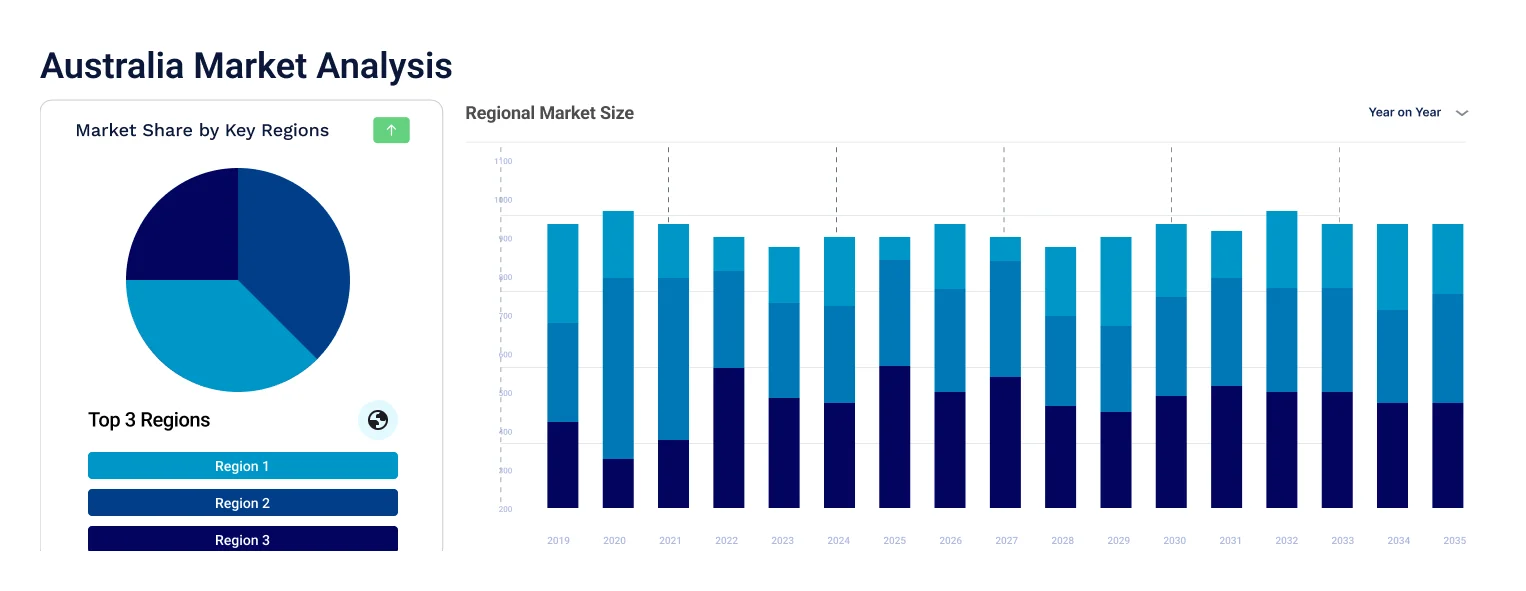
The Australia roofing tiles market attained a value of USD 1375.02 Million in 2025 and is projected to expand at a CAGR of 3.20% through 2035. The market is further expected to achieve USD 1884.11 Million by 2035. As more people look towards constructing using less carbon emissions, this is encouraging the producers to use industrial waste material and be more efficient with their materials while keeping records of the life-cycle emissions of their product.
Increased expectations of performance are compelling suppliers to come up with lighter weight, fireproof materials which are capable of meeting the market standards. Hence increasing demand for engineered products due to project specifications. On the other hand, Australia roofing tiles market observes an increased remodeling which is creating demand for tiles which are strong, repairable and also have accompanying accessories in order to minimize the work involved during the installation process.
The Australia roofing tiles market is trending towards the use of greener products with manufacturers collaborating with research institutes to develop new generation concrete roof tiles out of circular materials. An extensive study was conducted by RMIT University and Bristile Roofing in which coal ash and glass waste were mixed into concrete roof tiles manufactured in Bristile's Melbourne facility in October 2025. The resultant tiles not only were lightweight and highly fire-resistant but were also in compliance with the Australian Standards and had considerably lower CO2 emissions than regular concrete tiles according to the lifecycle assessment. Manufacturers therefore have a clear strategy to combat embodied carbon pressure while ensuring product performance.
Another trend in the Australia roofing tiles market revolves around product differentiation including architectural flexibility, premium finishes, and performance. CSR Monier provides both concrete and terracotta tiles in various formats, such as flat formats used in contemporary housing construction, along with terracotta Luxe series, which is marketed as a high-end range of Australian-made tiles with 50-year warranty period. Such product range allows manufacturers to meet the demands of builders looking for standardized products and developers looking for value-added residential projects. On the other hand, in July 2026, researchers developed tile-like solar panels using structural color technology, retaining approximately 95% of conventional panel output.
Compound Annual Growth Rate
3.2%
Value in USD Million
2026-2035
Read more about this report - REQUEST FREE SAMPLE COPY IN PDF
Primeline Roofing extended its operations in the state of New South Wales, improving its ability to offer durable roofing made from metal. Companies can expand their regional manufacturing, installation capabilities, and offer durable metal roofing portfolio to meet demands for infrastructure and residential roofing, boosting the Australia roofing tiles market development.
TARC introduced Australia’s first AI-powered roofing estimation tool to ease measurements, quotation and project assessments for roofing professionals. Such advancements indicate that companies can use AI estimation tools to fasten quotations and increase customer conversion rates.
Researchers came up with colored solar technology that provides PV functionality along with roof aesthetics without compromising the efficiency in energy conversion. There is scope for Australian roofing firms to manufacture integrated solar tiles that are architecturally appealing, renewable and energy efficient in residential developments.
A solar tile manufacturing firm in Australia raised funds for increased production and marketing in international markets. The Australia roofing tiles market presents ample scope for investment in solar tile manufacturing to incorporate renewable energy generation in roofing infrastructure.
Sustainability in the Australia roofing tiles market is transitioning from being a marketing slogan to actual product engineering. Companies are carrying out full-scale production trials on concrete roof tiles, incorporating both glass waste and coal ash. For example, in July 2026, Marley launched low-carbon roof tiles, reducing embodied carbon while supporting more sustainable construction and environmentally responsible roofing solutions. The output tiles were lighter and more fire resistant while also fulfilling the standards of Australian roof tiles in terms of structural integrity and longevity. This innovation project, conducted via RMIT's research center TREMS, is currently progressing into trials with the help of councils and other commercial stakeholders to enable manufacturers to establish consistent waste sources as well as low carbon tiles portfolio.
Roofing manufacturers are incorporating solar technologies together with regular tiles to generate multifunctional roof solutions for new residential construction projects. For instance, CSR Monier offers InlineSOLAR that is recessed in the roof structure as well as SOLARtiles that are supposed to substitute sections of compatible concrete roofs. These solar solutions range in various system capacities and can integrate batteries, bringing roof suppliers one step closer to distributed energy value chains. This trend in the Australia roofing tiles market is consistent with strong residential electrification efforts in Australia whereas building designers do not need to make changes to the appearance of roofs. In August 2026, Megasol equipped solar panels with an anti-glare surface, reducing reflections while improving visual integration and performance across building applications.
As buildings become responsive to National Construction Code standards and 7-star NatHERS criteria in Australia, energy efficiency becomes an increasingly strong specification criterion in the Australia roofing tiles market. CSR mentions that Monier roof systems may help achieve 7-star homes due to thermal efficiency and roof color selection, including light roof colors that reflect more sun heat in warmer regions. At the same time, government housing policy continues to stimulate building activity, with the Australian Government’s "Homes for Australia" initiative including AUD 2 billion for housing-enabling infrastructure and measures, announced in May 2026, that speed up residential building supply.
Growing building approval numbers expand the specification pipeline for concrete and terracotta roof manufacturing companies and those able to satisfy volume orders for established building contractors and provide proper documentation. According to the Australia roofing tiles market analysis, 205,249 dwelling units were approved in 2025-26, which is 9.2% higher than the preceding financial year. This growth encourages tile manufacturers, distributors and contractors, but also intensifies competition concerning reliability of delivery, standardized profile range, color palette and specific product lines of each builder.
Companies in the Australia roofing tiles market are developing premium and architecturally driven lines because of increased interest in distinguishing new homes by using roof forms, textures and colors. One of Australia's earliest flat terracotta roof tiles was released by CSR Monier in 2019 in response to current architectural trends and continues offering both flat, semi-flat and raised designs for concrete and terracotta lines. The current range of CSR Monier includes premium lines, various color palettes and technical materials for projects such as CAD files and textures of roof tiles. In May 2026, Antaisolar launched We Cover Solar Roof, a one-stop solution integrating rooftop solar systems with streamlined installation and structural components.
"Australia Roofing Tiles Market Report and Forecast 2026-2035" offers a detailed analysis of the market based on the following segments:
Market Breakup by Material Type
Key Insight: The concrete, clay, ceramic and other types of roofing tiles have individual specification needs in Australia's building industry. The choice of concrete is preferred when the builder's needs include ease of purchase, installers' experience, sturdiness, and wide range of designs. Clay tiles are favored when the project needs heat resistance, durability, and aesthetic design. Ceramic tiles can be preferred by projects where uniformity of the surface finish and decoration becomes more important than the mass production, accelerating the Australia roofing tiles market expansion. Other materials such as composite and other specialty types become preferred for projects that demand lightweight and unique features.
Market Breakup by Construction Type
Key Insight: As per the Australia roofing tiles market report, the rehabilitation and replacement segment continues to be motivated by roof restoration, deterioration due to environmental factors, and conformity with the form of buildings in place. In the case of new constructions, the driving factors include requirements of developers, standardization of homes, purchasing strategies, and the desire for modern roofs. Rehabilitations tend to embrace tiles which require minimal structural modifications and cause minimal disruptions in installation, while in the new construction cases there is more opportunity for manufacturers to have an influence on the choice of materials at the design stage. Compatibility of accessories, batch consistency in color, technical information, and logistics continue to be of significance to contractors in both categories.
Market Breakup by End Use
Key Insight: Demand for residential uses is driven by the increased construction of houses, re-roofing cycles, extending, and aesthetic preferences from homeowners, propelling opportunities in the Australia roofing tiles market. Uses for non-residential purposes depend on architectural specifications, long-term maintenance, institutional building specifications, and roof aesthetics that help distinguish properties. Buyers of roofing products in the residential segment are more concerned about availability, color choices, warranty coverage, and installer experience, while commercial buyers place more emphasis on technical information, logistics, durability, and replacement considerations.
Market Breakup by Region
Key Insight: The state of New South Wales is aided by its extensive residential base, its construction industry structure, and reroofing activities. The Victoria market benefits from the region’s urban renewal, renovation, and design-based housing activities. Queensland’s influence comes from its housing and roof maintenance due to climatic conditions, while the Australian Capital Territory enjoys its planned residential and institutional developments. In the Western Australia roofing tiles market, metropolitan construction and renovation activity support demand, while material selection is influenced by the state’s climate.
By material type, concrete tiles lead the overall market growth due to durability, familiarity, scale, and affordability
Concrete tiles continue to be the top choice for builders due to their combination of durability, ease of installation, wide profile range, and affordable acquisition cost, generating consistent growth in the Australia roofing tiles market. Concrete tile manufacturers produce various profiles on a large scale and provide an ample range of colors and surfaces in order to help developers keep consistent specifications in their projects. They fit into the already proven systems of roofing construction, and their easy installation allows them to minimize risks associated with project implementation. In addition, replacement needs create an additional market for concrete tiles since contractors prefer to replace profiles that match existing concrete tiles rather than change roof constructions.
Clay tiles are gaining major momentum across the Australia roofing tiles market scope as developers and architects choose premium roof appearance, long lifetime, and climate responsive roof. Due to their thermal characteristics and resistance to fading, they can be used in high-end residential construction projects, where roof appearance plays a major role in architectural conception. With advanced manufacturing technologies, such as glazing and profiling, as well as color range, designers have more opportunities in roof appearance creation. In April2025, Bongioanni signed an agreement for a new FBM roof tile production line, advancing automated manufacturing and production efficiency.
By construction type, renovation and replacement dominates the market due to aging roofs, storms, and refurbishment
Renovation and replacement represent the prevailing construction type due to the recurrent need to replace damaged, worn out, or old roofing systems in Australia's existing housing stock. The contractors carry out replacement of the broken tiles, repair, and modernization of old roof structures and profiles without altering the structure of the layout, accelerating the Australia roofing tiles market growth. Storm damage, moisture, thermal deterioration, or change in the tastes and preference of the architecture encourages roof restoration along with other renovations, Availability of matching profiles, accessory compatibility, color uniformity, and rapid delivery becomes an advantage to the manufacturers and distributors in order to satisfy replacement demands since contractors require immediate provision of the materials to ensure the smooth flow of renovations. To capitalize on such growth trends, in April 2026, Edilians acquired a clay roof tile manufacturer, expanding production capabilities and strengthening its position in the roofing market.
The new construction segment is gaining importance in the Australia roofing tiles market as developers, builders, and contractors include the roofing system specifications early during the building process. The standard profiles make the procurement and installation planning easy as well as help in controlling them in case of repetitive housing models. Roofing material is also used by developers to distinguish their projects through color coordination and architectural profiles. The construction segment offers opportunities to manufacturers who have consistent supply volumes, documentation, installation instructions, and integrated accessories on various sites.
By end use, the residential category clocks in the major share of the market through reroofing, housing construction, extensions, and homeowner preferences
The residential segment makes up the largest end use application in the Australia roofing tiles market since roofing tiles are being used in stand-alone housing, row houses, and medium density construction. Residential roofing demand is driven by construction of new housing units, as well as by reroofing, extension, and exterior renovations. Consumers now consider the shape, color, warranty, heat properties, and maintenance needs of roofing tiles when deciding on replacement tiles. Builders and roofing contractors prefer lines with ease of installation combined with versatility. Aligning with such trends, in March 2025, Edilians launched a tile-like rooftop PV mounting system, integrating solar panels seamlessly with conventional roofing while simplifying installation processes.
Non-residential applications are becoming increasingly prevalent across the Australia roofing tiles market scope, as developers, architects, and building owners are looking for roof systems with durability and visual consistency with commercial or institutional architecture. Roofs of hotels, retirement homes, community centers, office buildings, and mixed-use development projects can use a tile roofing system where aesthetics and maintenance properties warrant its specification. The non-residential segment favors manufacturers who can meet performance specifications, coordinate deliveries, and provide installation instructions. Commercial customers value the long-term maintenance, replacement capability, and procurement reliability of roof tiles, thus motivating manufacturers to build project management capabilities.
Read more about this report - REQUEST FREE SAMPLE COPY IN PDF
New South Wales clocks in the largest share of the market due to housing scale, renovation demand, contractor networks
New South Wales stands out as the leading region boosting the Australia roofing tiles market value based on its housing stock, redevelopment, renovations, and construction supply chains. With the huge number of people living in the state, there is a huge demand for the replacement, renovation, and installation of roofs. The urbanization process near Sydney is also leading to more residential buildings and renovations, providing a chance for tile suppliers. Another factor is the existing construction network that encourages the use of modern tile technologies. In February 2025, Westlake Royal Building Products introduced new Newpoint concrete roof tile colors, expanding aesthetic options for residential roofing applications.
Victoria stands out as the fastest growing region in the Australia roofing tiles market based on urban expansion, redevelopment, and residential construction increasing chances for modern tile specifications. Developers and architects can prefer high-end profile products, matched finishes, and durable products. In addition, renovations can help create replacement demands in existing suburbs, and this means that there are needs for materials that can go well with them. Manufacturers can exploit distribution channels and builders to enhance their responsiveness to regional demands. Growth will favor suppliers that can balance product variety with strong technical support, reliable delivery, and responsive customer service.
The industry is competitive, with key Australia roofing tiles market players concentrating their efforts on innovations in products, processes, architecture, sustainability, and relationships with builders and roofing contractors. Manufacturers are building up their competitive advantage through diversity of products, technical assistance, manufacturing, and sustainable innovation. They provide concrete and terracotta tiles in different colors, shapes, and styles, along with CAD drawings, installation guidelines, and specification tools that assist manufacturers in influencing projects right from design to installation.
Australia roofing tile companies are researching and partnering within the industry to bring out roofing products which are less carbon-emitting by means of recycling and using alternate materials. This would not only make the product sustainable but also keep the durability factor intact. Opportunities are arising in areas such as low carbon formulation, climate responsiveness, premium terracotta, integration of solar power, and digitally-driven specification. In addition, there are opportunities in newly-built houses as this market allows suppliers to ensure long-term specification by builders through standardized product ranges, reliable logistics, technical documentation, and roofing systems.
CSR Limited was founded in 1855 and has its corporate headquarters in Australia. The company caters to the Australia roofing tiles market with products such as concrete and terracotta products, architectural shapes, roofing with built-in solar energy systems, and technical specifications. Its efficiency in manufacture, energy use, design versatility, and sustainable practices enable it to meet the challenges of roof replacement and construction in Australia.
Founded in 1960 and headquartered in Australia, Lutum Montoro Roofing Pty Ltd works as a specialist roofing firm tied to an existing tile and roofing operation. It helps the market by offering its roofing products and services that cater for roof replacements and roof constructions. Its relevance to the market is tied to its product offerings, contractor ties, and roofing skills, whereas its existing position allows it to play in the fractured demand for roof replacement and maintenance in Australia.
Formed in 1934 and based in Horsley Park, New South Wales, Australia, Brickworks Limited manufactures building products such as concrete and terracotta roof tiles by its roofing division. Brickworks Limited incorporates manufacturing abilities and design studios, product display, technical support, and involvement of architects in its roofing approach.
Founded in 1959 and based in Western Australia, BGC Australia Pty Ltd introduced Harmony Roof Tiles as a part of its building products offering that is vertically integrated. BGC Australia Pty Ltd caters to roofing demands through local manufacture, connections with builders, affordable pricing, and logistics control. Sustainability and innovation in the process also form part of its positioning in Western Australian builders demanding roofing products competitively.
*Please note that this is only a partial list; the complete list of key players is available in the full report. Additionally, the list of key players can be customized to better suit your needs.*
Unlock the latest insights with our Australia roofing tiles market trends 2026 report. Discover regional growth patterns, consumer preferences, and key industry players. Stay ahead of competition with trusted data and expert analysis. Download your free sample report today and drive informed decisions in the market.


Upto 15% Off
USD
$2499 $2249
$3999 $3599
$4999 $4249
$5999 $5099


*While we strive to always give you current and accurate information, the numbers depicted on the website are indicative and may differ from the actual numbers in the main report. At Expert Market Research, we aim to bring you the latest insights and trends in the market. Using our analyses and forecasts, stakeholders can understand the market dynamics, navigate challenges, and capitalize on opportunities to make data-driven strategic decisions.*
The market was valued at USD 1375.02 Million in 2025.
The market is projected to grow at a CAGR of 3.20% between 2026 and 2035.
The revenue generated from the roofing tiles market is expected to reach USD 1884.11 Million in 2035.
The roofing tiles market is categorised according to material type, which includes concrete tiles, clay tiles, ceramic tiles, and others.
The key players are CSR Limited, Lutum Montoro Roofing Pty Ltd, Brickworks Ltd, and BGC (Australia) Pty Ltd among others.
Based on the roofing tiles end use, the market is divided into residential and non-residential.
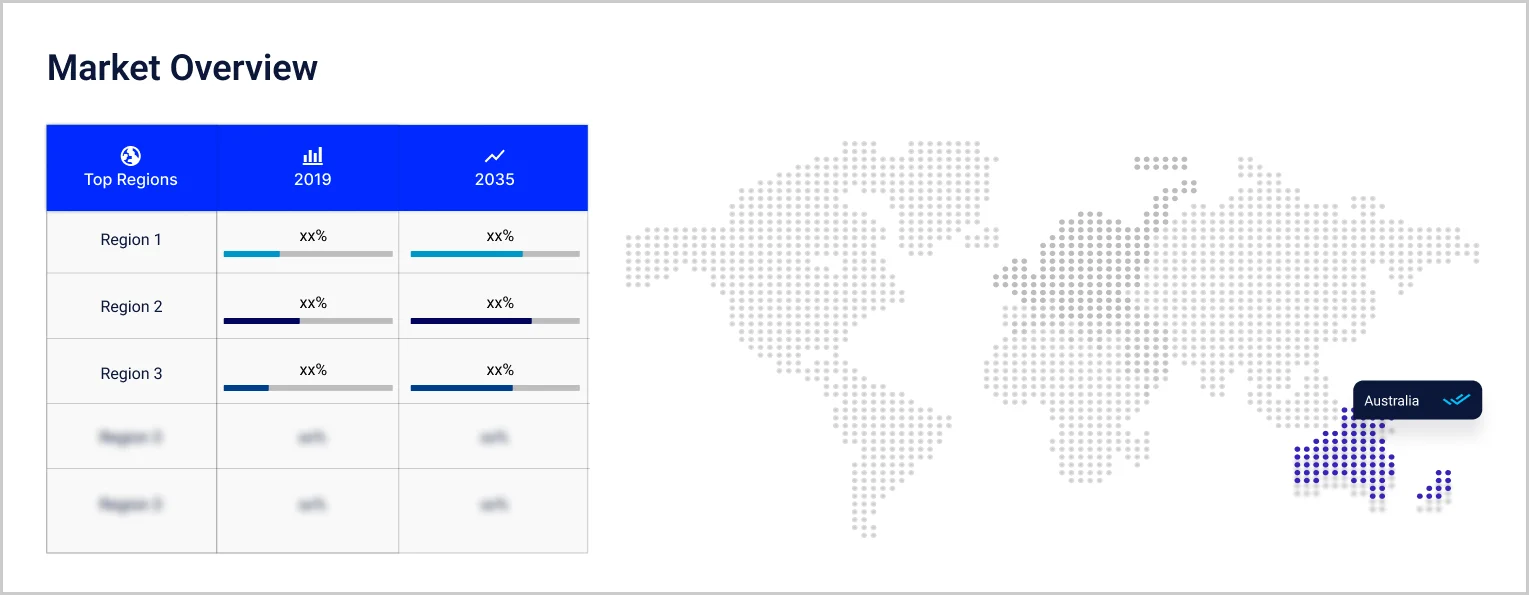
The market is broken down into New South Wales, Victoria, Queensland, Australian Capital Territory, Western Australia, and others.
Companies are facing volatile construction costs, energy-intensive manufacturing, raw-material pressures, skilled installer shortages, stricter sustainability expectations, climate-related damage, logistics constraints, and growing pressure to deliver innovative tiles without significantly increasing project costs.
Manufacturers are developing recycled-material tiles, strengthening builder partnerships, expanding solar-compatible systems, improving technical support, optimizing regional distribution, and promoting durable products with measurable environmental performance.
Explore our key highlights of the report and gain a concise overview of key findings, trends, and actionable insights that will empower your strategic decisions.
| REPORT FEATURES | DETAILS |
| Base Year | 2025 |
| Historical Period | 2019-2025 |
| Forecast Period | 2026-2035 |
| Scope of the Report |
Historical and Forecast Trends, Industry Drivers and Constraints, Historical and Forecast Market Analysis by Segment:
|
| Breakup by Material Type |
|
| Breakup by Construction Type |
|
| Breakup by End Use |
|
| Breakup by Region |
|
| Market Dynamics |
|
| Competitive Landscape |
|
| Companies Covered |
|
Datasheet
One User
USD 2,499
USD 2,249
tax inclusive*
Single User License
One User
USD 3,999
USD 3,599
tax inclusive*
Five User License
Five User
USD 4,999
USD 4,249
tax inclusive*
Corporate License
Unlimited Users
USD 5,999
USD 5,099
tax inclusive*
*Please note that the prices mentioned below are starting prices for each bundle type. Kindly contact our team for further details.*
Flash Bundle
Small Business Bundle
Growth Bundle
Enterprise Bundle
*Please note that the prices mentioned below are starting prices for each bundle type. Kindly contact our team for further details.*
Flash Bundle
Number of Reports: 3
20%
tax inclusive*
Small Business Bundle
Number of Reports: 5
25%
tax inclusive*
Growth Bundle
Number of Reports: 8
30%
tax inclusive*
Enterprise Bundle
Number of Reports: 10
35%
tax inclusive*
How To Order

Select License Type
Choose the right license for your needs and access rights.

Click on ‘Buy Now’
Add the report to your cart with one click and proceed to register.

Select Mode of Payment
Choose a payment option for a secure checkout. You will be redirected accordingly.
Strategic Solutions for Informed Decision-Making
Gain insights to stay ahead and seize opportunities.

Get insights & trends for a competitive edge.

Track prices with detailed trend reports.

Analyse trade data for supply chain insights.

Leverage cost reports for smart savings

Enhance supply chain with partnerships.

Connect For More Information
Our expert team of analysts will offer full support and resolve any queries regarding the report, before and after the purchase.
Our expert team of analysts will offer full support and resolve any queries regarding the report, before and after the purchase.
We employ meticulous research methods, blending advanced analytics and expert insights to deliver accurate, actionable industry intelligence, staying ahead of competitors.
Our skilled analysts offer unparalleled competitive advantage with detailed insights on current and emerging markets, ensuring your strategic edge.
We offer an in-depth yet simplified presentation of industry insights and analysis to meet your specific requirements effectively.




