

Consumer Insights
Uncover trends and behaviors shaping consumer choices today
Procurement Insights
Optimize your sourcing strategy with key market data
Industry Stats
Stay ahead with the latest trends and market analysis.
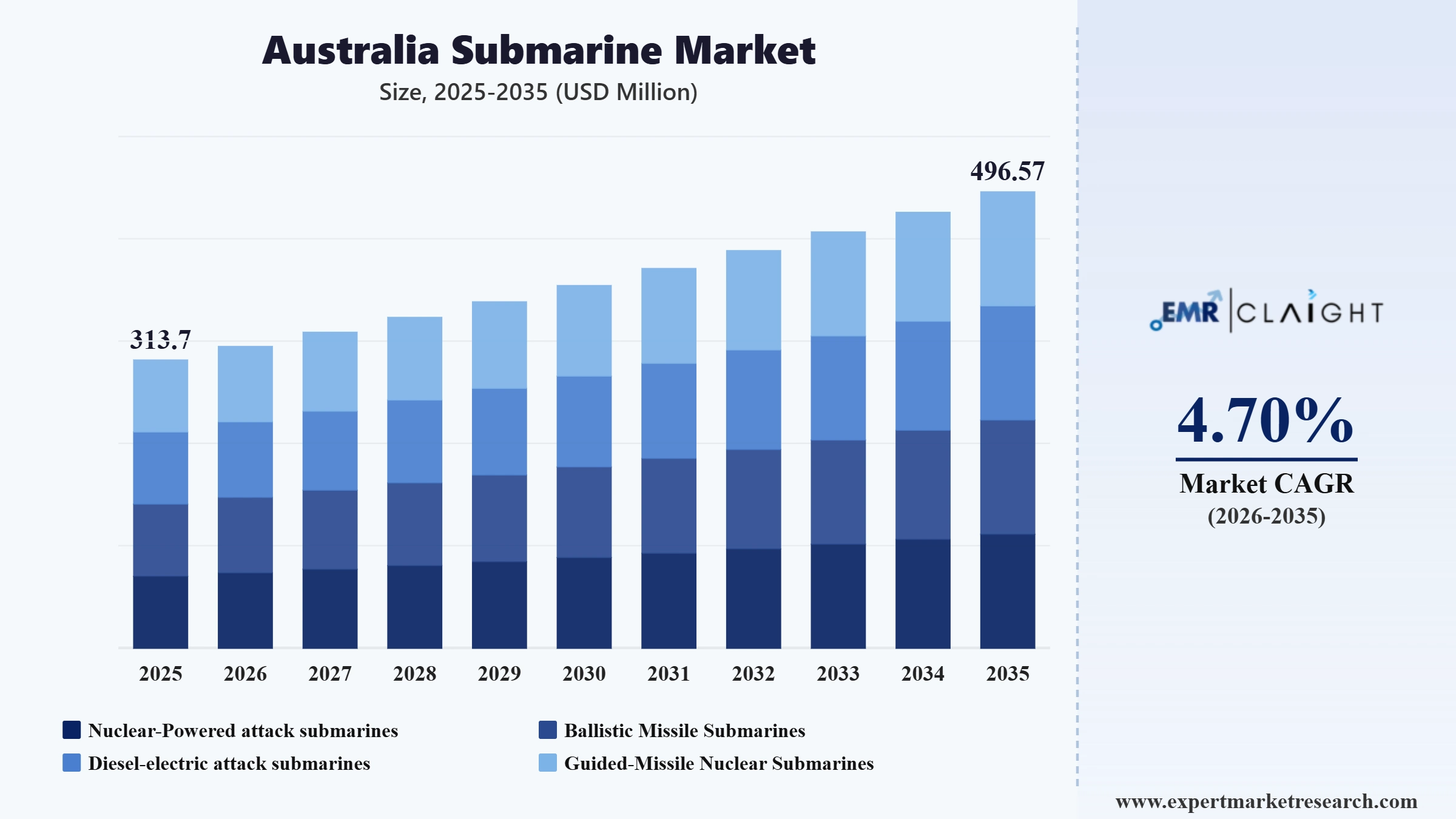
The Australia submarine market attained a value of USD 313.70 Million in 2025 and is projected to expand at a CAGR of 4.70% through 2035. The market is further expected to achieve USD 496.57 Million by 2035. With increased surveillance needs, the Australian defense suppliers being are compelled to build longer-endurance sensors and autonomous systems and communication for contested environments along with sovereign capability.
The Australia submarine market is transitioning to the next phase of capabilities by sustaining the Collins class while building an industrial base for nuclear submarines through AUKUS. In May 2026, the government initiated a life-of-type extension project for HMAS Farncomb which is the first of six submarines in the Collins class. Up to AUD 11 billion has been allocated for the next decade for the sustainment of Collins boats, workforce, and infrastructure. The life-of-type extension of HMAS Farncomb is using a condition-based approach where there might be retention and restoration of existing parts and upgrading of weapons and systems.
Moreover, the Australia submarine market continues to penetrate further into the supply chain of SSN-AUKUS. In February 2026, Australia invested AUD 310 million on long lead items that were necessary for the nuclear propulsion systems of its first two submarines in the SSN-AUKUS fleet. Rolls-Royce is also manufacturing the welded propulsion systems in the United Kingdom. In addition to shipbuilding, industry participation is diversifying in other areas such as energy storage solutions. In November 2025, PMB Defence got AUD 34 million contract from BAE Systems to integrate the nickel-zinc battery technology in the future SSN-AUKUS submarines.
Increasing difficulty in terms of maintenance is leading to increased demand for localized maintenance of the Collins Class vessels, thereby impacting the Australia submarine market growth trajectory. However, AUKUS integration of industries is pushing the suppliers to be eligible to supply propulsion systems, combat systems, batteries, and unmanned underwater vehicles. They are also developing specific competencies such as nuclear stewardship, workforce development, dockyard services, and maritime engineering, leading to new opportunities in the long-term defense agreements.
Read more about this report - REQUEST FREE SAMPLE COPY IN PDF
Australia developed its future Osborne submarine shipyard, increasing fabrication, outfitting, testing capabilities, and personnel skills to build AUKUS submarines. Australian firms can offer specialized engineering, fabrication, construction, testing, logistics, and maintenance services in the growing submarine industrial complex.
Leidos Gibbs & Cox was chosen for the design of a contingency dry dock to facilitate the maintenance of future nuclear submarines of Australia. The firms can design specialized dry dock engineering, marine infrastructure, maintenance, and support technology in the growing nuclear submarine facilities, boosting growth in the Australia submarine market.
Australia added another AUD 4.6 billion to Osborne's submarine building facility, increasing government funding to AUD 8.5 billion. Suppliers have a chance to go after the burgeoning procurement pipeline for construction materials, advanced manufacturing, training, engineering and industrial facilities, leveraging such developments in the Australia submarine market.
AUKUS partners embarked on joint development of underwater drone payloads. The technology companies of Australia may seek partnership in the area of autonomous underwater systems, payloads and subsea technology.
The introduction of nuclear-powered submarines by the country is turning out to be the critical determinant of the Australia submarine demand forecast. In September 2026, the nation established a USD 3 billion defense financing framework to promote indigenous research & development, industry, ship-building, and capability development. The framework is not only helping to boost the local supply chain but has also facilitated technology development and industrial capacity building for Australian firms.
Another cycle of demand in the Australia submarine market is created as a result of the Collins-class submarines fleet which will be maintained by the country in its move to SSN-AUKUS submarines. As was revealed by ANAO in May 2024, the strategy of extending the life of Collins-class submarines is partially efficient, but there are many delays, increased costs, and changed strategies implemented in the process. As a result, constant maintenance and upgrading of these submarines create demand for engineering and other services.
AUKUS might enable manufacturers in the Australia submarine industry to expand beyond domestic naval projects and participate in allied submarine supply chains. In April 2026, the government extended the Australian Submarine Supplier Qualification program to include Australian businesses in United Kingdom submarine supply chains, while ASC and BAE Systems established a new qualification pathway for SSN-AUKUS in April 2026. It is targeting to bring 5,500 jobs in South Australia in support of SSN-AUKUS construction.
The Australia submarine market development is expected to have more dependence on early acquisition and technology integration with the United Kingdom and the United States in the coming years, providing specialized opportunities for engineering and nuclear-qualified suppliers. In August 2026, Amentum and Laing O’Rourke formed a joint venture to support Australia’s nuclear-powered submarine construction yard development under AUKUS. Rolls-Royce Submarines is also producing the propulsion systems in the United Kingdom, while Australians are getting embedded with the international partners to develop design, engineering and quality control capabilities.
Uncrewed underwater systems represent one such important adjacent growth opportunity in the Australia submarine market, with the country looking to increase its undersea surveillance and strike capabilities without being wholly dependent on crewed submarines. In May 2026, Australia and the United Kingdom confirmed the first Pillar II signature project within the AUKUS framework, centered around advanced payloads and support systems for uncrewed underwater vehicles, and with initial capability expected to be available in 2027. This is also part of Australia's increasing sovereign capability in autonomous systems, as part of its broader defense modernization program.
The Expert Market Research's report titled “Australia Submarine Market Report and Forecast 2026-2035” offers a detailed analysis of the market based on the following segments:
Market Breakup by Type
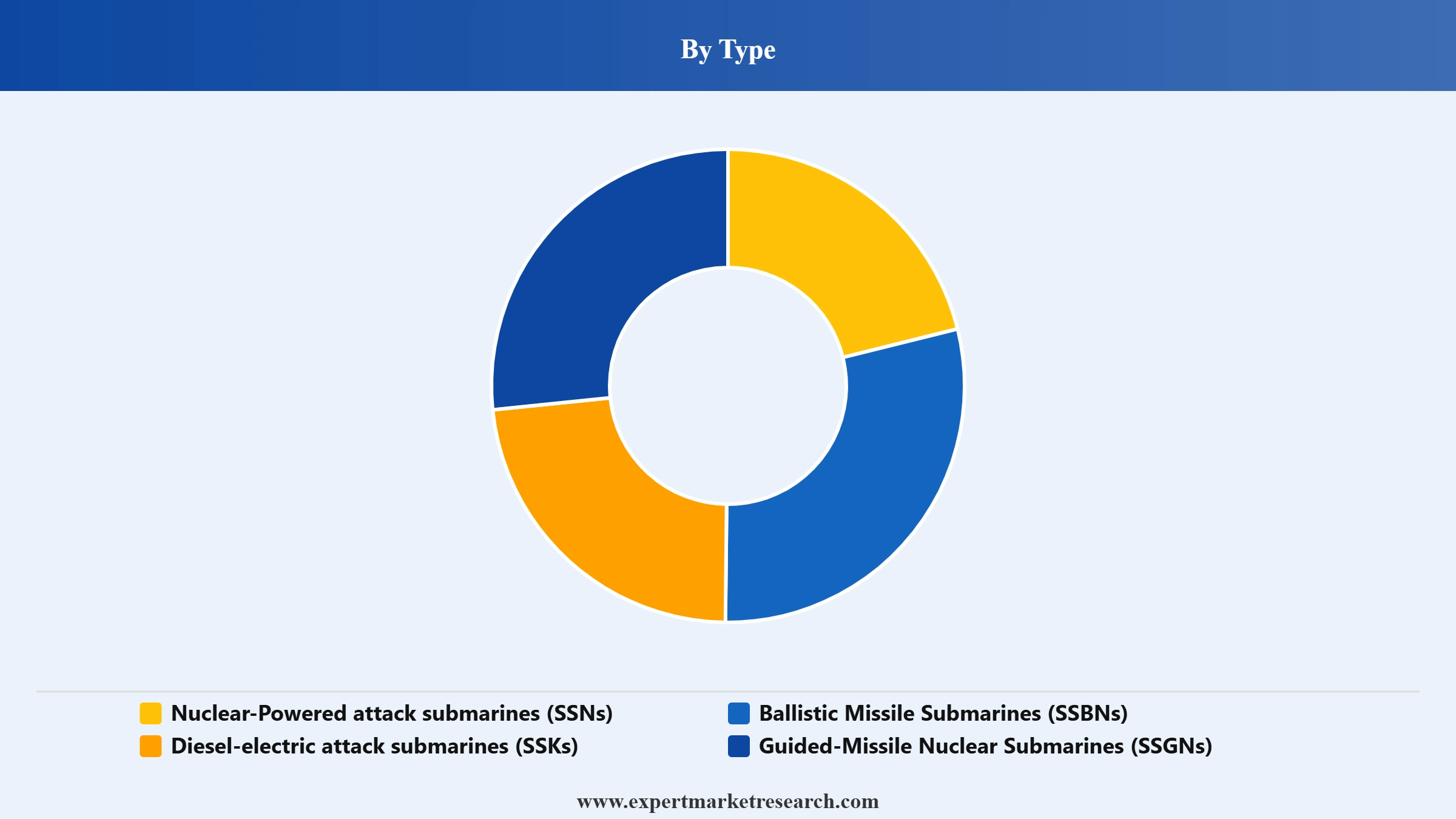
Key Insight: The variety of submarine types in Australia indicates a transition from the well-known to the innovative that is well-planned. The SSNs are emphasized for prolonged intelligence, surveillance, strike, and undersea warfare roles, boosting the overall growth in the Australia submarine market. At the same time, the SSKs play an important role in ensuring continuity of operations and building expertise in local sustainment. SSGNs also do not align with Australia’s current submarine plans. Australia’s future fleet of nuclear-powered submarines is expected to consist exclusively of attack submarines.
Market Breakup by Propulsion
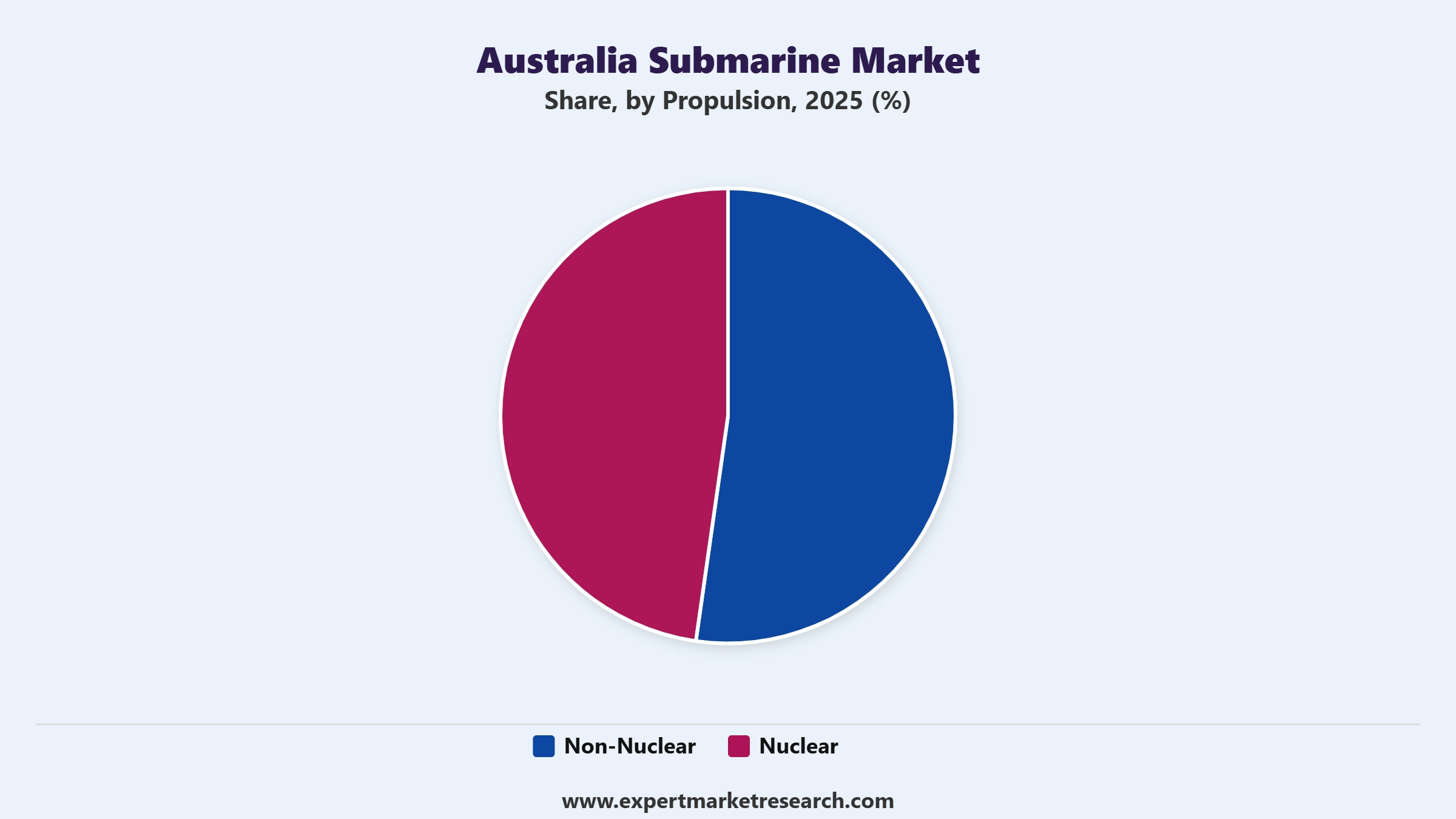
Key Insight: The Australia submarine market observes increasing strategic value attached to nuclear propulsion, via AUKUS, for suppliers focused on the reactor neighborhood, propulsion engineering, safety, and skilled personnel. There is commercial value in non-nuclear propulsion, due to the continued maintenance, upgrade, and availability of the Collins class submarines, during the period of transition to nuclear propulsion capability. This makes for a market that favors suppliers able to meet immediate conventional needs while also offering nuclear qualified programs. Companies with the ability to manufacture, inspect, integrate, and engineer assure existing conventional skills can move into submarine programs.
Market Breakup by Application
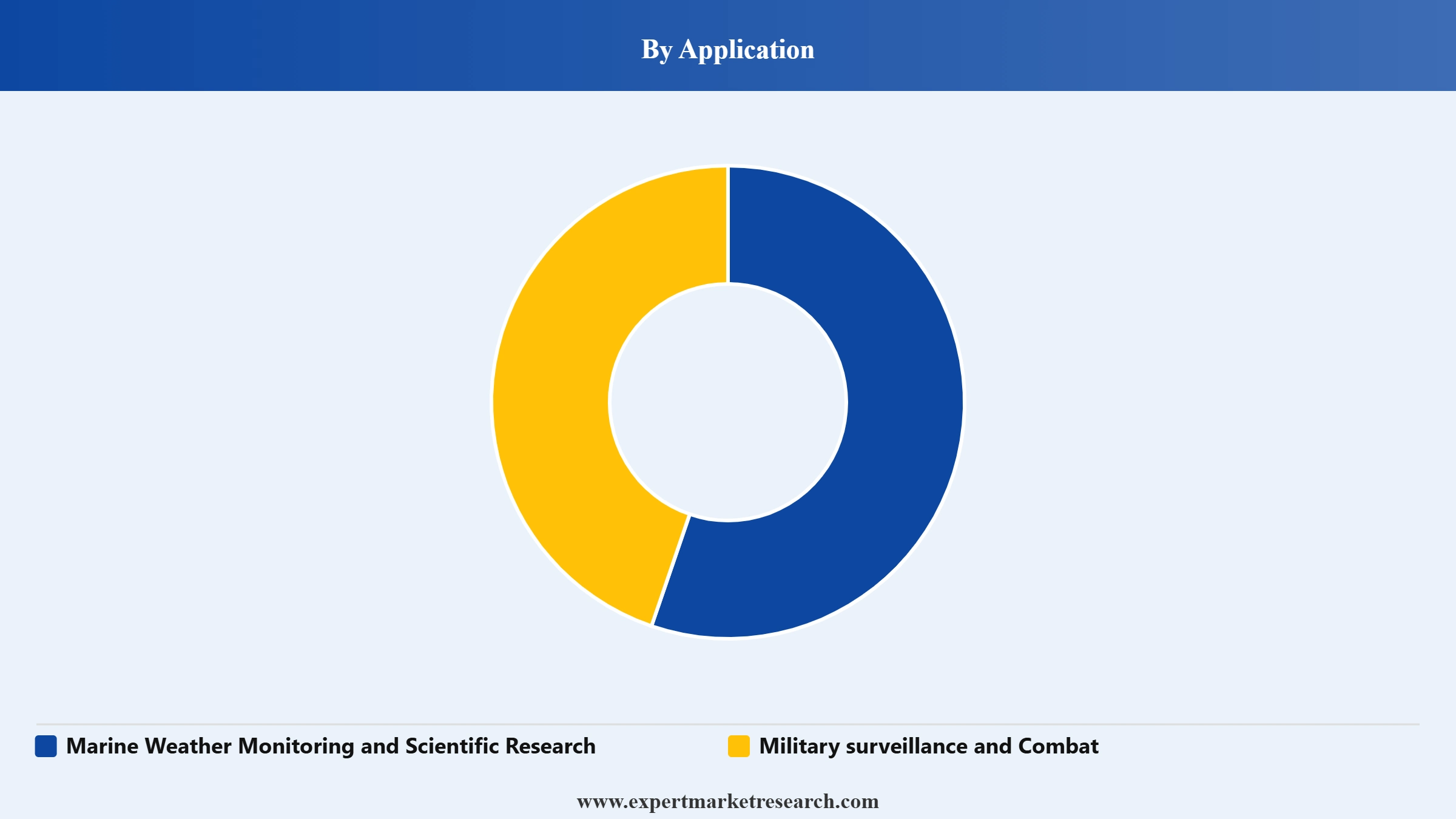
Key Insight: The surveillance and combat at sea category continues to be the primary application based on Australia’s requirements for persistent underwater intelligence, deterrence, and strike. The marine weather tracking and scientific work is becoming increasingly significant with the development of unmanned platforms that can collect information about the ocean and seabed with minimum human involvement. In November 2025, L3Harris delivered Australia’s new underwater tracking range, enhancing submarine training, testing, anti-submarine warfare, and undersea capability development. Additional applications in the Australia submarine market include training, logistics, infrastructure security, minesweeping, and seabed operations. One of the significant developments regarding the increase of use of uncrewed underwater vehicles is the possibility to leverage technology across different uses, thus creating an environment of applications around submarine capability in Australia.
Market Breakup by Region
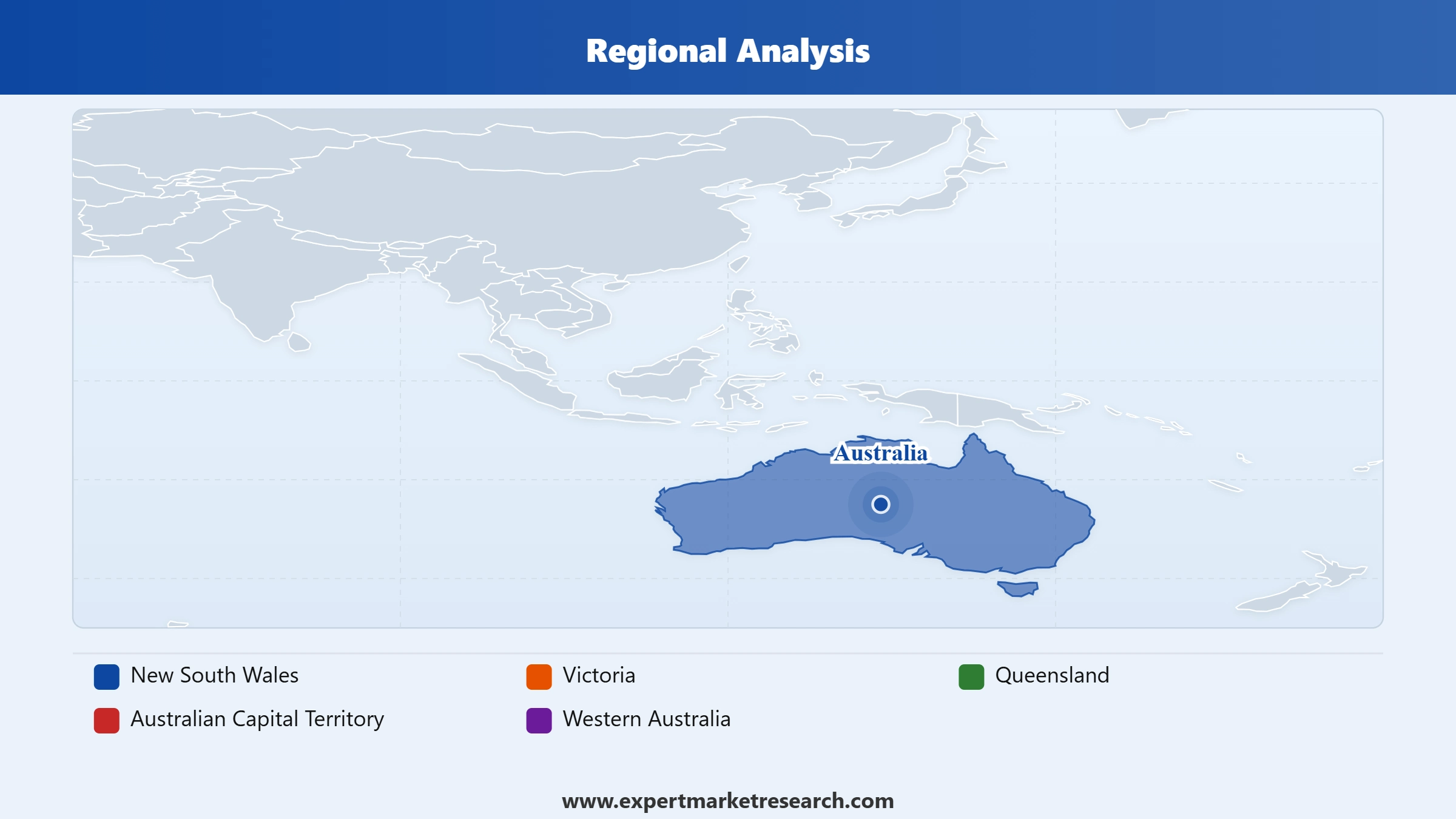
Key Insight: Submarine building, advanced manufacturing, systems integration and training of personnel are some of the areas that South Australia focuses on while the Western Australia submarine market focuses on operations, maintenance and sustainment of future nuclear submarines. Defense engineering, manufacturing, and technologies provided by NSW contribute to the project while Victorian manufacturing and electronics along with special capabilities provide input. Contribution from Queensland comes through engineering, maritime support, and supply chains in the defense industry.
Nuclear-powered attack submarines lead demand, driven by AUKUS capability transition and extended underwater endurance
The nuclear-powered attack submarine is predominant in the Australia submarine market shifts from using diesel-electric Collins-class submarines to building nuclear-powered submarines. SSNs are chosen to facilitate intelligence, surveillance, undersea warfare, and strike operations over a long period of time. Australia is procuring Virginia class submarines before proceeding to build domestic SSN-AUKUS submarines, thereby increasing demand in the areas of propulsion integration, combat system, maintenance and specialist facilities. SSN-AUKUS is referred to as a generational capability that will integrate technology from Australian, United Kingdom and United States countries. In September 2026, Australia began major Osborne shipyard construction, developing facilities for SSN-AUKUS submarines and expanding sovereign submarine-building capability.
Read more about this report - REQUEST FREE SAMPLE COPY IN PDF
Diesel-electric attack submarines gain momentum across the Australia submarine market scope as the country will need to maintain its conventional underwater capabilities until the infrastructure and workforce capability for SSN-AUKUS submarines are developed. All the six submarines in the Collins-class continue to play an important role as they get life-of-type extension to ensure that they remain operational and effective.
Nuclear propulsion leads the overall market growth, driven by AUKUS investments, longer endurance requirements and sovereign submarine ambitions
Nuclear propulsion largely contributes to the Australia submarine market revenue as the country is setting up its first capability of nuclear-powered submarines via AUKUS. Nuclear propulsion helps to have increased endurance, high speeds, reduced dependence on conventional refueling processes, and meets the requirements of Australia in Indo-Pacific region. The government provides funds for long lead nuclear propulsion equipment for the first two SSN-AUKUS submarines while Rolls-Royce is manufacturing welded propulsion equipment in the United Kingdom. In March 2024, Australia selected BAE Systems and ASC to build sovereign nuclear-powered submarines, advancing AUKUS capability and strengthening domestic shipbuilding capacity.
Read more about this report - REQUEST FREE SAMPLE COPY IN PDF
Non-nuclear propulsion observes significant growth in the Australia submarine market due to the need of keeping the existing Collins class submarines operational even as the new nuclear capability is brought on board. The life-of-type extension initiative is extending the operational period of all six Collins submarines, resulting in increased need for propulsion services, batteries, machinery refurbishment and improvement of reliability. The non-nuclear systems are also becoming important in meeting the needs of Australian firms gaining experience in submarine sustainment before joining nuclear qualified supply chains.
Military surveillance and combat applications dominate market growth, supported by undersea deterrence, intelligence and maritime security priorities
Surveillance and combat operations are observed as the dominant application in the Australia submarine market since the country’s submarine policy is concentrated on the improvement of undersea deterrence, intelligence gathering and long-range maritime operations. The SSN-AUKUS systems are used for the provision of intelligence, surveillance, undersea warfare and strike capabilities, whereas the Collins-class submarines keep supporting Australia's existing operational needs. The demand, therefore, is shifting towards combat management systems, sonar, electronic warfare, secure communication, weapons integration, and autonomy support systems. In September 2026, United States military and defense contractors started accessing 110 Australian facilities, supporting logistics, intelligence, training, and AUKUS-related operations.
Read more about this report - REQUEST FREE SAMPLE COPY IN PDF
The marine weather observation and scientific study is becoming a specific application in the Australia submarine market due to the opportunities provided by the development of advanced underwater platforms for the observation of the ocean. Underwater autonomous vehicles are able to collect information about the environment and the bottom of the ocean without needing continuous presence of submarines manned by people. The development of unmanned underwater technologies by Australia is contributing to the opportunity.
Read more about this report - REQUEST FREE SAMPLE COPY IN PDF
South Australia leads regional activity, driven by SSN-AUKUS construction, submarine manufacturing, and specialized workforce development
Adelaide dominates the market as Osborne is emerging as the hub of Australia’s future nuclear-powered submarines production enterprise. South Australia is establishing infrastructure for SSN-AUKUS construction, while ASC and BAE Systems support the country’s sovereign submarine building capability. It is projected by the government that there will be thousands of direct jobs during the peak of construction, requiring precision manufacturing, engineering, nuclear-qualified processes, logistics, and specialist training. In June 2026, United States nuclear-powered submarine personnel began rotating through Australia, advancing AUKUS readiness and regional deterrence.
Growth of the Western Australia submarine market is led by HMAS Stirling and the Henderson Defence Precinct increasing importance to the submarine sustainment and operation. The region is capable of sustaining Australia's future nuclear-powered submarines, while recent submarine maintenance work from the United Kingdom has been a good learning opportunity for Australia. Henderson is being developed into a hub for sustenance as well, with prospects in the fields of depot-level sustainment, engineering, infrastructure, logistics and specialist marine services.
Read more about this report - REQUEST FREE SAMPLE COPY IN PDF
Opportunities exist due to the change in the competitive landscape from Collins class sustainment into the construction of SSN-AUKUS nuclear-powered subs. Australia submarine companies focus on areas such as shipbuilding, nuclear propulsion, combat systems, workforce development, digital engineering, and maintenance. The market consists of several organizations that are improving their positions in terms of Collins Class sustainment, SSN-AUKUS building, systems integration, nuclear propulsion knowledge, and specialized engineering.
Leading Australia submarine market players are increasingly seeking out opportunities in materials, components, production, autonomous underwater technology, and life cycle support. The best opportunities will be for those organizations that can satisfy the highest standards of quality, traceability, security, and nuclear industry criteria.
Founded in 1985 and located in South Australia, ASC is the sovereign submarine enterprise in the country, which developed the Collins class submarines and currently offers sustainment, upgrades, and life-of-type extensions for them. ASC has entered into a partnership with BAE Systems to construct SSN-AUKUS submarines in Osborne and offer sustainment of future nuclear-powered submarines around the country.
Founded in 1904 and located in United Kingdom, Rolls-Royce Holdings offers technology for nuclear propulsion of naval submarines. The Rolls-Royce’s role in AUKUS in Australia is to provide reactors for future nuclear submarines in Australia and develop local industrial capacity for the new nuclear-submarine ecosystem of the country.
Founded in 1999 and based in United Kingdom, BAE Systems plays a leading role in submarine design and shipbuilding projects under the AUKUS alliance. In Australia, it works together with ASC for building SSN-AUKUS submarines in Osborne, as well as preparing to build them continually by building its workforce, supply chain, systems integration and shipyard capacities.
Founded in 1999 and based in Germany, thyssenkrupp AG boasts of extensive submarine design and shipbuilding experience due to its marine operations and naval fleet across the world. The significance of ThyssenKrupp to Australia would be competitive and technical as the experience pertains more to the design and export of conventional submarines globally strategically.
*Please note that this is only a partial list; the complete list of key players is available in the full report. Additionally, the list of key players can be customized to better suit your needs.*
Unlock the latest insights with our Australia submarine market trends 2026 report. Discover regional growth patterns, consumer preferences, and key industry players. Stay ahead of competition with trusted data and expert analysis. Download your free sample report today and drive informed decisions in the market.


Upto 15% Off
USD
$2499 $2249
$3999 $3599
$4999 $4249
$5999 $5099


*While we strive to always give you current and accurate information, the numbers depicted on the website are indicative and may differ from the actual numbers in the main report. At Expert Market Research, we aim to bring you the latest insights and trends in the market. Using our analyses and forecasts, stakeholders can understand the market dynamics, navigate challenges, and capitalize on opportunities to make data-driven strategic decisions.*
The market is projected to grow at a CAGR of 4.70% between 2026 and 2035.
The submarine market is categorised according to propulsion, which includes nuclear and non-nuclear.
The key players in the market include ASC Pty Ltd., Rolls-Royce Holdings plc, BAE Systems plc, and ThyssenKrupp AG, among others.
Based on the application, the market is divided into marine weather monitoring and scientific research, military surveillance and combat and others.
The market is broken down into New South Wales, Victoria, Queensland, Australian Capital Territory, Western Australia, and Others.
In 2025, the market reached an approximate value of USD 313.70 Million.
Companies face nuclear-safety qualification, skilled-worker shortages, complex AUKUS integration, stringent security controls, long procurement cycles, supply-chain localization requirements, infrastructure constraints and demanding certification standards across evolving submarine programs.
Stakeholders are expanding supplier qualification, investing in nuclear-ready skills, strengthening local manufacturing, forming AUKUS partnerships, developing autonomous systems and building lifecycle-support capabilities to capture emerging submarine contracts strategically progressively.
Explore our key highlights of the report and gain a concise overview of key findings, trends, and actionable insights that will empower your strategic decisions.
| REPORT FEATURES | DETAILS | |
| Base Year | 2025 | |
| Historical Period | 2019-2025 | |
| Forecast Period | 2026-2035 | |
| Scope of the Report |
Historical and Forecast Trends, Industry Drivers and Constraints, Historical and Forecast Market Analysis by Segment:
|
|
| Breakup by Type |
|
|
| Breakup by Propulsion |
|
|
| Breakup by Application |
|
|
| Breakup by Region |
|
|
| Market Dynamics |
|
|
| Competitive Landscape |
|
|
| Companies Covered |
|
Datasheet
One User
USD 2,499
USD 2,249
tax inclusive*
Single User License
One User
USD 3,999
USD 3,599
tax inclusive*
Five User License
Five User
USD 4,999
USD 4,249
tax inclusive*
Corporate License
Unlimited Users
USD 5,999
USD 5,099
tax inclusive*
*Please note that the prices mentioned below are starting prices for each bundle type. Kindly contact our team for further details.*
Flash Bundle
Small Business Bundle
Growth Bundle
Enterprise Bundle
*Please note that the prices mentioned below are starting prices for each bundle type. Kindly contact our team for further details.*
Flash Bundle
Number of Reports: 3
20%
tax inclusive*
Small Business Bundle
Number of Reports: 5
25%
tax inclusive*
Growth Bundle
Number of Reports: 8
30%
tax inclusive*
Enterprise Bundle
Number of Reports: 10
35%
tax inclusive*
How To Order

Select License Type
Choose the right license for your needs and access rights.

Click on ‘Buy Now’
Add the report to your cart with one click and proceed to register.

Select Mode of Payment
Choose a payment option for a secure checkout. You will be redirected accordingly.
Strategic Solutions for Informed Decision-Making
Gain insights to stay ahead and seize opportunities.

Get insights & trends for a competitive edge.

Track prices with detailed trend reports.

Analyse trade data for supply chain insights.

Leverage cost reports for smart savings

Enhance supply chain with partnerships.

Connect For More Information
Our expert team of analysts will offer full support and resolve any queries regarding the report, before and after the purchase.
Our expert team of analysts will offer full support and resolve any queries regarding the report, before and after the purchase.
We employ meticulous research methods, blending advanced analytics and expert insights to deliver accurate, actionable industry intelligence, staying ahead of competitors.
Our skilled analysts offer unparalleled competitive advantage with detailed insights on current and emerging markets, ensuring your strategic edge.
We offer an in-depth yet simplified presentation of industry insights and analysis to meet your specific requirements effectively.




