

Consumer Insights
Uncover trends and behaviors shaping consumer choices today
Procurement Insights
Optimize your sourcing strategy with key market data
Industry Stats
Stay ahead with the latest trends and market analysis.
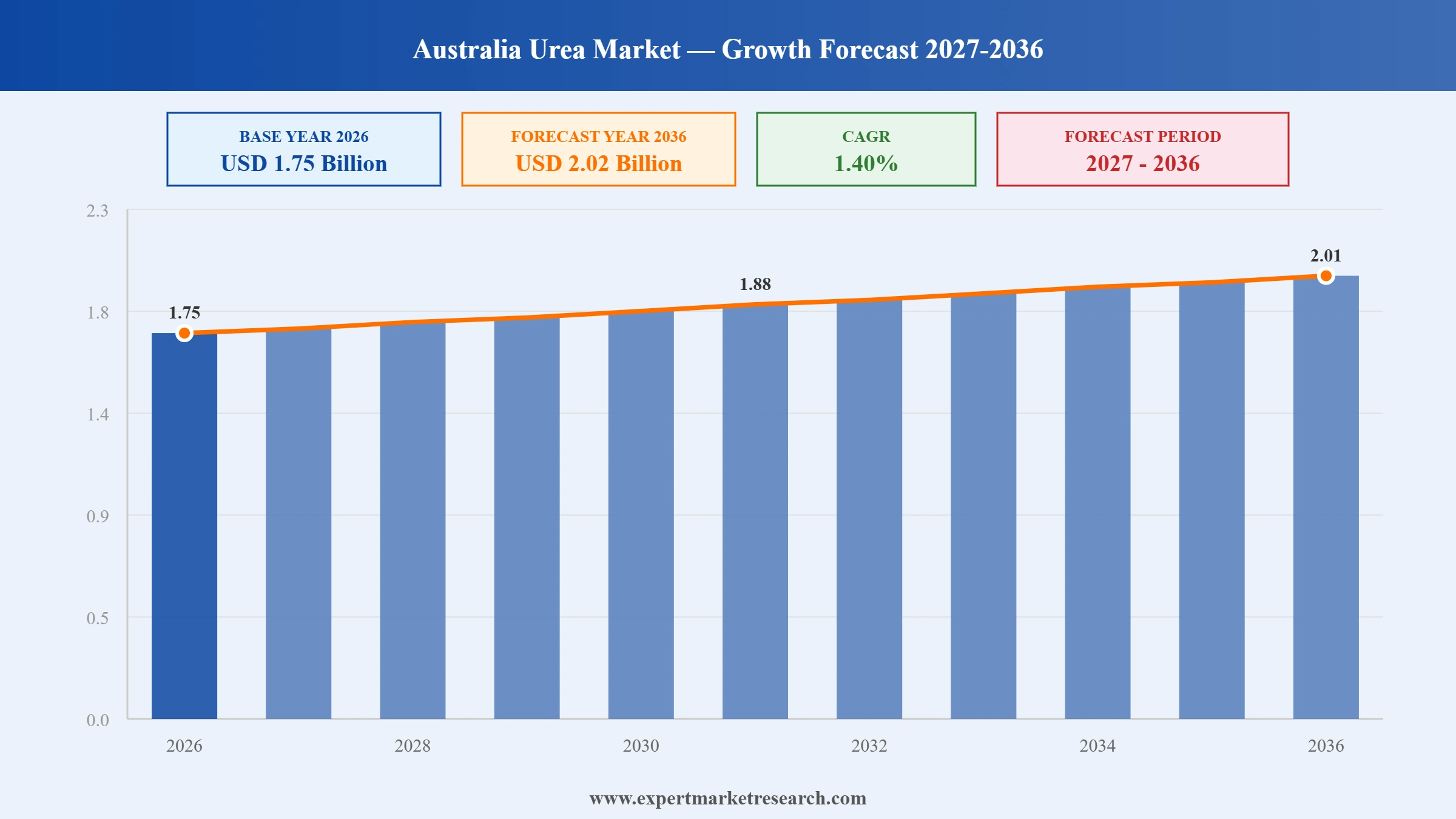
The Australia urea market attained a value of USD 1.73 Billion in 2025 and is projected to expand at a CAGR of 1.40% through 2035. The market is further expected to achieve USD 1.99 Billion by 2035. Australia's urea supply resilience is becoming a commercial differentiator as procurement shifts from lowest-cost sourcing toward supply certainty. With the country entirely reliant on imported urea fertilizer and 62% of fertilizer imports originating in the Middle East, diversified sourcing, strategic inventory, and domestic production proposals are gaining importance.
The demand for urea in terms of broadacre farming is another key reason for demand for urea since nitrogen fertilization is associated with the extensive growing of crops such as wheat, barley, and canola in Australia. In 2024–25, Australia produced 61.1 million tonnes of winter broadacre crops that were valued at AUD 22.5 billion, and the major share of 83% of these crops was represented by wheat, barley, and canola. The livestock industry is also an important source of demand for urea, as urea is used as a non-protein source of nitrogen in feeding ruminants. Australia had approximately 24.5 million cattle and calves in 2025, maintaining a substantial livestock base requiring nutritional inputs across grazing operations. Together, crop cultivation and livestock nutrition broaden urea demand beyond a single agricultural application and support recurring purchases across Australia’s farming supply chain, thereby boosting the Australia urea market value.
Australian urea innovation is now shifting towards low emissions production and sustainable nitrogen delivery. The Australian Fertilizer Corporation proposed plant in Gladstone, Queensland can be considered a new production model as it intends to produce highly pure urea using renewable hydrogen and biomass feedstock with annual capacity reaching up to 220,000 tonnes. The plant will produce technical urea that is used in the production of AdBlue and may serve as a possible local source for emissions control products. The development of the renewable energy sector in Australia brings possibilities to incorporate low-emissions hydrogen into the production of future ammonia and urea. For B2B buyers, such innovation may create new procurement criteria around product traceability, emissions reporting, and lifecycle environmental performance.
International supply-chain exposure remains a major challenge for Australia’s urea market because domestic agricultural fertilizer requirements are heavily dependent on imported material. Concentration among overseas supply origins leaves Australian buyers vulnerable to geopolitical disruptions, freight interruptions, production outages, and sudden changes in international availability. Importers must consequently balance competitive purchasing with the need to maintain sufficient inventories ahead of fertilizer application periods. Long-distance transportation also adds exposure to shipping costs, port congestion, and currency movements, complicating landed-cost planning for distributors and agricultural businesses. For domestic manufacturers, the challenge is establishing production that can compete economically with internationally sourced urea while securing reliable feedstock, infrastructure, financing, and long-term offtake agreements. These conditions make supply diversification and stronger procurement planning increasingly important for market participants, thereby boosting the Australia urea market developments.
Read more about this report - REQUEST FREE SAMPLE COPY IN PDF
Incitec Pivot Fertilisers continued diversifying its supply sources following disruptions affecting fertiliser shipments through the Middle East. The company reported that its 250,000-tonne urea supply arrangement with PT Pupuk Indonesia had begun delivering product, while four shipments had been imported under Export Finance Australia support. Incitec Pivot also confirmed access to up to 700,000 tonnes annually from Perdaman’s future Burrup plant. These measures strengthen supply continuity for Australian farmers while reducing exposure to individual international supply routes.
Australian Fertilizer Corporation secured agreements covering the planned output of its proposed 220,000-tonne-per-year technical-grade urea facility at Gladstone, Queensland, with contracts valued at approximately AUD 2.4 billion over 10 years. The plant is intended to produce high-purity urea primarily for AdBlue, supporting diesel emissions-control applications. The project remains subject to financing and development approvals, but the contracted capacity demonstrates industrial demand for locally produced technical-grade urea. If developed, the facility would also represent Australia’s first new urea manufacturing plant since 1969.
Greenhill Energy announced plans for a Tailem Bend, South Australia facility that would convert landfill waste and biomass into low-emission urea fertiliser. The project initially targets 100,000 tonnes of urea annually, equivalent to around 20% of South Australia’s estimated urea requirement, with scope for future expansion. The initiative could introduce an additional domestic production source while creating an alternative outlet for waste materials. For the Australian urea market, the project could improve regional supply resilience and reduce exposure to imported fertiliser and international shipping disruptions.
Australian start-up Jupiter Ionics continued developing technology to produce ammonia from nitrogen in the air and hydrogen generated using renewable electricity, offering an alternative pathway to conventional fossil-fuel-based nitrogen fertiliser production. The company reported growing interest from Australian farmers seeking more locally produced fertiliser solutions amid recent supply disruptions. The initiative could support decentralised nitrogen production closer to agricultural regions, potentially reducing exposure to imported urea and international shipping disruptions. However, the technology remains at the development and scale-up stage rather than commercial urea production.
Australia is moving toward a more structured approach to fertilizer procurement, with government and industry coordinating alternative sourcing, import facilitation, and market monitoring. In May 2026, two additional agricultural-grade urea shipments totaling 80,250 tonnes from Indonesia were supported through the Fuel and Fertiliser Security Facility. The initiative also works alongside streamlined biosecurity processes introduced on 30 April 2026, helping shorten administrative delays for imported fertilizer. For distributors and importers, this creates opportunities to diversify supplier portfolios beyond traditional origins, strengthen forward procurement arrangements, and build contingency inventories around seasonal application periods, and thereby shaping the Australia urea market dynamics and trends.
Prospective Australian production is creating a new dimension in the urea supply chain, particularly for businesses seeking greater proximity to supply. The Perdaman Urea Project in Western Australia is designed around approximately 2 million tonnes per annum of production and includes dedicated product-handling infrastructure connecting the facility with Dampier Port. The project has received environmental approval, with subsequent amendments recorded by the Western Australian EPA. If commercialized, the facility could provide domestic buyers with another procurement channel while supporting export logistics. For distributors, this may encourage longer-term contracting and regional storage strategies around locally produced nitrogen fertilizer.
Better fertilizer intelligence is becoming increasingly important as Australian buyers manage changing prices, rainfall patterns, and planting schedules. In June 2026, ABARES introduced a fertilizer dashboard providing Australian and global indicator prices, import quantities, and fertilizer market information, giving businesses a more consistent basis for procurement decisions. The government-industry working group has also identified data availability as an area requiring further development. For urea distributors, improved market visibility can support demand forecasting, inventory allocation, and customer-specific purchasing recommendations. Agribusinesses can similarly use pricing and supply information to better coordinate fertilizer orders with planting windows and expected application requirements.
Australian fertilizer buyers are increasingly considering supplier diversity and contracted availability alongside headline prices. In August 2026, the Fertiliser Supply Working Group highlighted the importance of maintaining diverse supplier relationships, improving information sharing, and using market intelligence to understand purchasing behavior during disruptions. The government also reported that urea arrivals had exceeded estimated seasonal demand, while acknowledging that later planting and rainfall conditions could alter actual consumption. This environment favors distributors with flexible sourcing networks and strong inventory visibility. For international suppliers, establishing multiple Australian importer relationships and dependable logistics arrangements can improve access to customers during periods of market uncertainty.
Australia's dependence on imported urea is encouraging businesses and policymakers to examine supply resilience beyond individual cargo purchases. DAFF states that Australia is entirely import reliant for urea fertilizer, while 62% of fertilizer imports come from the Middle East, with much of the remaining supply also dependent on Middle Eastern gas feedstock. This concentration creates a clear commercial rationale for alternative origins and domestic production initiatives. For market participants, the opportunity extends across import terminals, storage, logistics, supplier contracting, and future production infrastructure. Companies able to reduce geographic concentration in procurement can strengthen continuity of supply and respond more effectively to future international disruptions.
The Expert Market Research’s report titled "Australia Urea Market Report and Forecast 2026-2035” offers a detailed analysis of the market based on the following segments:
Market Breakup by Application
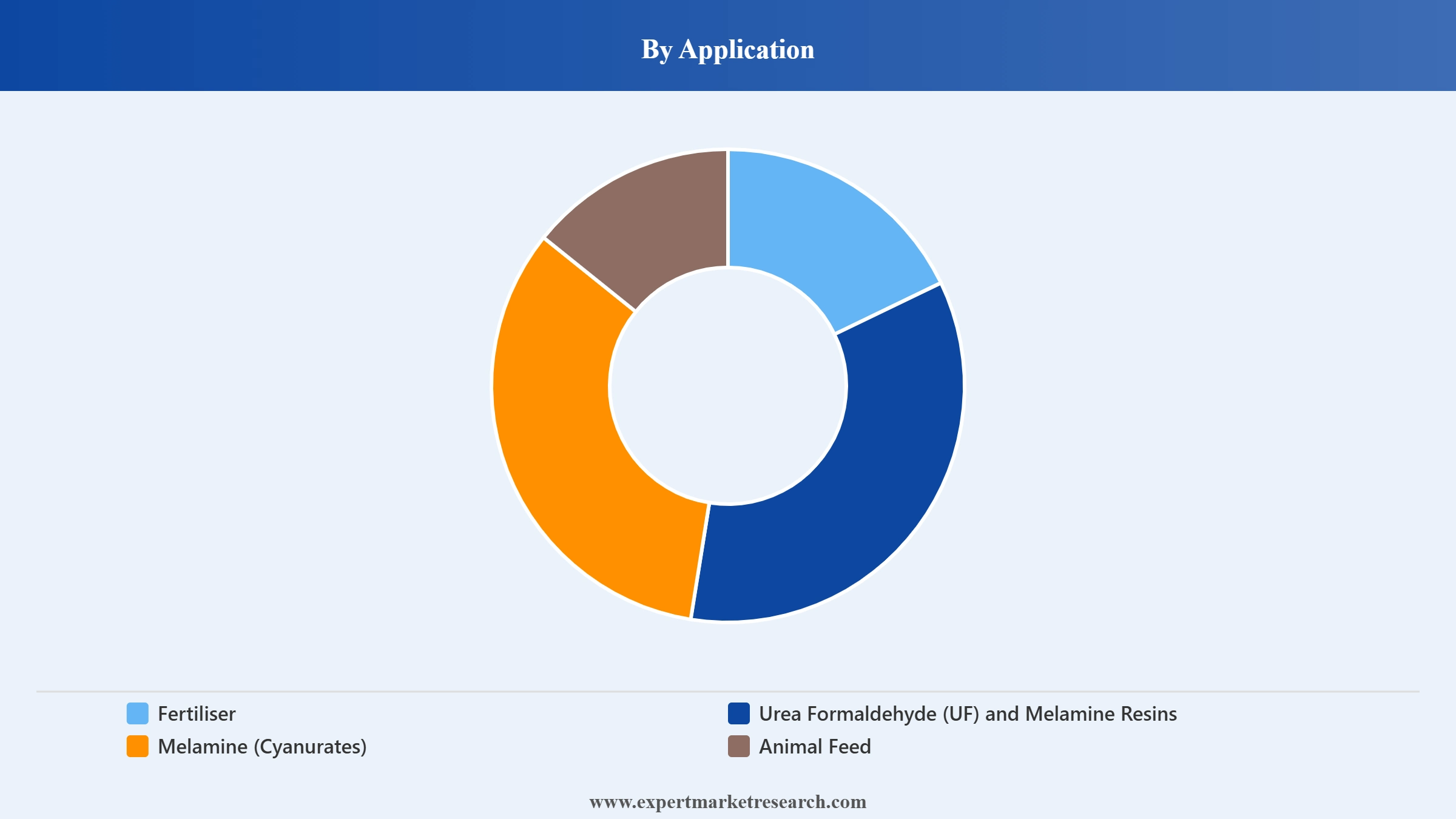
Key Insight: Fertilizer remains the principal application for urea in Australia, supported by nitrogen requirements across broadacre cropping and other agricultural activities. UF and melamine resins provide an industrial outlet, linking urea demand with engineered wood, adhesives, and manufacturing. Melamine cyanurates and other specialty applications serve narrower chemical markets, while feed-grade urea is used as a non-protein nitrogen source in ruminant nutrition under controlled formulations. These applications differ in purity requirements, procurement scale, and exposure to end-market cycles. Suppliers can improve market reach by differentiating agricultural and industrial grades, developing application-specific distribution, and maintaining dependable product specifications.
Market Breakup by End User
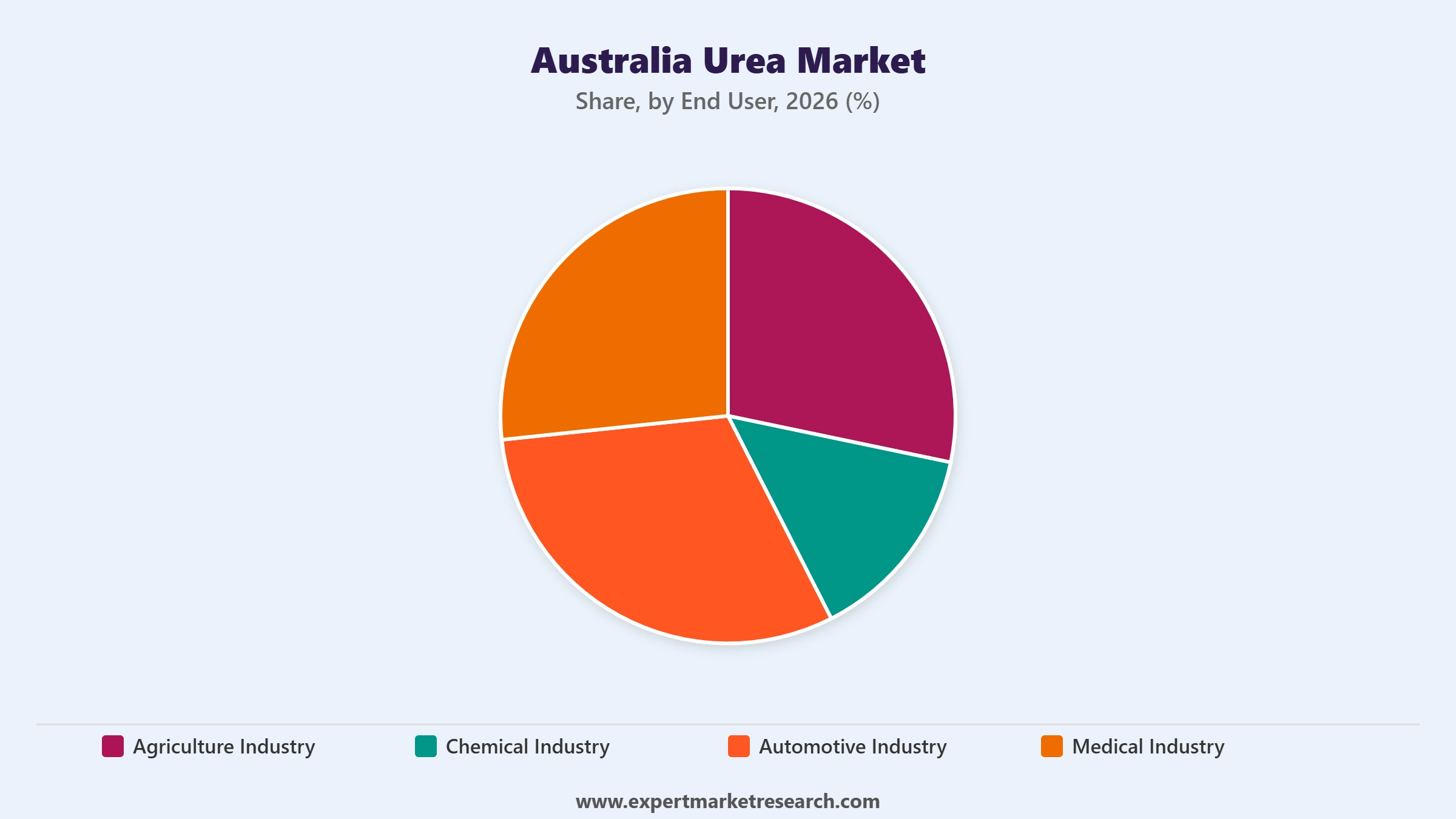
Key Insight: The agriculture industry represents the core end-user base, purchasing urea for crop nutrition across Australia's major growing regions. Chemical manufacturers use urea as a feedstock for resin and other industrial formulations, while automotive-related demand is associated with high-purity urea used in diesel exhaust fluid. Medical and personal-care applications account for more specialized uses, including topical formulations and pharmaceutical products. Differences in product quality, regulatory requirements, and purchasing volumes create distinct commercial channels. Market participants can strengthen their positions by aligning product grades, technical documentation, storage, and delivery services with the requirements of each end-user category.
Market Breakup by Region
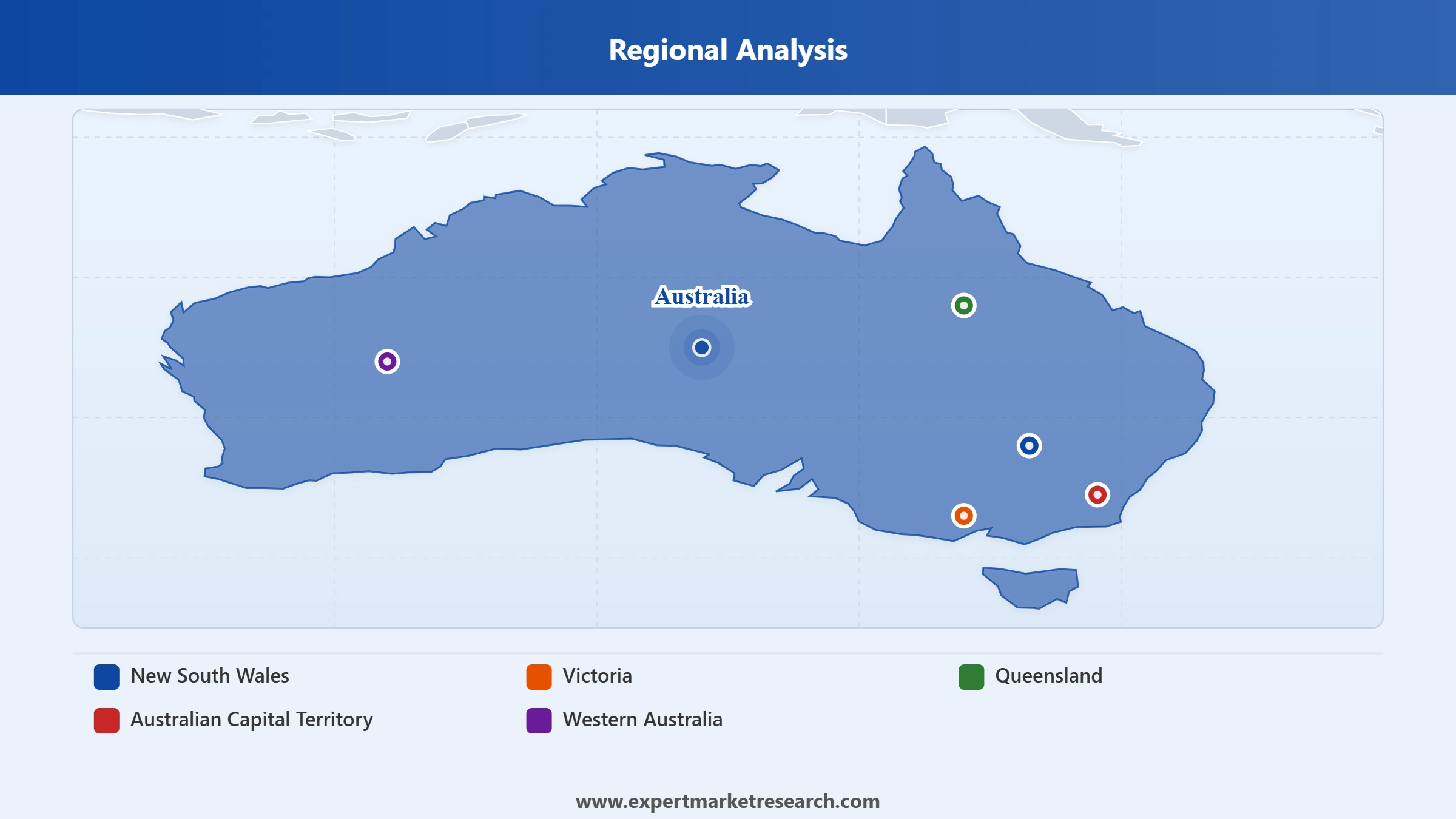
Key Insight: Regional urea demand reflects differences in crop mix, cultivated area, seasonal rainfall, logistics, and access to fertilizer distribution infrastructure. New South Wales and Western Australia are important agricultural markets, while Victoria and Queensland support demand through diverse cropping and livestock systems. The Australian Capital Territory represents a smaller direct agricultural market, with demand largely linked to surrounding supply networks. Regional distributors must account for seasonal application windows, freight costs, and storage capacity when allocating inventory. Businesses that integrate regional crop calendars with procurement forecasts can improve stock availability and reduce the risk of costly last-minute replenishment, thus driving the demand in the Australia urea market.
Read more about this report - REQUEST FREE SAMPLE COPY IN PDF
Fertilizer remains the principal application for urea in Australia, reflecting the scale of the country’s broadacre cropping sector. ABS reported 61.1 million tonnes of winter broadacre crops sold in 2024-25, generating AUD 22.5 billion in value. More recently, ABARES forecasts 61 million tonnes of winter crop production in 2026-27, including 29.9 million tonnes of wheat, 16.4 million tonnes of barley, and 7.3 million tonnes of canola. These large cropping volumes underpin recurring nitrogen-fertiliser requirements, although actual urea application varies by crop, soil conditions, rainfall and farm economics. Such developments will thus boost Australia urea market trends in the long run.
Read more about this report - REQUEST FREE SAMPLE COPY IN PDF
The industrial uses of urea such as in urea formaldehyde and melamine resins offer a use of urea apart from being used in agriculture as fertilisers, especially in adhesive production and engineered wood and panels. In Australia, there is evidence of downstream diversification in terms of the processing of urea within the country. The Perdaman project in Western Australia is designed to produce approximately 2 million tonnes of urea annually, while NAIF identifies the development as supporting a new domestic fertiliser industry. However, publicly available government sources do not provide a verified Australian consumption figure or growth rate specifically for UF and melamine resins, so this application is best treated as a potential industrial opportunity rather than a quantified fastest-growing segment.
Agriculture represents the principal end-use sector for urea because nitrogen fertilisation is closely connected with Australia’s extensive crop production. ABS recorded 61.1 million tonnes of winter broadacre crops sold in 2024-25, while ABARES forecasts 61 million tonnes of winter crop production in 2026-27. Wheat alone is forecast at 29.9 million tonnes, followed by barley at 16.4 million tonnes and canola at 7.3 million tonnes. ABARES also notes that higher fertiliser prices remain an important farm-cost consideration. Consequently, agricultural urea demand is influenced by planted area, crop yields, rainfall, fertiliser prices and farm profitability, thus boosting the Australia urea market revenues.
Read more about this report - REQUEST FREE SAMPLE COPY IN PDF
Automotive-related urea demand is associated primarily with AdBlue, the diesel exhaust fluid used in selective catalytic reduction systems to control nitrogen oxide emissions. In June 2026, Australian Fertilizer Corporation reported that customers had signed agreements covering the full output of its proposed 220,000-tonne-per-year technical-grade urea plant at Gladstone, Queensland, with AdBlue identified as the core product. The company stated that the contracts cover the planned production for 10 years, with a total value of about AUD 2.4 billion. The facility is not yet operational, so these figures represent prospective supply and contracted demand rather than current domestic consumption.
New South Wales and Western Australia are important markets within Australia's urea supply chain, supported by broadacre agriculture and established fertilizer distribution. New South Wales benefits from demand across inland grain-growing areas, where nitrogen application is influenced by crop rotations, soil conditions, and seasonal rainfall. Victoria also represents a significant agricultural market, with cropping and mixed farming supporting recurring fertilizer requirements. Queensland's demand is shaped by its diverse agricultural base, including grain production and other nitrogen-consuming activities. Across these eastern states, distributors must manage seasonal demand peaks, freight costs, and the availability of imported fertilizer. Regional purchasing decisions are increasingly influenced by the timing and reliability of deliveries rather than price alone, thereby directly boosting the Australia urea market regional growth.
Read more about this report - REQUEST FREE SAMPLE COPY IN PDF
Western Australia is an important emerging supply-chain development area because of its agricultural requirements and proposed domestic urea production. The Perdaman project, located on the Burrup Peninsula, has a proposed capacity of approximately 2 million tonnes per annum, potentially creating a major new source of domestic supply if completed. The Australian Capital Territory represents a comparatively small direct agricultural market, with fertilizer demand largely served through surrounding regional distribution networks. Other territories and smaller agricultural areas contribute to demand through localized crop and horticultural requirements. Across the country, the August 2026 Fertiliser Supply Working Group communiqué reported that urea arrivals had surpassed estimated seasonal demand, illustrating how actual regional uptake can diverge from procurement forecasts. For suppliers, aligning regional inventory with planting schedules and updated demand signals will remain essential.
The Australia urea market features international fertilizer suppliers, domestic distributors, and companies developing prospective manufacturing capacity. Competition among the Australia urea market players is shaped by access to imported product, supplier relationships, storage and handling infrastructure, and the ability to meet agricultural and industrial specifications. Importers compete through procurement flexibility, distribution reach, and delivery reliability, while prospective domestic manufacturers seek to establish long-term offtake arrangements and strengthen local supply resilience.
Australia urea companies are also adapting to supply-chain uncertainty by diversifying sourcing and improving customer coordination. Government-supported procurement arrangements have reinforced the importance of collaboration between fertilizer companies and international producers. At the same time, proposed Australian production projects may create additional competitive pathways, particularly for technical-grade and industrial urea. Companies that combine dependable supply with transparent pricing, technical support, and efficient logistics are positioned to address the varied needs of agricultural and industrial buyers.
Established in 2003, Perdaman Group is headquartered in Perth, Australia. Its chemicals and fertilizers business is developing the Perdaman Urea Project in Western Australia, intended to produce large-scale urea for domestic and export markets. The project is central to the company's role in prospective Australian nitrogen fertilizer manufacturing. Its future market contribution depends on project execution, commissioning, and commercial production.
Yara Australia is the Australian business of Yara International, established in 1905 and headquartered in Oslo, Norway. The company supplies crop nutrition products and fertilizer solutions to Australian agricultural customers. Its broader portfolio includes nitrogen fertilizers and agronomic services, supporting farm productivity and nutrient management. Yara's international sourcing and crop-nutrition expertise contribute to its participation in Australia's fertilizer supply chain.
NeuRizer Ltd, established in 2005 and headquartered in Adelaide, Australia, is associated with the proposed NeuRizer Urea Project in South Australia. The company's development concept is focused on domestic urea production, offering a potential route to diversify Australian nitrogen fertilizer supply. Its competitive contribution remains dependent on project financing, development progress, and the ability to establish commercially viable production.
*Please note that this is only a partial list; the complete list of key players is available in the full report. Additionally, the list of key players can be customized to better suit your needs.*
Explore the Australia Urea Market report by Expert Market Research to understand market size, emerging opportunities, competitive dynamics, and industry outlook. Download a free sample to access insights into Australia Urea Market trends 2026, regional demand patterns, and procurement developments. Gain a deeper understanding of the Australia Urea Market forecast 2026-2035 to support strategic sourcing, investment planning, and business expansion.


Upto 15% Off
USD
$2499 $2249
$3999 $3599
$4999 $4249
$5999 $5099


*While we strive to always give you current and accurate information, the numbers depicted on the website are indicative and may differ from the actual numbers in the main report. At Expert Market Research, we aim to bring you the latest insights and trends in the market. Using our analyses and forecasts, stakeholders can understand the market dynamics, navigate challenges, and capitalize on opportunities to make data-driven strategic decisions.*
In 2025, the market reached an approximate value of USD 1.73 Billion.
The market is projected to grow at a CAGR of 1.40% between 2026 and 2035.
The market is estimated to witness a healthy growth in the forecast period of 2026-2035 to reach USD 1.99 Billion by 2035.
Key strategies supporting the Australia urea market include diversifying import sources, strengthening supply chain resilience, expanding storage infrastructure, adopting efficient fertiliser application technologies, developing domestic production capabilities, and promoting sustainable nitrogen management to improve farm productivity and minimise environmental impacts.
Key trends aiding the market expansion include the focus on nitrogenous fertilisers like urea due to their cost-effectiveness, rising interest in potassic fertilisers to address potassium deficiency, and shift towards local production of urea due to trade ban by China.
Regions considered in the market are New South Wales, Victoria, Queensland, Western Australia, and Australian Capital Territory, among others.
Different applications of urea are fertiliser, urea formaldehyde (UF) and melamine resins, melamine (cyanurates), and animal feed, among others.
In terms of end users, market includes the agriculture industry, chemical industry, automotive industry, and medical industry, among others.
Key players in the market are Perdaman Group, Yara Australia Pty. Ltd., and NeuRizer Ltd., others.
Key challenges in the Australia urea market include dependence on imported supplies, global price volatility, fluctuating natural gas costs, currency exchange risks, and supply chain disruptions. Environmental regulations, freight expenses, and unpredictable weather conditions also affect fertilizer affordability, availability, and agricultural demand.
Explore our key highlights of the report and gain a concise overview of key findings, trends, and actionable insights that will empower your strategic decisions.
| REPORT FEATURES | DETAILS |
| Base Year | 2025 |
| Historical Period | 2019-2025 |
| Forecast Period | 2026-2035 |
| Scope of the Report |
Historical and Forecast Trends, Industry Drivers and Constraints, Historical and Forecast Market Analysis by Segment:
|
| Breakup by Application |
|
| Breakup by End User |
|
| Breakup by Region |
|
| Market Dynamics |
|
| Competitive Landscape |
|
| Companies Covered |
|
Datasheet
One User
USD 2,499
USD 2,249
tax inclusive*
Single User License
One User
USD 3,999
USD 3,599
tax inclusive*
Five User License
Five User
USD 4,999
USD 4,249
tax inclusive*
Corporate License
Unlimited Users
USD 5,999
USD 5,099
tax inclusive*
*Please note that the prices mentioned below are starting prices for each bundle type. Kindly contact our team for further details.*
Flash Bundle
Small Business Bundle
Growth Bundle
Enterprise Bundle
*Please note that the prices mentioned below are starting prices for each bundle type. Kindly contact our team for further details.*
Flash Bundle
Number of Reports: 3
20%
tax inclusive*
Small Business Bundle
Number of Reports: 5
25%
tax inclusive*
Growth Bundle
Number of Reports: 8
30%
tax inclusive*
Enterprise Bundle
Number of Reports: 10
35%
tax inclusive*
How To Order

Select License Type
Choose the right license for your needs and access rights.

Click on ‘Buy Now’
Add the report to your cart with one click and proceed to register.

Select Mode of Payment
Choose a payment option for a secure checkout. You will be redirected accordingly.
Strategic Solutions for Informed Decision-Making
Gain insights to stay ahead and seize opportunities.

Get insights & trends for a competitive edge.

Track prices with detailed trend reports.

Analyse trade data for supply chain insights.

Leverage cost reports for smart savings

Enhance supply chain with partnerships.

Connect For More Information
Our expert team of analysts will offer full support and resolve any queries regarding the report, before and after the purchase.
Our expert team of analysts will offer full support and resolve any queries regarding the report, before and after the purchase.
We employ meticulous research methods, blending advanced analytics and expert insights to deliver accurate, actionable industry intelligence, staying ahead of competitors.
Our skilled analysts offer unparalleled competitive advantage with detailed insights on current and emerging markets, ensuring your strategic edge.
We offer an in-depth yet simplified presentation of industry insights and analysis to meet your specific requirements effectively.




