

Consumer Insights
Uncover trends and behaviors shaping consumer choices today
Procurement Insights
Optimize your sourcing strategy with key market data
Industry Stats
Stay ahead with the latest trends and market analysis.

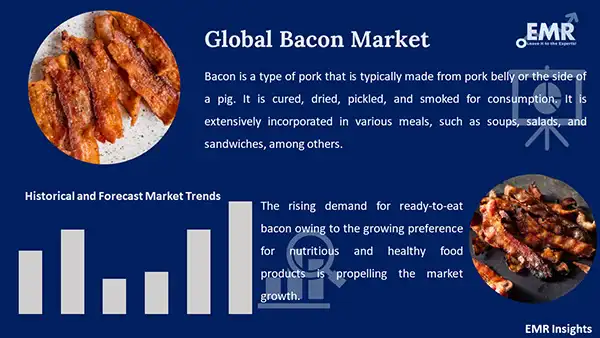
The global bacon market was valued at USD 74.33 Billion in 2025. The market is expected to grow at a CAGR of 2.90% during the forecast period of 2026-2035 to reach a value of USD 98.93 Billion by 2035. Rising popularity of ready-to-eat and pre-cooked bacon is fueling convenience-driven market growth globally.
The market is further experiencing significant growth, primarily driven by rising demand for protein-rich and convenience-focused meat products. Health-conscious consumers are seeking higher-quality and leaner bacon options, while low-sodium and nitrate-free variants are gaining traction. According to the bacon market analysis, in the United States per capita bacon consumption reached 51.6 pounds in 2024, reflecting steady growth over the past few years. Government support for sustainable pig farming practices, such as the EU’s Common Agricultural Policy initiatives, is also fostering the production of ethically sourced and traceable pork, strengthening market confidence among B2B buyers and retailers.
Another major factor is the surging adoption of ready-to-eat and pre-cooked bacon in foodservice and retail channels. Innovations in vacuum-sealed and microwave-ready bacon products allow restaurants, hotels, and convenience stores to reduce wastage while offering premium quality. The pre-cooked bacon market in the United States is growing rapidly, reflecting consumer preference for quick and safe consumption. Similarly, government-backed quality certifications in Europe, such as Red Tractor and Label Rouge, are enhancing product credibility, driving sales in high-end retail and foodservice establishments.
Base Year
Historical Period
Forecast Period
Compound Annual Growth Rate
2.9%
Value in USD Billion
2026-2035
*this image is indicative*
Consumers are increasingly seeking low-fat, low-sodium, and nitrate-free bacon options. In response, producers are innovating with natural curing techniques and organic feed pork. For example, Hormel Foods launched four new Bacon Toppings products, aligning with USDA organic certification standards in June 2018. European producers are promoting ethically raised pigs under EU welfare regulations. Such developments cater to growing health awareness, influence retailer purchasing decisions, and encourage product innovation. Moreover, the bacon market trend toward functional and lean meat is reshaping both B2B procurement strategies and end-consumer preferences.
Ready-to-eat bacon is gaining traction in foodservice and retail markets due to convenience and waste reduction. Vacuum-sealed, microwave-ready, and pre-cooked formats simplify meal preparation for restaurants, cafes, and convenience stores. According to the bacon market analysis, pre-cooked bacon sales in the United States has grown rapidly with hotels occupying 47.5% of the total share, showing strong consumption patterns. B2B buyers benefit from longer shelf life, consistent quality, and faster turnaround. Government quality certifications, such as Red Tractor and USDA Grade A, further assure food safety, enhancing confidence in bulk supply contracts and cross-border trade.
Plant-based bacon alternatives are expanding to meet flexitarian and vegetarian demands. Companies like Lightlife and MorningStar Farms are developing soy-, pea-, and mycoprotein-based bacon that mimics texture, taste, and aroma. Europe and North America lead adoption due to rising awareness of health, sustainability, and ethical concerns. The plant-based meat sector’s impressive growth reflects bacon market opportunities. Governments are promoting sustainable protein sources under environmental initiatives, giving B2B suppliers an opportunity to diversify product lines and attract new clientele.
Innovations in vacuum-sealing, modified atmosphere packaging, and smart labeling are extending shelf life and reducing wastage. Companies are integrating QR codes and blockchain for traceability, ensuring compliance with safety regulations. For example, Sealed Air Corporation offers MAP packaging solutions for retail bacon, maintaining freshness for extended periods, boosting demand in the bacon market. Such innovations enable distributors, retailers, and foodservice operators to optimize supply chains while meeting consumer expectations.
Restaurants, hotels, cafes, and quick-service chains are driving demand for bulk bacon supplies. Chains like McDonald’s and Starbucks integrate pre-cooked and ready-to-eat bacon in breakfast menus. Government hygiene and safety standards in Europe and North America influence product selection in foodservice. Innovations such as microwaveable strips and portion-controlled packs allow operators to manage inventory efficiently. As urbanization and disposable income rise, especially in the Asia Pacific region, foodservice demand is expected to increase, creating substantial B2B growth opportunities.
Read more about this report - REQUEST FREE SAMPLE COPY IN PDF
The EMR’s report titled “Global Bacon Market Report and Forecast 2026-2035” offers a detailed analysis of the market based on the following segments:
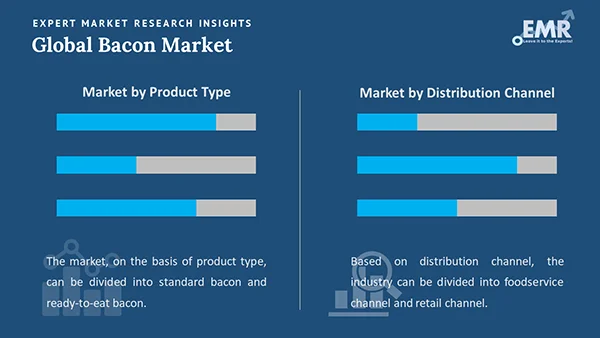
Market Breakup by Product Type
Key Insight: Standard bacon dominates the global market, fueled by long-standing consumption habits and strong demand in traditional breakfast and foodservice menus. Ready-to-eat bacon is growing rapidly, driven by convenience, pre-cooked efficiency, and vacuum-sealed packaging that reduces preparation time and wastage. Meanwhile, alternative protein bacon is emerging as a niche but rapidly expanding category, appealing to flexitarian and plant-based consumers seeking sustainable, ethical, and health-conscious meat alternatives.
Market Breakup by Distribution Channel
Key Insight: The foodservice channel largely propels the bacon market revenue growth due to bulk purchasing and operational efficiency, while the retail category is being driven by convenient pre-packaged and ready-to-eat products. E-commerce, specialty stores, and institutional supply channels continue to maintain steady adoption, supporting diverse distribution strategies and expanding market reach globally.
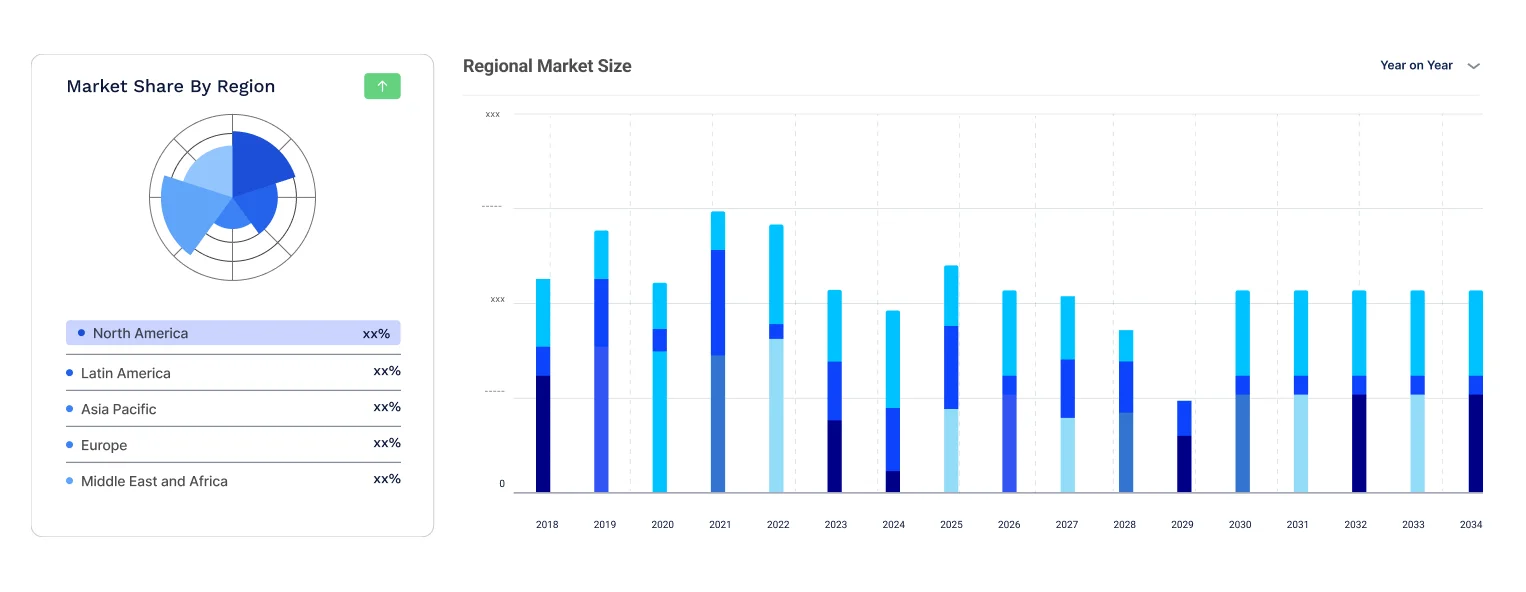
Market Breakup by Region
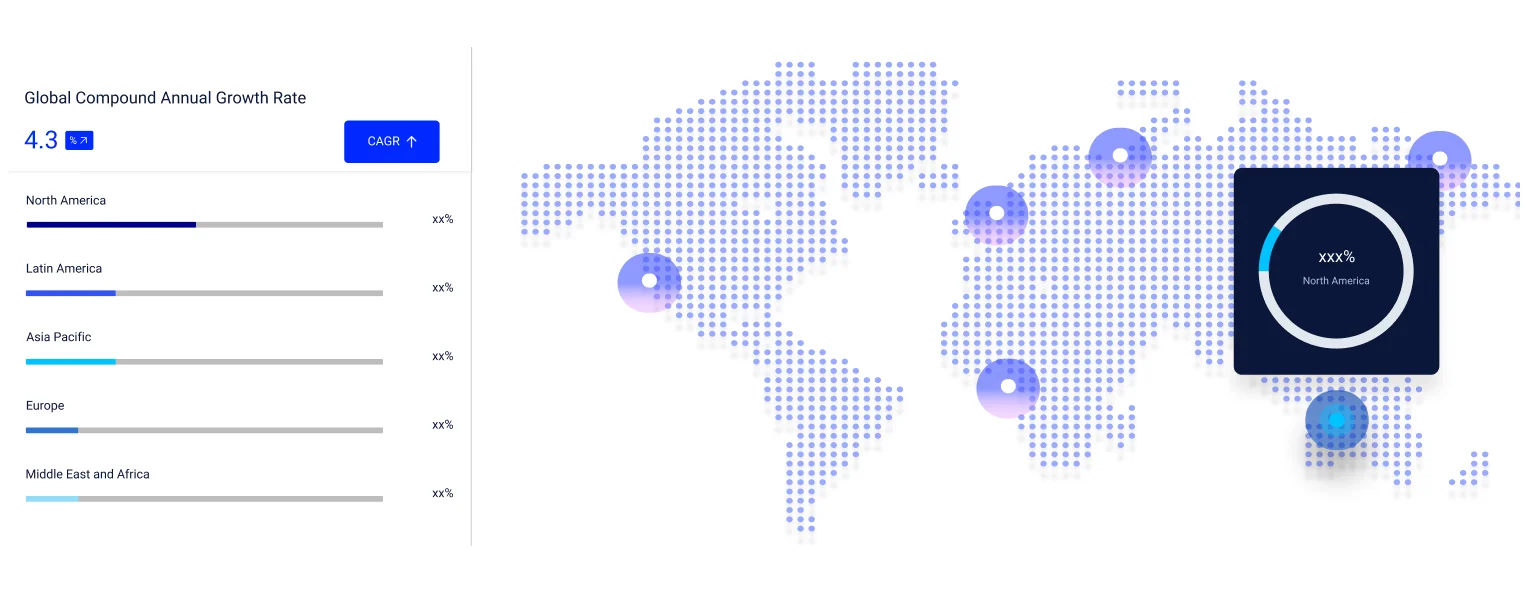
Key Insight: North America dominates due to high consumption and developed infrastructure; Europe emphasizes quality and sustainability; Asia Pacific grows at a fast pace due to rapid urbanization and western diet adoption; Latin America expands through industrial and retail channels; Middle East & Africa indicate eventual growth.
Read more about this report - REQUEST FREE SAMPLE COPY IN PDF
By product type, standard bacon accounts for the largest share of the market due to widespread consumption
Standard bacon continues to dominate the market because of its strong presence in traditional breakfast meals and commercial foodservice menus. Producers are innovating with lean cuts, smoked, cured, and flavored variants to appeal to diverse consumer preferences. In addition, certified organic and naturally raised pork options are becoming more common, enhancing product credibility. Bulk supply chains, stable shelf life, and predictable quality make standard bacon a reliable choice for restaurants, hotels, and retail distributors, ensuring its dominance in the bacon market dynamics.
Ready-to-eat bacon is witnessing rapid growth as consumers and businesses prioritize convenience and operational efficiency. Vacuum-sealed, pre-cooked, and microwave-ready formats reduce preparation time, minimize wastage, and maintain consistent taste and texture. Retailers are expanding shelf-stable and chilled offerings, while foodservice operators rely on portion-controlled packs to improve kitchen productivity. The trend is reinforced by rising demand for packaged breakfast items and meal kits, particularly in urban and fast-paced markets. Innovations in packaging and safety certification also support faster adoption globally.
Foodservice channels register the largest share of the market due to bulk requirements
The foodservice channel largely boosts the global bacon demand, driven by restaurants, hotels, cafes, and quick-service chains requiring large-scale, consistent supplies. Bulk packaging, standardized quality, and certifications for hygiene and traceability ensure reliable procurement. Pre-cooked and portion-controlled products are being increasingly preferred for operational efficiency, reducing preparation time and wastage. Foodservice operators are adopting bacon innovations such as flavored strips and lean cuts to meet evolving menu trends.
Retail channels experience accelerated growth in the bacon industry, fueled by increasing consumer preference for convenience, premium quality, and ready-to-cook or pre-cooked bacon products. Supermarkets, hypermarkets, and online grocery platforms are expanding pre-packaged offerings, including vacuum-sealed strips and meal kits. Safety and sustainability certifications, along with attractive packaging, appeal to health-conscious and urban consumers. Retailers are also promoting innovative flavors and functional options such as low-sodium and organic bacon.
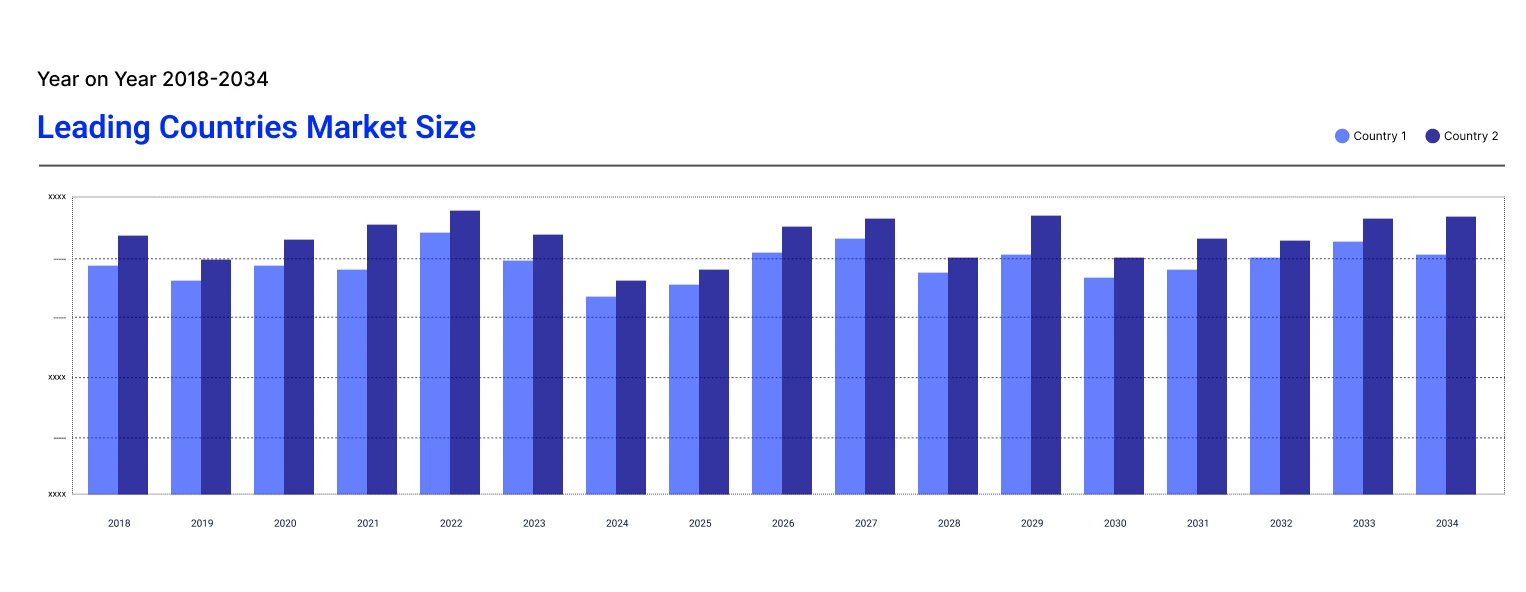
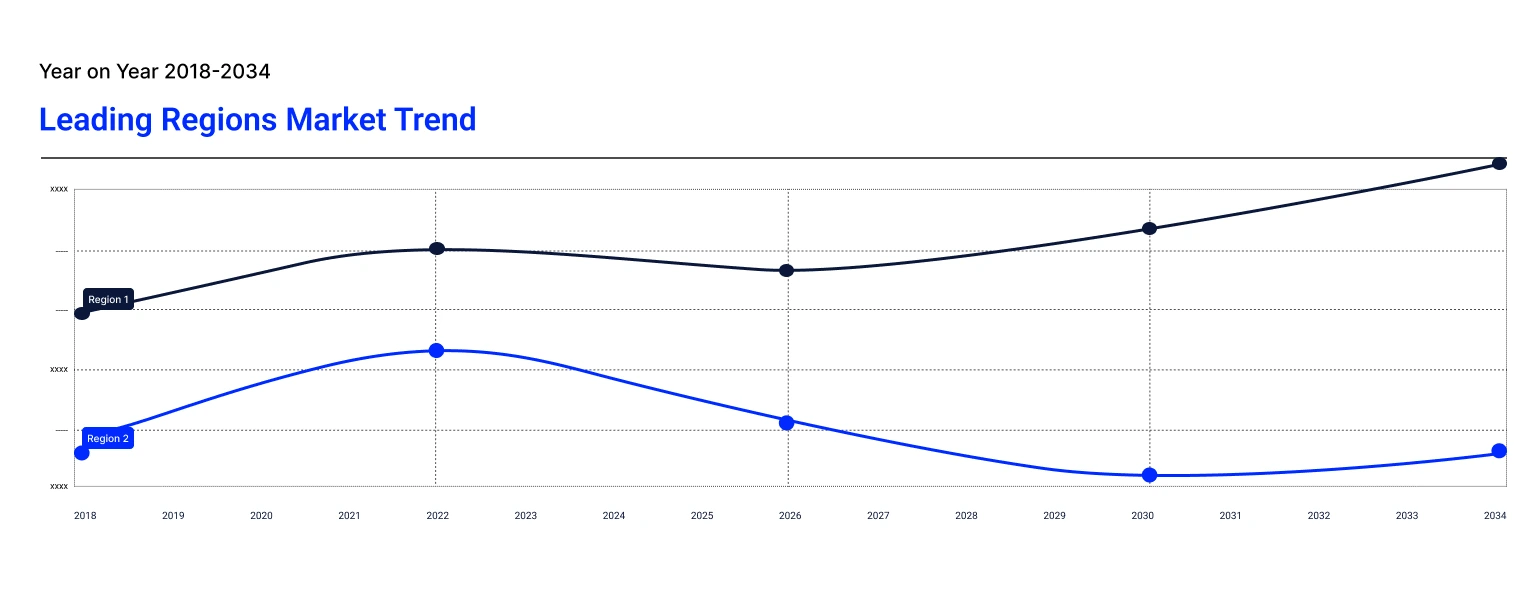
North America occupies a substantial share of the market due to high consumption and established supply chains
North America dominates the global industry, supported by strong consumption levels, well-established pork production, and modern processing infrastructure. The presence of major foodservice chains, supermarkets, and convenience stores ensures consistent demand for both standard and ready-to-eat bacon. Health-conscious and organic product trends are encouraging premiumization, while regulatory standards in the United States and Canada ensure product safety and quality. High per capita consumption, efficient logistics, and widespread retail penetration make North America the largest regional bacon industry globally.
Asia Pacific is experiencing the fastest market growth owing to urbanization, rising disposable incomes, and adoption of western-style diets. The growing popularity of convenience foods and pre-cooked products in countries like China, Japan, and India fuels demand in the market. Expansion of retail chains and foodservice networks is creating strong distribution opportunities. Increasing exposure to global breakfast and fast-food culture accelerates bacon consumption in both retail and commercial sectors across the region.
The market observes intense competition. Global bacon market players are focusing on product innovation, sustainability, and convenience-driven solutions. Companies are investing in pre-cooked, vacuum-sealed, and plant-based bacon to meet the growing demand for ready-to-eat and health-conscious alternatives. Expansion into retail, foodservice, and e-commerce channels presents significant opportunities.
Innovations in traceability, smart packaging, and functional nutrition, such as low-sodium and nitrate-free bacon, are key differentiation strategies for bacon companies. Regional expansion into emerging markets, particularly in the Asia Pacific, offers untapped growth potential, while government-supported food safety and sustainability programs are enhancing market credibility for leading players globally.
Hormel Foods Corporation, established in 1891 and headquartered in Austin, United States, focuses on diversified bacon offerings including Natural Choice, organic, and pre-cooked variants. The company leverages advanced processing and packaging technologies, offering ready-to-eat bacon for retail and foodservice.
Tyson Foods Inc., founded in 1935 and headquartered in Arkansas, United States, offers a wide range of bacon products, including smoked, flavored, and ready-to-eat options. Tyson is advancing sustainability by improving feed efficiency and reducing greenhouse gas emissions in pork operations. Its innovation in vacuum-sealed, portion-controlled bacon caters to foodservice efficiency and retail convenience.
The Kraft Heinz Company, established in 2015 and headquartered in Chicago, United States, delivers bacon under well-known brands with focus on quality, convenience, and flavor variety. Kraft Heinz is introducing ready-to-cook and pre-cooked bacon options enhanced with natural curing and lean cuts. The company invests in product traceability and eco-efficient processing to meet sustainability standards.
Fresh Mark Inc, founded in 1920 and headquartered in Ohio, United States, specializes in high-quality fresh and processed bacon, catering to retail, foodservice, and industrial buyers. The company emphasizes natural curing, minimally processed options, and bulk supply solutions for large-scale operators.
*Please note that this is only a partial list; the complete list of key players is available in the full report. Additionally, the list of key players can be customized to better suit your needs.*
Another key player in the market is Maple Leaf Food among others.
Explore the latest trends shaping the bacon market 2026-2035 with our in-depth report. Gain strategic insights, future forecasts, and key market developments that can help you stay competitive. Download a free sample report or contact our team for customized consultation on bacon market trends 2026.


Upto 15% Off
USD
$3999 $3599
$2499 $2249
$4999 $4249
$5999 $5099


*While we strive to always give you current and accurate information, the numbers depicted on the website are indicative and may differ from the actual numbers in the main report. At Expert Market Research, we aim to bring you the latest insights and trends in the market. Using our analyses and forecasts, stakeholders can understand the market dynamics, navigate challenges, and capitalize on opportunities to make data-driven strategic decisions.*
Get in touch with us for a customized solution tailored to your unique requirements and save upto 35%!
The market is projected to grow at a CAGR of 2.90% between 2026 and 2035.
Stakeholders are expanding plant-based and ready-to-eat portfolios, adopting eco-efficient processing, enhancing supply chain traceability, partnering with retailers and foodservice chains, and leveraging innovative packaging solutions for operational efficiency.
The key trends guiding the market growth are the launch of various innovative bacon products, the rising development of lab-grown bacon, and the growing incorporation of bacon in staple food products.
The major regions in the market are North America, Latin America, the Middle East and Africa, Europe, and the Asia Pacific.
Standard bacon and ready-to-eat bacon are the various product types considered in the market report.
The significant distribution channels in the market are foodservice channel and retail channel.
The key players in the market include Hormel Foods Corporation, Tyson Foods Inc., The Kraft Heinz Company, Fresh Mark Inc., and Maple Leaf Food, among others.
In 2025, the bacon market reached an approximate value of USD 74.33 Billion.
Companies face rising raw material costs, fluctuating pork supply, stringent food safety regulations, and pressure to develop sustainable, eco-friendly, and health-conscious bacon products without compromising taste or quality.
Explore our key highlights of the report and gain a concise overview of key findings, trends, and actionable insights that will empower your strategic decisions.
| REPORT FEATURES | DETAILS |
| Base Year | 2025 |
| Historical Period | 2019-2025 |
| Forecast Period | 2026-2035 |
| Scope of the Report |
Historical and Forecast Trends, Industry Drivers and Constraints, Historical and Forecast Market Analysis by Segment:
|
| Breakup by Product Type |
|
| Breakup by Distribution Channel |
|
| Breakup by Region |
|
| Market Dynamics |
|
| Competitive Landscape |
|
| Companies Covered |
|
| Report Price and Purchase Option | Explore our purchase options that are best suited to your resources and industry needs. |
| Delivery Format | Delivered as an attached PDF and Excel through email, with an option of receiving an editable PPT, according to the purchase option. |
Single User License
One User
USD 3,999
USD 3,599
tax inclusive*
Datasheet
One User
USD 2,499
USD 2,249
tax inclusive*
Five User License
Five User
USD 4,999
USD 4,249
tax inclusive*
Corporate License
Unlimited Users
USD 5,999
USD 5,099
tax inclusive*
*Please note that the prices mentioned below are starting prices for each bundle type. Kindly contact our team for further details.*
Flash Bundle
Small Business Bundle
Growth Bundle
Enterprise Bundle
*Please note that the prices mentioned below are starting prices for each bundle type. Kindly contact our team for further details.*
Flash Bundle
Number of Reports: 3
20%
tax inclusive*
Small Business Bundle
Number of Reports: 5
25%
tax inclusive*
Growth Bundle
Number of Reports: 8
30%
tax inclusive*
Enterprise Bundle
Number of Reports: 10
35%
tax inclusive*
How To Order

Select License Type
Choose the right license for your needs and access rights.

Click on ‘Buy Now’
Add the report to your cart with one click and proceed to register.

Select Mode of Payment
Choose a payment option for a secure checkout. You will be redirected accordingly.
Gain insights to stay ahead and seize opportunities.

Get insights & trends for a competitive edge.

Track prices with detailed trend reports.

Analyse trade data for supply chain insights.

Leverage cost reports for smart savings

Enhance supply chain with partnerships.

Connect For More Information
Our expert team of analysts will offer full support and resolve any queries regarding the report, before and after the purchase.
Our expert team of analysts will offer full support and resolve any queries regarding the report, before and after the purchase.
We employ meticulous research methods, blending advanced analytics and expert insights to deliver accurate, actionable industry intelligence, staying ahead of competitors.
Our skilled analysts offer unparalleled competitive advantage with detailed insights on current and emerging markets, ensuring your strategic edge.
We offer an in-depth yet simplified presentation of industry insights and analysis to meet your specific requirements effectively.





Share