

Consumer Insights
Uncover trends and behaviors shaping consumer choices today
Procurement Insights
Optimize your sourcing strategy with key market data
Industry Stats
Stay ahead with the latest trends and market analysis.
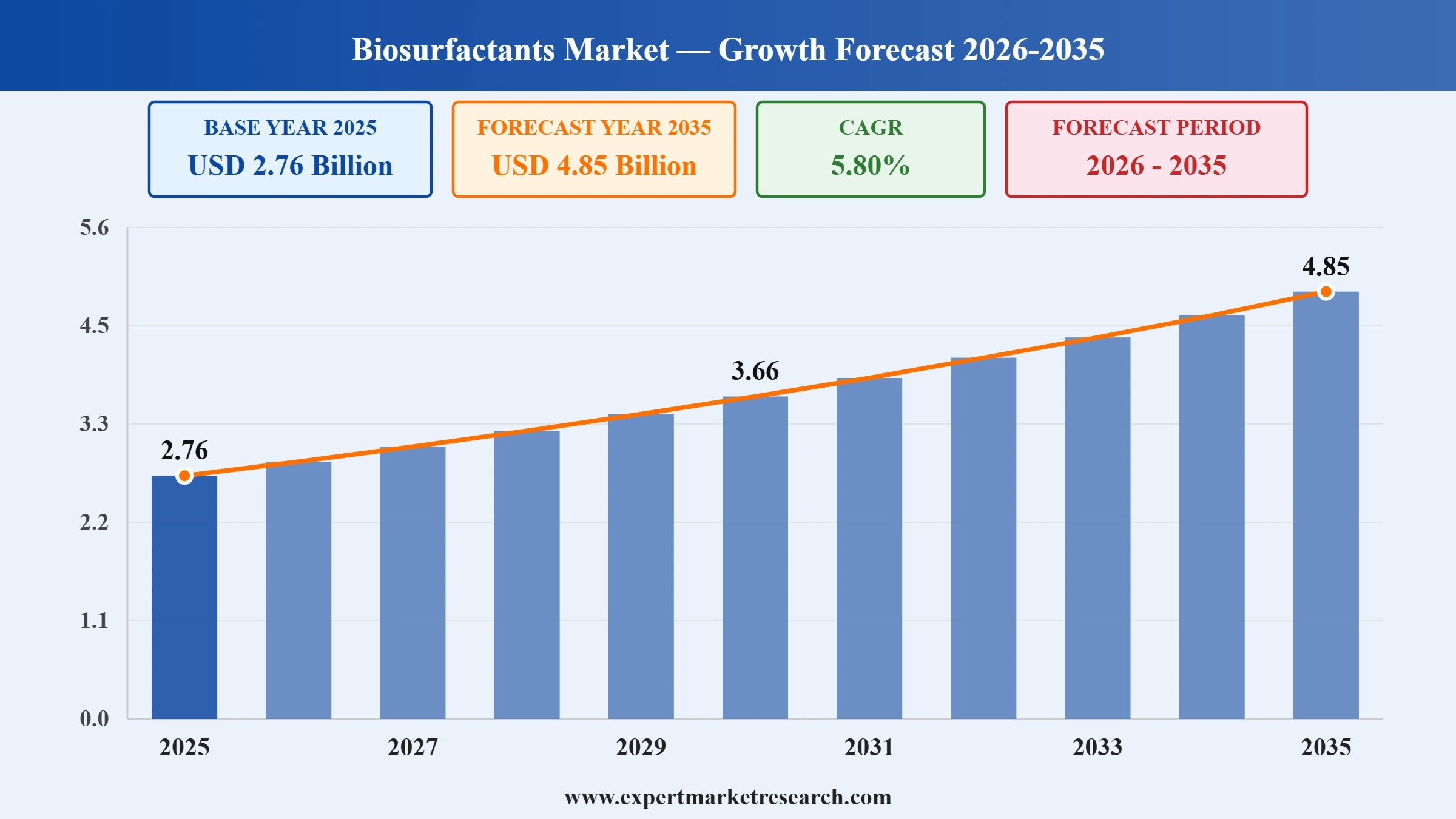
The biosurfactants market attained a value of USD 2.76 Billion in 2025 and is projected to expand at a CAGR of 5.80% through 2035. The market is further expected to achieve USD 4.85 Billion by 2035. The growing application of biosurfactants in oil recovery techniques and bioremediation initiatives is creating new business prospects outside the personal care segment, thereby opening up new possibilities for generating revenue in the long run.
The biosurfactants market observes increasing pressure on companies to develop eco-friendly cleansing agents, resulting in the substitution of synthetic compounds with biosurfactants; besides, innovations in microbial fermentation processes are also reducing manufacturing costs, making biosurfactants more viable from a commercial perspective. In addition, collaboration between biotechnology companies and prominent consumer goods companies is facilitating product commercialization through customized formulations suitable for personal care, agricultural, food, and industrial use.
Commercialization in the biosurfactants market is picking up pace as companies embrace fermentation technology and sustainable feedstock in order to phase out petroleum surfactants. One major development occurred in January 2024, when Evonik Industries AG added rhamnolipid-based compounds into its biosurfactant range that can be used for home and personal care formulations. This move might facilitate efforts by multinational consumer goods firms to utilize biosurfactants as sustainable substitutes with low carbon footprints. The European Commission estimates that surfactants are among the millions of tons of chemical products consumed annually across Europe.
Another major factor contributing to commercial growth in the biosurfactants market is the collaboration between biotech companies and consumer goods firms in order to boost yield and reduce production costs. The use of precision fermentation, synthetic biology, and waste streams are becoming common trends within the sector, which allows biosurfactants to offer high foaming capacity, emulsifying ability and antibacterial properties like traditional surfactants. In July 2026, Godrej Chemicals launched SLNOVA biosurfactant platform using renewable feedstocks for sustainable specialty chemical applications across industries.
Read more about this report - REQUEST FREE SAMPLE COPY IN PDF
Project Clean collaborated with Dispersa to release commercial cleaning products with biosurfactants produced from food waste, with petroleum and palm oil surfactants being replaced with circular biosurfactants. Companies can partner with cleaning product companies to develop waste biosurfactants into commercial products, accelerating such developments in the biosurfactants market.
Dispersa initiated commercial production of PuraSurf biosurfactants from food waste, providing its industrial and consumer cleaning manufacturers in North America with biosurfactants from agri-food waste. Companies in the biosurfactants market can finance industrial production of biodegradable biosurfactants from agri-food waste.
The upcycled biosurfactant by Kensing was unveiled in collaboration with AmphiStar, providing high-performing, eco-friendly raw materials that would be used in personal care formulations. Personal care ingredient providers can collaborate with biotechnology companies to create premium and sustainable formulations of cosmetic products amid the growing trend of eco-friendly cosmetics.
AmphiStar launched its AmphiNova platform, which consists of more than 80 biosurfactants. With the help of biotechnology and bioprocessing technology, biosurfactant manufacturers can create a wide range of specialized biosurfactants for home care, personal care, textile, and cleaning applications.
Precision fermentation is emerging as one of the critical growth factors of the biosurfactants market as manufacturers move towards cost-effective biosurfactant production. Manufacturers are focusing on microbial strain engineering aimed at increasing yield and decreasing dependency on petrochemical-based feedstocks. In July 2026, Melt&Marble launched Marble7, a precision-fermented bioactive lipid for sustainable skincare, makeup, and haircare formulations, enhancing ingredient performance. Moreover, there is growing government support for commercialization of biosurfactants. Within the Horizon Europe initiative of the European Union, several bio-based innovation projects get funded to assist in the development of sustainable industrial biotechnology and fermentation technologies, which helps companies develop biosurfactants commercially throughout Europe.
Agribusiness is starting to incorporate biosurfactants in the composition of biopesticides, biofertilizers, and soil enhancers in order to increase the productivity of crops and decrease chemical residues. The unique ability of biosurfactants to increase nutrient availability and disperse pesticides makes them attractive for agritech companies, accelerating demand in the biosurfactants market. Several Bio-based Industries Joint Undertaking projects are continuing to fund sustainable agricultural biotechnology by conducting industrial research. Furthermore, the European Union's Farm to Fork Strategy promotes the decreased use of synthetic agricultural chemicals. Following such trends, in February 2026, Holiferm partnered with Adiego Hermanos to expand sustainable biosurfactant distribution across Spain, strengthening agricultural and industrial market access.
Large-scale multinational corporations that manufacture consumer products are ramping up purchasing bio-based raw materials to fulfill their sustainability goals, driving increased demand in the biosurfactants market. Companies are now incorporating renewable raw materials that have reduced greenhouse gas emissions without affecting formulation quality. For example, in March 2026, Sironix Renewables launched Furasoft-LFS and Furasoft-SF bio-based surfactants for sustainable, high-performance personal care formulations from upcycled feedstocks. On the other hand, BASF remains dedicated to expanding its sustainable portfolio of products using renewable carbon-based raw materials in various industrial and home care applications. Additionally, the United States Department of Energy is constantly funding industrial decarbonization projects promoting use of renewable raw materials and advanced biomanufacturing techniques.
In addition to using plant-based oils, food waste, and molasses in biosurfactant production, manufacturers are using agricultural residue waste as sources of renewable raw materials, reshaping the biosurfactants market dynamics. This circular economy strategy brings down raw material cost and reduces industrial waste output. Biotechnology companies are also investing in technology that can convert low-grade raw materials into specialty chemicals. For instance, in October 2024, AmphiStar launched waste-based biosurfactants from food industry byproducts, offering sustainable, high-performance alternatives for personal care and home cleaning applications. In addition, the European Commission's Circular Economy Action Plan is continuously funding industrial resource efficiency and bio-based manufacturing processes. Such developments have improved the economics of biosurfactant production.
The use of biosurfactants in industrial processes, apart from their use in personal care applications, is growing due to their efficiency in enhanced oil recovery, wastewater management, and other areas. The biodegradability and low toxicity of biosurfactants make them suitable for replacing chemical surfactants in difficult industrial conditions, propelling growth in the biosurfactants market. Industrial energy companies are experimenting with biosurfactants to enhance recovery of hydrocarbons and decrease environmental harm. In July 2026, Locus FS expanded its The Woodlands laboratory, doubling R&D capacity to accelerate high-performance biosurfactant innovation across industrial applications. Moreover, governments are encouraging sustainable remediation technologies under environmental protection laws.
The EMR’s report titled “Biosurfactants Market Report and Forecast 2026-2035” offers a detailed analysis of the market based on the following segments:
Market Breakup by Type
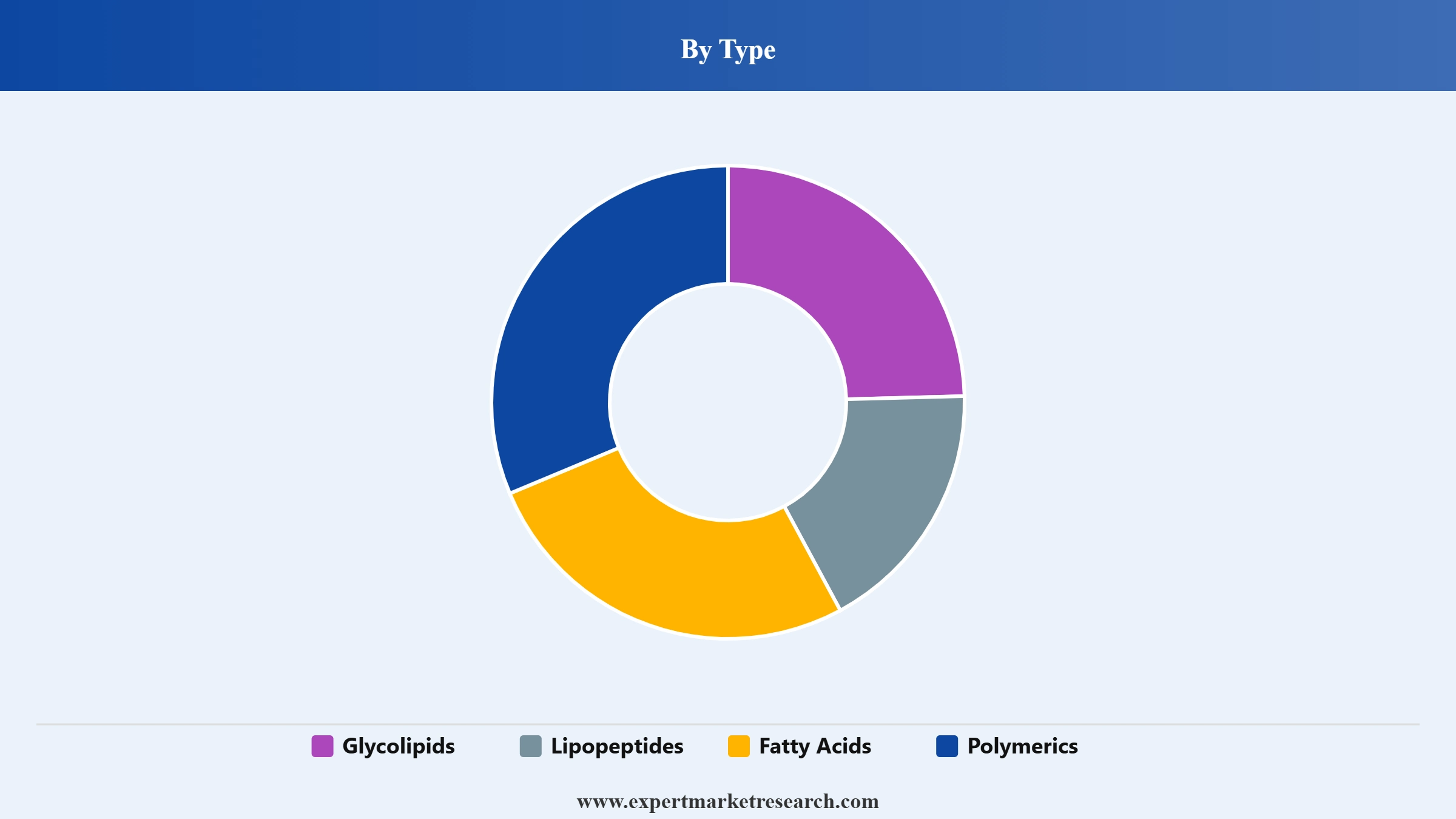
Key Insight: The biosurfactants market is marked by varied demand in respect of molecular classes with varied performance according to the needs of industries. Biosurfactants of glycolipid type are dominant owing to varied performances, economical synthesis and ability to work at large scale for cleaning and personal care. Biosurfactants of lipopeptide type are witnessing high growth owing to the increasing need for multi-functional compounds having antimicrobial properties. Biosurfactants of fatty acid class are significant for applications which require good emulsifying and wetting performance while polymeric biosurfactants are important for niche industrial processes.
Market Breakup by Application
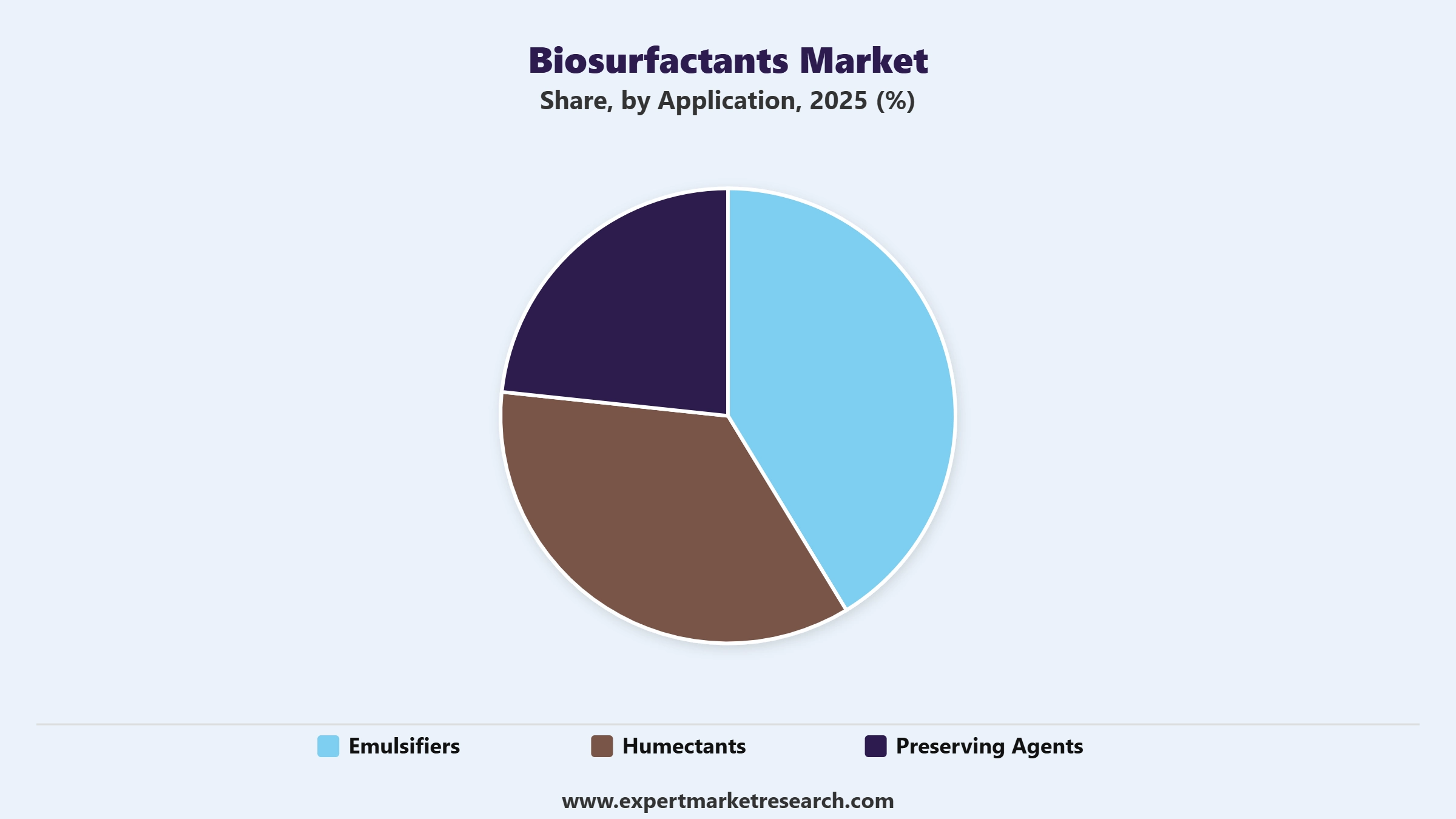
Key Insight: Applications require the functionality of biosurfactants in terms of their versatility in the formulation industry. The largest application category comprises emulsifiers due to the importance of stable dispersion in cosmetics, food items, pharmaceutical products, and cleaners. Preservation agents are becoming increasingly popular as the trend of adding natural functional substances to clean label products becomes more prevalent in businesses. Humectants continue being relevant in the biosurfactants market scope as it enhances moisture retention in the cosmetic and skin care formulations, and other specialized applications cover the needs related to foaming, wetting, dispersing, and conditioning properties.
Market Breakup by End Use
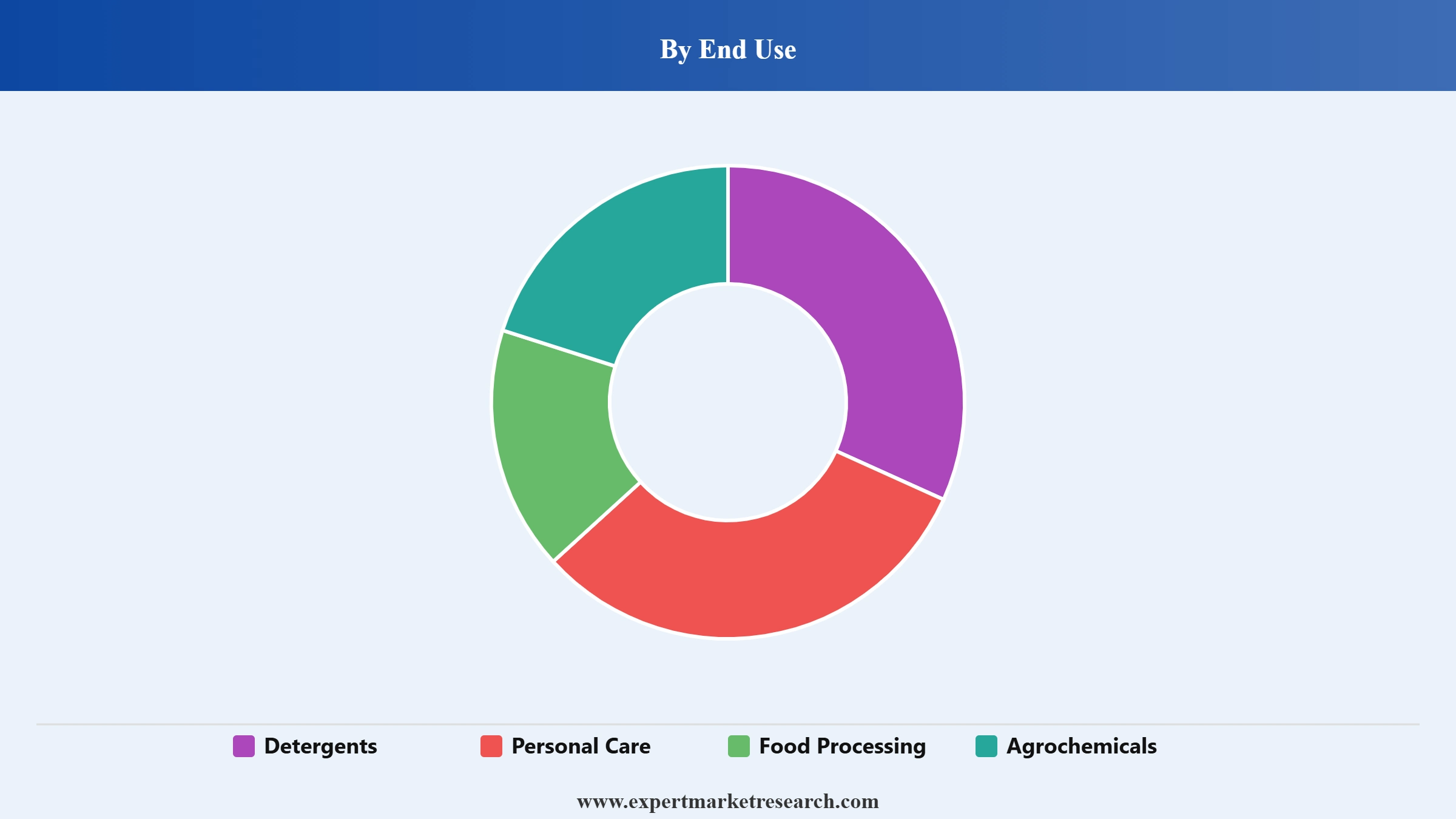
Key Insight: The end-use demand in the biosurfactants market is increasing as industries achieve a balance between performance and sustainable development. Detergents continue to dominate the market as cleaning agents need surfactants that are highly performing and environmentally friendly. Personal care is observing the fastest growth in terms of consumer demand for natural and gentle ingredients. In food processing, biosurfactants are used as an aid to improve processing performance and emulsification properties. Agricultural chemicals benefit from better performance in delivery and spreading in agricultural formulations. In April 2024, AmphiStar secured EUR 6 million to accelerate waste-derived biosurfactant commercialization, industrial scale-up, and sustainable production facility development.
Market Breakup by Region
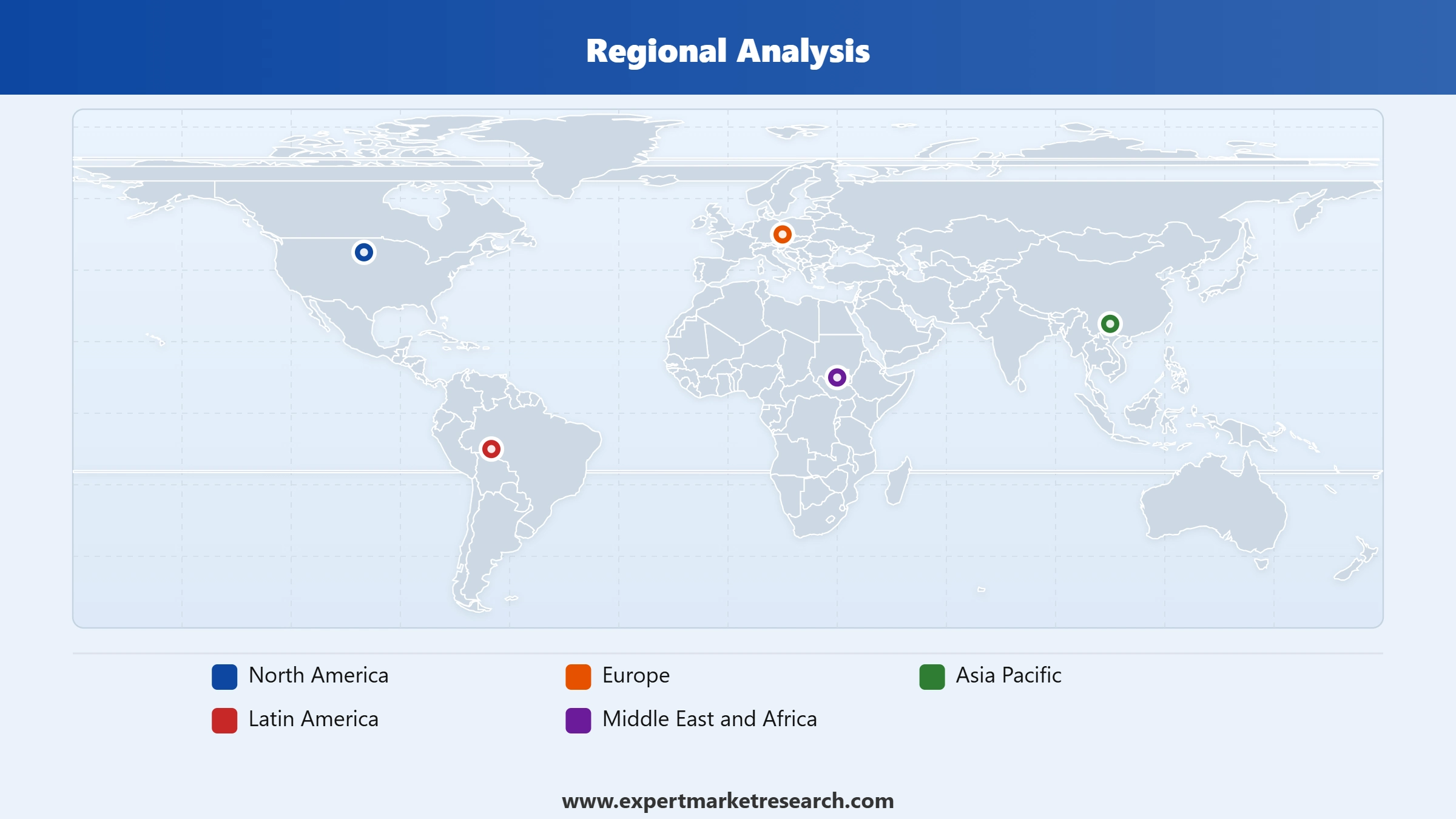
Key Insight: The regional biosurfactants market dynamics differ in various regions based on the level of industry maturity, regulations, and biotechnology development. Leadership in Europe is sustained by stringent environmental laws, robust research bases, and bio-manufacturing facilities. The Asia Pacific region demonstrates rapid growth in terms of manufacturing capabilities, biotechnology investments, and sustainable manufacturing practices. North America capitalizes on innovations, industrial biotechnology knowledge, and growing demand for renewable materials. Latin America presents itself as a high-potential market due to rich agricultural raw materials, which can be used for bio-manufacturing. The Middle East and Africa regions are also growing in terms of surfactant consumption.
By type, the glycolipids category dominates the market due to superior biodegradability and broad formulation compatibility
The glycolipids category is currently the largest in the biosurfactants market, owing to their superior surface activity and low toxicology levels as well as compatibility with various industrial formulations. Glycolipids are widely applied in manufacturing and producing commercial products owing to the consistency in product performance in changing pH and temperature conditions. The stability in manufacturing and use of glycolipids is important in ensuring that manufacturers have a stable supply of biosurfactants, which are sustainable as compared to their petroleum analogs. In June 2025, AmphiStar partnered with Kensing to commercialize upcycled biosurfactants, expanding sustainable personal care ingredient availability across North America.
Read more about this report - REQUEST FREE SAMPLE COPY IN PDF
Lipopeptides are currently the fastest growing category of the biosurfactants market, owing to their antibacterial, antifungal, and biofilm dispersing properties. Adoption in healthcare, agriculture, cosmetics, and specialty cleaning products are fueling demand for lipopeptides. This is driven by their ability to bring both biological functionality and surface activity together. Biotechnology investment and developments in precision fermentation are contributing towards efficient production of lipopeptides.
By application, the emulsifiers category leads the market through widespread demand for stable bio-based product formulations
Emulsifiers represent the biggest application area, as biosurfactants effectively stabilize the oil and water mixture used in cosmetics, food applications, drugs, and household cleaners. Increasing usage of bio-derived emulsifiers by manufacturers to achieve stable formulation and meet the sustainability goals is driving their demand in the biosurfactants market. Their ease of use with natural ingredients, along with enhanced texture and stability of the formulated products, is making these more commercially attractive.
Read more about this report - REQUEST FREE SAMPLE COPY IN PDF
The fastest-growing segment in terms of value is preservatives, where there is a need for naturally derived ingredients that can extend shelf life and support a clean label claim. Some biosurfactants have antimicrobial activity and prevent any microbial contamination in cosmetics, personal care, and specialty formulations. Increasing consumer preferences for preservatives with improved environmental credentials are prompting manufacturers to use biosurfactants in their premium range of products. In October 2023, Sasol Chemicals launched CARINEX and LIVINEX biosurfactant brands for sustainable personal care and home care applications.
By end use, detergents capture a substantial share of the market owing to rising sustainable household cleaning demand
Detergents continue dominating the end-use application segment since biosurfactants deliver an excellent combination of cleaning, foaming, and degreasing capabilities while minimizing environmental harm when compared to traditional surfactants. Manufacturers of household, industrial, and institutional cleaning products are moving away from petrochemicals toward biodegradable substances to comply with environmental standards and consumer expectations. The rising preference of consumers for environmentally friendly cleaning products and the growing commercial hygiene standards continue fueling the overall demand in the biosurfactants market.
Read more about this report - REQUEST FREE SAMPLE COPY IN PDF
Personal care is the fastest-growing end-use application segment since companies are reformulating their products using skin-friendly, natural ingredients to deliver a clean beauty formula. Biosurfactants exhibit excellent cleansing properties without causing skin irritation and can be used in cosmetic applications such as shampoos, face washes, and skincare products. Growing consumer consciousness about ingredient sourcing, along with the development of premium products, is driving biosurfactant usage in the global personal care sector. In April 2025, Clariant launched Clariant Beauty, introducing sustainable personal care solutions combining advanced cosmetic ingredients with formulation expertise.




Read more about this report - REQUEST FREE SAMPLE COPY IN PDF
Europe dominates the market through stringent sustainability regulations and advanced bio-based manufacturing capabilities
Europe dominates the biosurfactants market due to stringent environmental laws, circular economy strategies, and existing biotechnology expertise that promote the use of sustainable surfactants. The consumer’s preference for green products and heavy investments made towards developing green chemicals also contribute to regional dominance. Joint efforts between research organizations, ingredients suppliers, and consumer goods firms are boosting innovations and commercialization of biosurfactants in personal care, detergent, agricultural, and industrial industries in the region. In November 2025, Stepan partnered with AmphiStar to distribute upcycled biosurfactants across EMEA home care and industrial cleaning markets.
Asia Pacific is the fastest-growing regional biosurfactants market owing to rapid industrial development, increased investments in biotechnology, and rising production of personal care and household cleaning products. Increased emphasis on green chemicals by governments and industry players to minimize environmental damage is driving the growth in the region. Consumer awareness and demand for eco-friendly products are encouraging regional players to produce biosurfactants.
Read more about this report - REQUEST FREE SAMPLE COPY IN PDF
The global industry is witnessing growing competition among players in terms of their investments in biotech innovations, precision fermentation, and sustainable feedstock usage. Leading biosurfactants market players are looking to produce application-specific biosurfactants for various sectors such as agriculture, personal care, home care, and industrial cleaning while simultaneously building up their global manufacturing capacities through collaborations.
R&D activities are mainly directed towards the improvement of fermentation efficiency, using feedstock from wastes, and the development of biodegradable biosurfactants with improved performance. Biosurfactants companies are partnering with companies from the consumer goods sector to develop biosurfactants that help them in their efforts to be more sustainable. Future growth will come from biosurfactants for enhanced oil recovery, bioremediation, and specialized agricultural applications where demand for sustainable solutions is constantly rising.
Founded in 1865 and located in Ludwigshafen, Germany, BASF SE is a prominent producer of sustainable biosurfactants for use in personal care products, household cleaning, industrial cleaning, and agriculture. In addition to utilizing renewable raw materials, the company engages in biotechnology innovations to provide environmentally friendly formulations to assist its customers with lowering the adverse effects on the environment and compliance with changing sustainability regulations and consumers' demands.
Founded in 1847 and headquartered in Essen, Germany, Evonik Industries AG provides innovative biosurfactants for cosmetics, personal care products, household and industrial cleaning. With the use of biotechnology studies, the company offers bio-based surfactants to support its customers with the development of mild formulas with enhanced environmental friendliness.
Deguan Bio was founded in 2019 and is based in China. It is known for its expertise in the development of fermentation technology for biosurfactants that are applied in personal care, environmental remediation, agriculture, and industrial cleaning. The company offers sustainable manufacturing processes, personalized product formulation, and cost-effective production techniques to increase the use of renewable surfactants in different industries.
Founded in 2011, Biotensidon GmbH is located in Germany. It specializes in fermentation-based biosurfactant products based on renewable raw materials used in home care, personal care, agriculture, and industrial applications. The company emphasizes scalability, biodegradable surfactants, and collaboration in innovation to offer commercial substitutes for conventional petrochemical-based surfactants.
Other key players in the market include Allied Carbon Solutions Co Ltd, Croda International, Henkel AG & Co. KGaA, Pfeifer & Langen GmbH, Insilico Biotechnology AG, and Jeneil Biotech, Inc., among others.
*Please note that this is only a partial list; the complete list of key players is available in the full report. Additionally, the list of key players can be customized to better suit your needs.*
Unlock the latest insights with our biosurfactants market trends 2026 report. Discover regional growth patterns, consumer preferences, and key industry players. Stay ahead of competition with trusted data and expert analysis. Download your free sample report today and drive informed decisions in the market.


Upto 15% Off
USD
$2499 $2249
$3999 $3599
$4999 $4249
$5999 $5099


*While we strive to always give you current and accurate information, the numbers depicted on the website are indicative and may differ from the actual numbers in the main report. At Expert Market Research, we aim to bring you the latest insights and trends in the market. Using our analyses and forecasts, stakeholders can understand the market dynamics, navigate challenges, and capitalize on opportunities to make data-driven strategic decisions.*
In 2025, the global market for biosurfactants attained a value of nearly USD 2.76 Billion.
The market is assessed to grow at a CAGR of 5.80% between 2026 and 2035.
The market is estimated to witness healthy growth in the forecast period of 2026-2035 to reach almost USD 4.85 Billion by 2035.
Expanding fermentation facilities, strengthening biotechnology partnerships, developing application-specific formulations, improving feedstock diversification, investing in sustainable research, and targeting emerging industrial sectors are creating stronger long-term competitive advantages.
The key market trends include the increasing disposable income among people and the preference for bio-degradable and low toxicity surfactants.
The major regions in the market are North America, Europe, the Asia Pacific, Latin America, and the Middle East and Africa.
The various types in the market for biosurfactants include glycolipids, lipopeptides, fatty acids, and polymerics, among others.
The different applications in the market for biosurfactants include emulsifiers, humectants, and preserving agents, among others.
The different end-users in the market for biosurfactants include detergents, personal care, food processing, and agrochemicals, among others.
The key players in the market include BASF SE, Evonik Industries AG, Deguan Bio, Biotensidon GmbH, Allied Carbon Solutions Co Ltd, Croda International, Henkel AG & Co. KGaA, Pfeifer & Langen GmbH, Insilico Biotechnology AG, and Jeneil Biotech, Inc., among others.
High production costs, limited large-scale fermentation capacity, inconsistent raw material availability, regulatory approvals, performance standardization, and competition from lower-priced synthetic surfactants continue limiting broader commercial adoption across industries.
Explore our key highlights of the report and gain a concise overview of key findings, trends, and actionable insights that will empower your strategic decisions.
| REPORT FEATURES | DETAILS |
| Base Year | 2025 |
| Historical Period | 2019-2025 |
| Forecast Period | 2026-2035 |
| Scope of the Report |
Historical and Forecast Trends, Industry Drivers and Constraints, Historical and Forecast Market Analysis by Segment:
|
| Breakup by Type |
|
| Breakup by Application |
|
| Breakup by End Use |
|
| Breakup by Region |
|
| Market Dynamics |
|
| Competitive Landscape |
|
| Companies Covered |
|
Datasheet
One User
USD 2,499
USD 2,249
tax inclusive*
Single User License
One User
USD 3,999
USD 3,599
tax inclusive*
Five User License
Five User
USD 4,999
USD 4,249
tax inclusive*
Corporate License
Unlimited Users
USD 5,999
USD 5,099
tax inclusive*
*Please note that the prices mentioned below are starting prices for each bundle type. Kindly contact our team for further details.*
Flash Bundle
Small Business Bundle
Growth Bundle
Enterprise Bundle
*Please note that the prices mentioned below are starting prices for each bundle type. Kindly contact our team for further details.*
Flash Bundle
Number of Reports: 3
20%
tax inclusive*
Small Business Bundle
Number of Reports: 5
25%
tax inclusive*
Growth Bundle
Number of Reports: 8
30%
tax inclusive*
Enterprise Bundle
Number of Reports: 10
35%
tax inclusive*
How To Order

Select License Type
Choose the right license for your needs and access rights.

Click on ‘Buy Now’
Add the report to your cart with one click and proceed to register.

Select Mode of Payment
Choose a payment option for a secure checkout. You will be redirected accordingly.
Strategic Solutions for Informed Decision-Making
Gain insights to stay ahead and seize opportunities.

Get insights & trends for a competitive edge.

Track prices with detailed trend reports.

Analyse trade data for supply chain insights.

Leverage cost reports for smart savings

Enhance supply chain with partnerships.

Connect For More Information
Our expert team of analysts will offer full support and resolve any queries regarding the report, before and after the purchase.
Our expert team of analysts will offer full support and resolve any queries regarding the report, before and after the purchase.
We employ meticulous research methods, blending advanced analytics and expert insights to deliver accurate, actionable industry intelligence, staying ahead of competitors.
Our skilled analysts offer unparalleled competitive advantage with detailed insights on current and emerging markets, ensuring your strategic edge.
We offer an in-depth yet simplified presentation of industry insights and analysis to meet your specific requirements effectively.




