

Consumer Insights
Uncover trends and behaviors shaping consumer choices today
Procurement Insights
Optimize your sourcing strategy with key market data
Industry Stats
Stay ahead with the latest trends and market analysis.
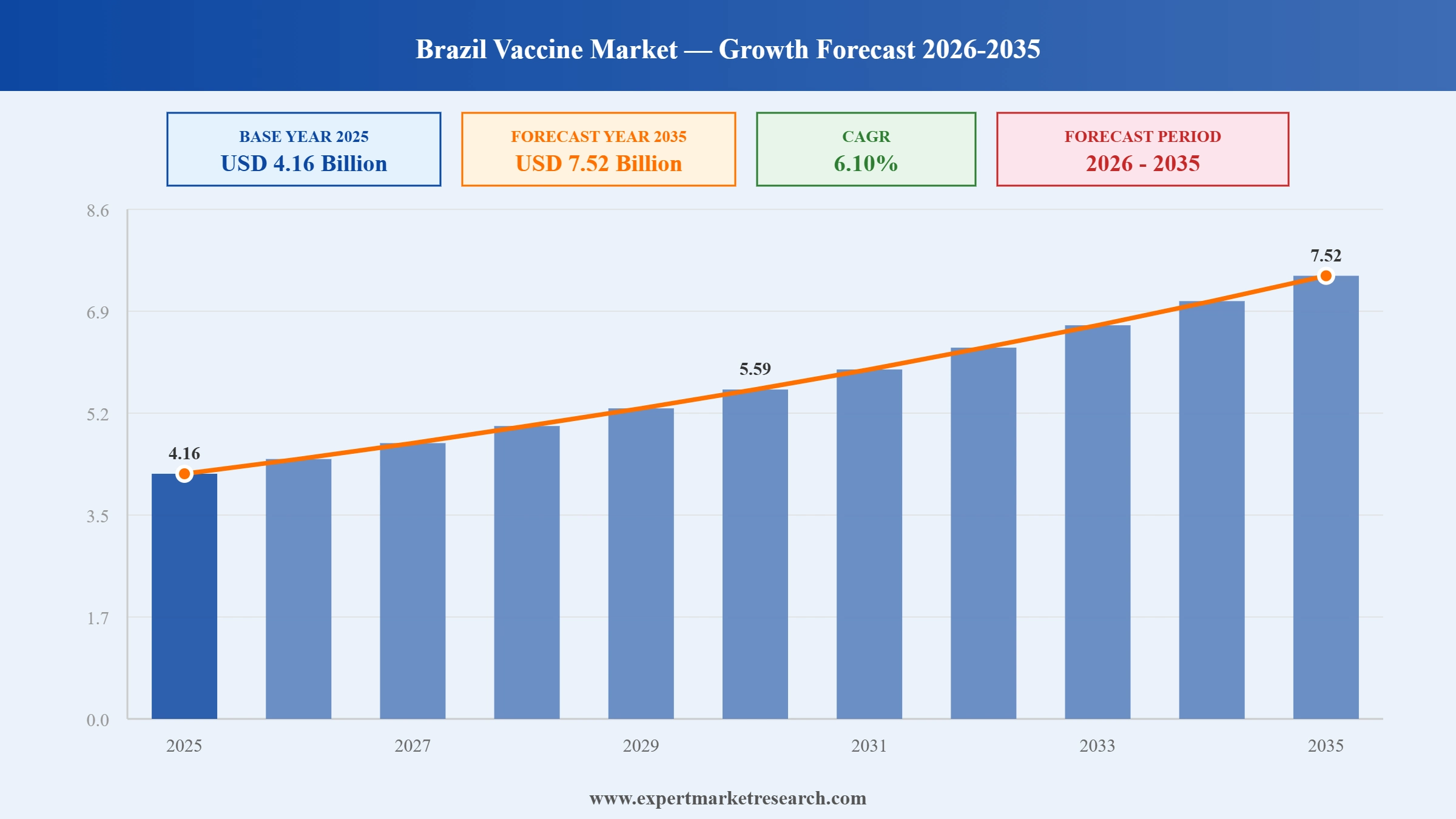
The Brazil Vaccine Market reached a value of USD 4.16 Billion at 2025 and is projected to expand at a CAGR of around 6.10% during the forecast period of 2026-2035. With Brazil's world-class National Immunization Program consistently delivering near-universal coverage, the rapid advancement of mRNA technology extending into endemic disease vaccines for dengue and influenza, strong public-private investment in domestic manufacturing infrastructure, and growing regulatory approvals for novel tropical disease vaccines, the market is expected to reach USD 7.52 Billion by 2035.
Read more about this report - REQUEST FREE SAMPLE COPY IN PDF
Some of the notable trends in the market are the large-scale dengue vaccination initiative and robust collaboration between the federal government and the private sector:
Brazil and Gavi, the Vaccine Alliance, signed a revised cooperation agreement in May 2025 designed to accelerate Brazil's local vaccine production capacity, expand immunization access for climate-sensitive diseases including dengue and yellow fever, and deepen health collaboration with African and Latin American partner countries. The agreement, reaffirmed during the 78th World Health Assembly following nearly two decades of joint work, reflects Brazil's strategic ambition to reduce dependence on imported vaccines and position itself as a leading vaccine manufacturing and distribution hub for the Global South. The partnership reinforces the commercial and public health case for sustained investment in Brazil's domestic vaccine production infrastructure, supporting long-term market growth across the forecast period.
In May 2025, SINOVAC Biotech Ltd. signed a strategic vaccine cooperation agreement with Eurofarma, a leading Brazilian pharmaceutical company, witnessed by Brazilian President Luiz Inácio Lula da Silva. The partnership establishes a Sino-Brazilian vaccine manufacturing platform designed to support localized production of multiple vaccine types for the Brazilian market and broader Global South distribution. The agreement aligns with Brazil's national strategy to reduce dependence on imported vaccines and strengthen domestic biopharmaceutical capacity through international technology transfer and co-investment. It further reinforces the role of Brazil's public-private health ecosystem in addressing infectious disease burdens across Latin America.
Brazil's National Health Surveillance Agency (ANVISA) granted regulatory approval in April 2025 to Valneva's single-dose chikungunya vaccine, IXCHIQ, marking the first authorization of a chikungunya vaccine in an endemic country. The approval is backed by support from CEPI, the European Union, and Instituto Butantan, and enables Phase 4 clinical trials to proceed locally, generating additional real-world safety and efficacy data. The clearance represents a milestone for Brazil's public health infrastructure and underscores the country's growing role in advancing vaccine access for diseases disproportionately affecting tropical and low-to-middle income nations. IXCHIQ's approval is expected to open a new commercially significant disease indication for vaccine providers already operating in Brazil.
Brazil's Ministry of Health advanced formal plans in April 2025 to incorporate the newly approved chikungunya vaccine into the country's public immunization system under the National Immunization Program. The initiative aims to enhance disease prevention across Brazil's endemic regions where chikungunya infections impose significant morbidity and economic burden on communities. By integrating the vaccine into the PNI's free universal access framework, the government ensures that coverage reaches socioeconomically vulnerable populations who lack access to private healthcare. This decision is expected to substantially increase vaccine demand from government procurement channels, which represent the largest purchasing segment in the Brazilian vaccine market.
Brazil's government announced plans in February 2025 to launch a fully domestically developed and manufactured single-dose dengue vaccine by 2026, with an annual production target of 60 million doses. The initiative, developed in partnership with Instituto Butantan and supported by public investment, is designed to eliminate Brazil's dependence on imported dengue vaccines and dramatically lower the per-dose cost of immunization for the national program. Dengue fever is a significant and recurring public health burden in Brazil, with the country recording one of the highest dengue case loads globally in recent years. A domestically produced vaccine at scale would be transformative for both public health outcomes and the structural composition of the Brazil vaccine market's production landscape.
The success of mRNA vaccine platforms during the COVID-19 pandemic has accelerated their adoption in Brazil across a broader range of disease indications, including seasonal influenza, respiratory syncytial virus (RSV), and potentially dengue and tuberculosis. Brazil's scientific infrastructure, anchored by institutions including Instituto Butantan, Fiocruz, and leading universities in Sao Paulo and Rio de Janeiro, is actively engaged in adapting mRNA technology for diseases with higher endemic burden in tropical populations. Brazil Vaccine Market growth in the mRNA segment is being further enabled by regulatory capacity-building at ANVISA, which has developed streamlined pathways for innovative vaccine modalities following its experience with COVID-19 accelerated approvals. The strategic partnership with Gavi confirmed in May 2025 also specifically supports technology transfer for climate-sensitive disease vaccines, accelerating mRNA platform development for tropical pathogens.
A defining trend in the Brazil vaccine market is the government's sustained commitment to building domestic vaccine production capacity, reducing dependence on global vaccine manufacturers and creating a more resilient public immunization supply chain. The February 2025 announcement of a domestically produced dengue vaccine targeting 60 million doses per year by 2026 represents the most visible expression of this strategy, building on the success of Instituto Butantan's domestic COVID-19 vaccine production during the pandemic. Brazil's Novo PAC program has allocated BRL 31 billion to health infrastructure that directly supports vaccine production facility upgrades and cold chain expansion. These investments are creating a growing domestic vaccine manufacturing sector that will increasingly displace imports in government procurement channels, while also creating export capacity to supply other Latin American and African markets through South-South cooperation frameworks.
Brazil's National Immunization Program has historically focused on pediatric vaccination, achieving world-class childhood immunization coverage rates. However, an expanding policy push toward adult and senior citizen vaccination is creating significant new demand segments for vaccine manufacturers. Vaccines for influenza, pneumococcal disease, herpes zoster, and HPV are seeing growing adult uptake as the Ministry of Health expands eligibility criteria and public awareness campaigns target working-age and elderly Brazilians. The adult segment is projected to register the fastest age-group growth rate through the forecast period, reflecting both the opportunity gap from historically lower adult coverage rates and the increasing disease burden awareness in an ageing population. Leading manufacturers including Pfizer, Sanofi, and GlaxoSmithKline are actively competing to secure position in this expanding adult immunization market through both government tender participation and private clinic distribution.
The collaboration between Brazil's public health institutions, particularly Instituto Butantan and Fiocruz, and global pharmaceutical companies is generating a pipeline of vaccines specifically designed for diseases with high endemic prevalence in tropical Brazil. ANVISA's April 2025 approval of Valneva's chikungunya vaccine IXCHIQ, supported by CEPI and Instituto Butantan, is a concrete example of how international funding, local scientific capacity, and regulatory readiness can converge to accelerate vaccine access in endemic markets. The May 2025 Brazil-Gavi agreement further institutionalizes this collaboration model, aligning international financing mechanisms with Brazil's domestic production ambitions for dengue, yellow fever, and other climate-sensitive disease vaccines. These partnerships create durable commercial opportunities for both global and regional vaccine developers who can navigate Brazil's regulatory requirements and public procurement frameworks effectively.
The EMR report offers a detailed analysis of the market based on the following segments:
Market Breakup by Product Type
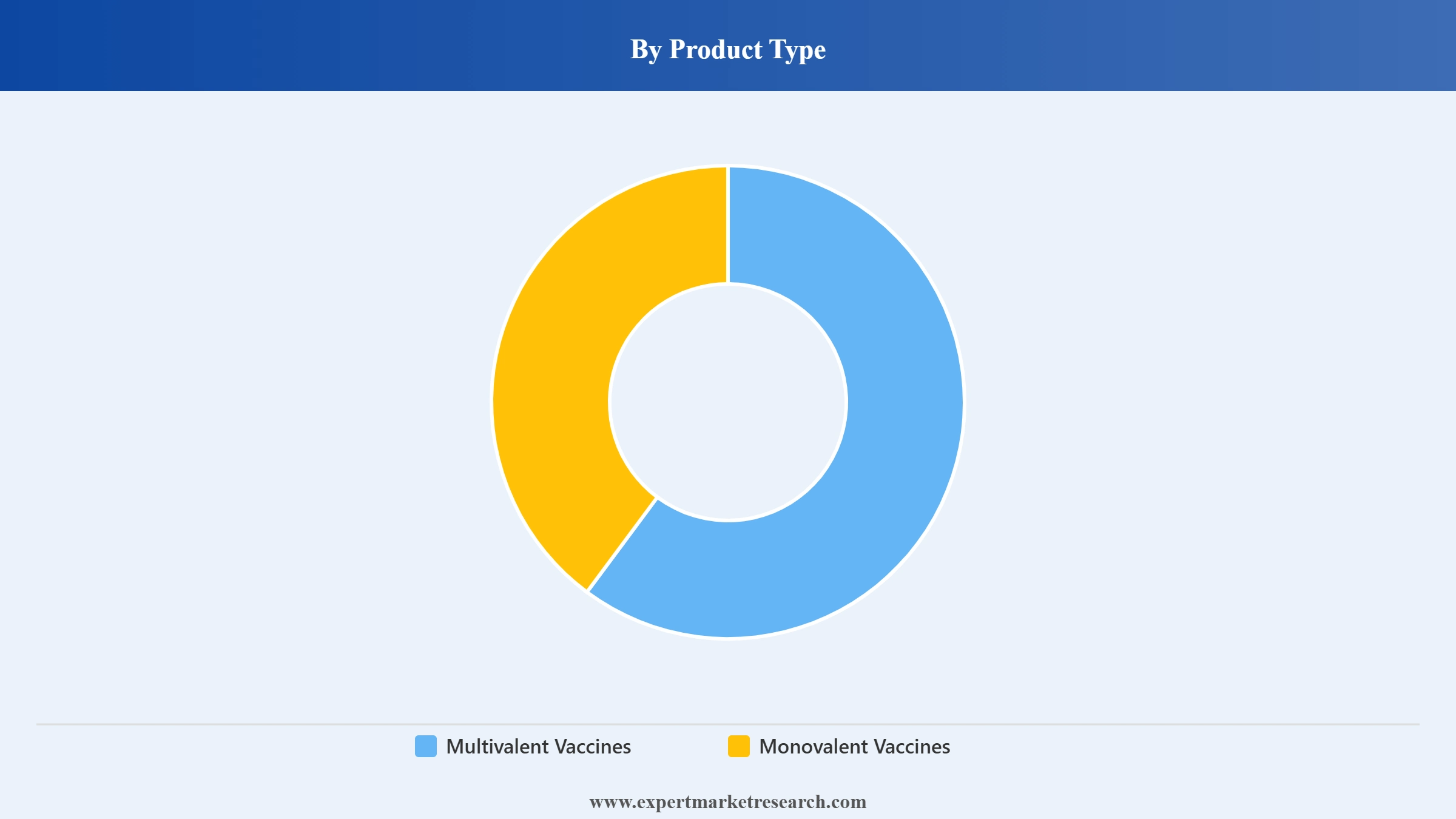
Key Insight: Multivalent vaccines represent the largest product segment in Brazil's vaccine market, reflecting the National Immunization Program's focus on reducing the number of vaccine visits required per child and adult while maximizing protection coverage. Combination vaccines such as pentavalent (DTP-HepB-Hib) and hexavalent formulations are central to Brazil's pediatric immunization schedule, minimizing administration burden and improving compliance. Multivalent vaccines align with the PNI's efficiency objectives and support the government's goal of achieving and maintaining high coverage rates across a geographically diverse and large population. Monovalent vaccines retain commercial importance for disease-specific campaigns including seasonal influenza, HPV, and dengue immunization programs, where single-antigen formulations offer flexibility for targeted deployment. Global manufacturers including GlaxoSmithKline, Pfizer, Sanofi, and Merck compete actively in both segments.
Market Breakup by Type
Key Insight: Subunit vaccines (including recombinant, conjugate, and toxoid formulations) account for a significant share of Brazil's vaccine market by value, reflecting the widespread use of pneumococcal conjugate, meningococcal conjugate, hepatitis B recombinant, and toxoid-based vaccines such as tetanus in the national immunization schedule. Live attenuated vaccines remain essential for measles-mumps-rubella (MMR), yellow fever, and rotavirus programs, where Brazil has achieved strong coverage. mRNA vaccines represent the fastest-growing type by technology adoption, driven by ongoing COVID-19 vaccination and the expanding pipeline of mRNA-based vaccines for influenza and other endemic diseases under development with Brazilian institutional participation. Inactivated vaccines serve a broad range of applications including influenza, hepatitis A, and rabies immunization.
Market Breakup by Route of Administration
Key Insight: Parenteral (injectable) administration dominates Brazil's vaccine market by volume and revenue, as the majority of vaccines within the National Immunization Program including influenza, COVID-19, hepatitis B, pneumococcal, and meningococcal formulations are delivered by intramuscular or subcutaneous injection. The parenteral route benefits from well-established healthcare worker training, cold chain infrastructure aligned to injectable vaccines, and consumer familiarity. Oral vaccines retain specific importance within Brazil's immunization schedule, particularly for rotavirus (using oral live attenuated vaccine), poliovirus (oral polio vaccine supplement in campaigns), and typhoid prevention. Nasal administration remains limited to a small subset of influenza and investigational vaccines, with commercial scale dependent on the broader acceptance of intranasal delivery platforms in clinical practice.
Market Breakup by Disease Indication
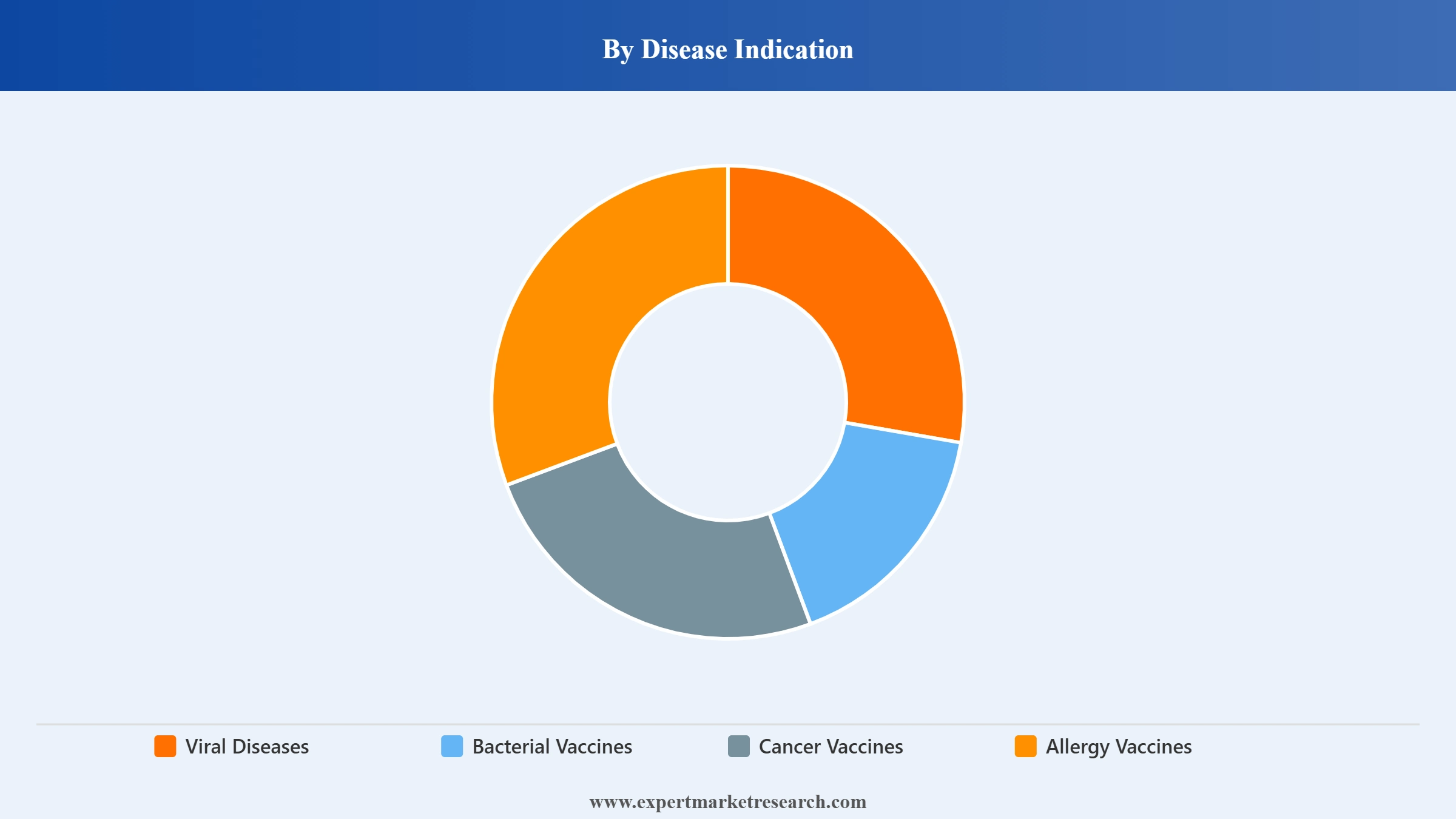
Key Insight: Viral disease vaccines represent the largest disease indication segment in Brazil's vaccine market, with influenza, COVID-19, hepatitis, HPV, and rotavirus vaccines generating the highest combined procurement volumes through the National Immunization Program. Influenza vaccination is conducted annually at scale, creating a recurring and commercially predictable demand cycle for major manufacturers. The addition of dengue and chikungunya vaccines to this segment through recent approvals is expected to significantly expand viral disease vaccine revenue through the forecast period. Bacterial vaccines, including meningococcal conjugate, pneumococcal conjugate, and DPT formulations, represent the second-largest disease indication segment and form core components of Brazil's pediatric immunization schedule. Cancer vaccines, led by HPV formulations targeting cervical cancer prevention, are a growing segment as Brazil expands HPV vaccine eligibility to both male and female adolescents.
Market Breakup by Age
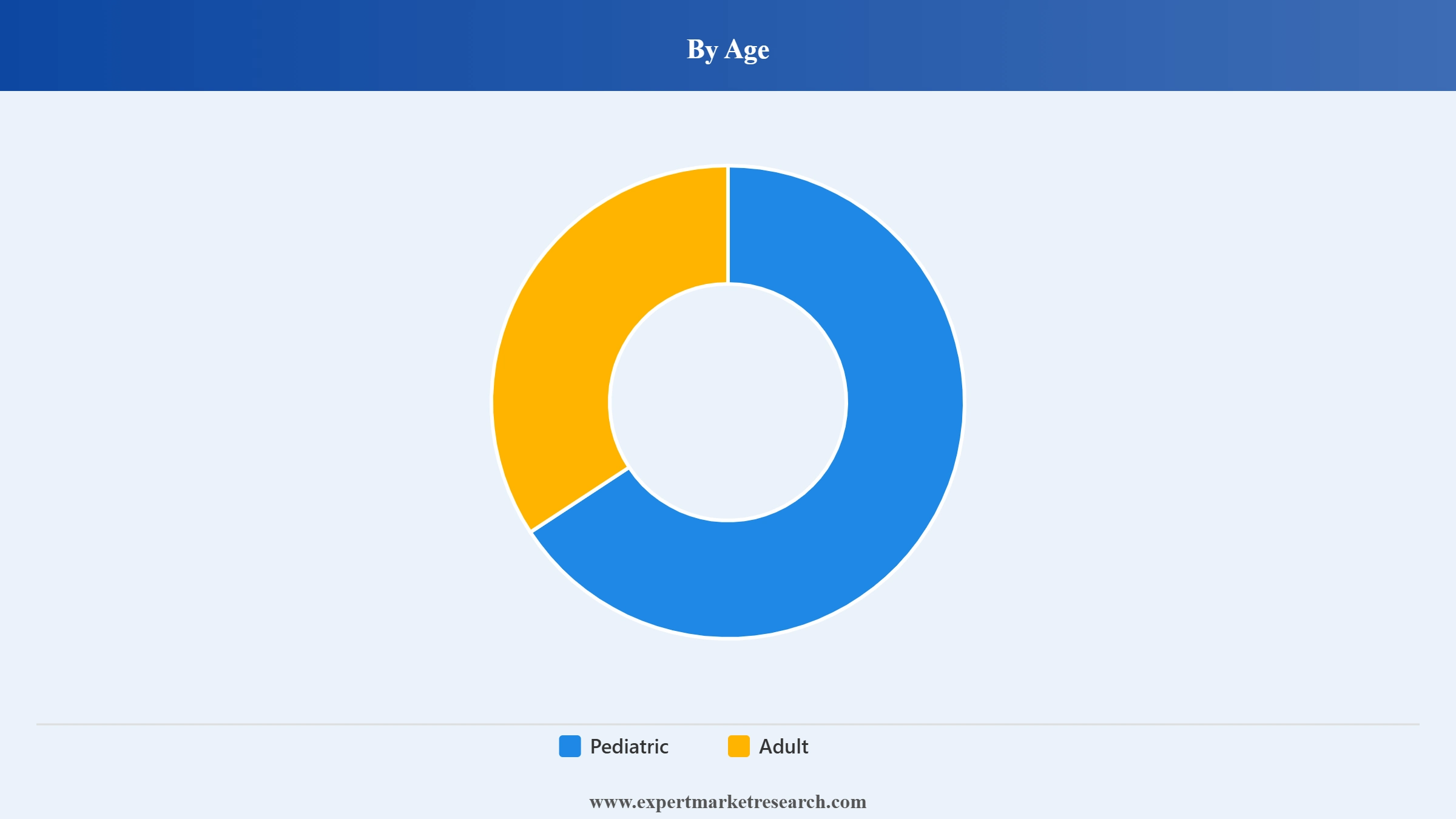
Key Insight: Pediatric vaccines have historically formed the foundation of Brazil's vaccine market, anchored by the PNI's comprehensive and freely accessible childhood immunization schedule that delivers some of the highest coverage rates in Latin America. However, adult vaccination is now the fastest-growing age segment, driven by expanding eligibility for influenza, pneumococcal, herpes zoster, and HPV vaccines and by growing consumer awareness of adult immunization needs. Brazil's rapidly ageing population is creating sustained demand for vaccines targeting senior citizens, with manufacturers developing specific senior-formulation influenza vaccines and expanded shingles prevention products to address this demographic. The growth in adult vaccination represents a structural commercial opportunity for global vaccine manufacturers who can differentiate on efficacy, convenience, and health economic value propositions beyond the pediatric government tender market.
Market Breakup by End User
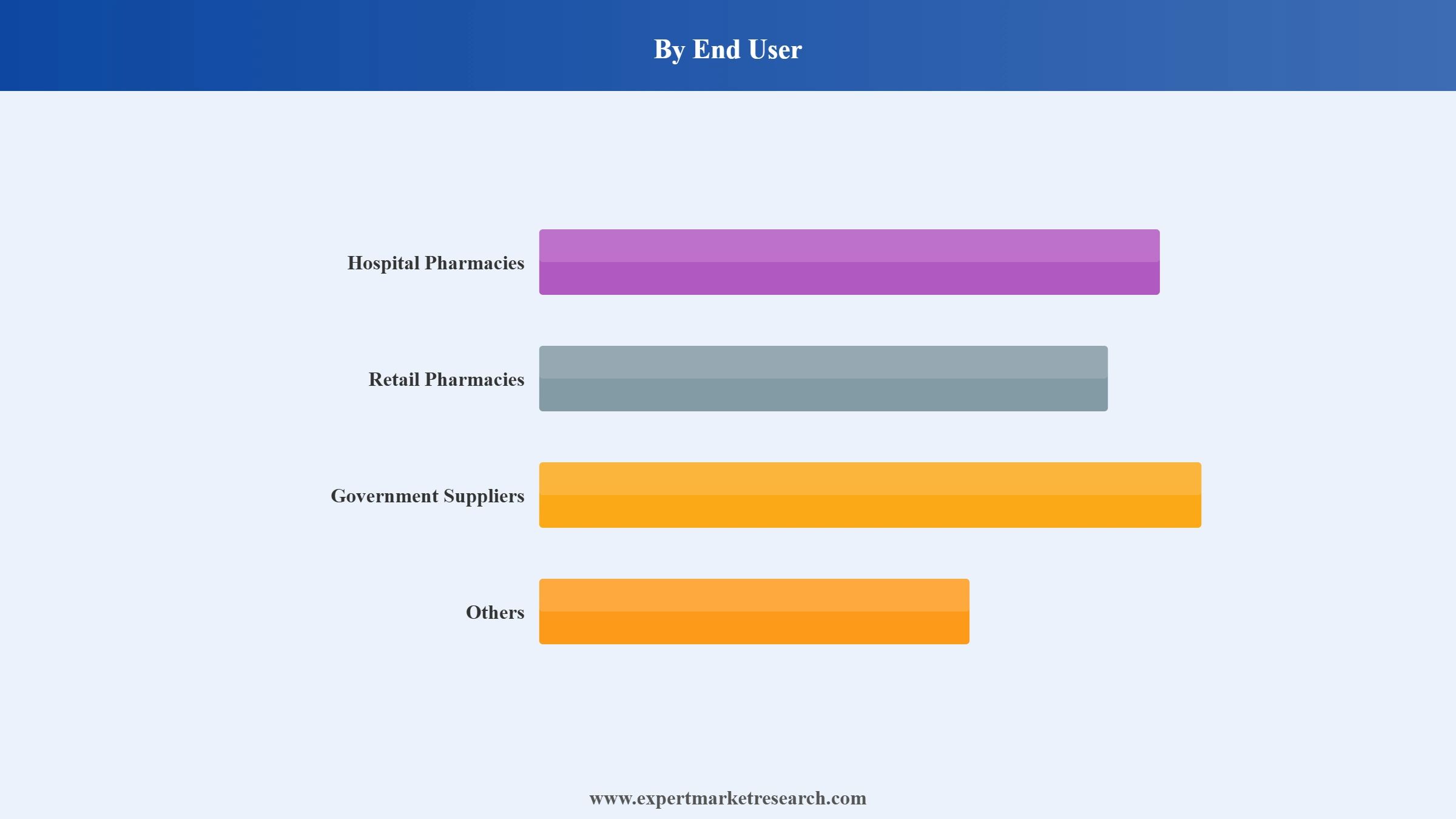
Key Insight: Government suppliers represent the dominant end-user segment in Brazil's vaccine market, reflecting the National Immunization Program's centralized procurement of vaccines for free universal distribution through public health clinics and campaigns. The PNI is one of the most sophisticated public vaccine procurement systems globally, purchasing at scale from both international manufacturers and domestic producers through long-term supply agreements. Hospital pharmacies serve a secondary role for specialty vaccines administered in clinical settings, including cancer vaccines, travel vaccines, and new specialty formulations. Retail pharmacies are a growing commercial channel as adult and private market vaccine demand rises, with pharmacy chains including Drogasil and Drogaria Sao Paulo expanding their vaccination services to capitalize on growing consumer interest in self-directed immunization beyond public program schedules.
Read more about this report - REQUEST FREE SAMPLE COPY IN PDF
By Product Type
Multivalent vaccines command the dominant product market share in Brazil's vaccine industry, reflecting their central role in the PNI's pediatric immunization schedule where combination vaccines minimize injection burden while maximizing protection per visit. Brazil's population of approximately 215 million and its geographically complex healthcare delivery system make the efficiency of multivalent formulations particularly valuable from both a public health and logistics standpoint. Monovalent vaccines hold a significant secondary position for targeted single-disease campaigns, most notably seasonal influenza programs that generate reliable annual demand from both government and private market channels. The complementary relationship between these two product types ensures that both segments maintain substantial commercial relevance throughout the forecast period.
Read more about this report - REQUEST FREE SAMPLE COPY IN PDF
By Disease Indication
Viral disease vaccines account for the largest share of Brazil's vaccine market by revenue, driven by the broad scope and high frequency of viral disease immunization campaigns under the PNI and through private vaccination services. Influenza vaccines generate the highest annual recurring procurement volumes due to the annual campaign structure, while COVID-19 booster demand continues to contribute meaningfully to viral vaccine revenue. The addition of dengue and chikungunya to the viral disease vaccine portfolio following ANVISA's recent approvals represents the most commercially significant disease indication expansion in recent years. Bacterial vaccines, including pneumococcal conjugate and meningococcal formulations, hold the second-largest disease indication share, with DPT combination vaccines forming a cornerstone of pediatric immunization.
Read more about this report - REQUEST FREE SAMPLE COPY IN PDF
By Age
Pediatric vaccines retain the largest age-segment share by volume in Brazil's vaccine market, supported by the PNI's world-class childhood immunization program that covers vaccines from birth through adolescence. Brazil's consistent investment in pediatric coverage has achieved some of the highest childhood vaccination rates in Latin America. Adults are the fastest-growing age segment, as policy expansion and rising consumer awareness of adult immunization needs create demand that was historically captured only partially by influenza campaigns. Senior citizens represent a strategically important sub-segment given Brazil's ageing demographic trajectory, with dedicated products for herpes zoster prevention and high-dose influenza formulations gaining commercial traction in the private clinic and retail pharmacy channels.
Read more about this report - REQUEST FREE SAMPLE COPY IN PDF
By End User
Government suppliers dominate the Brazil vaccine market end-user landscape by a substantial margin, reflecting the PNI's centralized, government-funded procurement model that provides universal free access to vaccines across Brazil's healthcare network. The scale of government procurement gives the Ministry of Health significant price leverage with both domestic and international vaccine manufacturers. Retail pharmacies represent the most dynamic growth channel in the end-user segment, as Brazil's expanding network of private vaccination services in pharmacy settings captures rising demand from adult and senior consumers who seek vaccines outside the public program, including travel vaccines, premium influenza formulations, and recently approved dengue and chikungunya products. Hospital pharmacies serve specialty and high-complexity vaccine administration needs within institutional healthcare settings.
Read more about this report - REQUEST FREE SAMPLE COPY IN PDF
Brazil's vaccine market is shaped by a combination of global multinational manufacturers supplying through international procurement contracts and domestic producers who leverage government partnerships and technology transfer agreements. The National Immunization Program's centralized procurement model creates structured tendering processes where both price competitiveness and supply reliability are critical. Leading global players including GlaxoSmithKline, Pfizer, Sanofi, Merck, and AstraZeneca maintain significant positions in Brazil through both PNI tender participation and private market commercial activities.
The competitive dynamic is uniquely shaped by Brazil's domestic production ambitions. Instituto Butantan and Fiocruz operate as quasi-commercial public institutions producing vaccines for the PNI at preferential pricing, creating a hybrid competitive landscape where public manufacturers and private multinationals coexist. The government's push for self-sufficiency in dengue and other tropical disease vaccines is expected to accelerate domestic production, potentially displacing some international suppliers from government channels while creating technology transfer and manufacturing partnership opportunities. ANVISA's evolving regulatory framework for innovative vaccine modalities including mRNA platforms is a key variable shaping the competitive environment for next-generation vaccine developers.
GlaxoSmithKline plc (GSK), founded in 2000 through the merger of Glaxo Wellcome and SmithKline Beecham and headquartered in London, United Kingdom, is one of the world's leading vaccine manufacturers with a significant and long-standing presence in Brazil. GSK's Brazilian vaccine portfolio spans meningococcal conjugate vaccines, rotavirus vaccines, HPV vaccines, and respiratory syncytial virus products, many of which are procured under PNI supply agreements. GSK operates local regulatory affairs and commercial infrastructure in Brazil and participates in public health partnerships supporting immunization program expansion. The company's ongoing investment in next-generation vaccines and its established relationship with ANVISA through multiple approved products reinforce its competitive standing in Brazil's vaccine market.
Merck and Co. (known as MSD outside North America), founded in 1891 and headquartered in Rahway, New Jersey, USA, maintains a strong competitive position in Brazil's vaccine market through its HPV (Gardasil), pneumococcal, and varicella vaccine portfolios. Merck's HPV vaccines are incorporated into Brazil's national adolescent immunization program, generating recurring government procurement revenue. The company's vaccines division is supported by established local distribution infrastructure, regulatory compliance capabilities, and ongoing clinical research activity in Brazilian institutions. Merck's pipeline of innovative vaccines, including its investigational dengue and mRNA-based products, positions the company to capture emerging disease indication opportunities in Brazil's expanding vaccination landscape.
Sanofi, founded in 1973 and headquartered in Paris, France, operates one of the broadest vaccine portfolios in Brazil, spanning influenza (including high-dose senior formulations), polio, meningococcal, and combination pediatric vaccines. Sanofi's influenza vaccines generate significant annual procurement volumes under Brazil's national influenza campaign, the largest single annual vaccine distribution event in the country. The company's local manufacturing presence and long-standing relationship with Brazilian health authorities through decades of PNI participation give it strong institutional standing. Sanofi's pipeline of dengue vaccines (Dengvaxia is already approved though restricted) and ongoing research in respiratory and oncology vaccines position it for continued relevance as Brazil expands its disease indication landscape.
Pfizer Inc., founded in 1849 and headquartered in New York, USA, has a prominent position in Brazil's vaccine market anchored by its Prevenar pneumococcal conjugate vaccine, which is included in the PNI's pediatric immunization schedule, and its COVID-19 mRNA vaccine, which was procured at scale by the Brazilian government. Pfizer's local commercial operations in Brazil span government tenders, private clinics, and pharmacy vaccination services. The company's mRNA platform capability is particularly strategically significant in Brazil, where the government is actively investing in building domestic mRNA manufacturing competence through technology transfer discussions with global manufacturers including Pfizer. Pfizer's broad portfolio and regulatory track record with ANVISA make it one of the most commercially versatile vaccine suppliers in the Brazilian market.
Other key players in the market are AstraZeneca plc, Johnson and Johnson Services Inc., CSL Behring, and Others.
*Please note that this is only a partial list; the complete list of key players is available in the full report. Additionally, the list of key players can be customized to better suit your needs.*
Explore the Brazil Vaccine Market in depth with our comprehensive 2026 research report. Whether you are tracking the regulatory pipeline for tropical disease vaccines, benchmarking global manufacturers competing in PNI tenders, or evaluating the commercial potential of adult immunization programs, this report provides the granular intelligence you need. From mRNA technology adoption to Brazil's domestic production ambitions, every major market force is analyzed and quantified. Download your free sample today and gain the insight needed to compete and grow in Brazil's expanding vaccine market.


Upto 15% Off
USD
$1999 $1799
$3099 $2789
$4599 $3909
$5999 $5099


*While we strive to always give you current and accurate information, the numbers depicted on the website are indicative and may differ from the actual numbers in the main report. At Expert Market Research, we aim to bring you the latest insights and trends in the market. Using our analyses and forecasts, stakeholders can understand the market dynamics, navigate challenges, and capitalize on opportunities to make data-driven strategic decisions.*
Explore our key highlights of the report and gain a concise overview of key findings, trends, and actionable insights that will empower your strategic decisions.
| REPORT FEATURES | DETAILS |
| Base Year | 2025 |
| Historical Period | 2019-2025 |
| Forecast Period | 2026-2035 |
| Scope of the Report |
Historical and Forecast Trends, Industry Drivers and Constraints, Historical and Forecast Market Analysis by Segment:
|
| Breakup by Product Type |
|
| Breakup by Type |
|
| Breakup by Route of Administration |
|
| Breakup by Disease Indication |
|
| Breakup by Age |
|
| Breakup by End User |
|
| Market Dynamics |
|
| Supplier Landscape |
|
| Companies Covered |
|
Datasheet
One User
USD 1,999
USD 1,799
tax inclusive*
Single User License
One User
USD 3,099
USD 2,789
tax inclusive*
Five User License
Five User
USD 4,599
USD 3,909
tax inclusive*
Corporate License
Unlimited Users
USD 5,999
USD 5,099
tax inclusive*
*Please note that the prices mentioned below are starting prices for each bundle type. Kindly contact our team for further details.*
Flash Bundle
Small Business Bundle
Growth Bundle
Enterprise Bundle
*Please note that the prices mentioned below are starting prices for each bundle type. Kindly contact our team for further details.*
Flash Bundle
Number of Reports: 3
20%
tax inclusive*
Small Business Bundle
Number of Reports: 5
25%
tax inclusive*
Growth Bundle
Number of Reports: 8
30%
tax inclusive*
Enterprise Bundle
Number of Reports: 10
35%
tax inclusive*
How To Order

Select License Type
Choose the right license for your needs and access rights.

Click on ‘Buy Now’
Add the report to your cart with one click and proceed to register.

Select Mode of Payment
Choose a payment option for a secure checkout. You will be redirected accordingly.
Strategic Solutions for Informed Decision-Making
Gain insights to stay ahead and seize opportunities.

Get insights & trends for a competitive edge.

Track prices with detailed trend reports.

Analyse trade data for supply chain insights.

Leverage cost reports for smart savings

Enhance supply chain with partnerships.

Connect For More Information
Our expert team of analysts will offer full support and resolve any queries regarding the report, before and after the purchase.
Our expert team of analysts will offer full support and resolve any queries regarding the report, before and after the purchase.
We employ meticulous research methods, blending advanced analytics and expert insights to deliver accurate, actionable industry intelligence, staying ahead of competitors.
Our skilled analysts offer unparalleled competitive advantage with detailed insights on current and emerging markets, ensuring your strategic edge.
We offer an in-depth yet simplified presentation of industry insights and analysis to meet your specific requirements effectively.




