

Consumer Insights
Uncover trends and behaviors shaping consumer choices today
Procurement Insights
Optimize your sourcing strategy with key market data
Industry Stats
Stay ahead with the latest trends and market analysis.
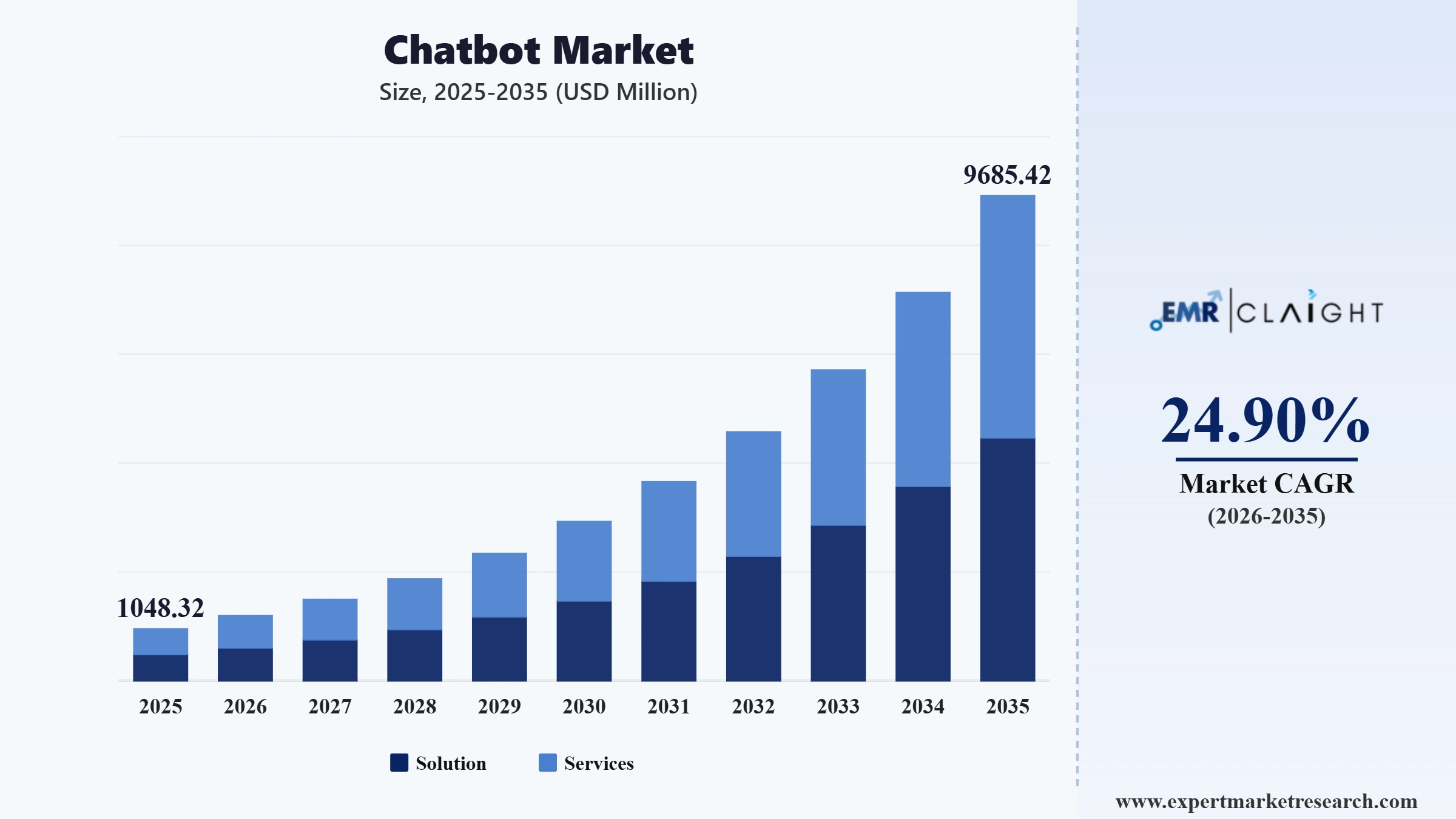
The chatbot market attained a value of USD 1048.32 Million in 2025 and is projected to expand at a CAGR of 24.90% through 2035. The market is further expected to achieve USD 9685.42 Million by 2035. The increasing investments from enterprises in AI-driven employees' assistants in line with ERP, CRM, and productivity systems are making chatbots more popular, as these systems ease the burden of repetitive tasks while enhancing operational decision-making processes throughout the enterprise.
The rising need among enterprises for industry-focused conversational AI technology is pushing chatbot market players to design industry-focused assistants such as those for the banking, healthcare, manufacturing, and legal sectors. This will not only improve the accuracy of responses but will also make sure that chatbots adhere to the regulations within the industry. At the same time, the collaboration between cloud providers and AI solution providers will help deploy retrieval-based chatbot platforms which can access enterprise knowledge base.
The latest trend that is emerging in the chatbot market includes the swift adoption of agentic AI platforms that help perform various business workflows as opposed to the mere provision of answers. For example, in April 2026, OpenAI upgraded its enterprise-level agent services to include productivity and business work-flows, which enables corporations to automate their research, reporting, and customer support functions. Such a trend is an indication of the increasing trust of businesses in conversational AI, and the focus on workflows as opposed to chat interfaces.
The chatbot market is further witnessing continuous evolution as companies transition from experimenting with these tools into deploying enterprise-scale AI assistants that assist in enhancing customer interactions and improving the productivity of employees. There is an observed trend in companies such as financial institutions, hospitals, retailers, manufacturing firms, and tech companies making investments in domain-specific chatbots rather than generic conversational AI platforms. For example, in October 2025, Silverback AI Chatbot launched AI Agents, expanding its platform with autonomous capabilities for enhanced customer interactions. Providers of leading solutions are offering enhanced governance features, multi-language support, compliance controls, and low-code development environment.
Read more about this report - REQUEST FREE SAMPLE COPY IN PDF
| Global Chatbot Market Report Summary | Description | Value |
| Base Year | USD Million | 2025 |
| Historical Period | USD Million | 2019-2025 |
| Forecast Period | USD Million | 2026-2035 |
| Market Size 2025 | USD Million | 1048.32 |
| Market Size 2035 | USD Million | 9685.42 |
| CAGR 2019-2025 | Percentage | XX% |
| CAGR 2026-2035 | Percentage | 24.90% |
| CAGR 2026-2035 - Market by Region | Asia Pacific | 28.7% |
| CAGR 2026-2035 - Market by Country | India | 32.9% |
| CAGR 2026-2035 - Market by Country | China | 27.5% |
| CAGR 2026-2035 - Market by Type | Messenger Based/Third Party | 27.9% |
| CAGR 2026-2035 - Market by End Use | Banking Financial Services and Insurance (BFSI) | 28.4% |
| Market Share by Country 2025 | Germany | 4.8% |
The Coimbatore District Police rolled out Kovai Digi Cop, a WhatsApp chatbot that helps citizens receive information from the police, make requests, get safety guidelines, and other emergency contacts through the familiar WhatsApp messaging application. Providers may create sector-specific chatbots that will help deliver public service information, handle requests, and provide emergency assistance using WhatsApp, leveraging such trends in the chatbot market.
The retail chain Woolworths decided to take its Everyday chatbot to the next level by converting it into an agentic loyalty assistant. This move indicated the transition from handling basic customer inquiries to more complex operations such as AI-based shopping experience and loyalty management. Chatbot market players may use WhatsApp to create agentic solutions for retail.
NewsGuard created NewsGuard AI, a chatbot specialized in the field of news, which uses data from 12,000 publishers that have been validated for reliability, cites its sources prominently, and includes editorial filters to combat misinformation. Software developers can distinguish themselves by creating application domain-specific chatbots with verified knowledge base, source identification, fact-checking facility, and protections for information-related applications.
The Indian government launched an AI-powered, voice-enabled multilingual chatbot named Samadhan Didi, which enables people to submit their complaints using natural language, and automatically recognizes them and routes them to the relevant authorities. Technology companies can focus on developing multilingual voice chatbots, having the ability to classify and route complaints to service management systems.
Agents powered by AI are transforming the chatbot market through the processing of complex customer queries, workflows execution, and enterprise knowledge acquisition without constant human intervention. Agentic chatbots can perform multistep business processes on CRM, ERP, and collaboration platforms. In October 2024, Microsoft augmented Copilot's capabilities by introducing autonomous AI agents within Microsoft 365, allowing organizations to automate procurement, customer support, and onboarding of employees. In parallel, Salesforce is augmenting the functionality of Agentforce to create AI agents for sales and service. The United States' National AI Research Resource initiative remains active and encourages the development and implementation of trusted AI innovations for enterprises.
Companies are increasingly focusing on the development of domain-specific chatbots with training enterprise data rather than conversational assistants, accelerating the chatbot market value. In healthcare, banking, insurance, manufacturing, and legal sectors, reasoning and terminology that is compliant with industry regulations is required to ensure accuracy of operations. In September 2024, Oracle enhanced AI functions within Oracle Fusion Cloud Applications by including finance, procurement, and human capital management assistants into Oracle's suite of applications.
Retrieval Augmented Generation (RAG) is a popular emerging trend in the chatbot market as companies prefer chatbot responses based on their internal documentation instead of using information from public Internet sources. Companies are using chatbots with enterprise knowledge bases, technical documentation, compliance libraries, and customer databases to get more precise answers and reduce hallucinations. In November 2023, Google Cloud extended the Vertex AI Search and Conversation functions for developing enterprise chatbots with proprietary data sets. AWS is also improving Amazon Bedrock to integrate enterprise knowledge into the platform. On the other hand, in August 2026, IotaBot launched an AI-powered customer support platform combining chatbots, human-agent handoff, ticketing, and file storage.
The chatbot platforms are becoming capable of going far beyond textual interaction with customers as multimodal AI helps companies use voice recognition, image recognition, document understanding, and video analysis in enterprise workflows. Multimodal conversational AI can help automate technical support, insurance claims handling, manufacturing control, and customer onboarding using different content types. For example, Google added the capability to use multimodal AI within Gemini-powered enterprise capabilities in July 2026 that allowed companies to perform document, presentation, and image analysis in conversational interfaces. In addition, OpenAI is improving multimodal enterprise assistants for document understanding and visual reasoning, redefining the chatbot market trends.
As the use of chatbots becomes more widespread within tightly regulated industries, companies are giving equal consideration to governance, transparency, and security, in addition to conversational effectiveness. Explainability, logging, identity management, and data residency are increasingly being required before enterprise-wide deployment, thereby accelerating the chatbot market opportunities. IBM is growing the capabilities of watsonx governance to assist enterprises with tracking risks, biases, and regulations related to AI during the lifetime of the chatbot. Similar advancements are being made at Microsoft and Google regarding their enterprise governance of generative AI. In August 2026, Gupshup advanced enterprise AI orchestration, connecting AI agents with business systems, workflows, and customer journeys.
The EMR’s report titled “Chatbot Market Report and Forecast 2026-2035” offers a detailed analysis of the market based on the following segments:
Market Breakup by Offering
Key Insight: The chatbot market is recording balanced growth in both categories. Platforms form the biggest share of the market, since companies are in need of technology that will help them achieve automation on a company-wide scale, engage intelligently with customers, and integrate with software. On the other hand, services are continuing to grow rapidly, since there is a need for expert deployment, AI governance, workflows customization, optimization, and support in order to ensure maximum benefit from using chatbots.
Market Breakup by Type
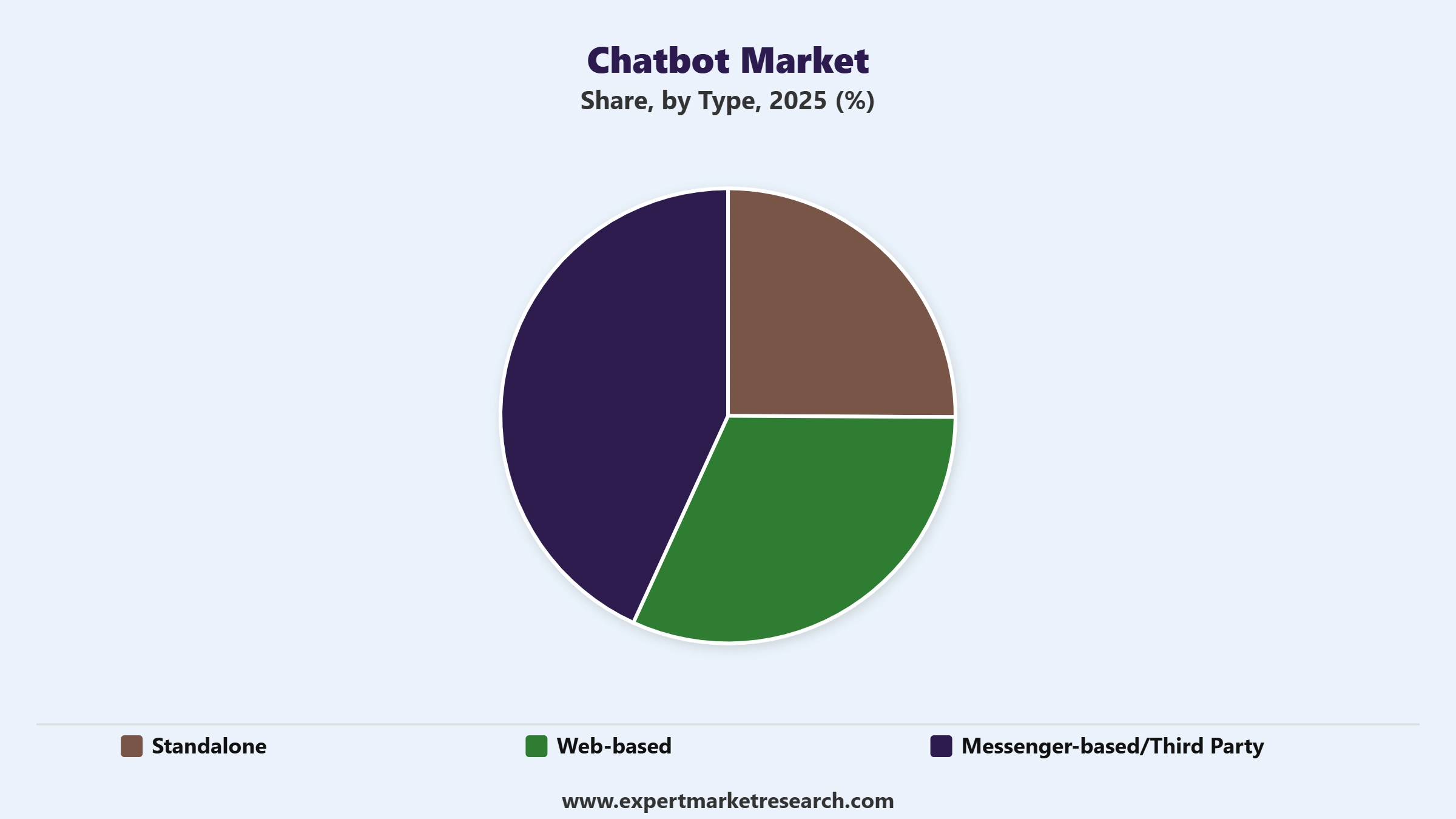
Key Insight: The chatbot market includes standalone, web-based, and messaging-based software that meets the various needs of enterprises. The web-based option is positioned at the forefront due to its ability to provide centralized deployment, scalable enterprise management, and digital transformation. Standalone chatbots are useful for those enterprises that require internal applications. Messenger-based chatbots boast the highest growth rate since they allow enterprises to communicate with customers using popular channels, while at the same time engaging and making it more accessible.
Market Breakup by Medium
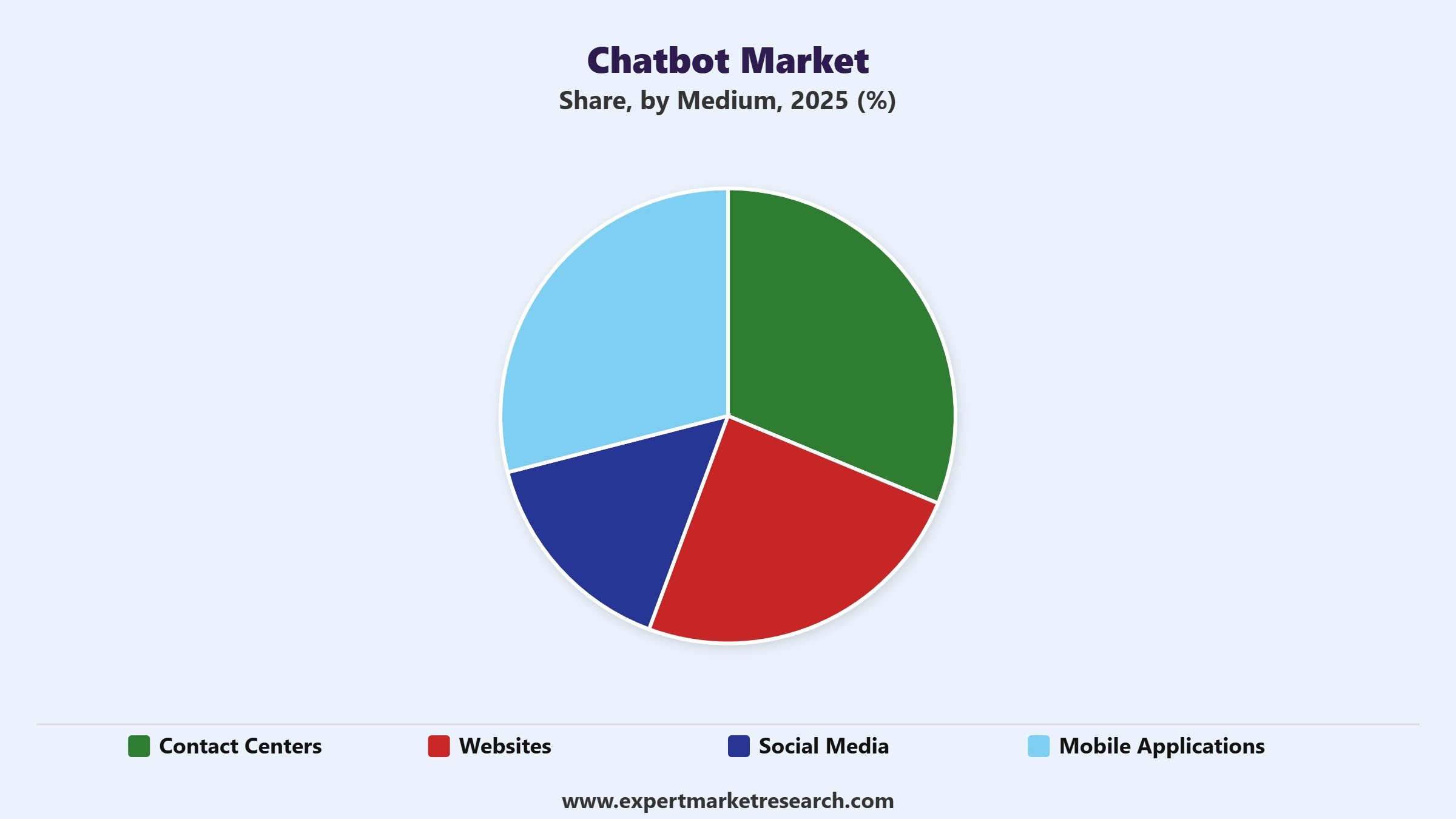
Key Insight: Chatbots can be deployed on several mediums of communication, catering to varied approaches for engaging customers. Websites hold a dominant position across the chatbot market scope due to their continued role as the most important digital means of customer engagement and business communication. The contact center is making use of AI for automation of repetitive questions while increasing the productivity of agents. In August 2024, Sobot announced an upgraded AI agent, enhancing customer service automation with improved intelligence, efficiency, and interaction capabilities. Social media channels help build stronger relationships through conversational marketing and community management. Mobile apps emerge as the quickest growing medium of chatbot deployment due to personalized and available experiences offered by them.
Market Breakup by Business Function
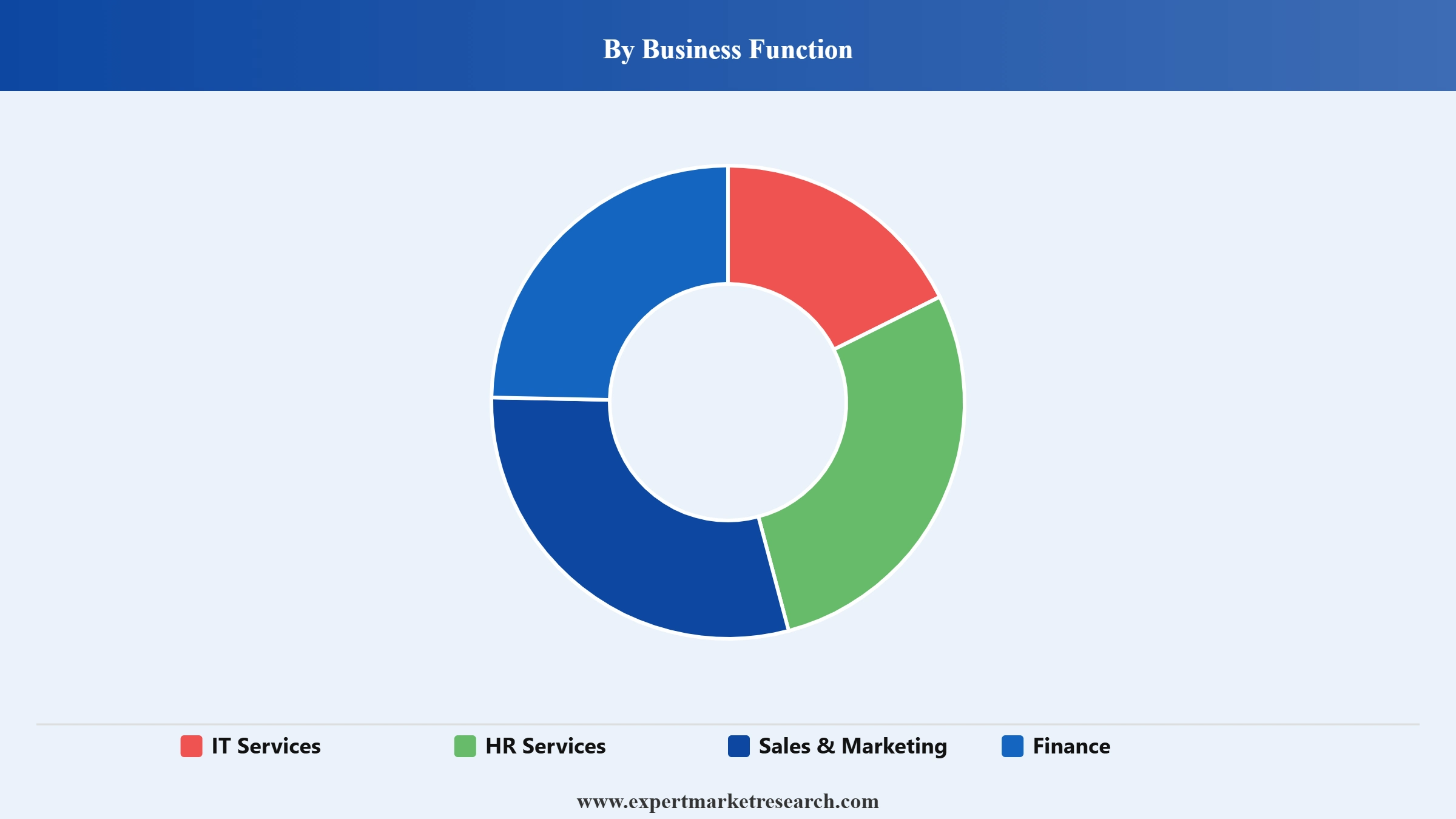
Key Insight: Chatbots are progressively helping all key business processes via automation. Sales and marketing are the dominant applications due to the importance that is being placed on customer acquisition and revenue generation. Conversational AI is used by IT services for helpdesk operations and IT service management, accelerating the chatbot market growth. In November 2025, Aetna launched generative AI-powered conversational navigation, personalizing healthcare guidance across digital channels for members. HR functions enhance the experience of employees through the use of automated chatbots. The finance function is progressively relying on chatbots for inquiries, reporting needs, and internal operations. All business processes benefit from increased efficiency, faster access to information, decreased workload, and better decision-making.
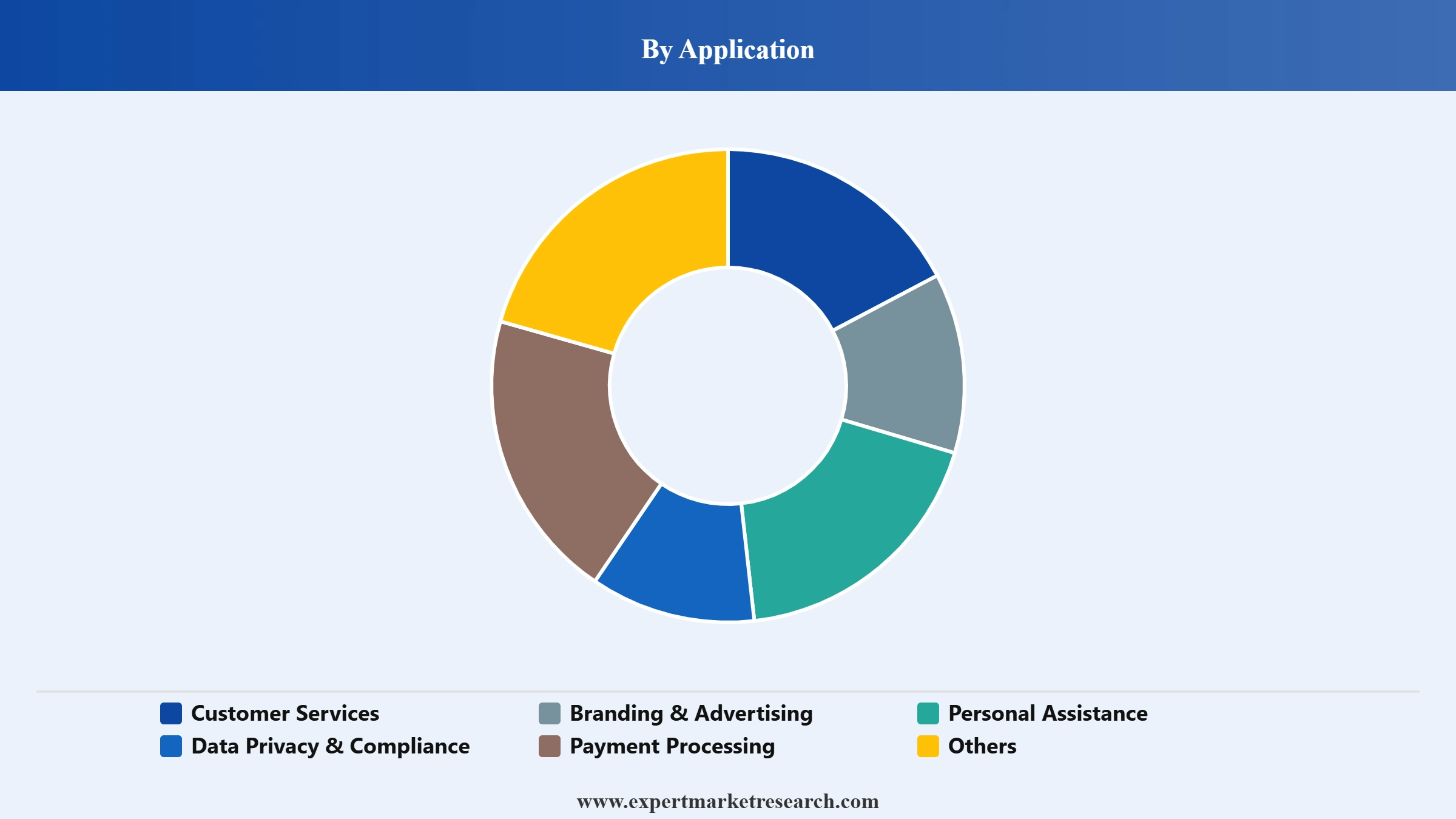
Market Breakup by Application
Key Insight: As per the chatbot market report, there are numerous enterprise-level applications served by chatbot technology aside from customer engagement. The need for scalable and intelligent support that would help increase customer satisfaction while lowering service costs is the reason why customer service is the most dominant. Branding and advertisement take advantage of conversational AI to make personalized marketing campaigns and build strong relationships with their customers. Intelligent task management increases productivity at work, and data privacy and compliance applications are gaining popularity at the fastest pace due to increased expectations for regulations.
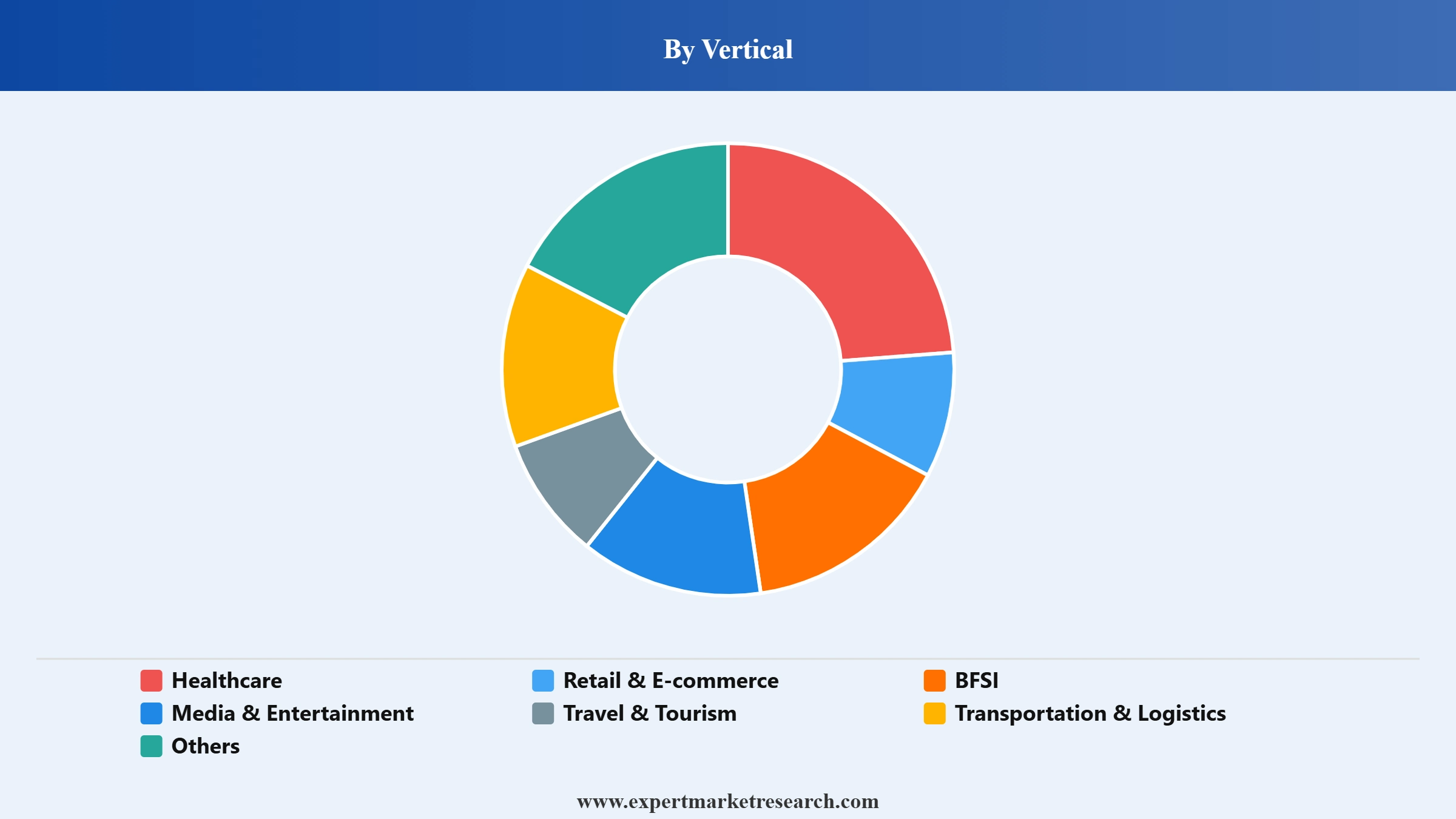
Market Breakup by Vertical
Key Insight: The use of chatbots is continuing to increase in different industries based on operational needs. The retail and ecommerce sector leads the market with better digital experiences and business results. The BFSI industry uses chatbots for providing security and customer service solutions in addition to financial services. The healthcare industry is growing at the highest pace by using chatbots to interact with patients and automate administrative functions, boosting the chatbot market growth. The media and entertainment sector use chatbots for improving interactions with its audiences, while travel and tourism use chatbots for improving booking experiences.
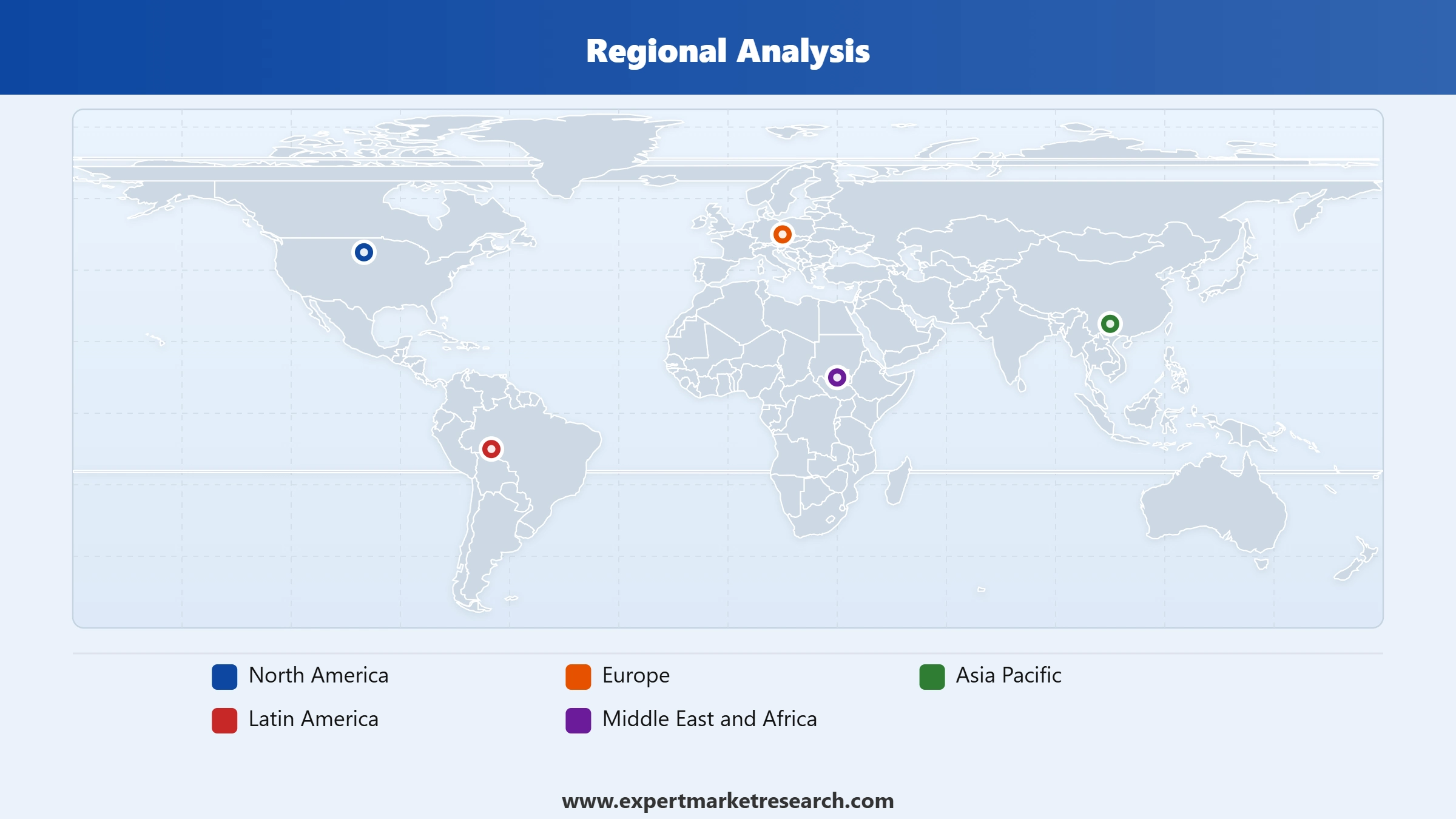
Market Breakup by Region
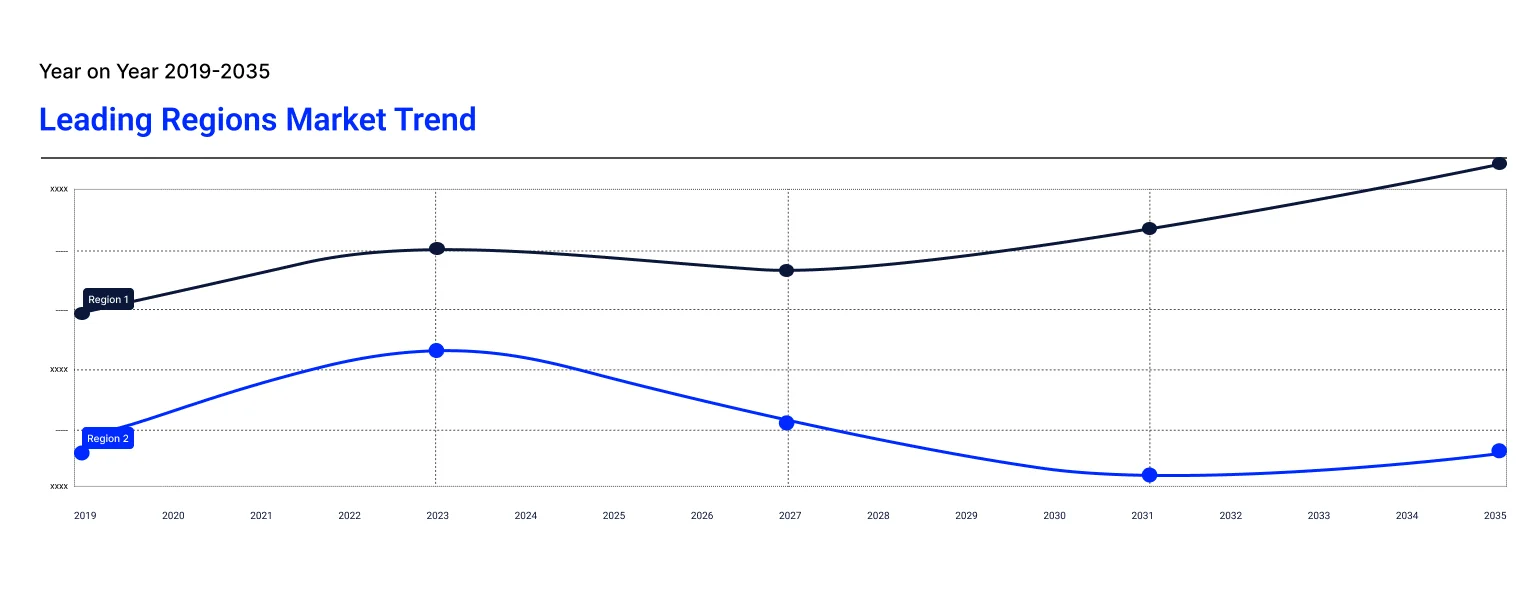
Key Insight: Chatbot market dynamics at a regional level are characterized by different stages of digital maturity and enterprise development. North America leads the field through superior artificial intelligence ecosystems, cloud computing technologies, and innovation in enterprises. Europe focuses on ethical implementation of artificial intelligence, regulation, and security of enterprise applications. Asia Pacific demonstrates the highest growth rate owing to increasing digital transformation and multilingual artificial intelligence as well as state-sponsored innovation. For example, in June 2026, Skyro launched an AI chatbot speaking Filipino and local dialects, automating customer support and improving service accessibility. Latin America is witnessing increasing adoption because of increasing digital engagement of customers, while the Middle East and Africa regions are making progress in implementing artificial intelligence in public sector, fintech, and enterprises.
Read more about this report - REQUEST FREE SAMPLE COPY IN PDF
By offering, solutions dominate the market through enterprise AI platform integration and workflow automation
The solution segment holds a dominant position in the chatbot market owing to increasing demand for scalable conversational AI systems that fit into the ecosystem of CRM, ERP, customer service, and collaboration tools. Enterprises require an all-in-one chatbot solution that includes natural language processing, large language models, analytics, multilingual functionality, and workflow automation. The constant development of chatbots, including AI model optimization, low-code platform, and enterprise-level security also supports their popularity. Providers of the solutions offer services related to various industries and make it easier for companies to deploy chatbots in a short time period. For example, in November 2025, Suffescom Solutions launched next-generation agentic commerce chatbots, enabling autonomous product discovery, personalization, checkout, and order tracking.
The service segment is growing at the fastest pace in the chatbot market scope owing to the need for consulting, customization, implementation, integration, governance, and optimization of the chatbot ecosystem. Companies rely on implementation partners to optimize AI models using their internal data and make sure that they meet the requirements of regulations and cybersecurity standards. The managed services that include model monitoring, prompt engineering, performance optimization, and training of employees are becoming crucial for maintaining the work of chatbots. Demand for enterprise-specific AI strategies makes service providers more relevant.
By type, web-based chatbots lead the market through scalable cloud deployment and accessibility
The web-based chatbot segment records the maximum share in the chatbot market revenue since enterprises seek to deploy their solutions on the cloud, which provides central management as well as easy integration into digital business operations platforms. The web-based chatbots facilitate engagement of customers via company websites, knowledge bases, and enterprise applications without significant infrastructure investments. Enterprises receive simplified maintenance, regular feature updates, and multi-platform support. Enterprise investments in cloud migration, omnichannel customer service, and AI-powered self-service services further fuel the adoption of web-based conversational platforms. In August 2026, Dev Technosys expanded AI chatbot services with secure, intelligent, compliance-focused solutions for modern businesses.
Read more about this report - REQUEST FREE SAMPLE COPY IN PDF
The messenger-based chatbots represent the fastest growing segment with the increasing engagement of customers via communication platforms, widening the chatbot market scope. Enterprises are incorporating conversational AI into their messengers to provide customized recommendations, automated customer service, appointment scheduling, and sales services within a familiar environment. Advanced API integration, authentication features, multilingual support, and AI-driven personalization help in improving customer satisfaction while reducing customer response time. Enterprises can reach wider audiences without compelling them to download any app.
By medium, websites remain the dominant medium through continuous enterprise digital customer engagement
Chatbots on the website continue dominating the chatbot market growth as websites serve as the first place where customers visit when they need to get information, generate leads, receive support, and find new products. Companies use AI assistants to respond instantly to their customers' questions, make personalized suggestions, communicate in different languages, and facilitate self-service. Website chatbots can also be easily integrated into analytics tools, CRM, and e-commerce systems, which help businesses boost conversions and lower their costs.
Read more about this report - REQUEST FREE SAMPLE COPY IN PDF
Mobile application chatbots are growing fast as companies personalize their experiences via smartphones and tablets, accelerating the overall chatbot market revenue growth. Mobile apps of all kinds including banking, retail, healthcare, travel, and enterprise applications are becoming more conversational. Notifications, biometric authentication, geolocation, and voice interactions enhance customers' experience. The increasing number of smartphones and investment into mobile digital experiences keep pushing businesses to develop more conversational interfaces in their applications. For example, in February 2026, Sarvam launched Indus, a 105-billion-parameter AI chatbot tailored for Indian languages and user needs.
By business function, the sales and marketing category dominates the market through AI-powered customer acquisition and revenue generation
The most extensive deployment of chatbots is seen in the sales and marketing function as companies automate lead qualification, customer engagement, product recommendations, campaign personalization, and sales support. Using an AI-based conversational platform helps companies to enhance customer engagement during the process of purchase as well as obtain behavior insights which can be used for making business decisions. The integration of chatbots with CRM software, marketing automation platforms, and customer analytics tools further enhances business decision making. Companies in the chatbot market are increasingly using conversational AI solutions to generate their pipelines, increase conversions, and create personalized customer experience through digital channels. In July 2026, MarketBlazer launched an AI platform delivering comprehensive AI-powered business solutions designed to improve enterprise efficiency and decision-making.
Read more about this report - REQUEST FREE SAMPLE COPY IN PDF
The fastest-growing application of chatbots is HR services as companies are automating their processes of onboarding employees, recruiting candidates, answering policy queries, training employees, administering benefits, and managing knowledge within the organization. Conversational AI allows HR departments to enhance employee experiences and reduce their workloads by providing faster responses. With the increasing number of enterprises implementing digital workplace transformation strategies, they are investing in intelligent chatbots that help them to support their hybrid workforce.
By application, customer services account for the dominant share of the market through continuous AI-powered support and self-service automation
Customer services continue to dominate the chatbot market space as companies strive for round-the-clock customer services, rapid problem resolution, and cost savings. The AI-based chatbots handle large inquiry loads and provide personalization through natural language processing and enterprise knowledge integration. Companies can raise customer satisfaction levels by reducing waiting time and facilitating easy transitions to human agents where needed. Further advancements in the areas of conversational intelligence, multi-language capabilities, and contextual reasoning are making the use of chatbots more appealing in customer service roles. In July 2025, VisionDirect launched a custom-built AI chatbot to enhance customer service, automate support, and deliver scalable personalized interactions.
Read more about this report - REQUEST FREE SAMPLE COPY IN PDF
Data privacy and compliance applications are becoming more common as companies develop governance strategies on AI-driven engagements and reporting, propelling the chatbot market value. Chatbots help employees navigate their way through compliance questions, policies, audits, documentation, and secure access to information. Companies seek AI-based systems that can provide transparency in decision-making while safeguarding their private company data. Increasing regulation needs around the globe are driving companies to adopt chatbots for compliance, cybersecurity, and enterprise risk management.
By vertical, retail and e-commerce secures the leading market share through personalized shopping and customer engagement initiatives
The chatbot market growth is largely supported by retail and e-commerce sectors due to rising demand for personalization of shopping experience, offering product suggestions, managing orders, managing returns, and engaging with customers. AI-based conversation platforms enable retailers to enhance the experience of their customers, improve conversion rates, and boost efficiency. Integration of the platform with inventory management, payments, and loyalty programs improves the performance of the business. Continuous growth of omnichannel commerce and digital retailing strengthens the investments in chatbots by global retail companies. In June 2026, Google partnered with Walmart and other retailers to enable in-chat shopping through its Gemini AI chatbot platform.
Read more about this report - REQUEST FREE SAMPLE COPY IN PDF
Conversational AI investments in the healthcare sector are growing at the fastest pace since the hospitals, insurers, and healthcare organizations are automating the process of scheduling appointments, advising on symptoms, reminding patients of appointments, answering insurance questions, and administration support. Conversational platforms ease the workload of the staff and improve the accessibility of the patients, thereby propelling demand in the chatbot market. Healthcare organizations also make use of enterprise chatbots for documenting clinical information, managing knowledge, and coordinating operations.
Read more about this report - REQUEST FREE SAMPLE COPY IN PDF
North America clocks in the dominant share of the market through advanced AI innovation and strong enterprise technology investments
North America is the biggest region in terms of share in the chatbot market owing to early adoption of generative AI among enterprises, cloud ecosystems, and heavy investments by leading technology firms. Enterprises from sectors like healthcare, financial services, retail, and manufacturing are leveraging advanced conversational AI solutions to improve customer engagement and automate processes. The development of digital ecosystems, ongoing AI innovations, and widespread enterprise software implementation are further helping this region maintain its leadership position and driving adoption of next-gen intelligent chatbots. In May 2025, Palm Beach launched Ask Poli, an AI chatbot providing 24/7 multilingual assistance and simplifying access to municipal information.
Asia Pacific is currently the fastest growing chatbot market due to the adoption of AI and digitization by governments and enterprises and cloud transformation programs. The quick growth of digital commerce, fintech, telecom, and manufacturing automation is resulting in high demand for multilingual chatbots. Enterprises are making investments in regional language-specific AI models. Further growth in technology ecosystems, rising startup investments, and AI policies from governments are expected to drive enterprise chatbot adoption in Asia Pacific.
There is an increasing competition in the market as chatbot companies are shifting from creating conversational products to building enterprise AI platforms for decision making and autonomous workflow execution. Major players in the market are focusing on agentic AI, multimodal interactions, retrieval-augmented generation, and specialized language models to enhance productivity and customer engagements in enterprises.
Leading chatbot market players are establishing strategic collaborations with cloud platforms, CRM systems, and cybersecurity firms to develop secure AI applications. Another major trend is responsible AI, which involves the inclusion of governance, explainability, and compliance features in AI solutions to keep up with regulations. There is a huge potential in health care, financial services, manufacturing, logistics, and government sectors, as enterprises need specialized conversational AI with integration with proprietary knowledge bases.
Headquartered in San Jose, California, United States, and founded in 2000, [24]7.ai is an organization that provides conversational AI technologies that help enterprises enhance their customer experiences in voice and digital channels. The company is known to develop products that focus on predictive customer engagement, intelligent virtual agents, and contact center automation. Additionally, [24]7.ai improves its conversational AI with enterprise integrations and analytics to help organizations increase their efficiency.
Founded in 2012 and having its headquarters in Argentina, Aivo LLC provides conversational platforms that use AI technologies to automate customer service, sales, and employee engagement processes. The organization uses AI technologies to generate chatbots that help businesses deliver services and communicate with customers in multiple languages through various channels. Industries served by Aivo include banking, telecommunications, retail, and insurance.
Founded in 2001 and based in Sweden, Artificial Solutions International AB provides advanced enterprise conversational artificial intelligence solutions to regulated industries. The company helps businesses to develop highly intelligent virtual assistants with sophisticated natural language processing and multilingual features. Its technology solution helps banking, healthcare, insurance, and telecommunication companies to deliver secure and customizable conversations that are integrated with enterprise business systems.
Founded in 2016 and based in Pakistan, Botsify Inc. is a no-code chatbot development software for businesses to quickly deploy conversational artificial intelligence solutions. The company helps businesses create artificial intelligence assistants for their website, messaging apps, and customer support services without any programming knowledge. Botsify is continuously adding more automation possibilities with generative AI, workflows, multilingual, and education-oriented conversation solutions.
Other key players in the market include Creative Virtual Private Limited, Inbenta Technologies Inc., IBM Corporation, eGain Corporation, Acuvate, Next IT Corp., and Nuance Communications, Inc., among others.
*Please note that this is only a partial list; the complete list of key players is available in the full report. Additionally, the list of key players can be customized to better suit your needs.*
Unlock the latest insights with our chatbot market trends 2026 report. Discover regional growth patterns, consumer preferences, and key industry players. Stay ahead of competition with trusted data and expert analysis. Download your free sample report today and drive informed decisions in the market.


Upto 15% Off
USD
$2499 $2249
$3999 $3599
$4999 $4249
$5999 $5099


*While we strive to always give you current and accurate information, the numbers depicted on the website are indicative and may differ from the actual numbers in the main report. At Expert Market Research, we aim to bring you the latest insights and trends in the market. Using our analyses and forecasts, stakeholders can understand the market dynamics, navigate challenges, and capitalize on opportunities to make data-driven strategic decisions.*
In 2025, the market reached an approximate value of USD 1048.32 Million.
The market is projected to grow at a CAGR of 24.90% between 2026 and 2035.
Stakeholders are prioritizing industry-specific AI platforms, expanding cloud partnerships, strengthening governance frameworks, integrating proprietary enterprise data, enhancing multilingual capabilities, and investing in autonomous conversational agents for sustainable business growth.
The increasing development in artificial intelligence and the rapid technological advancements are the key trends guiding the market growth.
The major regions in the market are North America, Latin America, the Middle East and Africa, Europe, and the Asia Pacific.
The significant types of chatbot are standalone, web based, and messenger based/third party.
Solution, and Services are the various offering of chatbot considered in the market report.
The major applications of the product include Customer Services, Branding & Advertising, Personal Assistance, Data Privacy & Compliance, and Payment Processing, among others.
The different Vertical of chatbot include healthcare, retail, banking financial services and insurance (BFSI), media and entertainment, travel and tourism, and transportation & logistics, among others.
The key players in the market report include [24]7.ai, Inc, Aivo LLC, Artificial Solutions International AB, Botsify Inc., Creative Virtual Private Limited, Inbenta Technologies Inc., IBM Corporation, eGain Corporation, Acuvate, Next IT Corp., and Nuance Communications, Inc., among others.
The market is estimated to witness a healthy growth in the forecast period of 2026-2035 to reach USD 9685.42 Million by 2035.
The retail & e-commerce segment dominated the global chatbot market.
The standalone segment led the global chatbot market.
The customer services segment dominated the global chatbot market.
United Kingdom, Germany, France, and Italy, among others are considered in the European region.
North America is the fastest growing region due to the use of chatbots in sectors like finance and banking.
Fresh mushrooms remain the dominant form in the market due to high consumer preference for minimally processed, nutritious food.
Companies face challenges including AI hallucinations, enterprise data security concerns, regulatory compliance, multilingual accuracy, rising infrastructure costs, integration complexity, and maintaining customer trust while scaling autonomous conversational AI globally.
Explore our key highlights of the report and gain a concise overview of key findings, trends, and actionable insights that will empower your strategic decisions.
| REPORT FEATURES | DETAILS |
| Base Year | 2025 |
| Historical Period | 2019-2025 |
| Forecast Period | 2026-2035 |
| Scope of the Report |
Historical and Forecast Trends, Industry Drivers and Constraints, Historical and Forecast Market Analysis by Segment:
|
| Breakup by Offering |
|
| Breakup by Type |
|
| Breakup by Medium |
|
| Breakup by Business Function |
|
| Breakup by Application |
|
| Breakup by Vertical |
|
| Breakup by Region |
|
| Market Dynamics |
|
| Competitive Landscape |
|
| Companies Covered |
|
Datasheet
One User
USD 2,499
USD 2,249
tax inclusive*
Single User License
One User
USD 3,999
USD 3,599
tax inclusive*
Five User License
Five User
USD 4,999
USD 4,249
tax inclusive*
Corporate License
Unlimited Users
USD 5,999
USD 5,099
tax inclusive*
*Please note that the prices mentioned below are starting prices for each bundle type. Kindly contact our team for further details.*
Flash Bundle
Small Business Bundle
Growth Bundle
Enterprise Bundle
*Please note that the prices mentioned below are starting prices for each bundle type. Kindly contact our team for further details.*
Flash Bundle
Number of Reports: 3
20%
tax inclusive*
Small Business Bundle
Number of Reports: 5
25%
tax inclusive*
Growth Bundle
Number of Reports: 8
30%
tax inclusive*
Enterprise Bundle
Number of Reports: 10
35%
tax inclusive*
How To Order

Select License Type
Choose the right license for your needs and access rights.

Click on ‘Buy Now’
Add the report to your cart with one click and proceed to register.

Select Mode of Payment
Choose a payment option for a secure checkout. You will be redirected accordingly.
Strategic Solutions for Informed Decision-Making
Gain insights to stay ahead and seize opportunities.

Get insights & trends for a competitive edge.

Track prices with detailed trend reports.

Analyse trade data for supply chain insights.

Leverage cost reports for smart savings

Enhance supply chain with partnerships.

Connect For More Information
Our expert team of analysts will offer full support and resolve any queries regarding the report, before and after the purchase.
Our expert team of analysts will offer full support and resolve any queries regarding the report, before and after the purchase.
We employ meticulous research methods, blending advanced analytics and expert insights to deliver accurate, actionable industry intelligence, staying ahead of competitors.
Our skilled analysts offer unparalleled competitive advantage with detailed insights on current and emerging markets, ensuring your strategic edge.
We offer an in-depth yet simplified presentation of industry insights and analysis to meet your specific requirements effectively.




