

Consumer Insights
Uncover trends and behaviors shaping consumer choices today
Procurement Insights
Optimize your sourcing strategy with key market data
Industry Stats
Stay ahead with the latest trends and market analysis.
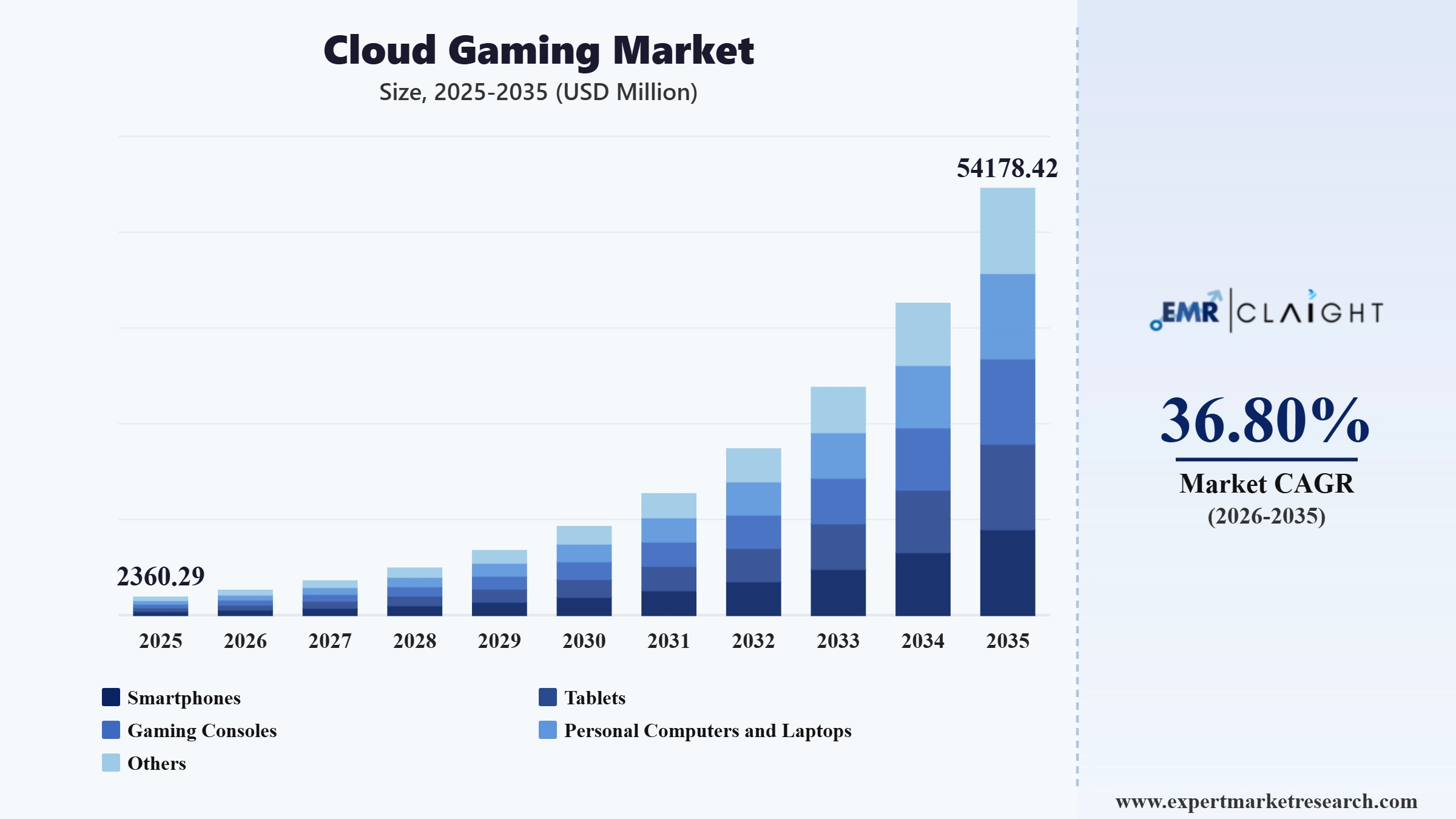
The global cloud gaming market reached a value of approximately USD 2360.29 Million in 2025 and is projected to expand at a compound annual growth rate (CAGR) of 36.80% during the forecast period of 2026 to 2035, reaching USD 54178.42 Million by 2035. This exceptional growth trajectory reflects a fundamental shift in how consumers access, purchase, and experience video games worldwide. Cloud gaming, also known as gaming-as-a-service or game streaming, enables users to play video games directly from remote servers via internet connectivity, eliminating the need for expensive dedicated hardware. Rather than installing games locally, players stream game content in real time to any connected device, including smartphones, smart TVs, tablets, laptops, or gaming consoles.
The market is driven by the convergence of several macro-level forces: the global rollout of 5G networks, the rapid proliferation of internet-connected devices, the maturation of cloud computing infrastructure, and a generational shift in consumer preference toward subscription-based digital services. These forces, combined with declining hardware costs and an expanding global gamer population now estimated at over 3 billion, are creating sustained and accelerating demand for cloud gaming platforms.
Read more about this report - REQUEST FREE SAMPLE COPY IN PDF
The cloud gaming industry is undergoing rapid transformation driven by a set of interconnected technological and commercial forces. Understanding these trends is essential for stakeholders evaluating market entry, investment, or expansion strategies.
The proliferation of 5G technology is the single most impactful driver of cloud gaming adoption globally. Ultra-low latency and high-bandwidth 5G connectivity resolve the most significant technical barrier to cloud gaming: the lag experienced between user input and on-screen response. Cloud gaming requires sub-20ms latency for a seamless experience, a threshold now consistently achievable through 5G networks in major urban centers.
Major cloud gaming operators are co-locating edge servers with 5G infrastructure to reduce round-trip times further. This strategy is particularly significant in high-density gaming markets such as South Korea, Japan, and China, where 5G penetration rates already exceed global averages. The commercial deployment of 5G in Europe (particularly the UK, Germany, France, and Spain) and North America is expected to expand the addressable market significantly during the 2026-2035 period.
AI and machine learning are reshaping cloud gaming across both the user experience and backend infrastructure layers. On the consumer side, AI enables real-time graphics upscaling (as demonstrated by NVIDIA DLSS), adaptive bitrate streaming, intelligent matchmaking, and personalized game recommendations. These capabilities are driving higher engagement, longer session times, and improved retention among cloud gaming subscribers.
On the infrastructure side, AI-driven predictive scaling allows providers to dynamically allocate GPU and server resources based on anticipated demand patterns, reducing operational costs and improving platform reliability. NVIDIA Corporation and AWS are leading in this integration, deploying AI workloads directly within their cloud gaming infrastructure to deliver more responsive and cost-efficient services.
Cross-platform gameplay has become a defining trend in the cloud gaming landscape, driven by consumer demand for seamless, device-agnostic gaming experiences. Leading platforms including Xbox Cloud Gaming and GeForce NOW allow users to start a game session on one device and continue it on another without losing progress, enabled by centralized cloud infrastructure that synchronizes real-time user data.
Beyond cross-platform play, a structural shift toward cloud-native game development is emerging. Developers are increasingly designing games from the ground up for cloud delivery rather than porting existing titles, unlocking capabilities that are architecturally impossible on local hardware. These include dynamic world updates at massive scale, real-time AI NPC behavior, and simultaneous multiplayer environments with tens of thousands of concurrent participants. This trend is expected to accelerate platform differentiation and drive premium subscriber growth over the forecast period.
The subscription economy has arrived decisively in gaming. Services such as Xbox Game Pass Ultimate (which includes Cloud Gaming), NVIDIA GeForce NOW, Amazon Luna, PlayStation Cloud, and Apple Arcade are reshaping monetization models industry-wide. Subscription platforms offer access to large game libraries for a monthly fee, lowering the barrier to entry for casual gamers and eliminating the per-title purchase friction that historically limited cloud gaming adoption.
Read more about this report - REQUEST FREE SAMPLE COPY IN PDF
Strategic partnerships are further strengthening subscription ecosystems. In January 2025, LG Electronics and Xbox announced a partnership to integrate the Xbox app directly into LG Smart TVs, bringing cloud gaming natively to one of the world largest smart TV platforms. In March 2025, Amazon Web Services introduced GameLift Streams, a managed service enabling developers to stream games at up to 1080p and 60 frames per second to any WebRTC-enabled browser with minimal code changes.
Cloud gaming refers to the practice of playing video games on distant equipment, which is generally disguised as servers owned by a third party. It relies on internet streaming to provide games to users' preferred devices rather than downloading them. This shows that gaming interfaces are not powered by the device's own internal hardware/storage. The main benefit of cloud gaming is that developers can improve and upgrade gaming technology without having to worry about users’ device specifications and capabilities.
Advancements in data center infrastructure, network technology, and compression algorithms are central to the continued improvement of cloud gaming performance. Upgrades in server hardware, including next-generation processors and high-performance GPUs, allow cloud gaming platforms to deliver games at higher resolutions and frame rates than were previously achievable through remote streaming. AI-powered features integrated at the server level, including frame generation and real-time upscaling, further refine visual output without placing additional demands on end-user devices or network bandwidth.
5G networks deliver significantly lower latency than earlier generations, a critical factor in cloud gaming where response time directly determines gameplay quality. The ongoing commercial expansion of 5G across major markets is steadily widening the addressable audience for cloud gaming on mobile and non-traditional devices. New compression algorithms complement this infrastructure by reducing the volume of data transmitted per session without meaningful loss of visual quality, enabling high-fidelity streaming even under constrained bandwidth conditions.
In September 2025, NVIDIA deployed its Blackwell architecture-based GeForce RTX 5080-class GPUs across GeForce NOW data centers in the platform's largest hardware upgrade to date. The new server infrastructure delivers 62 teraflops of compute performance with a 48GB frame buffer, enabling streaming at up to 5K resolution at 120 frames per second for Ultimate subscribers. The rollout incorporated DLSS 4 Multi-Frame Generation and AI-enhanced streaming pipelines, reflecting a broader industry direction in which cloud gaming operators are investing in server-side GPU advancement to provide hardware performance increasingly difficult for individual consumers to access through local hardware ownership.
The global cloud gaming market is segmented by type, device, and gamer type. Each segment presents distinct growth dynamics and strategic opportunities for platform operators, game developers, and infrastructure providers.
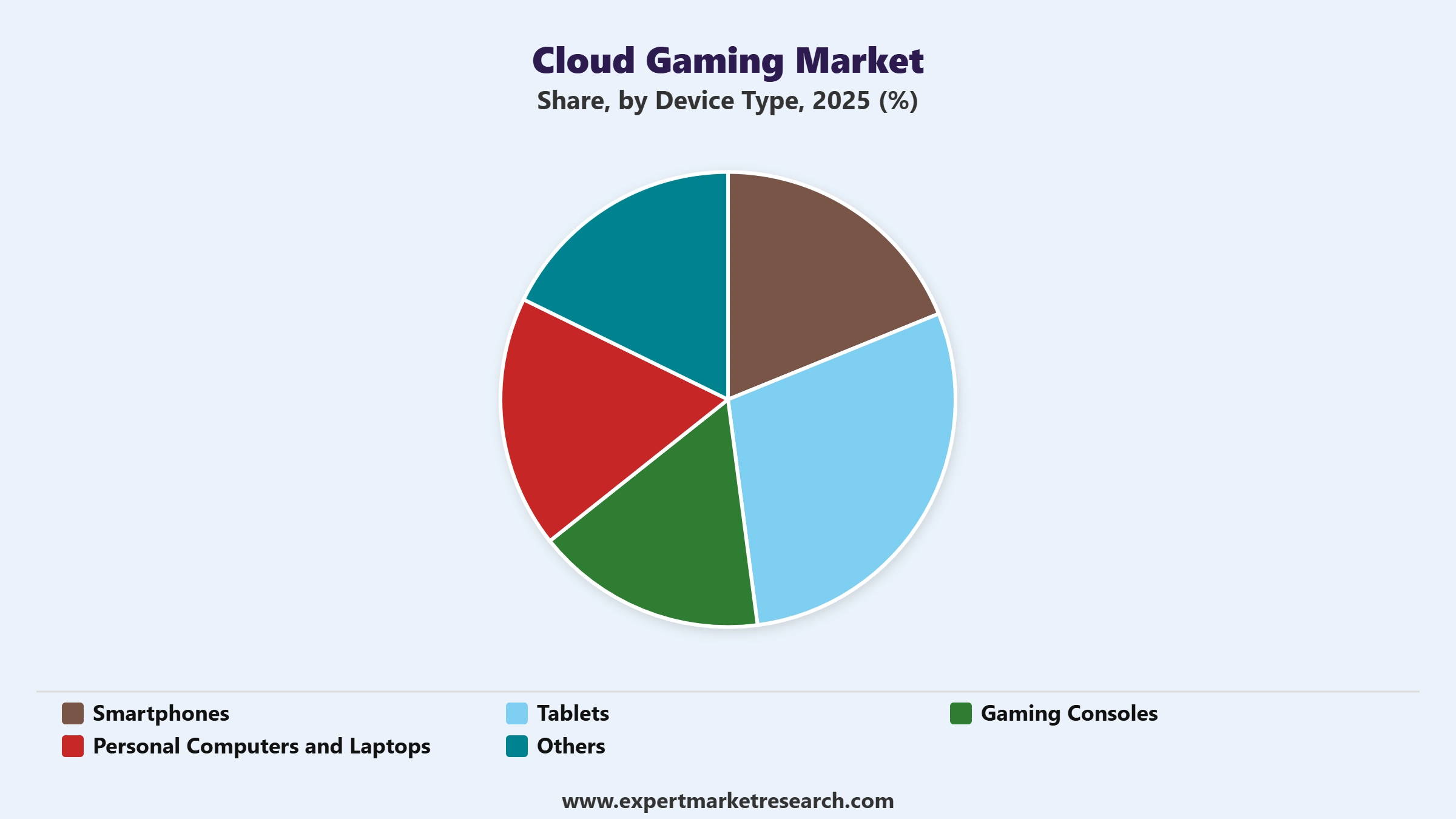
Market Breakup by Device Type
Key Insights: Gaming consoles currently hold the largest device segment share, driven by the evolution of platforms such as PlayStation and Xbox that increasingly integrate cloud gaming capabilities alongside traditional local gaming. The shift away from physical media toward digital and streaming formats is a structural tailwind for this segment.
Smartphones represent the fastest-growing device segment and are expected to maintain the highest CAGR through 2035. The ubiquity of mobile devices, combined with the rapid improvement in mobile processing power and 5G connectivity, is making smartphones the primary access device for cloud gaming in emerging markets. Smart TVs and tablets also represent significant growth opportunities, particularly as partnerships between cloud gaming platforms and device manufacturers (such as the LG-Xbox agreement) bring gaming directly into the living room.
Market Breakup by Solution Type
Key Insights: Video streaming commands the dominant share of the market, accounting for over 54% of revenues. In this model, the entire game is rendered server-side and the video output is streamed to the user device in real time. This approach powers all major consumer platforms including Xbox Cloud Gaming and GeForce NOW, and aligns with the broader consumer shift toward streaming media popularized by services such as Netflix and Amazon Prime Video.
File streaming, while currently a smaller segment, is forecast to grow at the highest CAGR during the 2026-2035 period. In file streaming, game assets are progressively delivered and cached on the user device, reducing latency sensitivity and enabling higher-fidelity experiences on lower-bandwidth connections. This model is gaining traction as hybrid approaches that combine cloud processing with local caching emerge as the next generation of cloud gaming architecture.
Market Breakup by Gamer Type
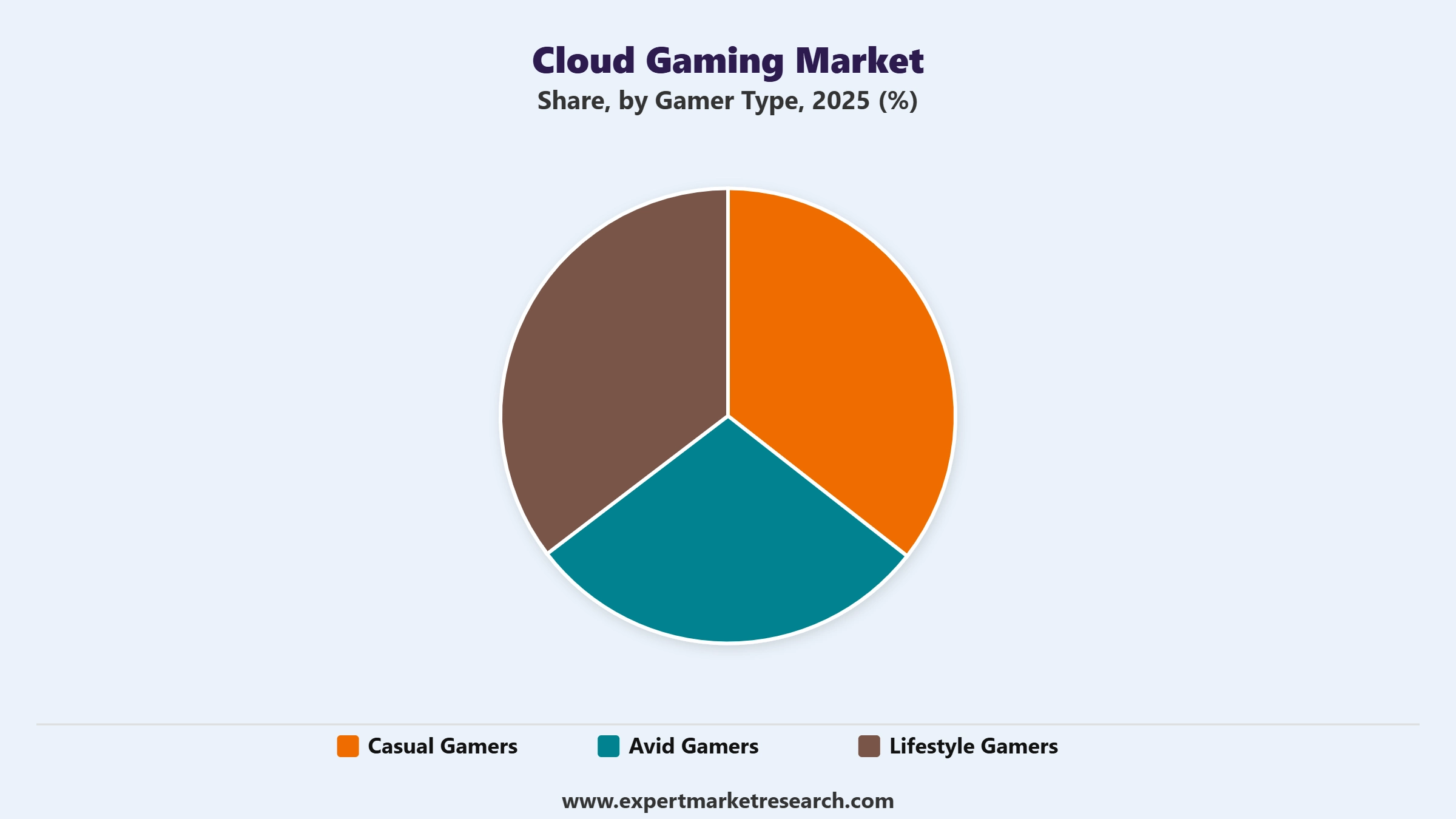
Key Insights: Casual gamers represent the largest gamer-type segment and are the primary growth engine for cloud gaming platforms. The absence of a requirement for high-end hardware, combined with flexible subscription pricing and easy access via smartphones and smart TVs, makes cloud gaming particularly attractive to this segment. Platforms offering large, varied game libraries through subscription services are capturing this demographic at scale.
Avid gamers, while a smaller segment by volume, are increasingly adopting cloud gaming services that offer high-performance streaming of AAA titles. Services such as NVIDIA GeForce NOW, which supports 4K resolution and high frame rates, are specifically targeting this segment. The growing library of cloud-native games with high production values is expected to accelerate avid gamer adoption significantly through the forecast period.
Market Breakup by Region
Read more about this report - REQUEST FREE SAMPLE COPY IN PDF
The cloud gaming market faces several technical and structural challenges that platforms and infrastructure providers are actively working to resolve. The most persistent challenge is network latency, which remains a barrier in regions where high-speed internet or 5G infrastructure is not yet widely deployed. Users experiencing response delays above 20 to 30 milliseconds notice a marked deterioration in gameplay quality, particularly in fast-paced competitive titles. Additionally, data consumption represents a challenge at the consumer level, as cloud gaming streams at high bitrates that can rapidly consume mobile data allowances. Cybersecurity risks associated with centralized cloud servers, including DDoS attacks and data breaches, also represent ongoing operational concerns for platform providers managing millions of concurrent sessions.
From a structural restraint perspective, the high capital expenditure required to build and maintain the GPU-dense data center infrastructure needed for cloud gaming limits market participation to well-capitalized technology companies. Smaller developers and regional players face significant entry barriers. Furthermore, the cloud gaming market operates in a licensing environment where game publishers retain control over streaming rights, creating a complex negotiation layer between platform operators and content owners. Inconsistent regulatory frameworks across jurisdictions, particularly related to data localization and digital services taxation in markets such as India and the European Union, add additional compliance costs that can slow regional expansion.
Read more about this report - REQUEST FREE SAMPLE COPY IN PDF
Despite these challenges, the cloud gaming market presents substantial and expanding opportunities for stakeholders across the value chain. The rapid monetization of emerging markets, including India, Southeast Asia, Brazil, and the Middle East, represents perhaps the most significant near-term growth opportunity. These regions have large, young, mobile-first gamer populations that lack the purchasing power for high-end gaming hardware but are increasingly able to access affordable cloud gaming subscriptions on smartphones. The integration of cloud gaming with augmented reality (AR) and virtual reality (VR) platforms is emerging as a high-potential innovation frontier, as cloud processing eliminates the need for compute-heavy local headsets. Investment in esports infrastructure, cloud-native game development, and AI-driven personalization further expands the opportunity landscape through the forecast period. For a complete analysis of these dynamics, including quantified opportunity sizing by segment and region, explore the full Expert Market Research cloud gaming market report.
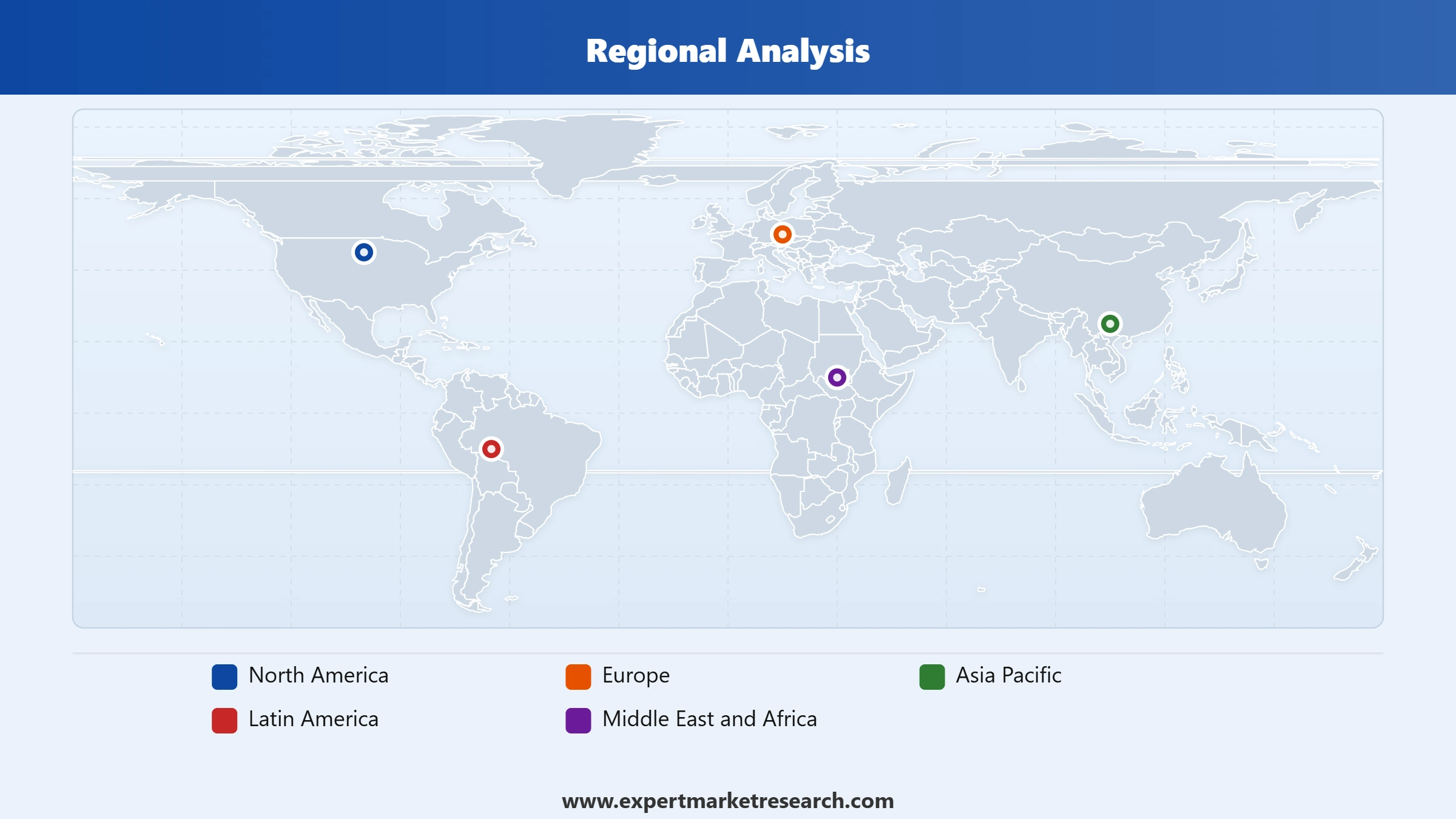
The cloud gaming market exhibits distinct regional dynamics shaped by internet infrastructure quality, gamer demographics, regulatory environments, and technology adoption rates.
North America represents a leading cloud gaming market, supported by advanced digital infrastructure, widespread 5G and fiber-optic network coverage, and a mature gaming culture. The United States is home to several of the world largest cloud gaming providers, including Microsoft (Xbox Cloud Gaming), NVIDIA (GeForce NOW), and Amazon (Luna), driving both innovation and subscriber growth.
The Canada cloud gaming market is experiencing strong growth, fueled by high broadband penetration, a growing esports community, and the accessibility of subscription services from US-based platforms. Canada benefits from proximity to major US data centers, reducing latency for streaming services. The Canadian gaming industry received significant government support in recent years, further strengthening the domestic ecosystem.
Read more about this report - REQUEST FREE SAMPLE COPY IN PDF
Europe is one of the most strategically important regions for cloud gaming growth, driven by high broadband penetration, strong gaming culture, and the progressive rollout of 5G across major markets.
The UK cloud gaming market benefits from among the highest broadband speeds in Europe and a demographically youthful, esports-engaged gaming population. The Germany cloud gaming market is driven by its well-developed digital infrastructure and a strong gamer base, though platform adoption has been somewhat moderated by consumer preferences for premium hardware gaming experiences. The Spain cloud gaming market shows accelerating adoption tied to rising 5G deployment and strong mobile gaming engagement. The France cloud gaming market is growing steadily, with major platforms investing in French-language content to accelerate subscriber acquisition.
In April 2023, Microsoft entered into a ten-year agreement with Nware, a European cloud gaming platform, specifically to expand game streaming services across the continent, reflecting the strategic importance of the European market for leading cloud gaming operators.
Asia Pacific is the largest regional market for cloud gaming globally, accounting for the highest revenue share, driven by a massive and rapidly expanding gamer population in China, India, Japan, and South Korea. The region leads the world in 5G deployment density and smartphone penetration, creating ideal conditions for cloud gaming adoption.
China represents the most advanced cloud gaming ecosystem in the Asia Pacific region, supported by domestic platforms from Tencent Holdings and NetEase, which command substantial user bases. India is the fastest-growing market within the region, driven by a young mobile-first population and the expansion of affordable 4G and 5G data plans. In January 2025, NVIDIA announced plans to launch its GeForce NOW service in India, powered by a data center equipped with GeForce RTX 4080 GPUs, marking a significant milestone for the Indian cloud gaming market.
Latin America represents an emerging but high-potential cloud gaming market. Brazil is the dominant market in the region, with a large and highly engaged gaming population. The growth of cloud gaming in the region is tied to expanding broadband infrastructure investment and the increasing affordability of smartphone-based gaming. The absence of affordable gaming hardware in many Latin American markets makes cloud gaming an economically attractive alternative for consumers seeking access to premium titles.
The Middle East and Africa region is in an early but accelerating phase of cloud gaming adoption. The UAE and Saudi Arabia lead the regional market, supported by ambitious digital infrastructure programs, high smartphone penetration, and strong per capita spending on entertainment. Africa represents a longer-term opportunity market, contingent on continued broadband and mobile infrastructure expansion across key countries including Nigeria, South Africa, and Egypt.
The cloud gaming market is characterized by high concentration among a small number of large technology and gaming companies, with active competition on dimensions of game library size, streaming quality, device compatibility, pricing, and regional infrastructure.
NVIDIA Corporation operates the GeForce NOW cloud gaming platform, one of the most technically advanced services in the market. GeForce NOW leverages NVIDIA high-performance GPU infrastructure to stream AAA titles at up to 4K resolution. In March 2024, NVIDIA made a strategic investment in Ubitus K.K. to advance generative AI and cloud gaming capabilities across Asia. NVIDIA expanding AI computing capabilities are increasingly integrated into cloud gaming services, enabling features such as real-time graphics upscaling through DLSS technology.
Microsoft operates Xbox Cloud Gaming as a core component of its Xbox Game Pass Ultimate subscription service, one of the largest gaming subscription offerings globally. Microsoft cloud gaming strategy is notable for its aggressive device partnership program, most recently demonstrated through the January 2025 Xbox-LG Smart TV integration. The company ten-year agreement with Nware underscores its long-term commitment to the European market.
Amazon Web Services operates both Amazon Luna, a consumer cloud gaming subscription service, and Amazon GameLift Streams, a B2B service enabling game developers to stream their titles to end users via WebRTC-enabled browsers at up to 1080p and 60fps with minimal integration effort. The March 2025 launch of GameLift Streams marks a significant strategic expansion into the developer-tools segment of the cloud gaming market, targeting studios seeking to publish cloud-native experiences without building streaming infrastructure independently.
Other significant participants in the global cloud gaming market include Google LLC (historical operator of Google Stadia, now integrated into YouTube and other Google services), Sony Interactive Entertainment (PlayStation Remote Play and PlayStation Plus cloud gaming features), Apple Inc. (Apple Arcade), Tencent Holdings Ltd. (WeGame Cloud and START Cloud Gaming platform, dominant in China), Ubitus K.K. (enterprise cloud gaming platform with strong APAC presence), and Backbone Labs (mobile cloud gaming controller and unified app ecosystem).
*Please note that this is only a partial list; the complete list of key players is available in the full report. Additionally, the list of key players can be customized to better suit your needs.*


Upto 15% Off
USD
$2499 $2249
$3999 $3599
$4999 $4249
$5999 $5099


*While we strive to always give you current and accurate information, the numbers depicted on the website are indicative and may differ from the actual numbers in the main report. At Expert Market Research, we aim to bring you the latest insights and trends in the market. Using our analyses and forecasts, stakeholders can understand the market dynamics, navigate challenges, and capitalize on opportunities to make data-driven strategic decisions.*
In 2025, the market reached an approximate value of USD 2360.29 Million.
The market is estimated to grow at a CAGR of 36.80% between 2026 and 2035.
The market is estimated to witness a healthy growth during 2026-2035 to reach around USD 54178.42 Million by 2035.
The major market drivers are the growing penetration of high-speed internet facilities, rising adoption of smart devices, increasing utilisation of gaming as a service, and digital transformations in the media and entertainment industry.
The key trends aiding the market growth include rapid growth of subscription models in cloud gaming, rising development of next-gen gaming platforms, growing focus on security and digital rights management (DRM), and technological advancements.
The major regions in the market are North America, Latin America, the Middle East and Africa, Europe, and the Asia Pacific.
The significant device types in the market include smartphones, tablets, gaming consoles, and personal computers and laptops, among others.
The primary solution types of cloud gaming available in the market are video streaming and file streaming.
The significant gamer types include casual gamers, avid gamers, and lifestyle gamers.
The major players in the market are Microsoft Corporation, Google Inc., Amazon.com Inc., IBM Corporation, Intel Corporation, Alibaba Group, NVIDIA Corporation, Sony Interactive Entertainment LLC, Tencent Holdings Ltd., Ubisoft Entertainment SA, Ubitus K.K, and Shadow SAS, among others.
Explore our key highlights of the report and gain a concise overview of key findings, trends, and actionable insights that will empower your strategic decisions.
| REPORT FEATURES | DETAILS |
| Base Year | 2025 |
| Historical Period | 2019-2025 |
| Forecast Period | 2026-2035 |
| Scope of the Report |
Historical and Forecast Trends, Industry Drivers and Constraints, Historical and Forecast Market Analysis by Segment:
|
| Breakup by Device Type |
|
| Breakup by Solution Type |
|
| Breakup by Gamer Type |
|
| Breakup by Region |
|
| Market Dynamics |
|
| Competitive Landscape |
|
| Companies Covered |
|
| Report Price and Purchase Option | Explore our purchase options that are best suited to your resources and industry needs. |
| Delivery Format | Delivered as an attached PDF and Excel through email, with an option of receiving an editable PPT, according to the purchase option. |
Datasheet
One User
USD 2,499
USD 2,249
tax inclusive*
Single User License
One User
USD 3,999
USD 3,599
tax inclusive*
Five User License
Five User
USD 4,999
USD 4,249
tax inclusive*
Corporate License
Unlimited Users
USD 5,999
USD 5,099
tax inclusive*
*Please note that the prices mentioned below are starting prices for each bundle type. Kindly contact our team for further details.*
Flash Bundle
Small Business Bundle
Growth Bundle
Enterprise Bundle
*Please note that the prices mentioned below are starting prices for each bundle type. Kindly contact our team for further details.*
Flash Bundle
Number of Reports: 3
20%
tax inclusive*
Small Business Bundle
Number of Reports: 5
25%
tax inclusive*
Growth Bundle
Number of Reports: 8
30%
tax inclusive*
Enterprise Bundle
Number of Reports: 10
35%
tax inclusive*
How To Order

Select License Type
Choose the right license for your needs and access rights.

Click on ‘Buy Now’
Add the report to your cart with one click and proceed to register.

Select Mode of Payment
Choose a payment option for a secure checkout. You will be redirected accordingly.
Strategic Solutions for Informed Decision-Making
Gain insights to stay ahead and seize opportunities.

Get insights & trends for a competitive edge.

Track prices with detailed trend reports.

Analyse trade data for supply chain insights.

Leverage cost reports for smart savings

Enhance supply chain with partnerships.

Connect For More Information
Our expert team of analysts will offer full support and resolve any queries regarding the report, before and after the purchase.
Our expert team of analysts will offer full support and resolve any queries regarding the report, before and after the purchase.
We employ meticulous research methods, blending advanced analytics and expert insights to deliver accurate, actionable industry intelligence, staying ahead of competitors.
Our skilled analysts offer unparalleled competitive advantage with detailed insights on current and emerging markets, ensuring your strategic edge.
We offer an in-depth yet simplified presentation of industry insights and analysis to meet your specific requirements effectively.




