

Consumer Insights
Uncover trends and behaviors shaping consumer choices today
Procurement Insights
Optimize your sourcing strategy with key market data
Industry Stats
Stay ahead with the latest trends and market analysis.
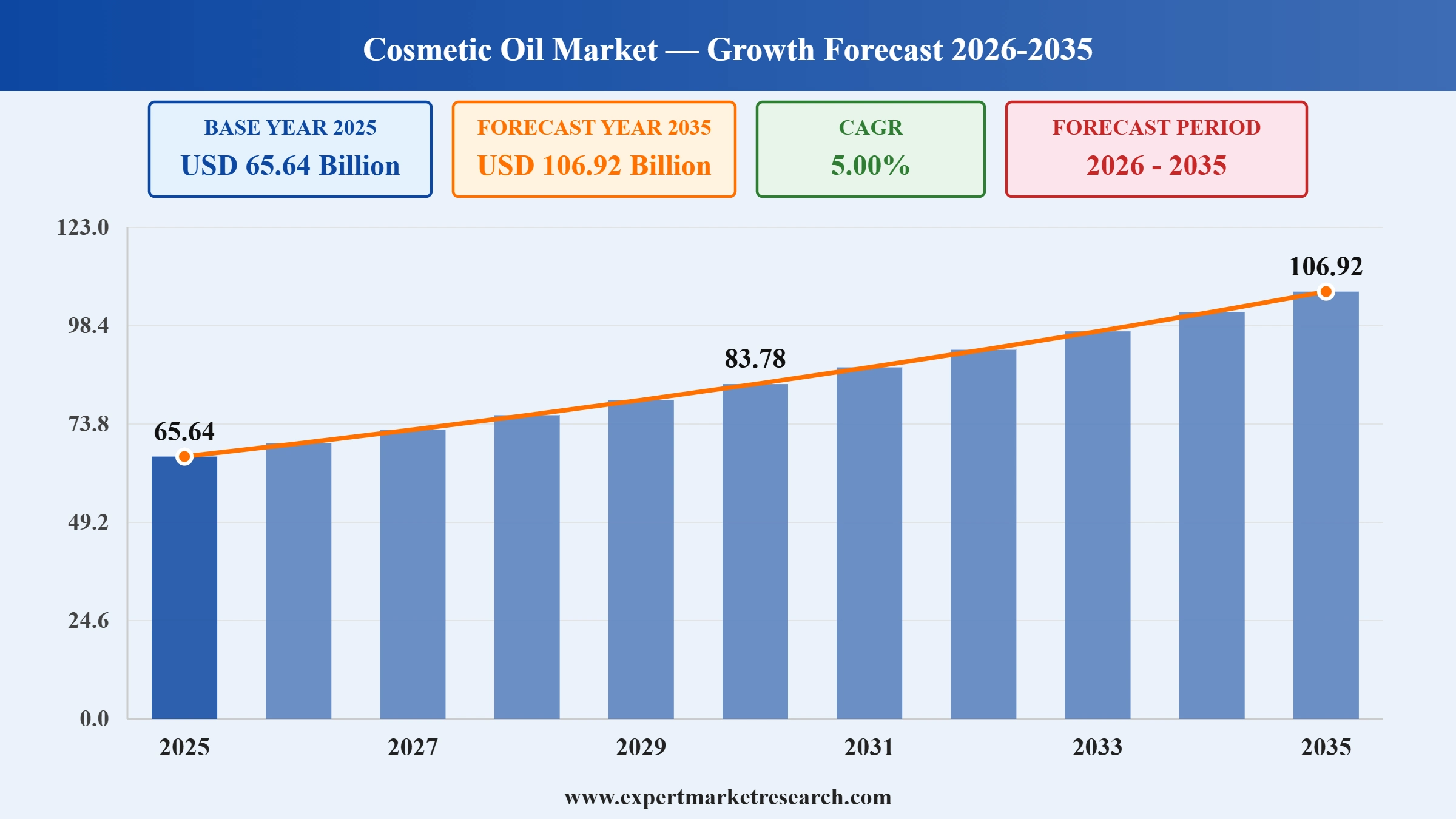
The global cosmetic oil market attained a value of USD 65.64 Billion in 2025 and is projected to expand at a CAGR of 5.00% through 2035. The market is further expected to achieve USD 106.92 Billion by 2035. The market witnesses a continuous increase in the investment in biotech extraction and regenerative farming that are helping to change the strategies of cosmetic oil sourcing. This way, manufacturers can create highly concentrated active ingredients while also improving supply chain transparency and building sustainability credentials.
Factored skincare trends or dermatology-inspired skincare trends are prompting brands to come up with oils that are high in barrier-repair lipids and antioxidant compounds, reshaping the entire cosmetic oil market dynamics. Such ingredients nourish skin microbiome balance and hydration. Moreover, luxury beauty brands are implementing traceable sourcing programs. Verified botanical supply chains not only allow companies to improve product marketing but also to get higher price points in the premium skincare sector.
Moreover, the cosmetic oil market is attracting renewed attention, as ingredient transparency and bioactive formulations are reshaping the pipelines of beauty products. In October 2024, Givaudan expanded its line of active beauty products by unveiling a cosmetic oil blend that comes from a biotech approach using fermentation technology. The new product is designed to help the skin barrier heal and stay moisturized throughout the day. Industry demand for such ingredients is getting stronger. Botanical and bio-derived oils are two of the main ingredients found majority of new skincare products. So, the manufacturers are ramping up efforts to collaborate with biotechnology startups in order to secure reliable sources of high-performance oils that can be used for clean beauty without a compromise on the effectiveness.
The change in repositioning cosmetic oils from just moisturizers to active ingredients with multiple functions is another factor that is accelerating demand in the cosmetic oil market. Leading providers are emphasizing oils that are not only rich in ceramides but also omega fatty acids and antioxidant substances. For example, in February 2026, Amway launched Artistry Skin Nutrition Omega Drops, a facial oil blend containing omegas 3, 6, 7, and 9 designed to strengthen the skin’s lipid barrier and improve hydration. Such elements are being put together to form a part of dermatology-oriented skincare as well as clinical beauty products. Some cosmetic companies are incorporating oils treatment enhancers which help in better delivery of serums and creams. This change of direction is encouraging interest from contract manufacturers and dermo-cosmetic brands who aim to find their niche in the competitive skincare market.
Read more about this report - REQUEST FREE SAMPLE COPY IN PDF
Savor accelerated the development of palm oil alternatives, introducing bio-based cosmetic oils designed to reduce deforestation risks while maintaining formulation stability and skin conditioning performance. Such developments create cosmetic oil market opportunities for ingredient suppliers to develop traceable botanical oils and sustainable lipid alternatives supporting environmentally responsible cosmetic formulations.
Clean Food Group received regulatory cosmetics approval for CLEAN Oil 2.5, a fermentation-derived palm oil alternative designed for sustainable beauty formulations and ingredient supply chains. Such developments allow beauty manufacturers to adopt biotech oils, reducing dependence on conventional palm oil.
Ashland introduced new platform technologies highlighting bio-functional cosmetic ingredients, including plant-derived oils designed to enhance skin barrier performance and sensory texture in skincare formulations. Such innovation encourages manufacturers in the cosmetic oil market to integrate multifunctional oils that combine hydration benefits with advanced delivery systems in premium skincare products.
Epax launched a specialized omega 3-9-11 oil blend designed to support skin nourishment, lipid barrier repair, and advanced cosmetic applications in skincare formulations. This development creates opportunities for cosmetic brands to formulate dermatology-inspired oils targeting skin barrier health.
Biotechnology is revolutionizing the way that manufacturers develop and refine cosmetic oils. Ingredient suppliers are leveraging microbial fermentation and enzyme-based methods to create oils with highly controlled fatty acid composition. In January 2024, Keys Soulcare launched the Deeply Replenishing Squalane Facial Oil exclusively on Amazon Premium Beauty, delivering vegan, non-comedogenic hydration and overnight skin barrier nourishment. Besides fermentation, these highly pure derived oils also facilitate manufacturers in scaling up their operations without depending on seasonal harvesting of plants. Even regulatory bodies have started to endorse biotechnology-driven innovation, accelerating the cosmetic oil market growth.
Traceability is emerging as a critical factor in sourcing cosmetic oils. Companies in the beauty industry are now directly funding their farming partners as a means of securing ethically sourced raw materials. Companies like L'Oreal are widening their sustainable argan and marula oil sourcing initiative by collaborating with women-led cooperatives in North Africa. Such initiatives not only guarantee the genuineness of the ingredients but also contribute to more stable supply. In December 2023, Evonik launched a sustainable baobab oil sourced from the Sahel region of Ghana as the latest product in its ECOHANCE program. Moreover, governments are playing a key role in promoting traceable agricultural systems, indirectly accelerating the overall cosmetic oil market penetration. For example, the Food and Agriculture Organization has advocated for the implementation of digital traceability platforms that can be used to oversee the supply chains of plant-based ingredients.
Highly advanced extraction methods are being used for improving the grade of oils that are suitable for a wide range of cosmetics. With the help of innovations in supercritical CO extraction and cold pressing, manufacturers are able to keep intact the sensitive and bioactive compounds that are present in the raw material. The companies that produce raw materials are buying such kind of equipment on a large scale, boosting the overall cosmetic oil market development. For example, Croda International unveiled its upgraded botanical extraction site in France aimed at making highly pure cosmetic oils that are essential in high-end skincare products. In November 2023, under the brand Crodarom, the company launched Phytessence French Rose EC, a botanical cosmetic ingredient extracted from organic Rosa gallica, designed to strengthen skin hydration and reinforce the natural lipid barrier.
Typically aligned with dermatology solutions in skincare, cosmetic oils are turning into powerful lipid-rich oils that facilitate skin barrier repair and microbiome balance. Companies like Beiersdorf are using omega-enriched botanical oils to create new products in its dermo-cosmetic skincare lines. The main aim is to minimize water loss through skin and enhance skin hydration for the long term. Further studies in dermatology are supporting such a trend in the cosmetic oil market. In January 2026, Debut introduced DermCeutical EDL, a biotech skincare active delivering clinic-level skin tightening results, improving fine lines, sagging, and elastin production through AI-discovered molecules.
Upcycling is progressively becoming the main method of innovation for the cosmetic oil market players. Ingredient companies are using agricultural by-products to produce high-value cosmetic oils. The oil is processed by low-energy methods and marketed for antioxidant-rich skincare formulations. Circular ingredient innovation is being encouraged by governments, for example the United Nations Environment Program has acknowledged the upcycling of cosmetic ingredients as a potential way to reduce agricultural waste. In June 2025, Kagome Australia began supplying cold-pressed tomato seed oil to cosmetics manufacturers, transforming tomato processing by-products into sustainable skincare ingredients.
The EMR’s report titled “Global Cosmetic Oil Market Report and Forecast 2026-2035” offers a detailed analysis of the market based on the following segments:
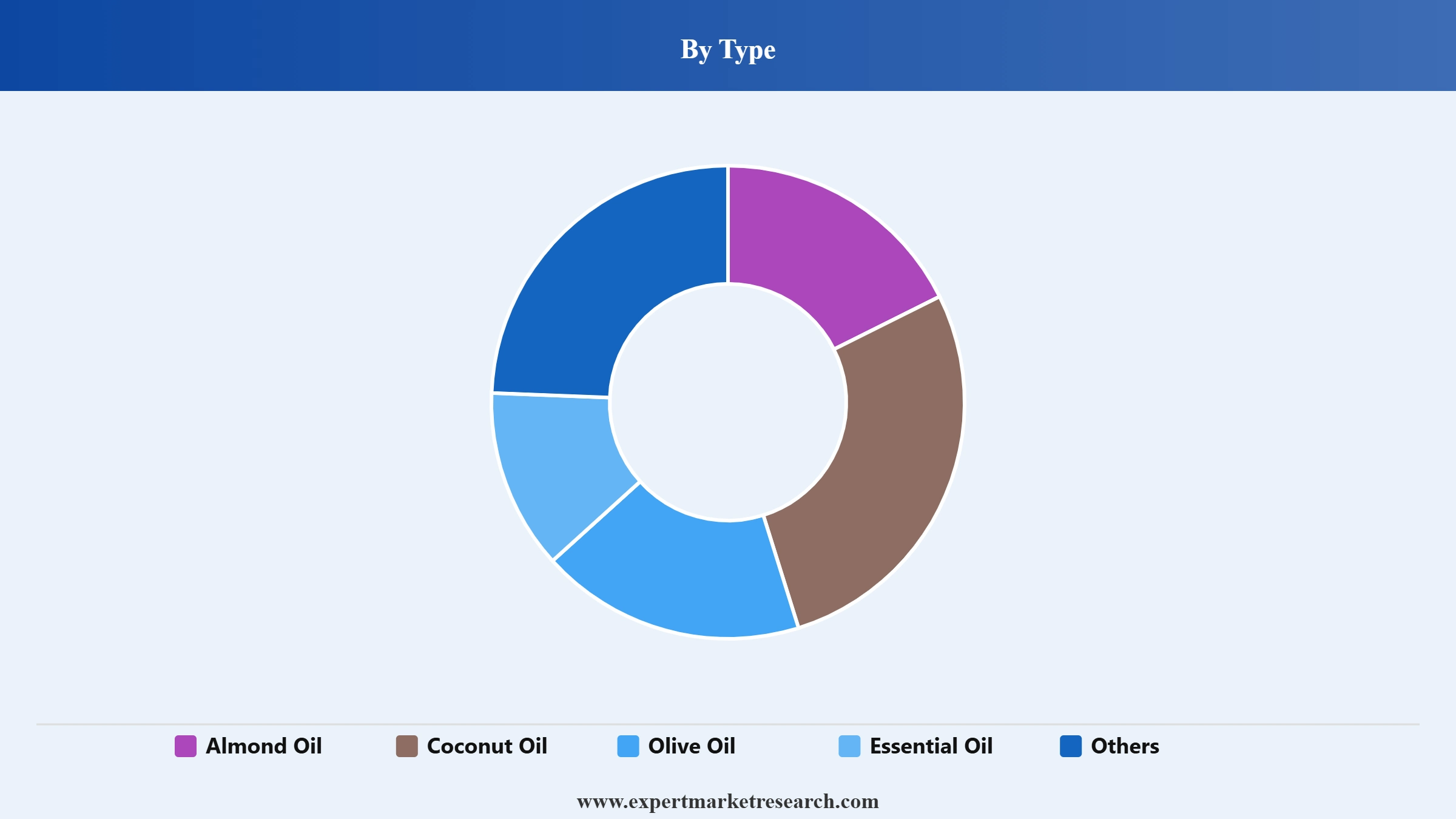
Market Breakup by Type
Key Insight: Various oils provide unique advantages for cosmetics formulations. Almond oil continues to be widely applied in sensitive skin products because it has a light texture and it is rich in vitamins. Coconut oil, on the other hand, is the most popular type because of its flexibility in both skincare and haircare products. The olive segment can be found in high-end creams and cleansing products as it provides excellent antioxidant benefits, propelling the cosmetic oil market growth. Essential oils are becoming more widely used in high-end skincare, and aromatherapy-inspired cosmetics where highly concentrated plant extracts act as a point of difference. In October 2025, P2 Science introduced CitroComplex Nourish, a green chemistry-based blend combining meadowfoam and radish seed oils with renewable polymer emollients for lightweight, high-performance skincare and haircare formulations.
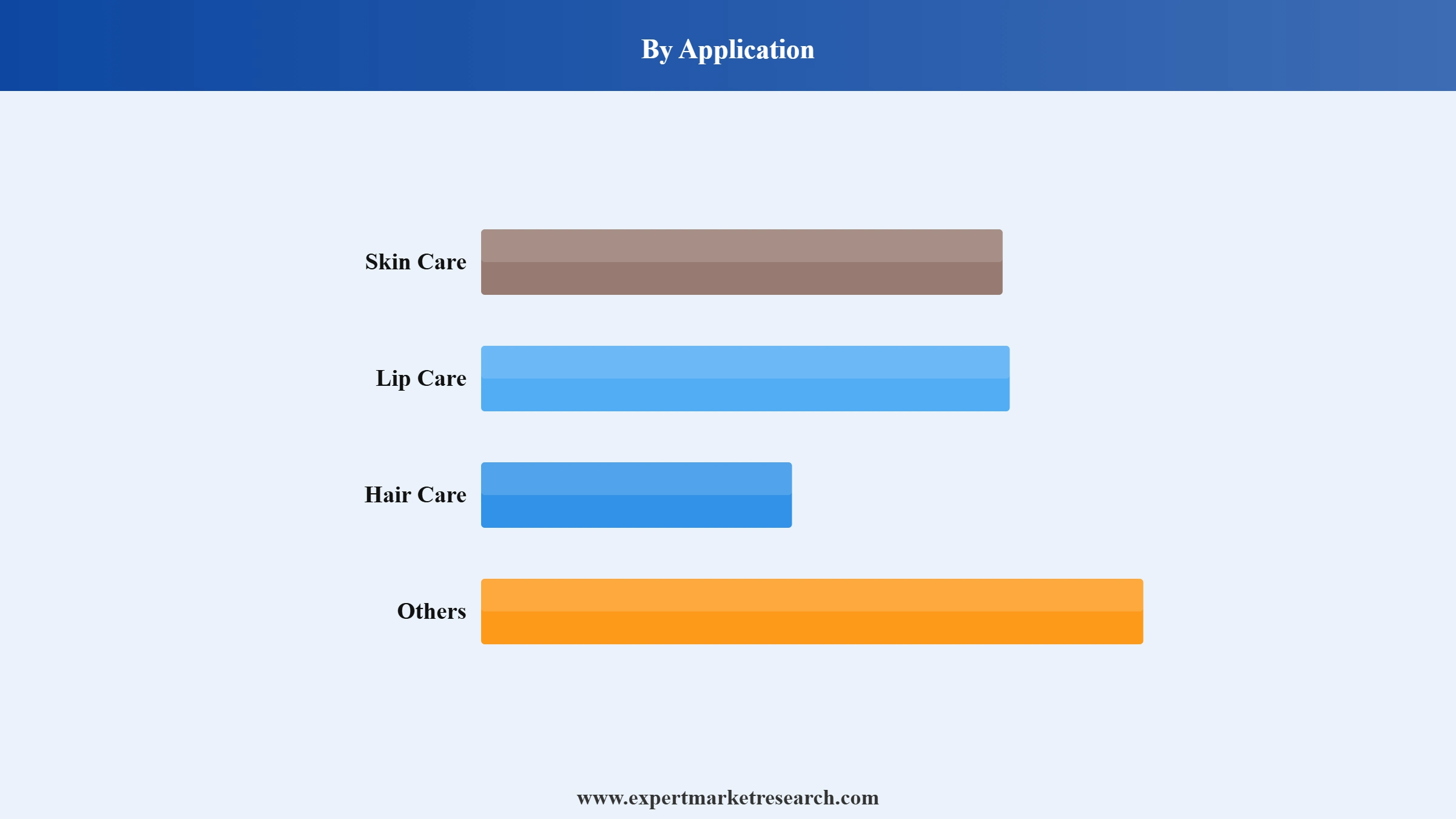
Market Breakup by Application
Key Insight: As per the cosmetic oil market report, skin care continues to be the leading revenue-generating industry as oils offer profound moisturizing and also enhance the effectiveness of active components in creams and serums. In the case of lip care items, cosmetic oils are mainly used for enhancing lip texture and retaining moisture. Besides, oils are effective in shielding the delicate lip skin from dryness and other environmental impacts. The hair care segment is particularly flourishing due to increased sales of scalp treatments and hair nourishment oils which are attracting users seeking healthier hair through their daily care routines.
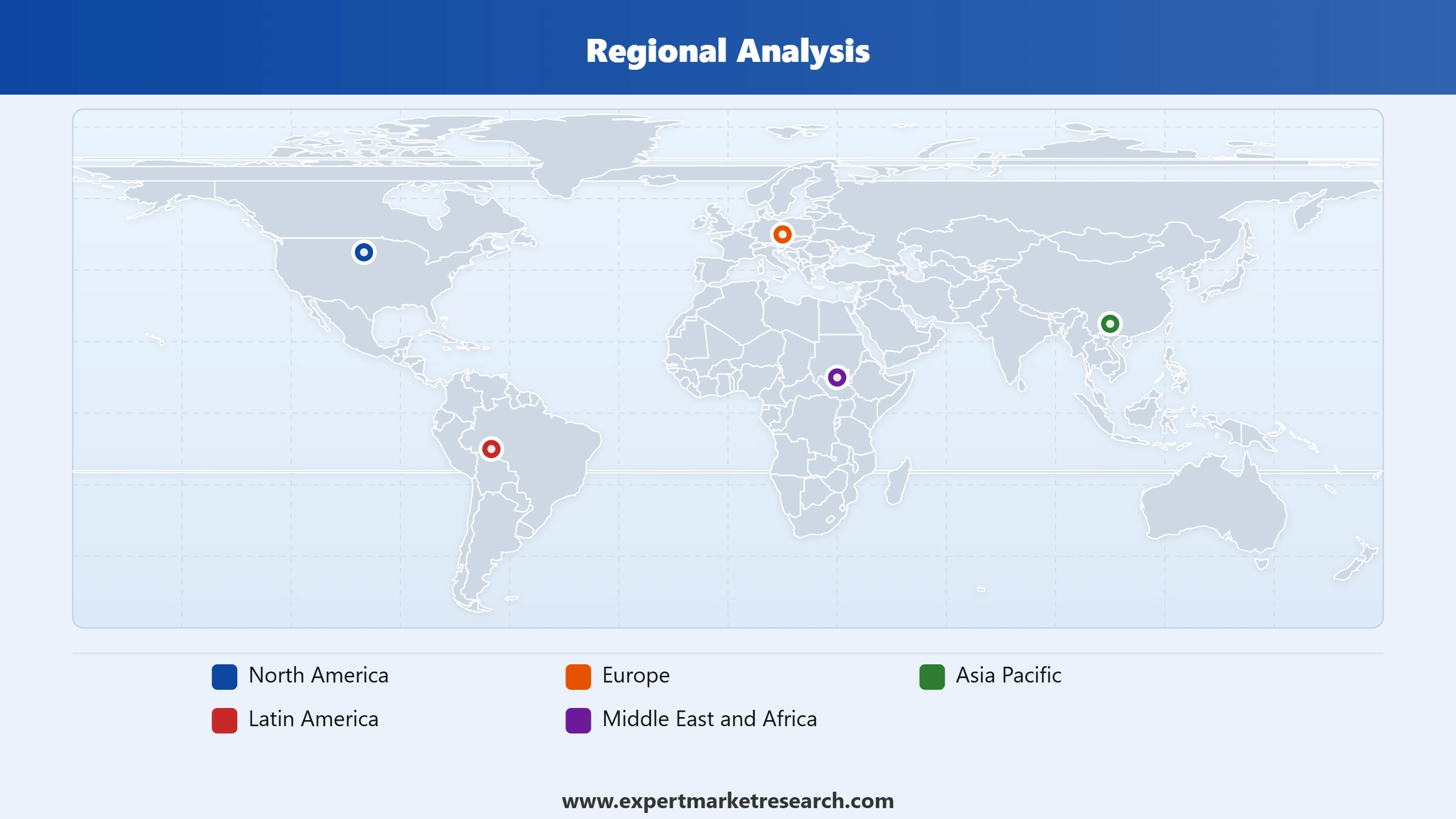
Market Breakup by Region
Key Insight: Due to a strong demand for clean beauty ingredients and skincare products adhering to the dermatological segment, North America is experiencing rapid growth. Europe, on the other hand, is emphasizing sustainable sourcing and botanical ingredient research which, in turn, is leading to new inventions in premium cosmetic products. Asia Pacific continues to be the dominant region because of the large natural botanical resources and time-tested herbal beauty traditions. Latin America supplies important plant-based oils such as avocado and Brazil nut oils used for making natural skin care viable products. The Middle East and Africa region is presenting several cosmetic oil market opportunities as beauty brands are turning to indigenous botanical oils and traditional wellness ingredients as sources for their global cosmetic products.

Read more about this report - REQUEST FREE SAMPLE COPY IN PDF
By type, coconut oil dominates the global industry due to multifunctional skincare demand
Coconut oil remains a popular ingredient in cosmetic products because it is stable and good at moisturizing the skin deeply. Several beauty brands apply coconut oil in different products like lotions, body oils, and cleansing balms, mainly because of its high lauric acid level. This particular fatty acid is able to help the skin barrier work better and also bring antimicrobial benefits. Some cosmetic oil market players are even giving coconut oil a new role in their sulfate-free haircare and scalp treatment products. For instance, companies like The Body Shop have widened their offerings of coconut products focusing on hydration and hair nourishment. In September 2025, Marico launched Parachute Advansed Olive Enriched Coconut Hair Oil, combining olive and coconut oils to strengthen hair, reduce breakage, and expand its premium natural haircare “superblend” portfolio.
Read more about this report - REQUEST FREE SAMPLE COPY IN PDF
Essential oils are rapidly gaining significance in the formulations of high-end beauty products. These oils offer highly concentrated botanical advantages in line with the skincare trends, that focus on well-being. Various cosmetic brands are applying essential oils such as lavender-tea tree and rosemary into their serums and facial oils which are meant for different skin issues. The use of aromatherapy is further increasing their attractiveness for commercial purposes, accelerating the demand in the cosmetic oil market.
By application, skin care dominates the market driven by barrier repair formulations
Skin care is the largest application that is stimulating the cosmetic oil market expansion. Besides moisturizers, cosmetic oils are also found in facial serums, cleansing balms, and overnight treatments. Advantages of cosmetic oils are not only limited to enhancement of skin barrier repair. They also increase in active ingredient absorption which is appreciated by manufacturers. Brands are coming up with lipid-rich facial oils that go well with dermatology-inspired skincare routines. In addition to hydration, anti-aging, and skin brightening benefits, cosmetic oils assist in lowering the use of synthetic emollients in formulations. In March 2026, IOPE launched its clinical-grade Korean skincare portfolio in Canada through Sephora channels, introducing advanced anti-aging serums and retinoid formulations to strengthen premium skincare distribution.
Read more about this report - REQUEST FREE SAMPLE COPY IN PDF
Application of hair care is one of the rapidly growing categories within the cosmetic oil market dynamics. Apart from scalp treatments and hair masks and serums, these ingredients are used in hair strengthening and moisturization so that hair breakage is minimized. Scalp health has been identified by companies as the main reason for haircare innovation. Oils which are abundant in fatty acids and antioxidants aid in hair follicle nourishment, and at the same time, keep the scalp hydrated.
Asia Pacific clocks in the leading position in the market due to strong botanical supply
The Asia Pacific cosmetic oil market revenue is continuously growing as the region acts as the major center for manufacturing and using cosmetic oils. Countries like India, Indonesia, and the Philippines provide the world with key natural ingredients such as coconut, sesame, and herbal extracts. Local beauty industries often use traditional, oil-based formulations that are closely connected to nature and health practices in skincare. Leading companies like Shiseido keep releasing beauty products made with natural oils, which are known for moisturizing and antioxidant effects. Besides, the regional plant manufacturing framework also facilitates the extensive processing of ingredients. In March 2026, The Estée Lauder Companies acquired full ownership of Forest Essentials to scale luxury Ayurvedic skincare globally and strengthen presence in India’s premium beauty segment.
Read more about this report - REQUEST FREE SAMPLE COPY IN PDF
Meanwhile, North America is turning into a rapidly expanding cosmetic oil market, due to a rise in clean beauty and dermatology-driven skincare. It has become a habit for consumers to select products made of plant-based ingredients, while expecting clear guidelines on their sourcing. This tendency motivates producers of beauty products to use natural oils in their high-end lines of skincare. Firms like Herbivore Botanicals have put together an impressive range of products that focus on natural facial oils.
Competition in the market increasingly hinges on innovation, as companies innovate beyond classical botanical oils. Leading cosmetic oil companies are channeling their efforts into oils derived from biotechnology, recycled ingredients, and programs of traceable sourcing to boost product differentiation, alongside focusing on multifunctional cosmetic oils providing hydration together with dermatology-backed benefits such as barrier repair and microbiome support.
Collaborations with ingredient biotechnology firms are paving the way for premium oil formulations featuring enhanced stability and bioactivity. Some beauty brands are releasing facial oils that facilitate the penetration of serums and active ingredients by the skin. There is also a growing popularity of digital transparency platforms, as cosmetic oil market players aim to showcase the origin of the ingredients and their sustainability credentials. These endeavors help manufacturers to market cosmetic oils as advanced treatment products instead of mere moisturizers.
Unilever is a multinational company established in 1930, with its main office located in London, United Kingdom. It is one of the leading manufacturers of personal care products, that is keen on the incorporation of botanical oils in the formulations of hair and body care products. The latest launches of the company are the oil-based formulas for scalp treatments aimed at better moisturizing and strengthening of the hair.
The Estée Lauder Companies, a firm that was set up in 1946, and is headquartered in New York City, United States, has made facial oils the symbol of the most luxurious skin products of the company in the high-end beauty segment. They produce oils rich in antioxidants which help in hydrating the skin as well as in the repair of the skin barrier.
Procter & Gamble Company, a company established in 1837 and having the main office located in Cincinnati, United States, uses beautifying oils as part of hair care and skincare products in a variety of consumer brands. Through advancement in ingredient science, the company promotes better oil shelf life and rate of absorption by the skin/hair, catering to the cosmetic oil market.
Coty Inc. is a leading beauty company that was established in 1904 and is headquartered in New York City, United States. The company is a pioneer in the secretion of botanical oils in its fragrances, skincare, and luxury cosmetic products. Coty Inc. is focused on oil-based textures that are rich in sensory properties to elevate the overall product experience.
*Please note that this is only a partial list; the complete list of key players is available in the full report. Additionally, the list of key players can be customized to better suit your needs.*
Other key players in the market include Johnson & Johnson Services, Inc and Kao Corporation among others.
Unlock the latest insights with our cosmetic oil market trends 2026 report. Discover regional growth patterns, consumer preferences, and key industry players. Stay ahead of competition with trusted data and expert analysis. Download your free sample report today and drive informed decisions in the market.


Upto 15% Off
USD
$2499 $2249
$3999 $3599
$4999 $4249
$5999 $5099


*While we strive to always give you current and accurate information, the numbers depicted on the website are indicative and may differ from the actual numbers in the main report. At Expert Market Research, we aim to bring you the latest insights and trends in the market. Using our analyses and forecasts, stakeholders can understand the market dynamics, navigate challenges, and capitalize on opportunities to make data-driven strategic decisions.*
In 2025, the market reached an approximate value of USD 65.64 Billion.
The market is projected to grow at a CAGR of 5.00% between 2026 and 2035.
Investing in biotechnology partnerships, expanding traceable botanical supply chains, developing multifunctional treatment oils, adopting advanced extraction technologies, and launching premium dermatology-inspired oil formulations to strengthen market differentiation.
The growing demand for natural ingredients and increasing consumer expectations are the key industry trends propelling the market's growth.
The major regions in the industry are North America, Latin America, the Middle East and Africa, Europe, and the Asia Pacific with Asia Pacific accounting for the largest share in the market.
Olive oil is the dominant type of oil in the market.
By application, the market is divided into skin care, lip care, and hair care, among others.
The key players in the market include Unilever plc, The Estée Lauder Companies, Procter & Gamble Company, Coty Inc., Johnson & Johnson Services, Inc and Kao Corporation among others.
Maintaining consistent botanical oil supply remains challenging due to climate variability and crop dependency. Companies also face formulation stability issues when combining natural oils with active cosmetic ingredients in advanced skincare products.
Explore our key highlights of the report and gain a concise overview of key findings, trends, and actionable insights that will empower your strategic decisions.
| REPORT FEATURES | DETAILS |
| Base Year | 2025 |
| Historical Period | 2019-2025 |
| Forecast Period | 2026-2035 |
| Scope of the Report |
Historical and Forecast Trends, Industry Drivers and Constraints, Historical and Forecast Market Analysis by Segment:
|
| Breakup by Type |
|
| Breakup by Application |
|
| Breakup by Region |
|
| Market Dynamics |
|
| Competitive Landscape |
|
| Companies Covered |
|
| Report Price and Purchase Option | Explore our purchase options that are best suited to your resources and industry needs. |
| Delivery Format | Delivered as an attached PDF and Excel through email, with an option of receiving an editable PPT, according to the purchase option. |
Datasheet
One User
USD 2,499
USD 2,249
tax inclusive*
Single User License
One User
USD 3,999
USD 3,599
tax inclusive*
Five User License
Five User
USD 4,999
USD 4,249
tax inclusive*
Corporate License
Unlimited Users
USD 5,999
USD 5,099
tax inclusive*
*Please note that the prices mentioned below are starting prices for each bundle type. Kindly contact our team for further details.*
Flash Bundle
Small Business Bundle
Growth Bundle
Enterprise Bundle
*Please note that the prices mentioned below are starting prices for each bundle type. Kindly contact our team for further details.*
Flash Bundle
Number of Reports: 3
20%
tax inclusive*
Small Business Bundle
Number of Reports: 5
25%
tax inclusive*
Growth Bundle
Number of Reports: 8
30%
tax inclusive*
Enterprise Bundle
Number of Reports: 10
35%
tax inclusive*
How To Order

Select License Type
Choose the right license for your needs and access rights.

Click on ‘Buy Now’
Add the report to your cart with one click and proceed to register.

Select Mode of Payment
Choose a payment option for a secure checkout. You will be redirected accordingly.
Strategic Solutions for Informed Decision-Making
Gain insights to stay ahead and seize opportunities.

Get insights & trends for a competitive edge.

Track prices with detailed trend reports.

Analyse trade data for supply chain insights.

Leverage cost reports for smart savings

Enhance supply chain with partnerships.

Connect For More Information
Our expert team of analysts will offer full support and resolve any queries regarding the report, before and after the purchase.
Our expert team of analysts will offer full support and resolve any queries regarding the report, before and after the purchase.
We employ meticulous research methods, blending advanced analytics and expert insights to deliver accurate, actionable industry intelligence, staying ahead of competitors.
Our skilled analysts offer unparalleled competitive advantage with detailed insights on current and emerging markets, ensuring your strategic edge.
We offer an in-depth yet simplified presentation of industry insights and analysis to meet your specific requirements effectively.




