

Consumer Insights
Uncover trends and behaviors shaping consumer choices today
Procurement Insights
Optimize your sourcing strategy with key market data
Industry Stats
Stay ahead with the latest trends and market analysis.
The global crude oil flow improvers market was valued at USD 2.15 Billion in 2025. The market is anticipated to grow at a CAGR of 5.90% during the forecast period of 2026-2035 to reach a value of USD 3.81 Billion by 2035. Rising demand for efficient crude transportation and pipeline optimization is boosting market growth.
Compound Annual Growth Rate
5.9%
Value in USD Billion
2026-2035
Crude oils are extracted from remote places through drilling and transported through pipelines. Transporting it is difficult as crude oil is viscous in property, and flow improvers are needed to maintain the temperature and consistency, so they are used as additives. The flow improvers protect the quality and state of the crude oil by working drag-reducing agents, and they are injected into the pipelines to reduce the friction.
Key drivers fuelling the crude oil flow improvers market expansion include the increasing production of crude oil worldwide, driven by the rise in unconventional sources, which necessitates the use of flow improvers to enhance transportation efficiency. The expansion of pipeline infrastructure, investments in advanced products, and the demand for energy, especially in developing nations, are also significant factors propelling the market forward.
Additionally, the emphasis on cost efficiency, technological advancements leading to improved formulations, stringent government regulations promoting the use of flow improvers for environmental compliance, and the exploration of unconventional reserves like shale and oil sands contribute to the market's growth. Moreover, the globalisation of oil trade and the focus on sustainable practices further drive the adoption of crude oil flow improvers in the industry.
Read more about this report - REQUEST FREE SAMPLE COPY IN PDF
Researchers at the Indian Institute of Technology Guwahati, in collaboration with Oil India Limited researchers, developed montmorillonite nanoclay-based composites for improving the low-temperature flow behaviour of Indian waxy crude oil. Published online in June 2026 in Energy & Fuels and in the July 2026 issue, the research evaluated three nanocomposites as flow improvers. The formulations achieved viscosity reductions of up to approximately 87.5% at 15°C, reduced yield stress by up to 898 Pa, and delivered up to 10°C pour-point depression at 200 ppm. The work demonstrates the development of advanced nanocomposite additives for controlling wax crystallisation and improving crude-flow assurance.
Southwest Research Institute (SwRI) received a patent in June 2026 for its EZ Flow™ technology, designed to reduce heavy crude oil viscosity by 60% or more. The two-part process combines a proprietary low-concentration chemical additive with controlled hydrodynamic cavitation to improve mixing and reduce crude viscosity. SwRI reported that testing showed the reduced viscosity could persist for at least six months. The technology is being developed to facilitate transportation of heavy crude through existing pipelines while potentially reducing reliance on large volumes of diluent and heating. SwRI plans to make the technology available through licensing or technology transfer.
Trans Mountain submitted an application to the Canada Energy Regulator for a project involving 16 drag-reducing agent units at 12 existing pump stations along its Line 1 and Line 2 systems. The project is expected to increase total pipeline throughput by approximately 10%, with the broader CER documentation identifying an expected capacity increase of around 90,000 barrels per day. The DRA units will be installed within existing pump-station boundaries, avoiding new land acquisition. Construction is expected between August 2026 and January 2027, making the project a significant commercial application of drag-reducing technology for crude-oil transportation.
Baker Hughes secured a multi-year agreement with Genesis Energy to supply drag-reducing agents for two offshore oil pipeline systems serving the U.S. Gulf Coast. Baker Hughes will provide its FLO™ DRA products for the Cameron Highway Oil Pipeline and Poseidon systems, transporting both light and heavy crude from offshore platforms to storage and refining facilities in Texas and Louisiana. The agreement also includes chemical-management services and Baker Hughes' Leucipa™ automated field-production solution. Baker Hughes stated that the DRA deployment will increase pipeline capacity while avoiding major infrastructure investment, and the company expanded U.S. chemical manufacturing capacity to support demand.
The application of nanotechnology for enhancement of the flow characteristics of waxy crudes at low temperatures is gaining momentum as a new area of research. Current efforts involve blending polymers and nanomaterials that would affect wax crystal morphology, decrease viscosity, and decrease pour point. A study from Energy & Fuels illustrated the ability of montmorillonite nanoclay based nanocomposites to significantly enhance the low-temperature flow characteristics of Indian waxy crudes, whereas earlier EVA/silica research had shown significant decreases in viscosity and pour point. This direction is significant because conventional polymeric flow improvers can have crude-specific performance limitations. Nanocomposites offer opportunities to engineer additive formulations around wax content, crystal morphology, dosage, and operating temperature.
Flow-improver formulation is increasingly moving away from one-size-fits-all additive strategies as crude oils differ substantially in wax concentration, composition, viscosity, and wax appearance temperature. Recent research evaluates additives against particular crude characteristics and measures multiple parameters, including pour point, viscosity, yield stress, gelation, wax morphology, and pressure drop. This approach allows chemical formulations to be selected according to the actual transportation conditions rather than relying only on general additive performance. Research on Indian waxy crude, for example, tested nanocomposites against different crude oils and observed different responses. Such crude-specific formulation can support more precise chemical dosing and improve flow-assurance performance across diverse pipeline systems.
The market is now considering wax deposition along with the reduction of viscosity and pour-point. The wax crystals may deposit on the surface of the pipeline, reducing its flow area and resulting in increased pressure. Recent research published in Fuel examined the interaction between chemical inhibitors and flow conditions, finding that turbulence combined with chemical inhibition can improve wax-deposition control. This indicates that flow improvers are increasingly being evaluated not simply by their ability to reduce bulk crude viscosity, but by their influence on deposition behaviour under realistic pipeline conditions. Consequently, additive developers are placing greater emphasis on wax-crystal morphology, deposition thickness, inhibitor efficiency, and flow regime when developing next-generation formulations.
Environmental considerations are encouraging researchers to investigate alternative chemistries for crude-oil flow assurance. Alongside conventional synthetic polymeric additives, researchers are exploring materials derived from renewable feedstocks and other potentially lower-impact formulations. One such example includes a study conducted recently, which explored the potential of using corn oil alkyd resins as a pour-point depressant based on a biological platform, and found significant reductions in pour point, wax deposition, and viscosity in laboratory tests. While such solutions are still in the early stages of R&D, they point to a larger trend towards developing flow enhancers that balance both technological functionality and environmentally-friendly properties. Future commercial adoption will depend on additive effectiveness, biodegradability, stability, cost, and compatibility with crude-processing systems.
Crude-oil flow assurance is increasingly moving toward hybrid treatment strategies rather than dependence on a single intervention. Chemical flow improvers can be combined with heating, dilution, emulsification, mechanical or hydrodynamic treatment, and other approaches depending on crude characteristics and pipeline conditions. A 2025 review identified several non-chemical methods for heavy and waxy crude transportation, including thermal, electrical, ultrasonic, microwave, electromagnetic, and thermochemical approaches, while noting that combinations of techniques can be more suitable for flow assurance. This creates opportunities for flow-improver suppliers to develop formulations designed to work alongside physical treatments, improving overall transportation efficiency and reducing reliance on intensive single-method interventions.
The growing demand for paraffin and asphaltene inhibitors can be attributed to the rising production of crude oil and the need to mitigate flow-related challenges in pipelines. For instance, the use of paraffin inhibitors in the Permian Basin has significantly reduced the frequency of pipeline cleaning and maintenance, resulting in cost savings for oil producers, thereby propelling crude oil flow improvers market growth.
The use of hydraulic fracturing in the Bakken Shale formation has significantly increased crude oil production, leading to a higher demand for flow improvers to manage the increased volume of crude oil being transported through pipelines. The necessity for flow improvement additives to decrease the viscosity of petroleum liquids and improve movement through pipes has increased, contributing to the growth of the market. Governments are also providing support through financial and machinery schemes, which further aids the global market for flow improvers.
Read more about this report - REQUEST FREE SAMPLE COPY IN PDF
The EMR’s report titled “Crude Oil Flow Improvers Market Report and Forecast 2026-2035” offers a detailed analysis of the market based on the following segments:
Market Breakup by Product
Market Breakup by Application
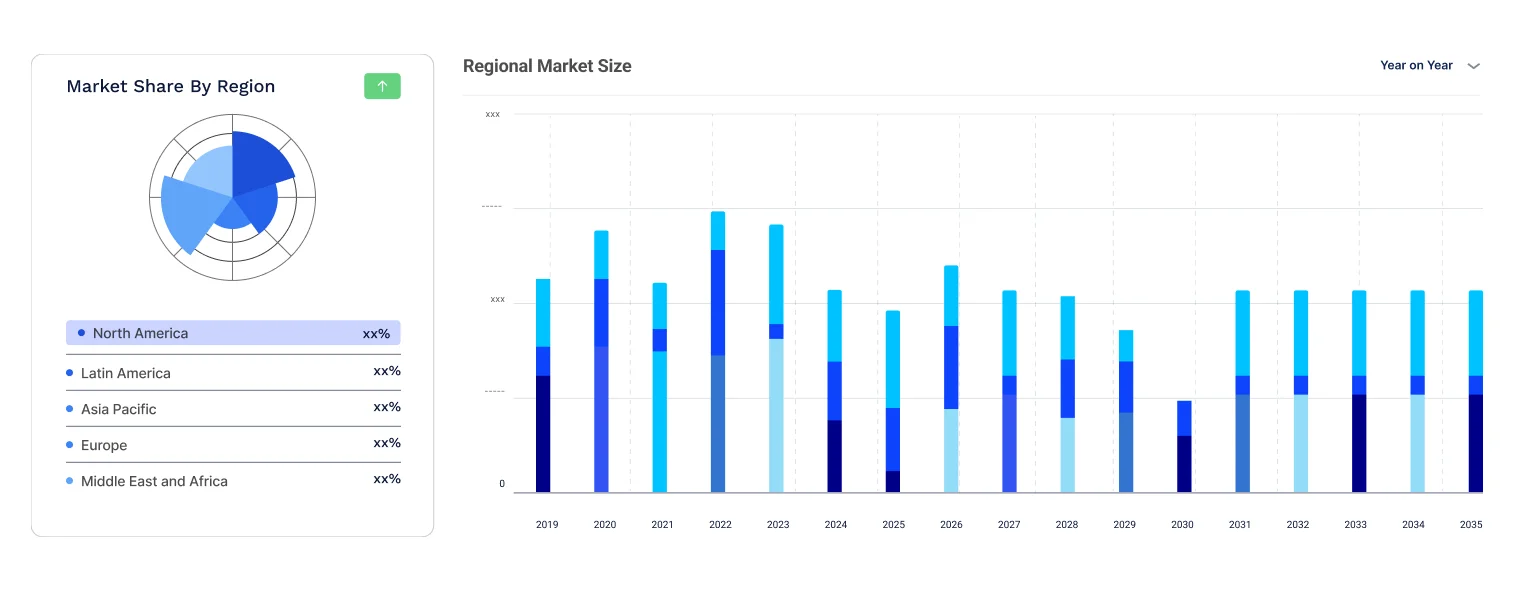
Market Breakup by Region

Flow improvers are used for extracting, transporting, and refining crude oil to meet the rising demand for petroleum products
In the extraction phase, crude oil flow improvers play a crucial role in maintaining the viscosity and flow of heavy crude oils, thereby maximising production efficiency. Products such as paraffin inhibitors to prevent wax deposition, asphaltene inhibitors to avoid agglomeration, and drag reducing agents to minimise friction and turbulence in pipelines are commonly used in this stage.
In pipeline transportation, flow improvers are essential for the efficient long-distance movement of crude oil through pipelines. They help enhance flow characteristics and prevent blockages, ensuring a smooth and uninterrupted transportation process. As per crude oil flow improvers market analysis, the segment is driven by the global expansion of pipeline infrastructure and the need to maintain viscosity and flow in challenging weather conditions.
In the refinery segment, crude oil flow improvers are added to maintain the quality and state of the crude oil, ensuring optimal processing and transportation to end users. This segment is expected to grow steadily due to the rising global consumption of petroleum products and the increasing demand for effective transportation of crude oil from production sites to refineries.
Paraffin inhibitors dominate the market as they facilitate smooth transportation of crude oil
Paraffin inhibitors are polymers that interact with paraffins in crude oil to restrict wax crystal formation and prevent deposition in pipelines. This is crucial for maintaining viscosity and ensuring smooth flow during long-distance transportation. Asphaltene inhibitors are projected to be the fastest growing segment as they are widely used in upstream and offshore operations to inhibit blockages in flow lines by preventing the aggregation and precipitation of asphaltenes. The increasing adoption of asphaltene inhibitors is driven by the need to preserve the integrity of subsea assets and manage throughput time.
According to crude oil flow improvers market report, scale inhibitors are used to control the formation of mineral scales that can build up in pipelines and processing equipment. As oil and gas reserves mature, scale buildup becomes more prevalent, driving the need for effective scale inhibitors to maintain the efficiency of crude oil production and transportation systems. Hydrate inhibitors, on the other hand, prevent the formation of gas hydrates, which can block pipelines and process equipment. Companies are focusing on developing low-dose, environmentally friendly hydrate inhibitors that substantially reduce the need for other chemical additives, lowering costs and risks.
Market players are focused on enhancing productivity, environmental compliance, strategic partnerships, global expansion, and regulatory adherence to drive innovation and sustainable growth
The Lubrizol Corporation was founded in 1928 and is headquartered in Ohio, United States. The company offers a diverse range of products and services tailored for various sectors such as lubricants, coatings, transportation, and healthcare.
BASF SE was founded in 1865 and it is a leading chemical company. Headquartered in Ludwigshafen, Germany, BASF SE operates across multiple sectors, including chemicals, plastics, performance products, agricultural solutions, and oilfield chemicals.
Schlumberger Limited was established in 1926 and has emerged as a global leader in providing technology solutions to the oil and gas industry. Headquartered in Texas, United States, the company specialises in reservoir characterisation, drilling, production, and processing technologies.
Evonik Industries AG was founded in 2007 and is headquartered in Essen, Germany. The company offers a wide array of products and solutions for industries ranging from chemicals and plastics to healthcare and energy.
*Please note that this is only a partial list; the complete list of key players is available in the full report. Additionally, the list of key players can be customized to better suit your needs.*
Other key players in the global crude oil flow improvers market Baker Hughes Company, among others.
Middle East and Africa leads the market due to its large production levels of crude oil
The Middle East region is expected to dominate the market during the forecast period. This can be attributed to the increase in demand from countries like Saudi Arabia, Iraq, and the United Arab Emirates, which are among the largest producers of crude oil in the world. The region's dominance is further supported by the presence of many crude oil reserves, with 64.5% of the OPEC crude oil reserves accounting for 79.6% of total world reserves. Saudi Aramco's recent investment in expanding its pipeline infrastructure to increase crude oil exports highlights the region's commitment to maintaining its position as a leading oil producer. The growing use of crude oil-based final products in energy generation, automobiles, and industries is expected to increase the crude oil flow improvers market share in the region.
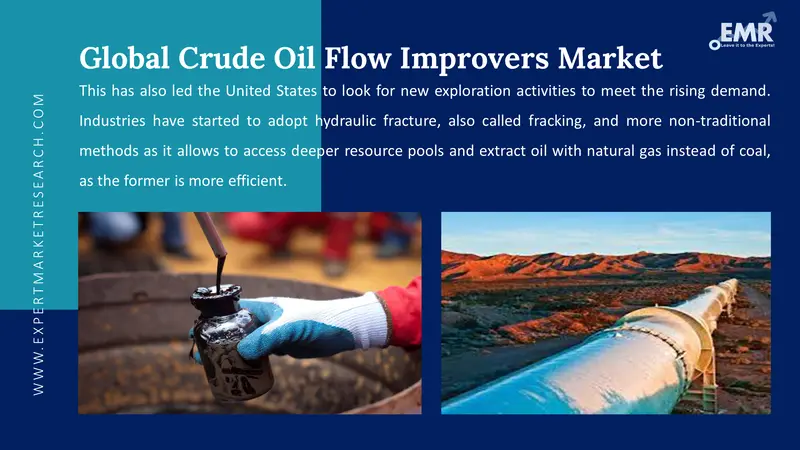
Meanwhile, oil and gas are some of the major sources of energy in the United States, and due to the recent Russia-Ukraine conflict, the global supply of oil has been obstructed. This has also led the United States to look for new exploration activities to meet the rising demand. Industries have started to adopt hydraulic fracture, also called fracking, and more non-traditional methods as it allows access to deeper resource pools and extract oil with natural gas instead of coal. The continued demand and adoption of non-traditional methods for crude oil have increased the need for flow improvers.


Upto 15% Off
USD
$2499 $2249
$3999 $3599
$4999 $4249
$5999 $5099


*While we strive to always give you current and accurate information, the numbers depicted on the website are indicative and may differ from the actual numbers in the main report. At Expert Market Research, we aim to bring you the latest insights and trends in the market. Using our analyses and forecasts, stakeholders can understand the market dynamics, navigate challenges, and capitalize on opportunities to make data-driven strategic decisions.*
The market is projected to grow at a CAGR of 5.90% between 2026 and 2035.
The major drivers of the market include the thriving population, booming automobile and machinery industry, and the consequent growing energy needs of the population around the world.
These flow improvers are crucial for mitigating challenges associated with pipeline transportation, such as viscosity issues, wax deposition, and other flow disruptions.
Key trends aiding market expansion include the governments’ support to further improve the production and the ongoing switch to non-traditional methods requiring more flow improvers.
Regions considered in the market are North America, Europe, the Asia Pacific, Latin America, and the Middle East and Africa, with the Asia Pacific being the fastest-growing market.
The products include paraffin inhibitors, asphaltene inhibitors, scale inhibitors, and hydrate inhibitors.
The crude oil flow improvers are applied and used in transportation, extraction, and refinery.
Key players in the market are The Lubrizol Corporation, BASF SE, Schlumberger Limited, Evonik Industries AG, and Baker Hughes Company, among others.
In 2025, the global crude oil flow improvers market reached an approximate value of USD 2.15 Billion.
The market is expected to attain a value of USD 3.81 Billion by 2035, supported by continued investments in oil infrastructure.
Explore our key highlights of the report and gain a concise overview of key findings, trends, and actionable insights that will empower your strategic decisions.
| REPORT FEATURES | DETAILS |
| Base Year | 2025 |
| Historical Period | 2019-2025 |
| Forecast Period | 2026-2035 |
| Scope of the Report |
Historical and Forecast Trends, Industry Drivers and Constraints, Historical and Forecast Market Analysis by Segment:
|
| Breakup by Product |
|
| Breakup by Application |
|
| Breakup by Region |
|
| Market Dynamics |
|
| Competitive Landscape |
|
| Companies Covered |
|
| Report Price and Purchase Option | Explore our purchase options that are best suited to your resources and industry needs. |
| Delivery Format | Delivered as an attached PDF and Excel through email, with an option of receiving an editable PPT, according to the purchase option. |
Datasheet
One User
USD 2,499
USD 2,249
tax inclusive*
Single User License
One User
USD 3,999
USD 3,599
tax inclusive*
Five User License
Five User
USD 4,999
USD 4,249
tax inclusive*
Corporate License
Unlimited Users
USD 5,999
USD 5,099
tax inclusive*
*Please note that the prices mentioned below are starting prices for each bundle type. Kindly contact our team for further details.*
Flash Bundle
Small Business Bundle
Growth Bundle
Enterprise Bundle
*Please note that the prices mentioned below are starting prices for each bundle type. Kindly contact our team for further details.*
Flash Bundle
Number of Reports: 3
20%
tax inclusive*
Small Business Bundle
Number of Reports: 5
25%
tax inclusive*
Growth Bundle
Number of Reports: 8
30%
tax inclusive*
Enterprise Bundle
Number of Reports: 10
35%
tax inclusive*
How To Order

Select License Type
Choose the right license for your needs and access rights.

Click on ‘Buy Now’
Add the report to your cart with one click and proceed to register.

Select Mode of Payment
Choose a payment option for a secure checkout. You will be redirected accordingly.
Strategic Solutions for Informed Decision-Making
Gain insights to stay ahead and seize opportunities.

Get insights & trends for a competitive edge.

Track prices with detailed trend reports.

Analyse trade data for supply chain insights.

Leverage cost reports for smart savings

Enhance supply chain with partnerships.

Connect For More Information
Our expert team of analysts will offer full support and resolve any queries regarding the report, before and after the purchase.
Our expert team of analysts will offer full support and resolve any queries regarding the report, before and after the purchase.
We employ meticulous research methods, blending advanced analytics and expert insights to deliver accurate, actionable industry intelligence, staying ahead of competitors.
Our skilled analysts offer unparalleled competitive advantage with detailed insights on current and emerging markets, ensuring your strategic edge.
We offer an in-depth yet simplified presentation of industry insights and analysis to meet your specific requirements effectively.




