

Consumer Insights
Uncover trends and behaviors shaping consumer choices today
Procurement Insights
Optimize your sourcing strategy with key market data
Industry Stats
Stay ahead with the latest trends and market analysis.
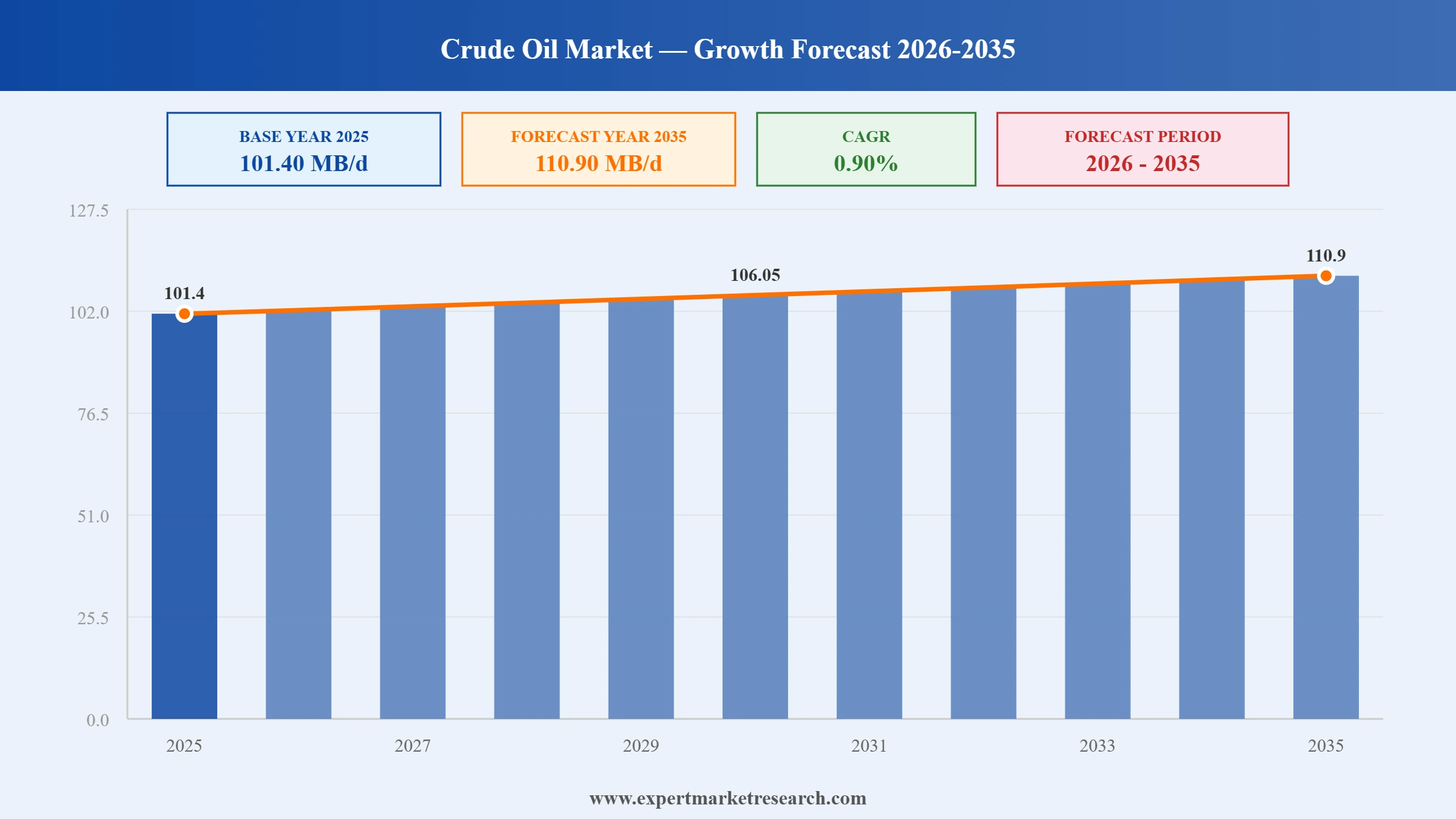
The global crude oil market attained a volume of 101.40 MB/d in 2025 and is projected to expand at a CAGR of 0.90% through 2035. The market is further expected to achieve a volume of 110.90 MB/d by 2035. The increased use of digital oilfield technology, advanced methods of enhanced oil recovery, and refined infrastructures is leading to better efficiencies in production, improved energy security, and sustainability in the long run within crude oil production operations.
Increasing demand for petrochemicals continues to be a key driving factor of growth in the crude oil market as manufacturers process more crude to meet the requirements for polymers, chemicals, and industrial feedstock that are necessary in the automotive, construction, and packaging sectors. Moreover, increased petroleum reserves by various importing countries are leading to better procurement contracts and investments in storage facilities, marine transportation, and pipeline infrastructures across borders.
The global crude oil market is further experiencing a strategic shift towards digital optimization, reduced emissions in production, and increased supply chain resilience. As an illustration of one of the major changes in the industry, Saudi Aramco is using artificial intelligence and advanced reservoir management tools in several upstream assets for better efficiency and production optimization. The project is consistent with the company's strategy of optimizing production and reducing emissions in operations. In addition, the global oil demand was estimated at more than 105 million barrels per day in 2025 owing to the robust aviation industry, petrochemical production, and industries against the backdrop of the increasing energy transition.
Apart from innovation in the upstream sector, refiners and national oil producers are directing their investments towards high value-added downstream segments, accelerating the crude oil market value. Integrated energy firms are developing additional petrochemical capacities, digital trading platforms, and carbon management projects to increase profits through changing commodity cycles. Collaborations between producers, engineering companies, and technology vendors are promoting the development of automated drilling systems, digital twins, and emissions monitoring systems. Growing refinery upgrade in Asia and the Middle East, and increasing crude storage capacity in emerging economies support international crude flows. In June 2026, CME Group expanded 24/7 trading for smaller WTI crude oil and gold contracts, enhancing global market accessibility and risk management.
Read more about this report -REQUEST FREE SAMPLE COPY IN PDF
| Global Crude Oil Market Report Summary | Description | Value |
| Base Year | MB/d | 2025 |
| Historical Period | MB/d | 2019-2025 |
| Forecast Period | MB/d | 2026-2035 |
| Market Size 2025 | MB/d | 101.40 |
| Market Size 2035 | MB/d | 110.90 |
| CAGR 2019-2025 | Percentage | XX% |
| CAGR 2026-2035 | Percentage | 0.90% |
| CAGR 2026-2035 - Market by Region | Asia Pacific | 1.0% |
| CAGR 2026-2035 - Market by Country | India | 1.3% |
| CAGR 2026-2035 - Market by Country | China | 1.2% |
| Market Share by Country 2025 | UK | 3.5% |
Restore & Protect motor oil was launched by Valvoline in Europe with innovative engine cleaner technology, greater protection, better performance, and increased engine life. Such developments in the crude oil market encourage other firms to formulate superior lubricants that help with engine performance, maintenance savings, and sustainability demands in automobiles.
Essar Energy Transition Fuels and IRH Global Trading reached a USD 500 million financing agreement in relation to crude oil and petroleum products. Other firms can also enter into strategic financing and trading relationships to enhance crude oil purchase and supply chain efficiency.
Bureau Veritas entered into a deal to sell off its testing business in the oil and petrochemicals sector, thereby focusing on portfolio of higher growth assurance and inspection businesses. Considering such developments, other firms in the crude oil market can look at portfolio optimization and energy services for better efficiency and tapping high value markets.
SEARAH joint venture was created by merging the upstream assets of Eni and PETRONAS for better hydrocarbon production, efficiency and energy development in the region. Other firms can also look at strategic upstream joint ventures for better asset portfolio management and production efficiency in the region.
One key trend is the digitalization of the crude oil market with the introduction of artificial intelligence and machine learning in upstream operations for improved reservoir modeling, precise drilling, and predictive equipment maintenance, reducing operating expenses. Governments are supporting the development of digital energy infrastructure via their national energy modernization plans. For instance, the United States Department of Energy keeps on financing digital energy projects, which promote operational resilience in the industry, thus encouraging the use of intelligent monitoring systems within mature and new oil fields. For example, in June 2026, Oil India and Kellton launched AI-powered digital wellhead monitoring, enhancing real-time visibility, predictive maintenance, production intelligence, and operational efficiency.
Energy companies are increasingly turning their attention to carbon capture, utilization, and storage along with low-emission production technologies to ensure the competitiveness of crude oil in the face of more stringent regulations. Major producers are adopting carbon management into upstream projects without reducing production capacities. Governments from the Gulf region are, at the same time, launching their national decarbonization plans to encourage such investments. Aligning with such developments in the crude oil market, in June 2026, BKV commissioned two new carbon capture and sequestration facilities, expanding commercial CCS capacity, emissions reduction, and sustainable energy operations.
The crude oil market observes increased governmental funding in strategic petroleum reserves for improved energy security and protection against geopolitical shocks. Such developments present future procurement prospects for oil producers as well as stimulate infrastructure development. China is increasing its national petroleum reserve capacities by adding more storage facilities aimed at ensuring a stable oil supply in times of volatility. On the other hand, India is launching new strategic petroleum reserves as part of its energy security policy that increases import security. There are rising investments into terminal development, underground storage and logistics infrastructure that increase flexibility of the crude oil trade and provide long-term demand for producers of transport and storage services. In March 2026, United States Department of Energy initiated a Strategic Petroleum Reserve emergency exchange, stabilizing global oil supplies and strengthening energy security.
Integrated refining and petrochemical facilities are becoming increasingly significant for companies that strive for more valuable products of their crude oil processing and additional sources of income. Modern plants are increasing feedstock flexibility and profitability through the manufacture of chemicals and fuel, widening the crude oil market scope. For instance, Kuwait Integrated Petroleum Industries Company is continuing the construction of the integrated refining complex in Al-Zour. In July 2026, Oil India secured 6 million tons of annual crude imports, strengthening refinery expansion, supply security, operational stability, and long-term energy growth. The governments in the Middle East are actively supporting downstream diversification as part of their long-term economic development strategies.
The exploration of offshore oil is regaining its vigor because of modern seismic imaging, automated drilling equipment, and floating production facilities. Energy companies are venturing into deepwater oil deposits where there are possibilities of increasing oil production over time without sacrificing efficiency. Firms like Petrobras are directing their efforts in developing pre-salt offshore oil deposits in Brazil by adopting advanced digital drilling technologies, expanding the crude oil market scope. On the other hand, in June 2026, Kolibri Global Energy raised its 2026 production forecast, expanding drilling targets, operational capacity, revenue growth, and long-term development strategy. Governments are also releasing more offshore oil licenses to promote investment in the upstream sector. In Brazil, the National Agency of Petroleum holds oil concession auctions on regular basis.
The Expert Market Research's report titled “Global Crude Oil Market Report and Forecast 2026-2035” offers a detailed analysis of the market based on the following segments:
Market Breakup By Type
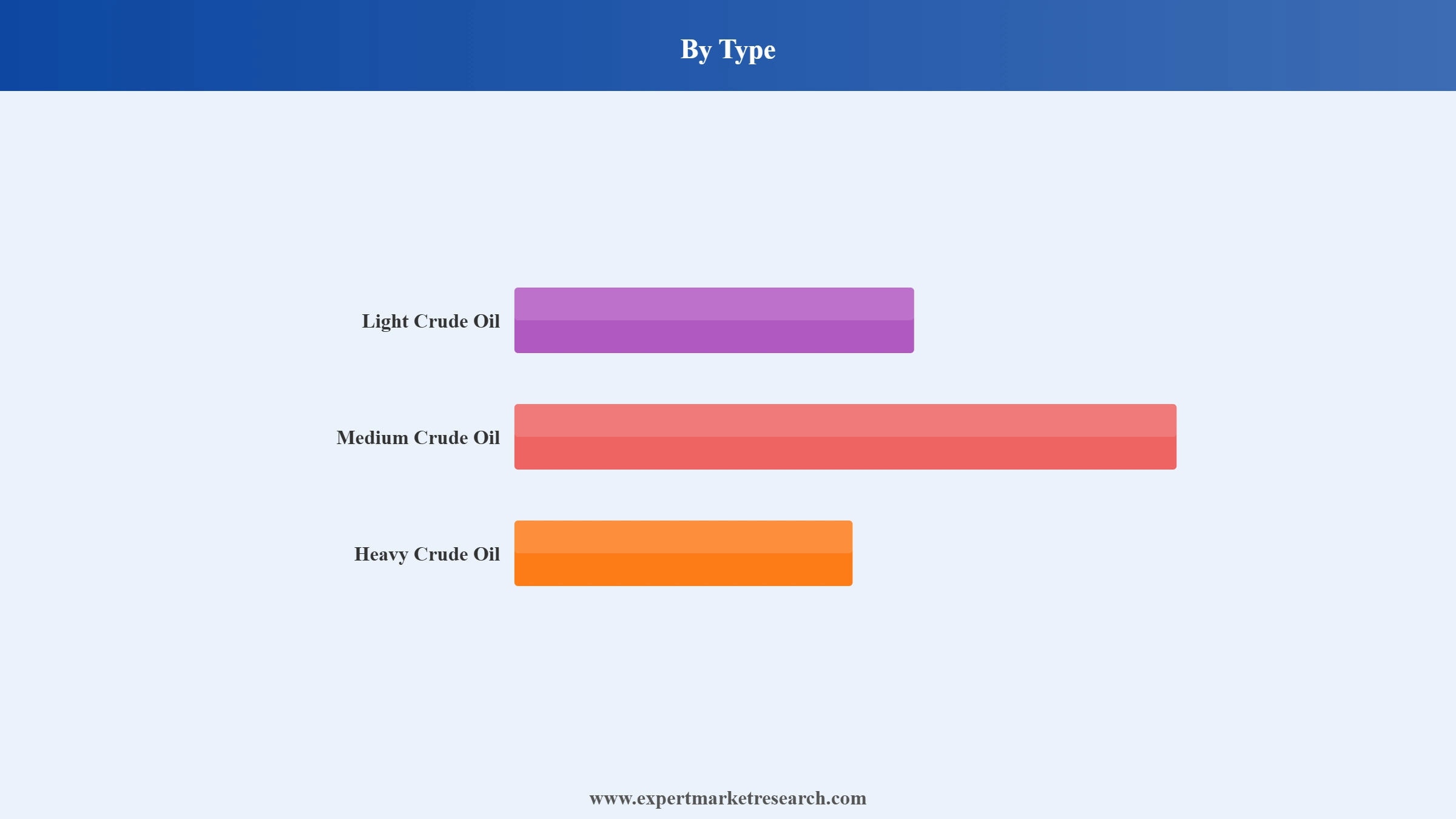
Key Insight: The light crude oil continues to dominate the crude oil market since it is more efficient, cleaner, and produces better-quality fuel. The medium crude oil is being adopted at an increasing rate due to improvements in technology making it more economical to process and giving the refiners more feedstock options. Heavy crude oil is still used in specialized refineries having sophisticated upgrading facilities that extract maximum value out of inexpensive feedstocks. Different kinds of crude serve different purposes and thus help the producers and refineries adopt more diversified supply methods.
Market Breakup By Application
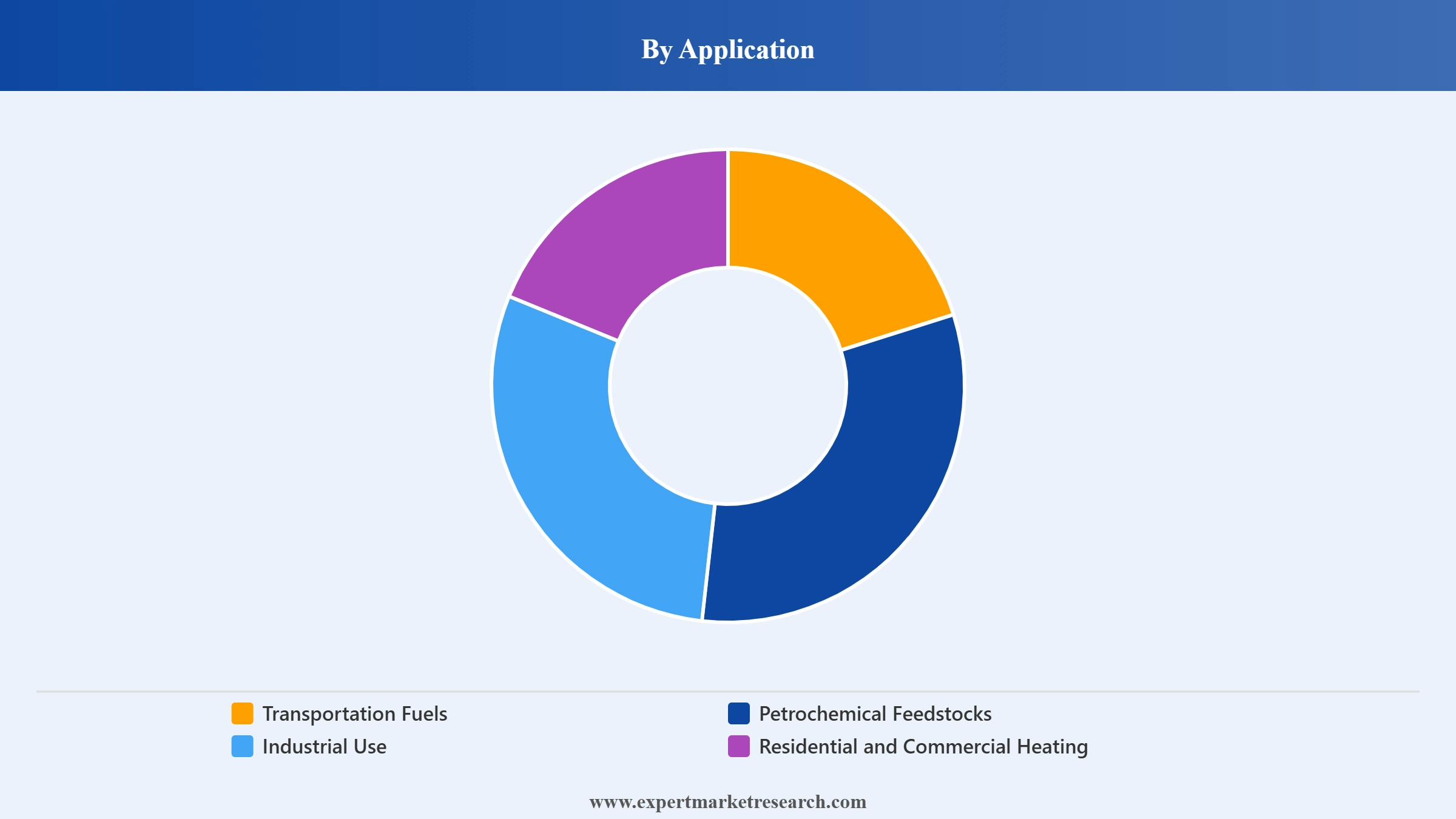
Key Insight: The applications considered in the crude oil market report form the major application due to the need for reliable transportation fuels for mobility, shipping, and aviation activities. Petrochemicals are rapidly growing their share due to the increasing reliance of manufacturing industries on value-added chemical products that are derived from crude oil. The industrial application segment maintains a steady demand through the use of lubricants, process oils, and manufacturing processes in heavy industries around the world. Heating fuel application is becoming vital, especially in the cold regions of the world where oil heating fuels offer reliable energy sources.
Market Breakup By Extraction Method
Key Insight: Onshore extraction remains positioned at the forefront of the crude oil market due to the existence of infrastructural set-up, low cost of capital, and proven production resources. The offshore extraction is also developing fast due to improved drilling technology that helps in accessing unexploited oil reserves and increasing production potential. The shallow water extraction process is relatively easier in terms of technical aspects, while deepwater and ultra-deepwater projects help in accessing large quantities of high-quality reserves needed to meet future demand.
Market Breakup by Region
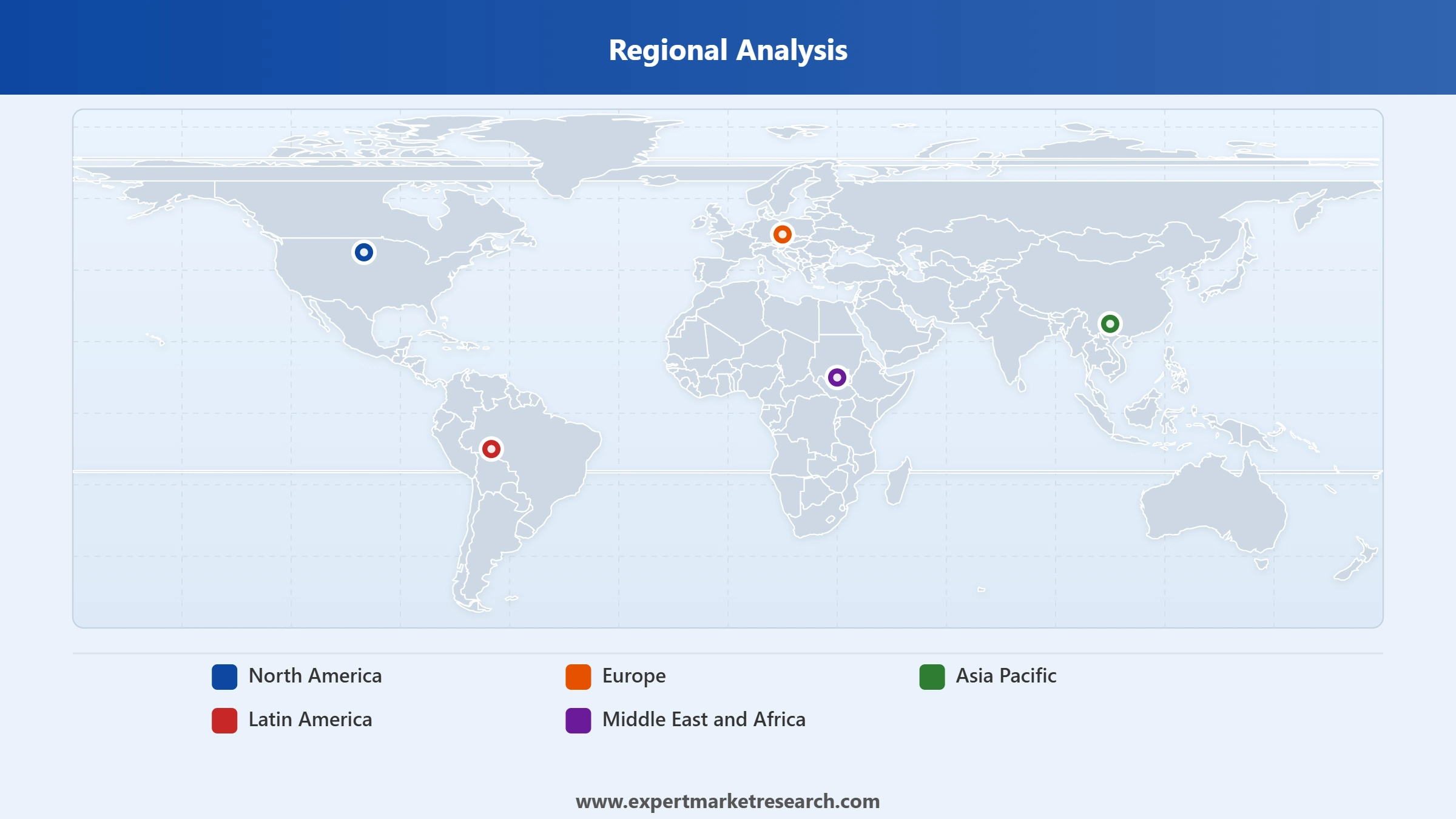
Key Insight: The Middle East and Africa region leads the overall crude oil market growth due to their resource endowment, cost advantages in production, and export capacities. The Asia Pacific region is experiencing rapid growth due to its ongoing increase in industrialization, refinery investments, and petrochemical expansion, which drive up its crude oil demand. The North American region is competitive owing to its technology, shale production, and refineries. Europe focuses on effective refining processes, energy diversification, and regulatory compliance for market stability. Latin America is competitive due to offshore development and utilization of reserves.
Read more about this report -REQUEST FREE SAMPLE COPY IN PDF
Light crude oil dominates the market owing to superior refining efficiency
Light crude oil largely contributes to the crude oil market revenue due to its low sulfur content, higher yield of premium transportation fuels, and lower refining complexity. Light crude oil is preferable for refineries since it produces bigger quantities of gasoline, diesel, and jet fuel with a smaller number of upgrade operations needed. Investments in advanced refining facilities in North America and Asia are driving growth in the demand for such a type of crude variant. Export-oriented companies choose light crude due to better pricing, higher refinery versatility, and increased flexibility of operations. In July 2026, Centrus secured a USD 900 million DOE contract, advancing commercial HALEU production, domestic nuclear fuel capacity, and energy security.
Medium crude oil is the fastest growing product due to investments made in the technology of crude upgrade which enables the processing of wider slate of crudes with higher yield of products. A higher number of modernization projects in Asia and the Middle East is driving the demand growth in the crude oil market. Medium crude offers a good balance between production costs and refining economics, which makes it possible for producers to export it in different directions. Aligning with such trends, in March 2026, Argus launched the global ACTI crude tanker index, improving freight transparency, risk management, shipping cost benchmarking, and market intelligence.
Read more about this report -REQUEST FREE SAMPLE COPY IN PDF
By application, transportation fuels lead the market growth owing to sustained global mobility demand growth
Transportation fuel is by far the most prominent application as crude continues to be the dominant feedstock source in the production of gasoline, diesel, marine fuels, and aviation fuel. Passenger mobility, freight transportation, ocean transport, and air transport are contributing to the global demand for refined products. Emerging economies are also seeing higher vehicle ownership and logistics activity, which further contributes to higher fuel consumption. In addition, refiners are optimizing their processes with respect to the transportation fuel yield while complying with fuel specifications, thereby boosting the crude oil market value. In June 2026, Summit Midstream secured additional Double E commitments, expanding pipeline capacity, crude gathering infrastructure, shipper access, and long-term energy transportation.
The highest growth rates are being observed in the petrochemical feedstocks sector due to increased demand for plastic products, specialty chemicals, synthetic fibers, industrial solvents, and packaging. Energy companies continue to benefit from the integration between refining operations and petrochemical plants. This increases value generation from the crude oil processing with minimal reliance on the margins of transportation fuels. The rapid pace of industrial development, urban construction, health care production, and consumer goods production is continuing to drive the consumption of petrochemicals. In July 2026, HPCL remained on track for fourth-quarter Rajasthan petrochemical unit startup, expanding refining capacity, petrochemical output, and import substitution capabilities.
Read more about this report -REQUEST FREE SAMPLE COPY IN PDF
Onshore production accounts for the largest share of the market owing to lower operational development costs
The onshore extraction method captures the highest share of the crude oil market revenue because of reduced costs of exploration, presence of supporting facilities, easy maintenance, and quick production times. Maturing onshore fields are enjoying benefits from enhanced oil recovery technology that enhances production from existing reservoirs. Extensive network of pipelines, road links, and processing facilities also help in improving the economics of onshore projects. Digital monitoring systems and automated drilling techniques are being used by producers to optimize production while minimizing costs. For example, in January 2026, IOC–BPCL joint venture discovered new Abu Dhabi onshore oil reserves, strengthening overseas production, energy security, and upstream resource development.
Offshore extraction is growing at a faster rate due to technological innovations that minimize the risks of development and enable production from deep water and ultra-deepwater reserves. High-capacity offshore production facilities, enhanced seismic imaging technologies, and automated drilling techniques are enabling economic offshore extraction projects, boosting the crude oil market penetration. Companies are seeking to exploit offshore discoveries that can sustain production for decades. Increasing investments in subsea systems and offshore safety systems are enhancing project economics while boosting global crude production capacity.
Middle East and Africa dominate the global market due to abundant reserves
Middle East and Africa represent the largest regional crude oil market because of extensive proven crude oil reserves, competitive production costs, and significant export capacity. National oil companies continue investing in upstream expansion, enhanced recovery technologies, and downstream integration to strengthen international competitiveness. The region also benefits from well-established export infrastructure connecting major consuming markets across Asia and Europe. Long-term production planning and strategic capacity expansion continue reinforcing its leadership within global crude supply chains. In April 2026, Sasol achieved Africa's first crude oil refinery sustainability certification, enabling certified renewable fuels, lower emissions, and circular feedstock integration.
Asia Pacific is emerging as the fastest-growing regional crude oil market due to expanding refining capacity, rising industrialization, and increasing transportation fuel consumption. Countries across the region are investing heavily in integrated refining and petrochemical complexes while strengthening crude import infrastructure. Growing manufacturing activity, urban development, and chemical production continue increasing demand for crude processing. Regional energy companies are also expanding storage capacity and supply diversification strategies to improve energy security and support sustained industrial growth.
Read more about this report -REQUEST FREE SAMPLE COPY IN PDF
The market is becoming competitive as crude oil market players shift towards the adoption of the technologies of digital oil field, reduced emissions in the production process, integration and refining, and resilient supply chain. Companies are also adopting technologies such as artificial intelligence, advanced seismic imaging, and advanced recovery methods that help to extract oil efficiently and cost-effectively. Cooperation with technology vendors is helping them to drill precisely and adopt predictive maintenance technologies.
Petrochemical integration and carbon capture are also gaining popularity among the crude oil companies as a means of revenue diversification and better sustainability performance. There is a possibility of growth in deep-water explorations, refineries upgrades, strategic petroleum reserves, and digital oil trading platforms. Moreover, some companies are being engaged in methane monitoring and automated production and reservoir management.
Hess Corporation was established in 1968 and operates from its headquarters located in New York, United States. It is an independent energy company that focuses on the exploration and production of crude oil. The company is currently developing its high-quality offshore resources especially in Guyana and applying state-of-the-art drilling technology and digital reservoir management to increase recovery efficiency, improve production efficiency, and shareholder value.
China Petrochemical Corporation was founded in 1993, and its headquarters is based in Beijing, China. The company deals in all areas of the petroleum industry such as exploration, refining, petrochemical, and fuel marketing and supports the crude oil market growth. The company is continuing to modernize its refineries, produce cleaner fuels, develop its petrochemical complexes, and use intelligent digital technologies.
Formed in 2002 and operating from the headquarters of Houston, Texas, United States, ConocoPhillips concentrates on cost-effective exploration and production in various global locations. The company highlights the use of cutting-edge seismic techniques, financial prudence, cost-effective development of resources, and carbon emissions reduction programs by increasing crude production from unconventional and offshore resources.
Formed in 2005 and operating from the headquarters of Houston, Texas, United States, Noble Energy Management LLC offers energy management and operational services to enhance crude oil production activities. The company is concerned about the improvement in production performance, reliability of operations, energy commercial risk management, and tailored energy solutions.
Other key players in the market include Devon Energy Corporation, Marathon Oil Corporation, PJSC NK Rosneft, Saudi Arabian Oil Company (Saudi Aramco), Kuwait Petroleum Corporation, China National Petroleum Corporation, Occidental Petroleum Corporation, Valero Energy Corporation, China National Offshore Oil Corporation, Reliance Industries Limited, Petróleo Brasileiro S.A., and Equinor ASA., among others.
*Please note that this is only a partial list; the complete list of key players is available in the full report. Additionally, the list of key players can be customized to better suit your needs.*
Unlock the latest insights with our crude oil market trends 2026 report. Discover regional growth patterns, consumer preferences, and key industry players. Stay ahead of competition with trusted data and expert analysis. Download your free sample report today and drive informed decisions in the market.
Energy Transition Impact On Crude Oil Demand
Downstream Oil Refining Petrochemical Insights
Crude Oil Market Innovations Trading Systems


Upto 15% Off
USD
$2499 $2249
$3999 $3599
$4999 $4249
$5999 $5099


*While we strive to always give you current and accurate information, the numbers depicted on the website are indicative and may differ from the actual numbers in the main report. At Expert Market Research, we aim to bring you the latest insights and trends in the market. Using our analyses and forecasts, stakeholders can understand the market dynamics, navigate challenges, and capitalize on opportunities to make data-driven strategic decisions.*
In 2025, the market attained a volume of nearly 101.40 MB/d.
The market is assessed to grow at a CAGR of 0.90% between 2026 and 2035.
The market is estimated to witness a healthy growth in the forecast period of 2026-2035 to reach about 110.90 MB/d by 2035.
The major market drivers are the increasing popularity of air travel and the extensive usage of hydrocarbons in everyday products.
The key trends aiding the market growth are the rising demand for petrochemicals, advancements in extraction technologies, and increasing exploration of shale oil reserves and deposits.
The major regions in the market are North America, Latin America, the Middle East and Africa, Europe, and the Asia Pacific.
The major players in the market are Hess Corporation, China Petrochemical Corporation, ConocoPhillips Company, Nobel Energy Management LLC, Devon Energy Corporation, Marathon Oil Corporation, PJSC NK Rosneft, Saudi Arabian Oil Company (Saudi Aramco), Kuwait Petroleum Corporation, China National Petroleum Corporation, Occidental Petroleum Corporation, Valero Energy Corporation, China National Offshore Oil Corporation, Reliance Industries Limited, Petróleo Brasileiro S.A., and Equinor ASA, among others.
Explore our key highlights of the report and gain a concise overview of key findings, trends, and actionable insights that will empower your strategic decisions.
| REPORT FEATURES | DETAILS |
| Base Year | 2025 |
| Historical Period | 2019-2025 |
| Forecast Period | 2026-2035 |
| Scope of the Report |
Historical and Forecast Trends, Industry Drivers and Constraints, Historical and Forecast Market Analysis by Segment:
|
| Breakup by Type |
|
| Breakup by Application |
|
| Breakup by Extraction Method |
|
| Breakup by Region |
|
| Market Dynamics |
|
| Competitive Landscape |
|
| Companies Covered |
|
Datasheet
One User
USD 2,499
USD 2,249
tax inclusive*
Single User License
One User
USD 3,999
USD 3,599
tax inclusive*
Five User License
Five User
USD 4,999
USD 4,249
tax inclusive*
Corporate License
Unlimited Users
USD 5,999
USD 5,099
tax inclusive*
*Please note that the prices mentioned below are starting prices for each bundle type. Kindly contact our team for further details.*
Flash Bundle
Small Business Bundle
Growth Bundle
Enterprise Bundle
*Please note that the prices mentioned below are starting prices for each bundle type. Kindly contact our team for further details.*
Flash Bundle
Number of Reports: 3
20%
tax inclusive*
Small Business Bundle
Number of Reports: 5
25%
tax inclusive*
Growth Bundle
Number of Reports: 8
30%
tax inclusive*
Enterprise Bundle
Number of Reports: 10
35%
tax inclusive*
How To Order

Select License Type
Choose the right license for your needs and access rights.

Click on ‘Buy Now’
Add the report to your cart with one click and proceed to register.

Select Mode of Payment
Choose a payment option for a secure checkout. You will be redirected accordingly.
Strategic Solutions for Informed Decision-Making
Gain insights to stay ahead and seize opportunities.

Get insights & trends for a competitive edge.

Track prices with detailed trend reports.

Analyse trade data for supply chain insights.

Leverage cost reports for smart savings

Enhance supply chain with partnerships.

Connect For More Information
Our expert team of analysts will offer full support and resolve any queries regarding the report, before and after the purchase.
Our expert team of analysts will offer full support and resolve any queries regarding the report, before and after the purchase.
We employ meticulous research methods, blending advanced analytics and expert insights to deliver accurate, actionable industry intelligence, staying ahead of competitors.
Our skilled analysts offer unparalleled competitive advantage with detailed insights on current and emerging markets, ensuring your strategic edge.
We offer an in-depth yet simplified presentation of industry insights and analysis to meet your specific requirements effectively.




