

Consumer Insights
Uncover trends and behaviors shaping consumer choices today
Procurement Insights
Optimize your sourcing strategy with key market data
Industry Stats
Stay ahead with the latest trends and market analysis.
The global dual-axis solar tracker market attained a value of USD 4.10 Billion in 2025 and is projected to expand at a CAGR of 29.20% through 2035. The market is further expected to achieve USD 53.14 Billion by 2035. An increase in the adoption of bifacial solar panels in utility-scale renewable energy projects is driving the demand for dual-axis trackers that can provide higher levels of energy output, optimize performance on-the-go, and improve operational efficiencies.
Growth in the dual-axis solar tracker market is being fueled by increasing investments in intelligent renewable energy infrastructures and automated solar solutions. The government in several countries within the Asia Pacific and Middle Eastern regions is promoting initiatives that will modernize their grids and need more efficient sources of renewable energy. At the same time, manufacturers are equipping trackers with IoT-enabled diagnostic features that enable them to track the condition of the devices remotely.
There are significant changes occurring in the global dual-axis solar tracker market as utility scale developers strive to enhance the efficiencies in photovoltaic output for high irradiation sites. In September 2023, the American tracker company, Nextracker announced the addition of terrain adaptative software features to its range of intelligent solar trackers meant for bifacial modules in non-uniform terrain settings. This move was a response to increased interest in the use of solar trackers by large-scale solar installations in Latin America and the Middle East as part of their efforts to boost electricity outputs for each panel. According to the International Energy Association, solar PV capacity expanded by around 12% year-on-year in 2025, lifting cumulative global installed capacity to approximately 2.8TW, thereby opening up procurement prospects for innovative tracking solutions for use in various climatic conditions.
Moreover, prominent engineering firms are prioritizing vertically integrated production processes together with regional partnerships to improve their supply chains. Dual axis trackers are also becoming popular in mixed renewable solutions that incorporate battery storage capacity alongside intelligent grid solutions. Companies in the dual-axis solar tracker market are also producing robust steel structures and automatic positioning technology that can be used in desert solar installations to cut down future maintenance costs. For example, in May 2026, in India, Gujarat launched battery storage systems totaling 870 MW across five locations to ensure renewable power grid stability.
Compound Annual Growth Rate
29.2%
Value in USD Billion
2026-2035
An innovative all-terrain solar tracking system was released by Arctech that is capable of handling uneven solar installations. This innovation makes way for new opportunities where firms can develop flexible solar tracking systems for difficult renewable energy utility installations around the world.
A software package that enhances the effectiveness and productivity of solar trackers was launched by Terrasmart. This innovation opens up prospects for firms in the dual-axis solar tracker market to develop sophisticated tracking software with better prediction and automation features.
Nextpower Arabia committed to deliver smart solar trackers amounting to 2.25 GW that would be useful for renewable energy generation in ACWA Power consortium projects. This is an example that shows how businesses could benefit from increasing their smart solar tracking systems manufacturing to cater to the expanding demand for renewable energy.
Corrie Energy introduced dual axis solar tracking system technologies that improved the efficiency of energy production. This development in the dual-axis solar tracker market exemplifies business prospects to design efficient solar energy systems for increased energy generation.
Integration of artificial intelligence into dual-axis trackers continues to be one of the technological trends among utility scale solar parks as energy producers require better forecasting of energy production along with accurate positioning. Advanced tracking software makes use of machine learning to position the panels according to variations in irradiance levels, the movements of clouds, and season. With this development in the dual-axis solar tracker market, the efficiency of these plants becomes better, thereby saving the owners from losses. For example, in July 2025, Nextracker launched advanced AI analytics services in dual axis tracker systems for utility-scale solar parks.
The rapid development of utility-scale solar farms in emerging countries is leading to higher procurement needs of solar tracker products that are expected to maximize the efficiency of energy production. Countries that are focused on renewable energy goals and have set high targets increasing prioritize tracking equipment, accelerating the dual-axis solar tracker market penetration. For instance, in December 2025, India achieved record renewable energy expansion, accelerating solar and wind infrastructure growth across national clean energy initiatives. Companies like Array Technologies continue to establish strategic alliances in order to meet growing demands in Asia Pacific and Middle Eastern markets.
Commercial use of bifacial photovoltaic modules is boosting growth in the dual-axis solar tracker market. Since bifacial panels harness power from both sides, dual axis solar trackers become indispensable as they can help increase reflected light capture and enhance overall efficiency. Manufacturers are enhancing tracker designs to carry larger loads with bifacial modules and improve flexibility with regard to angular movement. Aligning with this trend, in January 2025, WineBusiness highlighted innovative vineyard technologies improving sustainability, solar integration, and renewable energy efficiency within modern wine production operations.
Agrivoltaics is one of the promising application areas that is accelerating growth in the dual-axis solar tracker market as governments and agri-businesses seek ways of optimizing land use efficiency. Dual axis elevating trackers make it possible to utilize land simultaneously for agriculture and renewable energy production, especially in regions facing issues of water scarcity and limited space availability. European renewable organizations and departments of agriculture are showing greater interest in piloting agrivoltaic projects involving renewables and agriculture. For example, March 2026, TrinaTracker signed a 360 MW tracker agreement, expanding smart solar tracking deployment across large-scale photovoltaic infrastructure projects in Spain.
The tough weather conditions are leading to the development of robust dual-axis solar trackers that are resistant to wind and can be in utility scale projects located in deserts and hurricane-prone environments. Solar tracker manufacturers are increasingly being compelled to design robust structures that ensure the solar trackers' reliability in situations where there are strong winds and sandstorms, besides extreme temperatures. To reduce risks of damage due to harsh weather conditions, aerodynamic features are being added to the trackers, along with stowage systems and robust steel frames. Demonstrating this trend in the dual-axis solar tracker market, in August 2025, FTC Solar launched Pioneer+ High Wind tracker, strengthening resilient solar deployment across extreme weather and high-risk project environments.
Read more about this report - REQUEST FREE SAMPLE COPY IN PDF
The Expert Market Research's report titled “Global Dual-Axis Solar Tracker Market Report and Forecast 2026-2035” offers a detailed analysis of the market based on the following segments:
Market Breakup by Application
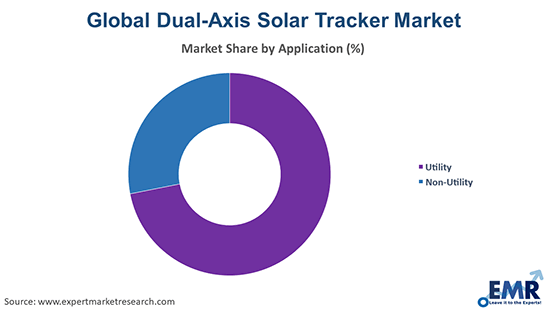
Key Insight: Utility remains the dominant segment in the double-axis solar tracker market due to the greater need for efficient energy utilization, better grid compatibility, and effective land use. On the other hand, the non-utility category is growing due to the efforts of industrial carbon reduction, agri-voltaics, and commercial solar power generation solutions. Utility scale companies are concentrating on smart automation and meteorological-based tracking technology, while commercial customers are seeking flexible installation with less technical difficulty. The growing popularity of bi-facial solar panels within both markets is also motivating tracker suppliers to develop more durable and sophisticated software and remote diagnostic tools.
Market Breakup by Region
Key Insight: The Europe market continues supporting dual-axis solar tracker adoption through sustainability regulations, carbon neutrality goals, and agrivoltaic projects optimizing land utilization. The dual-axis solar tracker market in Latin America continues to benefit from solar farms development in areas receiving high levels of radiation by focusing on improved photovoltaic efficiency and profitability from the project. The Middle East and Africa market experiences growth through the development of renewable energy in deserts that require trackers that are weatherproof and have self-calibrating abilities. North America retains its dominance through the development of utility solar plants.
By application, the utility segment accounts for the largest market share due to large-scale solar infrastructure investments
The utility segment holds the major share in the dual-axis solar tracker market due to the growing preference of efficient power production by utility companies. Dual-axis trackers are gaining traction in high-capacity solar power stations as they increase the energy collection during the course of the day and also augment the performance of bifacial solar panels. In April 2024, Soltec agreed supplying 367MW solar trackers to X-Elio, strengthening large-scale renewable energy infrastructure deployment across Spain.
The non-utility segment experiences accelerated growth in the dual-axis solar tracker market scope owing to the increasing popularity of solar energy use in various sectors like commercial sites, industrial complexes, and agriculture. The incorporation of advanced solar trackers by corporates and industrialists helps to reduce their power bills and meet environmental goals. In April 2026, Arctech launched all-terrain solar trackers, supporting efficient renewable energy deployment across geographically complex and uneven project sites.
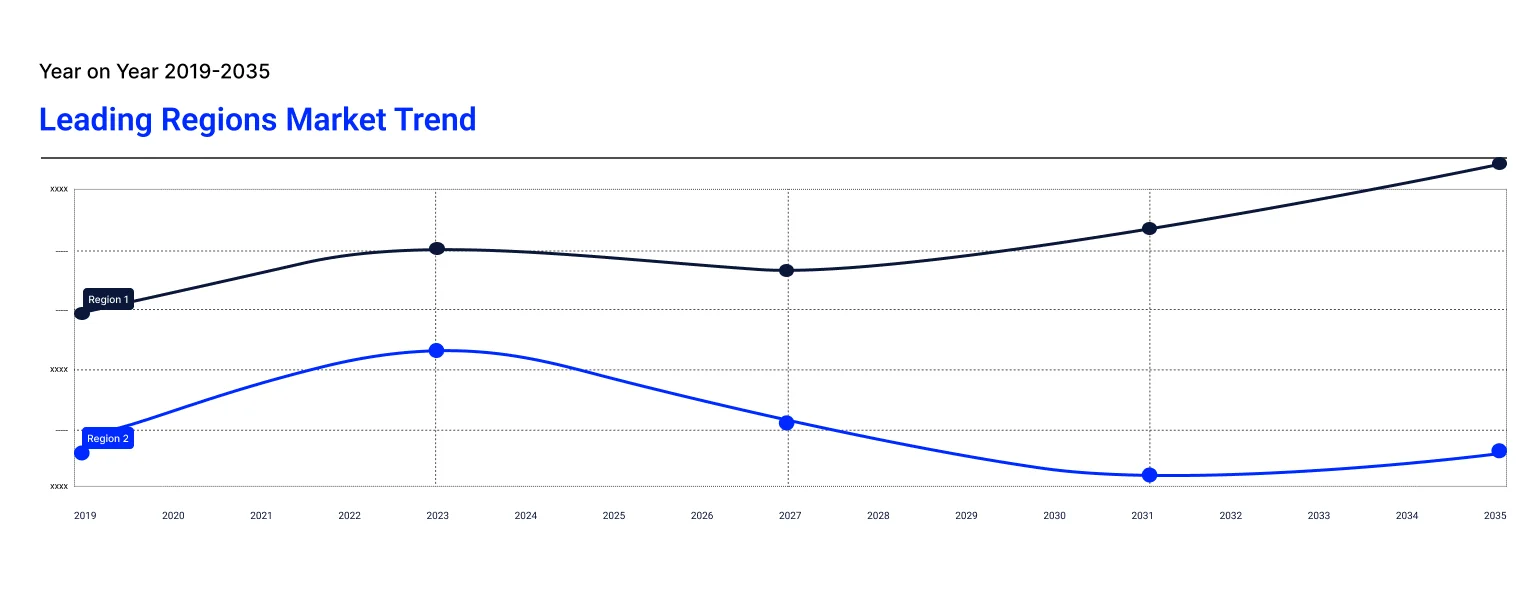
North America leads the market growth owing to utility-scale renewable modernization projects accelerating rapidly
North America constitutes the leading regional dual-axis solar tracker market owing to the use of utility-scale renewable energy infrastructure and robust grid development efforts. Solar energy companies operating in the United States are implementing sophisticated tracker systems that are combined with predictive analytics technology and terrain optimization features in order to improve the efficiency of energy output. Project developers in the renewable energy sector are also paying close attention to durable trackers that can withstand extreme weather and are capable of using bifacial photovoltaic modules. In August 2025, ARRAY Technologies partnered with OMCO Solar to supply United States-made solar trackers, strengthening domestic renewable infrastructure manufacturing capabilities.
Asia Pacific is expected to emerge as the fastest-growing regional dual-axis solar tracker market due to the aggressive installation of solar energy generation capacity by government initiatives and private players. Solar energy companies in nations such as India, China, and Australia are deploying advanced tracker systems for utility-scale renewable energy projects that need efficient energy generation. For example, in May 2025, Nextracker achieved 10 GW solar tracker milestone in India, accelerating large-scale renewable energy infrastructure expansion nationwide.
The competitive dynamics of the global market are increasingly being influenced by intelligent automation, ability to use bifacial panels, and capability to create weather-proof design solutions. Leading dual-axis solar trackers market players are developing artificial intelligence algorithms and adaptable designs as well as creating predictive maintenance solutions to enhance the efficiency of operations for large-scale solar farms. In addition, manufacturers are directing their efforts to create local partnerships in terms of manufacturing and EPC services.
Agrivoltaics, hybrid solar power systems combined with energy storage, and robots used for cleaning purposes are becoming promising opportunities in the industry. Some market players are focusing on using corrosion-resistant materials and automatic stowing functions for desert conditions or hurricane zones. Moreover, several dual-axis solar tracker companies are offering performance optimization via software solutions that enable remote management of solar trackers. The concentration on innovations like digital twinning, weather analysis, and maintenance minimization is allowing firms to get renewable infrastructure contracts for multiple years.
AllEarth Renewables, Inc., founded in 2008, is based out of Vermont, United States, and its business operations revolve around developing solar trackers that can be installed into any commercial or institutional renewable projects. Its focus areas include the development of low maintenance two-axis solar trackers equipped with remote monitoring services. Its tracker solutions have become increasingly prevalent in many decentralized energy applications that need efficient land usage, weather flexibility, and reliable solar energy production.
DEGERenergie GmbH & Co. KG, which was founded in 1999, has its headquarters in Germany. It is involved in developing intelligent tracking solutions for solar panels using positioning sensors. The firm primarily focuses on optimizing the production output of photovoltaics through weather-adaptive tracking.
Mechatro SA was incorporated in 2005 and is located in South Africa. This organization specializes in the design of high-performance solar trackers that are applicable across utility-scale and commercial renewable energy facilities. The company distinguishes itself by its expertise in building robust tracking systems specifically tailored to withstand Mediterranean climatic conditions.
Founded in 2023 and based in Jiangsu, China, Haosolar Co. Ltd is involved in the manufacture of solar tracker systems that are used by utility-scale and industrial renewable energy plants. The organization prioritizes customized tracking system designs, localized manufacturing, and construction of corrosion-resistant trackers. The firm's growing capacity for exports is enabling it to meet increasing demands in the Asia Pacific, African, and Middle Eastern solar markets.
Other key players in the market include InfiniteERCAM SA, Qingdao Eternal Electronic Co. Ltd., and Titan Tracker SL, among others.
*Please note that this is only a partial list; the complete list of key players is available in the full report. Additionally, the list of key players can be customized to better suit your needs.*
Unlock the latest insights with our dual-axis solar tracker market trends 2026 report. Discover regional growth patterns, consumer preferences, and key industry players. Stay ahead of competition with trusted data and expert analysis. Download your free sample report today and drive informed decisions in the market.


Upto 15% Off
USD
$2499 $2249
$3999 $3599
$4999 $4249
$5999 $5099


*While we strive to always give you current and accurate information, the numbers depicted on the website are indicative and may differ from the actual numbers in the main report. At Expert Market Research, we aim to bring you the latest insights and trends in the market. Using our analyses and forecasts, stakeholders can understand the market dynamics, navigate challenges, and capitalize on opportunities to make data-driven strategic decisions.*
The market is projected to grow at a CAGR of 29.20% between 2026 and 2035.
Stakeholders are strengthening regional manufacturing, integrating AI-based monitoring, developing agrivoltaic-compatible trackers, improving weather-resistant engineering, and forming long-term partnerships with EPC contractors and renewable infrastructure developers globally.
The high efficiency of electricity generation generated by new solar technologies and rising CSP and CPV solar plant installations are the key industry trends propelling the market's growth.
The major regions in the industry are North America, Latin America, Middle East and Africa, Europe, and Asia Pacific.
The major applications of the market includes utility and non-utility.
The key players in the market include AllEarth Renewables, Inc., DEGERenergie GmbH & Co. KG, Mechatron SA, Haosolar Co. Ltd, InfiniteERCAM SA, Qingdao Eternal Electronic Co. Ltd., and Titan Tracker SL, among others.
In 2025, the market reached an approximate value of USD 4.10 Billion.
High installation expenses, complex maintenance requirements, land alignment limitations, harsh weather exposure, and supply chain volatility are creating operational challenges for dual axis solar tracker manufacturers globally.
Explore our key highlights of the report and gain a concise overview of key findings, trends, and actionable insights that will empower your strategic decisions.
| REPORT FEATURES | DETAILS |
| Base Year | 2025 |
| Historical Period | 2019-2025 |
| Forecast Period | 2026-2035 |
| Scope of the Report |
Historical and Forecast Trends, Industry Drivers and Constraints, Historical and Forecast Market Analysis by Segment:
|
| Breakup by Application |
|
| Breakup by Region |
|
| Market Dynamics |
|
| Competitive Landscape |
|
| Companies Covered |
|
| Report Price and Purchase Option | Explore our purchase options that are best suited to your resources and industry needs. |
| Delivery Format | Delivered as an attached PDF and Excel through email, with an option of receiving an editable PPT, according to the purchase option. |
Datasheet
One User
USD 2,499
USD 2,249
tax inclusive*
Single User License
One User
USD 3,999
USD 3,599
tax inclusive*
Five User License
Five User
USD 4,999
USD 4,249
tax inclusive*
Corporate License
Unlimited Users
USD 5,999
USD 5,099
tax inclusive*
*Please note that the prices mentioned below are starting prices for each bundle type. Kindly contact our team for further details.*
Flash Bundle
Small Business Bundle
Growth Bundle
Enterprise Bundle
*Please note that the prices mentioned below are starting prices for each bundle type. Kindly contact our team for further details.*
Flash Bundle
Number of Reports: 3
20%
tax inclusive*
Small Business Bundle
Number of Reports: 5
25%
tax inclusive*
Growth Bundle
Number of Reports: 8
30%
tax inclusive*
Enterprise Bundle
Number of Reports: 10
35%
tax inclusive*
How To Order

Select License Type
Choose the right license for your needs and access rights.

Click on ‘Buy Now’
Add the report to your cart with one click and proceed to register.

Select Mode of Payment
Choose a payment option for a secure checkout. You will be redirected accordingly.
Strategic Solutions for Informed Decision-Making
Gain insights to stay ahead and seize opportunities.

Get insights & trends for a competitive edge.

Track prices with detailed trend reports.

Analyse trade data for supply chain insights.

Leverage cost reports for smart savings

Enhance supply chain with partnerships.

Connect For More Information
Our expert team of analysts will offer full support and resolve any queries regarding the report, before and after the purchase.
Our expert team of analysts will offer full support and resolve any queries regarding the report, before and after the purchase.
We employ meticulous research methods, blending advanced analytics and expert insights to deliver accurate, actionable industry intelligence, staying ahead of competitors.
Our skilled analysts offer unparalleled competitive advantage with detailed insights on current and emerging markets, ensuring your strategic edge.
We offer an in-depth yet simplified presentation of industry insights and analysis to meet your specific requirements effectively.




