

Consumer Insights
Uncover trends and behaviors shaping consumer choices today
Procurement Insights
Optimize your sourcing strategy with key market data
Industry Stats
Stay ahead with the latest trends and market analysis.
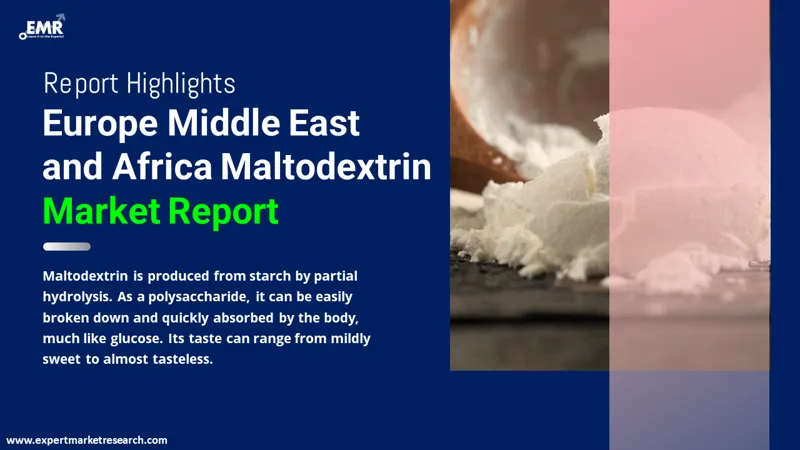
The Europe, Middle East and Africa maltodextrin market attained a volume of 0.96 Metric Tons in 2025 and is projected to expand at a CAGR of 2.40% through 2035. The market is also expected to achieve a volume of 1.22 Metric Tons by 2035. Growing formulation demand for clean-label and plant-based maltodextrin in infant nutrition, sports drinks, and pharmaceutical excipients is prompting regional producers to advance enzyme processing and specialty starch innovation.
In the EMEA region, a notable advancement has been Roquette Frères’ expansion into specialty starch-derivative ingredients designed for pharmaceutical and nutrition applications with the launch of KLEPTOSE in October 2025, reinforcing its leadership in plant-based and functional maltodextrin formulations. In 2024, the company reported stronger results in its pharmaceutical solutions business, reflecting a strategic move toward higher-value, application-specific maltodextrins that meet evolving formulation standards. This aligns with the broader trend in the Europe, Middle East and Africa maltodextrin market, where producers are transitioning from commodity-based output to more specialized maltodextrin variants engineered for advanced stability, solubility, and digestibility performance.
Across the region, manufacturers are rapidly innovating clean-label and non-GMO maltodextrin solutions that cater to infant nutrition, nutraceutical, and functional beverage sectors. The growing attention toward resistant maltodextrin and low-sugar formulations underscores the shift toward health-driven product profiles. In response, leading players are diversifying their product portfolios, expanding regional facilities, and emphasizing R&D collaboration with food-tech and pharma manufacturers, widening the Europe, Middle East and Africa maltodextrin market scope. For example, in October 2021, Cargill added flour-based maltodextrin to its SimPure line can replace the processed emulsifier in many applications and could also improve mouthfeel.
Compound Annual Growth Rate
2.4%
Value in Metric Tons
2026-2035
Archer Daniels Midland (ADM) unveiled its new Central Milling Laboratory at the ADM Specialty Manufacturing Facility in Decatur, Illinois. This supports the development of specialized maltodextrin formulations for food and beverage producers across EMEA.
AGRANA Stärke GmbH, a subsidiary of AGRANA Beteiligungs-AG, and INGREDION Germany GmbH entered a joint venture to jointly develop starch production in Romania. As part of the agreement, INGREDION Germany GmbH will purchase 49% of the shares of the Romanian operating entity, S.C. AGFD Țăndărei s.r.l., from AGRANA Stärke GmbH. This ensures reliable maltodextrin supply and fostering regional production synergies within the Europe, Middle East and Africa maltodextrin market.
The Arabian Agricultural Services Company (ARASCO), NEOM, and Cargill entered into an agreement to explore collaborative efforts for promoting the sustainable growth of the aquaculture sector in Saudi Arabia. Such a collaboration on sustainable aquaculture in Saudi Arabia drives demand for feed-grade maltodextrin, aligning with the region’s focus on environmentally responsible protein and feed solutions.
Cargill signed a deal with Croda to purchase the majority of its performance technologies and industrial chemicals division for USD 1.03 billion on a cash-free, debt-free basis. This development allows the company to enhance maltodextrin-based industrial and pharmaceutical applications across the EMEA region.
The ongoing surge in functional foods and beverages across EMEA has been a defining growth factor. As per the Europe, Middle East and Africa maltodextrin market analysis, nearly 40% of consumers are seeking products that enhance energy and digestion, maltodextrin’s use as an energy-boosting carbohydrate and stabilizer has expanded swiftly. It is increasingly replacing sucrose in sports drinks, meal replacements, and fortified infant nutrition products. In June 2025, Superbrewed Food announced that insulin levels were significantly lower during the first 90 minutes after ingestion of Postbiotic Cultured Protein with maltodextrin compared to intake of whey protein with maltodextrin. Moreover, brands like Arla Foods and Nestlé Middle East have reformulated their nutritional powders using maltodextrin to improve texture and nutrient delivery.
Pharmaceutical producers in Germany, France, and the UAE are using maltodextrin as a secure excipient and vehicle for active substances. The quantity of authorized formulations utilizing maltodextrin as a filler is said to be increasing, especially in oral rehydration solutions and children's syrups. Its suitability with delicate actives renders it a favored option for encapsulation and regulated release, widening the scope of Europe, Middle East and Africa maltodextrin market expansion. In March 2024, maltodextrin was added to Otsuka Pharmaceutical Factory, Inc.'s concentrated liquid diet product "Hine® Jelly" to improve its composition and physical characteristics. The region’s rising chronic disease burden, coupled with expanded investments in nutraceutical production facilities, such as Sanofi’s Frankfurt Biotech Plant, has further boosted demand for high-purity pharmaceutical-grade maltodextrins.
The EMEA region is witnessing significant upgrades in starch extraction and conversion technologies. Companies like Tereos and Roquette Frères have introduced enzymatic hydrolysis systems capable of producing high DE (dextrose equivalent) maltodextrin with improved solubility and consistency. The European Commission’s funding under the Horizon Europe Bio-Based Industries Program has enabled large-scale trials for sustainable starch-to-maltodextrin processing using renewable biomass, impacting the Europe, Middle East and Africa maltodextrin market revenue. Such innovation not only enhances efficiency but also aligns with EMEA’s decarbonization goals, supporting cleaner industrial starch conversion.
The clean-label trend is deeply influencing EMEA’s ingredient market. As per industry research, more than 50% of food developers in Europe now prioritize transparency and allergen-free labeling. Maltodextrin fits well into this trend as it is gluten-free, flavor-neutral, and plant-derived. European bakeries and beverage brands increasingly use it to maintain structure and stability in allergen-free recipes without compromising sensory attributes, driving the Europe, Middle East and Africa maltodextrin market value. For instance, FiberStar Inc. offers Citri-Fi, which is non-GMO, National Organic Program compliant, allergen-free ingredient solution, which includes maltodextrin. The adoption of allergen-safe maltodextrin variants, especially from corn and cassava, is also gaining traction across Africa’s health-conscious consumer markets.
Maltodextrin producers are increasingly transitioning toward renewable energy-based production facilities. Circular bio-economy projects in France and the Netherlands are now repurposing agricultural residues for starch-based ingredient production, effectively cutting down waste and carbon emissions. Startups like GreenGrow Nigeria are also piloting cassava-based maltodextrin units to reduce dependency on imports, paving their way in the Europe, Middle East and Africa maltodextrin market dynamics. These projects underline the shift toward a closed-loop, resource-efficient starch ecosystem.
Read more about this report - REQUEST FREE SAMPLE COPY IN PDF
The EMR’s report titled “Europe, Middle East and Africa Maltodextrin Market Report and Forecast 2026-2035” offers a detailed analysis of the market based on the following segments:
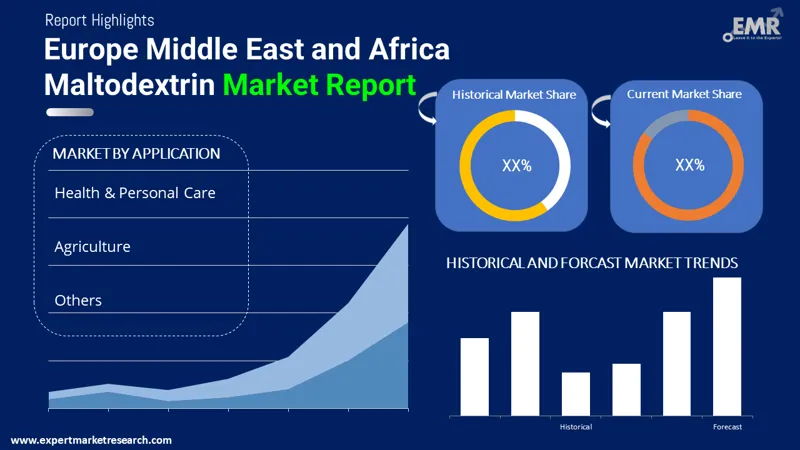
Market Breakup by Application
Key Insight: Food & beverages lead the Europe, Middle East and Africa maltodextrin market revenue share, while pharmaceuticals are the fastest-growing application. Health & personal care firms are using maltodextrin as a stabilizer in creams and serums, and agriculture players employ it as a carrier in micronutrient delivery systems. Overall, diverse applications and steady R&D investments are reinforcing its multi-sector importance across the region.
Market Breakup by Region
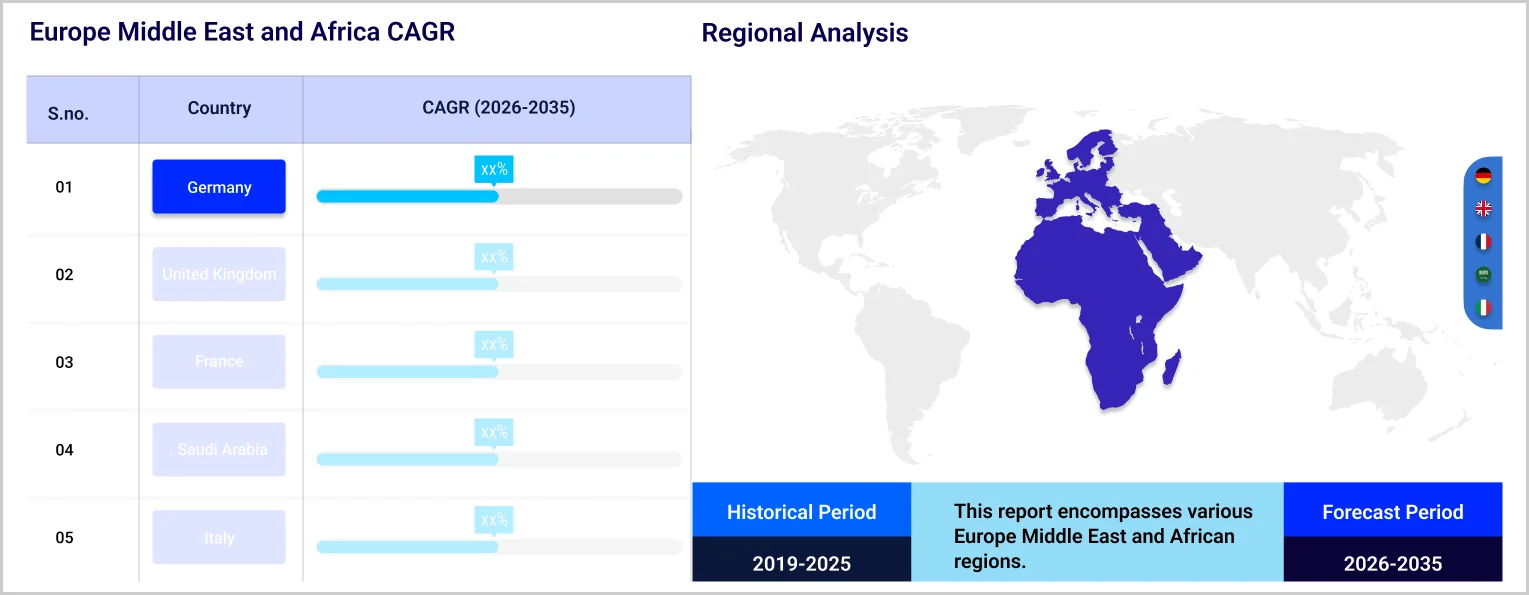
Key Insight: Germany, France, and the United Kingdom remain innovation leaders, focusing on biotech-driven and clean-label formulations. Meanwhile, Nigeria and other African markets are emphasizing agricultural self-reliance, exploring cassava-based maltodextrin manufacturing. The UAE and Saudi Arabia stand out as regional accelerators, pushing domestic food and pharmaceutical production.
Read more about this report - REQUEST FREE SAMPLE COPY IN PDF
By application, food & beverages account for the largest share due to increasing use in sports nutrition and clean-label beverages
Maltodextrin has cemented its role in the EMEA food and beverage sector, particularly in energy drinks, protein powders, and processed foods. Food processors rely on it for its ability to enhance texture, improve solubility, and stabilize emulsions without altering flavor. The European sports nutrition industry extensively incorporates maltodextrin as a rapid-digesting carbohydrate for post-workout recovery. Meanwhile, clean-label beverage makers in the UAE and Saudi Arabia are utilizing maltodextrin to replace synthetic thickeners, making their formulations more consumer-trusted and regulation-compliant, boosting the Europe, Middle East and Africa maltodextrin market trends and dynamics.
The pharmaceutical application is expanding at an impressive pace as demand for oral and liquid formulations continues to rise. Maltodextrin’s inert nature and ability to stabilize moisture-sensitive actives make it indispensable for tablets, oral rehydration solutions, and dietary supplements. The GCC region, particularly Saudi Arabia, has seen a considerable increase in nutraceutical exports supported by national healthcare diversification initiatives.
Germany dominates the market owing to its advanced food processing and nutraceutical manufacturing base
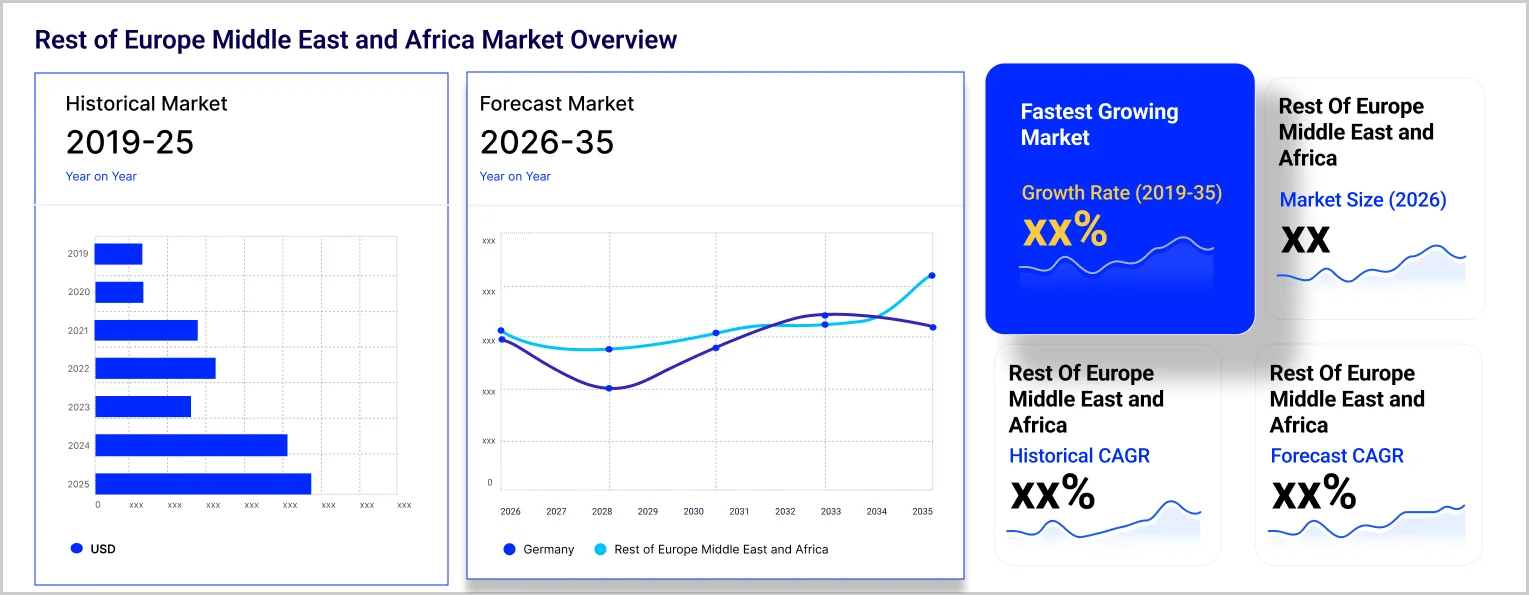
Germany has long been the epicenter of ingredient innovation in Europe, supported by strong R&D infrastructure and robust export channels. The nation’s Federal Ministry of Food and Agriculture (BMEL) has prioritized starch-based derivatives in its Sustainable Food Initiative, encouraging local maltodextrin producers to focus on non-GMO and bio-based product variants, boosting the overall growth in the Europe, Middle East and Africa maltodextrin market. German companies are also collaborating with biotechnology startups to develop next-gen maltodextrins with enhanced digestibility, driving both domestic and international demand.
Saudi Arabia’s Vision 2030 has propelled investments in domestic ingredient production, including maltodextrin. The National Industrial Development and Logistics Program (NIDLP) promotes value-added manufacturing and local sourcing. Maltodextrin’s role in energy drinks, confectionery, and health supplements has expanded significantly, supported by the SFDA’s drive toward healthier formulations.
Europe, Middle East and Africa maltodextrin market players are concentrating on specialty grades, resistant, low-DE, pharmaceutical-grade and liquid formats, and are investing in pilot facilities, application labs and analytical capability to support B2B co-development. Securing feedstock and reducing energy intensity are strategic priorities, leading to upstream integration, multi-year procurement contracts and trials with alternative starches like tapioca and wheat.
M&A and strategic acquisitions are consolidating formulation expertise into ingredient portfolios, creating scale advantages for excipient development. Opportunities in developing certified low-carbon maltodextrin lines, modular liquid systems for active nutrition, and API-compatible carriers for pharma are being increasingly explored by Europe, Middle East and Africa maltodextrin companies. For incumbents and newcomers alike, offering technical services, regulatory dossiers and reliable logistics is becoming the primary differentiation that wins B2B contracts. Smaller specialists are monetizing niche expertise via tolling and licensing, while larger groups are scaling formulation platforms to serve global customers with localized support.
Cargill, founded in 1865 and headquartered in Minnesota, United States, is supplying maltodextrin and starch derivatives across EMEA through tailored technical support and personal care applications. Cargill is emphasizing formulation partnerships, offering maltodextrin grades for textured food systems and cosmetic carriers while developing rice and alternative feedstock options for cleaner labels.
Archer Daniels Midland Company, established in 1902 and headquartered in the United States, is a major processor of starches and maltodextrin for EMEA clients. The company’s scale, supply contracts and service bundles enable large-volume customers to secure tailored maltodextrin grades and integrate ingredient logistics into centralized procurement strategies across the region.
Established in the year 1906 and headquartered in Westchester, Illinois, Ingredion Incorporated is focusing on specialty native starches and functional maltodextrins in EMEA. Ingredion is supporting clean-label formulators with texturizing solutions and organic or native starch platforms, plus application lab services for bakery and dairy sectors.
Roquette Frères S.A., founded in 1957 and headquartered in Lestrem, France, is pivoting into pharmaceutical excipients and speciality maltodextrin derivatives. Following strategic acquisitions and expanded pharma capabilities, Roquette is developing moisture-protective excipients and custom grades for nutraceutical and tablet formulations.
*Please note that this is only a partial list; the complete list of key players is available in the full report. Additionally, the list of key players can be customized to better suit your needs.*
Other key players in the Europe, Middle East and Africa maltodextrin market report include Tate & Lyle PLC, TEREOS Group, AGRANA Starch / AGRANA Stärke GmbH, Tiba Starch & Glucose Manufacturing Company, Tongaat Hulett Limited, HUNGRANA KFT., and others.
Unlock the latest insights with our Europe, Middle East and Africa maltodextrin market trends 2026 report. Discover regional growth patterns, consumer preferences, and key industry players. Stay ahead of competition with trusted data and expert analysis. Download your free sample report today and drive informed decisions in the market.


Upto 15% Off
USD
$2499 $2249
$3999 $3599
$4999 $4249
$5999 $5099


*While we strive to always give you current and accurate information, the numbers depicted on the website are indicative and may differ from the actual numbers in the main report. At Expert Market Research, we aim to bring you the latest insights and trends in the market. Using our analyses and forecasts, stakeholders can understand the market dynamics, navigate challenges, and capitalize on opportunities to make data-driven strategic decisions.*
In 2025, the market reached an approximate volume of 0.96 Metric Tons.
Companies are securing long-term feedstock contracts, investing in pilot labs, co-developing bespoke grades, implementing digital traceability, optimizing energy-efficient processing, enhancing regional tolling and customer service.
The increasing demand for high-intensity sweeteners in Europe owing to the rising health concerns about obesity is likely to be a key trend guiding the growth of the industry.
Germany, France, the United Kingdom, Nigeria, Saudi Arabia, and the United Arab Emirates are the leading regions in the market.
The leading application segments of the market are food and beverages, pharmaceutical, health and personal care, and agriculture, among others.
The key players in the market include Cargill, Incorporated, Archer Daniels Midland Company, Ingredion Incorporated, Roquette Frères S.A., Tate & Lyle PLC, TEREOS Group, AGRANA Starch / AGRANA Stärke GmbH, Tiba Starch & Glucose Manufacturing Company, Tongaat Hulett Limited, HUNGRANA KFT., and others.
The market is projected to grow at a CAGR of 2.40% between 2026 and 2035.
Pharma excipients, clean-label resistant grades, liquid formats for active nutrition, personal-care excipient adoption, and feedstock/energy resilience shaping EMEA maltodextrin evolution. Suppliers are innovating processing, traceability, and regionalization to meet demand.
Explore our key highlights of the report and gain a concise overview of key findings, trends, and actionable insights that will empower your strategic decisions.
| REPORT FEATURES | DETAILS |
| Base Year | 2025 |
| Historical Period | 2019-2025 |
| Forecast Period | 2026-2035 |
| Scope of the Report |
Historical and Forecast Trends, Industry Drivers and Constraints, Historical and Forecast Market Analysis by Segment:
|
| Breakup by Application |
|
| Breakup by Region |
|
| Market Dynamics |
|
| Competitive Landscape |
|
| Companies Covered |
|
| Report Price and Purchase Option | Explore our purchase options that are best suited to your resources and industry needs. |
| Delivery Format | Delivered as an attached PDF and Excel through email, with an option of receiving an editable PPT, according to the purchase option. |
Datasheet
One User
USD 2,499
USD 2,249
tax inclusive*
Single User License
One User
USD 3,999
USD 3,599
tax inclusive*
Five User License
Five User
USD 4,999
USD 4,249
tax inclusive*
Corporate License
Unlimited Users
USD 5,999
USD 5,099
tax inclusive*
*Please note that the prices mentioned below are starting prices for each bundle type. Kindly contact our team for further details.*
Flash Bundle
Small Business Bundle
Growth Bundle
Enterprise Bundle
*Please note that the prices mentioned below are starting prices for each bundle type. Kindly contact our team for further details.*
Flash Bundle
Number of Reports: 3
20%
tax inclusive*
Small Business Bundle
Number of Reports: 5
25%
tax inclusive*
Growth Bundle
Number of Reports: 8
30%
tax inclusive*
Enterprise Bundle
Number of Reports: 10
35%
tax inclusive*
How To Order

Select License Type
Choose the right license for your needs and access rights.

Click on ‘Buy Now’
Add the report to your cart with one click and proceed to register.

Select Mode of Payment
Choose a payment option for a secure checkout. You will be redirected accordingly.
Strategic Solutions for Informed Decision-Making
Gain insights to stay ahead and seize opportunities.

Get insights & trends for a competitive edge.

Track prices with detailed trend reports.

Analyse trade data for supply chain insights.

Leverage cost reports for smart savings

Enhance supply chain with partnerships.

Connect For More Information
Our expert team of analysts will offer full support and resolve any queries regarding the report, before and after the purchase.
Our expert team of analysts will offer full support and resolve any queries regarding the report, before and after the purchase.
We employ meticulous research methods, blending advanced analytics and expert insights to deliver accurate, actionable industry intelligence, staying ahead of competitors.
Our skilled analysts offer unparalleled competitive advantage with detailed insights on current and emerging markets, ensuring your strategic edge.
We offer an in-depth yet simplified presentation of industry insights and analysis to meet your specific requirements effectively.




