

Consumer Insights
Uncover trends and behaviors shaping consumer choices today
Procurement Insights
Optimize your sourcing strategy with key market data
Industry Stats
Stay ahead with the latest trends and market analysis.
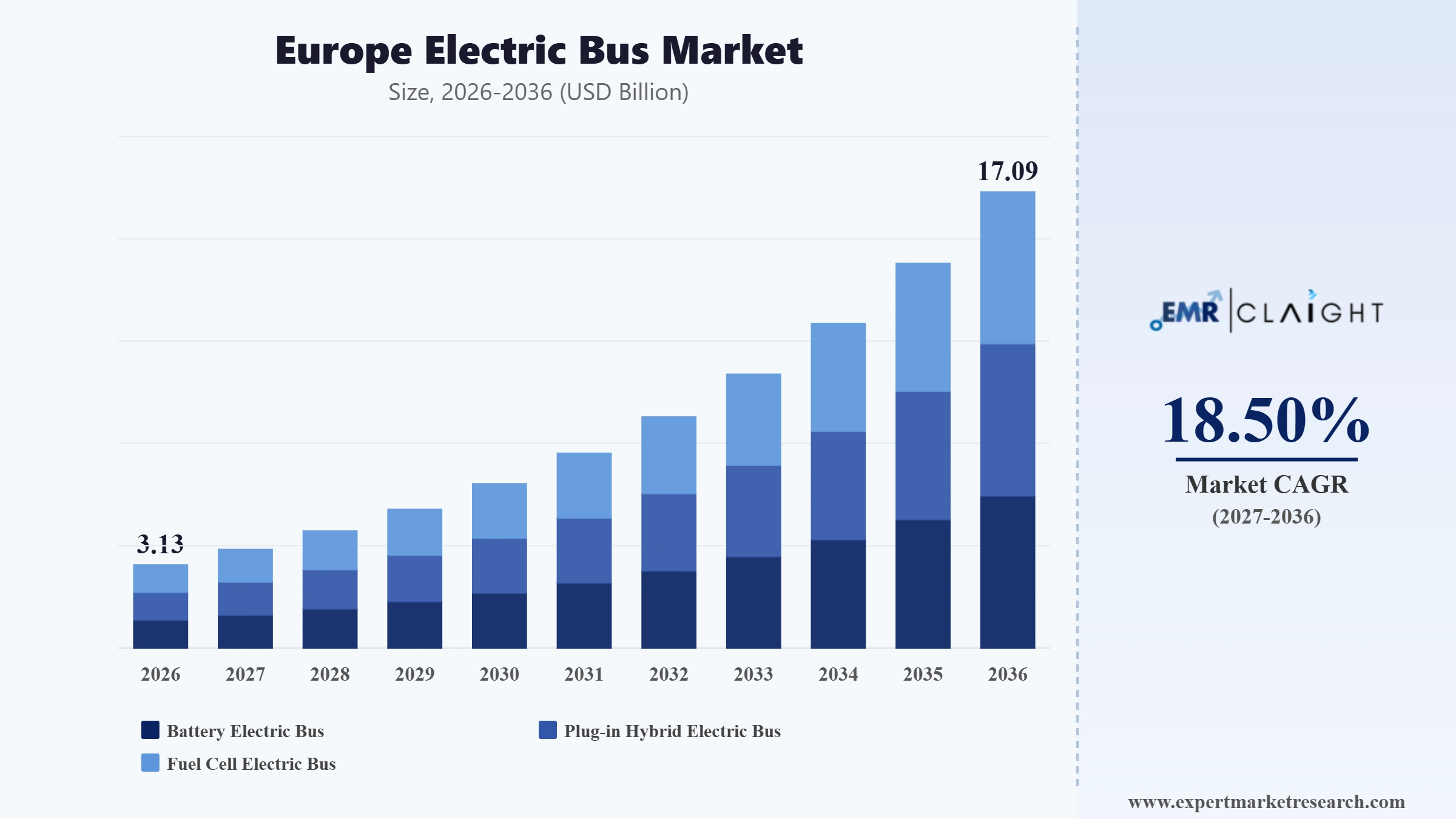
The Europe electric bus market attained a value of USD 2.64 Billion in 2025 and is projected to expand at a CAGR of 18.50% through 2035. The market is further expected to achieve USD 14.41 Billion by 2035. Rapid urbanisation, evolving mobility patterns, and government initiatives aimed at decarbonising the transportation sector continue to support demand for battery electric, plug-in hybrid, and fuel cell buses across Germany, the United Kingdom, France, and Italy.
Rapid urbanisation continues to anchor steady demand across the Europe electric bus market, as municipal transit operators increasingly replace ageing diesel fleets with zero-emission alternatives to meet climate targets. Manufacturers are also navigating an increasingly competitive procurement landscape, reflecting the industry's ongoing shift as Chinese entrants win a growing share of major municipal tenders traditionally dominated by established European manufacturers.
The Europe electric bus market is witnessing further developments as municipal transit operators award major fleet procurement contracts following competitive tender processes. Zurich's City Council approved financing for its transport operator to purchase 20 electric buses from Yutong and Daimler Buses, marking the first time a Chinese bus manufacturer has won a significant order in the city and displacing the operator's previous supplier pairing following technical reliability issues. This shift toward competitive, tender-driven procurement is concentrated among manufacturers with sufficient production scale and pricing flexibility, while smaller specialists hold their ground through established service relationships and regional manufacturing presence.
In addition, established European manufacturers are increasingly securing sizeable municipal fleet orders as public transit operators accelerate diesel fleet replacement programmes, reflecting the industry's recognition that operator familiarity and proven service relationships increasingly retain significant order volume even amid growing competition from new entrants. Such fleet procurement activity is reshaping competitive positioning across the wider europe electric bus market as manufacturers with proven municipal delivery track records increasingly differentiate themselves from newer entrants still building operational credibility.
Read more about this report - REQUEST FREE SAMPLE COPY IN PDF
Zurich's City Council approved financing worth approximately 17 million Swiss francs for its transport operator to purchase 20 electric buses, with eight standard buses awarded to Yutong and twelve articulated buses to Daimler Buses, marking the first time a Chinese manufacturer has won a significant order in the city. Companies can compete aggressively on price and delivery timelines in municipal tenders to displace established suppliers facing technical reliability concerns.
European electric bus registrations rose 48 percent to 11,607 units in 2025, with Chinese manufacturers Yutong and BYD together accounting for more than a quarter of all European e-bus registrations as their combined market share climbed to approximately 28 percent. Companies can track registration share shifts toward Chinese manufacturers to anticipate competitive pressure ahead of any changes to current tariff exemptions covering electric buses.
Solaris secured an order for 101 electric buses from VR Sverige for operations in Stockholm, following a separate 103-unit award in Sweden for low-entry electric buses to another operator, bringing the company's cumulative Swedish deliveries to nearly 300 electric buses. Companies can build on successive regional contract wins with the same transit authority to establish deeper, recurring procurement relationships beyond one-off tender victories.
BYD Europe won a competitive tender issued by the Municipality of Taranto for six 12-metre electric buses and three charging points, narrowly outscoring a competing bid from a Turkish manufacturer's Italian dealer by a margin of less than half a point. Companies can pursue smaller municipal tenders alongside larger fleet contracts to build a broader track record of competitive wins across diverse operator sizes.
Even a city with its own decades-old domestic bus builder is not immune, as one recent tender loss demonstrated when reliability complaints opened the door to an overseas rival. In July 2026, Yutong, together with Daimler Buses, won a significant order in Zurich for the first time, displacing the operator's previous supplier pairing following technical reliability issues across the europe electric bus market. Such tender wins reflect operators' recognition that competitive pricing and delivery reliability increasingly outweigh established supplier relationships when technical performance concerns arise.
The numbers back up what tender wins have been suggesting: two overseas brands now collectively account for more than a quarter of everything registered on the continent. In May 2026, industry data showed European electric bus registrations rising sharply in 2025, with two Chinese manufacturers together capturing more than a quarter of total registrations. Such registration trends reflect the industry's recognition that competitive manufacturing costs increasingly translate into meaningful market share gains within a relatively short entry period.
Once a transit authority finds a supplier it trusts, repeat orders tend to follow, and one manufacturer's growing Nordic order book reflects exactly that pattern. In April 2026, Solaris secured its latest 101-bus order from a Stockholm operator following a series of previous contract wins with the same customer. Such recurring contract wins reflect operators' recognition that proven delivery performance across successive orders increasingly reduces procurement risk compared with switching to unproven new suppliers.
Not every contract worth chasing involves hundreds of vehicles, and smaller municipal deals are proving just as competitive as their larger counterparts. In February 2026, BYD won a competitive tender for a small Taranto municipal bus and charging infrastructure order, narrowly outscoring a rival bid. Such competition for smaller contracts reflects manufacturers' recognition that accumulating wins across municipalities of all sizes increasingly builds the broader track record needed to compete for larger, more valuable tenders.
This Expert Market Research Report titled "Europe Electric Bus Market Report and Forecast 2026-2035" offers a detailed analysis of the market based on the following segments:
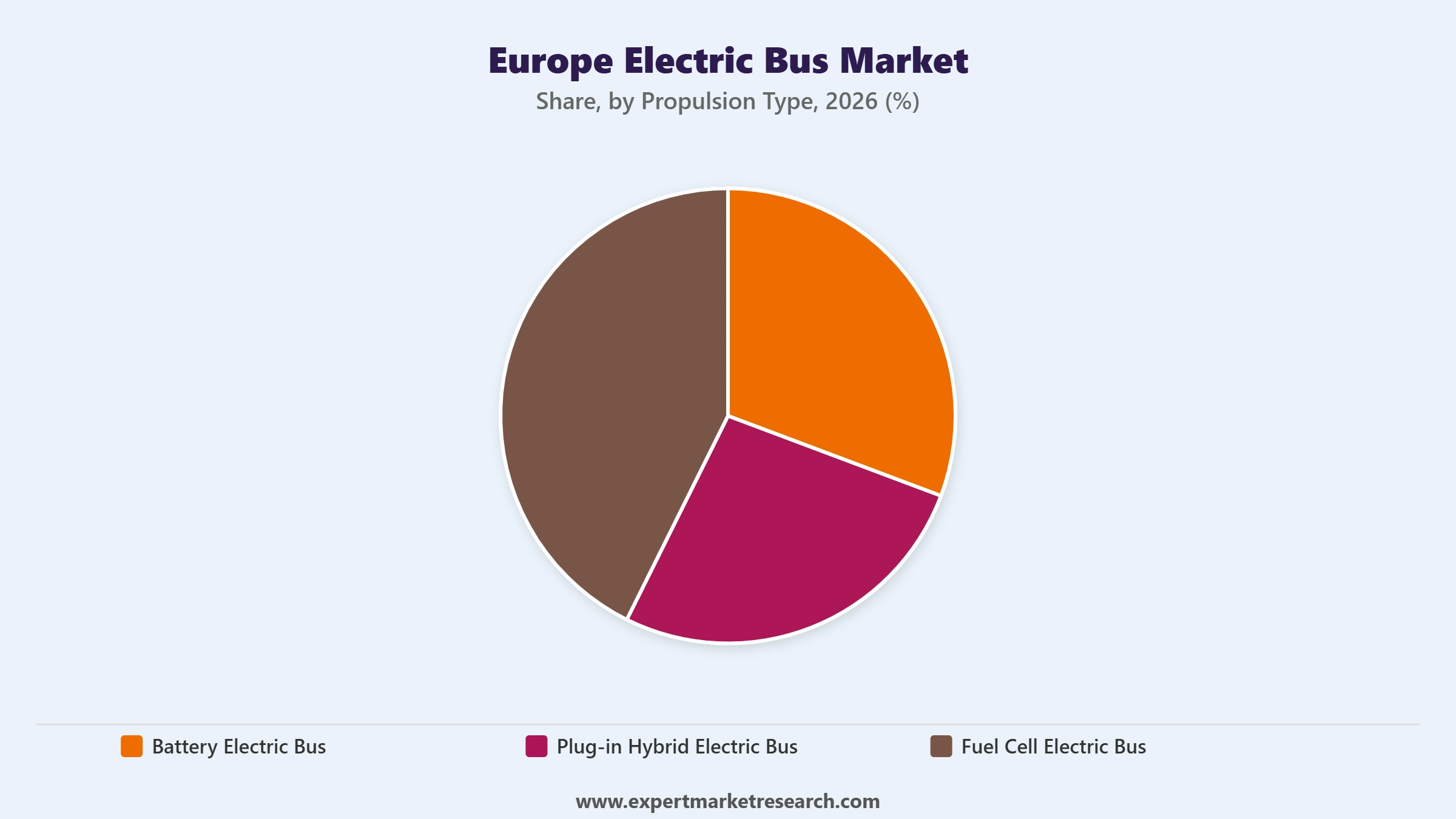
Market Breakup by Propulsion Type
Key Insight: Battery Electric Bus accounts for the largest share of the europe electric bus market, reflecting its established charging infrastructure and lower total cost of ownership compared with alternative propulsion types. Fuel Cell Electric Bus is growing at the fastest pace as technological advancements extend range for longer intercity and regional routes, with Yutong and Daimler Buses' July 2026 Zurich tender win, both battery electric propulsion suppliers, illustrating this dominance, while Plug-in Hybrid Electric Bus continues to serve operators transitioning gradually from conventional diesel fleets.
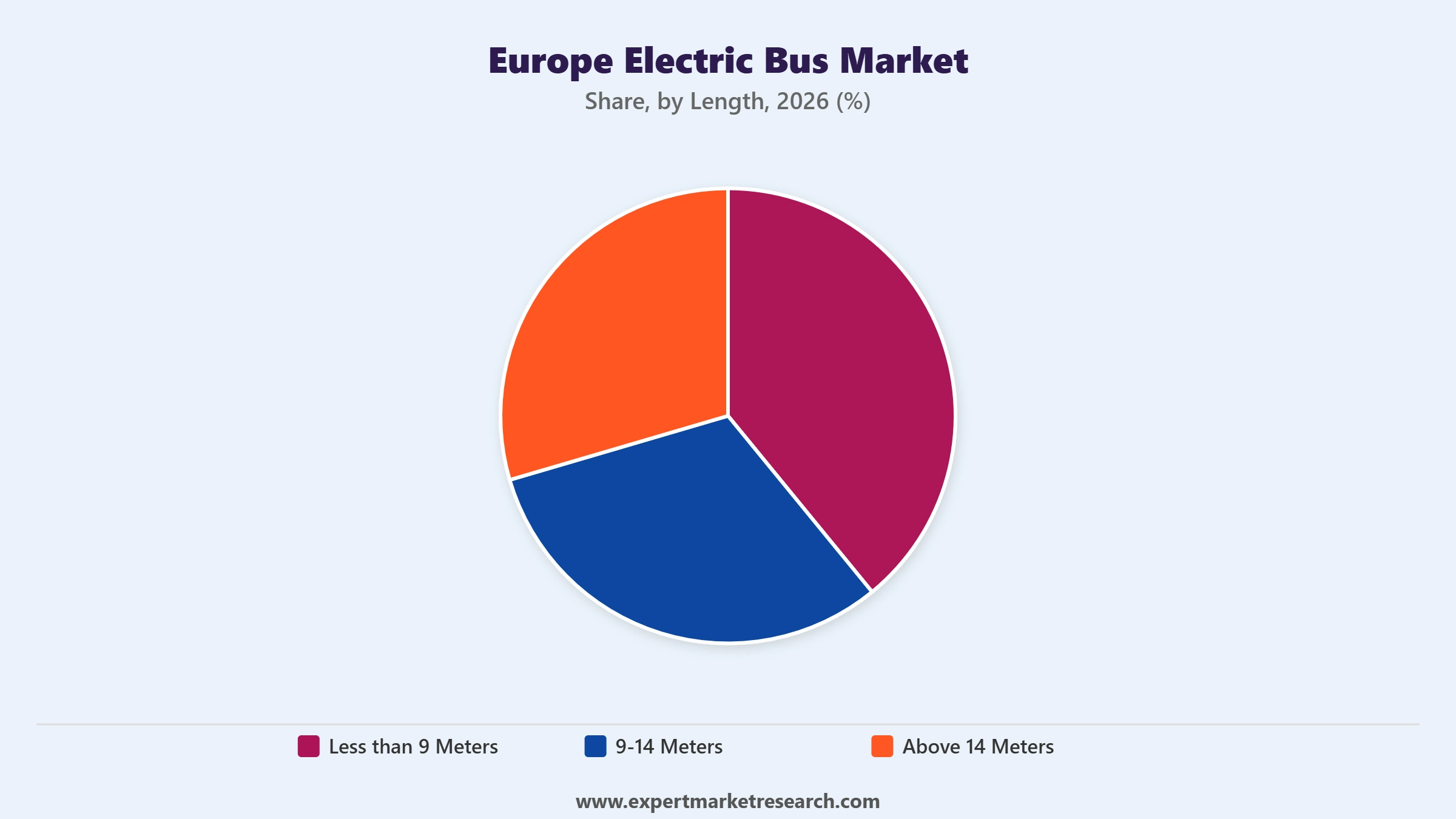
Market Breakup by Length
Key Insight: 9-14 Meters accounts for the largest share of the europe electric bus market, reflecting its established position as the standard configuration for urban and suburban transit routes. Above 14 Meters continues to represent substantial demand tied to articulated buses serving high-capacity urban corridors, illustrated by Zurich's July 2026 order splitting eight standard buses from Yutong and twelve articulated buses from Daimler Buses, while Less than 9 Meters serves midibus applications on lower-demand or narrower routes.
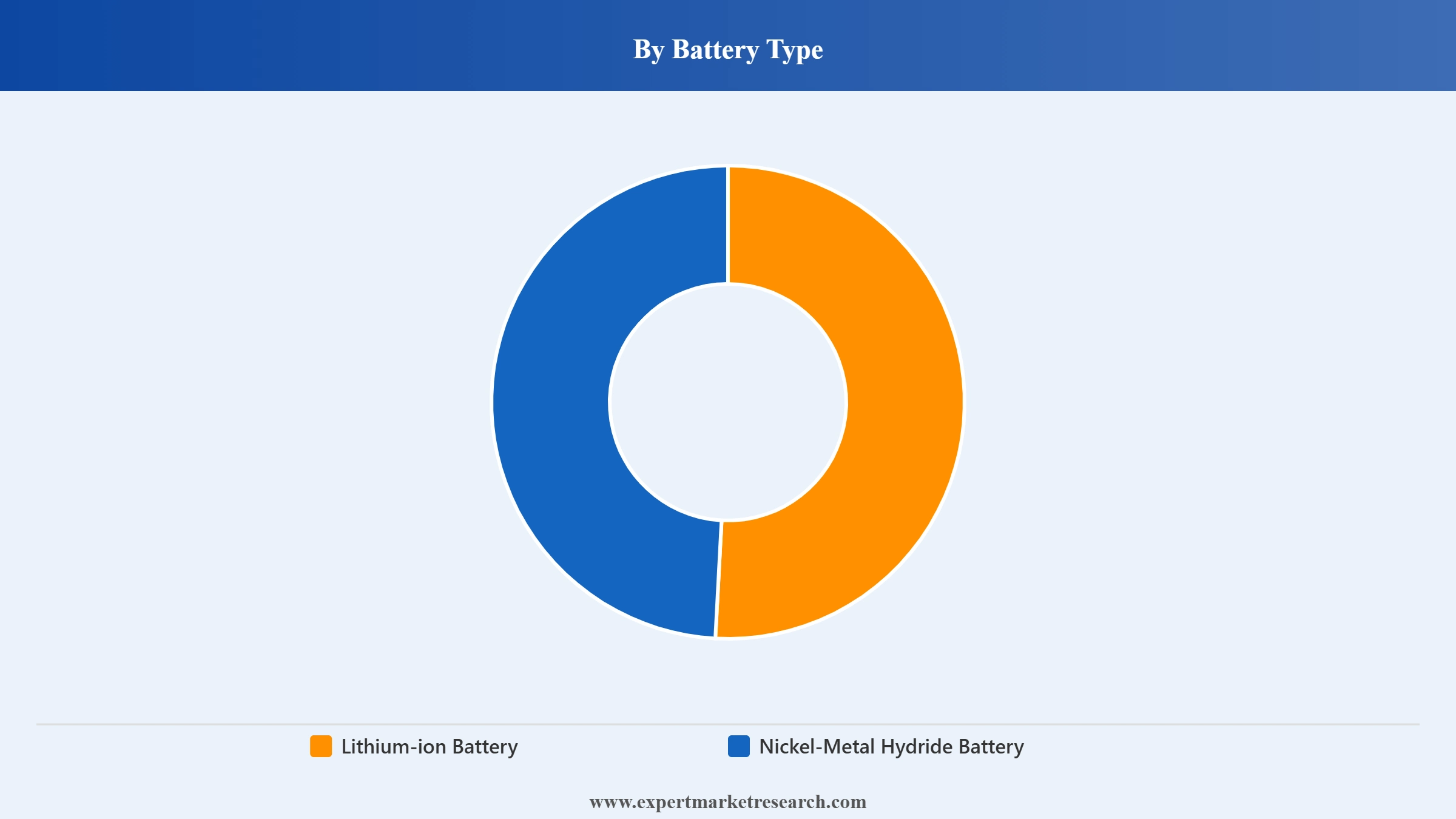
Market Breakup by Battery Type
Key Insight: Lithium-ion Battery accounts for the overwhelming majority share of the europe electric bus market, reflecting its superior energy density and established position across nearly all current electric bus models. Nickel-Metal Hydride Battery (NiMH) continues to serve a smaller, more specialised category limited to select legacy and niche applications, even as May 2026 registration data showed lithium-ion-equipped Chinese manufacturers capturing more than a quarter of the continent's registrations. Others covers emerging chemistries including solid-state and supercapacitor hybrid systems in early trial deployment.
Market Breakup by Range
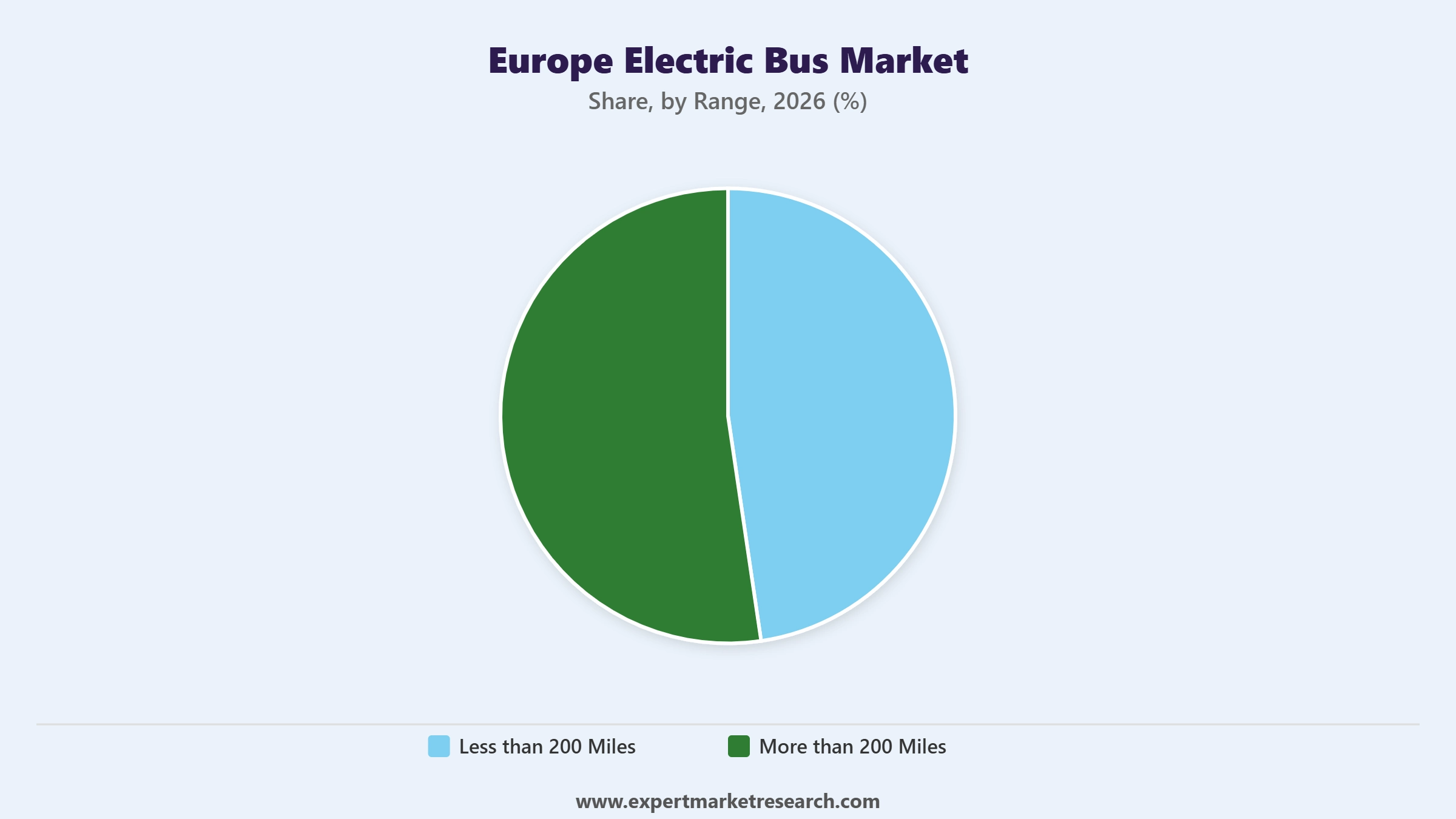
Key Insight: Less than 200 Miles accounts for the largest share of the europe electric bus market, reflecting sufficient range coverage for most urban and suburban route lengths without requiring premium battery capacity. More than 200 Miles continues to represent growing demand for intercity and longer regional routes requiring extended range without midday charging interruptions, underscored by BYD Europe's February 2026 Taranto tender win for extended-range battery configurations.
Market Breakup by Battery Capacity
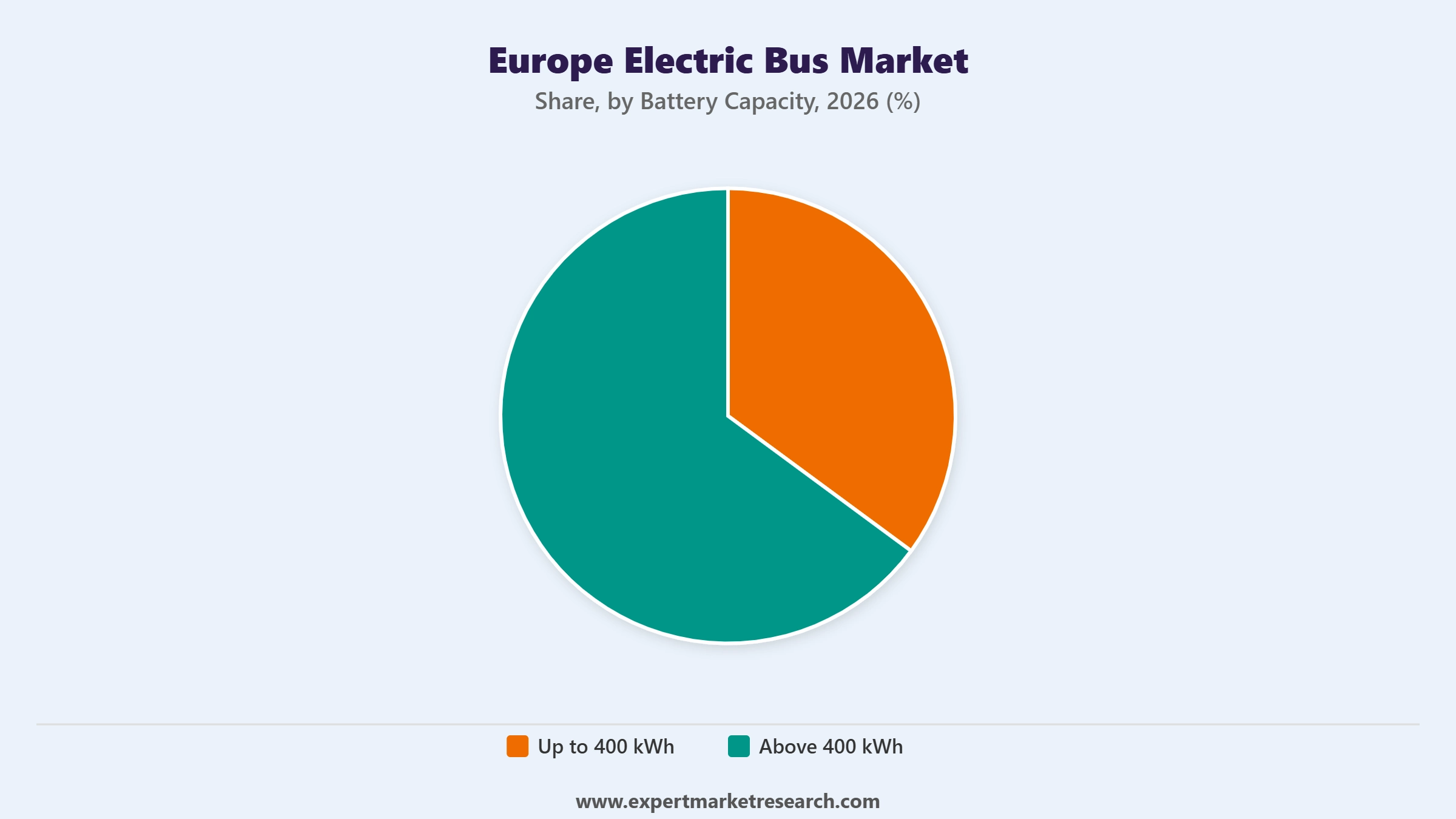
Key Insight: Up to 400 kWh accounts for the largest share of the europe electric bus market, reflecting sufficient capacity for standard urban route lengths at a lower upfront vehicle cost. Above 400 kWh continues to represent growing demand as operators increasingly prioritise extended range and reduced midday charging dependency for longer or more demanding routes, illustrated by Solaris' April 2026 101-unit order from a Stockholm operator.
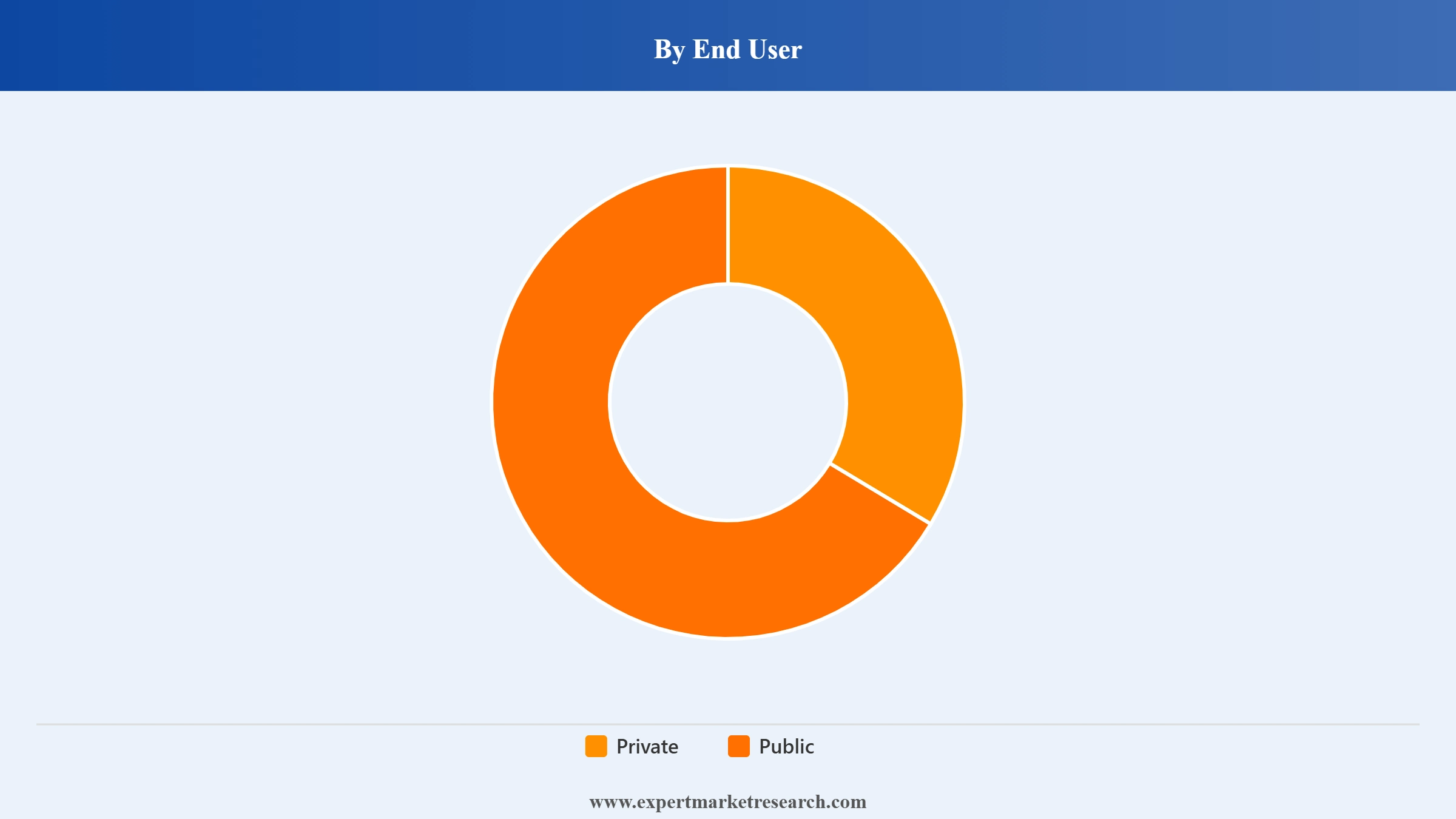
Market Breakup by End User
Key Insight: Public accounts for the largest share of the europe electric bus market, reflecting sustained municipal transit authority procurement through structured tender processes across major European cities. Private continues to represent a smaller share tied to charter, corporate shuttle, and tourism coach applications, while July 2026's Zurich transit authority tender win by Yutong and Daimler Buses illustrated continued public sector procurement momentum.
Market Breakup by Country
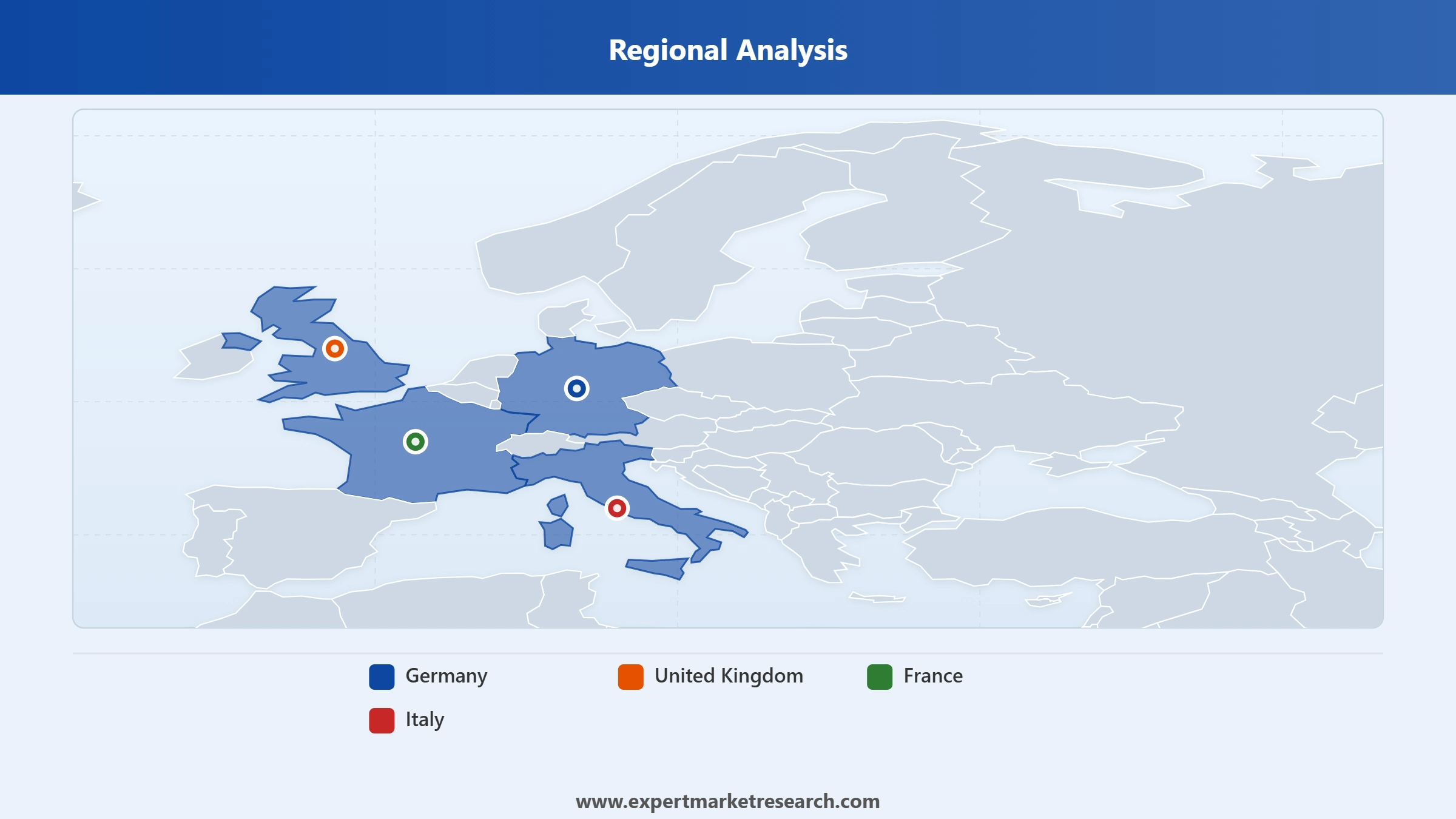
Key Insight: Germany accounts for the largest share of the europe electric bus market, supported by strong government policy support and substantial infrastructure investment. United Kingdom is emerging as a key growth market as zero-emission bus registrations continue to accelerate. France continues to serve distinct regional procurement patterns tied to its own municipal transit renewal programmes. Italy saw growing Chinese manufacturer penetration illustrated by BYD Europe's February 2026 tender win in Taranto, extending competitive pressure beyond Germany's traditional concentration.
Read more about this report - REQUEST FREE SAMPLE COPY IN PDF
By propulsion type, battery electric bus leads the market while fuel cell electric bus grows fastest given extended-range applications
Battery Electric Bus continues to account for the largest share of the market, reflecting its established charging infrastructure and lower total cost of ownership. Tender after tender, transit operators keep specifying battery electric, a pattern that has only deepened as procurement teams standardise around what already works, evident in July 2026's Zurich order awarding all 20 units to battery electric suppliers Yutong and Daimler Buses.
Read more about this report - REQUEST FREE SAMPLE COPY IN PDF
Fuel Cell Electric Bus is growing at the fastest pace across the europe electric bus market as technological advancements extend range for longer intercity and regional route applications beyond typical battery electric bus capability.
By end user, public leads the market while public continues strengthening its position given sustained municipal procurement
Public continues to account for the largest share of the market, reflecting sustained municipal transit authority procurement through structured tender processes across major European cities. Public procurement rules reward continuity, and transit authorities that have built working relationships with a manufacturer over one fleet renewal rarely see reason to restart the vetting process for the next.
Read more about this report - REQUEST FREE SAMPLE COPY IN PDF
Competition for public sector contracts continues intensifying across the europe electric bus market as Chinese manufacturers increasingly win major municipal tenders. In July 2026, Yutong and Daimler Buses jointly won a significant Zurich transit authority order, marking the first time a Chinese manufacturer secured such a contract in the city.
By length, 9-14 meters leads the market while above 14 meters grows fastest given rising urban corridor capacity demand
9-14 Meters continues to account for the largest share of the market, reflecting its established position as the standard configuration for urban and suburban transit routes. A 9-14 meter chassis platform that already meets most cities' route requirements gives manufacturers little reason to develop a competing configuration from scratch.
Read more about this report - REQUEST FREE SAMPLE COPY IN PDF
Above 14 Meters is growing at a fast pace across the europe electric bus market as high-capacity urban corridors increasingly require articulated bus configurations. In April 2026, Solaris secured a 101-unit order from a Swedish operator, building on its established Nordic fleet relationships.
By battery type, lithium-ion battery leads the market while lithium-ion battery continues strengthening its position given superior energy density
Lithium-ion Battery continues to account for the overwhelming majority share of the market, reflecting its superior energy density and established position across nearly all current electric bus models. Lithium-ion cell supply chains have matured to the point where alternative chemistries would need a compelling cost or performance edge to justify the switch, a maturity reflected in May 2026 registration data showing lithium-ion-equipped manufacturers capturing accelerating market share.
Read more about this report - REQUEST FREE SAMPLE COPY IN PDF
Nickel-Metal Hydride Battery (NiMH) continues to serve a smaller, specialised share of the europe electric bus market limited to select legacy and niche applications.
By range, less than 200 miles leads the market while more than 200 miles grows fastest given rising intercity route demand
Less than 200 Miles continues to account for the largest share of the market, reflecting sufficient range coverage for most urban and suburban route lengths without requiring premium battery capacity. Most urban routes simply do not demand more than 200 miles of range, so manufacturers keep sizing batteries to match rather than over-engineering for edge cases.
Read more about this report - REQUEST FREE SAMPLE COPY IN PDF
More than 200 Miles is growing at a fast pace across the europe electric bus market as intercity and longer regional routes increasingly require extended range without midday charging interruptions. In February 2026, BYD Europe's tender win in Taranto highlighted continued demand for extended-range battery configurations in municipal fleet procurement.
By battery capacity, up to 400 kWh leads the market while above 400 kWh grows fastest given extended-range procurement trends
Up to 400 kWh continues to account for the largest share of the market, reflecting sufficient capacity for standard urban route lengths at a lower upfront vehicle cost. Long-standing battery pack sourcing arrangements keep manufacturers tied to up to 400 kWh configurations across successive production cycles, sustaining the segment's lead.
Read more about this report - REQUEST FREE SAMPLE COPY IN PDF
Above 400 kWh is growing at a fast pace across the europe electric bus market as operators increasingly prioritise extended range and reduced midday charging dependency. In April 2026, Solaris' 101-unit order from a Swedish operator underscored continued Nordic demand for higher-capacity battery configurations.
Read more about this report - REQUEST FREE SAMPLE COPY IN PDF
Germany commands the largest share of the market through its strong government policy support
Germany holds the largest share of the Europe electric bus market, supported by strong government policy support and substantial infrastructure investment favouring green transportation adoption. Manufacturers here have opted to build new production capacity rather than push existing lines harder, a response to domestic and export order books filling up simultaneously.
United Kingdom is emerging as a key growth market as zero-emission bus registrations continue to accelerate. July 2026's Zurich tender win by Yutong and Daimler Buses underscored intensifying competitive pressure across established European markets extending well beyond Germany's traditional market concentration across the wider europe electric bus market.
The industry is moderately consolidated, with europe electric bus market companies ranging from diversified global commercial vehicle groups spanning multiple propulsion types to specialist bus manufacturers competing across propulsion type, length, and end user segments. Established players operate across the full electric bus value chain, from chassis and battery integration through complete vehicle assembly and municipal fleet delivery.
Competitive dynamics among europe electric bus players are increasingly shaped by the pace of Chinese manufacturer market entry, the scale of recurring regional fleet contract wins, and pricing competitiveness in municipal tender processes. Manufacturers are investing in extended battery range, competitive tender pricing, and recurring customer relationship depth to differentiate their offering and secure long-term municipal transit authority contracts.
Founded in 1963 and headquartered in Zhengzhou, China, Yutong manufactures battery electric buses and coaches for public transit and private charter applications across global markets. In July 2026, the company won a significant Zurich transit authority tender, marking its first major order win in the city. Yutong's competitive manufacturing scale and rapidly expanding European market share differentiate its offering from established manufacturers facing new competitive pressure.
Founded in 2021 following its spin-off from Daimler AG and headquartered in Stuttgart, Germany, Daimler Truck manufactures electric buses under its Mercedes-Benz eCitaro brand through its Daimler Buses division. In July 2026, the company's Swiss subsidiary won a portion of Zurich's major electric bus tender alongside Yutong. Daimler Truck's established European manufacturing presence and long-standing municipal transit relationships differentiate its offering from newer market entrants.
Founded in 1996 and headquartered in Bolechowo, Poland, Solaris manufactures battery electric and hydrogen fuel cell buses under its Urbino product line for European and North American transit operators. In April 2026, the company secured a 101-unit order from a Swedish transit operator, building on its established Nordic market presence. Solaris' deep, recurring Nordic fleet relationships and hydrogen fuel cell development partnership differentiate its offering from competitors with less-established regional service networks.
Founded in 1995 and headquartered in Shenzhen, China, with its European operations based in the Netherlands, BYD manufactures battery electric buses for municipal and charter applications across European markets. In February 2026, the company's European division won a competitive tender in Taranto, Italy. BYD's aggressive competitive pricing and rapidly expanding European registration share differentiate its offering from established European manufacturers facing intensifying price competition.
Other key players in the Europe electric bus market include IVECO S.p.A, AB Volvo, Traton SE, Karsan Otomotiv San. ve Tic. A.S, Xiamen Golden Dragon Bus Co., LTD, and TAM-Europe d.o.o., among others.
*Please note that this is only a partial list; the complete list of key players is available in the full report. Additionally, the list of key players can be customized to better suit your needs.*
Unlock the latest insights with our Europe electric bus market trends 2026 report. Discover regional growth patterns, propulsion type and length trends, and key industry players. Stay ahead of competition with trusted data and expert analysis. Download your free sample report today and drive informed decisions in the market.


Upto 15% Off
USD
$2499 $2249
$3999 $3599
$4999 $4249
$5999 $5099


*While we strive to always give you current and accurate information, the numbers depicted on the website are indicative and may differ from the actual numbers in the main report. At Expert Market Research, we aim to bring you the latest insights and trends in the market. Using our analyses and forecasts, stakeholders can understand the market dynamics, navigate challenges, and capitalize on opportunities to make data-driven strategic decisions.*
In 2025, the market reached an approximate value of USD 2.64 Billion.
The market is projected to grow at a CAGR of 18.50% between 2026 and 2035.
The market is estimated to witness a healthy growth in the forecast period of 2026-2035 to reach a value of around USD 14.41 Billion by 2035.
Competing aggressively on price and delivery timelines to win major municipal tenders, building recurring regional fleet contract relationships with repeat transit operator customers, and pursuing smaller municipal contracts alongside major fleet tenders to build broader competitive track records.
The key trends aiding the market expansion are technological advancements and innovations and the rising adoption of fuel cell electric buses.
The major propulsion types of electric bus are battery electric bus, plug-in hybrid electric bus, and fuel cell electric bus.
The different battery types in the market are lithium-ion battery and nickel-metal hydride battery (NiMH), among others.
The key players in the market include Yutong Bus Co., Ltd., Daimler Truck AG, IVECO S.p.A, Solaris Bus & Coach sp. z o.o., AB Volvo, Traton SE, Karsan Otomotiv San. ve Tic. A.S, Xiamen Golden Dragon Bus Co., LTD, TAM-Europe d.o.o., and BYD Europe B.V., among others.
Manufacturers face intensifying price competition from Chinese entrants capturing a growing share of municipal tenders, uncertainty over whether current tariff exemptions covering electric buses will persist, and the technical reliability expectations transit operators now demand following high-profile fleet performance issues.
Explore our key highlights of the report and gain a concise overview of key findings, trends, and actionable insights that will empower your strategic decisions.
| REPORT FEATURES | DETAILS |
| Base Year | 2025 |
| Historical Period | 2019-2025 |
| Forecast Period | 2026-2035 |
| Scope of the Report |
Historical and Forecast Trends, Industry Drivers and Constraints, Historical and Forecast Market Analysis by Segment:
|
| Breakup by Propulsion Type |
|
| Breakup by Length |
|
| Breakup by Battery Type |
|
| Breakup by Range |
|
| Breakup by Battery Capacity |
|
| Breakup by End User |
|
| Breakup by Region |
|
| Market Dynamics |
|
| Competitive Landscape |
|
| Companies Covered |
|
Datasheet
One User
USD 2,499
USD 2,249
tax inclusive*
Single User License
One User
USD 3,999
USD 3,599
tax inclusive*
Five User License
Five User
USD 4,999
USD 4,249
tax inclusive*
Corporate License
Unlimited Users
USD 5,999
USD 5,099
tax inclusive*
*Please note that the prices mentioned below are starting prices for each bundle type. Kindly contact our team for further details.*
Flash Bundle
Small Business Bundle
Growth Bundle
Enterprise Bundle
*Please note that the prices mentioned below are starting prices for each bundle type. Kindly contact our team for further details.*
Flash Bundle
Number of Reports: 3
20%
tax inclusive*
Small Business Bundle
Number of Reports: 5
25%
tax inclusive*
Growth Bundle
Number of Reports: 8
30%
tax inclusive*
Enterprise Bundle
Number of Reports: 10
35%
tax inclusive*
How To Order

Select License Type
Choose the right license for your needs and access rights.

Click on ‘Buy Now’
Add the report to your cart with one click and proceed to register.

Select Mode of Payment
Choose a payment option for a secure checkout. You will be redirected accordingly.
Strategic Solutions for Informed Decision-Making
Gain insights to stay ahead and seize opportunities.

Get insights & trends for a competitive edge.

Track prices with detailed trend reports.

Analyse trade data for supply chain insights.

Leverage cost reports for smart savings

Enhance supply chain with partnerships.

Connect For More Information
Our expert team of analysts will offer full support and resolve any queries regarding the report, before and after the purchase.
Our expert team of analysts will offer full support and resolve any queries regarding the report, before and after the purchase.
We employ meticulous research methods, blending advanced analytics and expert insights to deliver accurate, actionable industry intelligence, staying ahead of competitors.
Our skilled analysts offer unparalleled competitive advantage with detailed insights on current and emerging markets, ensuring your strategic edge.
We offer an in-depth yet simplified presentation of industry insights and analysis to meet your specific requirements effectively.




