

Consumer Insights
Uncover trends and behaviors shaping consumer choices today
Procurement Insights
Optimize your sourcing strategy with key market data
Industry Stats
Stay ahead with the latest trends and market analysis.
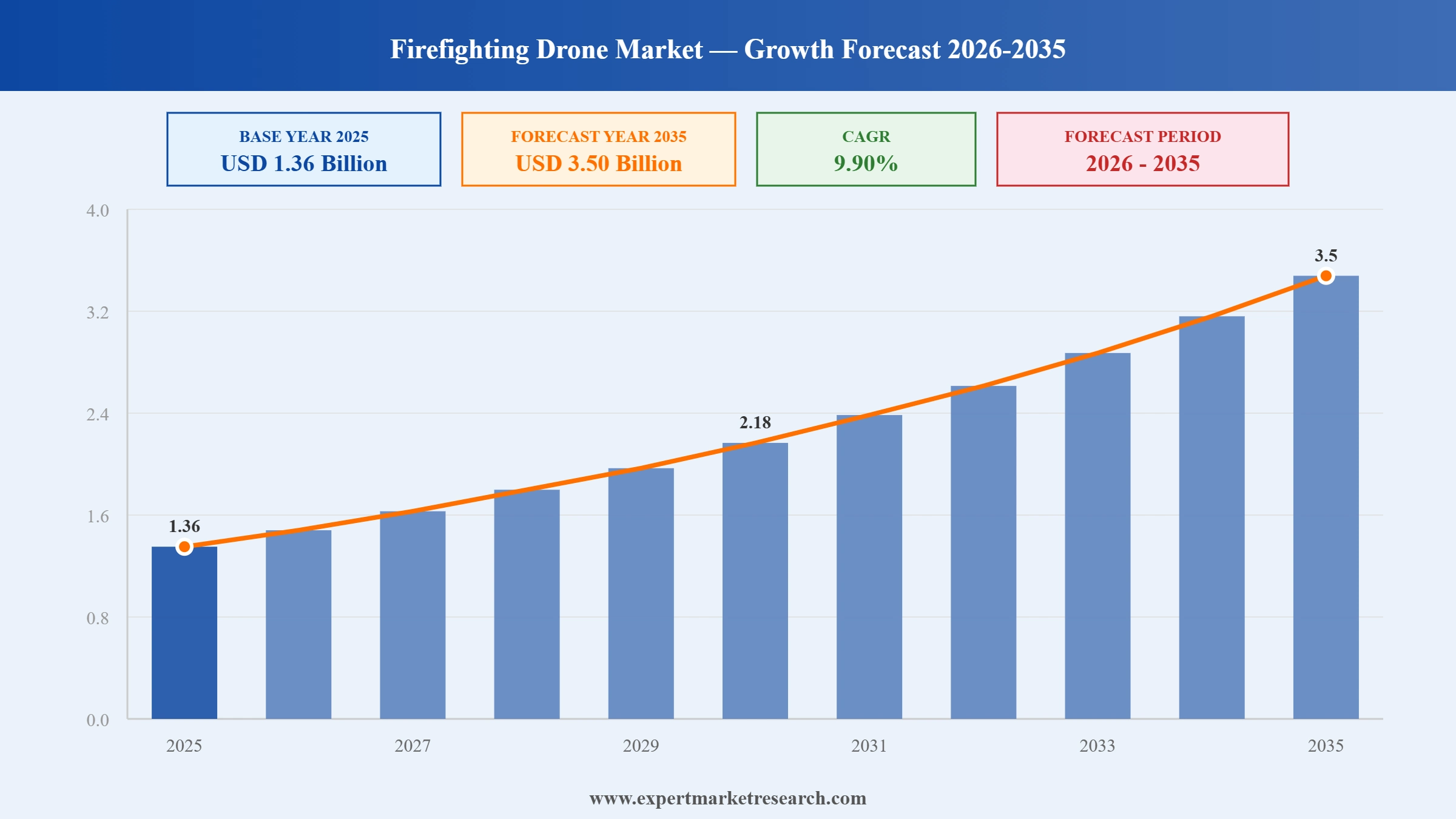
The global firefighting drone market attained a value of USD 1.36 Billion in 2025 and is projected to expand at a CAGR of 9.90% through 2035. The market is further expected to achieve USD 3.50 Billion by 2035. Rising wildfire frequency, growing government investment in disaster management, and advances in thermal imaging and AI-based detection are encouraging fire agencies to expand drone-based aerial response capabilities.
Increasing frequency and severity of wildfires across North America, Australia, and Southern Europe, combined with rising government funding for disaster management modernisation, continues to sustain demand for the firefighting drone market. Fire agencies are also replacing costlier manned aircraft and helicopter surveillance with drone fleets for routine monitoring, reserving manned assets for direct suppression missions.
The firefighting drone market is witnessing further developments as manufacturers extend flight endurance and payload capacity to support extended wildfire missions. Australian manufacturer Carbonix has deployed its Ottano hybrid VTOL drone, a 20-foot wingspan platform in September 2024, capable of carrying up to 110 pounds, for wildfire monitoring missions in Canada, pairing FLIR infrared sensors with extended endurance for overnight fire tracking. Manufacturers continue to prioritise hybrid-electric propulsion systems that balance flight endurance against payload weight for extended aerial monitoring missions.
In addition, firefighting drone players are competing increasingly on mission scope, with some manufacturers moving beyond pure surveillance into active suppressant delivery and aerial ignition to differentiate against surveillance-only rivals. In September 2025, Envirotech Vehicles unveiled the first American-made heavy lift drone capable of carrying 1,500 pounds, with a 100-gallon liquid capacity enabling it to deploy fire suppressant directly into wildfire zones inaccessible to traditional aircraft. Such active intervention capabilities are reshaping the wider firefighting drone market beyond its traditional monitoring roots.
Read more about this report - REQUEST FREE SAMPLE COPY IN PDF
Drone Amplified announced that the Federal Aviation Administration granted regulatory approval for commercial operation of its MONTIS drone-based avalanche control system, providing transportation departments and ski resorts a legal path to trigger-controlled avalanches remotely across the firefighting drone market. Companies can pursue dedicated regulatory approval pathways for novel payload applications to unlock commercial deployment ahead of less-prepared competitors.
EHang Holdings announced that the first EH216-F electric vertical take-off and landing firefighting aircraft had rolled off the assembly line at its Low-Altitude Emergency Rescue Equipment Headquarters in Beijing, marking the first anniversary of its cooperation with the local government. Companies can establish dedicated manufacturing headquarters for emergency rescue equipment to anchor long-term government-enterprise collaboration.
AdAstra Defense incorporated in California to build autonomous drone swarm systems for the firefighting drone market, designed to detect ignition points rapidly and deliver precision suppressant drops at early fire stages while minimising personnel risk. Companies can pursue swarm-based architectures to cover larger wildfire perimeters simultaneously without proportionally increasing operator staffing requirements.
Parrot partnered with DroneSense to deliver an integrated, NDAA-compliant hardware, software, and support bundle for public safety agencies, streamlining procurement and accelerating deployment for time-critical response missions. Companies can bundle hardware with mission-management software to simplify procurement for agencies lacking dedicated drone programme staff.
Major drone manufacturers are bundling artificial intelligence detection capabilities directly into flagship enterprise hardware rather than requiring separate third-party analytics software. DJI's enterprise ecosystem now supports more than one million business users worldwide, with its public safety product line increasingly positioned around bundled thermal imaging and object detection for wildfire monitoring, hotspot detection, and search-and-rescue missions across the firefighting drone market. The company's broad payload compatibility allows fire agencies to switch between monitoring and mapping sensors without operating separate drone fleets for each mission type.
Emergency response agencies are increasingly adopting autonomous drone dispatch models that launch automatically upon incident alerts, reducing response time compared with traditional crewed helicopter response. In February 2026, Skydio announced continued growth of its autonomous public safety drone ecosystem across the firefighting drone market, with expanded adoption of its Drone as First Responder platform emphasising autonomous flight capabilities, real-time situational awareness, and thermal imaging integration for wildfire assessment. The company has logged more than 2.8 million flights across its public safety drone fleet, reflecting the scale of agency reliance on autonomous dispatch models for rapid initial assessment ahead of crewed response.
Manufacturers are increasingly establishing dedicated live-fire testing facilities near their target public safety and defense customer base, rather than relying solely on third-party proving grounds for product validation. In March 2025, Draganfly established a new US location in Tampa, Florida, strategically positioned near key military and government clients and including a demonstration and live-fire testing facility to validate drone solutions across the firefighting drone market under realistic operating conditions. The facility reinforces the company's commitment to serving US public safety and defense customers directly, reducing the validation lead time between product development and field deployment for fire and emergency response agencies.
Manufacturers are extending flight endurance well beyond standard multi-rotor platforms to support wide-area forestry and wildfire surveillance missions that can last hours rather than minutes. In 2025, AeroVironment focused on scalable Group 3 unmanned aircraft systems for forestry missions across the firefighting drone market, integrating with US Department of the Interior wildfire monitoring programmes and combining hybrid-electric drivetrains with short-wave infrared sensors for over 90 minutes of flight time in contested, low-visibility environments. The company's AI-based false-positive minimisation is designed to reduce wasted dispatch of ground crews to sensor readings that do not represent genuine ignition events.
L3Harris Technologies continues to apply its intelligence, surveillance, and reconnaissance sensor expertise, including its WESCAM electro-optical and infrared targeting systems, across both defense and public safety unmanned aircraft applications. The company's multi-domain sensor integration experience positions it to support fire agencies seeking the kind of layered situational awareness historically developed for military reconnaissance missions, illustrating how defense-sector technology providers are increasingly finding adjacent public safety applications for their core sensor platforms.
The Expert Market Research’s report titled “Global Firefighting Drone Market Report and Forecast 2026-2035” offers a detailed analysis of the market based on the following segments:
Market Breakup by Type
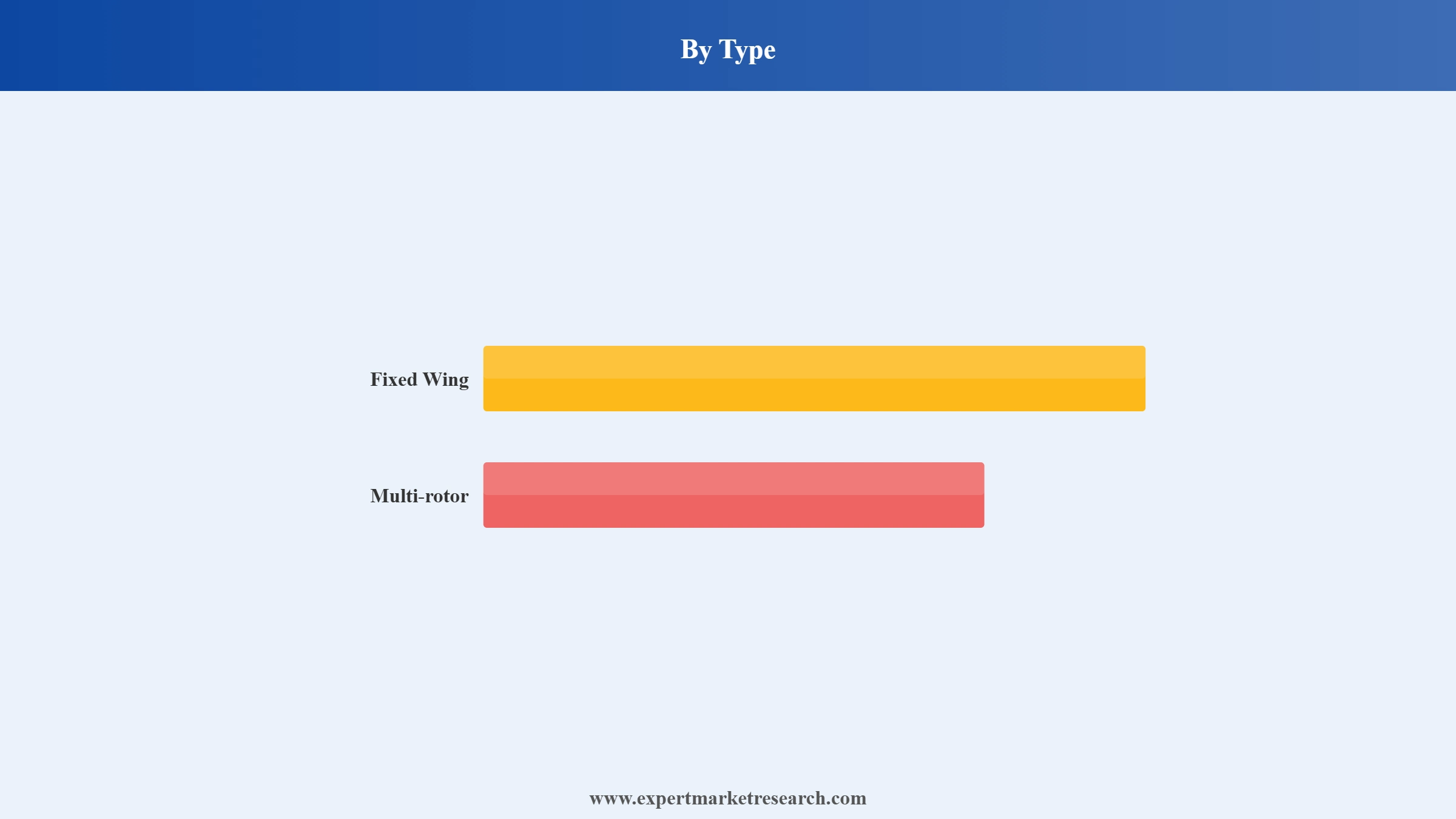
Key Insight: Multi-rotor drones account for the largest share of the firefighting drone market, valued for their vertical take-off capability, manoeuvrability in confined or obstructed terrain, and suitability for close-range scene monitoring. Fixed wing drones are growing steadily for large-area wildfire surveillance, offering longer endurance and range for monitoring extensive forest perimeters than multi-rotor platforms can typically achieve on a single charge. In July 2025, Drone Nerds debuted the NDAA-compliant WingtraRAY fixed-wing survey drone, engineered by Swiss manufacturer Wingtra to cover up to 1,360 acres in a single 59-minute flight. Agencies typically deploy both types in combination, using fixed wing platforms for perimeter mapping and multi-rotor platforms for close-range hotspot verification.
Market Breakup by Size
Key Insight: Micro drones hold the largest share of the firefighting drone market, offering a low-cost solution capable of carrying sensors and cameras with excellent communication range and quick navigation for monitoring and assessment applications. Macro drones are growing at a faster pace as agencies require heavier payload capacity for suppressant delivery and aerial ignition missions that micro-class platforms cannot practically support. Micro drones typically offer around twenty minutes of flight time before recharging is required, favouring rapid, repeated short-range missions.
Market Breakup by Propulsion
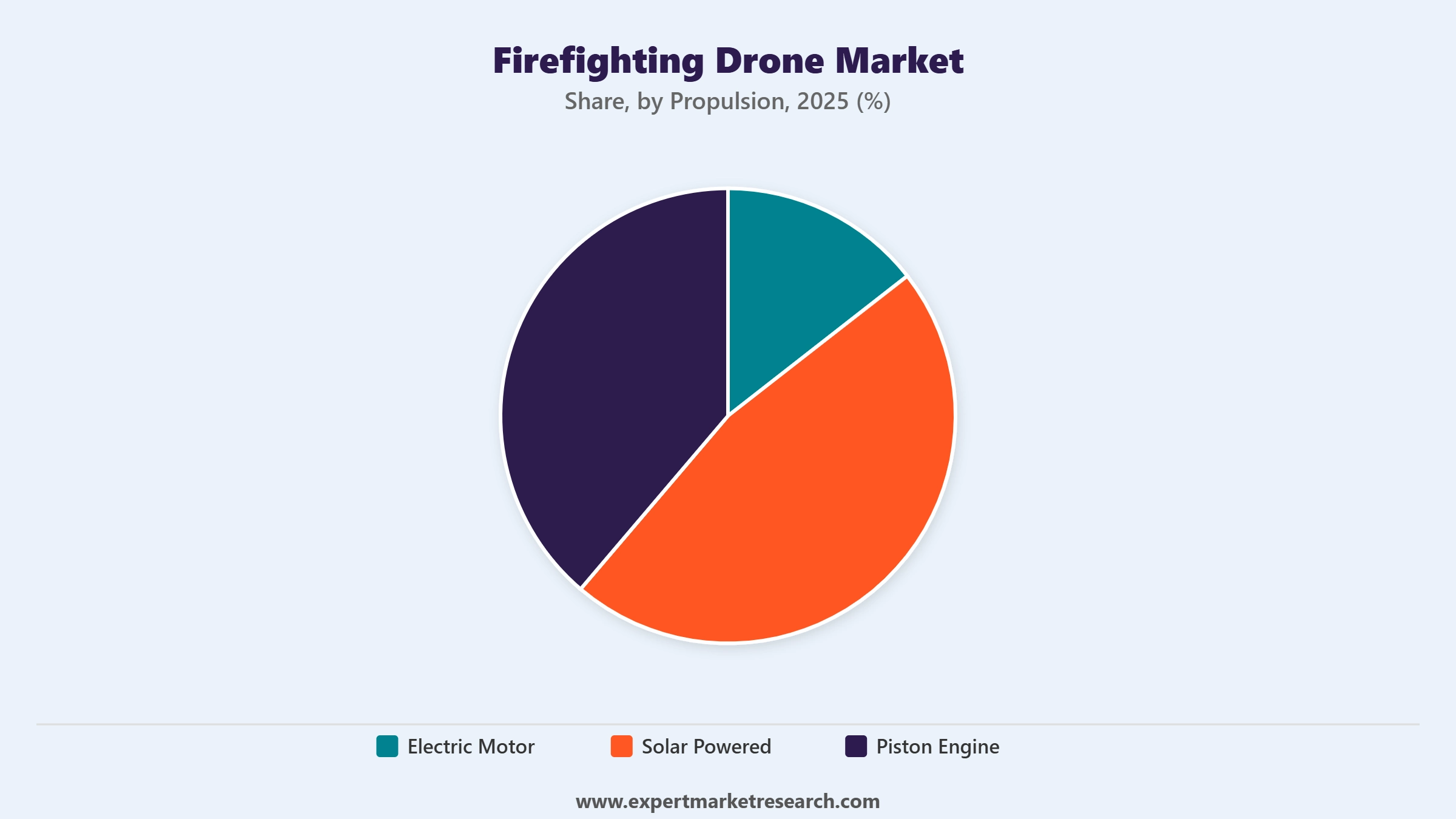
Key Insight: Electric motor propulsion accounts for the largest share of the market, offering quiet operation, low maintenance, and simplified logistics for routine agency deployment. Piston engine and hybrid-electric propulsion are gaining share for extended-endurance missions requiring longer flight times than battery-electric platforms typically support. Solar powered propulsion remains a smaller, niche category; Swiss company Dryad has developed solar-powered Silvanet Mesh Gateways as part of its forest sensor network, and separately secured European Regional Development Fund grant funding to develop an autonomous, solar-assisted drone-based wildfire suppression system named Florian.
Market Breakup by Application
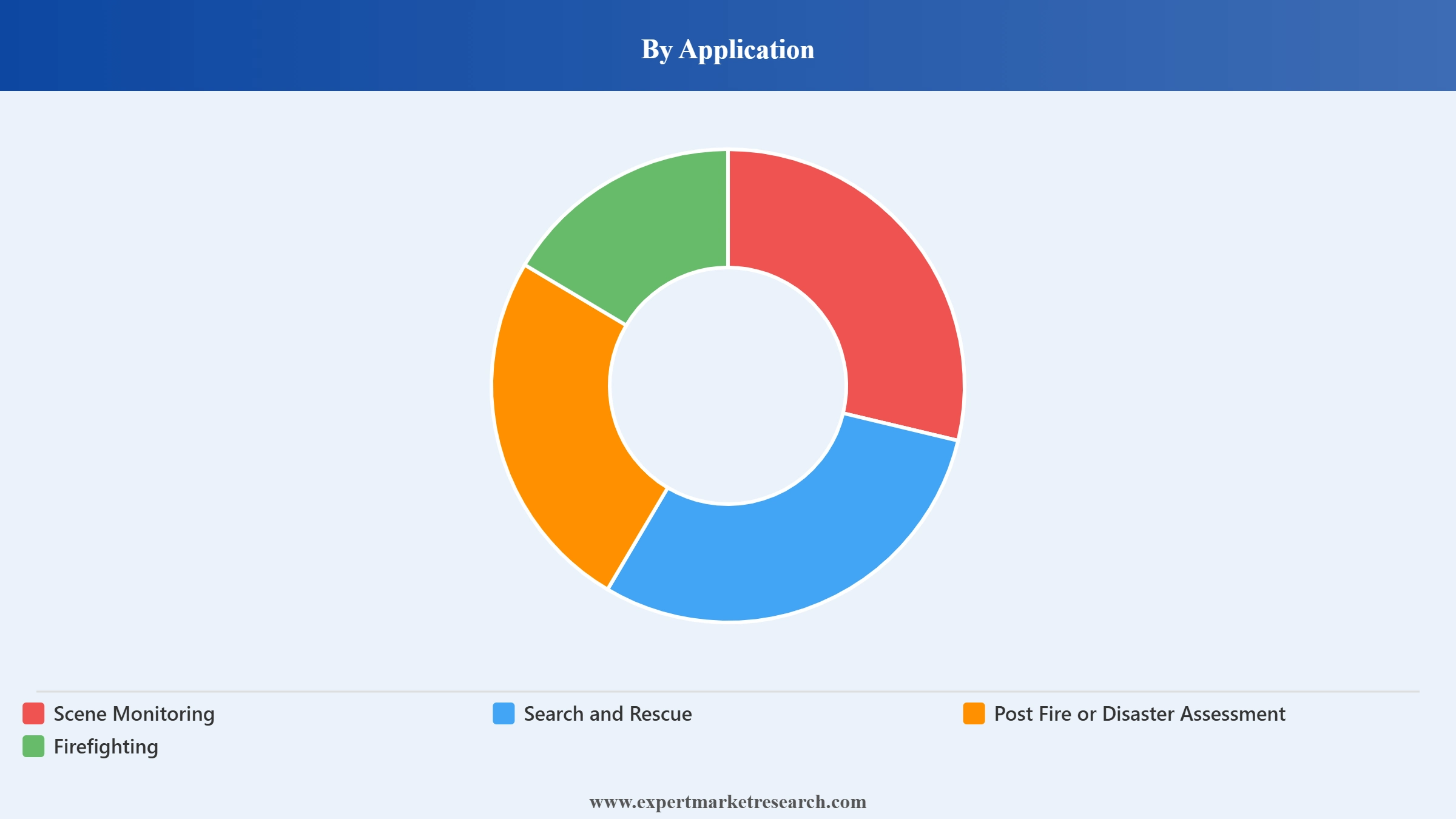
Key Insight: Scene monitoring accounts for the largest share of the firefighting drone market, as infrared cameras and sensors enable early detection and warning that helps first responders manage fire spread before it escalates. In May 2025, French manufacturer Elistair was awarded a contract to supply 13 tethered surveillance drones to Terra Spatium in support of Greece's Hellenic Fire Service, integrated into mobile operations centres for continuous wildfire detection and monitoring under the country's national disaster resilience programme. Firefighting applications, including aerial ignition and suppressant delivery, are growing at the fastest pace as agencies move beyond monitoring toward active intervention, favouring heavier-payload platforms capable of carrying and dispensing suppressant or ignition materials. Search and rescue applications continue to rely on high-resolution imaging for locating survivors in the immediate aftermath of a fire, while post fire or disaster assessment applications use similar imaging capabilities to evaluate structural and environmental damage and support recovery planning once the immediate danger has passed.
Market Breakup by Region
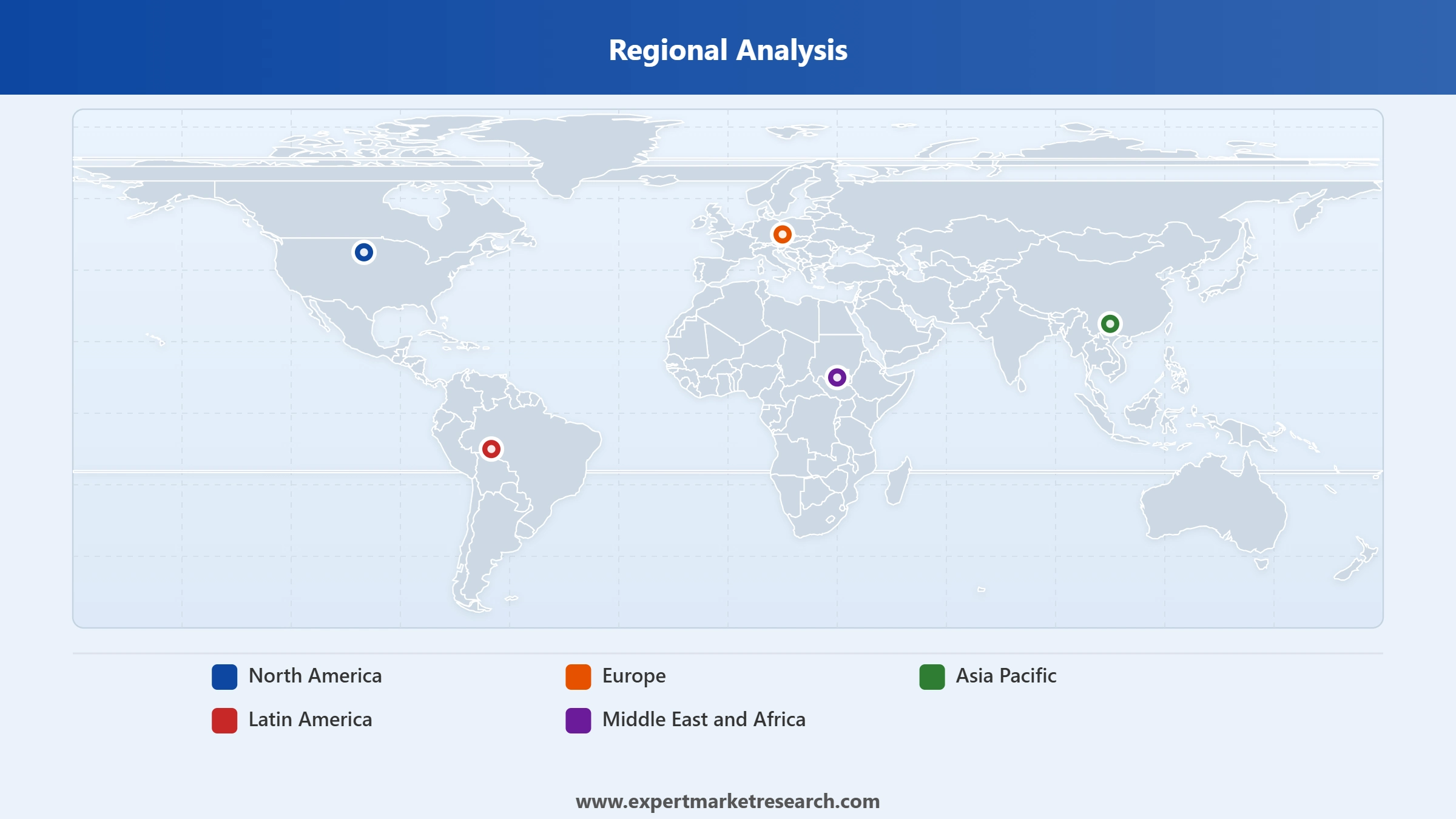
Key Insight: North America accounts for the largest share of the firefighting drone market, driven by the scale and frequency of wildfires across the United States and Canada and substantial federal and state disaster management funding. Asia Pacific is the fastest growing region as countries including Australia and China expand aerial wildfire response capacity alongside broader disaster management modernisation programmes. Europe continues to invest in drone-based forest monitoring following recent severe wildfire seasons across Southern Europe, while Latin America and the Middle East and Africa are gradually scaling adoption alongside expanding emergency response infrastructure.

Read more about this report - REQUEST FREE SAMPLE COPY IN PDF
By type, multi-rotor drones lead the market given their manoeuvrability and suitability for close-range scene assessment
Multi-rotor drones continue to account for the largest share of the firefighting drone market, valued for their vertical take-off capability and manoeuvrability across confined or obstructed terrain typical of structural fires and dense forest edges. Their ease of deployment without runway requirements continues to anchor steady replacement demand among municipal fire departments. In October 2025, Ascent AeroSystems became the first US small drone manufacturer to achieve Cybersecurity Maturity Model Certification Level 2, placing it among less than one percent of the domestic defense industrial base to meet the standard ahead of the Department of Defense's implementation deadline, strengthening its position as a trusted supplier of coaxial platforms for public safety and firefighting agencies.
Read more about this report - REQUEST FREE SAMPLE COPY IN PDF
Fixed wing drones are growing steadily as agencies prioritise longer endurance and wider-area coverage for large wildfire perimeters that exceed the practical range of multi-rotor platforms. Vendors are extending hybrid propulsion options to combine fixed-wing endurance with limited vertical take-off capability, reducing the runway infrastructure historically required for fixed-wing deployment and making the format increasingly viable for smaller agencies that previously lacked suitable launch sites.
Read more about this report - REQUEST FREE SAMPLE COPY IN PDF
By application, scene monitoring leads the market as infrared and sensor-based detection anchors early warning capability
Scene monitoring continues to account for the largest application share, reflecting the foundational role of aerial surveillance in nearly every fire response mission regardless of subsequent action taken. Established sensor and thermal imaging integration continues to anchor steady replacement demand as agencies upgrade ageing platforms with improved detection accuracy. In May 2026, Oklahoma-based RPX Technologies added its Embir-3 thermal camera to the Blue UAS Framework, a US government-vetted list of approved drone components, giving public safety agencies a trusted thermal sensor option for scene monitoring missions requiring verified, secure hardware.
Read more about this report - REQUEST FREE SAMPLE COPY IN PDF
Firefighting applications are growing at the fastest pace across the firefighting drone market as agencies move beyond monitoring toward active suppressant delivery and aerial ignition capability. In 2026, Drone Amplified reported expanded deployment of its IGNIS aerial ignition technology supporting prescribed burn and fuel-reduction programmes with government agencies and land management organisations, reflecting how agencies are increasingly willing to fund heavier-payload platforms once monitoring-only budgets have been established.

Read more about this report - REQUEST FREE SAMPLE COPY IN PDF
North America commands the largest share of the market through wildfire scale and substantial disaster management funding
North America holds the largest share of the firefighting drone market, driven by the scale and frequency of wildfires across the United States and Canada alongside substantial federal and state disaster management funding. In July 2026, Bridger Aerospace secured a 58 million dollar contract with the Texas A&M Forest Service to build a state wildfire aviation surveillance programme, illustrating the scale of state-level investment flowing into aerial wildfire response capacity across the region.
Read more about this report - REQUEST FREE SAMPLE COPY IN PDF
Asia Pacific is the fastest growing regional market as countries including Australia and China expand aerial disaster response capacity alongside public safety drone modernisation programmes. In 2026, New South Wales expanded its long-running aerial monitoring programme with a further AU$34 million in funding, extending coverage to 97 coastal locations and illustrating the scale of government investment in Australian drone infrastructure. Rising investment across the region continues to encourage manufacturers to expand distribution capacity.
The global industry is moderately fragmented, with firefighting drone companies ranging from large diversified drone manufacturers to specialised public safety and defense-adjacent developers competing across type, size, and application segments. Established players operate across the full mission spectrum, from scene monitoring hardware to emerging aerial ignition and suppressant delivery platforms for direct fire intervention.
Competitive dynamics among firefighting drone market players are increasingly shaped by autonomous flight capability, thermal imaging and AI detection accuracy, and the shift from pure surveillance toward active suppression roles. Manufacturers are investing in extended-endurance propulsion, payload flexibility, and defense-sector technology transfer to differentiate their offering and secure long-term agency contracts with fire and emergency response departments.
Founded in 2006 and headquartered in Shenzhen, China, DJI is the world's largest commercial drone manufacturer, supplying enterprise-grade platforms including its Matrice series for public safety, wildfire monitoring, and disaster management applications. The company's enterprise ecosystem supports more than one million business users worldwide across agriculture, construction, energy, and emergency response sectors.
Founded in 2014 and headquartered in Redwood City, California, United States, Skydio develops autonomous, AI-powered drones for public safety and defense applications, including its X10 platform used in Drone as First Responder programmes. The company positions its NDAA-compliant, US-manufactured drones as a domestic alternative for government and public safety customers restricted from using foreign-manufactured platforms.
Founded in 1998 and headquartered in Tampa, Florida, United States, Draganfly is one of North America's longest-established drone developers, supplying specialised platforms and sensors for public safety, defense, industrial, and humanitarian applications. The company has pivoted toward emergency response and payload delivery technology, including systems capable of carrying heavy loads for firefighting support missions.
Founded in 2019 through the merger of L3 Technologies and Harris Corporation, and headquartered in Melbourne, Florida, United States, L3Harris supplies intelligence, surveillance, and reconnaissance systems spanning space, air, land, sea, and cyber domains. The company's sensor and targeting technology, developed primarily for defense applications, increasingly finds adjacent uses across public safety and emergency response unmanned aircraft systems.
Other key players in the market include BSS Holland B.V., Yuneec International Co., Ltd., Aerialtronics DV B.V., MMC-UAV, Flyability SA, Guangzhou EHang Intelligent Technology Co., Ltd., and Parrot Drones SAS, Lockheed Martin Corporation, AeroVironment, Inc., Elistair Inc., Guangzhou EHang Intelligent Technology Co. Ltd.among others.
*Please note that this is only a partial list; the complete list of key players is available in the full report. Additionally, the list of key players can be customized to better suit your needs.*
Unlock the latest insights with our firefighting drone market trends 2026 report. Discover regional growth patterns, type and application trends, and key industry players. Stay ahead of competition with trusted data and expert analysis. Download your free sample report today and drive informed decisions in the market.
Thermal Imaging UAV And Monitoring Systems
Aerial Surveillance And Public Safety
Disaster Robotics And Response Tech


Upto 15% Off
USD
$2499 $2249
$3999 $3599
$4999 $4249
$5999 $5099


*While we strive to always give you current and accurate information, the numbers depicted on the website are indicative and may differ from the actual numbers in the main report. At Expert Market Research, we aim to bring you the latest insights and trends in the market. Using our analyses and forecasts, stakeholders can understand the market dynamics, navigate challenges, and capitalize on opportunities to make data-driven strategic decisions.*
In 2025, the market reached an approximate value of USD 1.36 Billion.
The market is projected to grow at a CAGR of 9.90% between 2026 and 2035.
The market for firefighting drones is estimated to witness a healthy growth in the forecast period of 2026-2035 to reach USD 3.50 Billion by 2035.
Expanding autonomous Drone as First Responder programmes, integrating AI-based thermal detection directly into flagship hardware, and developing aerial ignition and precision suppressant delivery capabilities for active fire intervention.
The key firefighting drone market trends are continued advancements by key players in the market, increasing cases of forest and industrial fire, and rising investments by various governments.
The significant applications of firefighting drones include scene monitoring, search and rescue, post fire or disaster assessment, and firefighting.
The various propulsions in the market are electric motor, solar powered, and piston engine.
The major objective of firefighting drones is to improve firefighting capabilities in a safe and efficient manner that reduces risk of harm to people and surroundings.
The major regions in the market are North America, Europe, the Asia Pacific, Latin America, and the Middle East and Africa.
The key players in the market include Lockheed Martin Corporation, AeroVironment, Inc., Elistair Inc., SZ DJI Technology Co., Ltd, BSS Holland B.V., Yuneec International Co., Ltd., Aerialtronics DV B.V., MMC-UAV, Flyability SA, Draganfly Inc., Guangzhou EHang Intelligent Technology Co. Ltd., Skydio, Inc., L3Harris Technologies, Inc., Parrot Drones SAS, among others.
Manufacturers face regulatory airspace restrictions on beyond-visual-line-of-sight operations, high operational costs limiting adoption among smaller municipalities, and the technical complexity of extending flight endurance without compromising payload capacity.
Explore our key highlights of the report and gain a concise overview of key findings, trends, and actionable insights that will empower your strategic decisions.
| REPORT FEATURES | DETAILS |
| Base Year | 2025 |
| Historical Period | 2019-2025 |
| Forecast Period | 2026-2035 |
| Scope of the Report |
Historical and Forecast Trends, Industry Drivers and Constraints, Historical and Forecast Market Analysis by Segment:
|
| Breakup by Type |
|
| Breakup by Size |
|
| Breakup by Propulsion |
|
| Breakup by Application |
|
| Breakup by Region |
|
| Market Dynamics |
|
| Competitive Landscape |
|
| Companies Covered |
|
Datasheet
One User
USD 2,499
USD 2,249
tax inclusive*
Single User License
One User
USD 3,999
USD 3,599
tax inclusive*
Five User License
Five User
USD 4,999
USD 4,249
tax inclusive*
Corporate License
Unlimited Users
USD 5,999
USD 5,099
tax inclusive*
*Please note that the prices mentioned below are starting prices for each bundle type. Kindly contact our team for further details.*
Flash Bundle
Small Business Bundle
Growth Bundle
Enterprise Bundle
*Please note that the prices mentioned below are starting prices for each bundle type. Kindly contact our team for further details.*
Flash Bundle
Number of Reports: 3
20%
tax inclusive*
Small Business Bundle
Number of Reports: 5
25%
tax inclusive*
Growth Bundle
Number of Reports: 8
30%
tax inclusive*
Enterprise Bundle
Number of Reports: 10
35%
tax inclusive*
How To Order

Select License Type
Choose the right license for your needs and access rights.

Click on ‘Buy Now’
Add the report to your cart with one click and proceed to register.

Select Mode of Payment
Choose a payment option for a secure checkout. You will be redirected accordingly.
Strategic Solutions for Informed Decision-Making
Gain insights to stay ahead and seize opportunities.

Get insights & trends for a competitive edge.

Track prices with detailed trend reports.

Analyse trade data for supply chain insights.

Leverage cost reports for smart savings

Enhance supply chain with partnerships.

Connect For More Information
Our expert team of analysts will offer full support and resolve any queries regarding the report, before and after the purchase.
Our expert team of analysts will offer full support and resolve any queries regarding the report, before and after the purchase.
We employ meticulous research methods, blending advanced analytics and expert insights to deliver accurate, actionable industry intelligence, staying ahead of competitors.
Our skilled analysts offer unparalleled competitive advantage with detailed insights on current and emerging markets, ensuring your strategic edge.
We offer an in-depth yet simplified presentation of industry insights and analysis to meet your specific requirements effectively.




