

Consumer Insights
Uncover trends and behaviors shaping consumer choices today
Procurement Insights
Optimize your sourcing strategy with key market data
Industry Stats
Stay ahead with the latest trends and market analysis.
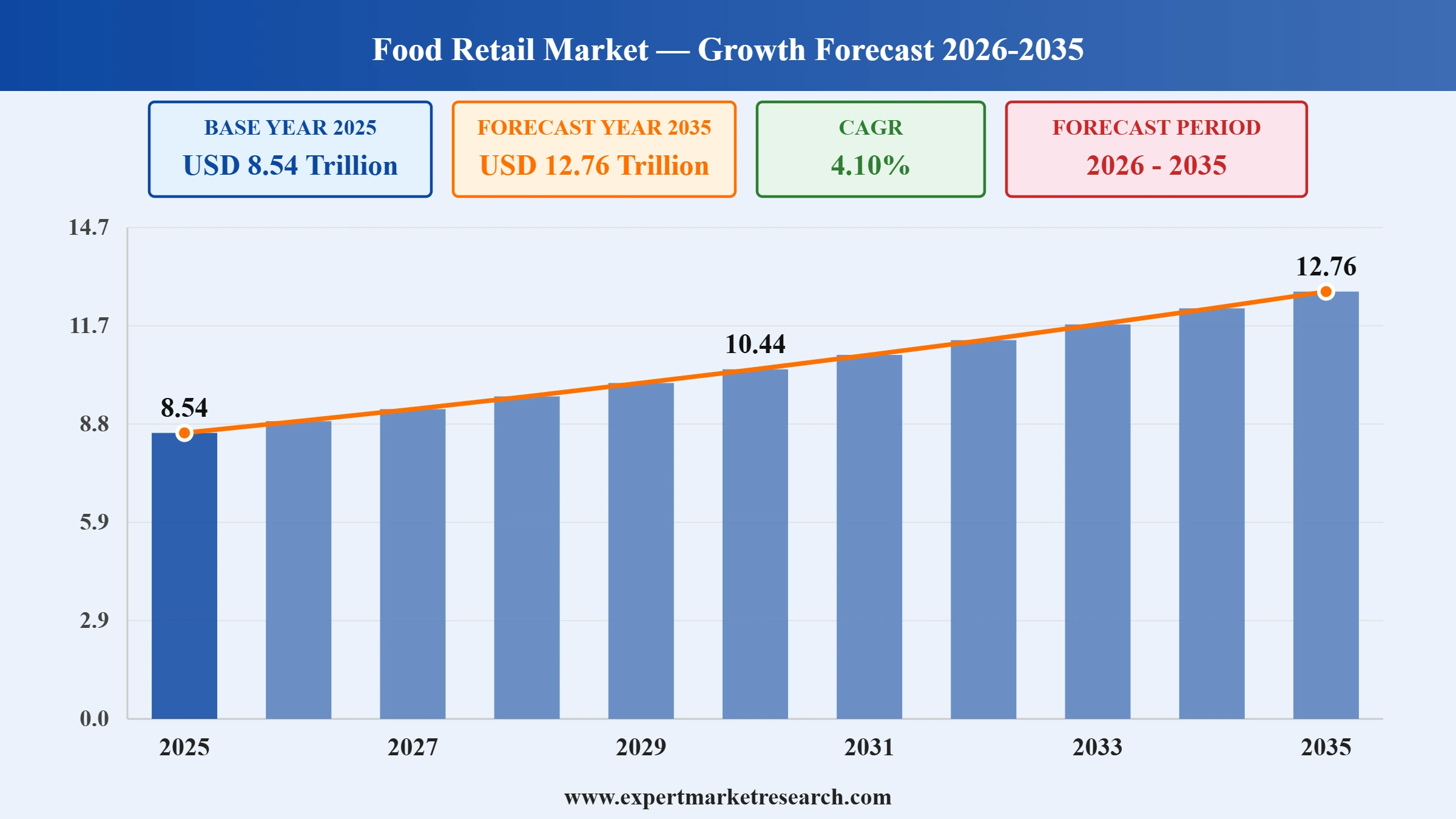
The global food retail market reached approximately USD 8.54 Trillion in 2025. The market is projected to grow at a CAGR of 4.10% between 2026 and 2035, reaching a value of around USD 12.76 Trillion by 2035.
Read more about this report - REQUEST FREE SAMPLE COPY IN PDF
| Global Food Retail Market Report Summary | Description | Value |
| Base Year | USD Trillion | 2025 |
| Historical Period | USD Trillion | 2019-2025 |
| Forecast Period | USD Trillion | 2026-2035 |
| Market Size 2025 | USD Trillion | 8.54 |
| Market Size 2035 | USD Trillion | 12.76 |
| CAGR 2019-2025 | Percentage | XX% |
| CAGR 2026-2035 | Percentage | 4.10% |
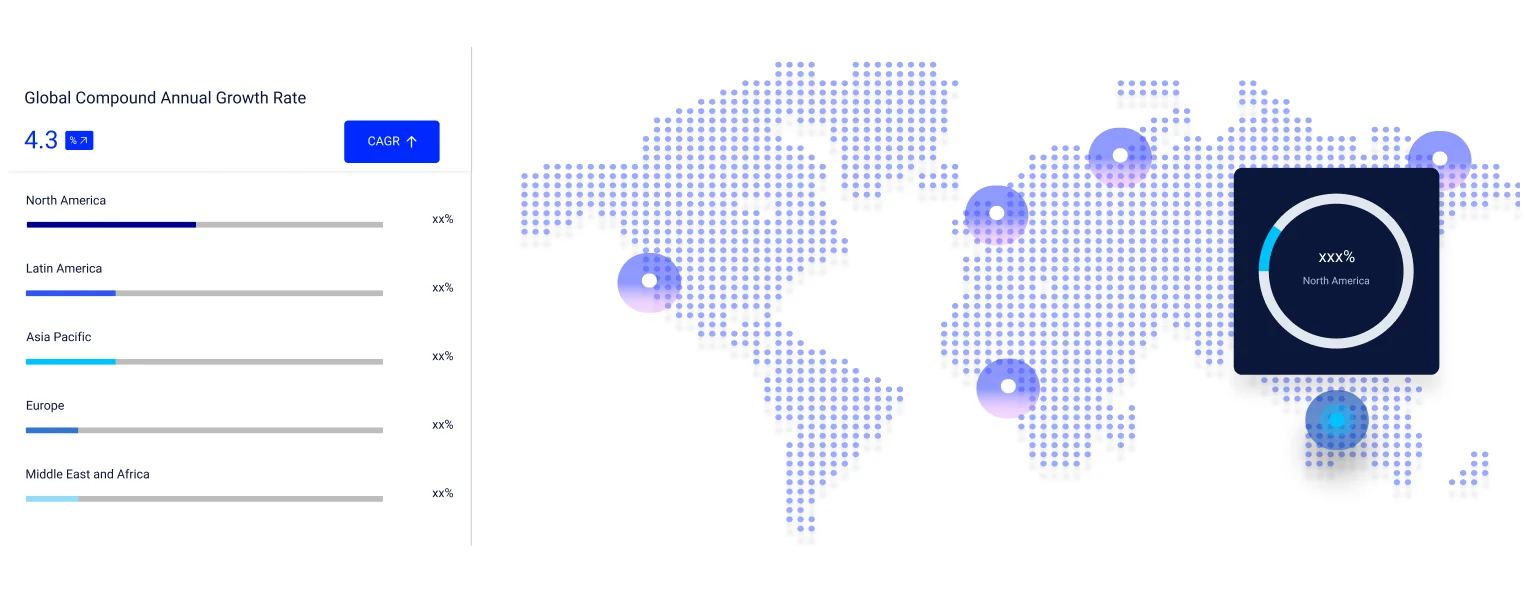
| CAGR 2026-2035 - Market by Region | Asia Pacific | 5.5% |
| CAGR 2026-2035 - Market by Country | India | 6.1% |
| CAGR 2026-2035 - Market by Country | China | 5.8% |
| CAGR 2026-2035 - Market by Product Type | Cereals | 4.7% |
| CAGR 2026-2035 - Market by Distribution Channel | Online | 7.8% |
| Market Share by Country 2025 | USA | XX% |
Growing demand for healthy food products, the rise of online shopping, and the burgeoning popularity of convenience food products are some of the prominent factors aiding the market growth. Consumers are increasingly looking for organic and functional food products which has led several retail stores and supermarkets to create a separate section for them or open new stores and departments just for their storage and sales. In the aftermath of the pandemic in 2020, there has been a significant rise in online shopping for goods including food and grocery items, pushing the food retail demand.
Due to the busy lifestyle of the working population and college students, the demand for convenience food products such as ready-to-eat meals, and pre-cut fruits and vegetables is on the rise. As per the SATS solution group, the ready-to-eat sector in India is expected to witness a growth of 45 per cent in the next five years from the year 2024.
Read more about this report - REQUEST FREE SAMPLE COPY IN PDF
Several market players are promoting sustainability by offering transparency on their product’s carbon footprint to their consumers. For instance, Albert Heijn, a Dutch-based grocery retailer, is now sharing the climate impact of 1100 of its food and beverage products with its customers via its platform. This data also allows it to detect the problem areas and reduce the impact of those products.
Shoprite announced an agreement to acquire a majority interest in Vida e Caffè, South Africa’s leading coffee brand, as part of its wider expansion strategy. The acquisition strengthens Shoprite’s presence in coffee and quick-service retail while adding an established convenience-oriented format to its portfolio, supporting greater customer reach and diversification beyond conventional supermarket operations.
Asda announced a partnership with Ocado Group to deploy Ocado’s Smart Platform across its website, mobile app, in-store picking, and home-delivery operations. The technology is expected to improve product search, checkout, order fulfilment, delivery reliability, and available delivery slots. The investment should strengthen Asda’s competitiveness in online grocery while accelerating digital transformation across food retail, thereby boosting the growth of the food retail market.
ALDI opened its first store in Portland, Maine, marking its entry into the state as part of its broader U.S. expansion programme. The retailer plans to open more than 180 stores during 2026 while expanding distribution capacity, increasing its physical grocery presence and strengthening its value-oriented proposition across additional U.S. markets.
Carrefour announced a franchise and supply partnership with Queens Supermarket PLC to enter Ethiopia, with the first stores planned for rebranding during the first half of the year. The expansion extends Carrefour’s food-retail footprint into a new African market through a local partnership model, increasing access to its supermarket format and strengthening international retail penetration.
Modern grocery retailers are increasingly abandoning the traditional mode of delivering groceries online in favor of ultrafast deliveries backed up by dark stores, micro fulfillment centers, and a robust local delivery network. In India, the trend of quick commerce is increasingly becoming popular within organized food retailing, whereas in China, modern grocery retailers and platforms are increasingly adopting supermarkets, dark stores, and lightning warehouses in order to support their instant deliveries. This is changing consumer expectations around delivery speed and encouraging retailers to redesign inventory positioning, assortment planning, and last-mile operations.
Retailers are moving beyond basic economy store brands towards broader private-label portfolios spanning premium, health-focused, convenience, and specialized food categories. Persistent consumer sensitivity to food prices is accelerating this shift, while retailers benefit from greater control over pricing, assortment, and margins. The trend is particularly pronounced in the US, where Aldi, Walmart, Target, and other retailers are expanding store-brand ranges to capture consumers seeking stronger value without necessarily compromising perceived quality, hence boosting the demand for food retail market.
Artificial intelligence is gradually becoming a part of the food-retailing process with respect to demand prediction, inventory management, restocking, personalization, pricing, and promotion optimization. European supermarkets are taking a step toward using AI in demand, decisions, and actions, although full-scale implementation in enterprises is still in its infancy. Retailers are increasingly using technology to reduce stockouts, improve product availability, optimize labor, and respond more rapidly to local purchasing patterns.
Consumers are increasingly moving between physical stores, retailer websites, mobile applications, click-and-collect services, and home delivery rather than relying on a single purchasing channel. This is causing food retailers to work on aligning pricing, promotions, product availability, loyalty programs, and fulfillment through multiple channels. Asda’s technology strategy for the year 2026 and its utilization of Ocado technology to place online orders is an example of what retailers are doing in terms of digital investments, bolstering the food retail market growth.
Food retailing is increasingly moving towards a two-tier marketplace where customers are looking for cheaper products on one hand and trading towards better-quality food items on the other. This means that retail formats are now offering not only mid-range items but value and premium brands too. Research on groceries in Europe reveals that customers are now showing increasing intentions for purchasing premium items along with price sensitivity, especially amongst poorer segments of society.
Another important trend developing in the food retail market at this time is personalized shopping experiences, driven by advanced data analytics and artificial intelligence. These technologies are being used by retailers to deliver tailored product recommendations, dynamic pricing, and targeted promotions based on individual consumer preferences and purchasing behavior. This trend increases customer satisfaction and generates higher loyalty by creating more relevant and convenient shopping experiences and thus boosts the food retail industry growth. This ultimately increases engagement and sales in an increasingly competitive market.
The High Level Of Food Spending On Food Expenditure Drives Up The Growth In The Food Retail Market Globally.
The shares of consumer expenditure spent on food as a percentage of the whole showed quite a marked variation across countries in 2022, indicating different economic situations, levels of income, and living costs. In Myanmar, the share reached over 50% of consumer expenditure. High shares of consumer spending on food are an indication of a low overall income level, in which a high part of the budget has to be allocated to consumption for subsistence. This becomes a significant trend in the food retail market globally.
In African countries, such as Angola, Ethiopia, and Tanzania, the share of food expenditure makes up about 30% up to 40% of the population, which reflects about the same trends: relatively low disposable incomes of the population in these countries versus a bigger cost of food compared to other consumer goods. For another type of country, Venezuela, which is still experiencing a severe economic crisis, 20% of food expenditure can characterize very high inflation and economic instability; thus, such changes can result in consumer shopping patterns.
In Asia, countries with the same range of 30% to 40% included Kazakhstan, Azerbaijan, and Iran, hence placing food at a high importance in household budgets against countries that vary in their degree of economic development. Also within this range were Belarus and Bolivia from Europe and South America respectively indicating that countries in similar economic conditions continued to have food as a major component of consumer expenditure.
This share was much shorter in wealthier countries like Australia and Bahrain, close to or a bit less than 15%. Then, the sum of total consumer expenditures in those countries was by far stronger and in most cases was returning 20-50 thousand US dollars per person. Consequently, shorter shares of spending on food in those countries suggest higher disposable income with a smaller share of income spent on meeting the requirements for food, and a stronger level of spending on other goods and services, thereby propelling the food retail demand growth.
For instance, in both Brazil and Argentina, expenditure on food was within the moderate level, 20% to 30% of all expenditures. This implies that it was a middle-income level, suggested by the fact that food was not the overwhelming portion of the budget, which it is in lower-income countries. Costa Rica was also in this range, suggesting a similar economy. The importance of the spending patterns of differences among countries shows that larger amounts have been spent on food in lower-income countries, while the wealthier nations are represented by a smaller percentage relating to food and more with so-called reserve dispositions of other spending items.
“Food Retail Market Report and Forecast 2026-2035” offers a detailed analysis of the market based on the following segments:
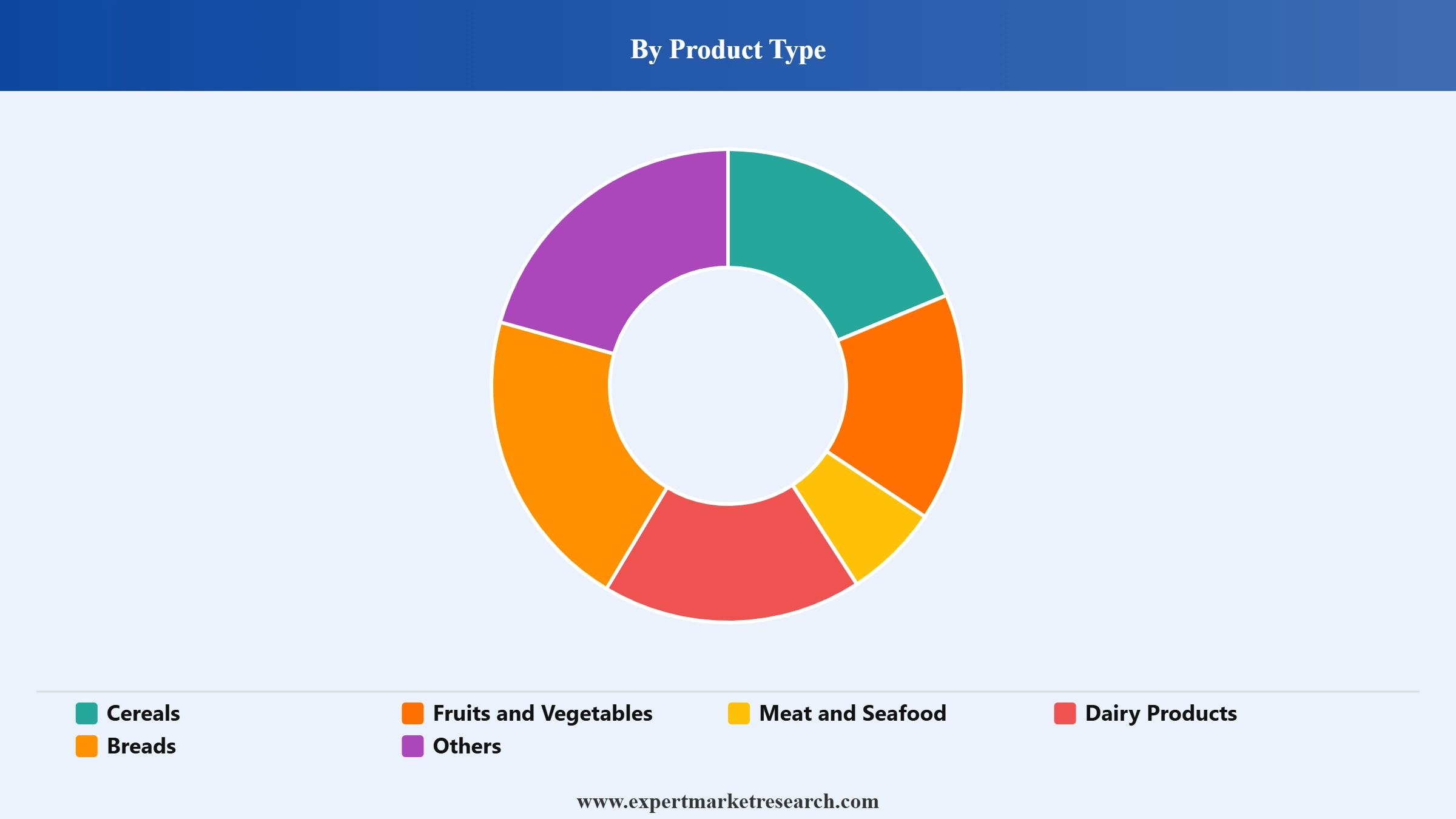
Market Breakup by Product Type
Market Breakup by Distribution Channel
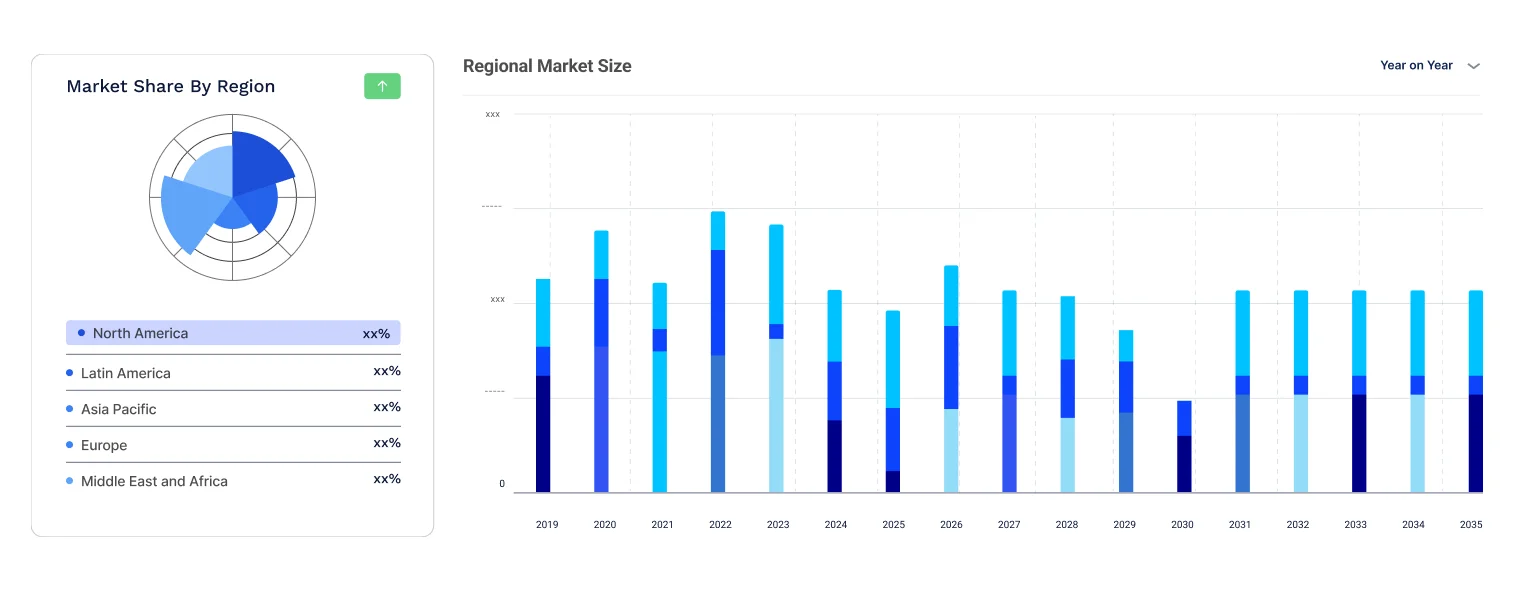
Market Breakup by Region
Read more about this report - REQUEST FREE SAMPLE COPY IN PDF
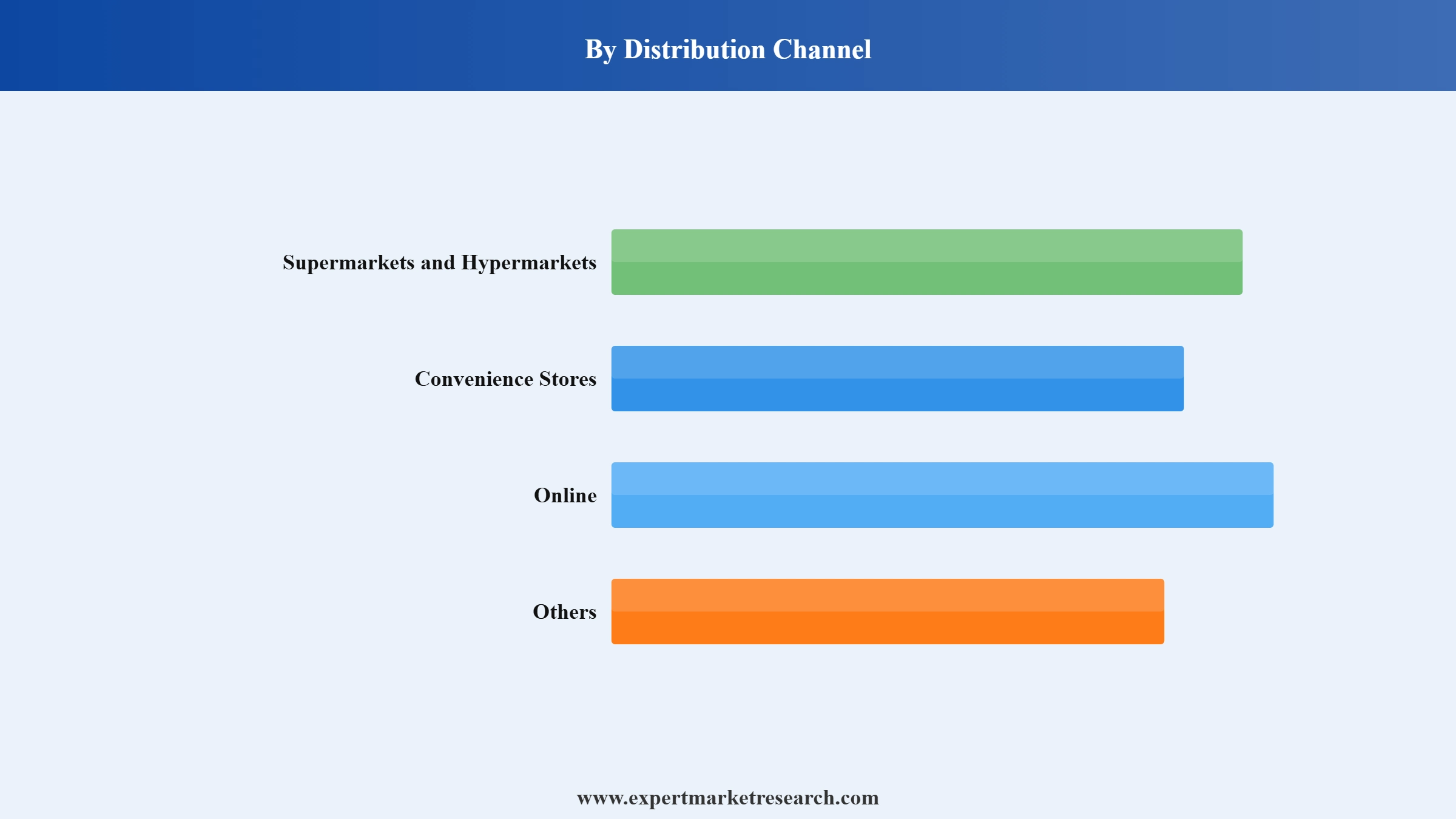
Supermarkets And Hypermarkets To Gain A Significant Share For Increased Availability Of Range Of Products
As per food retail market analysis, supermarkets and hypermarkets account for major market share owing to their increased accessibility and availability of a wide range of food products. They can offer a variety of goods, both food and non-food, thereby effectively meeting the different needs of the consumer, hence attracting more of them interested in variety and convenience in the purchasing experience. Moreover, these stores offer a broad assortment of products under a single roof and store discounts and coupons which makes them an attractive option for the consumers.
Read more about this report - REQUEST FREE SAMPLE COPY IN PDF
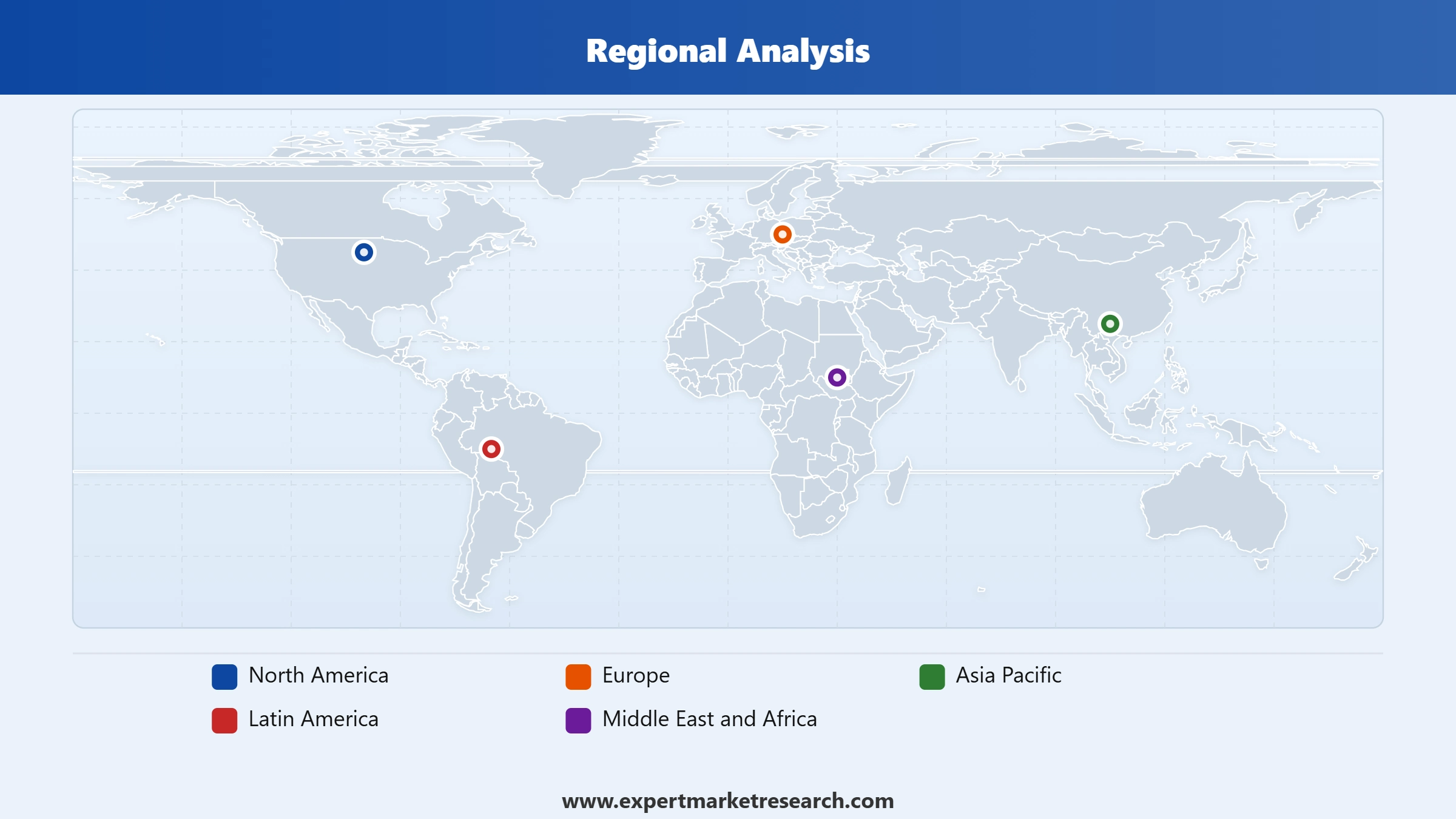
The food retail industry in Asia-Pacific region is on course to assume a more prominent place in the food retail market, driven by its rapidly growing population, increasing urbanization, and higher disposable incomes. A growing middle class creates demand for diversified ranges of foodstuffs and modern retail formats. At the same time, technological innovation and growth in e-commerce, as seen in countries like China and India, shift the dynamics of the retail environment toward accessibility. This will place Asia-Pacific at the forefront of the evolving food retail market globally.
Read more about this report - REQUEST FREE SAMPLE COPY IN PDF
The market players in the food retail industry are increasing their funding to invest in technology infrastructure and gain a competitive edge in the market.
Founded in 1962 and headquartered in Bentonville, Arkansas, Walmart Inc. has been one of the leading retailers around the world with regards to stressing convenience through online grocery delivery and curbside pickup. The company strives to reach a goal of zero waste by 2025 and looks to leverage advanced technologies such as blockchain and AI for customer experience and efficiency.
Kroger Company, based in Cincinnati, Ohio, was founded in 1883. It has large digital and e-commerce capabilities in delivery service and automated warehouses. The company looks forward to health and wellness by increasing organic products, reducing 50% of food waste by the year 2030.
Tesco PLC, founded in 1919 and headquartered in Welwyn Garden City, Hertfordshire, UK, has a mix of store formats ranging from hypermarkets to convenience stores. Saying that it would achieve zero carbon emission by 2050, reduce food waste through various charitable partnerships, and improve online shopping by advanced analytics for better customer service, Tesco does nothing but try to please its loyal customers.
Carrefour S.A. is a 1959 company based in Boulogne-Billancourt, France. It unites the storefronts of physical and digital to bring about one seamless customer experience. The firm promotes sustainable agriculture, encourages the development of local products, and builds a leading presence in emerging markets through strategic partnerships and acquisitions.
Costco Wholesale Corporation was founded in 1983 and is headquartered in Issaquah, Washington. Being involved in the bulk sale of goods makes it value-giving to the customer by price advantages and by private-label products that are not found anywhere else. The firm has been expanding its operations by opening new warehouse locations worldwide and maintains its commitment to sustainable sourcing and decreased environmental impact.
*Please note that this is only a partial list; the complete list of key players is available in the full report. Additionally, the list of key players can be customized to better suit your needs.*
Other key players profiled in the food retail market report are 7-ELEVEN, Inc., Amazon.com Inc., ALDI, Inc., and Schwarz Unternehmenskommunikation GmbH & Co. KG, among others.


Upto 15% Off
USD
$2499 $2249
$3999 $3599
$4999 $4249
$5999 $5099


*While we strive to always give you current and accurate information, the numbers depicted on the website are indicative and may differ from the actual numbers in the main report. At Expert Market Research, we aim to bring you the latest insights and trends in the market. Using our analyses and forecasts, stakeholders can understand the market dynamics, navigate challenges, and capitalize on opportunities to make data-driven strategic decisions.*
In 2025, the food retail industry reached an approximate value of USD 8.54 Trillion.
The market is estimated to grow at a CAGR of 4.10% between 2026 and 2035.
The market is estimated to witness a healthy growth during 2026-2035 to reach around USD 12.76 Trillion by 2035.
The market is being driven due to growing demand for healthy food products, the rise of online shopping, and the burgeoning popularity of convenience food products.
The key trends aiding the market include the increased popularity of plant-based products, sustainability initiatives by market players, and the rise of organic food products.
Regions considered in the market are North America, Europe, Asia Pacific, Latin America, and the Middle East and Africa.
Based on product type, market segmentations include cereals, fruits and vegetables, meat and seafood, dairy products, and breads, among others.
Different distribution channels are supermarkets and hypermarkets, convenience stores, and online, among others.
The major players in the market are Walmart Inc., 7-ELEVEN, Inc., Amazon.com Inc., Kroger Company, Costco Wholesale Corporation, ALDI, Inc., Target Corporation, Carrefour Group, Schwarz Unternehmenskommunikation GmbH & Co. KG, and Tesco Plc, among others.
Explore our key highlights of the report and gain a concise overview of key findings, trends, and actionable insights that will empower your strategic decisions.
| REPORT FEATURES | DETAILS |
| Base Year | 2025 |
| Historical Period | 2019-2025 |
| Forecast Period | 2026-2035 |
| Scope of the Report |
Historical and Forecast Trends, Industry Drivers and Constraints, Historical and Forecast Market Analysis by Segment:
|
| Breakup by Product Type |
|
| Breakup by Distribution Channel |
|
| Breakup by Region |
|
| Market Dynamics |
|
| Competitive Landscape |
|
| Companies Covered |
|
Datasheet
One User
USD 2,499
USD 2,249
tax inclusive*
Single User License
One User
USD 3,999
USD 3,599
tax inclusive*
Five User License
Five User
USD 4,999
USD 4,249
tax inclusive*
Corporate License
Unlimited Users
USD 5,999
USD 5,099
tax inclusive*
*Please note that the prices mentioned below are starting prices for each bundle type. Kindly contact our team for further details.*
Flash Bundle
Small Business Bundle
Growth Bundle
Enterprise Bundle
*Please note that the prices mentioned below are starting prices for each bundle type. Kindly contact our team for further details.*
Flash Bundle
Number of Reports: 3
20%
tax inclusive*
Small Business Bundle
Number of Reports: 5
25%
tax inclusive*
Growth Bundle
Number of Reports: 8
30%
tax inclusive*
Enterprise Bundle
Number of Reports: 10
35%
tax inclusive*
How To Order

Select License Type
Choose the right license for your needs and access rights.

Click on ‘Buy Now’
Add the report to your cart with one click and proceed to register.

Select Mode of Payment
Choose a payment option for a secure checkout. You will be redirected accordingly.
Strategic Solutions for Informed Decision-Making
Gain insights to stay ahead and seize opportunities.

Get insights & trends for a competitive edge.

Track prices with detailed trend reports.

Analyse trade data for supply chain insights.

Leverage cost reports for smart savings

Enhance supply chain with partnerships.

Connect For More Information
Our expert team of analysts will offer full support and resolve any queries regarding the report, before and after the purchase.
Our expert team of analysts will offer full support and resolve any queries regarding the report, before and after the purchase.
We employ meticulous research methods, blending advanced analytics and expert insights to deliver accurate, actionable industry intelligence, staying ahead of competitors.
Our skilled analysts offer unparalleled competitive advantage with detailed insights on current and emerging markets, ensuring your strategic edge.
We offer an in-depth yet simplified presentation of industry insights and analysis to meet your specific requirements effectively.




