

Consumer Insights
Uncover trends and behaviors shaping consumer choices today
Procurement Insights
Optimize your sourcing strategy with key market data
Industry Stats
Stay ahead with the latest trends and market analysis.
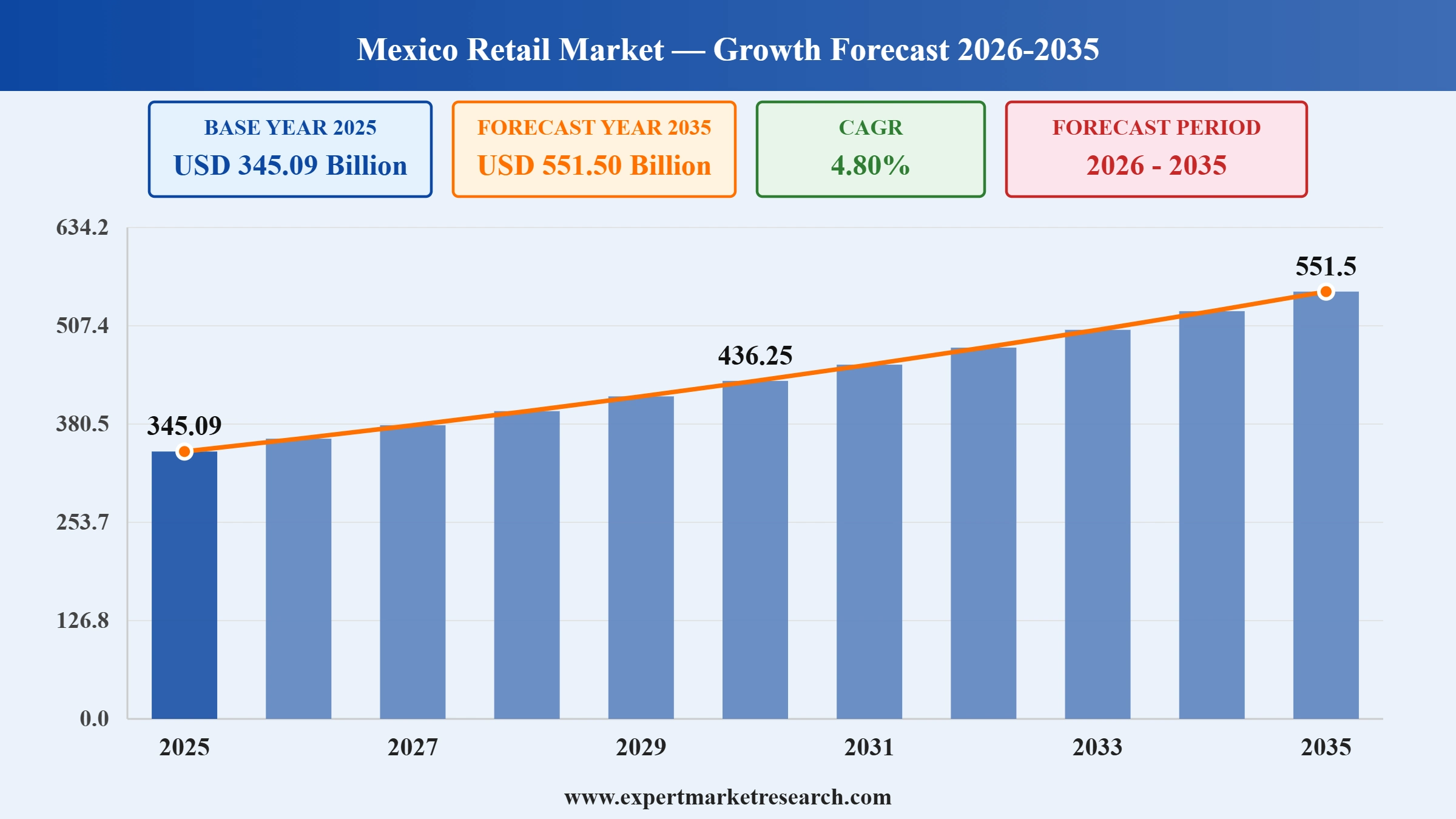
The Mexico retail market was valued at USD 345.09 Billion in 2025. The industry is expected to grow at a CAGR of 4.80% during the forecast period of 2026-2035 to reach a value of USD 551.50 Billion by 2035. The market growth is attributed to the booming online retail sector due to the rising internet penetration across the country.
According to data from the Center for Strategic and International Studies (CSIS), e-commerce accounted for 15 percent of total retail sales in 2023, up from just 1% a decade ago. Online sales reached USD 74 billion in 2023, with projections estimating approximately USD 100 billion in 2024 and USD 176.8 billion by 2026, highlighting the rapid scale and potential of the sector, propelling the Mexico retail market value.
This growth is underpinned by multiple factors. Digital platforms such as Amazon, Mercado Libre, and emerging Chinese players, such as Shein, Temu, and AliExpress, which offer consumers unparalleled convenience, product variety, and competitive pricing.
In addition to this, omnichannel retailers, including Walmart, Coppel, and Liverpool, are expanding their online and logistics capabilities, ensuring healthy competition across physical and digital channels. For instance, Walmart’s online revenue in Mexico grew by 21.7% in 2023, supported by a 129% increase in product assortment and a 78% rise in sellers.
CSIS analysis also emphasizes that small- and medium-sized enterprises (SMEs) are leveraging these digital channels to expand their reach, improve operational efficiency, and access previously untapped markets. By 2024, tens of thousands of Mexican SMEs are expected to rely on e-commerce platforms to generate significant employment and economic value, reflecting the sector’s role in promoting inclusive growth and strengthening Mexico retail market competitiveness.
Read more about this report - REQUEST FREE SAMPLE COPY IN PDF
The Mexico retail market is witnessing rapid transformation driven by digital innovation, evolving consumer preferences, and strategic partnerships across the ecosystem. Retailers are increasingly focusing on convenience, speed, and accessibility by integrating online and offline channels, while delivery platforms and e-commerce solutions are expanding their reach across major cities. The rise of on-demand services, mobile commerce, and last-mile delivery networks is reshaping how consumers shop, making retail more flexible and customer-centric. At the same time, collaborations between retail players and technology-driven platforms are strengthening the overall retail infrastructure, supporting faster fulfilment and wider product availability across the country.
Oxxo and DiDi partnered to bring Oxxo products to consumers through DiDi Shop in Mexico City, combining the retailer’s “Oxxo a Domicilio” platform with DiDi’s delivery network. The collaboration aims to provide fast, convenient access to Oxxo items while reaching DiDi’s 16 million monthly users. The partnership also disclosed plans to expand into other Mexican cities by the end 2025, boosting the country’s on-demand delivery and retail convenience ecosystem.
Authentic Brands Group and Saks Global launched Authentic Luxury Group (ALG) to expand luxury experiences across fashion, retail, hospitality, and lifestyle sectors. ALG plans to grow brands like Barneys New York, Judith Leiber Couture, Hervé Léger, and Vince through global licensing and distribution. In Mexico, initiatives such as Barneys residences in Tulum brings premium fashion and lifestyle offerings to local consumers.
Fabletics announced its expansion into Mexico in partnership with Liverpool, set to begin in Q2 2025. The collaboration will see Liverpool manage retail and online operations, bringing Fabletics’ popular activewear to Mexican consumers. This move reflects the rising demand for international lifestyle brands in Mexico’s retail sector.
Humanscale launched its first branded online store for refurbished office furniture, starting with its iconic Freedom chair. Refurbishing chairs at its Nogales, Mexico factory not only supports sustainability but also strengthens the local retail ecosystem by creating jobs and supplying refurbished furniture directly to Mexican consumers and businesses. This initiative highlights the growing circular economy trend within the country’s retail sector.
Digital innovation and convenience are driving the growth of the Mexico retail market. Consumers are increasingly looking for faster, easier, and more reliable ways to access products, pushing retailers to adopt online platforms, mobile payments, and rapid delivery solutions. Partnerships between global e-commerce players and local businesses are accelerating this shift. For example, in August 2024, Amazon Mexico collaborated with Jüsto to offer fresh groceries and essentials with delivery within hours, while supporting thousands of small suppliers. Such initiatives highlight how technology and convenience are reshaping the market.
Rising demand for affordability and convenience is shaping the market. Discount retailers are expanding aggressively to meet the needs of price-sensitive consumers. For instance, Dollar General entered Mexico in March 2023 with its first Mi Super Dollar General store in Nuevo León, featuring fresh produce, household essentials, and services such as a bakery and tortillería. The retailer also announced plans to open 20 additional stores, underscoring how value-driven formats are actively boosting the retail landscape in the country.
The Mexican government’s push to increase domestic products is driving Mexico retail market growth. The initiative will raise the share of Mexican-made goods in stores, pharmacies, and other sectors while giving SMEs access to new distribution channels. Digital platforms are highlighting local products through labeling and visibility strategies. Additionally, standardizing the “Made in Mexico” label to make it easier for consumers to identify national goods, further contributes to strengthening local supply chains and supporting broader economic expansion.
The rapid rise of social commerce is fueling Mexico’s retail sector, fueled by growing smartphone use, influencer culture, and consumer demand for interactive shopping experiences. Platforms are blending entertainment with commerce to engage younger demographics, especially Gen Z, through live shopping and in-app purchases. An example of this shift is the TikTok Shop’s launch in Mexico in November 2024, which plans to leverage promotional events and digital-first strategies to capture a larger share of the booming e-commerce market. Additionally, social commerce is gaining momentum, with retail sales via platforms like Facebook, WhatsApp, and TikTok projected to account for 40% of online sales by 2025.
The rise of social commerce is transforming the Mexico retail market dynamics due to the growing influencer culture, and demand for interactive shopping leading to a shift in consumer behavior toward social platforms. Retail sales via Facebook, WhatsApp, and TikTok accounted for 40% of online sales by 2025, according to the Center for Strategic and International Studies. Platforms blend entertainment with commerce, engaging Gen Z through live shopping and in-app purchases. For instance, TikTok Shop’s November 2024 launch in Mexico illustrates this trend, using digital-first strategies and promotions to expand its market share.
The EMR’s report titled “Mexico Retail Market Report and Forecast 2026-2035” offers a detailed analysis of the market based on the following segments:
Market Breakup by Product
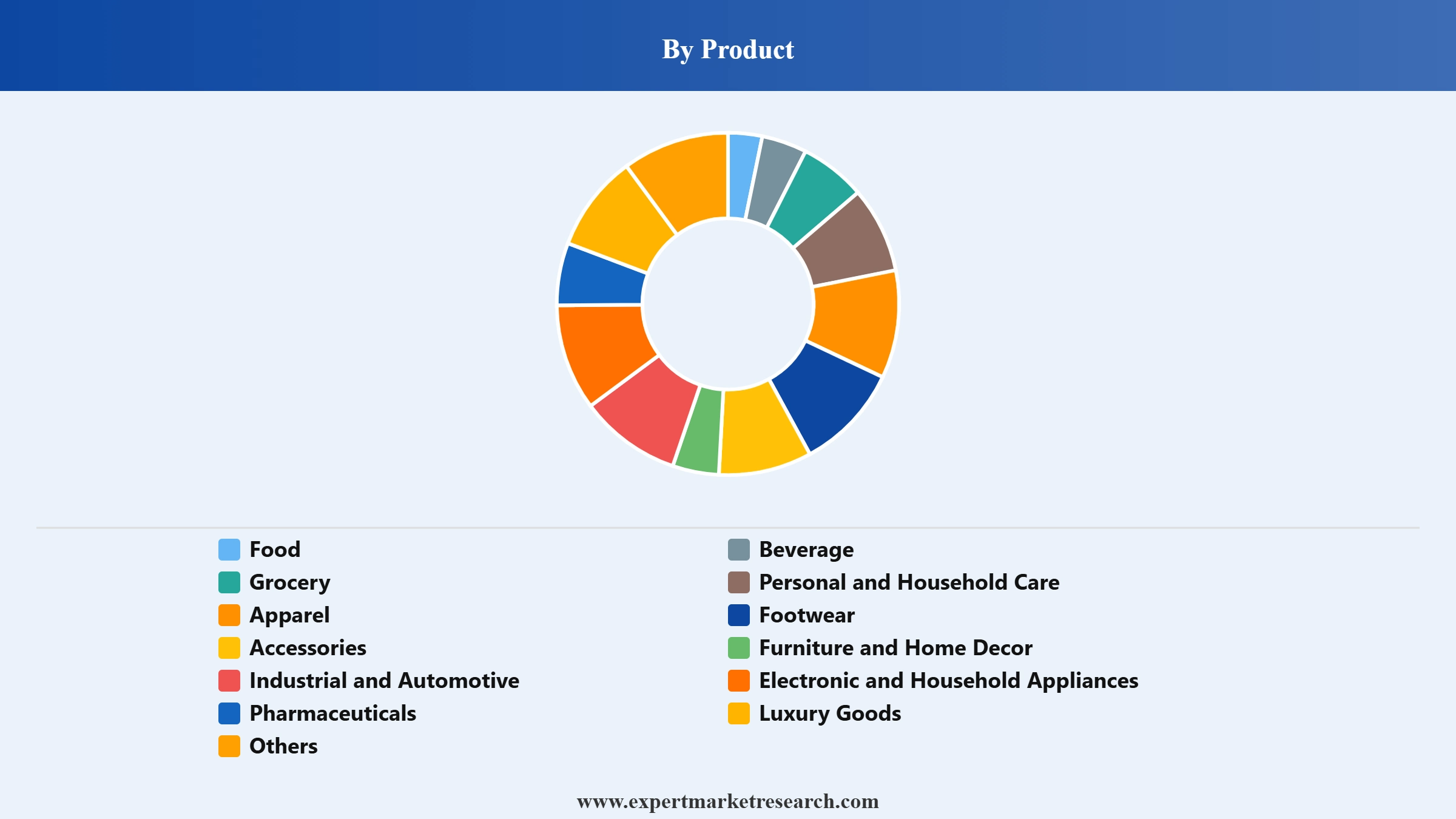
Key Insight: The market is led by the food, beverage, and grocery product category, driven by demand for daily essentials and convenience. The apparel, footwear, and accessories segment is supported by online shopping and digital payments. Personal and household care grows with rising incomes and hygiene awareness. Furniture and home decor expand due to urbanization and home improvement trends. Electronic and household appliances grow with technology adoption. Industrial and automotive grow with infrastructure and manufacturing needs. Pharmaceuticals grow with healthcare demand. Luxury goods grow with premium spending. Other categories grow with changing lifestyles.
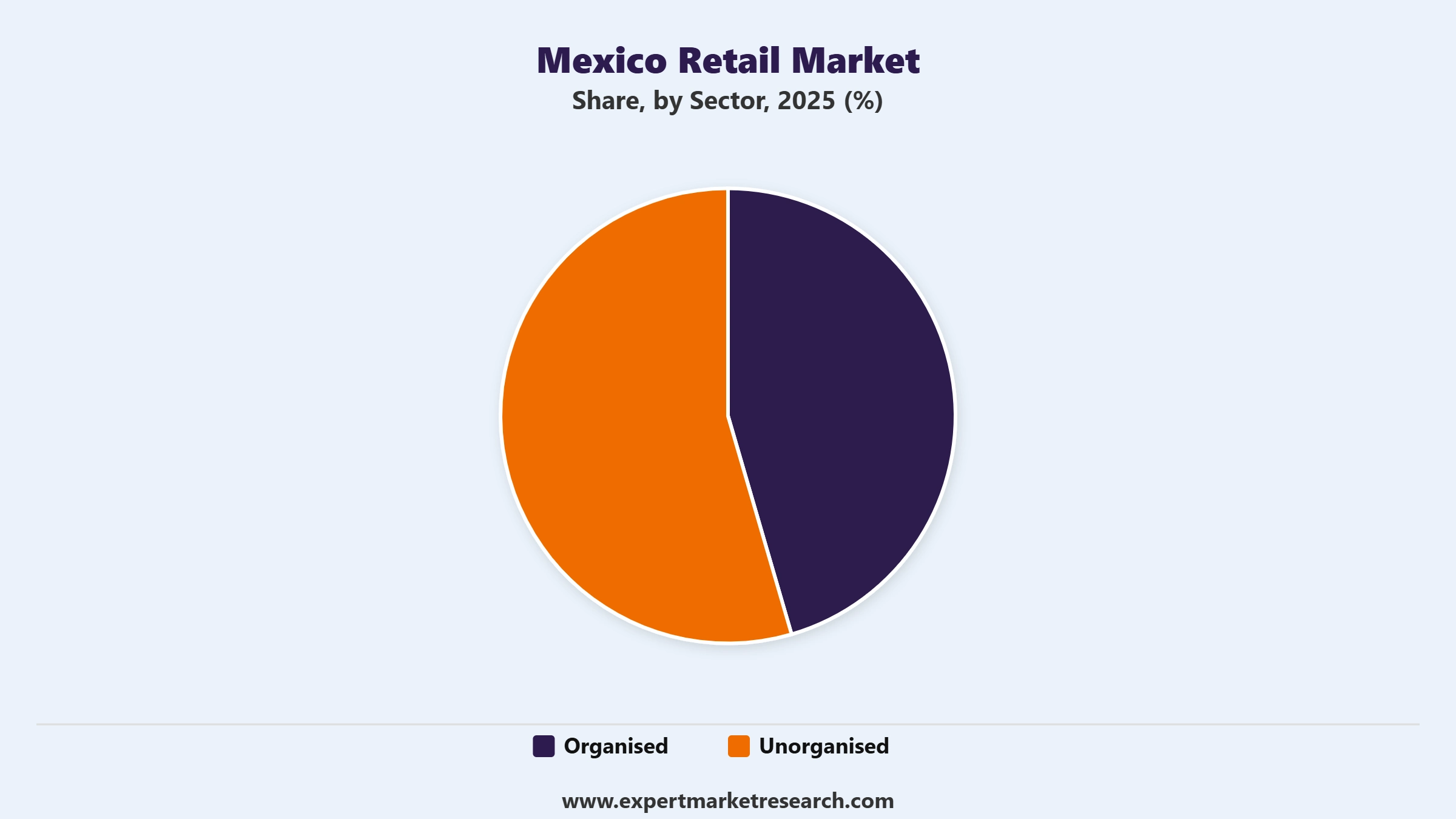
Market Breakup by Sector
Key Insight: Organized retail leads the Mexico retail market. Growth is driven by modern store formats, wide product availability, and efficient supply chains. Unorganized retail is the fastest-growing sector. Growth comes from small local shops, convenience, and close customer relationships. Organized retail expands with investments in technology, digital payments, and loyalty programs. Unorganized retail grows due to affordability, accessibility, and local demand in smaller towns. Both sectors benefit from rising incomes, urbanization, and changing consumer preferences, creating opportunities across traditional and modern retail channels.
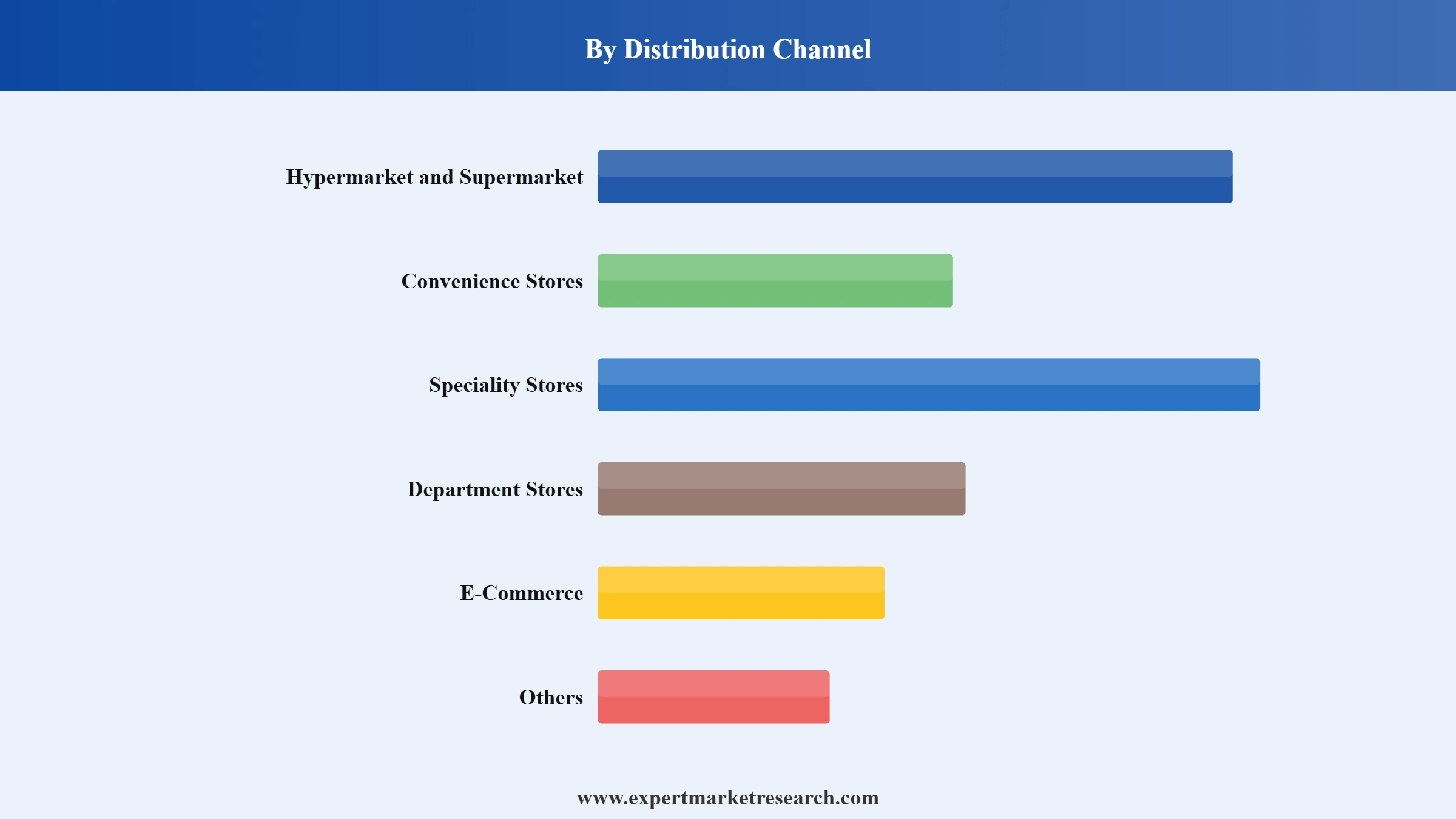
Market Breakup by Distribution Channel
Key Insight: Hypermarkets and supermarkets dominate the Mexico retail market development. They grow due to wide product choices, convenience, and one-stop shopping. E-commerce is the fastest-growing channel, fueled by online shopping, mobile payments, and home delivery. Convenience stores expand because of easy access and quick purchases. Specialty stores grow by offering niche products and personalized services. Department stores benefit from premium products and diverse selections. Other channels develop through local demand and unique offerings. Rising incomes, urbanization, and evolving consumer habits support growth across all channels.
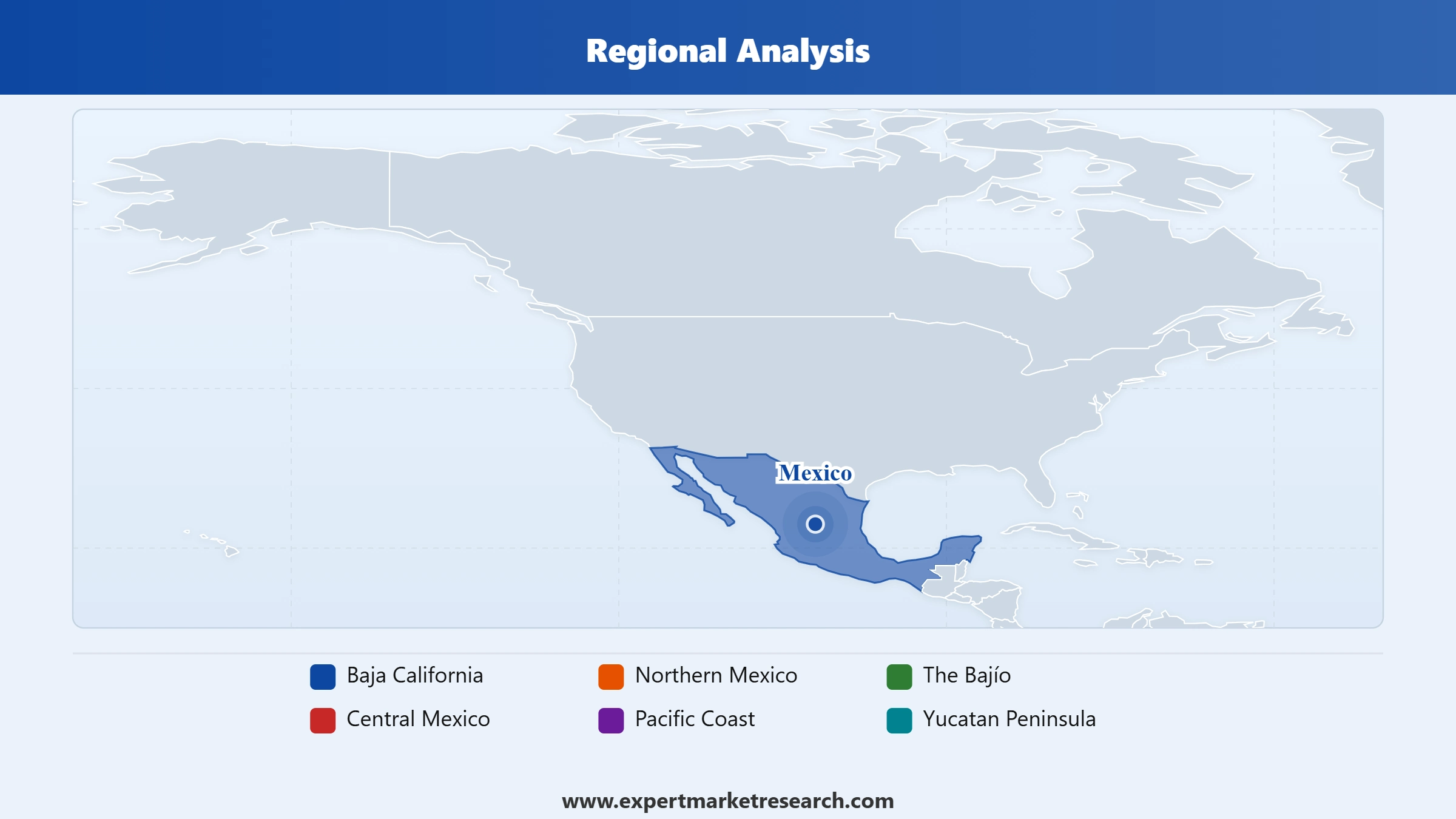
Market Breakup by Region
Key Insight: Baja California leads the retail demand in Mexico due to strong urban centers and cross-border trade. Northern Mexico grows steadily with industrial hubs and rising consumer demand. The Bajío region expands as manufacturing and logistics developments attract retail investments. Central Mexico remains a key market with high population density and diverse shopping options. The Pacific Coast grows with tourism and lifestyle-driven consumption. The Yucatán Peninsula develops through increasing urbanization and local demand. Overall, rising incomes, urban expansion, and changing consumer preferences drive retail growth across all regions.
Read more about this report - REQUEST FREE SAMPLE COPY IN PDF
By product, food, beverage, and grocery category to amass the highest revenue
The food, beverage, and grocery segment continue to lead the Mexico retail market. As per the retail foods report published by the United States Department of Agriculture, Mexico’s retail food sector remains a dynamic industry with sales reaching USD 78.4 billion in 2023. While traditional markets hold a strong presence, modern chains are increasingly attracting middle and high-income consumers who value variety and reliability. The rise of e-commerce, especially grocery platforms and food apps, is also fueling demand by offering convenience and quick access to essentials, cementing this segment as the largest contributor to retail sales.
Read more about this report - REQUEST FREE SAMPLE COPY IN PDF
Meanwhile, the apparel, footwear, and accessories product category is growing at a fast pace in the Mexico retail market expansion, supported by rising interest in affordable fashion and wider product variety. Consumers are increasingly seeking trendy styles at lower prices, making off-price formats more appealing. In June 2024, TJX expanded into Mexico through a joint venture with Grupo Axo, taking over more than 200 stores under banners like Promoda and Urban Store. This expansion highlights how value-driven retail strategies are reshaping shopping preferences and driving strong growth in this segment.
By sector, organized retail is picking up pace in Mexico
Organized retail account for the largest share, supported by the rise of modern store formats that provide variety, reliability, and convenience. Efficient supply chains ensure products are consistently available, while digital payment systems and loyalty programs make shopping smoother. Urbanization and changing lifestyles are pushing consumers toward organized channels, as they look for global brands and premium goods, adding to the Mexico retail market share
Read more about this report - REQUEST FREE SAMPLE COPY IN PDF
Meanwhile, unorganized retail sector is benefitting from the implementation of higher import taxes on low-value packages. In August 2025, Mexico increased import taxes on low-value packages under USD 2,500 from 19% to 33.5%, affecting shipments from countries without free trade agreements. For instance, a USD 500 shipment now faces USD 167.50 in taxes, up from USD 95. This rise in import costs has made low-cost foreign goods less accessible, encouraging consumers to buy from local vendors. Small retailers and informal shops are stepping in to meet this demand, expanding their operations and product offerings, thereby boosting segment growth.
By distribution channel, hypermarkets and supermarkets to generate substantial revenue
Hypermarkets and supermarkets dominate the Mexico retail market as they bring together a wide variety of products under one roof. Shoppers are drawn to these formats for their convenience, competitive pricing, and ability to meet multiple needs in a single trip. Efficient supply chains and bulk purchasing options also add to their appeal. Growing urbanization and rising incomes have further boosted their presence, making them the largest distribution channel. Their ability to adapt with private labels and fresh food offerings continues to reinforce their leadership in retail.
Read more about this report - REQUEST FREE SAMPLE COPY IN PDF
E-commerce is the fastest-growing distribution channel, driven by rising internet use, digital payments, and home delivery services. As per International Trade Administration, retail e-commerce sales in 2024 reached between USD 39.3 billion and USD 58.89 billion, reflecting the rapid pace of expansion. Growth is also supported by increased participation from unbanked and lower-income groups, who are gaining access to digital platforms, thus reshaping the Mexico retail market trends. While logistics and financial inclusion remain challenges, the strong digital consumer base continues to accelerate e-commerce.
By region, Baja California to dominate the market growth
Baja California leads the market growth, driven by urbanization and rising incomes that fuel demand for diverse products and modern store formats. The region’s proximity to the U.S. enables access to global retail trends, while local urban centers attract modern retail formats. A recent example is Walmart de México’s opening of its 2,500th Bodega Aurrera store in Mexicali in November 2024. This expansion highlights how affordability, convenience, and omnichannel services are reshaping retail in the state. The milestone underlines Baja California’s role as a leading retail hub with robust infrastructure and diverse shopping options.
Read more about this report - REQUEST FREE SAMPLE COPY IN PDF
On the other hand, Northern Mexico demonstrates notable growth in the Mexico retail market. Cities, such as Monterrey, Tijuana, and Hermosillo are seeing growing populations, rising household incomes, and increased consumer spending. This concentration of urban consumers attracts both domestic and international retailers, encouraging the development of shopping centers, supermarkets, and specialized stores. Improved infrastructure and transportation networks further support retail accessibility. As urban centers expand, demand for a variety of products, from electronics to fashion and home goods will continue boost growth.
Leading retail companies in Mexico are focusing on expanding modern store formats, strengthening supply chains, and enhancing product variety to attract diverse consumer groups. Investments in digital payment systems and loyalty programs are helping Mexico retail firms improve customer experience and build long-term relationships. Many companies are also upgrading logistics and distribution networks to ensure product availability in both urban and semi-urban markets. These strategies reflect an emphasis on convenience, affordability, and meeting evolving consumer expectations.
Retailers are increasingly adopting e-commerce and omnichannel strategies to capture the fast-growing online customer base. Efforts include integrating mobile apps, offering flexible delivery options, and investing in last-mile logistics. At the same time, retailers are diversifying product portfolios to include sustainable goods, premium items, and locally sourced products. Marketing campaigns that highlight affordability, quality, and lifestyle alignment are also being used to strengthen brand positioning and retain consumer trust in a highly competitive Mexico retail market.
Walmart, headquartered in Bentonville, the United States, was established in 1962. It operates a wide network of supermarkets and hypermarkets in Mexico. The company focuses on affordability and convenience for all consumers.
Amazon was founded in 1994 in Seattle, the United States. It is a major e-commerce platform in Mexico, offering a broad range of products. Fast delivery and easy online shopping drive its popularity.
Established in 1891 in Mexico City, El Palacio de Hierro is a premium department store chain. It is renowned for luxury goods, fashion, and home products. The chain mainly serves high-income shoppers.
Liverpool, founded in 1847 and based in Mexico City, is one of Mexico’s largest department stores. It provides fashion, electronics, and household items. The chain caters to a wide range of urban consumers.
*Please note that this is only a partial list; the complete list of key players is available in the full report. Additionally, the list of key players can be customized to better suit your needs.*
Other players in the Mexico retail market include Fomento Económico Mexicano, SAB de CV, Tiendas Soriana, S.A. de C.V., COPPEL, SA de CV, Sears Operadora México S.A. de C.V., Auchan Holding, and Costco Wholesale Corporation, among others.
Explore the latest trends shaping the Mexico Retail Market 2026-2035 with our in-depth report. Gain strategic insights, future forecasts, and key market developments that can help you stay competitive. Download a free sample report or contact our team for customized consultation on Mexico retail market trends 2026.


Upto 15% Off
USD
$2499 $2249
$3999 $3599
$4999 $4249
$5999 $5099


*While we strive to always give you current and accurate information, the numbers depicted on the website are indicative and may differ from the actual numbers in the main report. At Expert Market Research, we aim to bring you the latest insights and trends in the market. Using our analyses and forecasts, stakeholders can understand the market dynamics, navigate challenges, and capitalize on opportunities to make data-driven strategic decisions.*
The market is projected to grow at a CAGR of 4.80% between 2026 and 2035.
The different distribution channels in the market include hypermarket and supermarket, convenience stores, speciality stores, department stores, and e-commerce, among others.
The major types of products in the market include food, beverage, and grocery, personal and household care, apparel, footwear, and accessories, furniture and home décor, industrial and automotive, electronic and household appliances, pharmaceuticals, and luxury goods, among others.
The different sectors considered in the market report are organised and unorganised.
The major regions in the market include Baja California, Northern Mexico, The Bajío, Central Mexico, Pacific Coast, and Yucatan Peninsula.
The key players in the Mexico retail market include Walmart Inc., Amazon.com, Inc., El Palacio de Hierro, SA de CV, El Puerto de Liverpool, Fomento Económico Mexicano, SAB de CV, Tiendas Soriana, S.A. de C.V., COPPEL, SA de CV, Sears Operadora México S.A. de C.V., Auchan Holding, Costco Wholesale Corporation, and several other regional and international retailers.
In 2025, the market reached an approximate value of USD 345.09 Billion.
Key strategies driving the market include expanding e-commerce and omnichannel platforms, modernizing store formats, leveraging social commerce, investing in digital payments and loyalty programs, and offering premium, sustainable, and locally sourced products.
Baja California holds the largest share in the retail market, supported by its high population density, strong consumer spending, diverse retail infrastructure, and concentration of both domestic and international retailers.
Explore our key highlights of the report and gain a concise overview of key findings, trends, and actionable insights that will empower your strategic decisions.
| REPORT FEATURES | DETAILS |
| Base Year | 2025 |
| Historical Period | 2019-2025 |
| Forecast Period | 2026-2035 |
| Scope of the Report |
Historical and Forecast Trends, Industry Drivers and Constraints, Historical and Forecast Market Analysis by Segment:
|
| Breakup by Product |
|
| Breakup by Sector |
|
| Breakup by Distribution Channel |
|
| Breakup by Region |
|
| Market Dynamics |
|
| Competitive Landscape |
|
| Companies Covered |
|
Datasheet
One User
USD 2,499
USD 2,249
tax inclusive*
Single User License
One User
USD 3,999
USD 3,599
tax inclusive*
Five User License
Five User
USD 4,999
USD 4,249
tax inclusive*
Corporate License
Unlimited Users
USD 5,999
USD 5,099
tax inclusive*
*Please note that the prices mentioned below are starting prices for each bundle type. Kindly contact our team for further details.*
Flash Bundle
Small Business Bundle
Growth Bundle
Enterprise Bundle
*Please note that the prices mentioned below are starting prices for each bundle type. Kindly contact our team for further details.*
Flash Bundle
Number of Reports: 3
20%
tax inclusive*
Small Business Bundle
Number of Reports: 5
25%
tax inclusive*
Growth Bundle
Number of Reports: 8
30%
tax inclusive*
Enterprise Bundle
Number of Reports: 10
35%
tax inclusive*
How To Order

Select License Type
Choose the right license for your needs and access rights.

Click on ‘Buy Now’
Add the report to your cart with one click and proceed to register.

Select Mode of Payment
Choose a payment option for a secure checkout. You will be redirected accordingly.
Strategic Solutions for Informed Decision-Making
Gain insights to stay ahead and seize opportunities.

Get insights & trends for a competitive edge.

Track prices with detailed trend reports.

Analyse trade data for supply chain insights.

Leverage cost reports for smart savings

Enhance supply chain with partnerships.

Connect For More Information
Our expert team of analysts will offer full support and resolve any queries regarding the report, before and after the purchase.
Our expert team of analysts will offer full support and resolve any queries regarding the report, before and after the purchase.
We employ meticulous research methods, blending advanced analytics and expert insights to deliver accurate, actionable industry intelligence, staying ahead of competitors.
Our skilled analysts offer unparalleled competitive advantage with detailed insights on current and emerging markets, ensuring your strategic edge.
We offer an in-depth yet simplified presentation of industry insights and analysis to meet your specific requirements effectively.




