

Consumer Insights
Uncover trends and behaviors shaping consumer choices today
Procurement Insights
Optimize your sourcing strategy with key market data
Industry Stats
Stay ahead with the latest trends and market analysis.
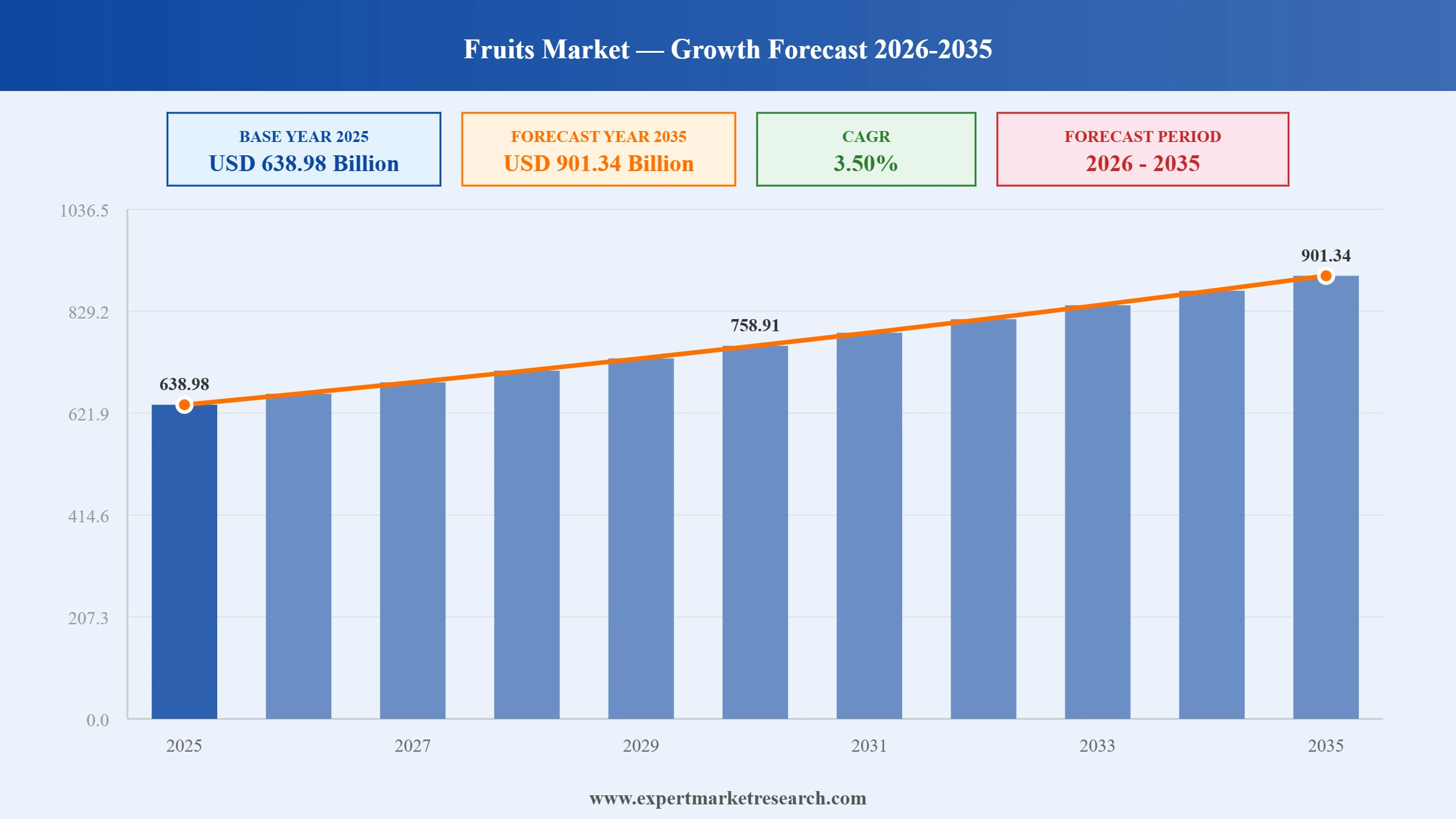
The global fruits market attained a value of USD 638.98 Billion in 2025 and is projected to expand at a CAGR of 3.50% through 2035. The market is further expected to achieve USD 901.34 Billion by 2035. Increased investment in controlled agricultural farming, cold chains logistics, and selective breeding of fruit crops is helping farmers in enhancing the efficiency of quality, reducing losses, and increasing exports around the globe.
There are two major driving factors that are fueling growth in the fruits market. Major agribusiness corporations are increasingly focusing on genetically advanced and profitable fruits that might enable them to increase profitability and boost their disease resistance capability. Secondly, retailers and food service companies are seeking round the year high-quality fruits, and they are making significant investments in developing cold chain technology, efficient storage methods, and intelligent supply chain management systems.
Innovation in the fruits market is associated with premium fruits, the ability of supply chains to withstand any supply shocks, and the improvement in post-harvest handling practices for better quality produce. Among recent innovations, the most interesting case relates to Dole plc that launched more varieties within its Sunripe pineapple brand in October 2025 and enhanced its data-enabled farming in Latin America and Asia to boost predictability and improve quality of its harvest. The new strategy fits into current trends of growing fruit consumption around the globe.
Currently, the global fruits market is facing significant structural changes because of increased focus of producers, exporters, and retailers on differentiation rather than growing volumes only. Thus, some producers are introducing new varieties that have better taste characteristics, increased durability, and transportation characteristics. For example, in August 2023, Fresh Del Monte Produce introduced new premium programs for its pineapples and avocados. On the other hand, companies like Zespri are developing new varieties of kiwifruits to ensure greater productivity of plants and consumer satisfaction.
Read more about this report - REQUEST FREE SAMPLE COPY IN PDF
| Global Fruits Market Report Summary | Description | Value |
| Base Year | USD Billion | 2025 |
| Historical Period | USD Billion | 2019-2025 |
| Forecast Period | USD Billion | 2026-2035 |
| Market Size 2025 | USD Billion | 638.98 |
| Market Size 2035 | USD Billion | 901.34 |
| CAGR 2019-2025 | Percentage | XX% |
| CAGR 2026-2035 | Percentage | 3.50% |
| CAGR 2026-2035 - Market by Region | Asia Pacific | 4.0% |
| CAGR 2026-2035 - Market by Country | India | 4.1% |
| CAGR 2026-2035 - Market by Country | China | 3.8% |
| CAGR 2026-2035 - Market by Distribution Channel | Online | 8.6% |
| CAGR 2026-2035 - Market by Application | Commercial | 3.9% |
| Market Share by Country 2025 | France | 3.4% |
The Summer Fancy Food Show saw the launch of premium fresh fruits and value-added products by Fresh Del Monte. The show demonstrated the rising needs of consumers towards convenient, healthy, and unique fruit products, which could encourage innovations in packaging, diversification of products, and premium fruits. Companies can offer value-added fruit snacks, premium packaging, and convenience-oriented products to appeal to health-conscious customers, boosting the fruits market value.
Evolution Fresh gained a secure multi-season orange juice supply chain by establishing contracts that ensured supply throughout different seasons for the company’s cold-pressed juice collection. The move is an example of the rising concern within the industry regarding the development of resilient supply chain management, sourcing of raw materials, and procurement strategies.
DiSilva Fruit rolled out the 2026 Summer Citrus Program to ensure that high-quality citrus varieties were available throughout seasonal shifts. This move shows how diversified sourcing networks and continuous supply of fruits can be critical for retailers and food service companies. Fruit producers have the capacity to create diversified sourcing seasons and build relationships with global fruit growers to ensure a smooth supply to the market.
Mission Produce launched a new avocado bag branding strategy and emphasized the company's dominance in the mango line of products. This is an example of how diversified fruit portfolio and consumer engagement are becoming more significant in driving retail sales. Fruit market players can therefore leverage brand building, packaging innovations, and diversified fruit categories to boost their retail presence.
The current fruits market is witnessing increasing commercialization of premium fruit breeds which feature excellent taste, prolonged shelf-life, and increased efficiency. Leading firms invest significantly in their breeding programs to develop distinctive products and earn higher profits through them. For example, in May 2026, Zespri expanded RubyRed kiwifruit into new international markets, increasing premium fruit availability, and consumer reach. Such developments in fruit production are supported by governments through innovation initiatives in the agricultural sector. The Ministry for Primary Industries of New Zealand is continuing its investment program into sustainable horticulture and cultivar production that will help boost fruit exports.
Modern agriculture is being increasingly transformed with digital technologies that allow farms to achieve better results, including higher yield per hectare, reduced expenditure on input factors, and consistent crop quality. Various solutions such as satellite imaging, AI-powered crop analysis, drone technology, and automatic irrigation systems are used by farms to improve production processes. Many leading firms in the fruits market including Fresh Del Monte Produce and significant fruit exporters are implementing various projects in precision agriculture to enhance production planning and manage fruit quality. In February 2025, BASF launched a precision farming tool for fresh produce, improving yield forecasting, and crop management.
Investments in the cold chain logistics and post-harvest infrastructure are revolutionizing the global fruits market dynamics. The market might benefit from advancements in refrigeration, controlled atmosphere storage, and smart packaging that will help preserve fruit quality during long transportation distances. In India, the government invests in the development of integrated cold chains via the Ministry of Food Processing Industries under several infrastructure development initiatives. Similar efforts take place throughout Southeast Asia and Latin America. Leading fruit suppliers, including Dole plc and Fresh Del Monte, continue developing logistics capabilities to facilitate exports. In June 2026, Asia Fruit Logistica launched FRESHTech, showcasing innovative technologies transforming fresh produce production, logistics, quality management, and trade.
Sustainability is becoming a key source of competitive advantage in the fruits market due to the growing demand for more environmentally friendly products. Fruit suppliers are implementing regenerative farming, water conservation methods, biological crop protection, and carbon reduction initiatives. For instance, Driscoll's company is shifting its focus to maintain soil health, boost biodiversity, and produce sustainable berries. Such activities are being supported by governments using their policies on environmental protection and agricultural sustainability. European countries are implementing the initiatives of the European Green Deal and the Farm to Fork strategy. In May 2025, One Banana launched a regenerative agriculture pilot, advancing sustainable banana cultivation and soil health improvements.
The development of agriculture based on exports is providing new growth opportunities in the fruits market. Countries are allocating resources into agriculture that would cater to lucrative foreign markets. Peru has become a key exporter of fruits due to massive investments into blueberry, avocado, and grape cultivation with the help of irrigation reforms. Government-backed agricultural export initiatives are facilitating greater access to foreign markets and supporting international trade growth. As mentioned by the Ministry of Agrarian Development and Irrigation of Peru, fruit-based exports remain an important objective for economic progress. On the other hand, in June 2026, Brazil secured new agricultural market access agreements with China and Panama, expanding fruit export opportunities.
The Expert Market Research's report titled “Global Fruits Market Report and Forecast 2026-2035” offers a detailed analysis of the market based on the following segments:
Market Breakup by Nature
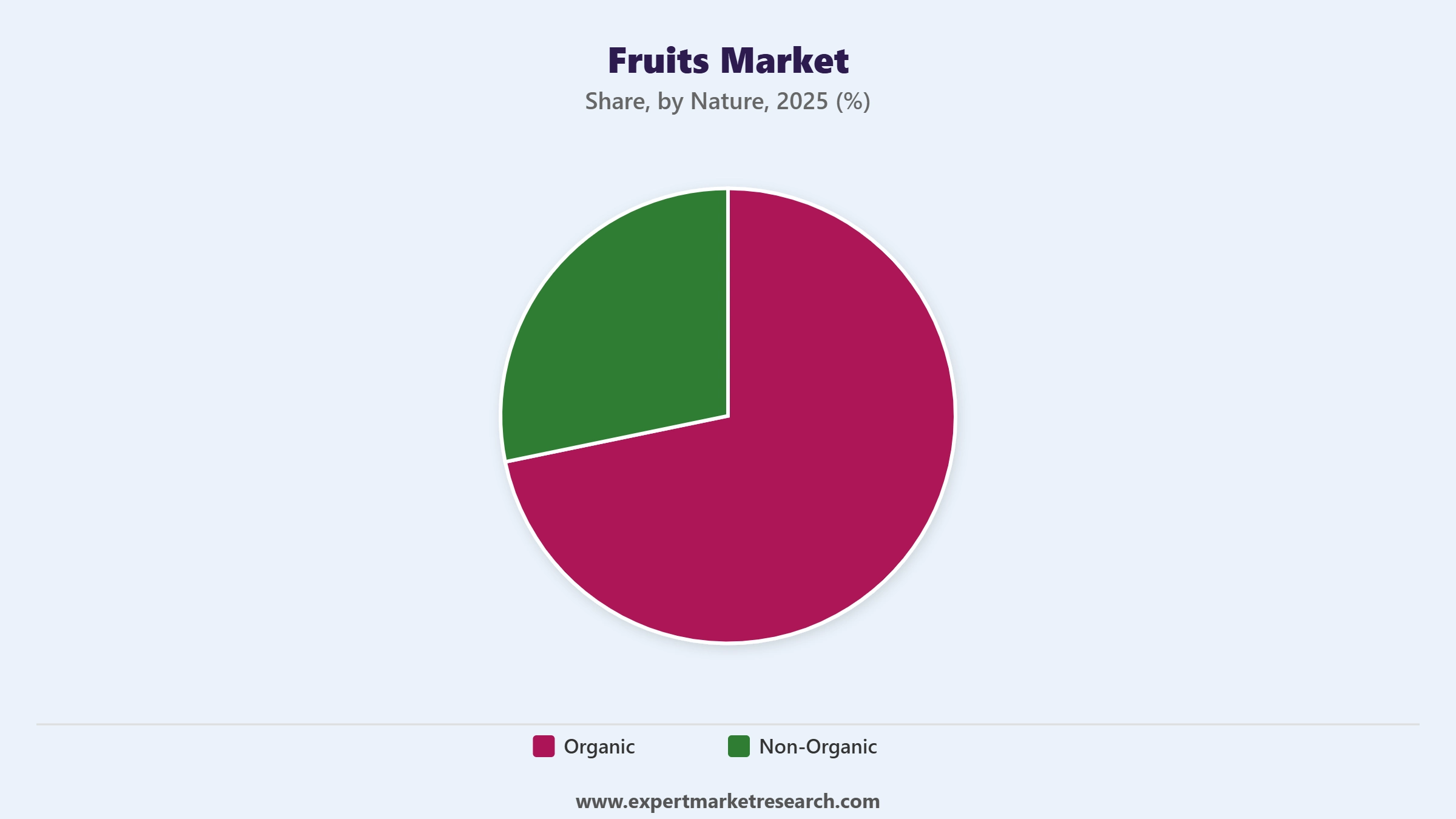
Key Insight: The nature section exhibits two different growth trends in the fruits market. Non-organic fruits continue to hold the dominant share owing to effective mass production processes, affordable pricing, and their high integration into the global supply chain. These features enable non-organic fruits to meet the needs for a great quantity of products that make up their leading market position. Organic fruits, on the other hand, are growing at an increased pace, considering the focus on sustainability, premium prices, and changes in customer preferences. Organic farming is gradually becoming popular among producers. In January 2026, Eosta launched Organic Fruit Heroes brand, encouraging children's fruit consumption through engaging organic snack offerings.
Market Breakup by Type
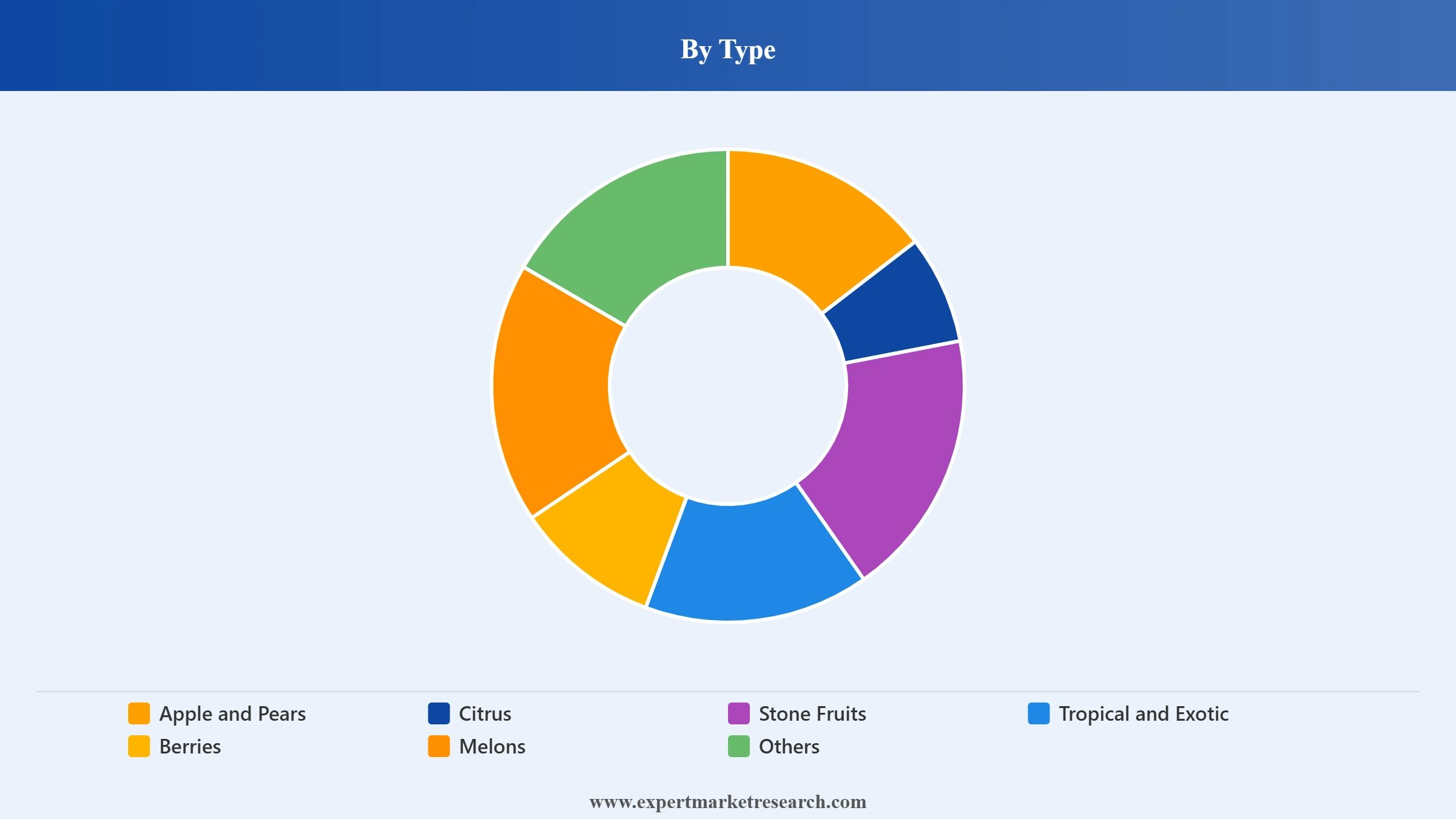
Key Insight: The type category presents a varied range of growth determinants in each group. Citrus products are expected to retain dominance due to the variety of uses, high requirements for processing, and widespread cultivation in various countries around the world. As per the fruits market report, apples and pears remain successful due to already formed traditions and convenient storage conditions. The advantage of stone fruits lie in their seasonality and premium positioning. Tropical and exotic fruits are gaining popularity due to increased exports and changes in the consumption pattern. Berry fruits are experiencing the highest rate of growth due to health-oriented consumption.
Market Breakup by Distribution Channel
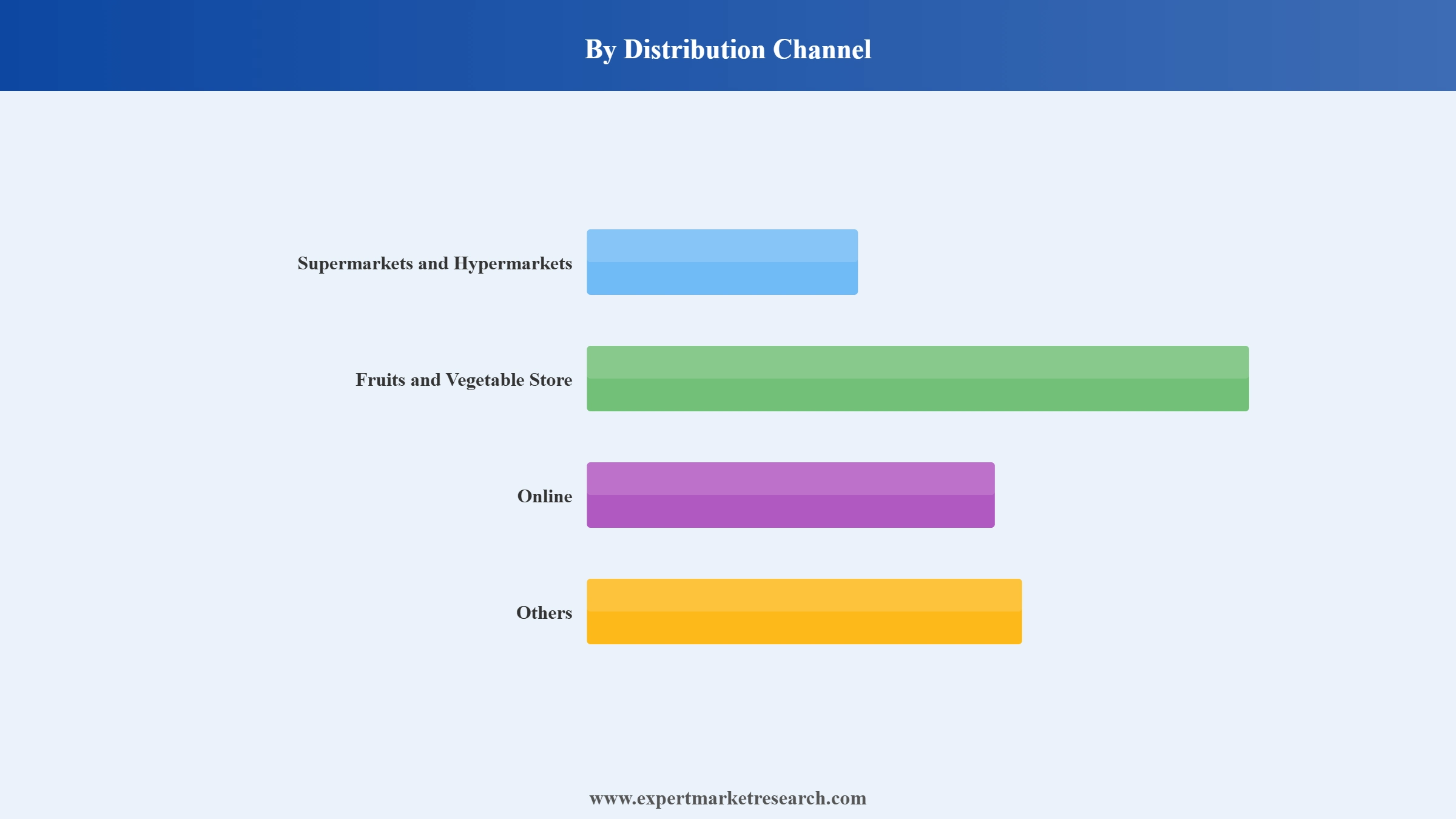
Key Insight: The performance of the distribution channels is influenced by varied purchasing behaviors and abilities. The supermarkets and hypermarkets continue to dominate within the fruits market scope owing to their variety of products, efficiencies in procurement activities, and easy customer access. Fruit shops are continuing to thrive on the basis of fresh products, locally sourced products, and close customer relations. The online platform continues to grow exponentially because of its convenience and technological advancements. Other channels such as wholesale and specialty stores play an important role by reaching out to specific customers.
Market Breakup by Application
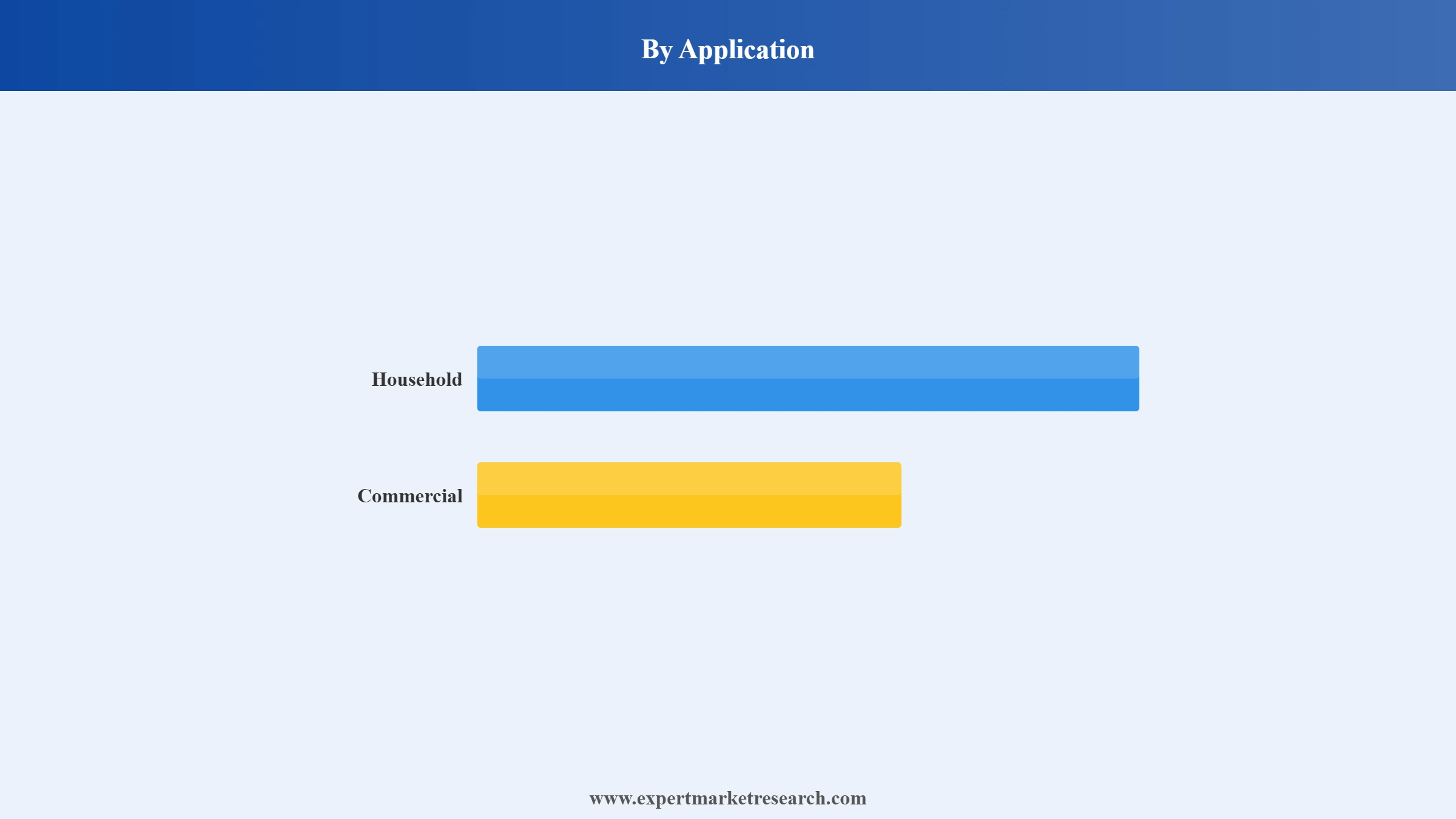
Key Insight: The demand based on application is related to the complementary nature of consumption by households and businesses. Household consumption continues to be the major source of demand in the fruits market since there is an increasing recognition that fruits are becoming an integral part of daily nutritional needs and healthy lifestyles. Business use is also increasing as more restaurant services and food processors create more fruit products due to consumer preferences. The key source of stable demand is boosted by households while innovation is driven by business customers.
Market Breakup by Region
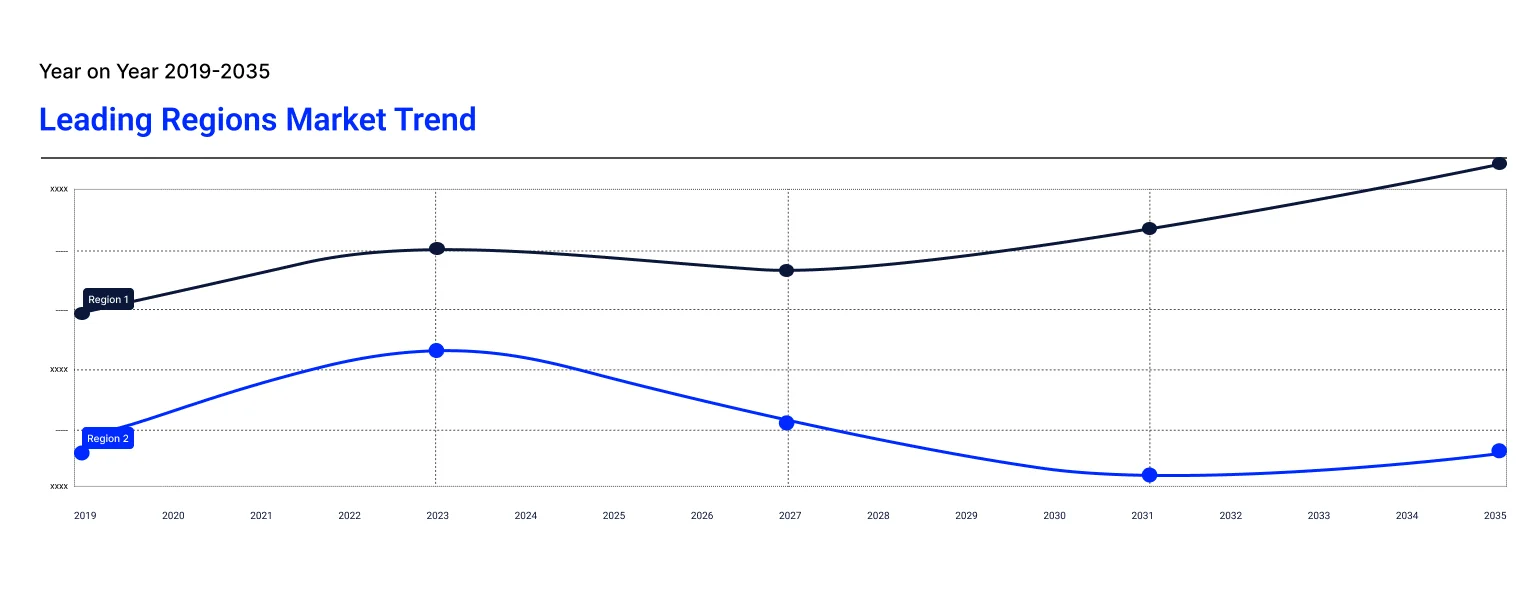
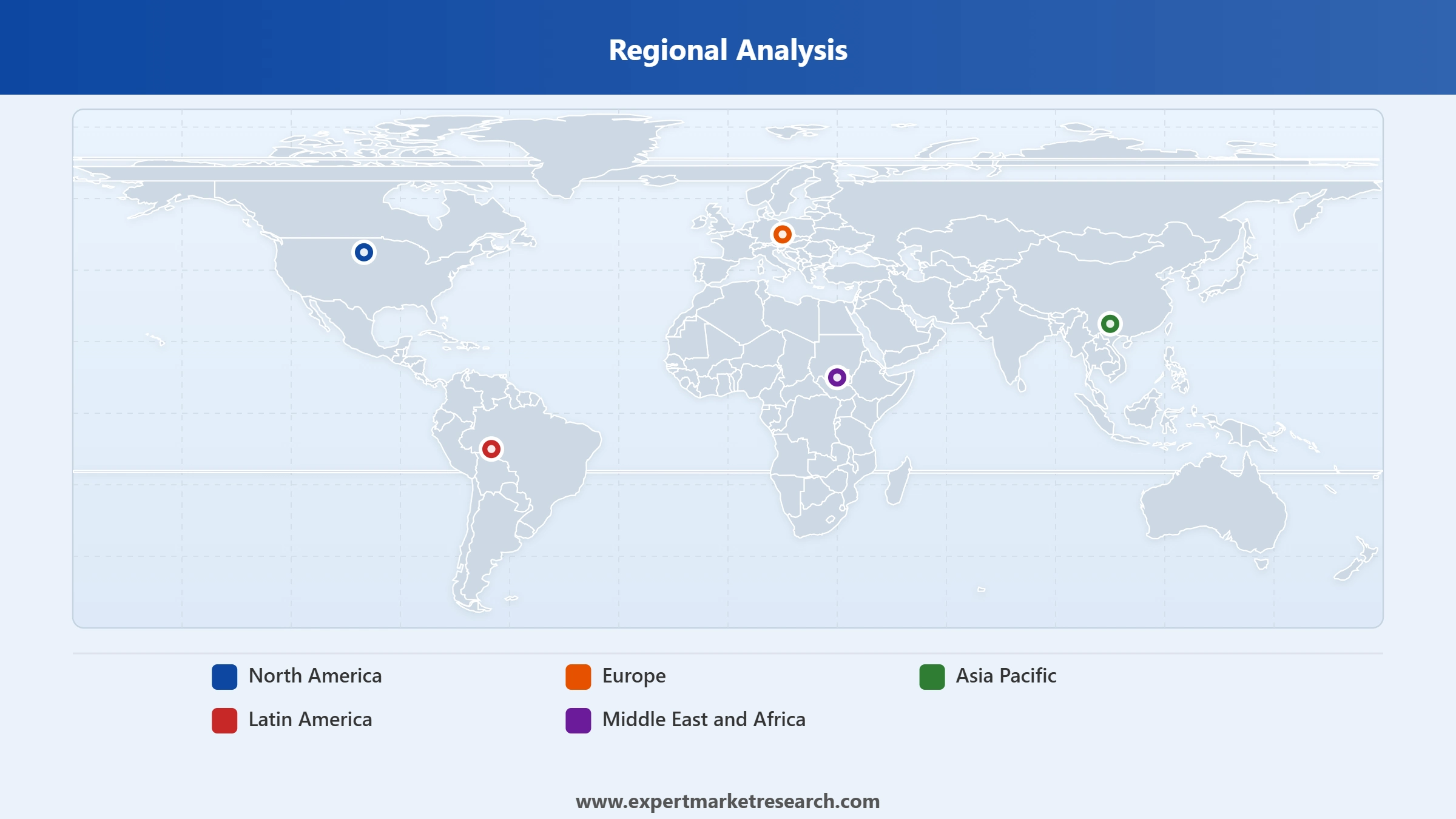
Key Insight: Performance levels across the different regions are based on production capacity, consumption rates, and export strength. Asia-Pacific is the top performer in the fruits market as a result of extensive planting, strong local consumption, and efficient supply chains. Europe enjoys the advantage of high-end fruit consumption together with sustainability practices. North America observes steady demand due to effective retail and distribution systems. Latin America is fast-growing due to its export-driven production and favorable agricultural conditions. Middle East and Africa are steadily growing due to increased fruit imports, supply chain improvements, and nutrition consumption awareness.
Read more about this report - REQUEST FREE SAMPLE COPY IN PDF
By nature, non-organic fruits register the largest share of the market due to affordability, scalability, and widespread retail availability
Non-organic fruits are taking the lead in the global market share due to their massive production capacity, well-established distribution channels, and competitive prices. Large-scale commercial and export-oriented farms utilize conventional farming techniques to ensure maximum production and all-year-round availability. Food retailers, food manufacturers, and foodservice providers favor non-organic fruits due to reliable sources and uniform quality standards, contributing to the fruits market development. The segment also enjoys a wide array of distribution channels that help producers cater to the demands of the supermarkets, wholesale traders, and food companies without compromising their pricing policy.
Read more about this report - REQUEST FREE SAMPLE COPY IN PDF
Organic fruits emerge as the fastest-growing segment of the fruits market due to growing consumer preferences towards products with clear labels and sustainability. Growers of organic fruits are developing their certified organic land acreage in order to offer higher prices and forge better partnerships with their customers. Retailers, on the other hand, are allocating more space on their shelves for the portfolio of organic produce. Awareness about environmentally friendly growing conditions, soil preservation practices, and sustainable production is leading food processors and restaurants to incorporate organic fruits in their products and menus. In June 2026, the Nilgiris district administration and the Department of Horticulture in India undertook a novel initiative to revive and promote the cultivation of native fruit trees in the district.
By type, citrus fruits account for the largest share of the market due to versatility
Citrus fruits hold the largest share of the fruits market revenue owing to their widespread cultivation, high consumer demand, and versatile applications in fresh consumption, beverages, and food processing industries. Oranges, lemons, limes, and mandarin oranges continue to be popular across developing and developed countries alike. Their sustained popularity and strong demand by beverage producers, hotels, and supermarket chains help ensure steady market performance for citrus fruits. In addition, citrus fruits have well-developed trade channels along with stable output, making them a key fruit type for distributors and wholesale fruit suppliers across the world.
Read more about this report - REQUEST FREE SAMPLE COPY IN PDF
Berries are considered to be the fastest-growing type of fruit, as people are looking for more nutrient-dense and high-end fruit varieties. Blueberries, raspberries, strawberries, and blackberries are witnessing increased demand as snacks and for their use as functional food and for retail sales through premium segments. Protected cultivation techniques and selective breeding programs are being used to enhance berry harvests throughout the year. Premium prices that can be commanded by berries, coupled with increasing inclusion in processed foods and bakery items, are driving expansion within the segment. According to the fruits market analysis, Russia targets 3 million tons of fruit and berry production by 2030 through orchard expansion.
By distribution channel, supermarkets and hypermarkets capture a substantial share of the market due to convenience
The dominance of supermarkets and hypermarkets in fruit delivery is attributed to their wide product range, efficient sourcing, and ability to bring many customers to their premises. Major retail chains are entering into direct partnerships with producers and exporters, thereby ensuring product quality and reasonable prices. These entities use modern technologies like efficient inventory management and cold chain storage to ensure minimal loss of goods through spoilage.
Read more about this report - REQUEST FREE SAMPLE COPY IN PDF
Online fruit delivery is on the rise since the majority of buyers are turning to online channels and home delivery of groceries, accelerating the fruits market expansion. Modern e-commerce businesses are using special logistic and inventory management services, as well as cold chain delivery technologies to ensure good condition of their goods. Subscription models for fruit delivery and direct deliveries from manufacturers to individual customers are also becoming more popular. Buyers appreciate wide selection, competitive prices, and convenience of buying without going out. In June 2026, Daily Punch expanded its portfolio with a premium dry fruits range, targeting health-conscious consumers.
Household applications secure the largest share of the market due to daily consumption patterns
The household category holds the leading position in the fruits market owing to the integration of fruits into consumers' diets and healthy lifestyles. Fruits have become an integral part of breakfast meals, snacks, desserts, and even cooking processes. Awareness regarding the benefits of balanced nutrition and natural products keeps promoting the consumption of fruits among people of different ages. Fruit vendors respond by offering better packaging options, high-quality products, and convenient ways to purchase fruits. Steady demand in the household segment guarantees constant consumption rates in developed and emerging economies. In March 2026, Rockit launched its 2026 season, delivering premium New Zealand apples to expanding global consumer markets.
Read more about this report - REQUEST FREE SAMPLE COPY IN PDF
The commercial category displays the highest rates of growth in the fruits market owing to increasing demand from hotels, restaurants, cafes, juice producers, bakers, and food processors. Fruits have become essential components in preparing beverages, desserts, and other menu items. Buyers in this category value supply reliability, consistency, and customization of products; thus, these factors promote innovative supply chain developments among fruit producers and suppliers.
Asia Pacific clocks in the leading market position due to expanding production capacities
Asia Pacific largely contributes to the fruits market revenue owing to high cultivation area, favorable climate, and huge consumer base. Nations such as China, India, Thailand, and Vietnam are playing a significant role in fruit production and consumption around the world. High local demand, growing export activities, and development of retail channels are among some of the key reasons behind the leading position of the regional market. Fruit producers are making continuous efforts to improve productivity, modernize distribution channels, and promote export-oriented cultivation. These will further consolidate the position of Asia Pacific as a prominent center for global fruit production and trade. In October 2025, Fragaria Fruits secured USD 2 million funding to expand sustainable berry farming and premium fruit production.
Read more about this report - REQUEST FREE SAMPLE COPY IN PDF
Latin America is one of the fastest-growing regional fruits market owing to rising exports, favorable agricultural conditions, and growing demand from other nations. Nations like Peru, Chile, Ecuador, and Mexico are positioning themselves as important players in global fruit supply chains via increased investments in irrigation, logistics facilities, and cultivation of premium fruits. Export-focused berry, avocado, grape, and tropical fruits production are continuing to attract substantial investments from international agribusiness firms.
The industry is facing an increasing level of competition as fruit companies are focusing on producing superior quality fruits using proprietary technologies such as genetics, AI-based crop monitoring, and efficient cold-chain technology for improved quality control and loss management. There is a growing trend towards sustainability among leading organizations as farmers resort to regenerative agriculture and water-conservative fruit cultivation techniques for fulfilling the demands of retailers.
The surging demand for premium berries, unique fruit varieties, e-commerce sales channels, and value-added fresh-cut fruits are creating new opportunities for fruits market players. In addition, there is an opportunity for companies to develop stronger relationships with retailers and restaurants by entering into supply agreements. With rising consumer demands for sustainable fruits with improved traceability, firms are now more focused on innovation and transparency rather than sheer volumes of produce.
Dole Food Company, founded in 1851, is a major player in the fruits market with headquarters located in Dublin, Ireland. This company is among the largest global growers and marketers of fresh fruits. The firm is focused on supplying the market with fruits from various sources such as banana, pineapple, avocado, and other packaged fruits. The company constantly implements new technologies that allow it to improve fruit quality, minimize losses, and enhance its distribution channels across the globe.
Del Monte Foods Inc. is a company which operates from its head office located in Walnut Creek, California, United States, was founded in 1886. The company serves the fruits market via its fresh, packaged, and processed fruits. The firm emphasizes innovations, convenience of consumption, and effective procurement strategies. Strong distribution channel capabilities allow the company to supply retail, institutional, and foodservice customers.
Founded in 1899 and operating from its headquarters in Switzerland, Chiquita Brands International Sàrl is a dominant distributor of bananas and tropical fruits. The firm has been enhancing the performance of the market through innovative agricultural processes, sustainable business practices, and digital traceability solutions. Chiquita is still advancing plantation productivity and logistics efficiency while developing relationships with retailers that require dependable sources of responsibly sourced fruits.
Founded in 1965 and headquartered in Belgium, Greenyard NV has been concentrating on fresh, frozen, and processed fruit products. The firm operates within the retail industry and provides food manufacturing services through a variety of integrated services including sourcing, processing, and logistics. Digitalization of supply chains, sustainable sourcing schemes, and innovative fresh produce products constitute some of the key focus areas of Greenyard.
Other key players in the market include Sunwest Fruit Company, among others.
*Please note that this is only a partial list; the complete list of key players is available in the full report. Additionally, the list of key players can be customized to better suit your needs.*
Unlock the latest insights with our fruits market trends 2026 report. Discover regional growth patterns, consumer preferences, and key industry players. Stay ahead of competition with trusted data and expert analysis. Download your free sample report today and drive informed decisions in the market.


Upto 15% Off
USD
$2499 $2249
$3999 $3599
$4999 $4249
$5999 $5099


*While we strive to always give you current and accurate information, the numbers depicted on the website are indicative and may differ from the actual numbers in the main report. At Expert Market Research, we aim to bring you the latest insights and trends in the market. Using our analyses and forecasts, stakeholders can understand the market dynamics, navigate challenges, and capitalize on opportunities to make data-driven strategic decisions.*
In 2025, the global fruit market attained a value of nearly USD 638.98 Billion.
The market is projected to grow at a CAGR of 3.50% between 2026 and 2035.
The key market trends guiding the growth of fruit industry include improved market access, changing consumer preferences, more professional retail environment, increasing purchasing power and the combination of improved logistics, (controlled-atmosphere) storage and cold-chain facilities for transportation.
The key industry trends include the shift towards superfoods like blueberries, avocados, and growing inclination towards smaller trees for most fruit crops.
The major regions in the industry are North America, Latin America, the Middle East and Africa, Europe, and the Asia Pacific.
Based on nature, fruits market can be divided into organic and non-organic.
The types of fruit in the market are apple and pears, citrus, stone fruits, tropical and exotic, berries, and melons, among others.
The major distribution channels of global fruits industry are supermarkets and hypermarkets, fruits and vegetable store, and online, among others.
The application sectors include household and commercial.
The major players in the industry are Dole Food Company Inc., Del Monte Foods Inc., Chiquita Brands International Sàrl, Greenyard NV, and Sunwest Fruit Company, among others.
The market is estimated to witness a healthy growth in the forecast period of 2026-2035 to reach USD 901.34 Billion by 2035.
Explore our key highlights of the report and gain a concise overview of key findings, trends, and actionable insights that will empower your strategic decisions.
| REPORT FEATURES | DETAILS |
| Base Year | 2025 |
| Historical Period | 2019-2025 |
| Forecast Period | 2026-2035 |
| Scope of the Report |
Historical and Forecast Trends, Industry Drivers and Constraints, Historical and Forecast Market Analysis by Segment:
|
| Breakup by Nature |
|
| Breakup by Type |
|
| Breakup by Distribution Channel |
|
| Breakup by Application |
|
| Breakup by Region |
|
| Market Dynamics |
|
| Competitive Landscape |
|
| Companies Covered |
|
| Report Price and Purchase Option | Explore our purchase options that are best suited to your resources and industry needs. |
| Delivery Format | Delivered as an attached PDF and Excel through email, with an option of receiving an editable PPT, according to the purchase option. |
Datasheet
One User
USD 2,499
USD 2,249
tax inclusive*
Single User License
One User
USD 3,999
USD 3,599
tax inclusive*
Five User License
Five User
USD 4,999
USD 4,249
tax inclusive*
Corporate License
Unlimited Users
USD 5,999
USD 5,099
tax inclusive*
*Please note that the prices mentioned below are starting prices for each bundle type. Kindly contact our team for further details.*
Flash Bundle
Small Business Bundle
Growth Bundle
Enterprise Bundle
*Please note that the prices mentioned below are starting prices for each bundle type. Kindly contact our team for further details.*
Flash Bundle
Number of Reports: 3
20%
tax inclusive*
Small Business Bundle
Number of Reports: 5
25%
tax inclusive*
Growth Bundle
Number of Reports: 8
30%
tax inclusive*
Enterprise Bundle
Number of Reports: 10
35%
tax inclusive*
How To Order

Select License Type
Choose the right license for your needs and access rights.

Click on ‘Buy Now’
Add the report to your cart with one click and proceed to register.

Select Mode of Payment
Choose a payment option for a secure checkout. You will be redirected accordingly.
Strategic Solutions for Informed Decision-Making
Gain insights to stay ahead and seize opportunities.

Get insights & trends for a competitive edge.

Track prices with detailed trend reports.

Analyse trade data for supply chain insights.

Leverage cost reports for smart savings

Enhance supply chain with partnerships.

Connect For More Information
Our expert team of analysts will offer full support and resolve any queries regarding the report, before and after the purchase.
Our expert team of analysts will offer full support and resolve any queries regarding the report, before and after the purchase.
We employ meticulous research methods, blending advanced analytics and expert insights to deliver accurate, actionable industry intelligence, staying ahead of competitors.
Our skilled analysts offer unparalleled competitive advantage with detailed insights on current and emerging markets, ensuring your strategic edge.
We offer an in-depth yet simplified presentation of industry insights and analysis to meet your specific requirements effectively.




