

Consumer Insights
Uncover trends and behaviors shaping consumer choices today
Procurement Insights
Optimize your sourcing strategy with key market data
Industry Stats
Stay ahead with the latest trends and market analysis.
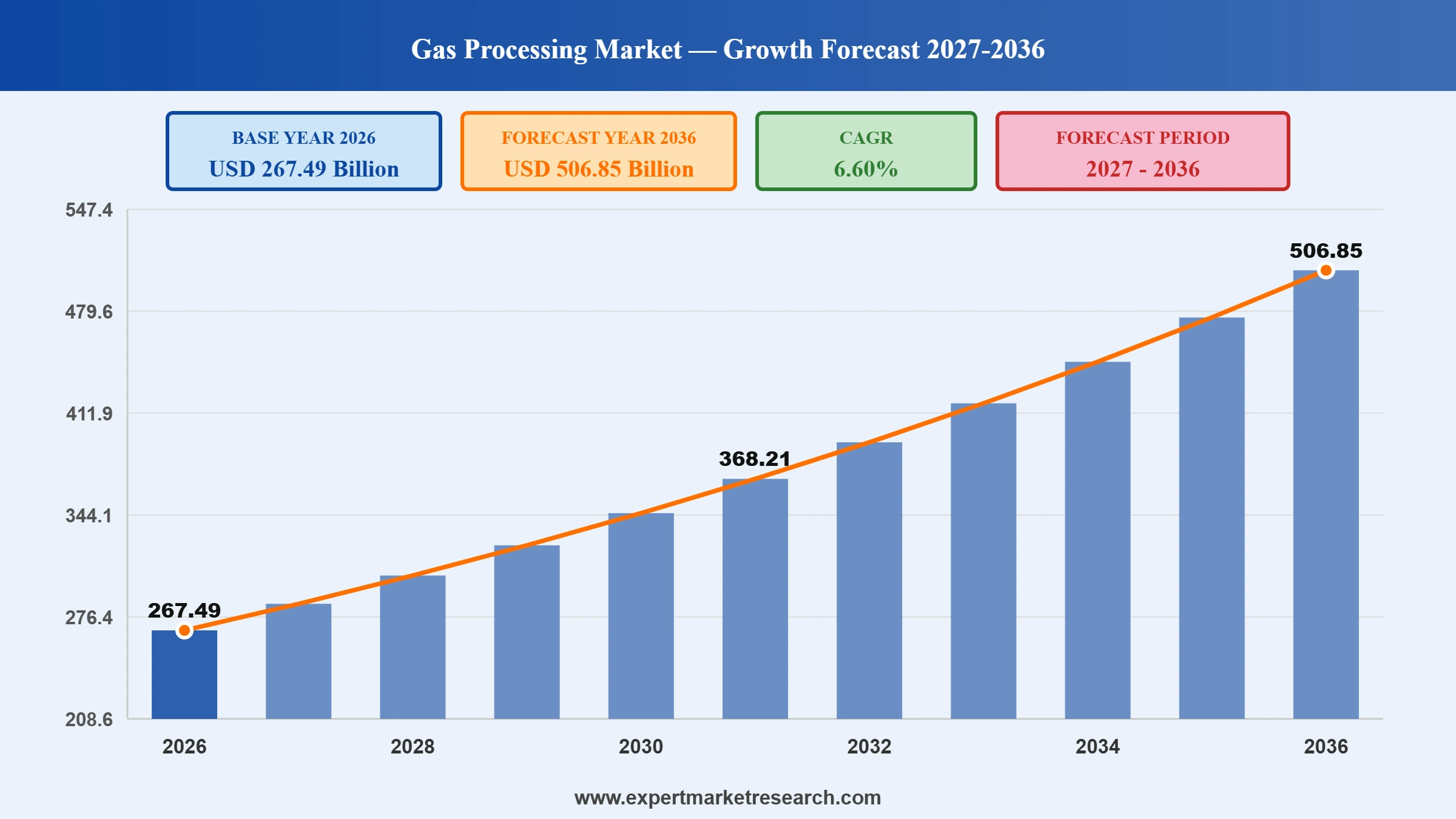
The global gas processing market attained a value of USD 250.93 Billion in 2025 and is projected to expand at a CAGR of 6.60% through 2035. The market is further expected to achieve USD 475.47 Billion by 2035, driven by rising natural gas production, growing recovery and fractionation of natural gas liquids, and the build-out of gas treatment capacity for pipeline and LNG supply chains.
Demand for processed gas and liquids is rising across Asia. GAIL of India reported in July 2026 that natural gas transmission rose to 122.36 million standard cubic metres a day in the quarter ended June 2026, from 118.99 million in the preceding quarter, while liquid hydrocarbon production climbed to 232 thousand tonnes from 194 thousand tonnes. Liquid hydrocarbons are recovered from gas at processing plants, so higher output points to heavier plant throughput. Every added unit of pipeline gas also has to meet pipeline specification before it reaches power, fertiliser and city gas buyers.
Export projects are adding new treatment demand. YPF, working with Eni and XRG, awarded in July 2026 the gas treatment plant for the Argentina LNG project to a joint venture of SACDE and Tecnimont. The plant will remove impurities and separate condensates and liquid hydrocarbons from Vaca Muerta gas before liquefaction, within a broader plan that could reach USD 7 billion. LNG trains cannot accept raw wellhead gas, so treatment and dehydration plants become a prerequisite for every export scheme and a steady source of orders for processing contractors.
Domestic supply programmes are also driving new plants. Sasol told the Mozambique Mining and Energy Conference in May 2026 that its new integrated gas processing facility at Temane, inaugurated in December 2025, processes cooking gas and condensate and supplies gas to the Temane thermal power plant, and that Pande and Temane operations supply five thermal power plants. Older fields are declining, so replacement processing infrastructure keeps gas available for power, industry and households, which sustains demand across southern Africa for treating and liquids recovery equipment and related services.
Read more about this report - REQUEST FREE SAMPLE COPY IN PDF
ADNOC Gas reported in August 2026 final investment decisions and construction awards for Phases 2 and 3 of its Rich Gas Development, worth USD 8.2 billion. Wison Engineering will build a new gas processing train at Habshan under Phase 2, and Tecnimont an NGL fractionation train at Ruwais under Phase 3. Companies can leverage state-backed awards to secure engineering and equipment work early.
Energy Transfer reported in May 2026 that NGL fractionation volumes reached a Partnership record of 1,206 thousand barrels a day in the quarter ended March 2026, up 11%, while NGL exports rose 19%. The Gateway NGL Pipeline debottlenecking project also entered service, lifting Delaware Basin deliveries to Mont Belvieu. Companies can expand fractionation and export links together to capture more value from each barrel.
Pembina Pipeline said RFS IV, a fractionation train at its Redwater Complex, entered service in late May 2026, on time and under budget. The unit adds 55,000 barrels a day of propane-plus fractionation and lifts total fractionation capacity to about 256,000 barrels a day. Companies can secure fractionation capacity ahead of demand to keep liquids from Alberta gas plants moving to market.
Golden Pass LNG, a joint venture of QatarEnergy and ExxonMobil, announced first LNG production from Train 1 at its Sabine Pass terminal in March 2026. Export plants of this kind depend on upstream treatment and processing to deliver dry, specification-grade feed gas, so each new train lifts demand for processing capacity along the Gulf Coast supply chain. Companies can leverage LNG start-ups to place treating, dehydration and fractionation services.
Alexey Miller, Chairman of the Management Committee of Gazprom, told the annual shareholders' meeting, as reported in June 2026, that construction of the Ust-Luga gas processing and liquefaction complex is 80% complete. The gas processing complex is designed for 45 billion cubic metres a year, with 3.6 million tonnes of ethane fraction and 1.7 million tonnes of liquefied petroleum gases. Companies can leverage large processing complexes to anchor multi-year equipment supply.
Aramco reported in August 2026, with results for the six months ended June 2026, that phase one of the Jafurah Gas Plant kept sales gas and condensate output steady, while phase two is in procurement and construction with completion expected in 2027. The Fadhili Gas Plant expansion is also on track for completion in 2027. Companies can leverage staged gas plant build-outs to schedule equipment and service deliveries.
PetroChina said in August 2026, in results for the six months ended June 2026, that marketable natural gas output reached 2.66 trillion cubic feet, with domestic output at its best level for a comparable period. Gas sales including LNG were 161.22 billion cubic metres, up 3.9%, and deep coalbed methane output at the Daji gas field is ramping up. Companies can leverage rising domestic output to offer gas treatment and processing services.
Shell reported in July 2026, in results for the six months ended June 2026, that its LNG liquefaction volumes rose 17%, mainly due to the LNG Canada ramp-up, partly offset by the Middle East conflict affecting Qatari volumes. Liquefaction volumes in the quarter ended June 2026 were 7.7 million tonnes, and LNG sales volumes were 17.96 million tonnes. Companies can leverage LNG ramp-ups to win gas conditioning contracts.
This Expert Market Research Report titled "Global Gas Processing Market Report and Forecast 2026-2035" offers a detailed analysis of the market based on the following segments:
Market Breakup by Product
Key Insight: Dry Gas is the pipeline-quality product, and Pemex reported dry gas production averaging 1,834 million cubic feet a day for the quarter ended June 2026, up 13.6%, in results discussed on its July 2026 earnings call and driven mainly by the Matapionche, Nuevo Pemex and Burgos gas processing complexes; NGL covers the liquids recovered at plants and fractionators, and Targa Resources reported in August 2026 that fractionation volumes rose 24% year on year for the quarter ended June 2026 as Train 11 at Mont Belvieu began operations; and Others captures by-products such as helium, with Helium One reporting in July 2026 its first sale under a short-term offtake agreement from the Pinon Canyon plant of the Galactica project in Colorado.
Market Breakup by Region
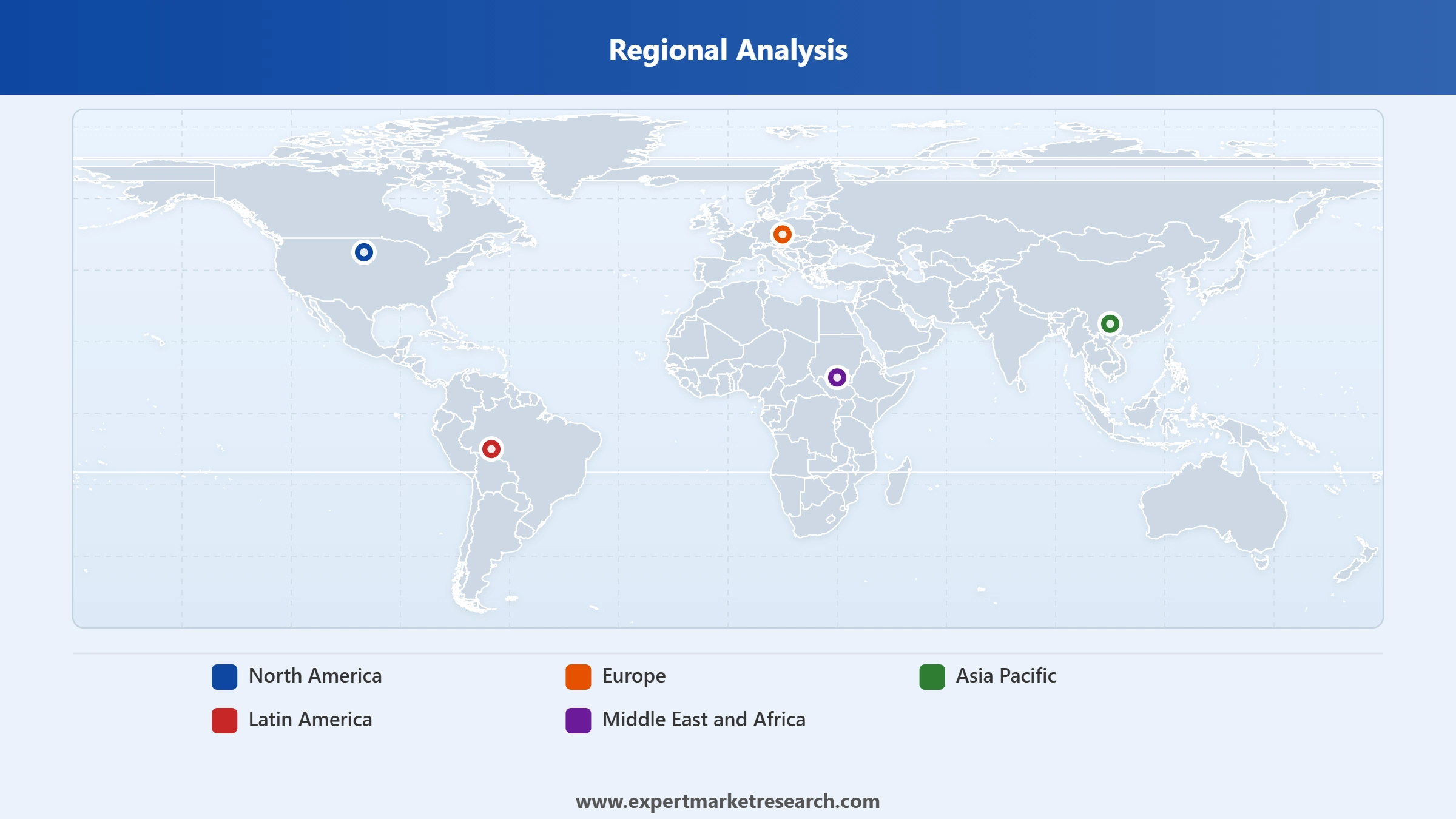
Key Insight: North America is anchored by liquids-rich gas, with Keyera reporting in August 2026 a record realized margin of CAD 128 million from its gathering and processing segment on gross processing throughput of 1,615 million cubic feet a day for the quarter ended June 2026; Europe is sustaining pipeline supply, with Equinor reporting in August 2026 that production had started from Troll Phase 3 Stage 2 to help maintain gas volumes through the Kollsnes processing plant; Asia Pacific is adding LNG-linked processing, with Woodside reporting in August 2026 that first gas was flowing from the Scarborough field, whose gas Pluto Train 2 will process; Latin America is adding pre-salt gas, with Petrobras starting the P-79 platform at Buzios in May 2026 with the ability to compress 7.2 million cubic metres of gas a day; and the Middle East and Africa is adding supply, with Seplat Energy's ANOH gas plant in Nigeria reaching first gas in January 2026.
Read more about this report - REQUEST FREE SAMPLE COPY IN PDF
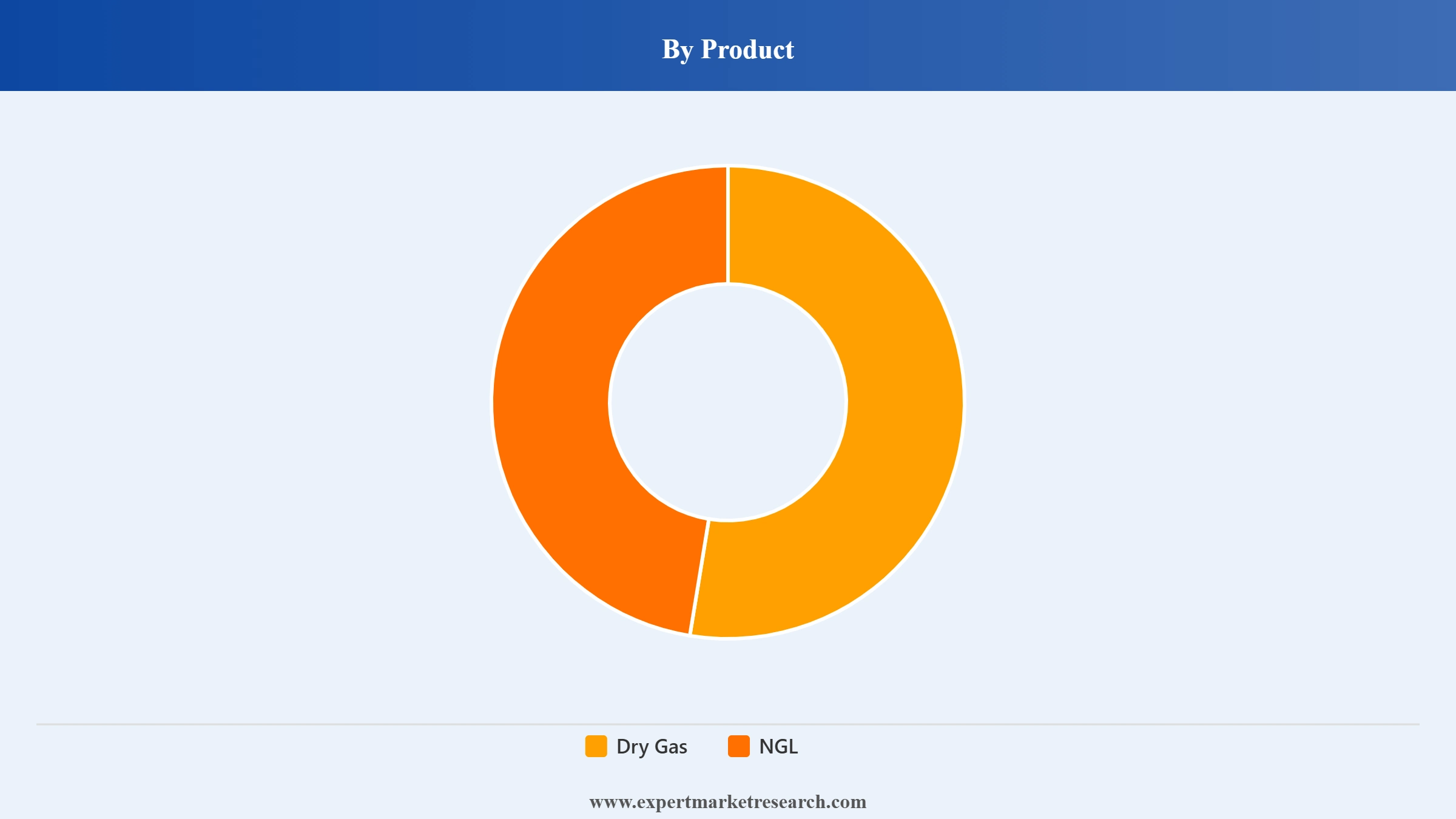
By Product, NGL leads the market while Dry Gas draws notable demand because liquids recovery adds value to every gas stream, while dry gas feeds power, industry and LNG export chains
NGL leads because processing plants recover ethane, propane and butanes that command higher prices than the dry gas left behind, and fractionation and export links turn the mixed stream into saleable products for buyers. Gazprom reported in September 2026 that, for the six months ended June 2026, its liquefied petroleum gas output rose 3.8% to 1.91 million tonnes, even as processing of natural and associated gas eased 3.6% to 30.99 billion cubic metres, showing liquids output holding up well overall.
Read more about this report - REQUEST FREE SAMPLE COPY IN PDF
Dry Gas draws notable demand because it is the pipeline-quality product that power plants, industry and LNG plants buy once treating and dehydration are complete. In August 2026 bp reported that, acting on its June 2026 announcement, it had started non-associated gas production on the Azeri-Chirag-Gunashli field in the Caspian Sea, the first commercial gas production there, adding a further supply stream that must be treated to specification before it enters pipelines and reaches industrial, power, export and household customers.
Middle East and Africa leads regional growth in gas processing, shaped by large gas development programmes, associated gas recovery and state-backed investment in treatment, liquids recovery and export capacity
This is supported by ADNOC Gas, which reported in August 2026 that gas supply from Habshan had been restored to 85% after security-related incidents in April 2026, ahead of schedule and above the year-end target set in May. The recovery shows how quickly operators in the region are working to return processing throughput after disruption, and it keeps the focus on reliability, spare capacity and the supply of equipment and services to Gulf gas plants in coming years.
Read more about this report - REQUEST FREE SAMPLE COPY IN PDF
North America follows, where Energy Transfer said in May 2026 that its 275 million cubic feet a day Mustang Draw I plant was being commissioned and was expected to reach full service in June 2026, adding Permian processing capacity. Asia Pacific is also growing strongly as LNG and domestic supply projects come on stream, while Europe and Latin America expand through pipeline gas, pre-salt output and LNG feed gas projects, where project timing and local contractors shape supplier choice.
The global gas processing market is moderately fragmented, with integrated oil and gas groups, national oil companies and midstream operators holding most processing and fractionation capacity alongside engineering contractors and specialist equipment suppliers serving gas treating, liquids recovery and LNG feed gas customers.
Competitive dynamics are increasingly shaped by access to low-cost gas supply, the ability to integrate processing with fractionation, pipelines and export terminals, long-term contracts with producers and utilities, and execution of large plant build-outs on time and on budget, as operators seek to defend share while customers demand reliable throughput.
BP Plc runs a gas and low carbon energy business spanning LNG and offshore gas. In July 2026 bp agreed terms for ConocoPhillips to acquire 42% of BP Energy Company of Kirkuk Limited and for TPAO to acquire a further 15%, and in May 2026 it signed a 10-year deal to supply KOGAS with 0.7 million tonnes a year of LNG from 2028.
Exxon Mobil Corporation is a Permian Basin producer. It reported in July 2026 that Permian output reached a record above 1.8 million oil-equivalent barrels a day in the quarter ended June 2026, consistent with a planned 9% annual compound growth rate through 2030, and in August 2026 Targa Resources signed 20-year fee-based gathering and processing agreements with ExxonMobil subsidiaries, including three new Delaware Basin gas processing plants of about 825 million cubic feet a day combined capacity.
Royal Dutch Shell plc is represented here through Shell's integrated gas business. In April 2026 Shell entered into a definitive agreement to acquire ARC Resources Ltd, with closing expected in the three months ending September 2026 subject to remaining regulatory approval, and its July 2026 results showed integrated gas production of 631 thousand barrels of oil equivalent a day in the quarter ended June 2026, against 909 thousand in the quarter ended March 2026.
Saudi Arabian Oil Co. brought the Tanajib Gas Plant into operation in December 2025. Aramco said in February 2026 that the plant, which processes associated gas from the offshore Marjan and Zuluf fields, is expected to reach raw gas processing capacity of 2.6 billion standard cubic feet a day in 2026, adding to the gas processing base that supports the kingdom's wider sales gas growth plans.
Other key players in the gas processing market include PetroChina Company Limited and Public Joint Stock Company Gazprom, among others.
*Please note that this is only a partial list; the complete list of key players is available in the full report. Additionally, the list of key players can be customized to better suit your needs.*
For a detailed assessment of opportunities across the gas processing market's product and regional segments through 2026 and beyond, connect with Expert Market Research for a customized consultation.


Upto 15% Off
USD
$2499 $2249
$3999 $3599
$4999 $4249
$5999 $5099


*While we strive to always give you current and accurate information, the numbers depicted on the website are indicative and may differ from the actual numbers in the main report. At Expert Market Research, we aim to bring you the latest insights and trends in the market. Using our analyses and forecasts, stakeholders can understand the market dynamics, navigate challenges, and capitalize on opportunities to make data-driven strategic decisions.*
The gas processing market is projected to grow at a CAGR of 6.60% from 2026 to 2035.
Key strategies include adding processing and fractionation trains close to producing basins, integrating processing with pipelines and export terminals, securing long-term contracts with producers, building treatment plants for LNG feed gas, and debottlenecking existing plants to lift throughput at lower cost.
The key trend guiding the growth of the market include the development of economically feasible and energy efficient methods of gas processing and the surging research and development (R&D) activities by key players.
The major regions in the market are North America, Latin America, the Middle East and Africa, Europe, and the Asia Pacific.
The major products of gas processing considered in the market report include dry gas and NGL, among others.
Key players in the gas processing market include BP Plc, Exxon Mobil Corporation, PetroChina Company Limited, Public Joint Stock Company Gazprom, Royal Dutch Shell plc, and Saudi Arabian Oil Co..
The global gas processing market attained a value of USD 250.93 Billion in 2025.
Key challenges include sour gas and high hydrogen sulfide content that restrict plant throughput, volatile gas and liquids prices, long permitting and construction timelines for large plants, geopolitical and sanctions-related disruption to equipment and supply chains, and the need to cut flaring and emissions.
Explore our key highlights of the report and gain a concise overview of key findings, trends, and actionable insights that will empower your strategic decisions.
| REPORT FEATURES | DETAILS |
| Base Year | 2025 |
| Historical Period | 2019-2025 |
| Forecast Period | 2026-2035 |
| Scope of the Report |
Historical and Forecast Trends, Industry Drivers and Constraints, Historical and Forecast Market Analysis by Segment:
|
| Breakup by Product |
|
| Breakup by Region |
|
| Market Dynamics |
|
| Competitive Landscape |
|
| Companies Covered |
|
| Report Price and Purchase Option | Explore our purchase options that are best suited to your resources and industry needs. |
| Delivery Format | Delivered as an attached PDF and Excel through email, with an option of receiving an editable PPT, according to the purchase option. |
Datasheet
One User
USD 2,499
USD 2,249
tax inclusive*
Single User License
One User
USD 3,999
USD 3,599
tax inclusive*
Five User License
Five User
USD 4,999
USD 4,249
tax inclusive*
Corporate License
Unlimited Users
USD 5,999
USD 5,099
tax inclusive*
*Please note that the prices mentioned below are starting prices for each bundle type. Kindly contact our team for further details.*
Flash Bundle
Small Business Bundle
Growth Bundle
Enterprise Bundle
*Please note that the prices mentioned below are starting prices for each bundle type. Kindly contact our team for further details.*
Flash Bundle
Number of Reports: 3
20%
tax inclusive*
Small Business Bundle
Number of Reports: 5
25%
tax inclusive*
Growth Bundle
Number of Reports: 8
30%
tax inclusive*
Enterprise Bundle
Number of Reports: 10
35%
tax inclusive*
How To Order

Select License Type
Choose the right license for your needs and access rights.

Click on ‘Buy Now’
Add the report to your cart with one click and proceed to register.

Select Mode of Payment
Choose a payment option for a secure checkout. You will be redirected accordingly.
Strategic Solutions for Informed Decision-Making
Gain insights to stay ahead and seize opportunities.

Get insights & trends for a competitive edge.

Track prices with detailed trend reports.

Analyse trade data for supply chain insights.

Leverage cost reports for smart savings

Enhance supply chain with partnerships.

Connect For More Information
Our expert team of analysts will offer full support and resolve any queries regarding the report, before and after the purchase.
Our expert team of analysts will offer full support and resolve any queries regarding the report, before and after the purchase.
We employ meticulous research methods, blending advanced analytics and expert insights to deliver accurate, actionable industry intelligence, staying ahead of competitors.
Our skilled analysts offer unparalleled competitive advantage with detailed insights on current and emerging markets, ensuring your strategic edge.
We offer an in-depth yet simplified presentation of industry insights and analysis to meet your specific requirements effectively.




