

Consumer Insights
Uncover trends and behaviors shaping consumer choices today
Procurement Insights
Optimize your sourcing strategy with key market data
Industry Stats
Stay ahead with the latest trends and market analysis.
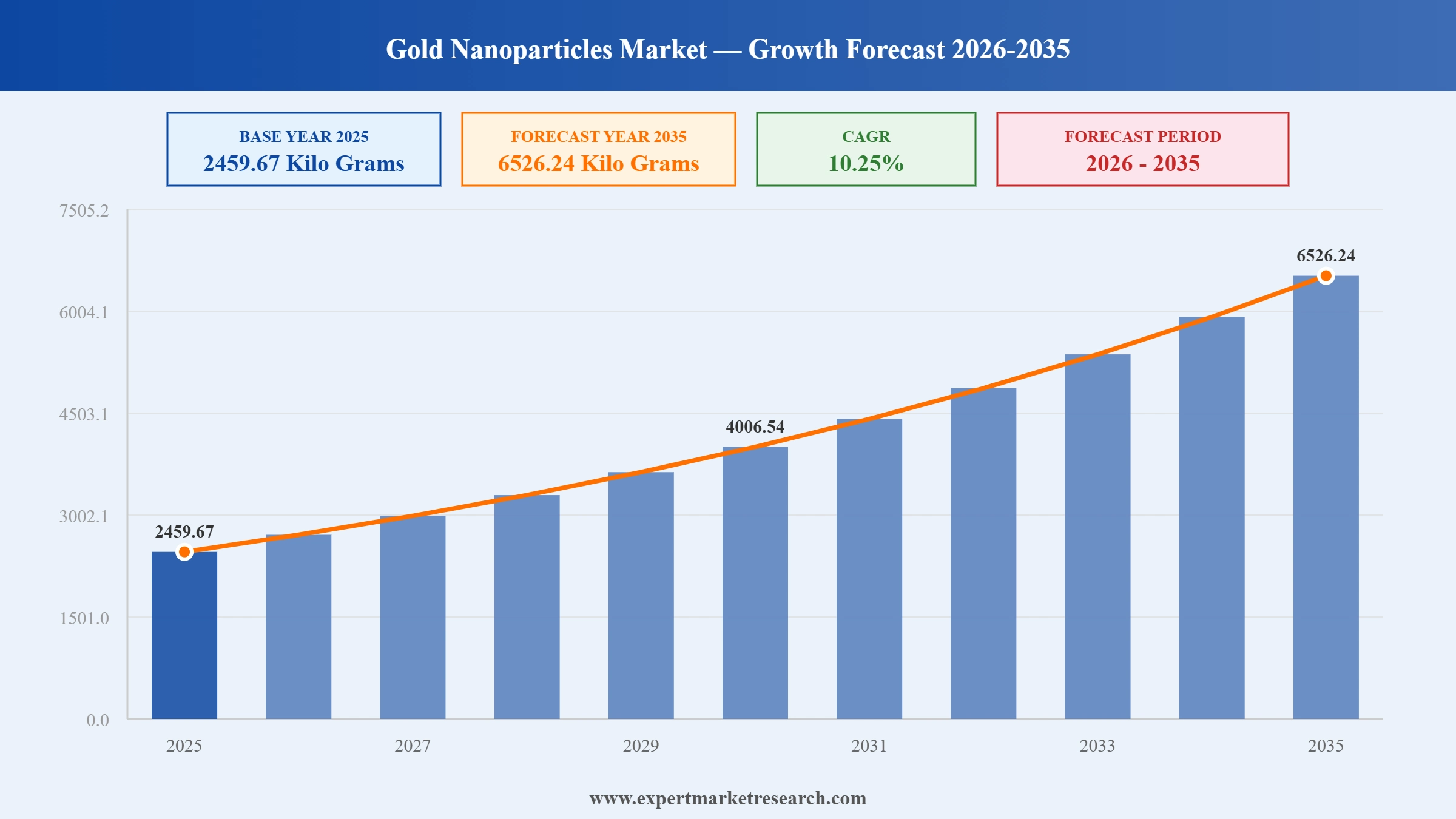
The global gold nanoparticles market attained a volume of 2459.67 Kilo Grams in 2025 and is projected to grow at a CAGR of 10.25% through 2035. The market is further expected to reach a volume of 6526.24 Kilo Grams by 2035. Demand from rapid diagnostics, targeted drug delivery, biosensors, catalysis, and printed electronics is supporting growth in the market.
Demand for gold nanoparticles rests on a small number of high values uses where tiny amounts deliver large effects. Diagnostic test makers need uniform colloidal gold, hospitals and laboratories test gold-based therapies and imaging agents, and electronics firms evaluate printable inks. Because each use calls for tight control of size, shape, and surface chemistry, suppliers that can document quality and supply reliably hold a clear advantage. Quality certificates and batch records are often requested before an order is placed.
Rapid test makers show how strong demand has become. In March 2026, Abingdon Health reported half year revenue of GBP 4.5 million, up 45% from GBP 3.1 million, and expects positive adjusted earnings in the second half, as lateral flow testing and contract development work grew. Growing orders for lateral flow tests support steady buying of the reagents and labels that go into them. Reagent suppliers, contract developers, and test makers all gain when diagnostic volumes rise and strips multiply.
Leading suppliers are directing investment toward conjugation services, custom particle shapes, and clinical grade production rather than single catalog items. Licensing, partnerships with universities, and service launches are now central to competitive positioning in the gold nanoparticles market, as firms seek secure access to new therapies, diagnostic platforms, and electronic materials while research groups continue to publish results every month. Research groups publish new results every month, and suppliers working closely with them learn about changing product needs much earlier.
Read more about this report - REQUEST FREE SAMPLE COPY IN PDF
Papersens, a start-up based in Mangaluru, developed non-invasive tests using gold nanoparticles and graphene quantum dots for urine, sweat, and saliva, with a leptospirosis test completing trials in 250 to 300 patients. Companies across the gold nanoparticles market can leverage this trend by building tests on easy samples, which widens screening in clinics and shortens the wait for final test results.
Sungkyunkwan University developed a gold nanoparticle coated electrode sensor that detects the liver fibrosis marker PICP down to 0.81 pg/mL, with 95.24% sensitivity and 100% specificity on patient blood. Companies across the gold nanoparticles market can leverage this trend by licensing sensitive electrode coatings, which opens a route into hospital laboratories and reduces reliance on invasive biopsies and repeat visits to clinics.
CD Bioparticles expanded its colloidal gold lateral flow assay development services, covering conjugate customization through assay optimization and commercialization, alongside supply of gold colloids. Companies across the gold nanoparticles market can leverage this trend by bundling materials with design support, which shortens development for small diagnostic firms and builds repeat orders for reagents, conjugates, labels, and other consumables for many years ahead.
Delta Gold Technologies signed a three-year research sponsorship and exclusive license with Penn State, worth USD 2,991,426, covering Au144 and Au25 gold nanoclusters for quantum materials with a 1% royalty above USD 20 million in sales. Companies can leverage this trend by licensing university research early, which secures intellectual property before competitors reach the field first.
Researchers across the gold nanoparticles market are turning gold based lateral flow formats toward cancer screening. Simple urine tests could reach clinics without specialist equipment. In June 2026, Universidad de Chile started a 24-month project to build a gold nanoparticle lateral flow urine test for PSA and the TMPRSS2-ERG fusion, targeting at least 90% sensitivity and a result in under one hour, with a licensing deal with Grupo SIBI planned. Patients may avoid some biopsies. Other laboratories may copy the approach in coming years.
Combined imaging and treatment agents across the gold nanoparticles market are attracting research funding. Gold absorbs X-rays and converts near infrared light into heat. In June 2026, the University of Mississippi reported gold containing nanoparticles that attach to neutrophils and could image endometriosis by X-ray and treat it by near infrared heating, tested so far in lab cells and human blood. The condition affects about one in ten women. Clinicians may gain a gentler option. More teams may test similar agents in animals and patients.
Faster screening can shorten the path from design to clinic. Fewer animals also lower cost and ethical concerns in the gold nanoparticles market. In May 2026, the National University of Singapore screened 30 DNA barcoded gold nanoparticle designs in vivo, producing over 1,000 data points with about 30 times fewer animal models, and found a folic acid cubic gold particle gave 99% tumor regression in preclinical work. Developers gain a quicker route to selecting carriers. Rivals may adopt barcoding to speed their own carrier programs.
First human data help move nanorod therapies toward larger trials. Gold nanorods heat tumors when exposed to light. In October 2025, Sona Nanotech reported results from a first in human study of its targeted hyperthermia therapy in 10 patients with immunotherapy resistant cutaneous metastatic melanoma, where 8 of 10 showed a significant clinical response by day 15. The study was not designed to measure response rates. Investors gain early evidence. Larger trials across the gold nanoparticles market are likely to follow within a few years.
Nasal delivery could carry drugs past barriers that block pills and injections. Gold particles can protect and carry the drug. In October 2025, Universita Cattolica del Sacro Cuore and Policlinico Gemelli in Italy reported that lithium coated gold nanoparticles in a nasal spray inhibited GSK-3beta in the mouse hippocampus after five days, and that two months of treatment reduced memory deficits in Alzheimer's mice. The approach is patented. Patients may gain gentler dosing. Human studies remain ahead and take time.
The Expert Market Research's report titled "Global Gold Nanoparticles Market Report and Forecast 2026-2035" offers a detailed analysis of the market based on the following segments:
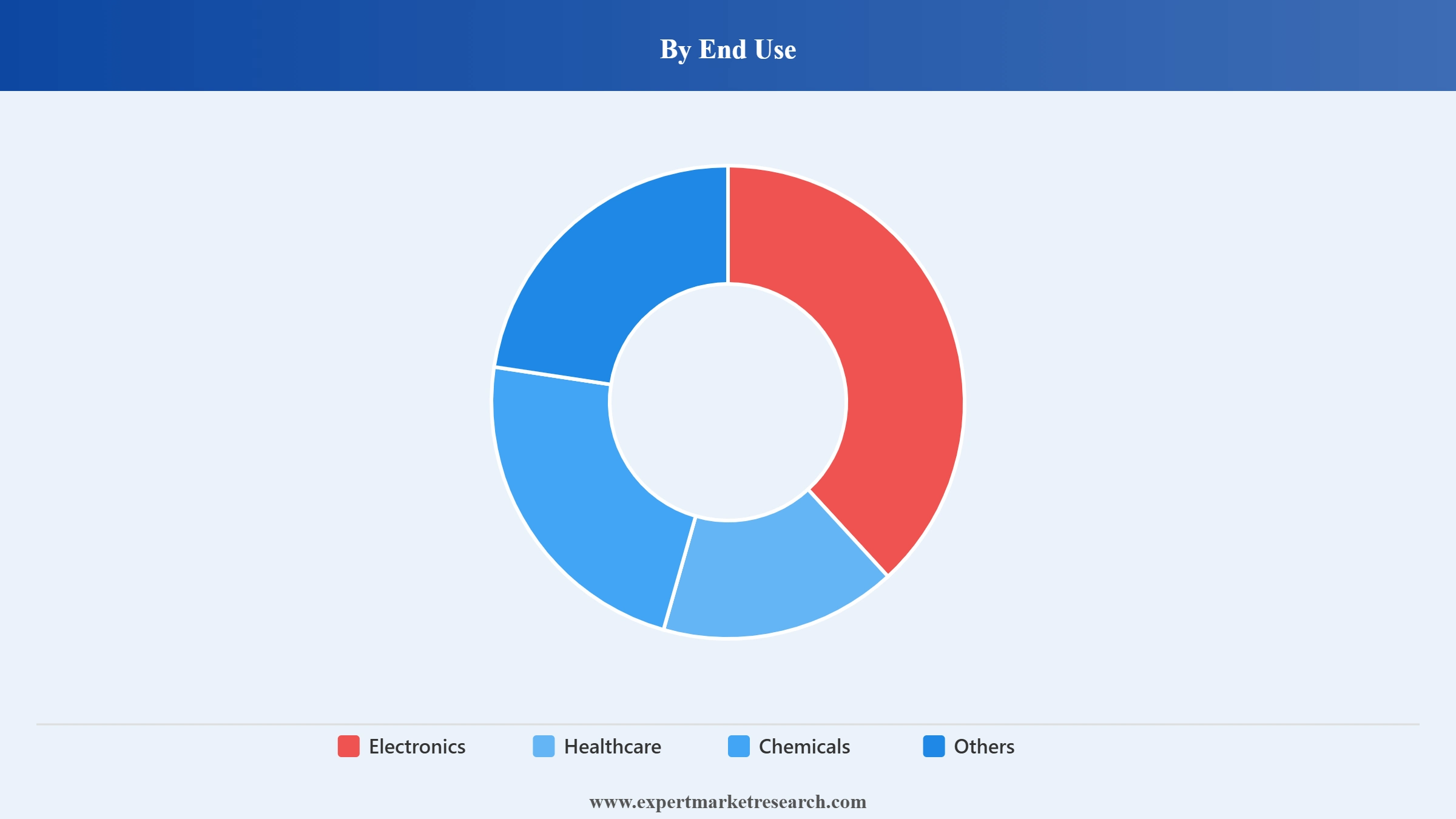
Market Breakup by End Use
Key Insight: Healthcare holds the largest share of the end use segment in the gold nanoparticles market, as diagnostics, imaging, and drug delivery use gold in the highest value applications. Electronics is expected to grow fastest as printed circuits, memory devices, and optical films adopt stable gold particles. Chemicals use gold nanoparticles as catalysts for reactions that need high activity at lower temperatures, including pollution control and fine chemical synthesis. Other uses, including cosmetics, food safety testing, and environmental monitoring, add smaller volumes. In August 2026, Huazhong University of Science and Technology reported citrate gold nanoparticle arrays as floating gates in transistor memory with a 54 V window.
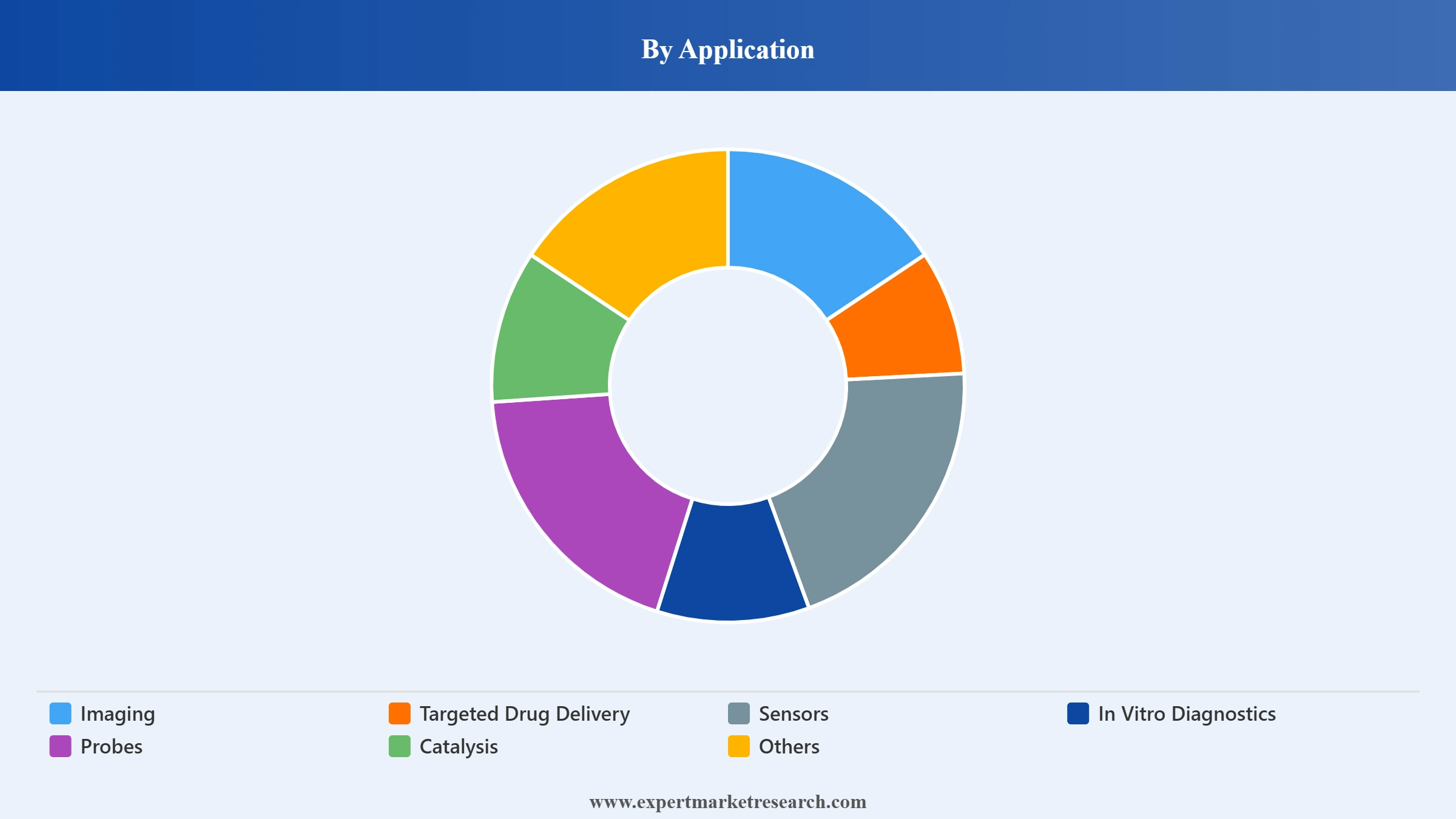
Market Breakup by Application
Key Insight: In vitro diagnostics holds the largest share of the application segment, as lateral flow tests depend on colloidal gold labels. Targeted drug delivery is expected to expand fastest as researchers load drugs onto engineered particles that reach tumors. Imaging uses gold for contrast in X-ray, optical, and photoacoustic methods, while sensors detect disease markers, pesticides, and toxins through color or electrical changes. Probes label DNA and proteins in research and diagnostic assays, and catalysis supports clean chemical reactions. Other applications include cosmetics and coatings. In July 2026, Khalifa University developed a label free gold nanoparticle DNA biosensor.
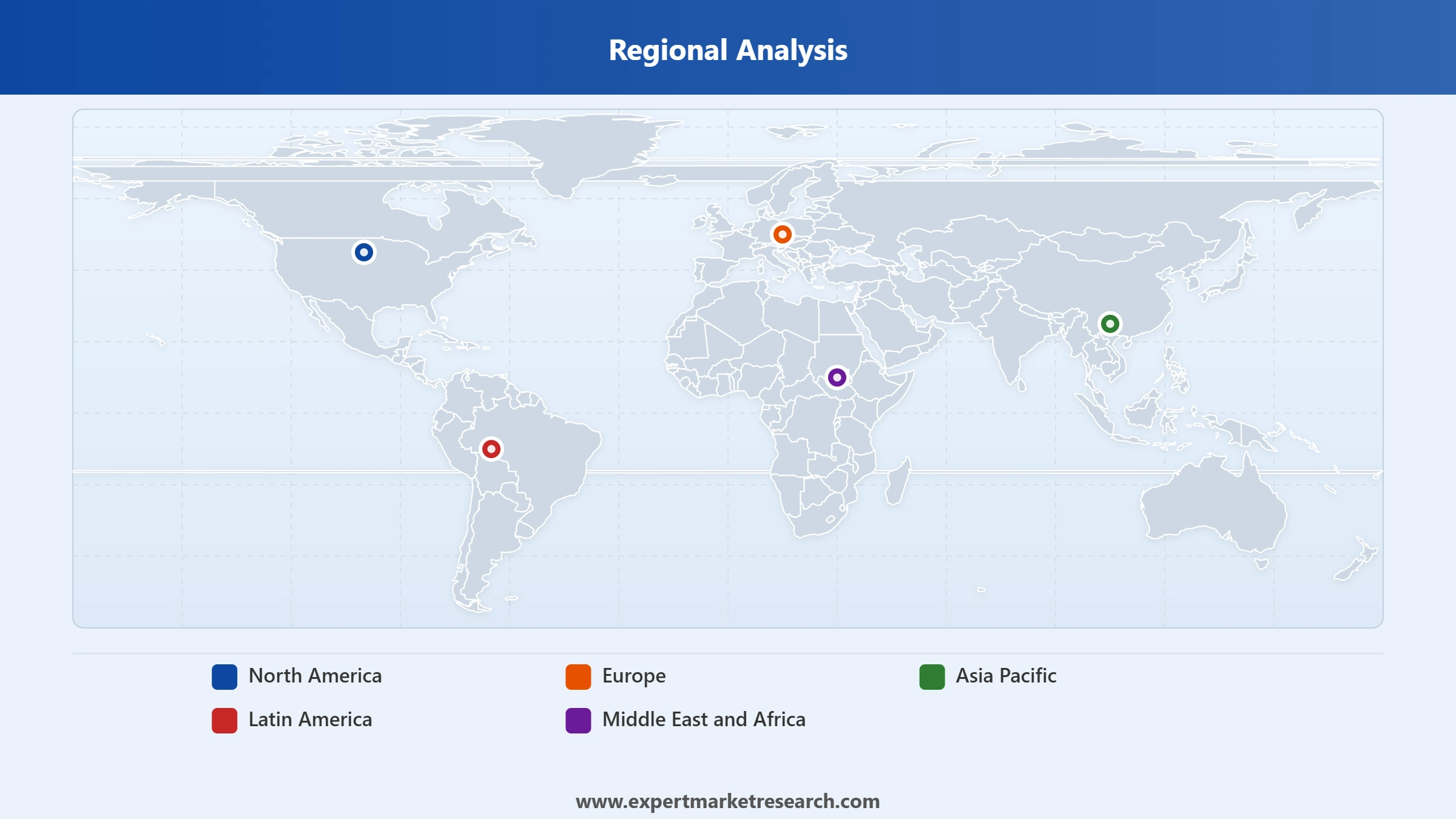
Market Breakup by Region
Key Insight: North America holds the largest regional share, supported by strong research funding, a large diagnostics industry, and early clinical trials. Asia Pacific is expected to grow fastest as universities, diagnostic makers, and electronics suppliers scale up. Europe contributes to the gold nanoparticles market through strong academic research, established contract developers, and growing clinical programs in nanomedicine. Latin America grows from a smaller base as local laboratories adopt rapid tests and research collaborations, while the Middle East and Africa expand through new universities, health programs, and diagnostic imports.
Read more about this report - REQUEST FREE SAMPLE COPY IN PDF
By end use, healthcare dominates the gold nanoparticles market owing to diagnostics, imaging, and cancer therapy demand
Healthcare holds the largest share of the end use segment, because diagnostics, imaging, and drug delivery rely on gold in their most valuable uses. Hospitals value tests and treatments that are precise, and regulators look closely at safety data. Documented quality gives suppliers a lasting edge with clinical customers worldwide today. Growing cancer screening programs, point of care testing, and nanomedicine research keep demand strong, while clinical grade production lines allow suppliers to command higher prices than in industrial applications.
Read more about this report - REQUEST FREE SAMPLE COPY IN PDF
Electronics is registering the fastest growth within the end use segment, as printed circuits, memory devices, and optical films adopt stable gold particles. In June 2026, Korea University reported a photonic glass made from 230 nanometer silica core shell particles with a 20-nanometer gold cluster, giving angle independent color including red, with gold making up only 0.022% of the film by weight. Small amounts of gold keep costs controlled. Display makers may study these coatings closely for future products.
By application, in vitro diagnostics dominates the gold nanoparticles market owing to the use of colloidal gold labels in rapid tests
In vitro diagnostics holds the largest share of the application segment, because lateral flow tests depend on colloidal gold labels that give a visible line within minutes. In March 2026, the University of Jyvaskyla in Finland studied nearly 100 gold nanocluster and biomolecule pairs on the LUMI supercomputer and found selective chiral recognition that could help detect disease in blood samples. Fast, low-cost tests reach homes and clinics. Simple formats suit remote regions without laboratories or trained local staff.
Read more about this report - REQUEST FREE SAMPLE COPY IN PDF
Targeted drug delivery is registering the fastest growth within the application segment, as researchers load drugs onto engineered gold carriers that reach tumors. Training the next generation of researchers supports future clinical programs, and precise carriers may lower side effects for cancer patients over time. Funding agencies and pharmaceutical firms are backing early studies of antibody, peptide, and small molecule conjugates, which creates steady demand for custom particles with controlled size, shape, and surface chemistry across many academic research laboratories.
North America commands the largest regional share of the gold nanoparticles market, supported by strong research funding and a large diagnostics industry
North America commands the largest regional share of the gold nanoparticles market, supported by strong research funding, a large diagnostics industry, and an active clinical trial base. Strong university and hospital networks also feed new ideas into start-ups, and venture funding supports the move from laboratory to products. Federal grants, established contract developers, and large rapid test makers create a deep customer base for high-quality colloidal gold, conjugates, and custom nanoparticle services, supporting both academic and commercial development programs.
Read more about this report - REQUEST FREE SAMPLE COPY IN PDF
Asia Pacific is registering the fastest growth among the regional markets, driven by expanding universities, diagnostic manufacturers, and electronics supply chains. In October 2026, the University of Delhi reported citrate gold nanoparticles that detect the pesticide ethion by a color shift read with an iPhone 13, with a detection limit of 0.052 micromolar. Government research programs also support local suppliers. Rising health spending increases demand for diagnostics and imaging agents across the region and supports many new local production plants.
The competitive landscape remains fragmented, with established gold nanoparticles companies competing on particle uniformity, conjugation expertise, quality documentation, custom synthesis, and supply reliability across diagnostics, research, and electronics customers. Leading gold nanoparticles companies continue to invest in conjugation services, custom shapes, and clinical grade production to retain loyal customers while capturing demand from therapy and sensor developers in faster growing regions. Technical support and consistent batch quality decide most supplier choices today.
Major gold nanoparticles market players are also pursuing licensing, university partnerships, and service launches to strengthen their footprint across both mature and emerging regions. Continued emphasis on batch consistency, safety data, and technical support is allowing established suppliers to defend their position with diagnostic firms while building deeper presence in newer areas such as photothermal therapy, biosensors, and printed electronics. Collaboration with hospitals and universities is giving suppliers access to clinical needs.
Founded in 2006 and headquartered in Burlington, Ontario, Canada, the company supplies the market through gold nanoparticles, NanoUrchins, nanorods, conjugation kits, and lateral flow products for research and diagnostic customers. It sells directly and through distributors to customers in more than 40 countries.
Founded in 1986 and headquartered in Cardiff, United Kingdom, the company supplies the market through gold colloid and gold conjugates, alongside antibodies, antigens, and lateral flow contract manufacturing. It sells to in vitro diagnostic and life science customers across Europe, North America, and Asia.
Founded in 2013 and headquartered in Austin, Texas, United States, the company supplies the market with gold nanospheres and nanorods sold as contrast agents for imaging, microscopy, and diagnostic research. It sells to universities, laboratories, and assay makers directly and through distributors.
Founded in 2005 and headquartered in Loveland, Colorado, United States, the company industry through gold nanospheres, nanorods, shells, stars, and cubes, together with ligands, coatings, and kits. It sells to research, life science, materials, and optics customers, and its products appear in thousands of publications.
Other key players in the market include Goldsol Inc. and Nanosphere Inc. [Luminex Corporation], among others.
*Please note that this is only a partial list; the complete list of key players is available in the full report. Additionally, the list of key players can be customized to better suit your needs.*
Unlock the latest insights with our gold nanoparticles market trends 2026 report. Discover regional growth patterns, diagnostic formats, therapy platforms, and key industry players. Stay ahead of competition with trusted data and expert analysis. Download your free sample report today and drive informed decisions in the market. Request a customised quote to align the findings with your own business planning.


Upto 15% Off
USD
$2499 $2249
$3999 $3599
$4999 $4249
$5999 $5099


*While we strive to always give you current and accurate information, the numbers depicted on the website are indicative and may differ from the actual numbers in the main report. At Expert Market Research, we aim to bring you the latest insights and trends in the market. Using our analyses and forecasts, stakeholders can understand the market dynamics, navigate challenges, and capitalize on opportunities to make data-driven strategic decisions.*
The market reached a volume of 2459.67 Kilo Grams in 2025.
The market is projected to grow at a CAGR of 10.25% between 2026 and 2035, reaching 6526.24 Kilo Grams by 2035.
The major drivers of the market include increased use of metal nanoparticles in medical and dental practice, favourable properties and application in targeted cancer imaging and therapy.
Growing research and development expenditure by key players and the increasing demand in the electronics and development sector for niche applications are the key industry trends propelling the growth of the market.
North America leads the market by region, while Asia Pacific is registering the fastest growth.
Healthcare leads the market by end use, while electronics is expected to grow fastest.
The diverse applications for market are imaging, targeted drug delivery, sensors, in vitro diagnostics, probes, and catalysis, among others.
The key players in the market include Cytodiagnostics Inc., BBI Solutions OEM Limited, NanoHybrids, Inc., Nanopartz Inc., Goldsol Inc., and Nanosphere Inc. [Luminex Corporation], among others.
Explore our key highlights of the report and gain a concise overview of key findings, trends, and actionable insights that will empower your strategic decisions.
| REPORT FEATURES | DETAILS |
| Base Year | 2025 |
| Historical Period | 2019-2025 |
| Forecast Period | 2026-2035 |
|
Scope of the Report
|
Historical and Forecast Trends, Industry Drivers and Constraints, Historical and Forecast Market Analysis by Segment:
|
| Breakup by End Use |
|
| Breakup by Application |
|
| Breakup by Region |
|
| Market Dynamics |
|
| Competitive Landscape |
|
| Companies Covered |
|
| Report Price and Purchase Option | Explore our purchase options that are best suited to your resources and industry needs. |
| Delivery Format | Delivered as an attached PDF and Excel through email, with an option of receiving an editable PPT, according to the purchase option. |
Datasheet
One User
USD 2,499
USD 2,249
tax inclusive*
Single User License
One User
USD 3,999
USD 3,599
tax inclusive*
Five User License
Five User
USD 4,999
USD 4,249
tax inclusive*
Corporate License
Unlimited Users
USD 5,999
USD 5,099
tax inclusive*
*Please note that the prices mentioned below are starting prices for each bundle type. Kindly contact our team for further details.*
Flash Bundle
Small Business Bundle
Growth Bundle
Enterprise Bundle
*Please note that the prices mentioned below are starting prices for each bundle type. Kindly contact our team for further details.*
Flash Bundle
Number of Reports: 3
20%
tax inclusive*
Small Business Bundle
Number of Reports: 5
25%
tax inclusive*
Growth Bundle
Number of Reports: 8
30%
tax inclusive*
Enterprise Bundle
Number of Reports: 10
35%
tax inclusive*
How To Order

Select License Type
Choose the right license for your needs and access rights.

Click on ‘Buy Now’
Add the report to your cart with one click and proceed to register.

Select Mode of Payment
Choose a payment option for a secure checkout. You will be redirected accordingly.
Strategic Solutions for Informed Decision-Making
Gain insights to stay ahead and seize opportunities.

Get insights & trends for a competitive edge.

Track prices with detailed trend reports.

Analyse trade data for supply chain insights.

Leverage cost reports for smart savings

Enhance supply chain with partnerships.

Connect For More Information
Our expert team of analysts will offer full support and resolve any queries regarding the report, before and after the purchase.
Our expert team of analysts will offer full support and resolve any queries regarding the report, before and after the purchase.
We employ meticulous research methods, blending advanced analytics and expert insights to deliver accurate, actionable industry intelligence, staying ahead of competitors.
Our skilled analysts offer unparalleled competitive advantage with detailed insights on current and emerging markets, ensuring your strategic edge.
We offer an in-depth yet simplified presentation of industry insights and analysis to meet your specific requirements effectively.




