

Consumer Insights
Uncover trends and behaviors shaping consumer choices today
Procurement Insights
Optimize your sourcing strategy with key market data
Industry Stats
Stay ahead with the latest trends and market analysis.
The global home fragrances market attained a value of USD 7.78 Billion in 2025 and is projected to expand at a CAGR of 5.00% through 2035. The market is further expected to achieve USD 12.67 Billion by 2035. Demand is being fueled by the growing trend of luxury property developers adopting signature scents branding and consequently leading to bulk purchasing contracts for sustainable programmable fragrance systems in high-end residential and mixed-use developments around the world.
The home fragrances market is driven by the convergence of wellness-focused consumer behavior and institutional demand for differentiated sensory experiences. This is supported by the fact that consumers, who are becoming increasingly health-conscious, are looking for products that enhance their wellbeing while companies are seeking ways to provide sensory differentiation in their products. As consumers learn about the health benefits of using scents in aromatherapy treatments, there has been an increase in the uptake of diffusers made using essential oils in both domestic and corporate settings.
The global home fragrances market is exhibiting trends of premiumization as major firms venture into wellness-driven products, rather than limiting their offerings to conventional scented candles. For example, in April 2026, Oriflame partnered with Givaudan to launch an affordable niche fragrance collection, supporting emerging perfumers, enhancing accessibility, innovation, and premiumization in beauty markets. Consequently, procurement trends are expected to be transformed significantly among hotels and co-living enterprises, where ambient fragrance becomes a core element of branding efforts.
On the structural front, wellness, sustainability, and experiential retail practices are now dictating consumer behavior in favor of products and services that offer health benefits, minimal environmental impact, and memorable sensory experiences. Corporate buyers in the hospitality and luxury real estate segments are becoming more inclined towards using long-lasting, non-toxic fragrance sources, namely natural essential oils extracted from plants. Accordingly, companies are offering products such as reusable diffusers and wax compositions that are compostable and emit fewer VOC compounds, thereby complying with stringent indoor air quality regulations. Following this home fragrances market trend, in March 2024, Pura launched Allos scent collection featuring wellness-driven fragrances, enhancing mood, relaxation, focus, and emotional well-being through scientifically formulated ingredients.
Compound Annual Growth Rate
5%
Value in USD Billion
2026-2035
Mecarte Luxury introduced long-lasting fragrances which were suitable for the Indian climate, thereby helping improve the longevity of their products. These examples clearly illustrate opportunities for companies to develop climate-based formulations that cater to various environmental issues.
Kimirica introduced a luxury range of home fragrances that comprise candles and diffusers, with emphasis on appearance, wellness, and enhanced sensory experiences. This underscores the opportunity for companies in the home fragrances market to develop wellness-focused products while emphasizing premium design and aesthetic appeal.
Glasshouse Fragrances expanded its retail presence by entering Anthropologie stores, which resulted in improved retail distribution, increased brand awareness, and broader availability of high-end home fragrance collections within the United States. This move creates possibilities for firms to use strategic retail collaborations to improve their reach and achieve quicker entry into the premium category.
IRIS Home Fragrances introduced an aromatherapy-specific collection that focuses on wellness, relaxation, and all-natural ingredients. This highlights the opportunity for home fragrances market companies to develop wellness-oriented products that align with the growing consumer demand for healthier home environments.
An increasing number of businesses are utilizing artificial intelligence to customize fragrance profiles in accordance with their customers’ needs, thereby boosting the home fragrances market value. Businesses use data analytics to explore local trends related to scents, thereby making custom products possible. For example, firms like Firmenich are launching new platforms to develop customized scents for hospitality businesses considering demographic traits of consumers. This is especially significant for luxurious hotels since scent branding there is tied to memory and loyalty among consumers. For example, in March 2025, Osmo launched Generation AI-powered fragrance house, enabling data-driven scent creation, faster development cycles, exclusive ingredients, and enhanced precision for brands.
The home fragrances market finds itself noting that it is increasingly crucial for B2B customers to take into account sustainability trends when sourcing their products. Leading players are replacing paraffin wax with alternatives such as soy, coconut, and beeswax blends, while also introducing recyclable packaging to align with sustainability-focused consumer preferences. This includes companies such as Reckitt, which provides a line of biodegradable air fresheners known as Air Wick. On the other hand, the company IFF launched a sustainable scent delivery solution called ENVIROCAP in July 2025.
Smart fragrance diffusers powered by IoT systems are becoming common among users, especially those who live in cities. They provide users with the ability to control fragrance intensity, duration, and scent combinations through mobile apps or voice-enabled systems, further shaping trends and dynamics in the home fragrances market. For example, in February 2026, Shelly introduced an intelligent device called Cury that unites two functions including aroma release and mosquito repelling. This device can also be controlled via apps. It uses two types of scent simultaneously, and provides more comfort at home. The use of aroma technologies within smart houses creates new revenue sources for firms.
Contract manufacturing and private labeling activities are booming as retailers and hotels strive to differentiate themselves with their own unique fragrances, thus widening the home fragrances market scope. They are entering into long-term contracts that involve the manufacture of custom-scented products bearing the name of the retailer or hotel chain. Manufacturers in India are often contracted by foreign retail groups to manufacture scented candles and diffusers under their names. Programs such as India’s PLI Scheme are helping local manufacturers expand their capacity. Similarly, in January 2026, New Directions Aromatics partnered with Aromatic Fragrances International, creating digitally enabled specialty ingredients platform, expanding United States footprint, enhancing formulation, e-commerce capabilities.
Several emerging trends are shaping the development and evolution of the home fragrances market. The combination of wellness products with fragrances and their use to help improve mental well-being is emerging as a new trend. Fragrance dispensers that come with health and well-being properties, such as stress relief, sleep, and mood elevation, are becoming popular among both household and institutional consumers. In May 2025, Aroma Amplifier launched eco-friendly diffusers using ultrasonic, waterless technology, enabling toxin-free fragrance delivery, improved safety, sustainability, and long-lasting home scenting.
Read more about this report - REQUEST FREE SAMPLE COPY IN PDF
The EMR’s report titled “Global Home Fragrances Market Report and Forecast 2026-2035” offers a detailed analysis of the market based on the following segments:
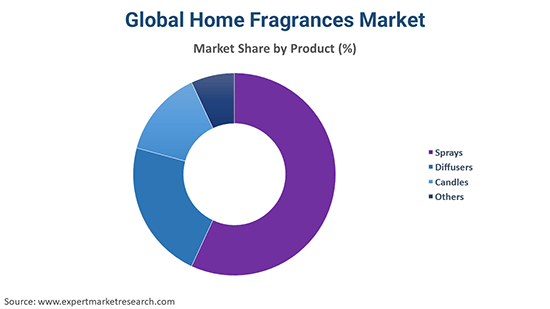
Market Breakup by Product
Key Insight: The home fragrances market comprises several products, which meet varied functional and sensory demands among consumers. Sprays continue to satisfy immediate use cases in crowded areas, but diffusers gain popularity in the market. This category is powered by automation and prolonged release periods. On the other hand, candles are increasingly being used for their luxurious and gifting purposes due to innovative designs. There are other products like gels and sachets that suit certain application areas like limited space availability and portable use.
Market Breakup by Distribution Channel
Key Insight: According to the home fragrances market report, the future of distribution channels lies in balancing scalability with personalized customer experiences. For example, supermarkets and hypermarkets offer mass exposure and repeat sales from their brick-and-mortar store fronts, whereas convenience stores serve as a means for quick impulse buys. In November 2025, Decoy Perfumes partnered with Reliance Smart Bazaar in India, expanding offline presence through shop-in-shop model, enhancing accessibility, visibility, and affordable luxury fragrance reach. Digital media is also disrupting traditional methods of shopping by facilitating personalization, subscription services, and interaction with brand names.
Market Breakup by Region
Key Insight: The regional dynamics reveal the different factors of growth as well as adoption trends in the home fragrances market. Premiumization, sustainability, and strong regulatory compliance are key characteristics of shaping the market in North America and Europe. On the other hand, Asia-Pacific concentrates on growth through urbanization and online retailing. In Latin America, the market witnesses a steady adoption trend as a result of lifestyle changes. Meanwhile, in the Middle East and Africa, luxury hospitality and real estate are becoming key growth driving factors for the regional market.
By product, diffusers account for the dominant share of the market due to programmable scent delivery systems
Diffusers primarily lead the home fragrances market growth, mainly owing to the reliable and durable release of fragrances at homes as well as business settings. Leading firms are designing programmable and intelligent diffusers that are IoT-integrated, enabling effective central control of the scent across various rooms and premises. There is an increasing adoption of HVAC compatible diffuser units to provide an identical scent profile for hospitality chains and top-end offices. Diffusers that use refillable scented cartridges and essential oils have become popular for meeting sustainability requirements. For example, in April 2025, Ripple+ Home launched REED diffuser collection featuring six scents, natural ingredients, sustainable packaging, and long-lasting fragrance enhancing modern home ambiance.
Candles are emerging as the fastest-growing product type within the home fragrances market scope mainly because of their classification as lifestyle and experiential items and not merely as fragrance-generating objects. The top brands in this segment are offering multi-scented candles having long burning hours and wax types like coconut and soy. The gifting industry along with the hospitality sector is generating increased demand for bulk purchase of custom branded candles using unique fragrances and designs. Firms are also developing hybrid candles, including those used for massages with essential oils. For example, in April 2026, Ulla Johnson launched fragrance and candle collection, expanding into home scenting, blending artisanal design, premium ingredients, and lifestyle-focused brand storytelling.
By distribution channel, supermarkets and hypermarkets account for the dominant market share due to high product visibility reach
The supermarkets and hypermarkets continue to be the predominant distribution channels, owing to the wide variety of offerings available in these channels and high customer traffic at such stores. These types of retailing allow brands to offer a wide variety of home fragrance products, including basic spray fragrances as well as diffusers and candles. The trend toward in-store experience through sensory displays and testers is gaining traction in these channels. Bulk procurement agreements with retail stores also provide manufacturers with guaranteed shelf space and sales volumes.
Online channels are witnessing massive growth in the home fragrances market, owing to rising digital penetration. Through the use of e-commerce websites, brands are providing customized fragrance recommendations based on the customer's preferences and order history. The subscription model, especially for refills and exclusive collections, is gaining popularity. Launches of limited editions are another feature which is proving to be popular among urban customers. Digital channels are increasingly being used to introduce niche collections and conduct product trials before large-scale production. Demonstrating this shift, in March 2026, Guerlain launched luxury home fragrance line featuring refillable candles, soaps, customizable scents, enhancing premium home experiences and sustainable lifestyle positioning.
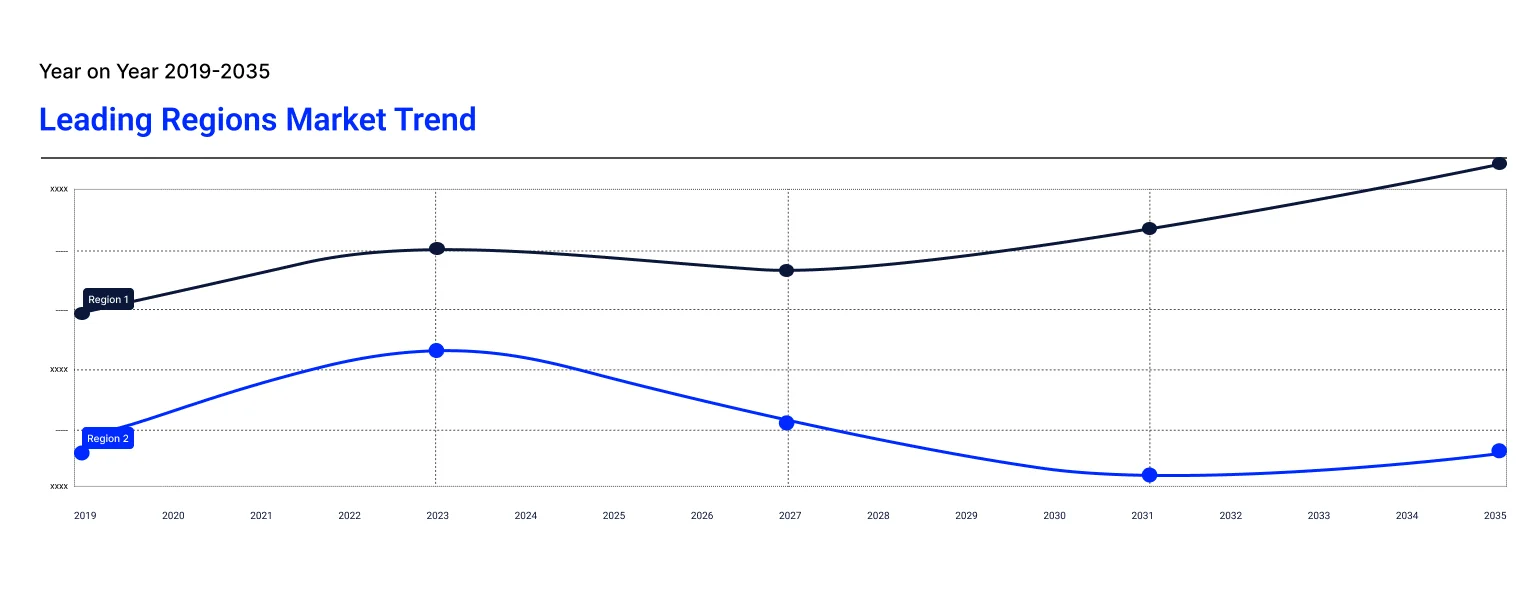
North America registers the leading market position due to high adoption of premium scenting solutions
The North American market largely contributes to the global home fragrances market revenue due to the increasing demand for luxury and technologically advanced perfumed products. Both consumers and companies in the region are showing greater innovation by incorporating advanced solutions such as smart diffusers and wellness-focused fragrances into their homes. Companies are increasingly allocating their resources towards research and development to create formulations that adhere to indoor air quality regulations in the region. In February 2026, Bath & Body Works launched official Amazon United States storefront, expanding accessibility, improving product discovery, and strengthening omnichannel distribution strategy for fragrance consumers.
The Asia Pacific region is experiencing robust growth in the home fragrances market owing to the high level of urbanization and increased disposable incomes. An increasing awareness about the importance of wellness and the aesthetic appeal of homes is prompting individuals to invest in perfuming products for their homes. Fragrances with distinct local scent characteristics are increasingly being developed in order to cater to the various cultures found in nations such as India, China, and Southeast Asia.
The competitive environment in the market is growing with more innovation-led firms increasingly trying to differentiate themselves through technological superiority, environmental friendliness, and custom-made products. Leading home fragrance companies are exploring smart scent dispensing technologies, environmentally sustainable fragrances, and reusable packaging as part of the strategy to comply with regulations and address consumers' concerns. Collaboration with hotel groups, real estate companies, and retail chains is being used to gain access to favorable supply deals and expand a company's presence in the market.
The development of business opportunities such as personalized scents using AI and subscription models helps increase customer loyalty and create additional revenue streams. Home fragrances market players are also improving their supply chain by resorting to local production and contract manufacturing to reduce costs and deliver products faster to the market. Moreover, an increase in private labeling is observed, giving retail chains and corporations an opportunity to provide their customers with unique fragrances.
Established in 1840 and headquartered in Slough, United Kingdom, Reckitt leverages its portfolio of hygiene and air-care brands, including Air Wick and Lysol, to maintain a strong position in the home fragrance category. The company is recognized for its innovations in aerosol and liquid formats, along with a strong focus on sustainability and expansion into emerging markets to capture steady and growing demand.
Formed in 1837 and based in Cincinnati, Ohio, United States, Proctor & Gamble Company provides home fragrance products via its Febreze brand, specializing in odor elimination and sensory enhancement. Its extensive distribution network and research capacity together with brand strategy have allowed it to penetrate the markets at premium and mass consumer levels.
Established in 2001 and based in Texas, United States, Seda France focuses on high-end candles and home fragrances. With artisan skills and superior wax quality and fragrances, the organization focuses on specialty luxury customers in the decoration-focused European and North American markets.
Established in 1886 and based in Racine, Wisconsin, United States, S. C. Johnson & Son, Inc. enjoys an overwhelming global presence with their Glade brand of fragrances that come in sprays, gels, and diffusers. They constantly work to innovate their products, adopt sustainable practices, and distribute worldwide to meet consumer demand for such products.
*Please note that this is only a partial list; the complete list of key players is available in the full report. Additionally, the list of key players can be customized to better suit your needs.*
Other key players in the market include 3M Company, and Newell Brands Inc., among others.
Unlock the latest insights with our home fragrances market trends 2026 report. Discover regional growth patterns, consumer preferences, and key industry players. Stay ahead of competition with trusted data and expert analysis. Download your free sample report today and drive informed decisions in the market.


Upto 15% Off
USD
$3999 $3599
$2499 $2249
$4999 $4249
$5999 $5099


*While we strive to always give you current and accurate information, the numbers depicted on the website are indicative and may differ from the actual numbers in the main report. At Expert Market Research, we aim to bring you the latest insights and trends in the market. Using our analyses and forecasts, stakeholders can understand the market dynamics, navigate challenges, and capitalize on opportunities to make data-driven strategic decisions.*
In 2025, the market reached an approximate value of USD 7.78 Billion.
The market is projected to grow at a CAGR of 5.00% between 2026 and 2035.
Companies are investing in smart fragrance technologies, expanding private label partnerships, optimizing sustainable sourcing, leveraging AI for scent personalization, and strengthening omnichannel distribution strategies to enhance engagement and long-term profitability.
The key trends guiding the growth of the market include the growing popularity of home aromatherapy and availability of product customisation options.
The major regions in the market are North America, Latin America, the Middle East and Africa, Europe, and the Asia Pacific.
Sprays, diffusers, and candles, among others, are the major products in the global home fragrances market.
The significant distribution channels of the product include supermarkets and hypermarkets, convenience stores, and online.
The key players in the market include Reckitt Benckiser Group PLC, Proctor & Gamble Company, Seda France Inc., S. C. Johnson & Son, Inc., 3M Company, and Newell Brands Inc., among others.
Companies face challenges in maintaining fragrance consistency across regions, meeting strict chemical regulations, managing volatile raw material supply chains, and balancing sustainability requirements with cost efficiency and scalable production capabilities.
Explore our key highlights of the report and gain a concise overview of key findings, trends, and actionable insights that will empower your strategic decisions.
| REPORT FEATURES | DETAILS |
| Base Year | 2025 |
| Historical Period | 2019-2025 |
| Forecast Period | 2026-2035 |
| Scope of the Report |
Historical and Forecast Trends, Industry Drivers and Constraints, Historical and Forecast Market Analysis by Segment:
|
| Breakup by Product |
|
| Breakup by Distribution Channel |
|
| Breakup by Region |
|
| Market Dynamics |
|
| Competitive Landscape |
|
| Companies Covered |
|
| Report Price and Purchase Option | Explore our purchase options that are best suited to your resources and industry needs. |
| Delivery Format | Delivered as an attached PDF and Excel through email, with an option of receiving an editable PPT, according to the purchase option. |
Single User License
One User
USD 3,999
USD 3,599
tax inclusive*
Datasheet
One User
USD 2,499
USD 2,249
tax inclusive*
Five User License
Five User
USD 4,999
USD 4,249
tax inclusive*
Corporate License
Unlimited Users
USD 5,999
USD 5,099
tax inclusive*
*Please note that the prices mentioned below are starting prices for each bundle type. Kindly contact our team for further details.*
Flash Bundle
Small Business Bundle
Growth Bundle
Enterprise Bundle
*Please note that the prices mentioned below are starting prices for each bundle type. Kindly contact our team for further details.*
Flash Bundle
Number of Reports: 3
20%
tax inclusive*
Small Business Bundle
Number of Reports: 5
25%
tax inclusive*
Growth Bundle
Number of Reports: 8
30%
tax inclusive*
Enterprise Bundle
Number of Reports: 10
35%
tax inclusive*
How To Order

Select License Type
Choose the right license for your needs and access rights.

Click on ‘Buy Now’
Add the report to your cart with one click and proceed to register.

Select Mode of Payment
Choose a payment option for a secure checkout. You will be redirected accordingly.
Strategic Solutions for Informed Decision-Making
Gain insights to stay ahead and seize opportunities.

Get insights & trends for a competitive edge.

Track prices with detailed trend reports.

Analyse trade data for supply chain insights.

Leverage cost reports for smart savings

Enhance supply chain with partnerships.

Connect For More Information
Our expert team of analysts will offer full support and resolve any queries regarding the report, before and after the purchase.
Our expert team of analysts will offer full support and resolve any queries regarding the report, before and after the purchase.
We employ meticulous research methods, blending advanced analytics and expert insights to deliver accurate, actionable industry intelligence, staying ahead of competitors.
Our skilled analysts offer unparalleled competitive advantage with detailed insights on current and emerging markets, ensuring your strategic edge.
We offer an in-depth yet simplified presentation of industry insights and analysis to meet your specific requirements effectively.




