

Consumer Insights
Uncover trends and behaviors shaping consumer choices today
Procurement Insights
Optimize your sourcing strategy with key market data
Industry Stats
Stay ahead with the latest trends and market analysis.
The India Clean Beauty Market reached a value of INR 7786.49 Crores at 2025 and is projected to expand at a CAGR of around 15.70% during the forecast period of 2026-2035. With ingredient transparency, sustainable packaging, premiumisation of skincare, and the rapid scale-up of digital-first D2C brands, the market is expected to reach INR 33471.51 Crores.
Compound Annual Growth Rate
15.7%
Value in INR Crores
2026-2035
|
India Clean Beauty Market Report Summary |
Description |
Value |
|
Base Year |
INR Crores |
2025 |
|
Historical Period |
INR Crores |
2019-2025 |
|
Forecast Period |
INR Crores |
2026-2035 |
|
Market Size 2025 |
INR Crores |
7786.49 |
|
Market Size 2035 |
INR Crores |
33471.51 |
|
CAGR 2019-2025 |
Percentage |
XX% |
|
CAGR 2026-2035 |
Percentage |
15.70% |
|
CAGR 2026-2035 - Market by Region |
South India |
17.3% |
|
CAGR 2026-2035 - Market by Region |
West India |
16.6% |
|
CAGR 2026-2035 - Market by Product |
Colour Cosmetics |
16.4% |
|
CAGR 2026-2035 - Market by End-User |
Female |
16.8% |
|
2025 Market Share by Region |
North India |
27.3% |
India's clean beauty market is being reshaped by ingredient-conscious consumers, sharper regulatory scrutiny, large-scale acquisitions of homegrown brands, and the migration of premium global names through omnichannel beauty retailers. Together, these forces are pushing transparency, efficacy, and sustainability into the mainstream of skincare, haircare, and colour cosmetics.
The Estée Lauder Companies announced in early 2026 that it will acquire the remaining stakes in Indian Ayurvedic luxury beauty brand Forest Essentials, expanding its existing 49% holding (raised from a 2008 minor stake) to full ownership, with completion expected by mid-2026 pending regulatory approvals. Forest Essentials clocked revenue of around INR 585 crore in the financial year ending March 2025, recording 18% year-on-year growth, and operates roughly 200 stores across India and select international markets including the UK, UAE, Kuwait, Qatar, and Bahrain.
L'Oréal launched its dermo-cosmetics brand La Roche-Posay in India in November 2025 via an exclusive distribution partnership with Nykaa, building on a two-year collaboration that previously brought CeraVe to the country. The brand is being rolled out online and across selected Nykaa Luxe stores. CEO Nicolas Hieronimus has stated that L'Oréal plans to more than double its India business, with around 95% of products sold locally already manufactured in-country. The launch supports rising consumer demand for clinically validated, allergy-tested, minimal-ingredient skincare.
Garnier Men, under L'Oréal India, introduced its AcnoFight Gentle Cleanser in October 2025, targeting acne-prone male skin with a gentle, plant-extract-based formulation, and signed Indian T20 cricketer Abhishek Sharma as brand ambassador. The launch reflects how mass-market players are reformulating men's skincare with cleaner, gentler actives rather than repackaging unisex products. It represents a meaningful step in expanding clean beauty propositions into the male grooming category, where natural and herbal positioning is increasingly central to product innovation in India.
Miranda Kerr's certified organic skincare brand KORA Organics re-launched in India on 30 April 2025 through a partnership with Beautindia, with exclusive distribution across the Nykaa platform. The relaunch portfolio includes the Turmeric Glow Foaming Cleanser, Noni Glow Face Oil, and Active Algae Calming Cleansing Balm, all formulated with certified organic botanicals and superfoods. The move underscores how international clean beauty brands are leaning on India's largest beauty omnichannel retailer to access a fast-premiumising consumer base seeking toxin-free, results-led skincare.
Hindustan Unilever Limited signed a definitive agreement on 22 January 2025 to acquire a 90.5% stake in Jaipur-based actives-led skincare brand Minimalist for approximately INR 2,955 crore, with a path to acquire the remaining stake within two years. Founded in 2020, Minimalist had crossed an annual revenue run rate of around INR 500 crore on the back of its science-backed, ingredient-transparent positioning. The deal anchors HUL's premium beauty and wellbeing portfolio in the high-growth masstige clean skincare segment, strengthening its competitive position against digital-first challengers.
Legacy FMCG players are buying out India's fastest-growing clean beauty challengers to plug into ingredient-led, masstige skincare. In January 2025, Hindustan Unilever announced the acquisition of a 90.5% stake in Minimalist for around INR 2,955 crore, fast-tracking the conglomerate's entry into actives-led, transparent formulations. The deal sits at the heart of India clean beauty market growth, indicating that incumbents now treat clean, science-backed brands as core portfolio pillars rather than niche bets, accelerating competition, premiumisation, and capital inflow into the segment.
International certified-organic and clean labels are re-entering India through partnerships with Nykaa, betting on its omnichannel scale and curated premium discovery. KORA Organics' April 2025 relaunch with Beautindia for exclusive Nykaa distribution exemplifies this playbook, packaging US FDA certified organic skincare for premium Indian consumers. The trend reflects how global brands are leveraging local distribution expertise rather than direct entry, shortening go-to-market timelines, and validating India's standing as a strategic clean beauty growth market within Asia Pacific.
India is reinforcing the regulatory backbone of clean beauty. On 21 August 2025, the Bureau of Indian Standards announced significant revisions to IS 4707 (Part 2): 2017, with the new IS 4707 (Part 2): 2025 (Fifth Revision) and a companion IS 4707 (Part 3): 2025 on permitted preservatives publicly released on 3 September 2025. The updated lists tighten the use of restricted substances and preservatives in cosmetics, pushing brands towards reformulation, cleaner ingredient panels, and higher-quality safety documentation, structurally favouring established clean beauty players.
Clean beauty is expanding decisively into male grooming, with brands launching dedicated, gentler formulations rather than repurposing unisex stock-keeping units. In October 2025, Garnier Men, under L'Oréal India, rolled out its AcnoFight Gentle Cleanser for acne-prone male skin, fronted by cricketer Abhishek Sharma. The launch illustrates how growing consumer interest in natural, herbal, and dermatologically tested products is reshaping mass and masstige men's grooming, and creating a lasting demand pull from a segment historically underserved by the clean beauty narrative.
The EMR’s report titled “India Clean Beauty Market Report and Forecast 2026-2035” offers a detailed analysis of the market based on the following segments:
Market Breakup by Product
Key Insight: Skin care anchors the India clean beauty market, supported by structurally rising demand for paraben-free moisturisers, sunscreens, serums, and cleansers across both face and body sub-segments. Hair care is benefitting from the consumer shift away from sulphates, silicones, and synthetic fragrances, with brands such as Plum, Mamaearth, and Forest Essentials anchoring the natural haircare push. Colour cosmetics, however, is the fastest-growing sub-segment, projected to grow at a CAGR of 16.4% through 2026–2035, propelled by mineral pigments, plant-based emulsifiers, and entries by 100% vegan international labels such as e.l.f. Cosmetics and homegrown organic-makeup pioneer Ruby's Organics. New product launches are increasingly tied to certifications such as PETA, ECOCERT/COSMOS, and Made Safe.
Market Breakup by Price Range
Key Insight: The masstige segment is emerging as the centre of gravity for clean beauty in India. Brands such as Minimalist (acquired by HUL in January 2025), Plum, The Derma Co., and Dot & Key sit between mass and luxury, offering active-led, ingredient-transparent skincare priced for upper-middle-class urban consumers. The premium/luxury sub-segment, fuelled by Forest Essentials (now being fully acquired by The Estée Lauder Companies in 2026), KORA Organics, and global dermocosmetic brands like CeraVe and La Roche-Posay, is the fastest-premiumising tier and a structural beneficiary of rising disposable incomes. The mass segment continues to scale through accessible Ayurvedic and herbal product lines distributed via general trade, supermarkets, and online platforms.
Market Breakup by End-User
Key Insight: The female end-user category dominates the India clean beauty market and is projected to register a CAGR of around 16.8% over the forecast period, supported by Gen Z and millennial women prioritising clean, vegan, and cruelty-free formats across skincare, haircare, and colour cosmetics. The male sub-segment, while smaller in absolute size, is growing rapidly as men adopt routine skincare and clean haircare; recent launches such as Garnier Men's AcnoFight Gentle Cleanser (October 2025) and Plum's Phy sub-brand reflect dedicated formulation work for male skin types. Distribution platforms such as Nykaa Man and dedicated D2C men's grooming brands are also expanding the addressable male clean beauty consumer base.
Market Breakup by Distribution Channel
Key Insight: Clean beauty products in India are distributed across hypermarkets and supermarkets, specialty stores, online platforms, and other channels, each adapting to evolving consumer preferences. Hypermarkets and supermarkets provide wide visibility and convenience, specialty stores offer curated experiences and brand exclusivity, and online channels deliver accessibility and indie brand reach. For example, in July 2025, Korean skincare brand Anua launched in India via an exclusive partnership with Nykaa that covered both its website and app and over 230 physical stores. These multichannel efforts enable clean beauty brands to scale across consumer segments and fulfil diverse shopping behaviours, thereby fueling the India clean beauty market growth.
Market Breakup by Region
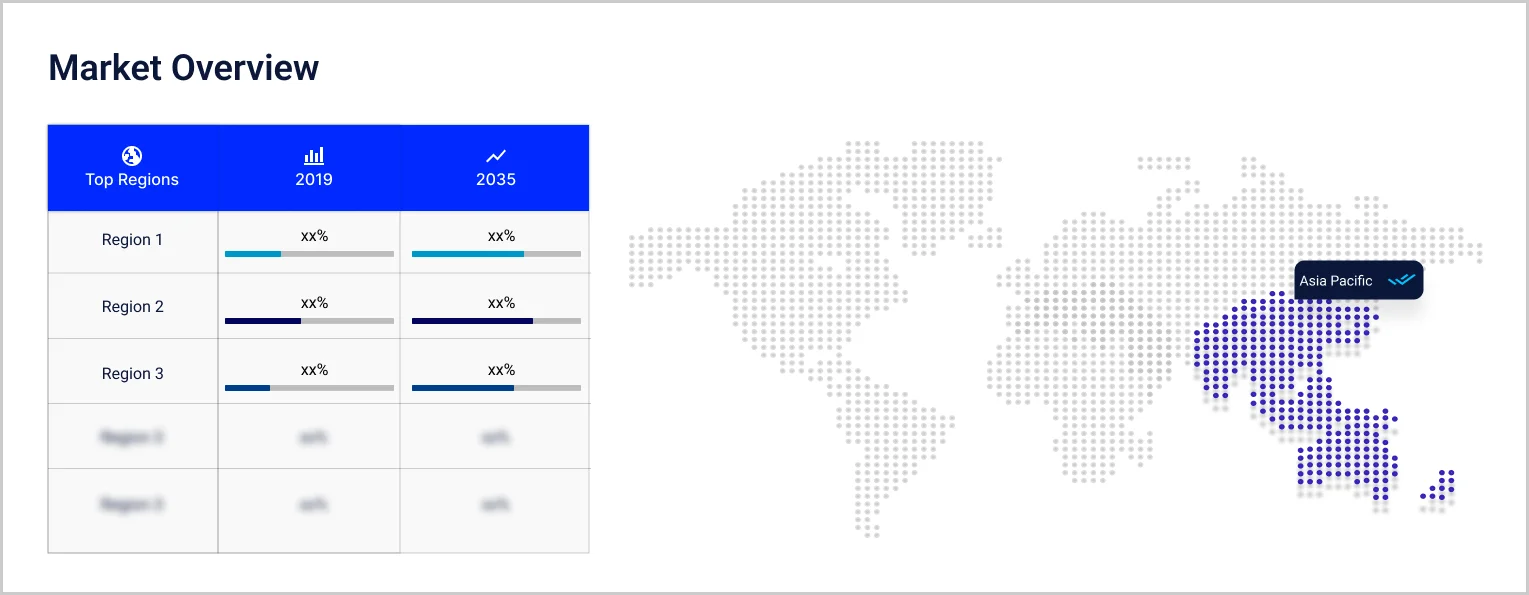
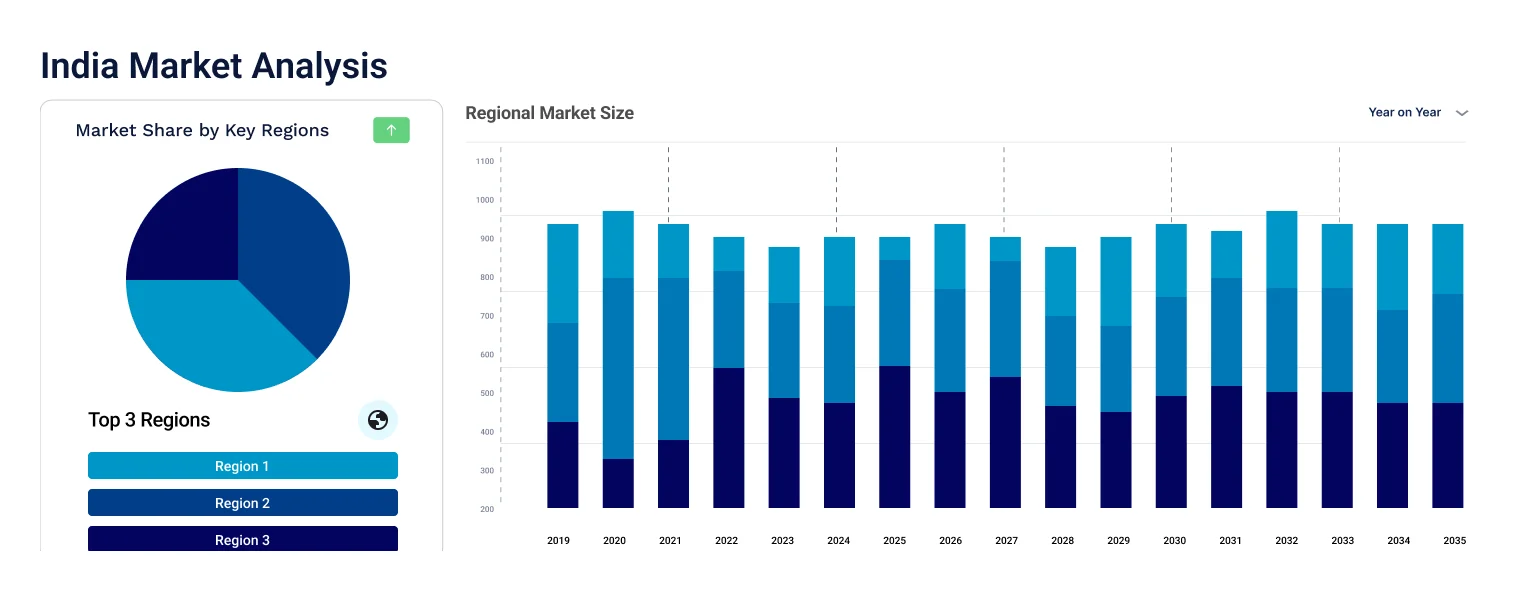
Key Insight: South India leads the India clean beauty market and is projected to grow at a CAGR of approximately 17.3% during 2026–2035, supported by Bengaluru, Chennai, and Hyderabad's metropolitan, technology-driven consumer base, high female workforce participation, and early adoption of premium dermocosmetics. West India, anchored by Mumbai and Pune, is the second-largest cluster, hosting the headquarters of brands including Plum (Mumbai-based Pureplay Skin Sciences), Ruby's Organics (Mumbai), and Honasa Consumer's Mumbai operations. North India, led by Delhi-NCR, benefits from luxury beauty footprint expansion (Forest Essentials, Chanel boutiques), while East India is in an emerging-growth phase with rising digital penetration in tier-2 cities such as Kolkata and Bhubaneswar.
The India clean beauty market, valued at INR 7,786.49 Crores in 2025, is segmented predominantly across product, price range, and end-user, with a clear concentration of share around skincare, masstige price tiers, and the female consumer. Skin care holds the largest share within the product segmentation, supported by the high frequency of usage of cleansers, moisturisers, sunscreens, and serums across daily routines. Indian consumers are increasingly scrutinising ingredient lists, seeking products free from parabens, sulphates, phthalates, and harmful chemicals, while preferring brands that adopt eco-conscious packaging practices. Recent industry validation includes the BIS revisions to IS 4707 (released September 2025), which tightened the restricted-ingredient list and structurally favours skin care brands with cleaner formulations and stronger safety dossiers.
Within end-user segmentation, the female category is the dominant share-holder and the fastest-growing. The combination of Gen Z and millennial women's preference for clean, vegan, and cruelty-free routines, the rapid expansion of women-led D2C labels (Plum, Ruby's Organics, Asa Beauty), and offline-omnichannel retail expansion through Nykaa, Tira, and Shoppers Stop has anchored female-led demand. Honasa Consumer's Mamaearth, the country's first Made Safe-certified D2C clean beauty house, crossed INR 1,500 crore in revenue in 2024, and its 2025 strategy of scaling The Derma Co., Aqualogica, and Lumineve to over 150,000 retail outlets reflects how deeply female consumers anchor the segment's mainstream growth narrative.
|
CAGR 2026-2035 - Market by |
Region |
|
South India |
17.3% |
|
West India |
16.6% |
|
East India |
XX% |
|
North India |
XX% |
South India dominates the India clean beauty market, supported by Bengaluru, Chennai, and Hyderabad's affluent, digitally engaged consumer base, dense IT-services workforce, and rapidly expanding modern-trade and Nykaa Luxe retail footprint. The region recorded the highest growth among the four zones in 2024 and is projected to expand at a CAGR of approximately 17.3% during 2026-2035. Premium beauty discovery is anchored by Forest Essentials' large flagship presence, Estée Lauder Companies' deepening commitment (the planned full acquisition of Forest Essentials announced in early 2026), L'Oréal's CeraVe and La Roche-Posay distribution via Nykaa, and the recent re-entry of KORA Organics in April 2025. Demand is reinforced by high female labour-force participation, the dermocosmetics boom, and increasing consumer scrutiny of ingredient labels for paraben-, sulphate-, and silicone-free claims.
West India ranks among the fastest-scaling clean beauty zones, anchored by Mumbai, Pune, Ahmedabad, and Surat. The region hosts the headquarters of Pureplay Skin Sciences (Plum, Phy, BodyLovin') in Mumbai, Ruby's Organics in Mumbai, and the operational base of multiple D2C and contract-manufacturing players. Hindustan Unilever's January 2025 acquisition of Minimalist (Jaipur, with significant Mumbai distribution) reinforced West India as a strategic operations corridor for the clean beauty supply chain. Premium and luxury demand is led by Mumbai's high-income urban consumers, with Reliance Retail's Tira and Shoppers Stop expanding clean beauty assortments through 15–20 new beauty stores annually over the next three years. The region also leads in vernacular-content marketing, refill-pack adoption, and the integration of Ayurvedic-clean brand positioning.
The India clean beauty market is moderately consolidated at the top tier and increasingly fragmented at the masstige and emerging-brand level, with competitive intensity concentrated around ingredient transparency, certifications (PETA, ECOCERT, Made Safe, COSMOS), and digitally native consumer experiences. Global majors such as L'Oréal, Unilever, and The Estée Lauder Companies are doubling down on India through acquisitions (Minimalist, Forest Essentials), portfolio additions (CeraVe, La Roche-Posay), and local manufacturing investments.
The competitive set is shaped by four parallel cohorts: digital-first homegrown D2C brands, prestige Ayurvedic-luxury players, global vegan/clean beauty labels entering via Nykaa and Tira, and contract-manufacturing platforms supporting private-label clean beauty SKUs. Key competitive priorities include category extension into colour cosmetics, premiumisation through actives-led skincare, expansion into male grooming, and the build-out of refillable, recyclable, and biodegradable packaging systems.
Founded in 2011 and headquartered in Los Angeles, California, USA, The Honest Company, Inc. is a publicly listed (NASDAQ: HNST) clean lifestyle company specialising in safer baby care, beauty, personal care, and household essentials. Its product portfolio spans skincare, body care, and beauty SKUs formulated against a strict "No List" of restricted ingredients. The company's strengths include third-party certifications, a multi-channel retail presence, and rigorous ingredient transparency.
Founded in 1909 and headquartered in Clichy, France, L'Oréal S.A. is the world's largest beauty company, generating EUR 43.48 billion in sales in 2024 across 37 international brands. Active in India since 1994, L'Oréal India operates 26 brands, two manufacturing plants in Chakan and Baddi, and R&I centres in Mumbai and Bengaluru. The group has launched La Roche-Posay (November 2025) and CeraVe in India, and plans to more than double its India business, with 95% of products sold locally manufactured in-country.
Founded in 2004 and headquartered in Oakland, California, USA, e.l.f. Cosmetics, Inc. is a publicly listed (NYSE: ELF) prestige-inspired beauty company offering 100% vegan and cruelty-free colour cosmetics and skincare. The brand entered India in January 2021 via an exclusive partnership with Nykaa, distributing through Nykaa.com and select Nykaa stores. Its strengths include accessibly priced, prestige-quality formulations, strong Gen Z social-media equity, and a fast product-innovation cadence.
Founded in 2009 by celebrity makeup artist Rose-Marie Swift and headquartered in New York, USA, RMS Beauty is a pioneering clean colour cosmetics company specialising in raw, food-grade, organic-ingredient makeup. Its portfolio spans complexion, lip, eye, and cheek products built on minimally processed botanicals. The brand's strengths include strict ingredient sourcing, third-party certifications, and a strong following among clean-beauty professionals; it is sold internationally via prestige retailers and select Indian e-commerce platforms.
Other key players in the market are Clean Beauty Pvt. Ltd., asa Beauty Private Limited, Ruby's Organics, Forest Essentials, Purearth Wellness Private Limited, and Others.
*Please note that this is only a partial list; the complete list of key players is available in the full report. Additionally, the list of key players can be customized to better suit your needs.*
Discover the latest insights on the India Clean Beauty Market 2026 with our comprehensive report. Stay ahead of the curve with valuable data on product innovations, ingredient trends, evolving consumer preferences, and the fastest-growing regional markets across India. Whether you are launching a new clean beauty SKU, expanding distribution into tier-2 cities, or planning a strategic acquisition, this report provides the clarity needed to act with confidence. Download your free sample now and uncover the key opportunities shaping India's thriving Clean Beauty industry.


Upto 15% Off
USD
$2499 $2249
$3999 $3599
$4999 $4249
$5999 $5099


*While we strive to always give you current and accurate information, the numbers depicted on the website are indicative and may differ from the actual numbers in the main report. At Expert Market Research, we aim to bring you the latest insights and trends in the market. Using our analyses and forecasts, stakeholders can understand the market dynamics, navigate challenges, and capitalize on opportunities to make data-driven strategic decisions.*
In 2025, the India clean beauty market reached an approximate value of INR 7786.49 Crores.
The market is projected to grow at a CAGR of 15.70% between 2026 and 2035.
The key players in the market include The Honest Company, Inc., L'Oréal S.A., e.l.f. Cosmetics, Inc., RMS Beauty, Clean Beauty Pvt. Ltd., Asa Beauty Private Limited, Ruby’s Organics, Forest Essentials, Purearth Wellness Private Limited, and others.
Growth is driven by rising consumer awareness of ingredient safety and ecological impact, the rapid scale-up of digital-first and D2C clean brands, large-scale acquisitions by FMCG majors (such as HUL's purchase of Minimalist and Estée Lauder's planned full acquisition of Forest Essentials), the entry and re-entry of certified-organic global labels via Nykaa and Tira, tighter regulatory standards including the BIS IS 4707 (Part 2): 2025 revision, premiumisation of skincare among urban Gen Z and millennial consumers, growing male grooming demand for clean formulations, and the wider adoption of recyclable, refillable, and biodegradable packaging.
South India accounts for the biggest share of the India clean beauty market and is set to expand at a CAGR of 17.3% throughout 2035.
The India clean beauty market by product is segmented into Skin Care (further split into Face Care and Body Care), Hair Care, and Colour Cosmetics. Skin care anchors the market by value, while colour cosmetics is the fastest-growing sub-segment, projected to expand at a CAGR of around 16.4% over the forecast period.
Key trends include large-scale FMCG acquisitions of digital-first clean brands (HUL–Minimalist, Estée Lauder–Forest Essentials); the re-entry of global certified-organic brands through Nykaa partnerships (KORA Organics in April 2025); tighter ingredient regulation under the BIS IS 4707 (Part 2): 2025 revisions; the expansion of clean beauty into male grooming with launches such as Garnier Men's AcnoFight Gentle Cleanser in October 2025; and rapid premiumisation of dermocosmetics led by L'Oréal's CeraVe and La Roche-Posay launches.
Explore our key highlights of the report and gain a concise overview of key findings, trends, and actionable insights that will empower your strategic decisions.
| REPORT FEATURES | DETAILS |
| Base Year | 2025 |
| Historical Period | 2019-2025 |
| Forecast Period | 2026-2035 |
| Scope of the Report |
Historical and Forecast Trends, Industry Drivers and Constraints, Historical and Forecast Market Analysis by Segment:
|
| Breakup by Product |
|
| Breakup by Price Range |
|
| Breakup by End-User |
|
| Breakup by Distribution Channel |
|
| Breakup by Region |
|
| Market Dynamics |
|
| Competitive Landscape |
|
| Companies Covered |
|
Datasheet
One User
USD 2,499
USD 2,249
tax inclusive*
Single User License
One User
USD 3,999
USD 3,599
tax inclusive*
Five User License
Five User
USD 4,999
USD 4,249
tax inclusive*
Corporate License
Unlimited Users
USD 5,999
USD 5,099
tax inclusive*
*Please note that the prices mentioned below are starting prices for each bundle type. Kindly contact our team for further details.*
Flash Bundle
Small Business Bundle
Growth Bundle
Enterprise Bundle
*Please note that the prices mentioned below are starting prices for each bundle type. Kindly contact our team for further details.*
Flash Bundle
Number of Reports: 3
20%
tax inclusive*
Small Business Bundle
Number of Reports: 5
25%
tax inclusive*
Growth Bundle
Number of Reports: 8
30%
tax inclusive*
Enterprise Bundle
Number of Reports: 10
35%
tax inclusive*
How To Order

Select License Type
Choose the right license for your needs and access rights.

Click on ‘Buy Now’
Add the report to your cart with one click and proceed to register.

Select Mode of Payment
Choose a payment option for a secure checkout. You will be redirected accordingly.
Strategic Solutions for Informed Decision-Making
Gain insights to stay ahead and seize opportunities.

Get insights & trends for a competitive edge.

Track prices with detailed trend reports.

Analyse trade data for supply chain insights.

Leverage cost reports for smart savings

Enhance supply chain with partnerships.

Connect For More Information
Our expert team of analysts will offer full support and resolve any queries regarding the report, before and after the purchase.
Our expert team of analysts will offer full support and resolve any queries regarding the report, before and after the purchase.
We employ meticulous research methods, blending advanced analytics and expert insights to deliver accurate, actionable industry intelligence, staying ahead of competitors.
Our skilled analysts offer unparalleled competitive advantage with detailed insights on current and emerging markets, ensuring your strategic edge.
We offer an in-depth yet simplified presentation of industry insights and analysis to meet your specific requirements effectively.




