

Consumer Insights
Uncover trends and behaviors shaping consumer choices today
Procurement Insights
Optimize your sourcing strategy with key market data
Industry Stats
Stay ahead with the latest trends and market analysis.
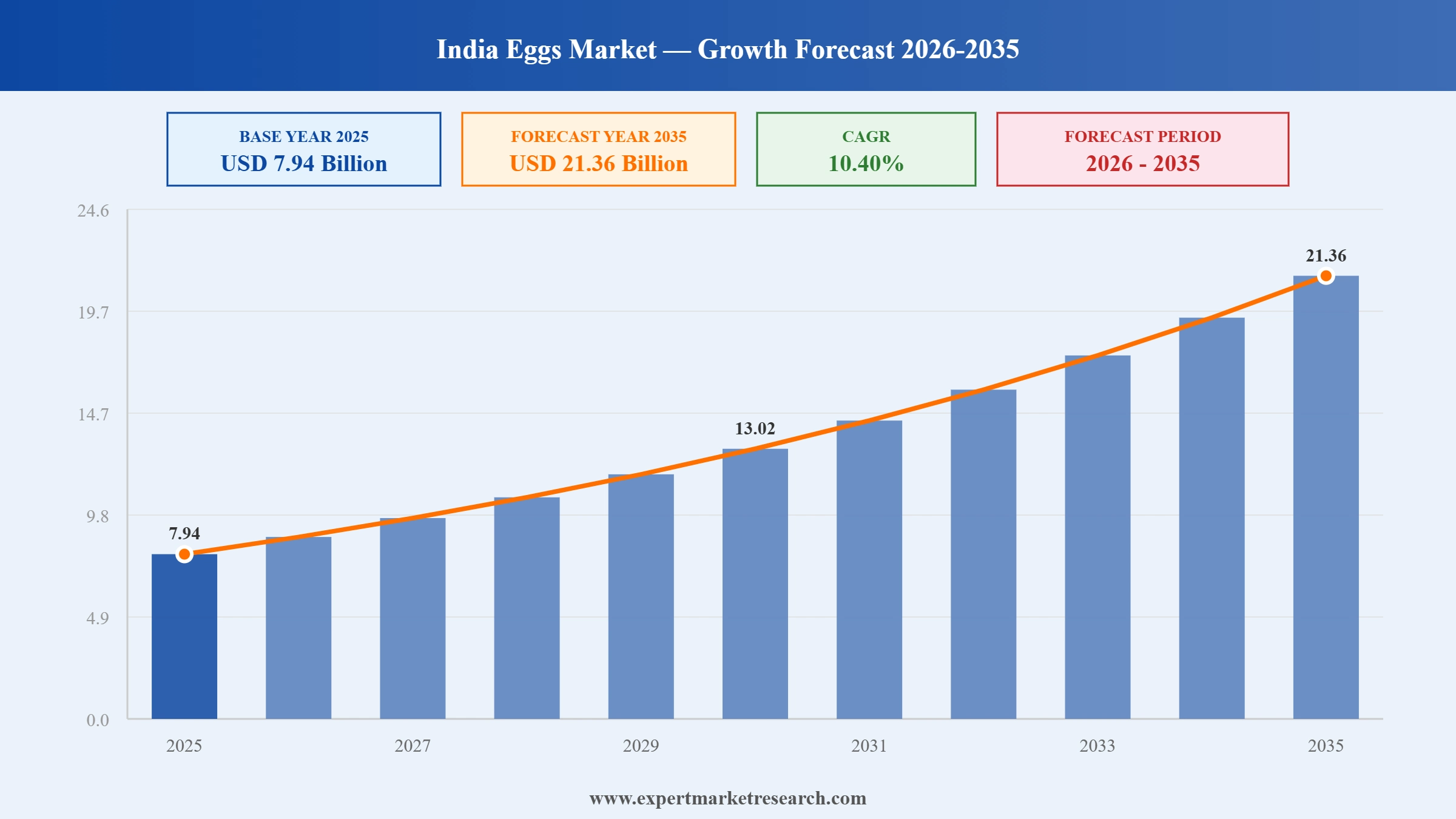
The India Eggs Market reached a value of USD 7.94 Billion at 2025 and is projected to expand at a CAGR of around 10.40% during the forecast period of 2026-2035. With rising health and protein consumption awareness driving demand for eggs as an affordable nutrition source, government nutrition programs boosting institutional procurement, growing urban preference for branded and specialty egg varieties, and expanding cold chain and online delivery infrastructure widening market reach, the market is expected to reach USD 21.36 Billion by 2035.
Read more about this report - REQUEST FREE SAMPLE COPY IN PDF
|
India Eggs Market Report Summary |
Description |
Value |
|
Base Year |
USD Billion |
2025 |
|
Historical Period |
USD Billion |
2019-2025 |
|
Forecast Period |
USD Billion |
2026-2035 |
|
Market Size 2025 |
USD Billion |
7.94 |
|
Market Size 2035 |
USD Billion |
21.36 |
|
CAGR 2019-2025 |
Percentage |
XX% |
|
CAGR 2026-2035 |
Percentage |
10.40% |
|
CAGR 2026-2035 - Market by Region |
South India |
11.4% |
|
CAGR 2026-2035 - Market by Region |
East India |
11.0% |
|
CAGR 2026-2035 - Market by End Use |
Food Service |
10.8% |
|
CAGR 2026-2035 - Market by Distribution Channel |
Online |
14.7% |
|
2025 Market Share by Region |
West India |
27.4% |
The India eggs market is evolving through rising health protein awareness, growing urban preference for branded and specialty egg formats, government nutrition programs scaling institutional demand, cage-free and organic product transitions driven by corporate commitments, and expanding e-commerce and cold chain infrastructure reshaping how eggs reach consumers.
The Allana Group, a globally recognized agri-commodities conglomerate, announced the formation of the Indian Poultry Alliance at the Poultry India 2024 exhibition in December 2024. Backed by an initial investment of USD 120 million, the alliance targets fully integrated poultry operations encompassing breeder farms, hatcheries, feed manufacturing plants, broiler contract farming, value-added processing, and rendering plants. The initiative signals a major private-sector commitment to professionalizing India's poultry and egg production value chain and strengthening institutional supply capabilities.
In 2024, several FMCG brands introduced fortified egg products targeting young professionals in India's major urban markets, including Bengaluru, Mumbai, and Hyderabad. These products, which include omega-3-enriched, vitamin D-fortified, and high-protein egg variants, are positioned at a premium over conventional eggs and are distributed through modern retail and e-commerce platforms. The launches reflect a broader industry shift toward value-added egg products that align with rising health consciousness and the growing sports nutrition and wellness segment among India's urban working population.
OVO Farm, the largest egg-producing company in East India, implemented blockchain technology across its flagship Kenko brand in 2024, enabling consumers to scan a QR code on each egg product to trace its full journey from farm to retail shelf. The initiative enhances supply chain transparency and consumer trust in the premium egg segment, addressing growing demand from health-conscious urban buyers who want verifiable information about sourcing, farming conditions, and product safety. The move positions OVO Farm as a technology-forward player in India's evolving branded egg market.
Global Food Partners (GFP), a Singapore-based consulting and advisory firm, entered into a formal partnership with India's Cage-free and Free-range Poultry Producers Association (CFFRPPA) to support Indian egg farmers in transitioning to cage-free production systems. The collaboration was initiated to help Indian producers meet growing sourcing requirements from multinational companies including Unilever, Nestle, and Marriott International, which have committed to using only cage-free eggs in their supply chains. The partnership builds long-term capacity in India's cage-free segment and positions domestic producers to supply global institutional buyers.
Venkateshwara Hatcheries, one of India's largest integrated poultry companies, announced a Rs 250 crore investment in early 2024 to establish new poultry farms across North India. The expansion targets a 15% increase in the company's market share in the region within two years, capitalizing on the growing consumer base and rising per capita egg consumption in cities including Delhi-NCR, Lucknow, and Chandigarh. The investment also strengthens the company's position in servicing both retail and institutional foodservice channels in the northern market.
Eggs have become a cornerstone of India's health and nutrition conversation, positioned as one of the most affordable complete protein sources available to a population of over 1.4 billion. Rising health literacy, particularly among urban millennials and working professionals, is fuelling consumption not just at breakfast but also in sports diets, meal prep culture, and ready-to-eat formats. The India eggs market growth is being further reinforced by government school meal programs like PM-POSHAN, which serve 5 to 6 eggs weekly per student in states including Tamil Nadu and Odisha. In 2024, FMCG brands launched fortified egg products in Bengaluru, Mumbai, and Hyderabad, targeting wellness-oriented consumers willing to pay a premium for nutritionally enhanced formats.
India's egg retail landscape is shifting from unbranded loose sales to packaged, hygienically presented products that carry quality credentials and traceability features. Over 40% of urban Indian consumers now prefer branded eggs, creating space for premium packaged offerings with QR codes, nutritional labelling, and farm-of-origin details. Companies including Eggoz and OVO Farm have capitalized on this trend through UV-cleaned egg packaging and blockchain-based Kenko brand traceability. This premiumization trend is reshaping distribution priorities, with branded eggs gaining shelf prominence in supermarkets and commanding premium price points that lift overall market value beyond volume growth.
The cage-free movement in Indian egg production is accelerating, driven by corporate procurement commitments from Unilever, Nestle, Marriott, and other multinationals operating in India. The Global Food Partners and CFFRPPA partnership in 2024 is building the production and certification capabilities needed to supply these buyers at scale. Simultaneously, consumer-facing organic and free-range egg brands including Happy Hens Farm are expanding their retail presence in metro markets through premium supermarkets and online grocery platforms. Specialty and fortified egg formats are forecast to grow at more than 15% annually, commanding significant price premiums over conventional varieties.
The expansion of online grocery platforms and quick-commerce delivery networks in India is transforming how eggs reach consumers in urban and semi-urban markets. The online distribution channel is the fastest-growing in the India eggs market, projected at a CAGR of 14.7% through 2035, enabling branded egg companies to reach consumers in apartment complexes and gated communities that may not have proximity retail access. Investments in cold chain storage and temperature-controlled logistics are also reducing spoilage, which the Central Poultry Development Organization previously estimated caused losses of up to 15% of egg production. In 2024, OVO Farm's blockchain traceability initiative under the Kenko brand further demonstrated how technology and logistics investment are converging to enhance egg market quality and consumer confidence.
The Expert Market Research's report titled "India Eggs Market Report and Forecast 2026 to 2035" offers a detailed analysis of the market based on the following segments:
Market Breakup by Type
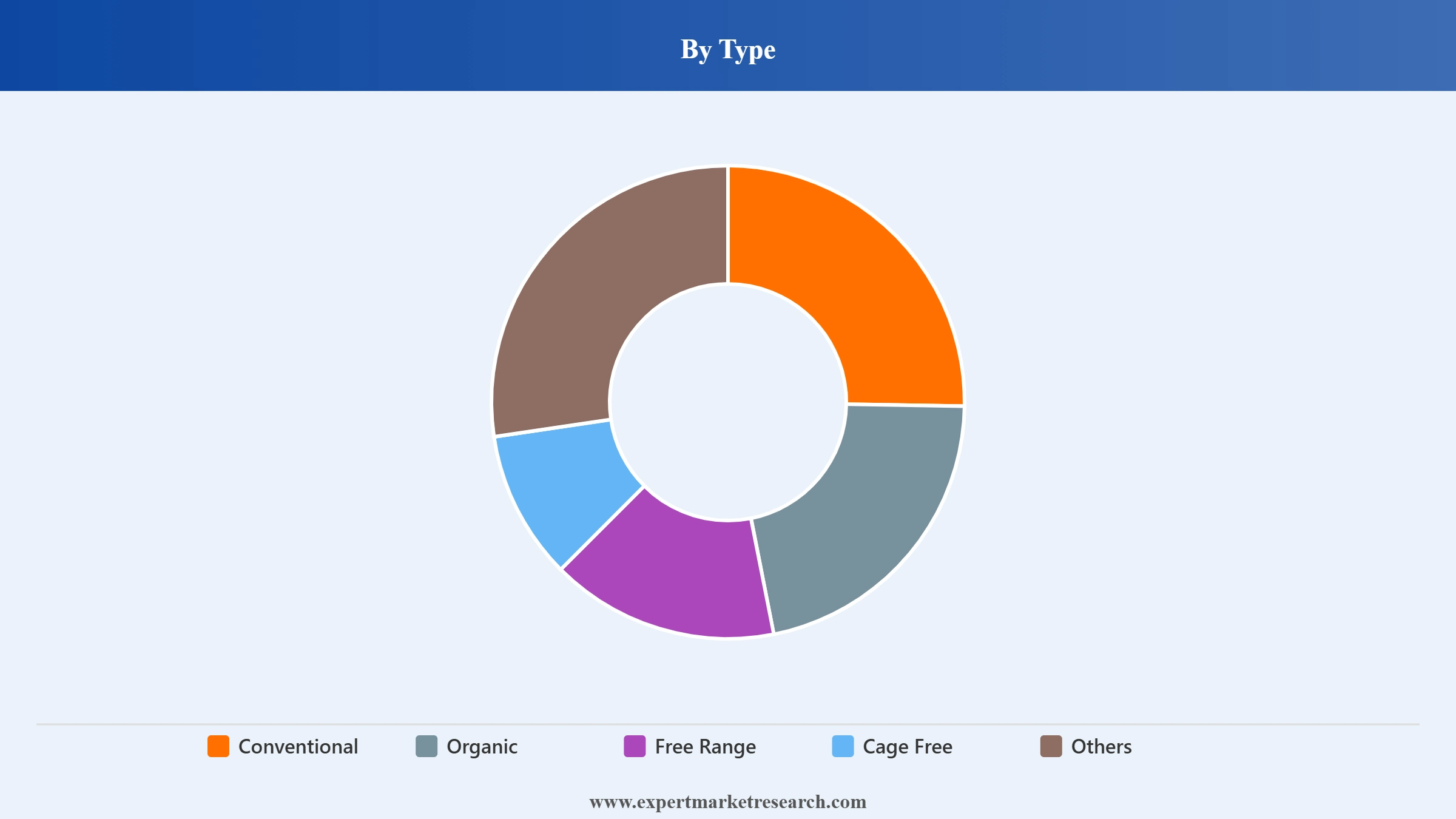
Key Insight: Conventional eggs dominate the India eggs market by type, reflecting their price accessibility, wide availability through traditional retail and modern trade channels, and strong familiarity across both urban and rural consumer segments. Large-scale commercial layer farms in Andhra Pradesh, Telangana, Tamil Nadu, and Haryana produce the bulk of conventional supply at competitive costs. Organic, free-range, and cage-free eggs represent the fastest-growing specialty segments, driven by rising consumer awareness of animal welfare, hormone-free nutrition, and the expanding pool of urban consumers willing to pay a premium for ethically sourced food. Happy Hens Farm and Organic India are among the brands actively scaling premium specialty egg distribution in metro markets.
Market Breakup by End Use
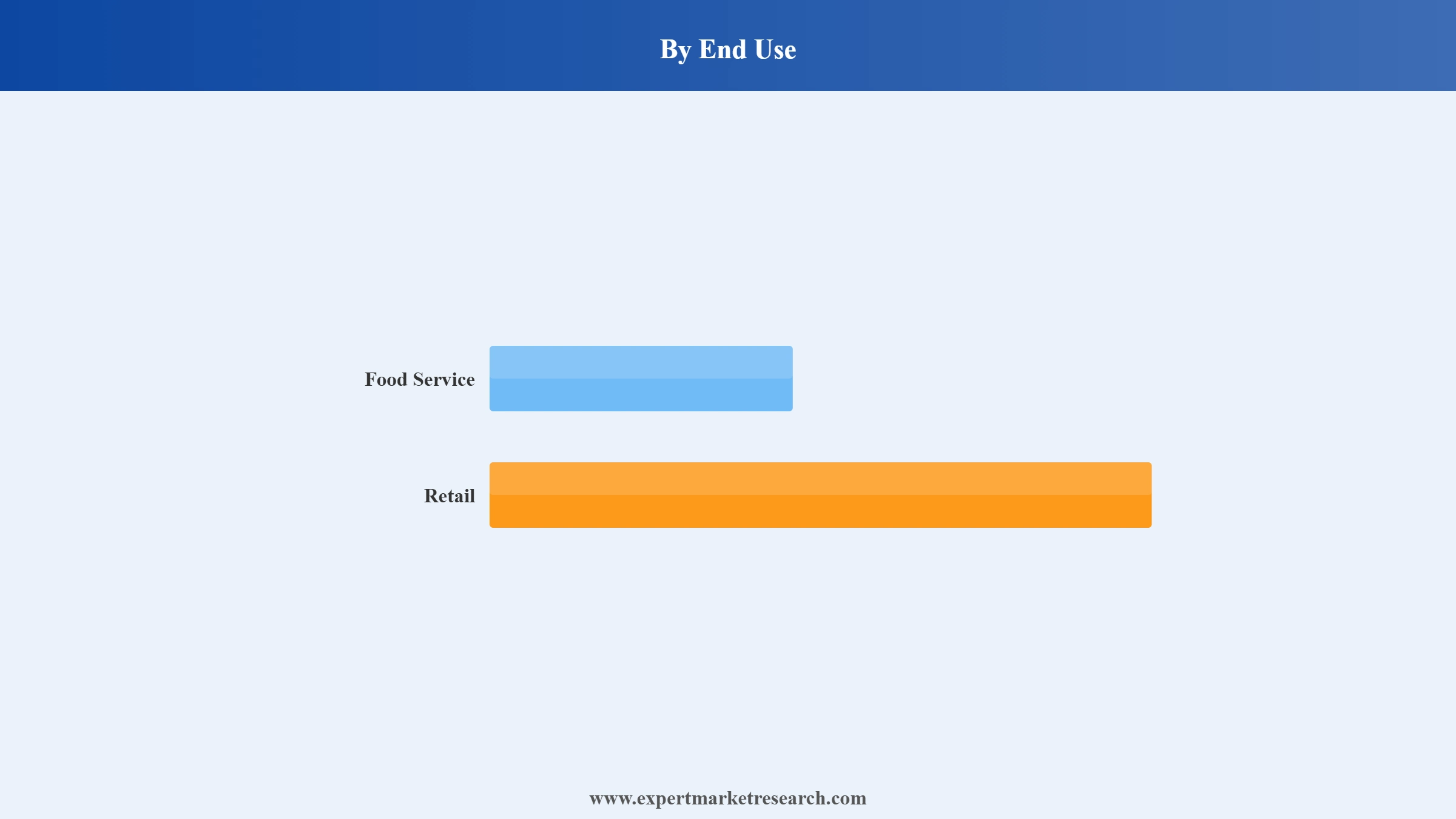
Key Insight: Retail dominates end-use share in the India eggs market, driven by household consumption as eggs remain a staple dietary item for the vast majority of Indian families. The segment is being further strengthened by modern trade expansion, branded egg shelf prominence in supermarkets, and the growing role of online grocery delivery in reaching consumers at home. Food service is the faster-growing end-use segment, expanding alongside the rapid proliferation of QSRs, cloud kitchens, and casual dining chains that use eggs as a versatile, cost-effective menu ingredient. EatFit, Box8, and major hotel chains are among the institutional buyers contributing to rising food service egg procurement.
Market by Distribution Channel
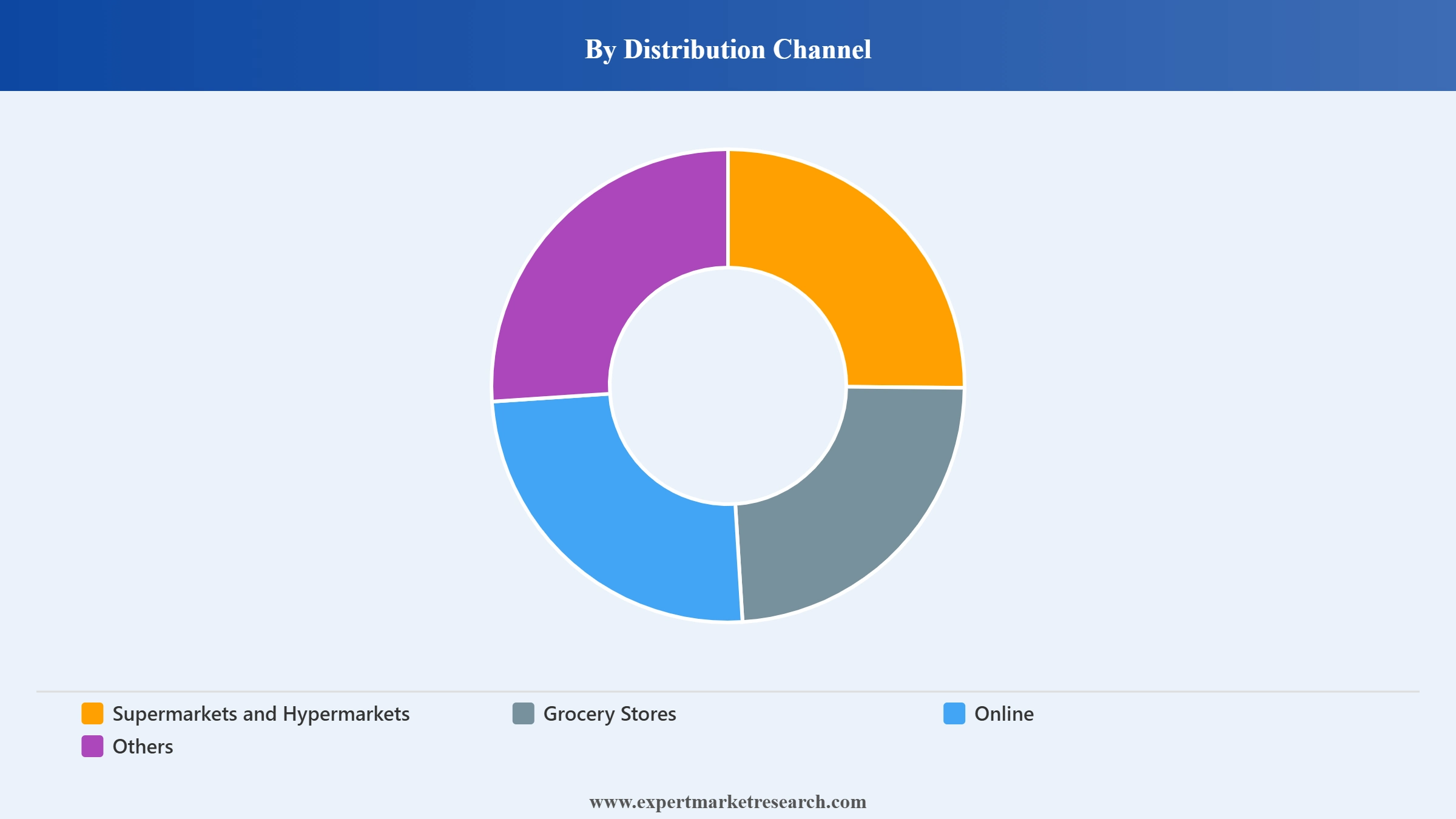
Key Insight: Grocery stores remain the dominant distribution channel for eggs in India, given the country's extensive network of small kiranas and local retail points that form the primary egg purchase touchpoint for most consumers. Supermarkets and hypermarkets are gaining share through branded egg sections, cold chain infrastructure, and premium variety availability that drives value per transaction. Online distribution is the fastest-growing channel, projected at a CAGR of 14.7% through 2035, with platforms like BigBasket, Swiggy Instamart, and Blinkit enabling rapid doorstep delivery of packaged eggs. The shift toward online purchasing is most pronounced in Tier 1 cities among younger, health-conscious demographics who value branded product credentials and delivery convenience.
Market Breakup by Region
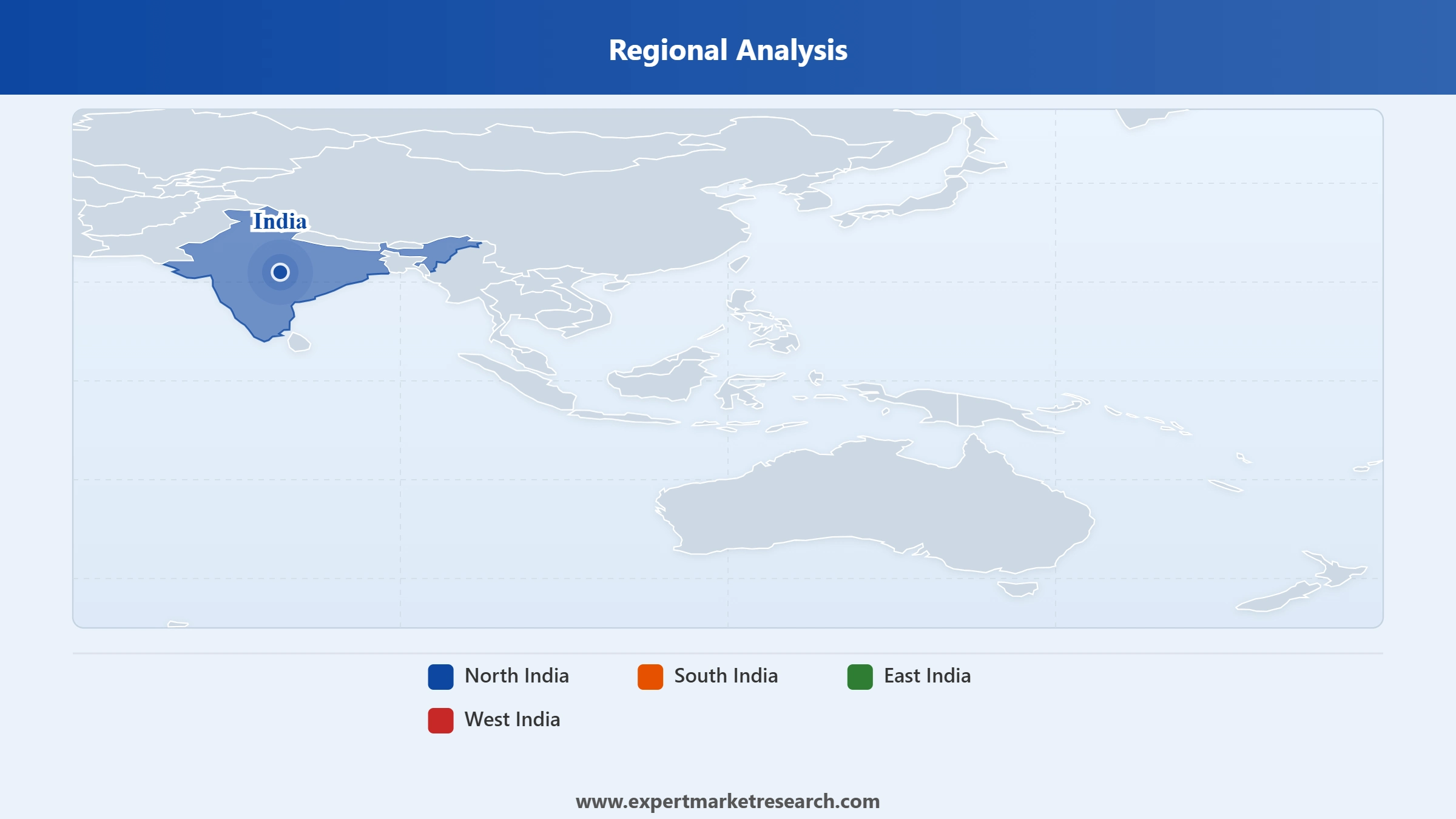
Key Insight: South India dominates egg production and market share, with Andhra Pradesh, Telangana, and Tamil Nadu collectively accounting for a large share of India's 140 billion-plus annual egg output. The region's advanced layer farming infrastructure, established poultry genetics companies, and proximity to major urban centers give it sustained production and distribution advantages. North India is the fastest-growing regional market, driven by urbanization in Delhi-NCR, rising health awareness in cities like Lucknow, Chandigarh, and Jaipur, and growing institutional demand from QSR chains and food service operators. Venkateshwara Hatcheries' Rs 250 crore North India expansion in early 2024 reflects the commercial opportunity being recognized by large-scale producers in the region.
Read more about this report - REQUEST FREE SAMPLE COPY IN PDF
Conventional eggs account for the dominant share of India's egg market, reflecting the country's enormous commercial layer farming base and the product's unmatched affordability relative to per-capita protein availability. This segment serves the broadest consumer base, spanning households across all income groups, food service operators requiring cost-effective bulk supply, and institutional buyers under government nutrition schemes. The PM-POSHAN mid-day meal program, which supplies eggs to students in multiple Indian states on a weekly basis, is a major structural demand driver that ensures steady large-volume procurement of conventional eggs from local farms regardless of market-level price fluctuations.
Read more about this report - REQUEST FREE SAMPLE COPY IN PDF
Within specialty segments, organic, free-range, and cage-free eggs are growing at the fastest pace, driven by a convergence of consumer demand trends and corporate procurement requirements. Brands like Happy Hens Farm are scaling their free-range egg distribution in metro markets through premium supermarkets and online platforms, targeting health-conscious consumers who prioritize animal welfare and nutritional quality. The 2024 Global Food Partners and CFFRPPA partnership is building structured supply capacity to serve multinational food companies that have committed to cage-free-only procurement, establishing India's cage-free segment on a commercial footing that will support sustained growth through the forecast period.
Read more about this report - REQUEST FREE SAMPLE COPY IN PDF
Retail holds the largest end-use share, underpinned by household-level consumption that spans urban, semi-urban, and rural markets. The rise of branded packaged eggs with QR-traceable sourcing is reshaping the retail segment's value composition, pushing average selling prices higher even as volume grows. Online retail, while currently a smaller channel, is growing fastest, capturing demand from urban households that value the convenience of doorstep delivery and the transparency of hygienically packaged products. Regionally, South India's production dominance gives it a structural cost advantage, while North India's faster growth trajectory reflects the upside from urbanization and rising institutional demand in a region historically underserved by modern poultry infrastructure.
Read more about this report - REQUEST FREE SAMPLE COPY IN PDF
South India's commanding position in the India eggs market derives from decades of investment in integrated layer farming infrastructure across Andhra Pradesh, Telangana, and Tamil Nadu. These states collectively host some of the country's largest commercial poultry operations, supported by established genetic supply companies, specialized feed manufacturers, and experienced poultry veterinarians who keep disease risk and production costs at competitive levels. The region's urban centers, particularly Chennai, Hyderabad, and Bengaluru, are also generating fast-growing demand for premium egg formats, with specialty brands including Abhi Foods and Happy Hens Farm specifically targeting these markets for expansion. The combination of production scale, cost competitiveness, and rising urban premium demand makes South India a dual-driver of both volume and value growth in the national eggs market.
Read more about this report - REQUEST FREE SAMPLE COPY IN PDF
North India's eggs market is in an earlier stage of formalization but is growing at a notably fast pace, driven by urbanization, rising incomes, and the rapid expansion of QSR and food service operators that use eggs heavily in their menus. Delhi-NCR is the focal point of this growth, with cloud kitchens, large restaurant chains, and health-focused food delivery services generating substantial institutional procurement demand. States including Punjab, Haryana, and Uttar Pradesh are also expanding their layer farming capacity, benefiting from proximity to major consumption markets and government incentives under the Animal Husbandry Infrastructure Development Fund. Venkateshwara Hatcheries' Rs 250 crore 2024 investment in North India specifically targets the region's expanding institutional and retail demand, indicating that major producers see significant commercial potential in establishing dedicated production closer to northern consumption centers.
The India eggs market is moderately fragmented, with a combination of large integrated producers, regional poultry companies, branded specialty startups, and unorganized local farms operating across the value chain. The organized sector is growing steadily as consumer preference shifts toward packaged, branded, and traceable eggs, which favor established players with cold chain capabilities and quality certification. Market structure differs significantly by segment: conventional eggs are dominated by large integrated producers in South India, while specialty and premium segments are more open to newer entrants with differentiated product positioning.
Key competitive dynamics include investment in biosecurity-certified farm infrastructure, development of branded retail packaging with traceability features, expansion into Tier 2 and Tier 3 city distribution networks, and partnerships with QSR and food service chains. The growing cage-free and organic segment is attracting both specialized startups and larger producers looking to diversify beyond conventional supply, creating a two-tiered competitive landscape across commodity and premium segments.
Abhi Foods operates as a branded egg company focused on hygienically packaged, retail-oriented products targeting urban consumers seeking quality and safety assurance. The company has established distribution across supermarkets and online platforms in South India, particularly in Chennai and Hyderabad, and is expanding its footprint as branded egg demand grows among health-conscious shoppers. Abhi Foods competes through product freshness, clean packaging, and competitive pricing within the premium conventional egg segment.
Happy Hens Farm specializes in free-range and specialty eggs, positioning itself in the premium segment of the India eggs market. The brand targets metro consumers in Bengaluru, Mumbai, and Chennai through partnerships with high-end supermarkets, organic food stores, and online grocery platforms. Happy Hens Farm's product portfolio includes free-range, omega-3-enriched, and organic egg variants, catering to the growing wellness-oriented consumer demographic. The brand's focus on animal welfare credentials and ethical sourcing has given it strong resonance among younger urban buyers.
KEGGFARMS Private Limited is an established Indian poultry genetics and egg production company known for developing the Kuroiler breed, a dual-purpose high-productivity chicken suited for rural smallholder farming conditions. The company contributes to both commercial egg production and rural livelihood development through its breed distribution model, which empowers small farmers across multiple Indian states. KEGGFARMS has been instrumental in expanding India's total egg production base through genetics innovation and serves both institutional and retail segments.
OVOFARM.IN, operating under the OVO Farm brand, is the largest egg-producing company in East India and a pioneer in applying technology to egg supply chain transparency. The company's flagship Kenko brand features QR-code-enabled blockchain traceability on all products, allowing consumers to verify farm-to-table sourcing. This technology-first differentiation positions OVO Farm strongly in the premium branded egg category and has created a model for supply chain transparency that is influencing broader market practices across the industry.
*Please note that this is only a partial list; the complete list of key players is available in the full report. Additionally, the list of key players can be customized to better suit your needs.*
Other key players in the market are Sakku Group, Daulat Farms Group, and Others.
Unlock the full potential of India's booming eggs market with our comprehensive India Eggs Market report for 2026 to 2035. From segment-level forecasts across conventional, organic, and cage-free categories to regional analysis, distribution channel dynamics, and competitive profiling of leading players, this report gives you the intelligence you need to act with confidence. Whether you are a producer scaling operations, a retailer building your branded egg offering, or an investor evaluating the sector, the data is here. Download your free sample today and discover what is shaping India's thriving egg industry.


Upto 15% Off
USD
$2499 $2249
$3999 $3599
$4999 $4249
$5999 $5099


*While we strive to always give you current and accurate information, the numbers depicted on the website are indicative and may differ from the actual numbers in the main report. At Expert Market Research, we aim to bring you the latest insights and trends in the market. Using our analyses and forecasts, stakeholders can understand the market dynamics, navigate challenges, and capitalize on opportunities to make data-driven strategic decisions.*
In 2025, the India eggs market reached an approximate value of USD 7.94 Billion.
The market is projected to grow at a CAGR of 10.40% between 2026 and 2035.
The key players in the market include Abhi Foods, Happy Hens Farm, Sakku Group, Daulat Farms Group, KEGGFARMS Private Limited, and OVOFARM.IN, among others.
The online distribution channel is expected to grow at 14.7% CAGR through 2035.
Key strategies driving the India eggs market include nutritional branding, expansion into tier II and III cities, investment in cold chain logistics, promotion of value-added products, and partnerships with retail and food service chains.
Explore our key highlights of the report and gain a concise overview of key findings, trends, and actionable insights that will empower your strategic decisions.
| REPORT FEATURES | DETAILS |
| Base Year | 2025 |
| Historical Period | 2019-2025 |
| Forecast Period | 2026-2035 |
| Scope of the Report |
Historical and Forecast Trends, Industry Drivers and Constraints, Historical and Forecast Market Analysis by Segment:
|
| Breakup by Type |
|
| Breakup by End Use |
|
| Breakup by Distribution Channel |
|
| Breakup by Region |
|
| Market Dynamics |
|
| Competitive Landscape |
|
| Companies Covered |
|
Datasheet
One User
USD 2,499
USD 2,249
tax inclusive*
Single User License
One User
USD 3,999
USD 3,599
tax inclusive*
Five User License
Five User
USD 4,999
USD 4,249
tax inclusive*
Corporate License
Unlimited Users
USD 5,999
USD 5,099
tax inclusive*
*Please note that the prices mentioned below are starting prices for each bundle type. Kindly contact our team for further details.*
Flash Bundle
Small Business Bundle
Growth Bundle
Enterprise Bundle
*Please note that the prices mentioned below are starting prices for each bundle type. Kindly contact our team for further details.*
Flash Bundle
Number of Reports: 3
20%
tax inclusive*
Small Business Bundle
Number of Reports: 5
25%
tax inclusive*
Growth Bundle
Number of Reports: 8
30%
tax inclusive*
Enterprise Bundle
Number of Reports: 10
35%
tax inclusive*
How To Order

Select License Type
Choose the right license for your needs and access rights.

Click on ‘Buy Now’
Add the report to your cart with one click and proceed to register.

Select Mode of Payment
Choose a payment option for a secure checkout. You will be redirected accordingly.
Strategic Solutions for Informed Decision-Making
Gain insights to stay ahead and seize opportunities.

Get insights & trends for a competitive edge.

Track prices with detailed trend reports.

Analyse trade data for supply chain insights.

Leverage cost reports for smart savings

Enhance supply chain with partnerships.

Connect For More Information
Our expert team of analysts will offer full support and resolve any queries regarding the report, before and after the purchase.
Our expert team of analysts will offer full support and resolve any queries regarding the report, before and after the purchase.
We employ meticulous research methods, blending advanced analytics and expert insights to deliver accurate, actionable industry intelligence, staying ahead of competitors.
Our skilled analysts offer unparalleled competitive advantage with detailed insights on current and emerging markets, ensuring your strategic edge.
We offer an in-depth yet simplified presentation of industry insights and analysis to meet your specific requirements effectively.




