

Consumer Insights
Uncover trends and behaviors shaping consumer choices today
Procurement Insights
Optimize your sourcing strategy with key market data
Industry Stats
Stay ahead with the latest trends and market analysis.
The India Electronics Equipment Market reached a value of USD 31.04 Billion at 2025 and is projected to expand at a CAGR of around 8.10% during the forecast period of 2026-2035. With India's young and digitally connected population driving sustained demand for smartphones, laptops, and smart wearables, government PLI and Digital India programmes accelerating domestic manufacturing investment, online retail channels growing at over 10% annually to reach electronics consumers across India's smaller cities, and global brands deepening their local manufacturing presence, the market is expected to reach USD 67.64 Billion by 2035.
Compound Annual Growth Rate
8.1%
Value in USD Billion
2026-2035
Read more about this report - REQUEST FREE SAMPLE COPY IN PDF
|
India Electronics Equipment Market Report Summary |
Description |
Value |
|
Base Year |
USD Billion |
2025 |
|
Historical Period |
USD Billion |
2019-2025 |
|
Forecast Period |
USD Billion |
2026-2035 |
|
Market Size 2025 |
USD Billion |
31.04 |
|
Market Size 2035 |
USD Billion |
67.64 |
|
CAGR 2019-2025 |
Percentage |
XX% |
|
CAGR 2026-2035 |
Percentage |
8.10% |
|
CAGR 2026-2035 - Market by Region |
West India |
9.2% |
|
CAGR 2026-2035 - Market by Region |
North India |
8.7% |
|
CAGR 2026-2035 - Market by Distribution Channel |
Online |
10.2% |
|
CAGR 2026-2035 - Market by Product Type |
Fitness Tracker |
10.6% |
|
2025 Market Share by Region |
East India |
20.8% |
India's electronic equipment market is evolving rapidly through domestic manufacturing investment under PLI and Make in India programmes, accelerating smartphone upgrade cycles driven by 5G adoption, a structural e-commerce shift in retail, and rising premium segment demand from a growing aspirational middle class.
In November 2025, HP launched a dedicated sustainability initiative in India focused on promoting its refurbished electronics product line, with an emphasis on reducing electronic waste and advancing circular economy principles. The initiative targets environmentally conscious consumers and corporate buyers seeking cost-effective alternatives to new devices, and it aligns with India's growing regulatory pressure on electronics manufacturers under the E-Waste Management Rules. HP positioned the programme as a differentiator in a market increasingly driven by both price sensitivity and ecological responsibility.
In October 2025, Xiaomi announced the opening of a new manufacturing facility in India, dedicated to expanding production capacity for its Redmi series, which serves India's large and competitive mid-range and budget smartphone segments. The facility is expected to create approximately 1,000 direct employment positions, reinforcing Xiaomi's commitment to localised production under India's Make in India framework and positioning the company to respond more rapidly to seasonal demand cycles in the country's highly competitive electronics retail calendar.
In September 2025, Apple launched the iPhone 17 series in India, with units assembled domestically by Foxconn Hon Hai and Tata Electronics. The locally manufactured launch aligned with India's push to expand electronics export capacity, and Apple achieved a record 4.9 million units shipped in the third quarter of 2025, with the iPhone 17 accounting for nearly 20% of that volume. Apple's India shipments grew approximately 60% year-on-year in Q2 2025, cementing its position among India's top five smartphone brands.
In September 2025, Samsung unveiled its latest Galaxy A series in India, featuring significantly enhanced camera technology and extended battery performance tailored to the preferences of mid-range smartphone buyers. The launch reflects Samsung's sustained focus on India's fastest-growing smartphone price tier, where the brand competes intensely with Xiaomi, vivo, and OPPO. Samsung leveraged its financing strength by bundling 18-month and 24-month zero-cost EMI schemes with the Galaxy A36 and A56 models to broaden access across Tier 1 and Tier 2 city consumers.
In May 2025, LG Electronics announced a USD 600 million investment to establish its third manufacturing plant in India, located at Sri City in Andhra Pradesh. The facility is designed to enhance LG's production capacity for consumer electronics and expand its research and development capabilities within the country. The investment signals LG's long-term commitment to India as both a production base and a growth market, particularly for premium smart home appliances and consumer electronics across the subcontinent.
India's Production Linked Incentive scheme is fundamentally reshaping the electronics manufacturing landscape, with the government approving a dedicated Electronics Component Manufacturing Scheme worth Rs 22,919 crore in April 2025, targeting bare printed circuit boards, display components, and related sub-assemblies. Global brands including Apple, Samsung, and Xiaomi have progressively deepened their Indian manufacturing footprint, with smartphone production growing 8% year-on-year in 2025. Electronics ascended to India's third-largest export category in financial year 2025, with exports projected to reach second position by financial year 2026. This manufacturing push is directly fuelling the India electronic equipment market growth outlook through increased domestic value addition and new employment creation.
The nationwide expansion of 5G networks across India is catalysing one of the most significant consumer electronics upgrade cycles the market has witnessed. Consumers in Tier 1 and Tier 2 cities are trading up from 4G handsets, attracted by affordable 5G models from brands such as Xiaomi, Realme, and Samsung. Smartphone shipments in India grew 7% year-on-year to 39 million units in Q2 2025, driven by fresh launches and easing inventory conditions. The Apple iPhone 17, locally assembled and launched in September 2025, alone accounted for nearly 20% of Apple's India shipments that quarter, indicating strong premium upgrade appetite.
Online retail has become the fastest-growing distribution channel in India's electronic equipment market, expected to grow at a CAGR of 10.2% through 2035. Platforms such as Amazon, Flipkart, and Tata Neu have dramatically expanded electronics accessibility by offering exchange deals, no-cost EMI financing, and next-day delivery to consumers in Tier 2 and Tier 3 cities where physical retail coverage remains patchy. Electronic exports surged 27.4% between April and November 2024, reaching USD 22.5 billion, with smartphone exports alone rising 45%, reflecting how digital retail and manufacturing investment are moving in tandem to broaden India's electronics economy.
India's expanding affluent urban class is driving a notable premiumisation trend within consumer electronics, as buyers increasingly favour AI-integrated, feature-rich devices over entry-level alternatives. Samsung launched its Bespoke AI series of air conditioners and refrigerators in India in April 2025, featuring algorithms specifically optimised for local power supply patterns. Sony's 2024 BRAVIA 9 flagship TV, featuring Mini-LED technology and AI-powered picture processing, gained traction in India's premium home entertainment segment. Fitness trackers, smart speakers, and IoT-enabled home devices are growing rapidly, driven by health awareness and smart home adoption trends among India's young professional demographic.
The Expert Market Research's report titled "India Electronic Equipment Market Report and Forecast 2026 to 2035" offers a detailed analysis of the market based on the following segments:
Market Breakup by Product Type
Key Insight: Mobile phones are the dominant product type in India's electronic equipment market, reflecting the country's status as one of the world's largest and fastest-growing smartphone markets. Vivo led shipments with a 20% market share in Q3 2025, followed by Samsung at 14% and Xiaomi at 13%, with Apple recording its highest-ever quarterly volume of 4.9 million units. Laptops are the second-largest segment, driven by hybrid working and education demand, with PLI-backed local manufacturing reducing price points. Tablets are growing, particularly in the education and enterprise segments. Fitness trackers are among the fastest-growing categories, driven by rising health consciousness, affordable smartwatch models, and the integration of health monitoring features into budget-tier wearables.
Market Breakup by Distribution Channel
Key Insight: Online retail is the leading distribution channel by growth rate in India's electronic equipment market, projected to expand at a CAGR of 10.2% through 2035. E-commerce platforms including Amazon India, Flipkart, and Tata Neu generate significant electronics volume through flash sales, festive season campaigns, and no-cost EMI schemes that effectively extend purchasing power to lower-income consumer segments. Online channels accounted for approximately 12.5% of total consumer electronics revenues in 2025 by some estimates, though their share is rapidly increasing. Offline retail remains important in Tier 2 and Tier 3 cities and for premium products, with chains including Croma, Reliance Digital, and regional stores providing demonstration, after-sales support, and personalised guidance for higher-value purchases.
Market Breakup by Region
Key Insight: South India and West India are the two dominant regions in India's electronic equipment market, each contributing substantially to both production and consumption. South India, particularly Tamil Nadu and Andhra Pradesh, has emerged as India's primary hub for smartphone and electronics assembly, hosting Apple's contract manufacturers Foxconn and Tata Electronics in Tamil Nadu and LG Electronics' latest USD 600 million plant in Sri City, Andhra Pradesh. North India, centred on Delhi NCR, is a major retail consumption hub with strong demand for premium electronics, fuelled by high per-capita income and dense urban retail infrastructure. West India, anchored by Maharashtra, combines large-scale electronics manufacturing with Mumbai's thriving premium electronics retail market.
Read more about this report - REQUEST FREE SAMPLE COPY IN PDF
Within the product type segmentation, Mobile Phones account for the dominant share of India's electronics equipment market, a reflection of the country's extraordinary smartphone density and rapid upgrade cycles. India shipped over 39 million smartphone units in Q2 2025 alone, with major brands including vivo, Samsung, Xiaomi, OPPO, and Apple competing across every price tier. The 5G transition is acting as a structural upgrade driver, encouraging existing users to replace 4G handsets with newer models. Apple's locally manufactured iPhone 17 launch in September 2025 contributed to a 60% year-on-year growth in Apple's India shipments in Q2 2025, demonstrating that premium demand is accelerating alongside high-volume mid-range sales. Laptops hold the second-largest product share, supported by hybrid working norms, education sector digitalisation, and falling prices from PLI-backed domestic assembly.
Within the distribution channel segmentation, Offline remains the largest channel by revenue share due to India's preference for in-person product evaluation for high-value electronics purchases, particularly for laptops, televisions, and premium smartphones. Retail chains such as Croma and Reliance Digital are actively expanding into Tier 2 markets. Online is the fastest-growing channel, with a projected CAGR of 10.2% through 2035. E-commerce has fundamentally democratised electronics access by enabling consumers in smaller cities to purchase products at the same prices as metropolitan buyers, supported by exchange deals, no-cost EMI, and next-day logistics. The festive season electronics sale windows on Flipkart and Amazon have become multi-billion dollar events, with electronics consistently ranking as the top-selling category.
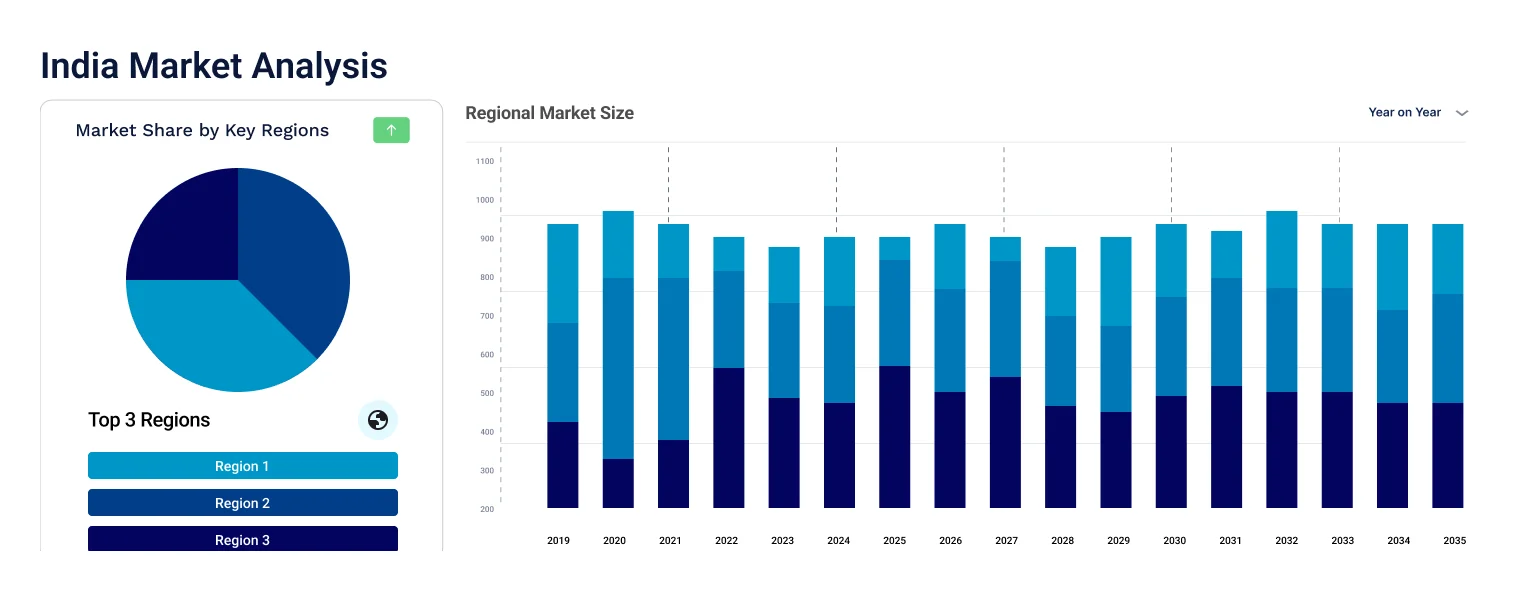
Within the regional segmentation, South India leads production-side dominance while remaining a large consumer market. Tamil Nadu alone contributes significantly to smartphone export volumes through Foxconn and Tata Electronics operations serving Apple's supply chain. West India, represented by Maharashtra, hosts a strong electronics retail ecosystem in Mumbai and Pune, while also providing manufacturing capacity across consumer electronics and industrial electronics sectors. North India, particularly Delhi NCR, Haryana, and Uttar Pradesh, drives strong per-capita electronics consumption and is home to major brand showrooms, service centres, and distribution warehouses serving the entire northern market corridor.
Read more about this report - REQUEST FREE SAMPLE COPY IN PDF
South India is one of India's most strategically important regions for electronic equipment, combining large-scale production investments with a sizeable and growing consumer market. Tamil Nadu is home to the assembly operations of Foxconn and Tata Electronics, which produce Apple iPhones for both domestic sale and international export. Apple achieved record quarterly shipments of 4.9 million units in Q3 2025, with locally assembled iPhone 17 units contributing approximately one-fifth of that volume. Andhra Pradesh joined the electronics investment landscape prominently in May 2025 when LG Electronics announced a USD 600 million third manufacturing plant at Sri City. Karnataka's Bengaluru remains a hub for electronics design and software-driven product development, adding to the region's integrated role across both hardware manufacturing and technology innovation within the India electronic equipment value chain.
West India, led by Maharashtra, is the second-largest electronics market region and is anchored by Mumbai's and Pune's thriving retail environments. Maharashtra has consistently ranked as a top destination for electronics Foreign Direct Investment, with its infrastructure, port access, and skilled workforce supporting both manufacturing and logistics operations. The state's dense urban population drives high per-capita electronics consumption, particularly for premium smartphones, laptops, and home entertainment systems. Major electronics retail chains operate flagship stores across Maharashtra's metropolitan centres, while the state's industrial zones host production facilities serving both domestic and export markets. The Maharashtra government's industrial policy actively incentivises electronics manufacturers with preferential lease arrangements and streamlined approvals, reinforcing the region's position as one of the leading consumption and manufacturing corridors for electronic equipment in India.
India's electronic equipment market is one of the world's most fiercely contested, featuring global technology leaders, established Korean and Japanese consumer electronics brands, and Chinese challengers targeting the mid-range and budget segments. Samsung and Apple together command a dominant share of the premium and mid-range smartphone segments, while Xiaomi, vivo, and OPPO compete aggressively on specifications and price across mass-market tiers. The market is increasingly shaped by domestic manufacturing commitments under PLI, with companies that combine local production scale, e-commerce penetration, and channel depth gaining a structural competitive advantage.
Competition spans product quality, pricing agility, after-sales service networks, and brand prestige. Brands are differentiated by their ability to serve both the aspirational premium buyer and the first-time technology adopter, often within the same product line. Companies investing in AI-integrated features, sustainability programmes, and omnichannel retail strategies are gaining the strongest forward momentum.
Founded in 1969 and headquartered in Suwon, South Korea, Samsung is one of India's most comprehensive electronics brands, competing across smartphones, tablets, laptops, televisions, home appliances, and wearables. Samsung shipped 6.2 million smartphones in India in Q2 2025, holding a 16% market share. The brand's Galaxy A and Galaxy S series address mass-market and premium segments respectively, supported by a deep offline distribution network and aggressive no-cost EMI financing. Samsung's Bespoke AI appliance series, launched in India in April 2025, reinforces its premium positioning in the home electronics segment.
Founded in 1976 and headquartered in Cupertino, California, Apple has rapidly strengthened its position in India through locally assembled iPhones produced by Foxconn and Tata Electronics. Apple recorded approximately 4.9 million smartphone shipments in Q3 2025, its highest quarterly volume in India, driven by the locally manufactured iPhone 17 launch. Apple's premium positioning, expanding trade-in programme, and growing retail presence through Apple Authorised Resellers and the first Apple Stores in India are enabling the company to capture aspirational demand from India's growing upper-middle-class segment.
Founded in 2010 and headquartered in Beijing, China, Xiaomi has long been one of India's most popular electronics brands across smartphones, smart TVs, fitness trackers, and audio accessories. Xiaomi's value-for-money positioning and digital-first retail strategy have built a loyal consumer base across urban and semi-urban India. In October 2025, the company opened a new manufacturing facility in India specifically for its Redmi series, creating approximately 1,000 jobs and deepening its domestic manufacturing footprint. Xiaomi's strategy of frequent product launches and competitive specs at accessible price points continues to drive volume in India's fiercely competitive smartphone market.
Founded in 1947 and headquartered in Seoul, South Korea, LG operates a significant electronics business in India spanning smartphones, televisions, home appliances, audio equipment, and consumer technology. LG's May 2025 announcement of a USD 600 million third manufacturing plant at Sri City in Andhra Pradesh signals a major long-term commitment to India as a production and innovation base. LG competes in both premium and mid-range segments in India, with its OLED televisions and smart home appliances holding strong positions in the premium tier. The new plant will expand LG's production and research and development capacity across multiple product categories.
Other key players in the market are Lenovo Group Limited, Sony Group Corporation, Dell Technologies Inc., HP Inc., Panasonic Holdings Corporation, Alphabet, Inc., and Others.
*Please note that this is only a partial list; the complete list of key players is available in the full report. Additionally, the list of key players can be customized to better suit your needs.*
Access the definitive analysis of the India Electronics Equipment Market with our 2026 report, covering product innovation, 5G adoption trends, PLI-driven manufacturing shifts, and the competitive strategies of the world's leading electronics brands in India. Whether you are an electronics manufacturer evaluating local production investment, a retailer planning channel expansion, or an investor tracking the sector's growth trajectory, this report gives you the data foundation you need. Download your free sample today and stay ahead in one of the world's most dynamic electronics markets.


Upto 15% Off
USD
$2499 $2249
$3999 $3599
$4999 $4249
$5999 $5099


*While we strive to always give you current and accurate information, the numbers depicted on the website are indicative and may differ from the actual numbers in the main report. At Expert Market Research, we aim to bring you the latest insights and trends in the market. Using our analyses and forecasts, stakeholders can understand the market dynamics, navigate challenges, and capitalize on opportunities to make data-driven strategic decisions.*
In 2025, the India electronics equipment market reached an approximate value of USD 31.04 Billion.
The market is projected to grow at a CAGR of 8.10% between 2026 and 2035.
The key players in the market include Samsung Electronics Co., Ltd., Apple Inc., Xiaomi Corporation, LG Corporation, Lenovo Group Limited, Sony Group Corporation, Dell Technologies Inc., HP Inc., Panasonic Holdings Corporation, and Alphabet, Inc., among others.
Key strategies driving the market include pursuing all three avenues of rural markets, use of local language, and options for financing to broaden appeal and evolve into long-term customer retention for organic growth.
The major product types considered in the market report are mobile phones, tablets, laptops, desktop computer, headphone and speakers. fitness tracker, and others.
The market is projected to grow significantly during the forecast period 2026 to 2035 to reach USD 67.64 Billion by 2035.
Explore our key highlights of the report and gain a concise overview of key findings, trends, and actionable insights that will empower your strategic decisions.
| REPORT FEATURES | DETAILS |
| Base Year | 2025 |
| Historical Period | 2019-2025 |
| Forecast Period | 2026-2035 |
| Scope of the Report |
Historical and Forecast Trends, Industry Drivers and Constraints, Historical and Forecast Market Analysis by Segment:
|
| Breakup by Product Type |
|
| Breakup by Distribution Channel |
|
| Breakup by Region |
|
| Market Dynamics |
|
| Competitive Landscape |
|
| Companies Covered |
|
Datasheet
One User
USD 2,499
USD 2,249
tax inclusive*
Single User License
One User
USD 3,999
USD 3,599
tax inclusive*
Five User License
Five User
USD 4,999
USD 4,249
tax inclusive*
Corporate License
Unlimited Users
USD 5,999
USD 5,099
tax inclusive*
*Please note that the prices mentioned below are starting prices for each bundle type. Kindly contact our team for further details.*
Flash Bundle
Small Business Bundle
Growth Bundle
Enterprise Bundle
*Please note that the prices mentioned below are starting prices for each bundle type. Kindly contact our team for further details.*
Flash Bundle
Number of Reports: 3
20%
tax inclusive*
Small Business Bundle
Number of Reports: 5
25%
tax inclusive*
Growth Bundle
Number of Reports: 8
30%
tax inclusive*
Enterprise Bundle
Number of Reports: 10
35%
tax inclusive*
How To Order

Select License Type
Choose the right license for your needs and access rights.

Click on ‘Buy Now’
Add the report to your cart with one click and proceed to register.

Select Mode of Payment
Choose a payment option for a secure checkout. You will be redirected accordingly.
Strategic Solutions for Informed Decision-Making
Gain insights to stay ahead and seize opportunities.

Get insights & trends for a competitive edge.

Track prices with detailed trend reports.

Analyse trade data for supply chain insights.

Leverage cost reports for smart savings

Enhance supply chain with partnerships.

Connect For More Information
Our expert team of analysts will offer full support and resolve any queries regarding the report, before and after the purchase.
Our expert team of analysts will offer full support and resolve any queries regarding the report, before and after the purchase.
We employ meticulous research methods, blending advanced analytics and expert insights to deliver accurate, actionable industry intelligence, staying ahead of competitors.
Our skilled analysts offer unparalleled competitive advantage with detailed insights on current and emerging markets, ensuring your strategic edge.
We offer an in-depth yet simplified presentation of industry insights and analysis to meet your specific requirements effectively.




