

Consumer Insights
Uncover trends and behaviors shaping consumer choices today
Procurement Insights
Optimize your sourcing strategy with key market data
Industry Stats
Stay ahead with the latest trends and market analysis.

The India predictive analytics market was valued at USD 113.32 Billion in 2025. The market is expected to grow at a CAGR of 29.80% during the forecast period of 2026-2035. The growth of digital transformation in industries such as BFSI, healthcare, and retail is fuelling the need for predictive analytics to support real-time decision-making and targeted customer interactions in India. Such factors have resulted in the market attaining a value of USD 1538.34 Billion by 2035.
India predictive analytics market is being increasingly shaped by sector-specific innovations and high-value tech investments, particularly in critical infrastructure and enterprise intelligence. For instance, in June 2025, the East Central Railway’s Danapur Division launched an AI-powered predictive maintenance system at the Ara coaching depot. The platform uses advanced sensor analytics to detect hot axles, fire risks, and brake issues in real time, enhancing safety and operational uptime. Similarly, global analytics leader Databricks announced a USD 250 million investment to expand R&D and go-to-market operations in India, strengthening predictive analytics deployment across BFSI, retail, and manufacturing.
Amidst rising demand for smarter infrastructure, companies are piloting predictive AI systems to pre-empt operational failures. These systems leverage real-time sensor data, automated risk detection, and maintenance alerts, lowering downtime and boosting efficiency. With global players investing heavily, expect widespread adoption across public transport, manufacturing, energy, and telecom. This shift underscores India’s emergence as a leader in deploying end-to-end, industrial-strength predictive analytics to support digital transformation across sectors.
Base Year
Historical Period
Forecast Period
Compound Annual Growth Rate
29.8%
Value in USD Billion
2026-2035
*this image is indicative*
| India Predictive Analytics Market Report Summary |
Description |
Value |
|
Base Year |
USD Billion |
2025 |
|
Historical Period |
USD Billion |
2019-2025 |
|
Forecast Period |
USD Billion |
2026-2035 |
|
Market Size 2025 |
USD Billion |
113.32 |
|
Market Size 2035 |
USD Billion |
1538.34 |
|
CAGR 2019-2025 |
Percentage |
XX% |
|
CAGR 2026-2035 |
Percentage |
29.80% |
|
CAGR 2026-2035 - Market by Region |
South India |
31.2% |
|
CAGR 2026-2035 - Market by End Use |
BFSI |
34.0% |
|
CAGR 2026-2035 - Market by Component |
Services |
33.4% |
Integration of AI and machine learning into predictive analytics is changing industries with greater accuracy in forecasting and intelligent decision-making, boosting the demand in the India predictive analytics market. For instance, AI-based predictive models in banking detect fraud and assess credit risk, thus improving security and operational efficiency. Likewise, healthcare applies predictive analytics for predicting disease outbreaks and patient outcomes, enabling better resource allocation and improved patient care.
The Indian government is undertaking various initiatives, for instance, the India AI Mission and setting up AI Centers of Excellence to speed up the India predictive analytics market development. These efforts are promoting research and development in AI and encouraging the application of predictive analytics in a number of sectors. For instance, AI centres in agriculture, healthcare, and sustainable cities are all promoting the use of predictive analytics to ensure informed policymaking and streamline service delivery. For example, in February 2025, the government allocated INR 500 crore in the Union Budget to establish AI Centres of Excellence in sectors like agriculture, healthcare, and sustainable cities, concrete steps that drive predictive analytics deployment nationally.
The India predictive analytics market witnesses an increasing shift towards cloud-based analytics solutions, which are scalable, cost-effective and easy to integrate. Cloud platforms such as Microsoft Azure and AWS enable firms to deploy predictive models in the cloud without committing to large capital expenditures. The trend is especially favourable to SMEs that lack the resources required for on-premises deployment.
Predictive analytics increasingly addresses changing demands across different industries, thereby boosting further opportunities for the India predictive analytics market expansion. In retailing, predictive models predict demands for customers and personalize marketing strategy to maximize customer satisfaction and increase sales. On the other hand, predictive effort on maintenance via analytics improves cutting down of downtime, reduces the lifespan consumption of equipment, and results in cost reduction as well as operational effectiveness.
Precision agriculture is emerging as a niche trend in India’s predictive analytics market, especially with increasing tech-agriculture partnerships. In May 2025, Punjab Agricultural University collaborated with BITS-Pilani to deploy predictive models using IoT sensors, AI, and satellite imagery for crop yield forecasting and irrigation planning. These systems help farmers make data-backed decisions on fertilization and water use, reducing costs and improving productivity. The success of such models in Punjab is encouraging similar rollouts across Haryana and Maharashtra, promoting smart, analytics-driven farming and enabling sustainable agricultural development.
The EMR’s report titled “India Predictive Analytics Market Report and Forecast 2026-2035” offers a detailed analysis of the market based on the following segments:
Market Breakup by Component
Key Insight: Predictive analytics services lead the market, driven by enterprise demand for expert implementation, training, and integration. In June 2025, Databricks announced a commitment of USD 250 million over three years to set up a Data + AI Academy in Bengaluru and strengthen R&D, highlighting the importance of service-led analytics adoption. This trend shows that businesses prefer partner-led analytics deployments rather than purely software solutions, steering the market toward comprehensive, end-to-end predictive analytics services.
Market Breakup by Deployment Mode
Key Insight: The cloud segment dominates due to its scalability and ease of deployment. In June 2025, Infosys established a fintech development centre at GIFT City emphasizing cloud-based predictive analytics tools for banking clients, demonstrating the industry’s shift toward cloud-first architectures, thus boosting the India predictive analytics market growth. Companies continue to migrate analytics workloads from on-premise servers to cloud platforms to enable real-time insights, faster scaling, and reduced infrastructure overhead, consolidating cloud deployment as the default choice for predictive analytics in enterprise India.
Market Breakup by Enterprise Size
Key Insight: Large enterprises are at the forefront of implementing predictive analytics in India, leveraging their extensive data assets and budgets. For example, Databricks' planned R&D expansion and training academy aim to serve large corporates seeking to embed AI and analytics into systems. These companies typically operate dedicated analytics divisions and partner with global vendors to build custom models, thus cementing the dominance of large-scale enterprise adoption of predictive analytics across sectors like manufacturing, finance, and telecom.
Market Breakup by End Use
Key Insight: The BFSI sector is the largest consumer of predictive analytics in India, focused on use cases like fraud detection, credit assessment, and customer personalization. In April 2025, Infosys' GIFT City fintech hub launched advanced analytics projects for banks and insurers leveraging AI-powered fraud detection and risk modelling tools. With regulated requirements and large transaction volumes, BFSI has driven early adoption of analytics and continues to invest aggressively in expanding predictive capabilities across financial services, thus driving the India predictive analytics demand.
Market Breakup by Region
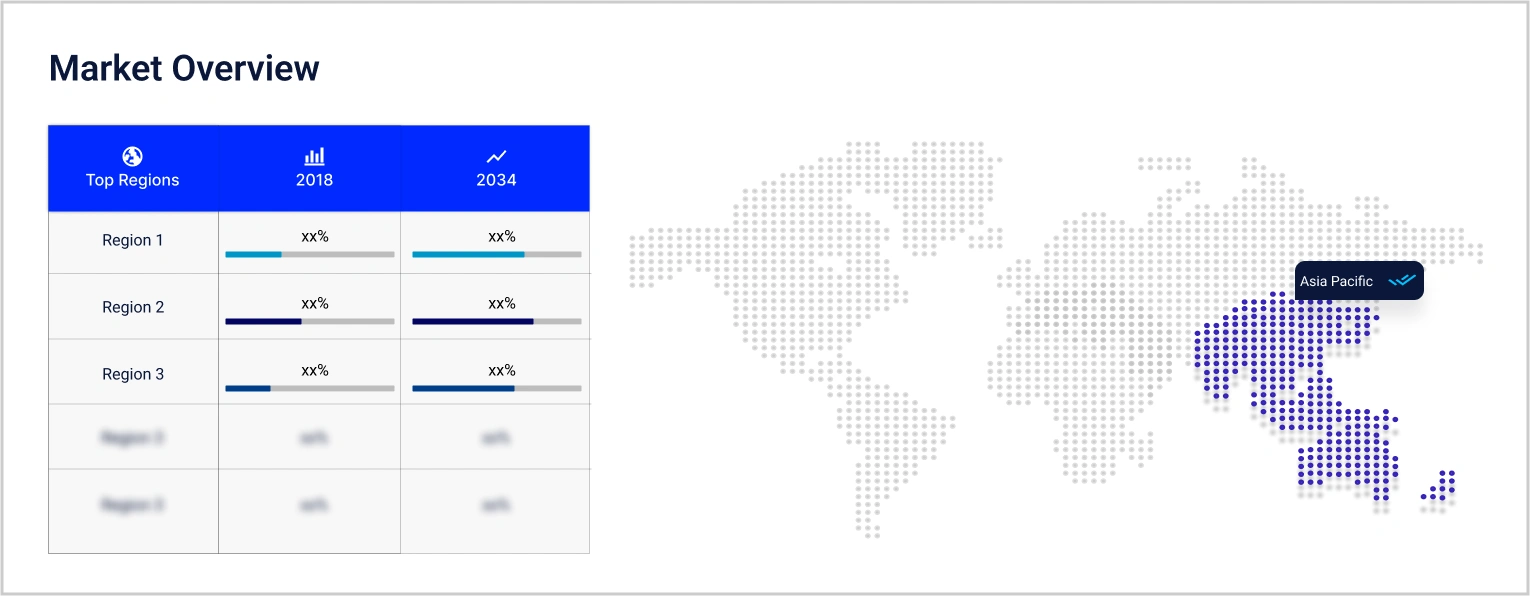
Key Insight: South India, especially Bengaluru, is the dominant regional hub for predictive analytics. The April 2025 announcement of Databricks' new R&D centre and Data + AI Academy in Bengaluru underscores the region’s role as the centre of analytics innovation. Supported by a vibrant startup ecosystem, global tech company presence, and talent from regional universities, South India leads nationally in predictive analytics development, deployment, and talent cultivation, thus reinforcing its status as the country’s analytics nerve centre.
|
CAGR 2026-2035 - Market by |
Region |
| South India |
31.2% |
| North India |
XX% |
| East India |
XX% |
| West India |
XX% |
By Component, Solutions Secure the Bigger Share of the Market
The demand for predictive analytics solutions in India is at its peak as an increasingly business-oriented world relies on advanced software tools to weigh a complex dataset and forecast future outcomes. The utility of data mining, statistical modelling, and machine learning algorithms by integrating them into core business operations is realized through these solutions. BFSI and retail industries use these tools to detect fraud, optimize inventory, and analyse customer behaviour.
Services are the fastest-growing sub-segment in the India predictive analytics market because of increased demand for consulting, implementation, and support services. Companies adopting analytics tools seek assistance from experts to tailor the requirements of these tools to their particular business environments. In addition, managed services and data science-as-a-service value offerings are gaining considerable traction, especially among small and medium enterprises.
By Deployment Mode, On-Premise Predictive Analytics Register the Major Share of the Market
On-premise predictive analytics solutions largely contribute to the India predictive analytics market value, particularly through large enterprises where data security and compliance needs are extremely tight. With stricter data governance, these solutions are the preferred choice in industries like BFSI and government, where any violation of data privacy is flagrant. In June 2025, the Government of Uttar Pradesh announced a comprehensive cyber security infrastructure upgrade for its Cooperative Bank network, involving integration into a secure, core-banking system with strict on-premise controls. This illustrates that in sectors like BFSI and government, where data privacy violations carry heavy penalties, organizations prefer hosting analytics internally to maintain tighter governance and meet regulatory requirements.
The growth in cloud-based predictive analytics solutions has been rapid due to their scalability and cost-effectiveness, thus driving the India predictive analytics market revenues. These solutions allow companies to analyse and process large volumes of data in real-time, thus enabling rapid decision-making and enhanced agility. Cloud platform use is therefore extremely beneficial for SMEs since these platforms offer advanced analytics without investment in expensive infrastructure.
By Enterprise Size, Large Enterprises Account for the Dominant Share
Large businesses dominate the India predictive analytics market revenue share owing to huge amounts of data and the use of sophisticated analytics solutions. Companies utilize predictive models for various applications, including risk management, customer segmentation, and supply chain optimization, which provide them with a competitive advantage. A compelling example is Jaguar Land Rover (JLR), a Tata Motors subsidiary, which in June 2023 partnered with Everstream Analytics to integrate AI-powered risk prediction into its global supply chain. By embedding real-time analytics and machine learning, JLR can now detect potential disruptions, like natural disasters or shipping delays, before they impact production. This operational foresight enables better planning, inventory management, and resilience, demonstrating how large businesses capitalize on predictive analytics across complex, global operations.
Small and medium enterprises (SMEs) are quickly embracing predictive analytics, propelled by the cost-effectiveness of cloud-based solutions and the imperative to optimize operational efficiency. SMEs are using predictive models to maximize marketing campaigns, enhance customer service, and streamline processes, resulting in increased growth and profitability.
By End Use, BFSI Leads the Predictive Analytics Market in India
The BFSI industry continues to be the biggest consumer user of predictive analytics. The predictive analytics demand in BFSI rises from the increased need for credit scoring, fraud detection, and customer retention programs. Predictive models assist in evaluating risk and tailoring financial products to enhance customer satisfaction and operational efficiency. In early 2025, SBI implemented predictive analytics for real-time fraud detection, analyzing transaction patterns and user behavior. This reduced fraud losses by 40%, showcasing the BFSI sector’s growing reliance on predictive models for security, risk management, and customer trust.
A significant spurt in predictive analytics adoption in India is witnessed in the healthcare industry. The sector extensively uses these analytics for patient outcome prediction, disease outbreak forecasting, and resource allocation. These applications enhance patient care while optimizing healthcare delivery systems. In June 2025, AIIMS Patna deployed AI-powered predictive analytics to screen tuberculosis using handheld X-ray devices and image-based algorithms. This innovation enables early TB detection in rural regions, streamlining patient triage and treatment protocols for thousands in Bihar.
By Region, South India Holds the Largest Market Share
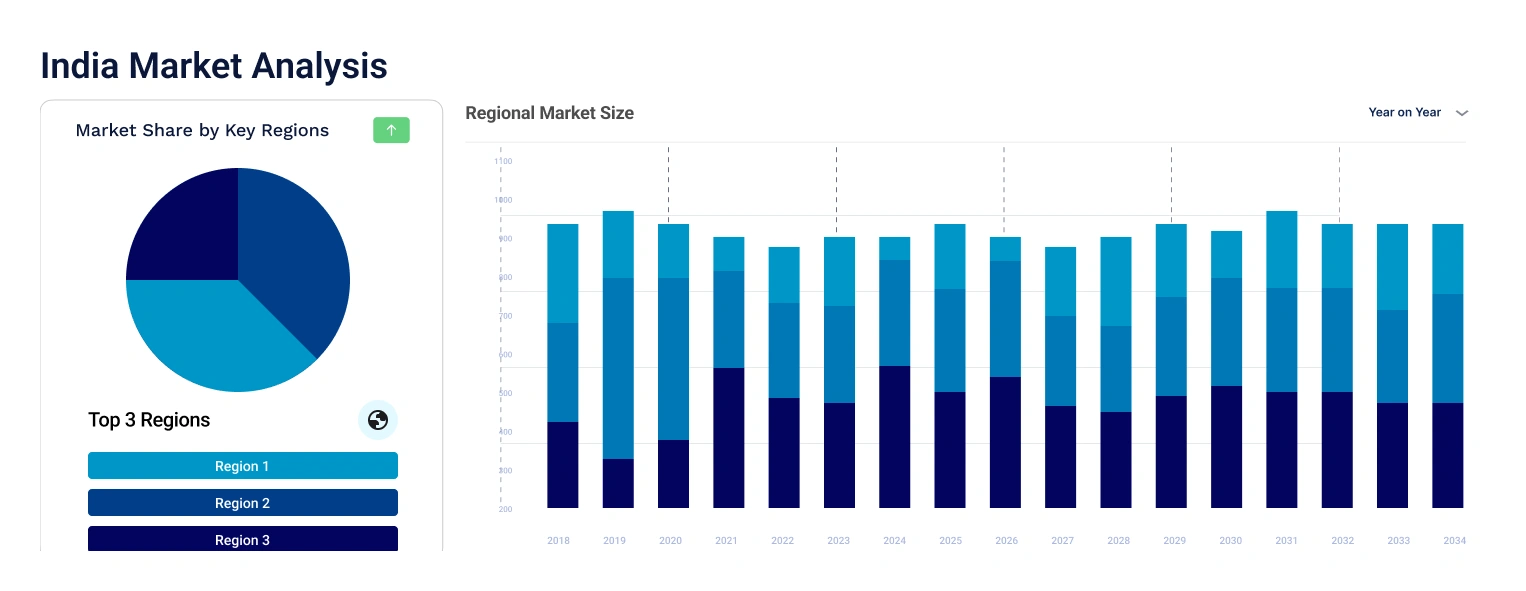
Growth in the South India predictive analytics market is majorly contributed by mature IT ecosystem and a concentration of tech hubs like Bengaluru, Hyderabad, and Chennai. This region hosts the biggest analytics firms and startups, all supported by skilled talent, superior infrastructure, and collaboration with R&D centres of global players. In May 2025, Punjab Agricultural University collaborated with BITS-Pilani to deploy predictive models using IoT sensors, AI, and satellite imagery for crop yield forecasting and irrigation planning. These systems help farmers make data-backed decisions on fertilization and water use, reducing costs and improving productivity. The success of such models in Punjab is encouraging similar rollouts across Haryana and Maharashtra, promoting smart, analytics-driven farming and enabling sustainable agricultural development. Moreover, the market enjoys a favourable policy environment nurturing innovation for further development and adoption.
North India is emerging as the fastest-growing region in the Indian predictive analytics market because of the rapid digital transformation taking place in Delhi and its neighbouring states like Haryana and Uttar Pradesh. Smart city schemes, along with government initiatives and startup ecosystems, are boosting adoption, particularly through healthcare, logistics, and government sectors. Growing investments in AI infrastructure and data-centric services are setting the pace for analytics adoption in both public and private sectors.
The India predictive analytics market players are increasingly developing industry-specific analytics tools for BFSI, retail, and health care. There is strong demand for real-time insights, a secure analytics platform, and a scalable cloud-based solution focused on the market with increasing regulatory demands and customer expectations. Moreover, the India predictive analytics companies are finding opportunities in the Tier II and III cities where corporations are beginning to adopt data-driven decision-making. In 2025, players in India’s predictive analytics market are increasingly focusing on AutoML (Automated Machine Learning) to simplify model development and reduce reliance on data science experts. AutoML enables faster deployment of predictive models with minimal manual tuning, ideal for enterprises with limited AI resources. For example, Tata Consultancy Services and Tech Mahindra have begun integrating AutoML features into their analytics platforms to target mid-sized businesses. The technology's ability to automate feature engineering and model selection makes it vital for scaling AI adoption across sectors like retail, BFSI, and healthcare.
Established in 1977 and based in California, Oracle offers cutting-edge predictive analytics using its Oracle Cloud Infrastructure and data science platforms. India is seeing the firm's expanding presence through strategic cloud alliances and AI-driven enterprise offerings.
Established in 1972 and with headquarters in Germany, SAP utilizes predictive analytics within ERP and customer experience platforms. SAP increases its presence in India by partnering with industries for intelligent data platforms and investing in upskilling initiatives for business intelligence experts.
Established in 1911 and based in New York, United States, IBM leverages the Watson platform to offer predictive analytics in banking, healthcare, and telecom. In India, the firm collaborates with hybrid cloud and AI solutions that can be used in regulated sectors, with the help of its innovation centres in Bengaluru and Pune.
Established in 1975, Microsoft provides predictive analytics using Azure AI and Power BI. Microsoft is directing its Indian operations towards working with government organizations and startups to implement scalable analytics platforms for government services, retail, and education for supporting their digital transformation initiative.
*Please note that this is only a partial list; the complete list of key players is available in the full report. Additionally, the list of key players can be customized to better suit your needs.*
Other players in the India predictive analytics market include AVEVA Group Limited, and Altair Engineering Inc., among others.
Explore India’s evolving predictive analytics ecosystem, and discover innovations in data modelling, enterprise applications, and public-sector transformation. Download the 2026–2035 report sample for forecasts and decision-ready intelligence.


Upto 15% Off
USD
$2499 $2249
$3999 $3599
$4999 $4249
$5999 $5099


*While we strive to always give you current and accurate information, the numbers depicted on the website are indicative and may differ from the actual numbers in the main report. At Expert Market Research, we aim to bring you the latest insights and trends in the market. Using our analyses and forecasts, stakeholders can understand the market dynamics, navigate challenges, and capitalize on opportunities to make data-driven strategic decisions.*
Get in touch with us for a customized solution tailored to your unique requirements and save upto 35%!
In 2025, the India predictive analytics market reached an approximate value of USD 113.32 Billion.
The market is projected to grow at a CAGR of 29.80% between 2026 and 2035.
The key players in the market include Oracle Corp., SAP SE, IBM Corp., Microsoft Corp., AVEVA Group Limited, and Altair Engineering Inc., among others.
Key strategies driving the market include working on developing sector-specific solutions, penetrating unexplored territories, training analytics talent with AI integrated along with conventional BI tools to cater to the altering demands across industries in India.
The major end uses considered in the market report are BFSI, healthcare, retail, IT and telecom, industrial, government and defense, and others.
Explore our key highlights of the report and gain a concise overview of key findings, trends, and actionable insights that will empower your strategic decisions.
| REPORT FEATURES | DETAILS |
| Base Year | 2025 |
| Historical Period | 2019-2025 |
| Forecast Period | 2026-2035 |
| Scope of the Report |
Historical and Forecast Trends, Industry Drivers and Constraints, Historical and Forecast Market Analysis by Segment:
|
| Breakup by Component |
|
| Breakup by Deployment Mode |
|
| Breakup by Enterprise Size |
|
| Breakup by End Use |
|
| Breakup by Region |
|
| Market Dynamics |
|
| Competitive Landscape |
|
| Companies Covered |
|
Datasheet
One User
USD 2,499
USD 2,249
tax inclusive*
Single User License
One User
USD 3,999
USD 3,599
tax inclusive*
Five User License
Five User
USD 4,999
USD 4,249
tax inclusive*
Corporate License
Unlimited Users
USD 5,999
USD 5,099
tax inclusive*
*Please note that the prices mentioned below are starting prices for each bundle type. Kindly contact our team for further details.*
Flash Bundle
Small Business Bundle
Growth Bundle
Enterprise Bundle
*Please note that the prices mentioned below are starting prices for each bundle type. Kindly contact our team for further details.*
Flash Bundle
Number of Reports: 3
20%
tax inclusive*
Small Business Bundle
Number of Reports: 5
25%
tax inclusive*
Growth Bundle
Number of Reports: 8
30%
tax inclusive*
Enterprise Bundle
Number of Reports: 10
35%
tax inclusive*
How To Order

Select License Type
Choose the right license for your needs and access rights.

Click on ‘Buy Now’
Add the report to your cart with one click and proceed to register.

Select Mode of Payment
Choose a payment option for a secure checkout. You will be redirected accordingly.
Gain insights to stay ahead and seize opportunities.

Get insights & trends for a competitive edge.

Track prices with detailed trend reports.

Analyse trade data for supply chain insights.

Leverage cost reports for smart savings

Enhance supply chain with partnerships.

Connect For More Information
Our expert team of analysts will offer full support and resolve any queries regarding the report, before and after the purchase.
Our expert team of analysts will offer full support and resolve any queries regarding the report, before and after the purchase.
We employ meticulous research methods, blending advanced analytics and expert insights to deliver accurate, actionable industry intelligence, staying ahead of competitors.
Our skilled analysts offer unparalleled competitive advantage with detailed insights on current and emerging markets, ensuring your strategic edge.
We offer an in-depth yet simplified presentation of industry insights and analysis to meet your specific requirements effectively.





Share