

Consumer Insights
Uncover trends and behaviors shaping consumer choices today
Procurement Insights
Optimize your sourcing strategy with key market data
Industry Stats
Stay ahead with the latest trends and market analysis.
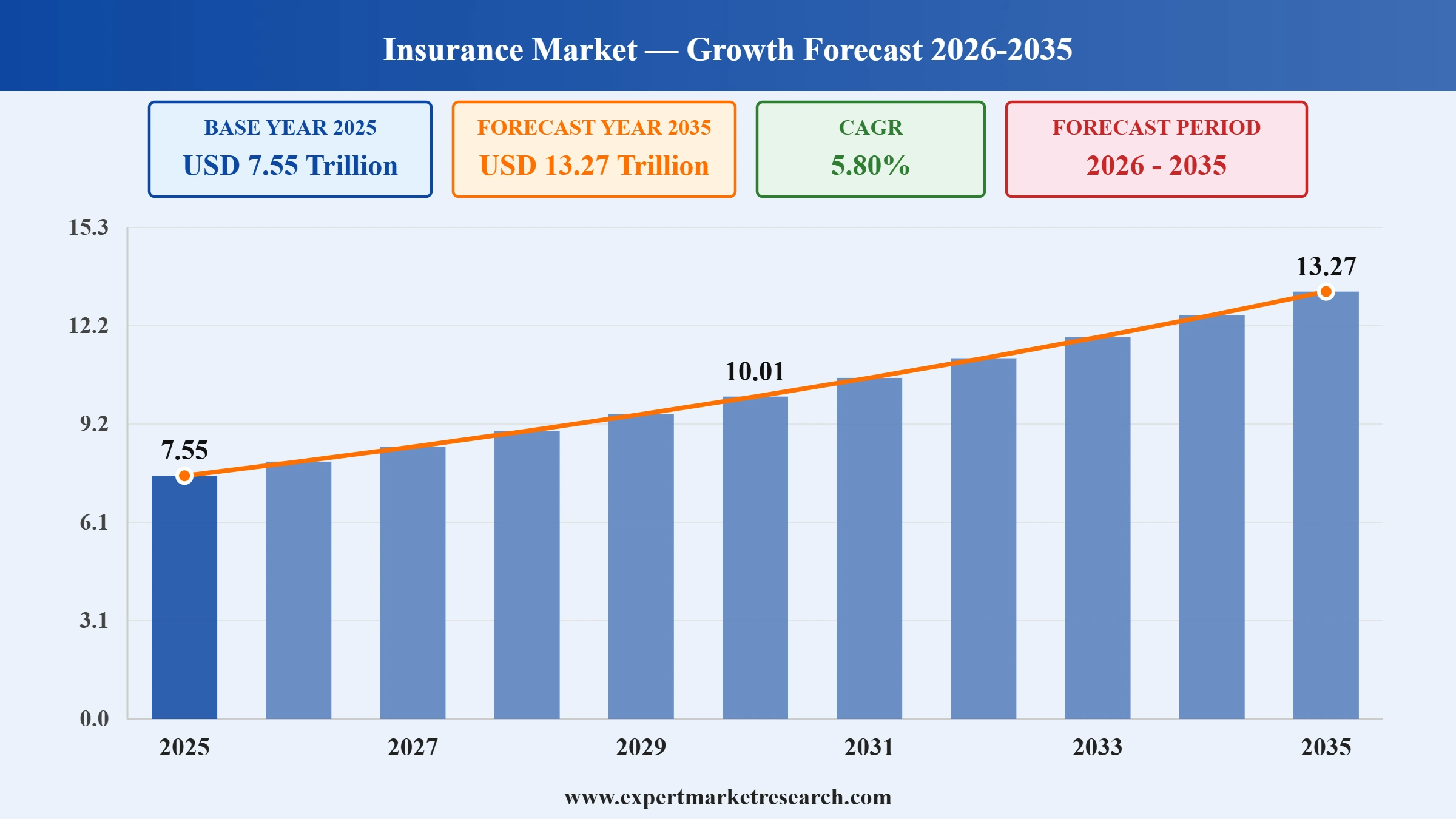
The global insurance market size reached approximately USD 7.55 Trillion in 2025 and is projected to grow at a CAGR of 5.80% between 2026 and 2035, reaching nearly USD 13.27 Trillion by 2035, according to Expert Market Research. This growth reflects the indispensable nature of insurance as a cornerstone of financial security serving individuals, enterprises, governments, and institutions across every geography and sector worldwide.
The insurance market is one of the largest and most structurally significant sectors in the global economy. It operates as a risk transfer and capital allocation mechanism, enabling individuals and organisations to protect against financial loss arising from health events, property damage, liability exposure, natural catastrophes, and operational disruptions. Every policyholder, insurer, reinsurer, broker, agent, and actuarial professional is a participant in this market contributing to a system that collectively manages trillions of dollars in risk exposure annually.
The insurance market refers to the complete ecosystem of products, services, institutions, and regulatory frameworks enabling the transfer and management of financial risk. It encompasses life insurance covering mortality, disability, and savings and non-life insurance, which includes property and casualty coverage, health insurance, liability protection, marine and aviation policies, and a growing range of specialty products addressing cyber risk, climate exposure, and emerging technology liabilities.
The market is structured across multiple distribution channels direct sales, independent agents, bancassurance partnerships, and digital platforms each serving distinct buyer segments and policy types. The global insurance market is regulated at national and regional levels through statutory solvency frameworks, consumer protection mandates, pricing regulations, and increasingly, artificial intelligence governance requirements that are reshaping how products are underwritten, priced, and sold.
Read more about this report - REQUEST FREE SAMPLE COPY IN PDF
Rising Healthcare Costs and Expanding Health Coverage
Healthcare cost escalation is the most consistent demand driver across the global insurance market, directly expanding health insurance premium volumes in both public and private payer systems. As medical inflation outpaces general price indices in major economies, individuals and employers face mounting financial exposure that makes health insurance an economic necessity rather than an optional benefit. The growing burden of chronic disease including cardiovascular disease, diabetes, cancer, and respiratory conditions further amplifies the frequency and severity of health insurance claims, driving premium volume growth across all coverage tiers and geographies.
Growing Ageing Population and Life Insurance Demand
The global demographic shift toward older populations is creating sustained structural demand for life insurance, annuity, and long-term care products. As working-age populations in Western Europe, North America, Japan, and China shrink relative to retiree cohorts, the demand for income replacement, estate planning, and dependent care coverage intensifies. This demographic reality represents one of the most durable and quantifiable demand drivers in the entire insurance market, with predictable long-term effects on premium volumes across life, disability, and savings-oriented insurance products.
AI and Digital Transformation Accelerating Insurer Operations
Artificial intelligence has become the defining technology force reshaping how the global insurance market underwrites risk, manages claims, and engages customers. Global insurance IT spending is expected to reach USD 374.88 billion in 2026 and grow at an 11.1% CAGR through 2030, while US insurance IT spending will total USD 173 billion in 2026, representing roughly 6% of total US tech spending. These investments are enabling real-time risk assessment, automated claims triage, dynamic pricing, and personalised policy recommendations that were not possible with legacy actuarial and operational systems. The operational efficiency gains from AI in fraud detection, document processing, and customer service automation are directly improving underwriting margins and enabling premium growth without proportional cost increases.
Read more about this report - REQUEST FREE SAMPLE COPY IN PDF
Availability of Customised and Micro-Insurance Products
The introduction of usage-based insurance, parametric products, and micro-insurance policies designed for low-income populations in developing markets is expanding the total addressable market for the global insurance industry. According to Expert Market Research, the rising availability of micro-insurance policies offers affordable solutions to the low-income population, opening market segments that traditional premium-level products could not reach. This product diversification is particularly impactful in Asia Pacific, Africa, and Latin America, where large populations with limited insurance penetration represent significant untapped premium potential.
Expanding Insurance Penetration in Emerging Economies
Insurance penetration measured as a percentage of GDP remains substantially lower in emerging markets than in developed economies, representing a significant growth opportunity for the global insurance industry across the forecast period. Rising middle-class incomes, increasing digital access, and growing awareness of financial risk among previously uninsured populations are collectively driving premium volume growth in markets including India, Indonesia, Brazil, Mexico, and across Sub-Saharan Africa, where the combination of economic development and demographic expansion creates compounding demand for both life and non-life insurance products.
AI Operationalisation Across Underwriting and Claims
By 2026, AI is no longer a pilot-stage investment for the insurance industry but is embedded across underwriting, pricing, claims, and customer service as part of the core operating model. Insurers are deploying machine learning models for real-time risk scoring, natural language processing for claims document extraction, and computer vision for property damage assessment. The shift from AI experimentation to operational deployment at scale represents the most significant productivity transformation the insurance industry has undergone in decades, compressing policy issuance timelines, reducing loss adjustment expenses, and improving combined ratios across personal and commercial lines.
Agentic AI and Autonomous Insurance Workflows
The 2026 focus has shifted from piloting AI to operationalising agentic AI at scale with autonomous systems handling claims intake, property assessments, and low-stakes customer interactions while insurers work to embed these capabilities across the value chain to drive real-time risk mitigation. Agentic AI systems operate with high degrees of autonomy, initiating actions and making decisions within defined risk parameters without constant human intervention. This capability is accelerating straight-through processing rates for routine claims and reducing the average time from first notice of loss to settlement a key competitive differentiator in both personal and commercial insurance lines.
AI Liability Exclusions and New Standalone Policy Products
The emergence of AI-related liability exposures is creating a new insurance product category with significant premium growth potential. Berkshire Hathaway, Chubb, and Travelers sought state regulatory approval to exclude AI-related damages from general liability policies, while Munich Re and specialist insurtech providers stepped in with standalone AI liability policies offering policy limits from USD 2 million to USD 50 million, serving enterprises exposed to AI-driven decision-making failures, model bias claims, and automated system errors.
Embedded Insurance and Digital Distribution Growth
Embedded insurance the integration of coverage products directly into non-insurance purchasing journeys, including e-commerce, travel booking, mortgage origination, and automotive purchase transactions is one of the fastest-growing distribution innovations in the insurance market. By embedding insurance offers at the point of need, carriers and technology partners are reaching consumer and SME buyers who would not typically engage with traditional insurance channels, expanding market reach without proportional acquisition cost increases.
Climate Risk and Parametric Insurance Expansion
The escalating frequency and severity of climate-related loss events including floods, wildfires, hurricanes, and droughts is driving growth in parametric insurance products that pay automatically when a defined trigger threshold is reached, without requiring traditional loss adjustment. Parametric products are particularly valuable in emerging markets where loss assessment infrastructure is limited, and for agricultural, government, and infrastructure buyers seeking rapid liquidity after catastrophic events rather than protracted claims processes.
Read more about this report - REQUEST FREE SAMPLE COPY IN PDF
The global insurance market faces significant operational and structural challenges as technology adoption accelerates faster than governance frameworks can respond. A Grant Thornton 2026 survey found that 44% of insurance executives reported governance and compliance challenges had caused AI projects to fail or underperform, highlighting the sector-wide struggle to deploy transformative technology responsibly within heavily regulated operational environments. Simultaneously, the escalating frequency of climate-related catastrophes is driving catastrophe losses to record levels in consecutive years, pressuring reinsurance capacity and forcing some carriers to withdraw from high-risk geographic markets creating coverage availability challenges in precisely the regions most exposed to climate volatility. Fraud detection at scale, data privacy compliance across GDPR, CCPA, and emerging national AI regulations, and the challenge of maintaining actuarial accuracy in rapidly changing risk environments collectively impose mounting operational burdens on insurers seeking to grow profitably.
Several structural dynamics constrain near-term market growth for specific participants. Traditional distribution models relying on captive agent networks face intensifying margin pressure as digital platforms enable direct-to-consumer sales at lower acquisition costs disrupting established commission structures and forcing carriers to rethink multi-channel economics. In life insurance, persistently low interest rates across key markets have reduced investment returns on policyholder reserves, compressing operating margins and creating pressure on guaranteed product offerings. The concentration of catastrophe reinsurance capacity among a relatively small number of global reinsurers introduces systemic vulnerability when consecutive years of elevated natural catastrophe losses reduce available capacity and drive pricing dislocations across the primary insurance market. Additionally, regulatory fragmentation with distinct solvency requirements, product filing obligations, and consumer protection standards across jurisdictions imposes substantial compliance costs that disproportionately affect smaller carriers and new market entrants seeking to compete across multiple geographies.
Despite these challenges, the insurance market presents substantial, well-documented, and growing opportunities across every major sub-segment and geography. The emergence of AI liability insurance as a standalone product category represents a multi-billion-dollar greenfield opportunity, with demand scaling rapidly as enterprises deploy AI systems across customer-facing and operational workflows. IoT expansion is projected to unlock a USD 1.1 trillion insurance premium opportunity by 2030, improving loss ratios by 20–40% and boosting customer retention by 15–25% through connected risk monitoring and engagement programmes. Emerging markets across Asia Pacific, Africa, and Latin America offer the largest untapped penetration opportunity, with growing middle-class populations, rising digital access, and increasing regulatory frameworks creating the conditions for sustained premium volume growth. Embedded insurance partnerships between carriers and technology platforms, the maturation of parametric climate products, and the structural tailwind of an ageing global population driving life and health insurance demand all support sustained above-GDP growth across the forecast period.
“Global Insurance Market Report and Forecast 2026-2035” offers a detailed analysis of the market based on the following segments:
Market Breakup by Insurance Type
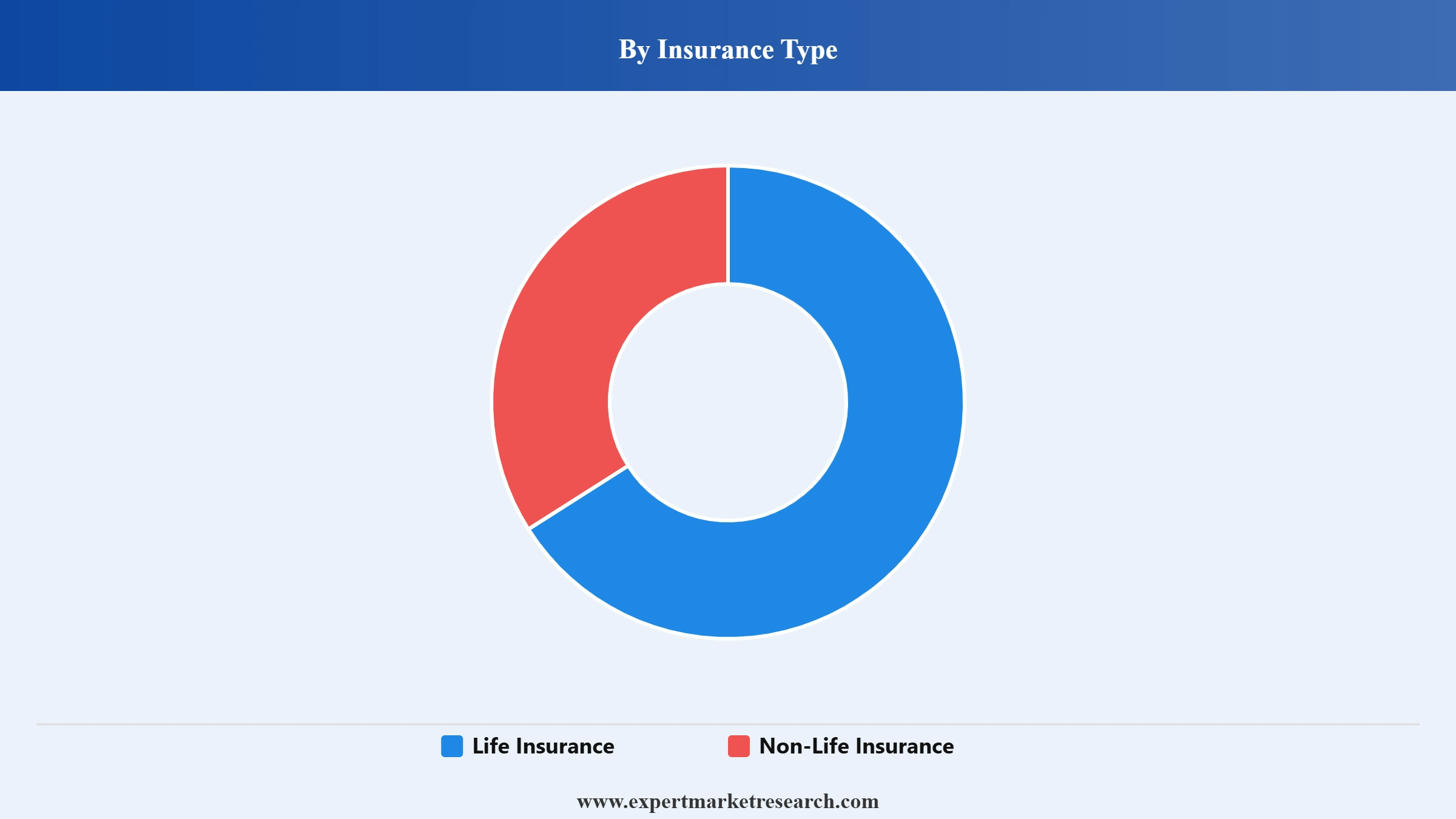
Life Insurance encompasses the full range of products providing financial protection against mortality, disability, and longevity risk, including term life, whole life, universal life, endowment, and annuity contracts. This segment benefits directly from the ageing global population trend, rising household awareness of income protection, and the growing importance of long-term savings products in markets where pension coverage is inadequate. Life insurance is the dominant segment in Asia Pacific particularly across China, India, and Japan where cultural attitudes toward savings and family financial protection drive sustained premium volume.
Non-Life Insurance covers property and casualty lines, health insurance, liability coverage, marine and aviation policies, and specialty products including cyber, agricultural, and parametric coverages. This segment is the largest contributor to global premium volume in North America and Europe, driven by mandatory personal lines products such as auto and homeowners insurance, commercial property and general liability coverage for businesses, and the rapidly growing cyber insurance market.
Market Breakup by Distribution Channel
Direct Sales channels including digital platforms, carrier websites, and telesales operations are the fastest-growing distribution mechanism, driven by consumer preference for self-service purchasing, real-time quote comparison, and seamless digital policy issuance. Direct channels are particularly effective for standard personal lines products where risk assessment is straightforward and brand recognition drives consumer confidence.
Agency Sales remain the dominant distribution channel for complex products requiring professional advice, including commercial property, specialty liability, executive benefits, and whole life insurance. Independent agents and brokers provide valuable advisory services and multi-carrier access that direct channels cannot replicate for buyers with complex or non-standard risk profiles.
Bancassurance leverages the distribution infrastructure, customer relationships, and data assets of retail banking networks to cross-sell insurance products to existing deposit and lending customers. This channel is particularly strong in Europe, Latin America, and Asia Pacific, where established banking relationships provide low-cost access to large and captive customer bases.
Market Breakup by Region
Read more about this report - REQUEST FREE SAMPLE COPY IN PDF
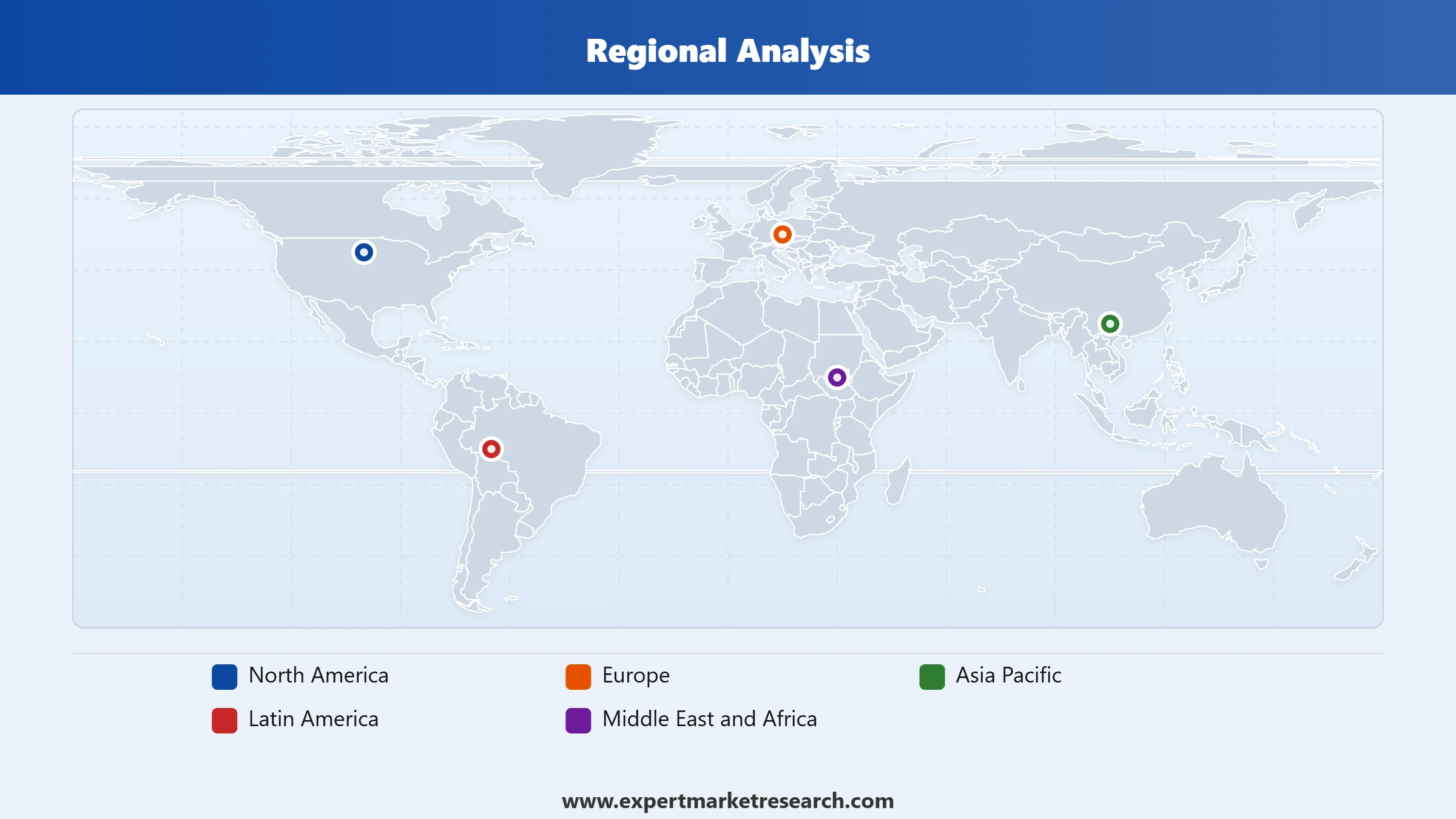
North America leads the global insurance market with the largest premium volume, anchored by the United States' mature life, health, property, and casualty markets. The United States accounts for the dominant share of regional and global premium volume, supported by mandatory auto and health coverage requirements, a sophisticated commercial insurance ecosystem, and the world's deepest reinsurance and specialty market infrastructure centred in markets including Lloyd's of London connections and Bermuda-based reinsurers.
Europe is characterised by highly regulated markets with mature penetration rates, strong solvency frameworks under Solvency II, and growing demand for sustainable and ESG-linked insurance products. The United Kingdom, Germany, France, and the Netherlands are the primary revenue contributors, with GDPR and emerging AI regulatory frameworks creating distinctive compliance-driven demand for specialised insurance products.
Asia Pacific is the fastest-growing regional market, driven by the world's largest uninsured population, rapidly rising middle-class incomes across China, India, and Southeast Asia, and government initiatives expanding mandatory social insurance coverage. The region's young demographic profile, expanding digital infrastructure, and low historical insurance penetration rates create the largest long-term growth opportunity within the global insurance market.
Latin America is an emerging growth market anchored by Brazil and Mexico, where expanding regulatory frameworks, rising middle-class awareness of risk management, and growing bancassurance distribution infrastructure are driving premium volume growth across both life and non-life lines.
Middle East and Africa represents the earliest-stage but highest long-term potential regional segment, with insurance adoption expanding alongside economic diversification programmes, infrastructure investment, and increasing awareness of financial risk management among previously uninsured populations.
The company offers commercial property, casualty, healthcare professional liability, executive and professional lines, and surety insurance. It caters to various industries with tailored insurance solutions, focusing on robust financial support, expertise, and responsive service.


Upto 15% Off
USD
$2499 $2249
$3999 $3599
$4999 $4249
$5999 $5099


*While we strive to always give you current and accurate information, the numbers depicted on the website are indicative and may differ from the actual numbers in the main report. At Expert Market Research, we aim to bring you the latest insights and trends in the market. Using our analyses and forecasts, stakeholders can understand the market dynamics, navigate challenges, and capitalize on opportunities to make data-driven strategic decisions.*
The global insurance market reached approximately USD 7.55 Trillion in 2025, according to Expert Market Research. This figure represents gross written premiums across life and non-life insurance lines globally, spanning personal and commercial policies across all major regions and distribution channels.
The global insurance market is projected to grow at a CAGR of 5.80% between 2026 and 2035, according to Expert Market Research. Individual sub-segments including digital distribution platforms, AI-enabled specialty products, and emerging market penetration are expected to exceed this aggregate growth rate significantly over the same period.
The market is being driven due to rising healthcare costs, the availability of customised insurance policies, and the growth of the ageing population which has fuelled the demand for life insurance.
Key trends shaping the global insurance market include the operationalisation of AI across underwriting and claims, the emergence of agentic AI in autonomous insurance workflows, the development of standalone AI liability insurance products, expanding embedded insurance distribution through digital platforms, and growing parametric product adoption for climate risk transfer.
North America leads the global insurance market with the largest premium volume share, anchored by the United States' mature and diversified insurance ecosystem across personal, commercial, specialty, and reinsurance segments.
The market is categorised according to the insurance type, which includes life insurance and non-life insurance.
Based on the distribution channel, the market is divided into direct sales, agency sales, bancassurance and others.
The global insurance market features major players across life, property and casualty, health, specialty, and reinsurance segments. Key entities include Berkshire Hathaway, Allianz, AXA, Ping An Insurance, Prudential, MetLife, Zurich Insurance Group, Munich Re, Swiss Re, Chubb, and Travelers, among others covered in the full Expert Market Research report.
The insurance industry is worth approximately USD 7.55 Trillion globally in 2025, making it one of the largest service sectors in the global economy. This value is expected to grow to nearly USD 13.27 Trillion by 2035.
Yes, the global insurance industry is growing consistently. According to Expert Market Research, the market is projected to expand at a 5.80% compound annual growth rate between 2026-2035 driven by rising healthcare costs, ageing global populations, expanding digital distribution, increasing insurance penetration in emerging economies, and the emergence of entirely new coverage categories including AI liability and parametric climate products.
The global insurance market is segmented by Insurance Type Life Insurance and Non-Life Insurance and by Distribution Channel Direct Sales, Agency Sales, Bancassurance, and Others. Regional analysis covers North America, Europe, Asia Pacific, Latin America, and Middle East and Africa.
The major distribution channels in the global insurance market are Direct Sales (including digital platforms), Agency Sales (independent and captive agents), Bancassurance (bank-integrated distribution), and Others (including affinity groups, brokers, and embedded digital partnerships).
AI is transforming the global insurance market across every operational dimension from real-time underwriting and dynamic pricing to autonomous claims processing and personalised policy recommendations.
Explore our key highlights of the report and gain a concise overview of key findings, trends, and actionable insights that will empower your strategic decisions.
| REPORT FEATURES | DETAILS |
| Base Year | 2025 |
| Historical Period | 2019-2025 |
| Forecast Period | 2026-2035 |
| Scope of the Report |
Historical and Forecast Trends, Industry Drivers and Constraints, Historical and Forecast Market Analysis by Segment:
|
| Breakup by Insurance Type |
|
| Breakup by Distribution Channel |
|
| Breakup by Region |
|
| Market Dynamics |
|
| Competitive Landscape |
|
| Companies Covered |
|
Datasheet
One User
USD 2,499
USD 2,249
tax inclusive*
Single User License
One User
USD 3,999
USD 3,599
tax inclusive*
Five User License
Five User
USD 4,999
USD 4,249
tax inclusive*
Corporate License
Unlimited Users
USD 5,999
USD 5,099
tax inclusive*
*Please note that the prices mentioned below are starting prices for each bundle type. Kindly contact our team for further details.*
Flash Bundle
Small Business Bundle
Growth Bundle
Enterprise Bundle
*Please note that the prices mentioned below are starting prices for each bundle type. Kindly contact our team for further details.*
Flash Bundle
Number of Reports: 3
20%
tax inclusive*
Small Business Bundle
Number of Reports: 5
25%
tax inclusive*
Growth Bundle
Number of Reports: 8
30%
tax inclusive*
Enterprise Bundle
Number of Reports: 10
35%
tax inclusive*
How To Order

Select License Type
Choose the right license for your needs and access rights.

Click on ‘Buy Now’
Add the report to your cart with one click and proceed to register.

Select Mode of Payment
Choose a payment option for a secure checkout. You will be redirected accordingly.
Strategic Solutions for Informed Decision-Making
Gain insights to stay ahead and seize opportunities.

Get insights & trends for a competitive edge.

Track prices with detailed trend reports.

Analyse trade data for supply chain insights.

Leverage cost reports for smart savings

Enhance supply chain with partnerships.

Connect For More Information
Our expert team of analysts will offer full support and resolve any queries regarding the report, before and after the purchase.
Our expert team of analysts will offer full support and resolve any queries regarding the report, before and after the purchase.
We employ meticulous research methods, blending advanced analytics and expert insights to deliver accurate, actionable industry intelligence, staying ahead of competitors.
Our skilled analysts offer unparalleled competitive advantage with detailed insights on current and emerging markets, ensuring your strategic edge.
We offer an in-depth yet simplified presentation of industry insights and analysis to meet your specific requirements effectively.




