

Consumer Insights
Uncover trends and behaviors shaping consumer choices today
Procurement Insights
Optimize your sourcing strategy with key market data
Industry Stats
Stay ahead with the latest trends and market analysis.
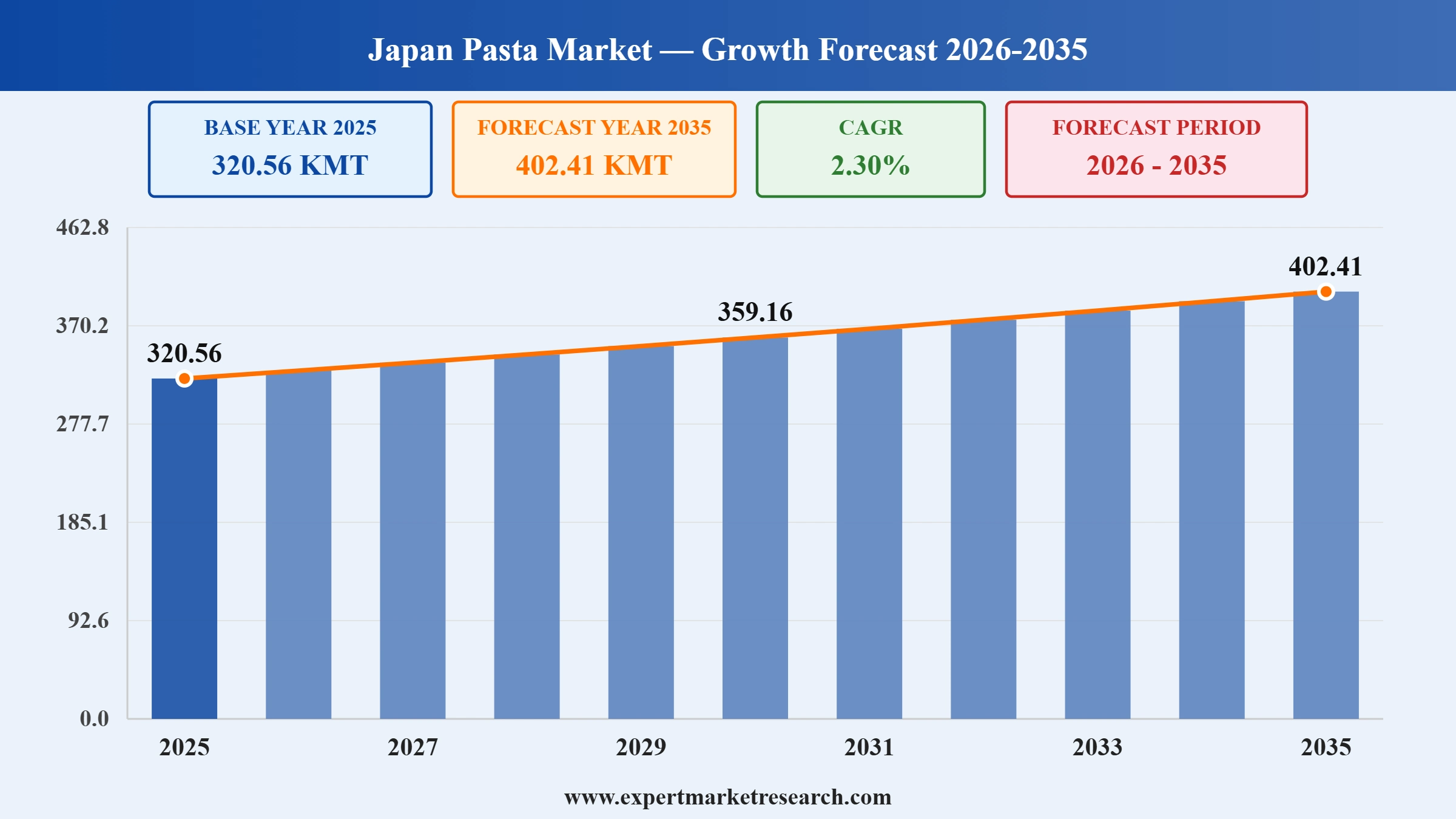
The Japan pasta market attained a volume of 320.56 KMT in 2025. The market is expected to grow at a CAGR of 2.30% during the forecast period of 2026-2035. Rising adoption of high-protein pasta variants among Japanese fitness-conscious millennials is compelling domestic processors and retailers to expand beyond traditional wheat-based offerings. As a result, the market is expected to reach a volume of 402.41 KMT by 2035.
Innovative developments are reshaping the Japan pasta market trends where firms offer unique pasta products meeting the needs of health-conscious consumers or individuals simply wanting a novel culinary experience. The fusion of Japanese-Italian cuisines has given rise to pasta dishes that utilize local ingredients like miso, seaweed, and ‘mentaiko’ to provide consumers with an exclusive taste profile. In May 2024, the "Mentai BASE" pop-up at Mark Is Fukuoka introduced a Japanese Italian fusion menu featuring dishes like "Mentaiko and Mushroom Carbonara with White Miso Flavour." This innovative pasta combines spicy cod roe with creamy white miso, offering a unique umami-rich experience that exemplifies the harmonious blend of Japanese and Italian culinary traditions. Furthermore, packaging that ensures environmental sustainability and the use of alternative ingredients like lentils and chickpeas are also gaining popularity among the environmentally aware consumer base.
The integration of robotic automation in pasta preparation is further contributing to the Japan pasta market growth. For instance, Tokyo's E Vino Spaghetti restaurant employs "P-Robo," an AI-powered robot developed by Pronto Corporation and TechMagic, capable of cooking up to 90 pasta dishes per hour. This innovation addresses labour shortages and enhances efficiency in the foodservice sector. The adoption of such technology reflects Japan's commitment to blending culinary tradition with cutting-edge automation.
Read more about this report - REQUEST FREE SAMPLE COPY IN PDF
| Japan Pasta Market Report Summary |
Description |
Value |
|
Base Year |
KMT |
2025 |
|
Historical Period |
KMT |
2019-2025 |
|
Forecast Period |
KMT |
2026-2035 |
|
Market Size 2025 |
KMT |
320.56 |
|
Market Size 2035 |
KMT |
402.41 |
|
CAGR 2019-2025 |
Percentage |
XX% |
|
CAGR 2026-2035 |
Percentage |
2.30% |
|
CAGR 2026-2035- Market by Type |
Gluten Free |
2.8% |
|
CAGR 2026-2035 - Market by Product Type |
Chilled |
2.9% |
|
CAGR 2026-2035 - Market by Distribution Channel |
Online Stores |
6.3% |
The Korean instant noodle producer launched Shin Ramyun Toomba cup in all 7-Eleven convenience stores in Japan. Encouraged by the cup version's popularity, Nongshim announced plans to release a packet version of Shin Ramyun Toomba in the third quarter of this year. It will initially be sold in imported food retailers such as Aeon's Caferrante and Kaldi, with ambitions to expand to nationwide retail locations in the fourth quarter. This development reflects growing consumer demand for ready-to-eat noodle-pasta hybrids, intensifying cross-border competition in the pasta market.
Samyang Foods Inc. planned to introduce its global instant noodle brand, MEP, in Japan to enter the country's instant pasta industry. The company exhibited at the 59th Supermarket Trade Show at the Makuhari Messe convention centre in Chiba Prefecture, Japan. This strategic entry highlights the convergence of noodle and pasta categories, indicating opportunitues for innovation.
Shinji Harada, the chef of the famed Italian restaurant "Aromafresca Ginza," oversaw the third edition of pasta dishes presented by FamilyMart Co., Ltd. The new product, "Two Sauces: Five Cheese Cream & Meat Sauce," along with three items from the "Famima The Pasta" series, has been made available at approximately 16,300 FamilyMart locations countrywide. Such a development illustrates strong demand for gourmet-inspired ready meals, reinforcing the convenience retail sector's influence on mass pasta consumption in Japan.
Otsuka Foods Co., Ltd. announced the release of two new "Bon Curry Umami wo Ajiwau Curry Udon no Moto" (Bon Curry Umami-Rich Curry Udon Noodles Topping) products, the first from the Bon Curry brand designed specifically for use with curry Udon noodles. This launch blurs the line between traditional Japanese noodles and Western-style pasta toppings, suggesting consumer acceptance flavour crossovers in hybrid pasta offerings.
The growing popularity of matcha-infused variants has boosted further demand in the Japan pasta market. Leveraging Japan’s deep-rooted tea culture, manufacturers are incorporating green tea powder into pasta dough to create a distinctively coloured, antioxidant-rich product that appeals to health-conscious and novelty-seeking consumers. This innovation blends traditional Japanese ingredients with Western cuisine, appealing to both domestic palates and global curiosity. Matcha pasta is increasingly featured in premium grocery stores and upscale restaurants, reflecting evolving consumer preferences for fusion and functional foods.
Increased interest in good food experiences has resulted in pasta demand growth in Japan Consumers spend premium prices on craft, imported or handmade pastas made with durum wheat or other premium-quality ingredients. In December 2024, FamilyMart Co., Ltd. debuted the third edition of pasta dishes overseen by chef Shinji Harada of the famed Italian eatery "Aromafresca Ginza." The new product, "Two Sauces: Five Cheese Cream & Meat Sauce," as well as three items from the "Famima The Pasta" line have been made available in 16,300 FamilyMart Stores. Such a trend is also complemented by the demand for gourmet pasta sauces with truffles, lobster and other upscale ingredients to help create luxurious dining experiences. Brands are also focusing on local and limited-volume fruits to win over high-income consumers.
Sustainability is one of the major trends that has shaped the Japan pasta market dynamics, mainly boosted by eco-conscious customers. Brands like NIPPN Corporation have introduced eco-friendly packaging for their 'oh'my Pasta Series,' utilizing FSC-certified paper and plant-based biomass ink, aligning with Japan's waste reduction initiatives. Simultaneously, the market observes a notable shift towards plant-based pasta options made from lentils, chickpeas, and edamame, catering to health-conscious consumers and supporting sustainable agriculture. Such changes have been complemented by manufacturing pastas from alternative, sustainable products such as lentils, chickpeas, and edamame aimed at health-conscious consumers.
The Japan pasta market value is uniquely driven by a surge in demand for functional pastas enriched with collagen and dietary fibre, targeting skin health and digestion, which are key priorities among the nation’s aging population. Brands are innovating by incorporating these ingredients into pasta products, appealing to beauty and health-conscious consumers who seek foods that offer both nutrition and cosmetic benefits, differentiating this trend from generic health-focused pasta options.
Due to busy lives and the need for instant meal options, consumers demand more convenient food products. Pasta fits into this trend because of its versatility and short cooking time. Ready-to-eat and microwaveable methods of cooking pasta products have been introduced by manufacturers to serve consumers looking for convenience meals, driving growth in the Japan pasta expansion. In December 2024, two new "Bon Curry Umami wo Ajiwau Curry Udon no Moto" (Bon Curry Umami-Rich Curry Udon Pata Noodles Topping) products were introduced by Otsuka Foods Co., Ltd. This new product make it east make curry pasta by heating the whole box in the microwave. Pasta has become popular among urbanites and working-class individuals who prefer convenience. Their accessibility through supermarkets, convenience stores, and even online retailers have contributed to their accessibility.
The EMR’s report titled “Japan Pasta Market Report and Forecast 2026-2035” offers a detailed analysis of the market based on the following segments:
Market Breakup by Type
Key Insight: Wheat pasta continues to hold a significant share in the Japan pasta industry due to its cultural significance and versatility. It is a staple in various households, a part of various traditional and contemporary cuisines. Its affordability and accessibility further enhance its significance as a choice among consumers. Producers fortify the appeal for wheat pasta with added fortified nutrients and localization of recipes incorporating Japanese ingredients like natto and soy sauce-based sauces. This type of local product innovation has kept the category relevant even in evolving dietary patterns. Furthermore, organic and whole wheat variants are increasingly being promoted under this category by Japanese brands aimed at the rising health-conscious consumer bases.
Market Breakup by Product Type
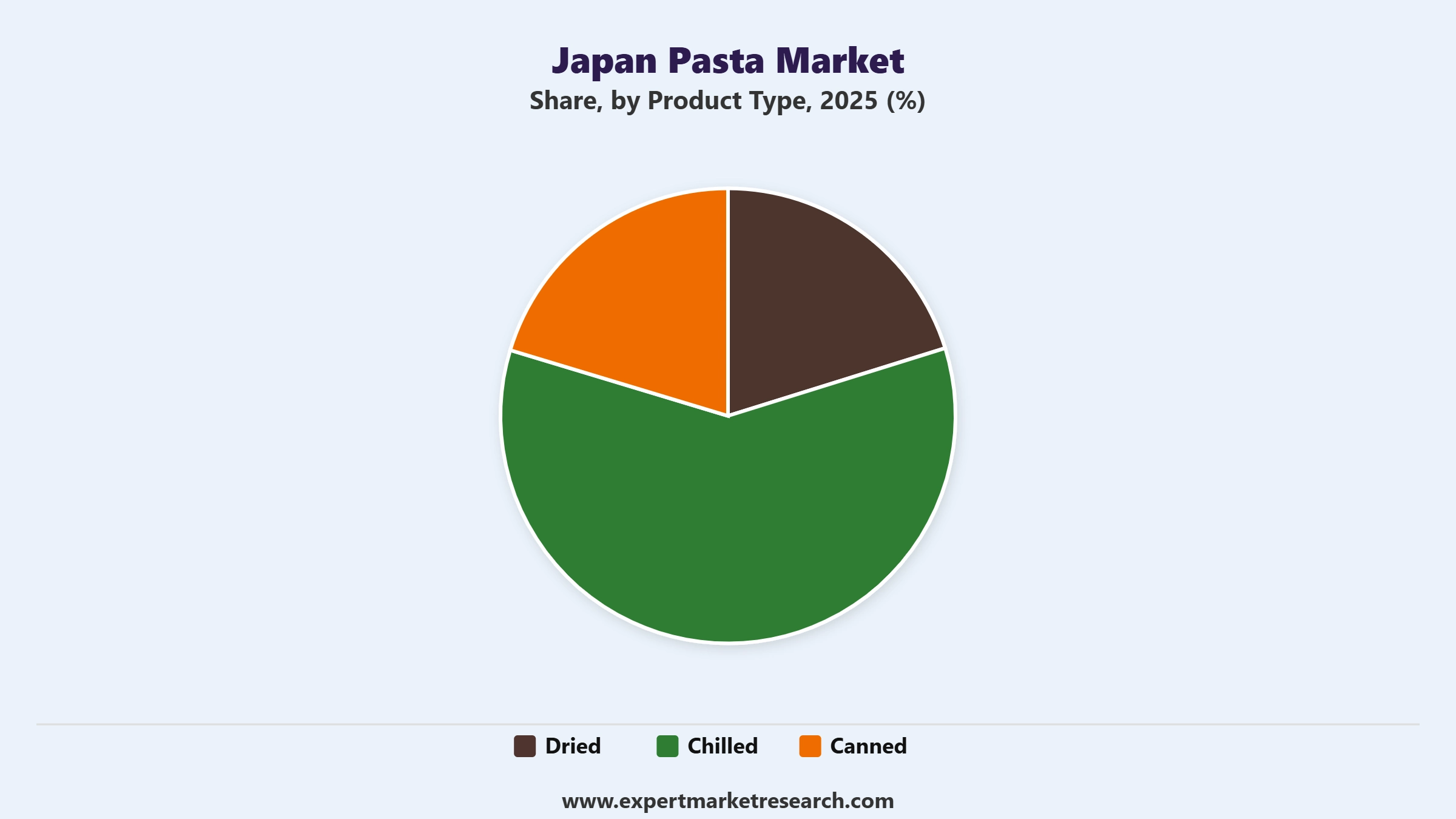
Key Insight: Dried pasta considerably drives the Japan pasta market development. Firms are eager to go beyond plain spaghetti to provide multi-coloured, vegetable-flavoured pasta, whole grain options, or fusion-based packs introducing soba-influenced textures to Italian shapes. Dried pasta is also being applied in meal kits and bento boxes developed for working professionals and school kids. This kind of transition in consumer behaviour is due to the demand for convenience, though without loss of quality or taste. Along with low manufacturing expenses, dried pasta also offers long shelf life and hence, gains with bulk consumption.
Market Breakup by Distribution Channel
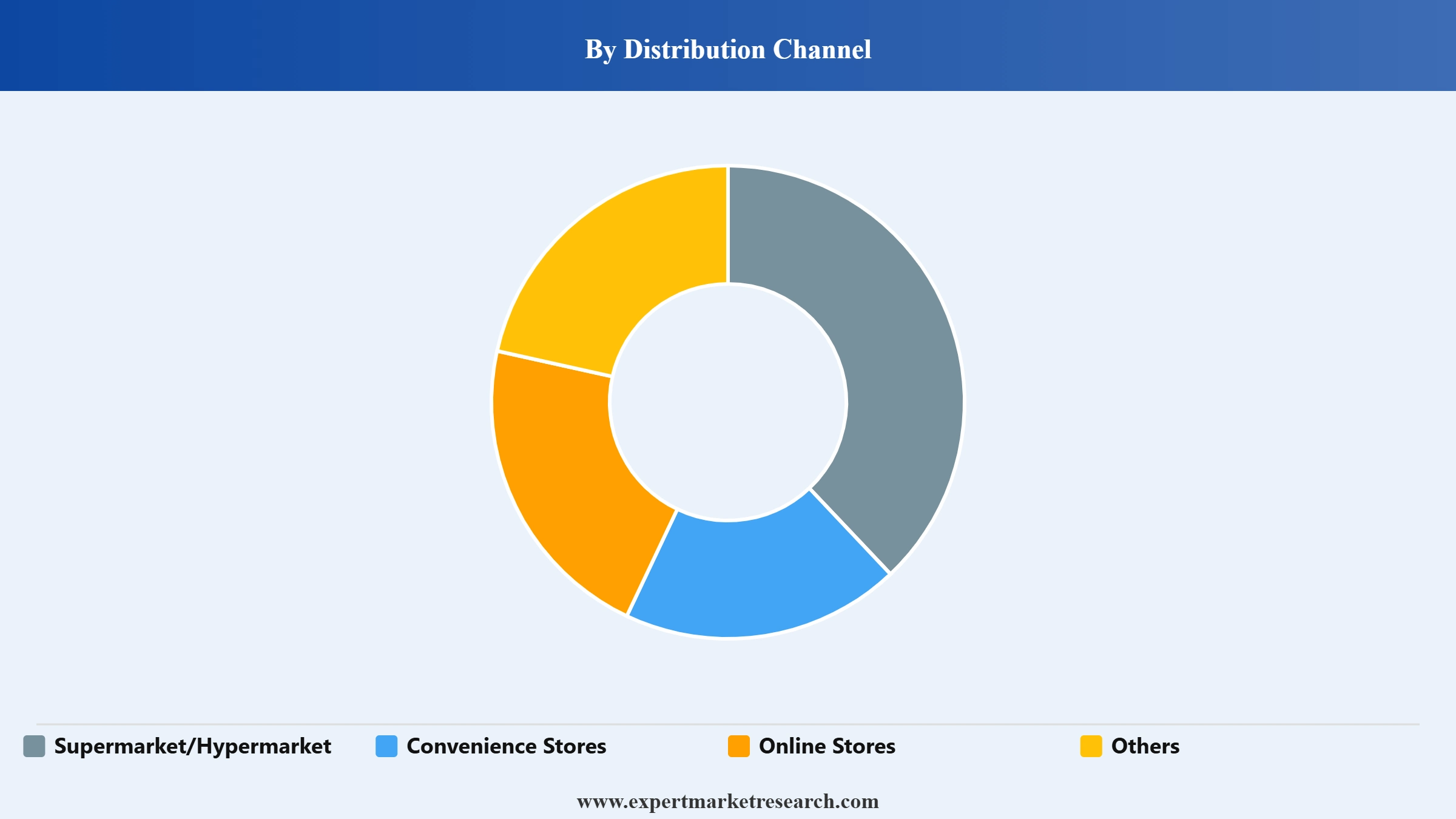
Key Insight: Supermarkets significantly drive the overall pasta consumption in Japan with their strong presence across urban and suburban regions of the country. These stores help educating consumers about new products through sample cooking, recipe cards, and international food fairs. High foot traffic and growing shelf space dedicated to pasta under healthy food and global cuisine categories improve the visibility of the products. Moreover, Japanese supermarkets use data analytics to tailor promotions and stock to match regional taste preferences.
Read more about this report - REQUEST FREE SAMPLE COPY IN PDF
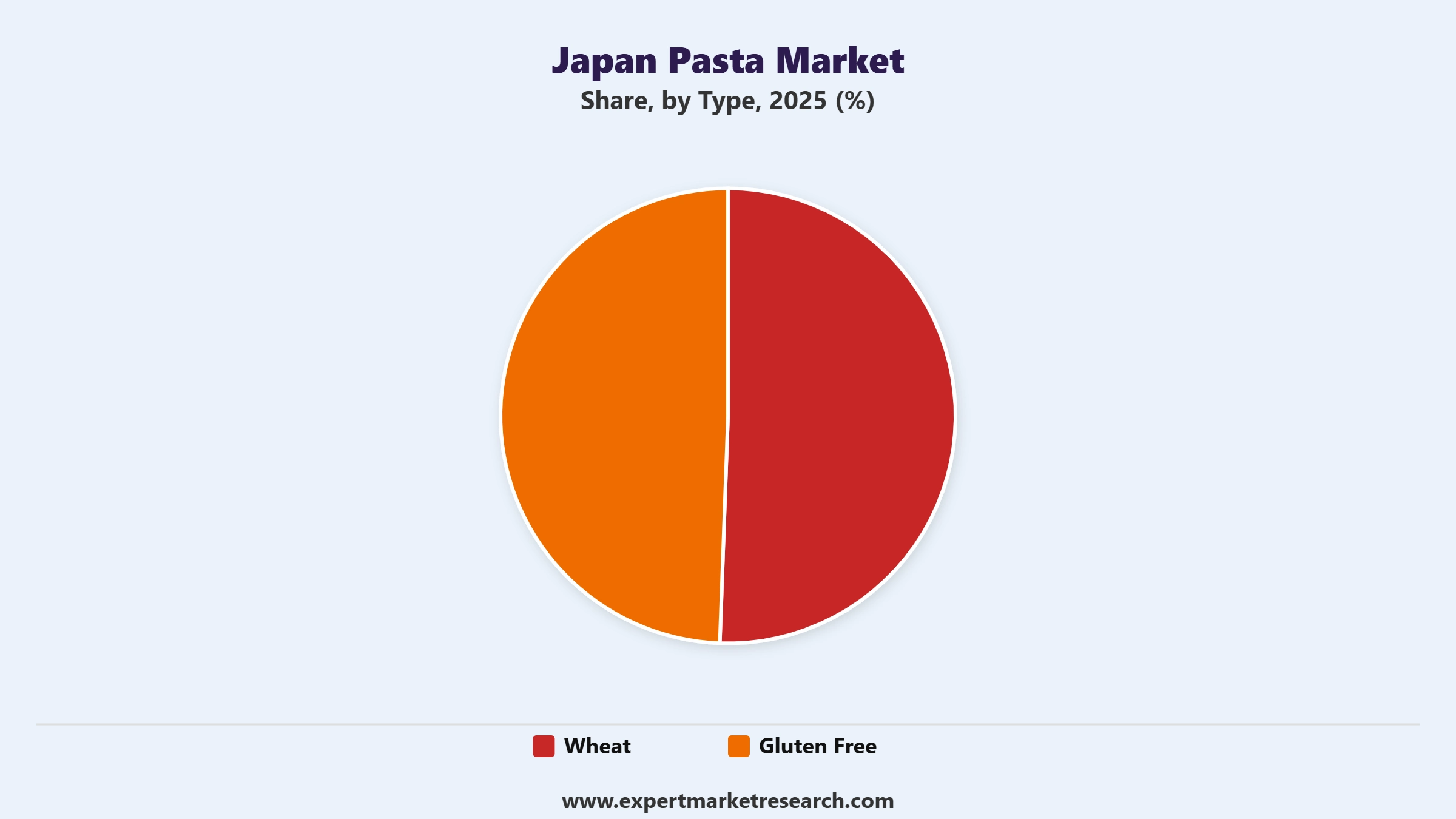
By Type, Wheat-Based Pasta Secure the Dominant Share of the Market
Wheat pasta continues to dominate the Japan pasta market revenue share due to its original taste and consumption level. Wheat pasta is more popular since it is extremely versatile and compatible with different types of sauce and dishes. Moreover, wheat pasta is less costly compared to other categories and therefore more customers can afford it. Being highly utilized in homes and food establishments also helps in the sustained market dominance of wheat pasta.
Read more about this report - REQUEST FREE SAMPLE COPY IN PDF
Due to rising health awareness and dietary habits that lead consumers to adopt gluten-free diets, the gluten-free pasta market in Japan is expanding at a rapid speed. The emergence of this category is primarily fuelled by consumers who are suffering from gluten intolerance or individuals who opt for gluten-free food consumption. Companies are developing and using substitute ingredients such as rice, corn, and legumes to produce gluten-free pasta that offer the same texture and taste as other types of pasta.
By Product Type, Dried Pasta Registers the Leading Position in the Market
Dried pasta occupies the maximum pasta market share in Japan as it offers extended shelf life, affordability, and can be used in almost all households and restaurants as a meal. It is preferred due to the convenience and versatility of meal preparation. Brands like Akagi Foods have come up with special dried pastas marketed with the taste of yuzu and shiso from among other Japanese flavours. Such types of innovations are likely to fit modern consumer demand for convenience and gourmet quality in meals.
Read more about this report - REQUEST FREE SAMPLE COPY IN PDF
Cold or chilled pasta is gaining popularity in Japan, particularly in urban areas. These pasta variants cater to the growing demand of consumers who seek freshness and quality without preparation hassle. Companies like 7-Eleven and Lawson have introduced ready-to-eat cold pasta meals based on unique ingredients such as mentaiko cream, matcha noodles, and ume-shiso sauces. This category thrives due to the strong convenience food consumption and the evolving cold chain infrastructure.
By Distribution Channel, Supermarkets/Hypermarkets Hold the Leading Position in the Market
Supermarkets and hypermarkets remain the largest distribution channels, fuelling the Japan pasta market revenue growth. These stores provide extensive product assortment, promotion campaigns, and sampling in shops, urging consumers to sample new and premium products. Aeon and Ito-Yokado, the famous chains in the country, have recently expanded their private-label pasta range, which has an organic and gluten-free string diced. Pasta is placed near fresh produce and sauces to encourage impulse purchases.
Read more about this report - REQUEST FREE SAMPLE COPY IN PDF
As per the Japan pasta market report, online sales witnesses fast-paced growth because of the extensive expansion of e-commerce platforms such as Rakuten and Amazon Japan. Consumers prefer this mode of purchase as they can find specialty and imported pasta products that may not be found locally. Subscription boxes, filled with curated pasta meals and regional pasta selections, are also becoming popular in the country. This trend, accelerated during the pandemic, has been continuously supported by Japan's tech-savvy population and efficient logistics network, bringing fresh and dried products within reach.
The Japan pasta market players are primarily focusing on innovation, product development, flavour localization, and sustainability to attract health-conscious consumers. They are also developing gluten-free and chilled pasta to target niche segments through online marketing and sustainable packaging strategies. Firms are also launching fusion pasta lines, extending chilled pasta availability to convenience stores, and collaborating with restaurants to co-create branded meals. A key strategy used by Japan pasta companies to gain a competitive edge is launching region-specific pasta flavours that fuse traditional Japanese ingredients, like miso, yuzu, and shiso, into Western formats. This localization strategy appeals to domestic palates while offering novelty. It also enhances brand identity by blending cultural authenticity with innovation, allowing companies to differentiate their offerings in a saturated market and foster stronger connections with Japanese consumers.
Corno Macaroni Co., Ltd., founded in 1946 and located in Osaka, is focused on the traditional and specialty dried pasta lines. More recently, the company has developed low-carb soybean-infused pasta in line with health trends.
Nisshin Seifun Group Inc. is based in Tokyo and was founded in 1900. The company is rapidly investing in gluten-free pasta, R&D efforts, while taking advantage of its strong logistics to get chilled pasta distributed nationally via retail partners.
Japan Foods Holding Ltd was established in 1997 in Singapore. Japan Foods collaborates with restaurant chains to introduce co-branded pasta products in flavors that blend various culinary traditions, for instance, mentaiko-alfredo or teriyaki spaghetti.
Akagi Foods Co., Ltd., established in 1893 in Gunma, specializes in ready-to-consume chilled pasta, having recently upgraded its plant to produce more environmentally packaged bento-type pasta meals.
*Please note that this is only a partial list; the complete list of key players is available in the full report. Additionally, the list of key players can be customized to better suit your needs.*
Other key players in the market are Kraft Heinz, Barilla G. e R. F.lli S.p.A., and F.lli De Cecco di Filippo S.p.A., among others.
Unlock strategic insights with our expertly curated report on the Japan pasta market trends 2026. Download your free sample today to explore the Japan pasta market forecast 2026 and 2035, key growth drivers, and competitive landscape. Stay ahead with data-driven insights from a trusted source. Ideal for investors, policymakers, and manufacturers eyeing Southeast Asia’s rising electronics hub.


Upto 15% Off
USD
$2499 $2249
$3999 $3599
$4999 $4249
$5999 $5099


*While we strive to always give you current and accurate information, the numbers depicted on the website are indicative and may differ from the actual numbers in the main report. At Expert Market Research, we aim to bring you the latest insights and trends in the market. Using our analyses and forecasts, stakeholders can understand the market dynamics, navigate challenges, and capitalize on opportunities to make data-driven strategic decisions.*
In 2025, the Japan pasta market reached an approximate volume of 320.56 KMT.
The market is projected to grow at a CAGR of 2.30% between 2026 and 2035.
The key players in the market include Corno Macaroni Co., Ltd., Nisshin Seifun Group Inc., Japan Foods Holding Ltd, Akagi Foods Co., Ltd., Kraft Heinz, Barilla G. e R. F.lli S.p.A., and F.lli De Cecco di Filippo S.p.A., among others.
Key strategies driving the market include localized flavour innovation, strengthening chilled pasta lines, sustainable packaging, collaboration with convenience chains, and investment in health-related product R&D activities.
The major product types considered in the market report are dried, chilled, and canned.
Explore our key highlights of the report and gain a concise overview of key findings, trends, and actionable insights that will empower your strategic decisions.
| REPORT FEATURES | DETAILS |
| Base Year | 2025 |
| Historical Period | 2019-2025 |
| Forecast Period | 2026-2035 |
| Scope of the Report |
Historical and Forecast Trends, Industry Drivers and Constraints, Historical and Forecast Market Analysis by Segment:
|
| Breakup by Type |
|
| Breakup by Product Type |
|
| Breakup by Distribution Channel |
|
| Market Dynamics |
|
| Competitive Landscape |
|
| Companies Covered |
|
Datasheet
One User
USD 2,499
USD 2,249
tax inclusive*
Single User License
One User
USD 3,999
USD 3,599
tax inclusive*
Five User License
Five User
USD 4,999
USD 4,249
tax inclusive*
Corporate License
Unlimited Users
USD 5,999
USD 5,099
tax inclusive*
*Please note that the prices mentioned below are starting prices for each bundle type. Kindly contact our team for further details.*
Flash Bundle
Small Business Bundle
Growth Bundle
Enterprise Bundle
*Please note that the prices mentioned below are starting prices for each bundle type. Kindly contact our team for further details.*
Flash Bundle
Number of Reports: 3
20%
tax inclusive*
Small Business Bundle
Number of Reports: 5
25%
tax inclusive*
Growth Bundle
Number of Reports: 8
30%
tax inclusive*
Enterprise Bundle
Number of Reports: 10
35%
tax inclusive*
How To Order

Select License Type
Choose the right license for your needs and access rights.

Click on ‘Buy Now’
Add the report to your cart with one click and proceed to register.

Select Mode of Payment
Choose a payment option for a secure checkout. You will be redirected accordingly.
Strategic Solutions for Informed Decision-Making
Gain insights to stay ahead and seize opportunities.

Get insights & trends for a competitive edge.

Track prices with detailed trend reports.

Analyse trade data for supply chain insights.

Leverage cost reports for smart savings

Enhance supply chain with partnerships.

Connect For More Information
Our expert team of analysts will offer full support and resolve any queries regarding the report, before and after the purchase.
Our expert team of analysts will offer full support and resolve any queries regarding the report, before and after the purchase.
We employ meticulous research methods, blending advanced analytics and expert insights to deliver accurate, actionable industry intelligence, staying ahead of competitors.
Our skilled analysts offer unparalleled competitive advantage with detailed insights on current and emerging markets, ensuring your strategic edge.
We offer an in-depth yet simplified presentation of industry insights and analysis to meet your specific requirements effectively.




