

Consumer Insights
Uncover trends and behaviors shaping consumer choices today
Procurement Insights
Optimize your sourcing strategy with key market data
Industry Stats
Stay ahead with the latest trends and market analysis.
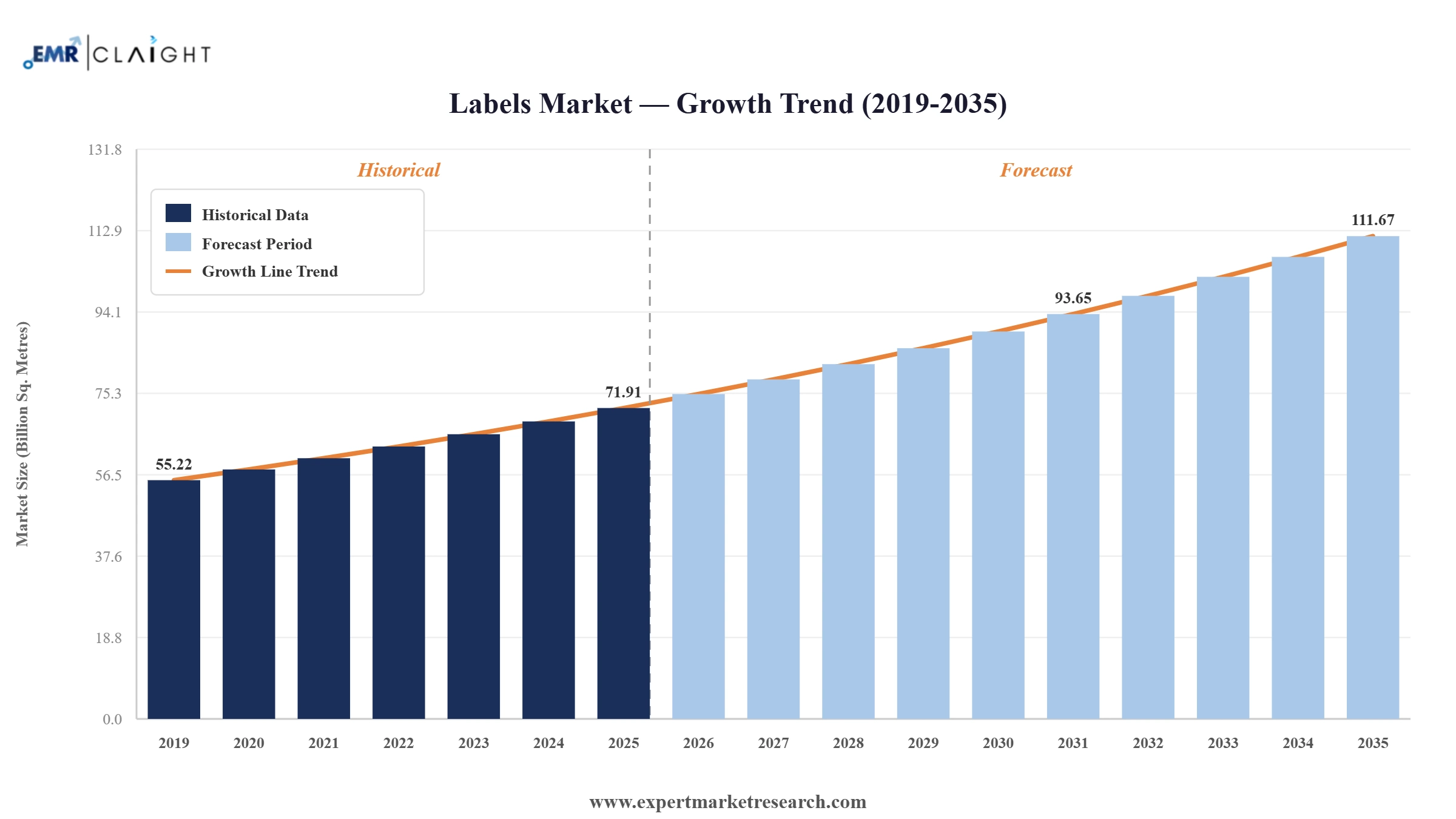
The global labels market size attained a volume of 71.91 Billion Sq. Metres in 2025. Sustainable label substrates, such as biodegradable and recycled films, are gaining prominence among manufacturers due to tightening EU regulations and rising demand from eco-conscious B2B clients across retail and logistics. In turn, the market is expected to grow at a CAGR of 4.50% during the forecast period of 2026-2035 to reach a volume of 111.67 Billion Sq. Metres by 2035.
Read more about this report - REQUEST FREE SAMPLE COPY IN PDF
The global labels market is experiencing significant structural shifts as converters invest in digital press infrastructure, RFID-integrated label solutions, and eco-friendly substrate innovations. Increasing compliance requirements across food, beverage, and pharmaceutical sectors, combined with robust e-commerce growth, are reshaping procurement strategies and competitive priorities for label manufacturers globally.
CCL Industries completed the acquisition of ALT Technologies, a provider of durable automotive and industrial labels, immediately renaming the business CCL Design. The transaction expanded CCL's specialty label portfolio with manufacturing facilities across the Netherlands, Romania, China, and Mexico, strengthening its industrial label segment.
CCL Industries signed a binding option agreement to acquire Sleever International, a specialist in shrink sleeve labels and application equipment serving consumer packaged goods and healthcare markets globally. The transaction values Sleever at approximately USD 151 million, combining two major sleeve businesses.
CCL Industries completed the acquisition of IDESCO Holding, expanding its Avery division's capabilities in secure identification and credentialing solutions globally. The move broadens CCL's footprint in security labels, access control badges, and enterprise identification systems, enhancing its competitive position in the institutional label segment.
CCL Industries, through its Avery division, acquired a UK-based lanyard manufacturer headquartered in the East Midlands, extending Avery's wearable identification product range. The bolt-on acquisition strengthened CCL's presence in the European corporate identification and workplace safety label segment across the United Kingdom.
Rising RFID and NFC adoption is transforming supply chain visibility across retail, logistics, and pharmaceutical sectors. The global labels market benefits from demand for tamper-evident, trackable solutions meeting serialization mandates and connecting physical products to digital ecosystems across major industries.
The global labels market is witnessing accelerated adoption of biodegradable, recycled, and linerless substrates as brands respond to tightening EU packaging waste regulations. Converters are investing in material capabilities to deliver sustainable formats retaining print quality and strong adhesive performance.
Investment in digital label presses enables converters to offer personalized, variable data, and short-run production economically. Global labels market growth is propelled by food, personal care, and craft beverage brand owners seeking agile print workflows and reduced minimum order quantities.
The expansion of global e-commerce is fuelling demand for shipping, barcoded, and thermal labels across warehousing, last-mile logistics, and returns management. Labels market growth benefits as platform sellers globally adopt carrier-integrated, on-demand printing systems at scale for high-volume parcel processing.
Stricter food and pharmaceutical labeling regulations in North America, Europe, and Asia Pacific mandate serialization, allergen disclosure, and track-and-trace codes on packaging. These requirements are expanding the global labels industry by driving volume growth in pharmaceutical-grade pressure sensitive label formats.
The report of the Expert Market Research's titled "Global Labels Market Report and Forecast 2026-2035" offers a detailed analysis of the market based on the following segments:
Market Breakup by Material
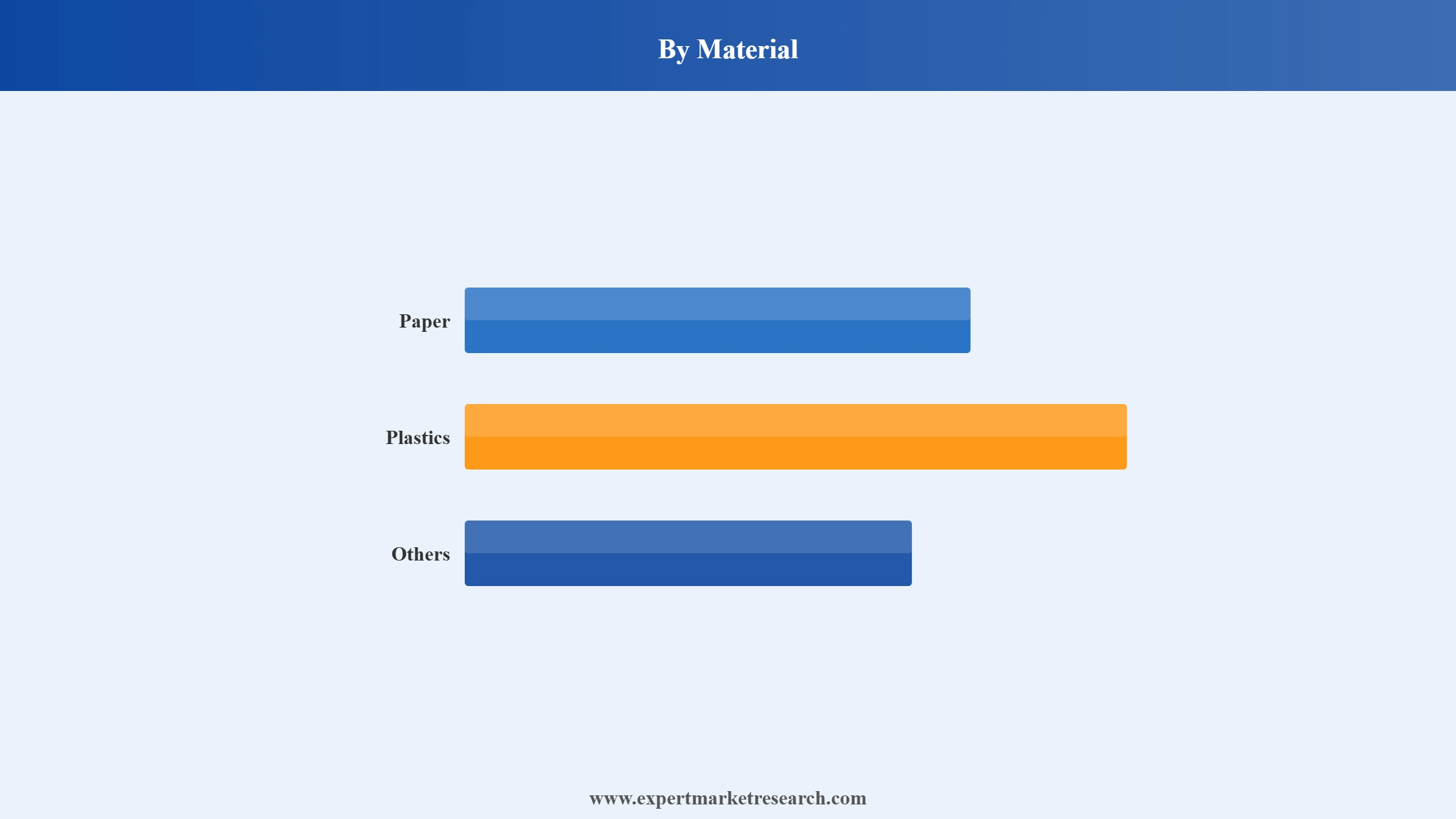
Key Insight: Paper holds the leading position in the global labels market, driven by widespread adoption in food and beverage, retail, and consumer goods sectors where sustainability alignment and printability are critical. Growth in recycled paper substrates and FSC-certified materials reinforces paper's dominance as EU regulations tighten. Plastics, encompassing polypropylene, polyethylene, and PET films, command significant share in pharmaceutical, personal care, and logistics labeling due to their resistance to moisture, chemicals, and mechanical stress.
Market Breakup by Application
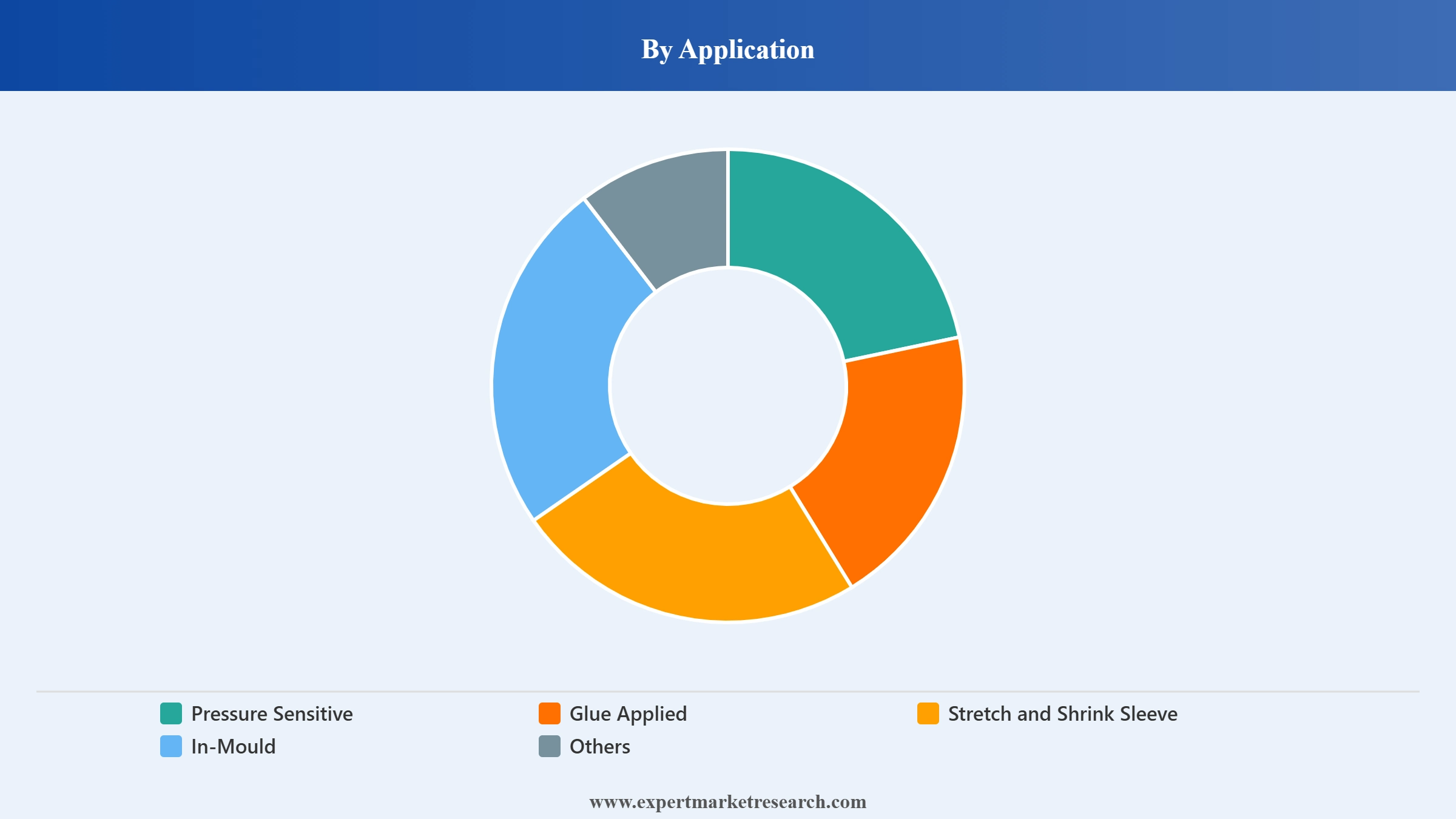
Key Insight: Pressure sensitive labels lead the global labels market by application, capturing approximately 55% of total volume. Their self-adhesive functionality, compatibility with diverse substrates, and support for digital printing make them the preferred choice across food, pharmaceutical, retail, and logistics sectors. The glue applied segment retains relevance in high-volume beverage labeling, particularly for glass bottles. Stretch and shrink sleeve labels are gaining traction in beverage and personal care sectors for their 360-degree branding capability and tamper evidence properties.
Market Breakup by Region
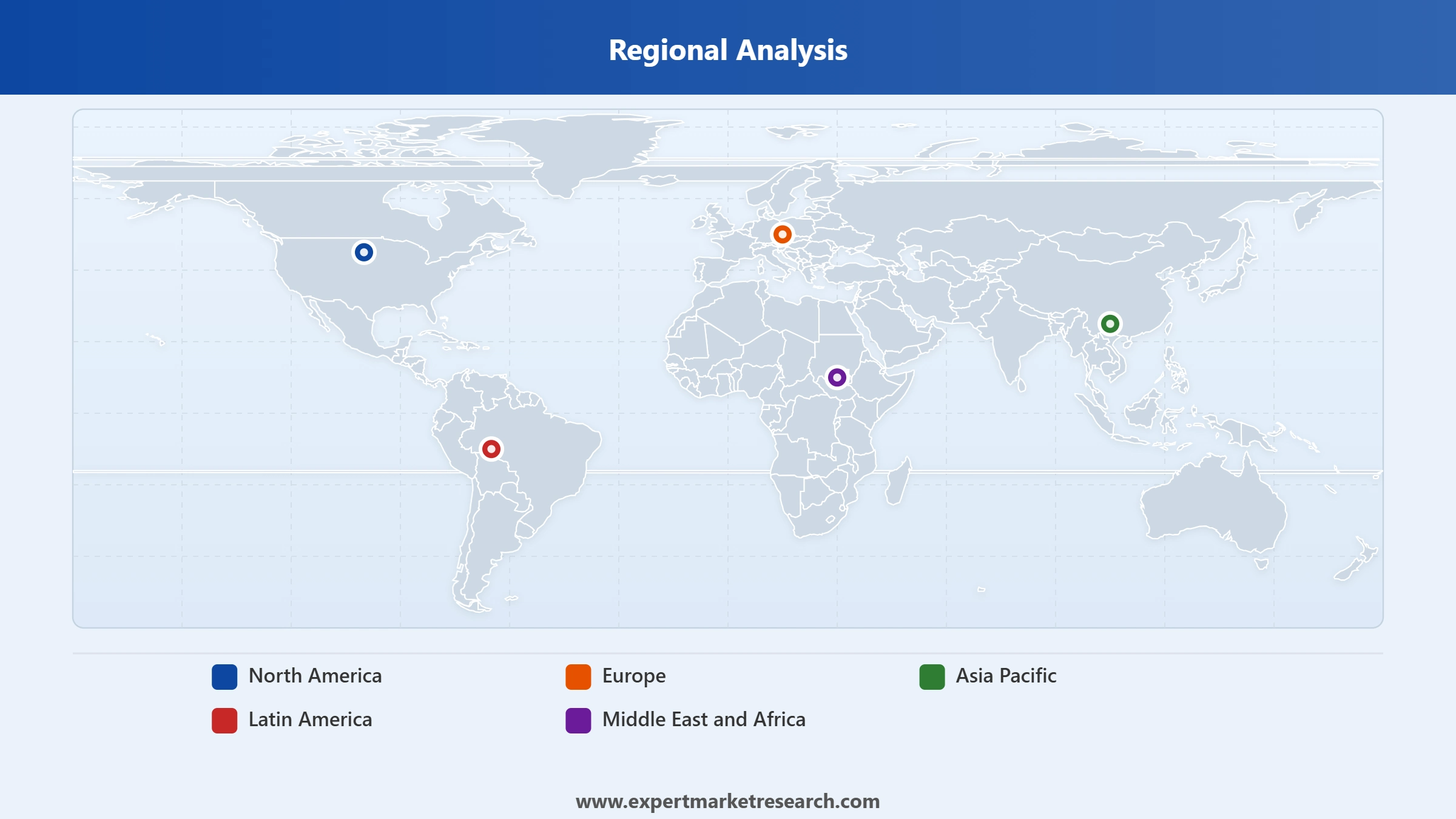
Key Insight: Asia Pacific is the largest and fastest-growing regional market in the global labels industry, accounting for approximately 41% of global volume, driven by rapid expansion of manufacturing and consumer goods sectors in China, India, and Southeast Asia. Increasing investment in food safety and pharmaceutical compliance is reinforcing long-term label demand. North America is the second-largest market, bolstered by stringent compliance requirements, strong retail infrastructure, and heavy adoption of intelligent label technologies.




Read more about this report - REQUEST FREE SAMPLE COPY IN PDF
By Material, paper dominates the market due to widespread use in food and sustainable packaging
Paper is the dominant material in the global labels market, driven by its versatility in food and beverage packaging, strong recyclability profile, and compatibility with flexographic and digital printing technologies. The food and beverage industry, which accounts for the largest share of label consumption globally, favors paper substrates for their cost efficiency and sustainability credentials. Major converters maintain robust paper label portfolios to serve retail and private label customers requiring eco-compliant packaging solutions.
Read more about this report - REQUEST FREE SAMPLE COPY IN PDF
Plastics represent the second major material category and are gaining share in pharmaceutical, personal care, and logistics labeling due to their chemical resistance and moisture barriers. In March 2026, CCL Industries signed an agreement to acquire Sleever International, expanding durable film and sleeve label capabilities globally. The ongoing demand for bio-based film alternatives is creating opportunities for next-generation plastic label substrates that combine performance with improved recyclability in the global labels market.
By Application, pressure sensitive labels account for the dominant share of the market due to ease of use and cross-industry adaptability
Pressure sensitive labels dominate the global labels market application segment by commanding approximately 55% of total volume. Their no-heat, no-water adhesion mechanism simplifies high-speed application across food, pharmaceutical, retail, and logistics sectors. Fuji Seal International and Multi-Color Corporation serve global brand owners with extensive ranges of pressure sensitive label formats compatible with both flexographic and digital printing platforms, ensuring reliable performance across temperature-sensitive and humid environments.
Read more about this report - REQUEST FREE SAMPLE COPY IN PDF
The stretch and shrink sleeve segment is among the fastest-growing application categories, driven by demand for full-body branding coverage on irregular container shapes within the beverage, personal care, and household cleaning sectors. In March 2026, CCL Industries signed an agreement to acquire Sleever International for approximately USD 151 million, combining two major sleeve label businesses with approximately USD 700 million in combined 2025 revenues, significantly accelerating CCL's position in the global labels market.
Asia Pacific dominates the market due to rapid manufacturing growth and rising consumer goods demand
Asia Pacific leads the global labels market, accounting for approximately 41% of global volume, supported by China's vast manufacturing output, India's rapidly expanding packaged goods sector, and Southeast Asia's growing e-commerce ecosystem. Increasing government investment in food safety and pharmaceutical compliance requirements across the region is reinforcing long-term label demand. ASEAN markets are emerging as high-growth zones as organized retail penetration deepens across Thailand, Vietnam, and Indonesia.
Read more about this report - REQUEST FREE SAMPLE COPY IN PDF
North America is the second-largest regional market in the global labels industry, characterized by high adoption of intelligent label technologies, including RFID and NFC-integrated formats, across retail supply chains. The United States labels market reached USD 7.11 Billion in 2025 and is forecast to grow to USD 9.65 Billion by 2035. Regulatory compliance requirements from the FDA and USDA continue to drive consistent label specification upgrades across food and pharmaceutical packaging channels.
The global labels market is characterized by a mix of large, multinational converters and specialized regional players. Consolidation is accelerating as leading companies pursue strategic acquisitions to expand product portfolios, geographic reach, and technological capabilities across pressure sensitive, shrink sleeve, and intelligent label formats. Top players maintain extensive manufacturing networks across multiple continents to serve multinational consumer goods, pharmaceutical, and retail clients.
Founded in 1951 and headquartered in Toronto, Canada, CCL Industries is the world's largest converter of pressure sensitive and specialty extruded film materials. Operating more than 214 facilities in 42 countries, CCL serves global corporations in consumer packaging, healthcare, electronics, and automotive markets, recently expanding through acquisitions of ALT Technologies and Sleever International.
Multi Packaging Solutions International Limited provides premium packaging solutions, specializing in specialty labels and folding cartons for beauty, spirits, healthcare, and consumer goods industries. The company operates production facilities across North America, Europe, and Asia, serving leading multinational brands with complex decoration, embellishment, and specialty substrate capabilities.
Founded in 1916 and headquartered in Ohio, USA, Multi-Color Corporation is among the world's leading label companies, serving food and beverage, wine and spirits, personal care, and healthcare markets. Operating across more than 30 countries, it provides pressure sensitive, cut and stack, heat-applied, and shrink sleeve labels to global brand owners.
Founded in 1897 and headquartered in Osaka, Japan, Fuji Seal International specializes in shrink sleeve labels, pressure sensitive labels, spouted pouches, and application machinery. With operations across Japan, the Americas, Europe, and Asia Pacific, Fuji Seal serves food, beverage, personal care, and pharmaceutical customers with innovative heat-shrink sleeve technologies.
Other key players in the market are UPM Adhesive Materials, and Others.
*Please note that this is only a partial list; the complete list of key players is available in the full report. Additionally, the list of key players can be customized to better suit your needs.*
Explore in-depth insights on the global labels market 2026 with our comprehensive industry report. Stay informed on emerging substrate innovations, intelligent label adoption trends, and the fastest-growing regional markets shaping the industry through 2035. Whether you are a converter seeking to expand capabilities or an investor evaluating packaging sector opportunities, this report delivers the clarity you need. Download your free sample today and uncover the key growth opportunities in the dynamic labels industry.
North America Cryogenic Label Printer Market
United States Label Release Liner Market
Automatic Labelling Machine Market
Warning Labels and Stickers Market
North America Print Label Market


Upto 15% Off
USD
$2499 $2249
$3999 $3599
$4999 $4249
$5999 $5099


*While we strive to always give you current and accurate information, the numbers depicted on the website are indicative and may differ from the actual numbers in the main report. At Expert Market Research, we aim to bring you the latest insights and trends in the market. Using our analyses and forecasts, stakeholders can understand the market dynamics, navigate challenges, and capitalize on opportunities to make data-driven strategic decisions.*
In 2025, the labels market reached an approximate volume of 71.91 Billion Sq. Metres.
The market is projected to grow at a CAGR of 4.50% between 2026 and 2035.
The market is estimated to witness a healthy growth in the forecast period of 2026-2035 to reach a volume of almost 111.67 Billion Sq. Metres by 2035.
Key strategies driving the market include investing in digital presses, adopting linerless formats, developing region-specific label variants, integrating RFID tech, and forming recycling partnerships.
The key trends aiding the market include sustainable packaging labels, clean and allergen-free labels, variable data printing in labels, and the rising adoption of smart labels.
The major regions in the market are North America, Latin America, the Middle East and Africa, Europe, and the Asia Pacific.
The major materials of labels considered in the market report include paper and plastic, among others.
The significant applications of labels include pressure sensitive, glue applied, stretch and shrink sleeve, and in-mould, among others.
The major players in the market are CCL Industries, Multi Packaging Solutions International Limited, Multi-Color Corporation, Fuji Seal International, Inc., and DPS Group, among others.
The key challenges are high raw material volatility, recycling compliance costs, and complex global regulatory divergence. Integrating smart tech with legacy systems also remains a barrier for mass-scale adoption.
Explore our key highlights of the report and gain a concise overview of key findings, trends, and actionable insights that will empower your strategic decisions.
| REPORT FEATURES | DETAILS |
| Base Year | 2025 |
| Historical Period | 2019-2025 |
| Forecast Period | 2026-2035 |
| Scope of the Report |
Historical and Forecast Trends, Industry Drivers and Constraints, Historical and Forecast Market Analysis by Segment:
|
| Breakup by Material |
|
| Breakup by Application |
|
| Breakup by Region |
|
| Market Dynamics |
|
| Competitive Landscape |
|
| Companies Covered |
|
| Report Price and Purchase Option | Explore our purchase options that are best suited to your resources and industry needs. |
| Delivery Format | Delivered as an attached PDF and Excel through email, with an option of receiving an editable PPT, according to the purchase option. |
Datasheet
One User
USD 2,499
USD 2,249
tax inclusive*
Single User License
One User
USD 3,999
USD 3,599
tax inclusive*
Five User License
Five User
USD 4,999
USD 4,249
tax inclusive*
Corporate License
Unlimited Users
USD 5,999
USD 5,099
tax inclusive*
*Please note that the prices mentioned below are starting prices for each bundle type. Kindly contact our team for further details.*
Flash Bundle
Small Business Bundle
Growth Bundle
Enterprise Bundle
*Please note that the prices mentioned below are starting prices for each bundle type. Kindly contact our team for further details.*
Flash Bundle
Number of Reports: 3
20%
tax inclusive*
Small Business Bundle
Number of Reports: 5
25%
tax inclusive*
Growth Bundle
Number of Reports: 8
30%
tax inclusive*
Enterprise Bundle
Number of Reports: 10
35%
tax inclusive*
How To Order

Select License Type
Choose the right license for your needs and access rights.

Click on ‘Buy Now’
Add the report to your cart with one click and proceed to register.

Select Mode of Payment
Choose a payment option for a secure checkout. You will be redirected accordingly.
Strategic Solutions for Informed Decision-Making
Gain insights to stay ahead and seize opportunities.

Get insights & trends for a competitive edge.

Track prices with detailed trend reports.

Analyse trade data for supply chain insights.

Leverage cost reports for smart savings

Enhance supply chain with partnerships.

Connect For More Information
Our expert team of analysts will offer full support and resolve any queries regarding the report, before and after the purchase.
Our expert team of analysts will offer full support and resolve any queries regarding the report, before and after the purchase.
We employ meticulous research methods, blending advanced analytics and expert insights to deliver accurate, actionable industry intelligence, staying ahead of competitors.
Our skilled analysts offer unparalleled competitive advantage with detailed insights on current and emerging markets, ensuring your strategic edge.
We offer an in-depth yet simplified presentation of industry insights and analysis to meet your specific requirements effectively.




