

Consumer Insights
Uncover trends and behaviors shaping consumer choices today
Procurement Insights
Optimize your sourcing strategy with key market data
Industry Stats
Stay ahead with the latest trends and market analysis.
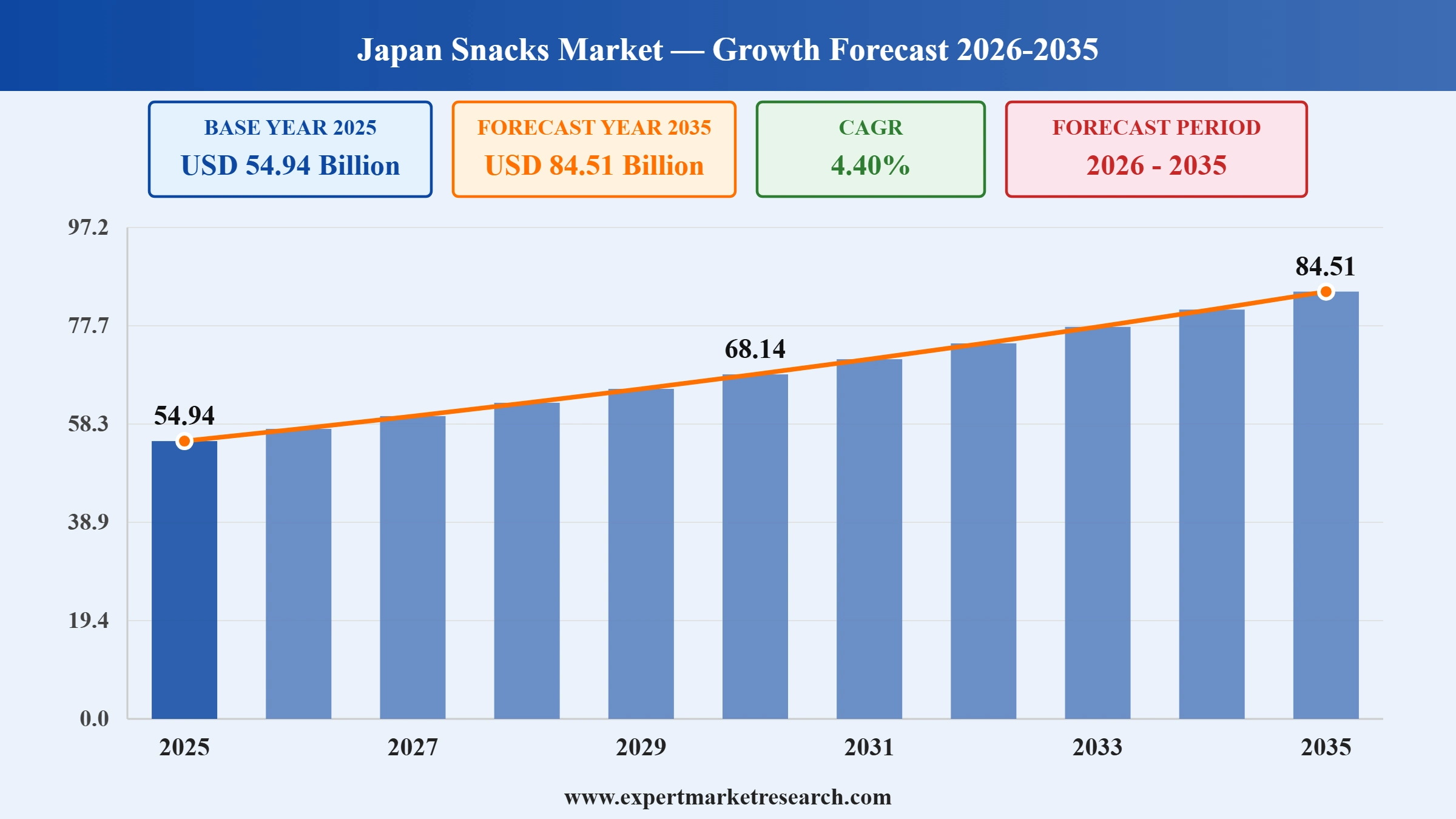
The Japan snacks market was valued at USD 54.94 Billion in 2025. The market is expected to grow at a CAGR of 4.40% during the forecast period of 2026-2035. Limited-edition regional flavours, often co-created with local producers, are driving impulse purchases and encouraging snack consumption. In return, the market is expected to reach a value of USD 84.51 Billion by 2035.
Upcycled snacks are emerging as a key trend that is boosting the Japan snack market growth, aligning with increased consumer interest in sustainability and food innovation. Made from surplus ingredients like vegetable peels and fruit pulp, these snacks directly support Japan’s national goal to reduce food loss. According to the Ministry of Agriculture, Forestry and Fisheries (MAFF), Japan reduced food waste by 510,000 tons in 2022. As public awareness grows, these eco-conscious snacks are attracting consumers seeking both flavour and environmental responsibility.
The snack market in Japan is rapidly evolving with the dual rise of online platforms and traditional convenience stores. In 2024, major convenience store chains saw record sales of JPY 11.8 trillion, while the online grocery market reached USD 40.4 billion, projected to grow significantly by 2033. This shift is driven by demand for convenience, same-day delivery, and AI personalization. Additionally, consumers increasingly favour healthier snacks, prompting both retail formats to adapt.
In addition, companies in the Japan snacks industry are shifting their focus towards sustainable packaging and clean label ingredients in response to the rising environmental and health concerns. Such shifts are expected to position the industry to benefit significantly after developing a unique competitive advantage of converging tradition with technology and personalization during the forecast period.
Read more about this report - REQUEST FREE SAMPLE COPY IN PDF
| Japan Snacks Market Report Summary |
Description |
Value |
|
Base Year |
USD Billion |
2025 |
|
Historical Period |
USD Billion |
2019-2025 |
|
Forecast Period |
USD Billion |
2026-2035 |
|
Market Size 2025 |
USD Billion |
54.94 |
|
Market Size 2035 |
USD Billion |
84.51 |
|
CAGR 2019-2025 |
Percentage |
XX% |
|
CAGR 2026-2035 |
Percentage |
4.40% |
|
CAGR 2026-2035- Market by Product Type |
Frozen Snacks |
5.0% |
|
CAGR 2026-2035 - Market by Distribution Channel |
Online |
8.8% |
Calbee transformed its Madera, California site into a Snack Lab, focusing on product innovation, automation, and sustainability. The facility develops next-gen snacks tailored for United States consumers, emphasizing research, speed, and flexibility. This development signals the Japan’s export-oriented snack innovation strategy, enabling faster adaptation of Japanese snack trends for global markets while refining R&D and sustainability practices.
Meiji, the Japanese candy giant, expanded its WELLCACAO line with a new snack product called Spicy Crisp, which is made with its unique cacao-based ingredient, cacao granules. This groundbreaking substance, created through a regulated fermentation process, decreases bitterness while retaining important nutrients like polyphenols and lipids. This development introduces functional snacking by merging wellness ingredients with indulgence, appealing to Japan’s health-aware consumers without sacrificing taste or traditional flavour profiles.
Otsuka Foods launched five renewed Bon Curry NEO products, featuring richer, more flavourful curry and modernized packaging designed to enhance convenience, appeal, and the overall instant meal experience for consumers. This launch reflects the growing emphasis on quality and convenience in ready-to-eat snacks, targeting busy urban consumers seeking premium, time-saving meal solutions.
Mik Japan Co., Ltd. launched a new subscription service that supplies world-renowned Japanese snacks to consumers living in the United States. Every month, this service sends carefully selected, high-quality Japanese treats to consumers' doorsteps. Mik Japan’s overseas snack subscription service expands global demand for Japanese treats, reinforcing brand value and promoting domestic snack culture to international audiences through curated exports.
The rapid consumption of “flavourless” confectionery products like that of Kanro’s Aji no Shinai? Ame is shaping up the Japan snacks market dynamics. Initially made for mask-wearers, these have grown popular for being discreet, healthy, and mildly sweet. B2B companies are marketing these through novelty-focused packaging, subtle wellness messaging, and collaborations with workplaces and public spaces like transit hubs. This approach targets health-conscious, low-stimulation consumers while opening new retail channels beyond traditional snack aisles, boosting both visibility and trial.
The functional snacks market in Japan is currently booming due to increasing health consciousness. These products are aimed at boosting immunity, digestive function, and even mood enhancement. Companies like Meiji and Asahi are developing new product offers which feature probiotics, collagen, and dietary fibre. As of 2024, the Department of Health has amended the Food Labelling Act to endorse functional health claims to spur public confidence in such products. Consequently, there has been an increase in sales of "beauty gummies" and "brain-boosting chocolates", as demanded by working adults and older consumers.
The clean-label trend has now matured into minimalist traceability movements, boosting the Japan snacks market development. Artificial additives, GMOs, and synthetic colours are being actively avoided by shoppers. In fostering this demand, Kellogg's Japan and Nestlé reformulated their major SKUs. Moreover, the Japanese Agricultural Standards (JAS) system has tightened enforcement of organic certification, encouraging the use of natural ingredients. Innovations include “single-origin rice crackers” and “farm-partnered dried fruits” equipped with QR codes, which help in tracing factory sourcing.
Traditional flavours are being increasingly reinterpreted in the Japan snacks industry. Innovations include kinako (roasted soybean flour)-salted caramel, mango-infused matcha, and yuzu-pepper rice crisps. Companies like Koikeya plan to introduce seasonal editions, mixing nostalgic ingredients with trendy culinary themes such as Wasabi Maple Chips. Furthermore, local services are initiated by the government to promote the use of prefecture-level local ingredients.
Digital commerce is considerably boosting the Japan snack market value. Online grocery and D2C (direct-to-consumer) snack brands are rapidly growing in terms of popularity. Limited-edition subscription snack boxes are available on Rakuten and Amazon Japan. Startups are also coming up with snack subscription AI boxes that analyse the taste profiles of consumers. Traditional manufacturers like Calbee have launched an e-commerce-exclusive snack line featuring AI-generated flavours. This channel is becoming a key revenue generator with the promise of convenience and novelty for Gen Z and urban professionals alike.
The EMR’s report titled “Japan Snacks Market Report and Forecast 2026-2035” offers a detailed analysis of the market based on the following segments:
Market Breakup by Product Type
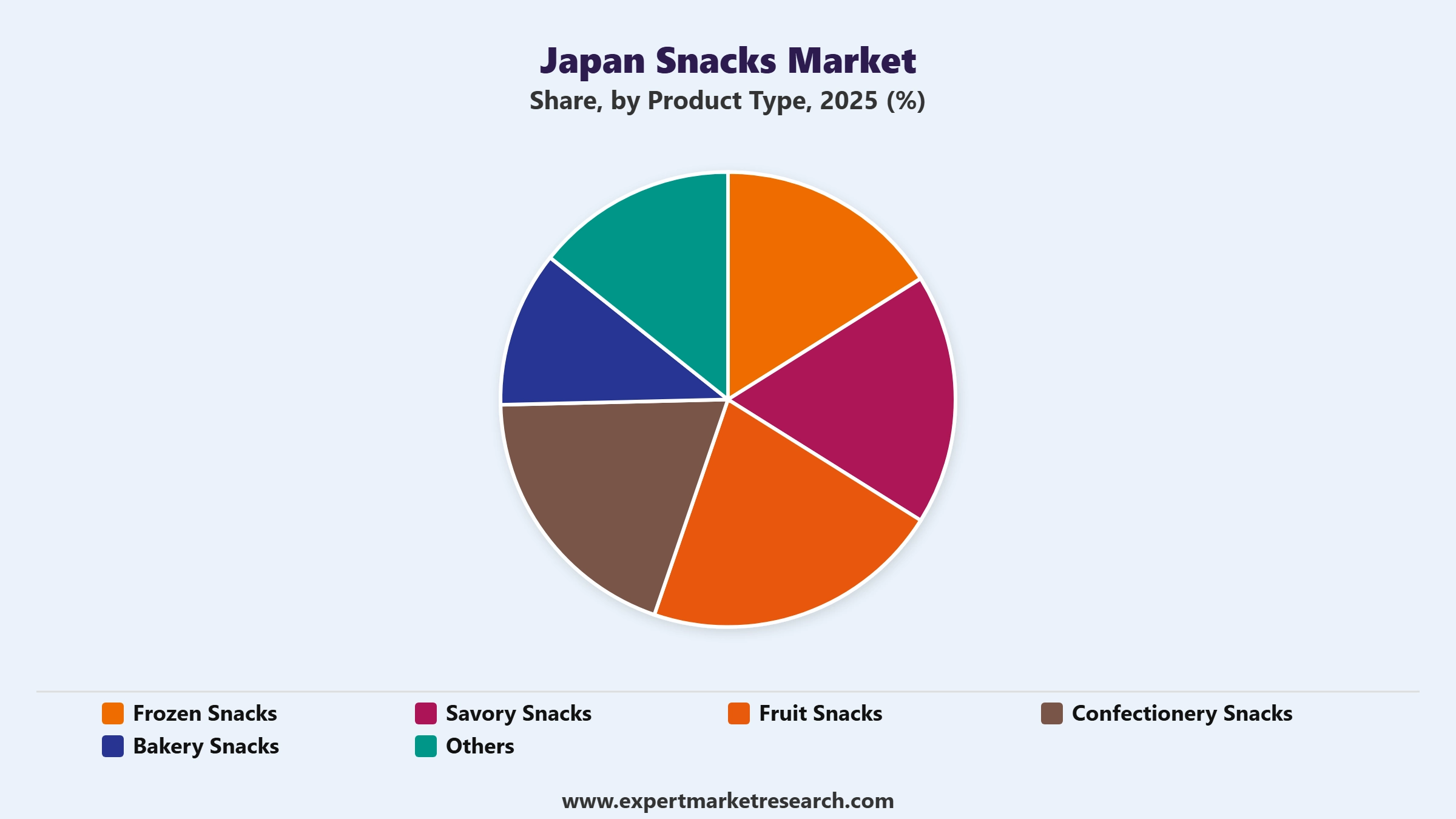
Key Insight: Savoury snacks have been the largest category that is accelerating the demand in the Japan snacks market. Innovations such as miso-butter potato chips or matcha-edamame crackers are flavour-oriented snacks that also indicate cultural identity. Leading players are collaborating to come up with products like "Kyoto Uji Tea Crackers". Furthermore, new subcategories "vegetable-based crisps" or "protein puffs" attract health-focused consumers who seek snacking options without compromising the signature bold, umami-rich flavours.
Market Breakup by Distribution Channel
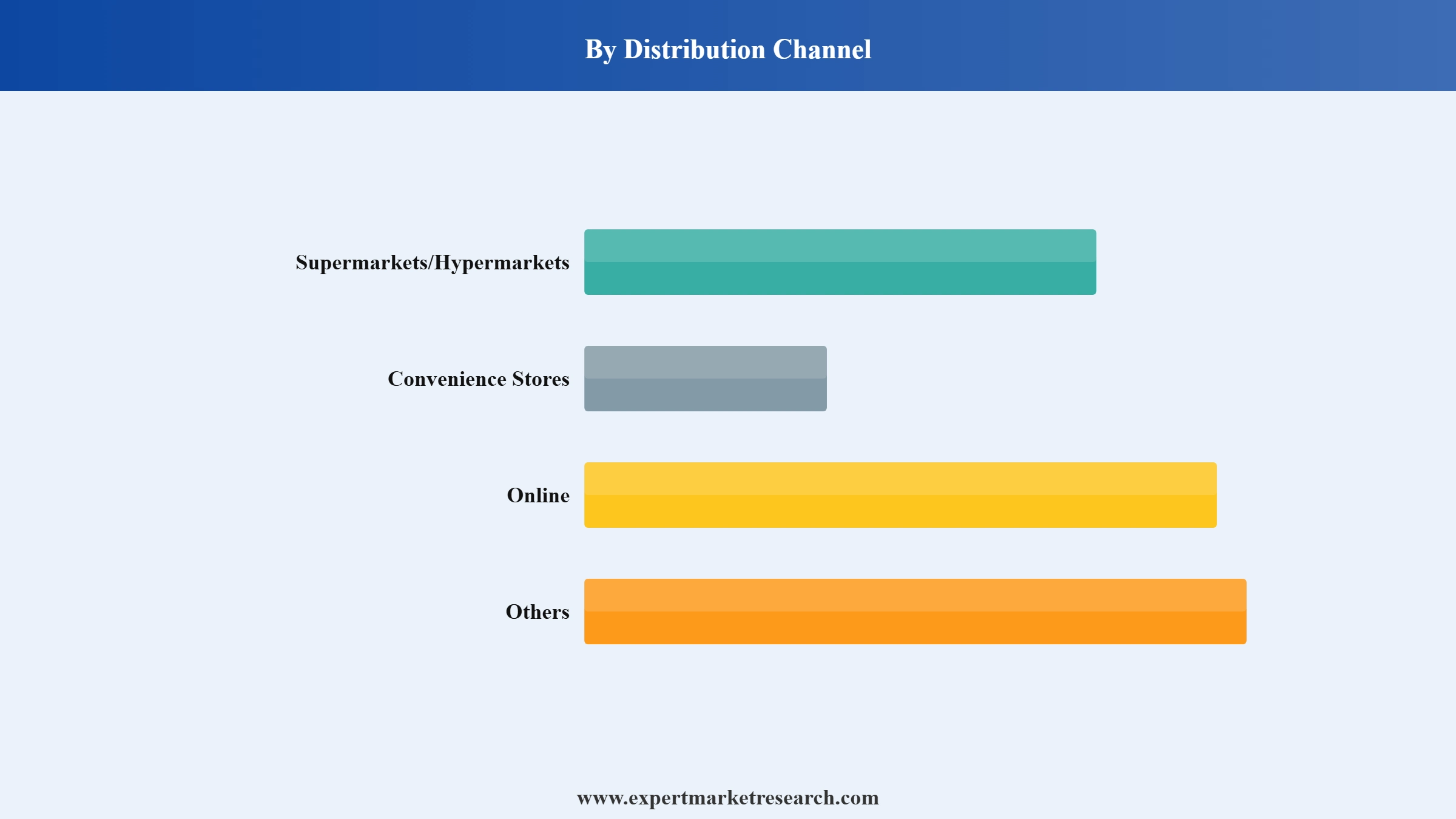
Key Insight: Convenience stores, being hubs for snack innovation, have remained dominant as per the snacks market share in Japan. Collaborations between retailers and manufacturers have resulted in popular snack items like “mini mochi bars” that align with lunchboxes and seasonal confections. Smart shelving systems and shopper analytics support real-time inventory management.
Read more about this report - REQUEST FREE SAMPLE COPY IN PDF
By Product Type, Savory Snacks Largely Contribute to the Market Growth
Savory snacks remain the largest and most influential category that is boosting the Japan snacks market revenue growth. Rice crackers, seaweed crisps, and umami-flavoured chips continue to resonate with consumers. Koikeya and Calbee dominate with bold innovations like “soup-inspired chips” and “regional ramen flavour crisps.” These brands capitalize on local preferences and nostalgia. A shift towards baked, not fried, formats aligning with health trends is also evident in the market. Savory snacks' ability to blend heritage with flavour experimentation retains their dominance in both retail and seasonal marketing campaigns.
Read more about this report - REQUEST FREE SAMPLE COPY IN PDF
Fruit snacks are gaining rapid momentum in the Japan snacks demand forecast, driven by the country’s wellness-oriented population. Freeze-dried mandarin slices, collagen-infused fruit bars, and yuzu jellies provide nutrition and novelty. Domestic brands are focused on local fruit varieties, like Shine Muscat and Kyoho grapes, to set their products apart. Moreover, consumers perceive these snacks as guilt-free indulgences. Government imposed food education programmes like "Shokuiku," encouraging fruit intake among children have also helped boost demand.
By Distribution Channel, Convenience Store Account for the Dominant Share of the Market
Japan's "konbini" network including 7-Eleven, Lawson, FamilyMart, stands as the strongest retail outlets that have collectively accelerated growth in the Japan snacks market. With more than 56,000 locations, these stores offer a wide variety of snack assortments. Collaborations with anime, celebrity chefs, and even social media influencers promote quick consumer trials. Limited-time-only snacks, such as "Moon Viewing Dango Puffs," create exhilarating hype that draws foot traffic.
Read more about this report - REQUEST FREE SAMPLE COPY IN PDF
The e-commerce industry is the fastest-expanding channel that is widening the scope for Japan snacks market expansion. The online retail is expected to grow at a CAGR of 8.8% over the forecast period. Tech-savvy consumers prefer curated snack boxes, algorithmic recommendations, and flavours exclusively found on online channels. AI-personalized snack deliveries are offered by platforms like SnackMe and Mujirushi. Brands have also resorted to live-streamed snack tastings and influencer-led product launches to draw the digital audience.
The Japan snacks market players are focusing on flavour innovations and AI-based personalization, health benefits along with digital retailing strategies. Most of the firms are collaborating with tech startups, while concentrating on ethical sourcing of ingredients, and emotional branding in response to growing demands. Functional snacks, subscription models, collaborations with industries like entertainment, health, and tourism, further offer opportunities for growth. Japan snack companies like Meiji continues to push boundaries through its functional snacking lines like WELLCACAO, appealing to health-conscious and premium-seeking consumers. Meanwhile, newer entrants and regional brands are developing products with locally sourced ingredients, traditional preparation methods, and D2C models. Convenience store chains such as Lawson, 7-Eleven, and FamilyMart play a critical role in distribution, often co-developing exclusive SKUs with snack manufacturers to drive in-store footfall. Imported brands and cross-border e-commerce are also gaining visibility, although domestic loyalty remains high.
Kellanova is a publicly traded company, based in Chicago, United States. The company is known for developing culturally attuned snack SKUs for Japan based on real-time consumer feedback received from digital platforms.
PepsiCo, Inc. was founded in the year 1898 and has its head office in New York, United States. One of the measures adopted by PepsiCo to establish its market base in Japan is co-branding with elements of Japanese pop culture.
Founded in 1899, Morinaga & Co., Ltd. is a Japan-based company in Tokyo. The company largely emphasizes functional ingredients by developing snack lines. Morinaga produces collagen-rich and enzyme-enhanced snacks targeted at health-conscious consumers.
Founded in 1856 in Minnesota, United States, General Mills invests through D2C snack channels and region-based new product launches leveraged on Japan's festival and seasonal cycles.
*Please note that this is only a partial list; the complete list of key players is available in the full report. Additionally, the list of key players can be customized to better suit your needs.*
Other key players in the market are Mondelez International, Inc., Nestle SA, Meiji Holdings Co., Ltd., Calbee, Inc., and Ezaki Glico Co., Ltd., among others.
Unlock strategic insights with our expertly curated report on the Japan snacks market trends 2026. Download your free sample today to explore the Japan snacks market 2026 and 2035, key growth drivers, and competitive landscape. Stay ahead with data-driven insights from a trusted source. Ideal for investors, policymakers, and manufacturers eyeing Southeast Asia’s rising electronics hub.


Upto 15% Off
USD
$2499 $2249
$3999 $3599
$4999 $4249
$5999 $5099


*While we strive to always give you current and accurate information, the numbers depicted on the website are indicative and may differ from the actual numbers in the main report. At Expert Market Research, we aim to bring you the latest insights and trends in the market. Using our analyses and forecasts, stakeholders can understand the market dynamics, navigate challenges, and capitalize on opportunities to make data-driven strategic decisions.*
In 2025, the Japan snacks market reached an approximate value of USD 54.94 Billion.
The market is projected to grow at a CAGR of 4.40% between 2026 and 2035.
The key players in the market include Kellanova, PepsiCo, Inc., Morinaga & Co., Ltd., General Mills, Inc., Mondelez International, Inc., Nestle SA, Meiji Holdings Co., Ltd., Calbee, Inc., and Ezaki Glico Co., Ltd., among others.
Key strategies driving the market include leveraging AI to emotionally profile flavours, innovating into functional health SKUs, and scaling D2C platforms partnering with local players, linking products with Japan's seasonal cultural and wellness trends.
The major product types considered in the market report are frozen snacks, savoury snacks, fruit snacks, confectionery snacks, bakery snacks, and others.
Explore our key highlights of the report and gain a concise overview of key findings, trends, and actionable insights that will empower your strategic decisions.
| REPORT FEATURES | DETAILS |
| Base Year | 2025 |
| Historical Period | 2019-2025 |
| Forecast Period | 2026-2035 |
| Scope of the Report |
Historical and Forecast Trends, Industry Drivers and Constraints, Historical and Forecast Market Analysis by Segment:
|
| Breakup by Product Type |
|
| Breakup by Distribution Channel |
|
| Market Dynamics |
|
| Competitive Landscape |
|
| Companies Covered |
|
Datasheet
One User
USD 2,499
USD 2,249
tax inclusive*
Single User License
One User
USD 3,999
USD 3,599
tax inclusive*
Five User License
Five User
USD 4,999
USD 4,249
tax inclusive*
Corporate License
Unlimited Users
USD 5,999
USD 5,099
tax inclusive*
*Please note that the prices mentioned below are starting prices for each bundle type. Kindly contact our team for further details.*
Flash Bundle
Small Business Bundle
Growth Bundle
Enterprise Bundle
*Please note that the prices mentioned below are starting prices for each bundle type. Kindly contact our team for further details.*
Flash Bundle
Number of Reports: 3
20%
tax inclusive*
Small Business Bundle
Number of Reports: 5
25%
tax inclusive*
Growth Bundle
Number of Reports: 8
30%
tax inclusive*
Enterprise Bundle
Number of Reports: 10
35%
tax inclusive*
How To Order

Select License Type
Choose the right license for your needs and access rights.

Click on ‘Buy Now’
Add the report to your cart with one click and proceed to register.

Select Mode of Payment
Choose a payment option for a secure checkout. You will be redirected accordingly.
Strategic Solutions for Informed Decision-Making
Gain insights to stay ahead and seize opportunities.

Get insights & trends for a competitive edge.

Track prices with detailed trend reports.

Analyse trade data for supply chain insights.

Leverage cost reports for smart savings

Enhance supply chain with partnerships.

Connect For More Information
Our expert team of analysts will offer full support and resolve any queries regarding the report, before and after the purchase.
Our expert team of analysts will offer full support and resolve any queries regarding the report, before and after the purchase.
We employ meticulous research methods, blending advanced analytics and expert insights to deliver accurate, actionable industry intelligence, staying ahead of competitors.
Our skilled analysts offer unparalleled competitive advantage with detailed insights on current and emerging markets, ensuring your strategic edge.
We offer an in-depth yet simplified presentation of industry insights and analysis to meet your specific requirements effectively.




