

Consumer Insights
Uncover trends and behaviors shaping consumer choices today
Procurement Insights
Optimize your sourcing strategy with key market data
Industry Stats
Stay ahead with the latest trends and market analysis.
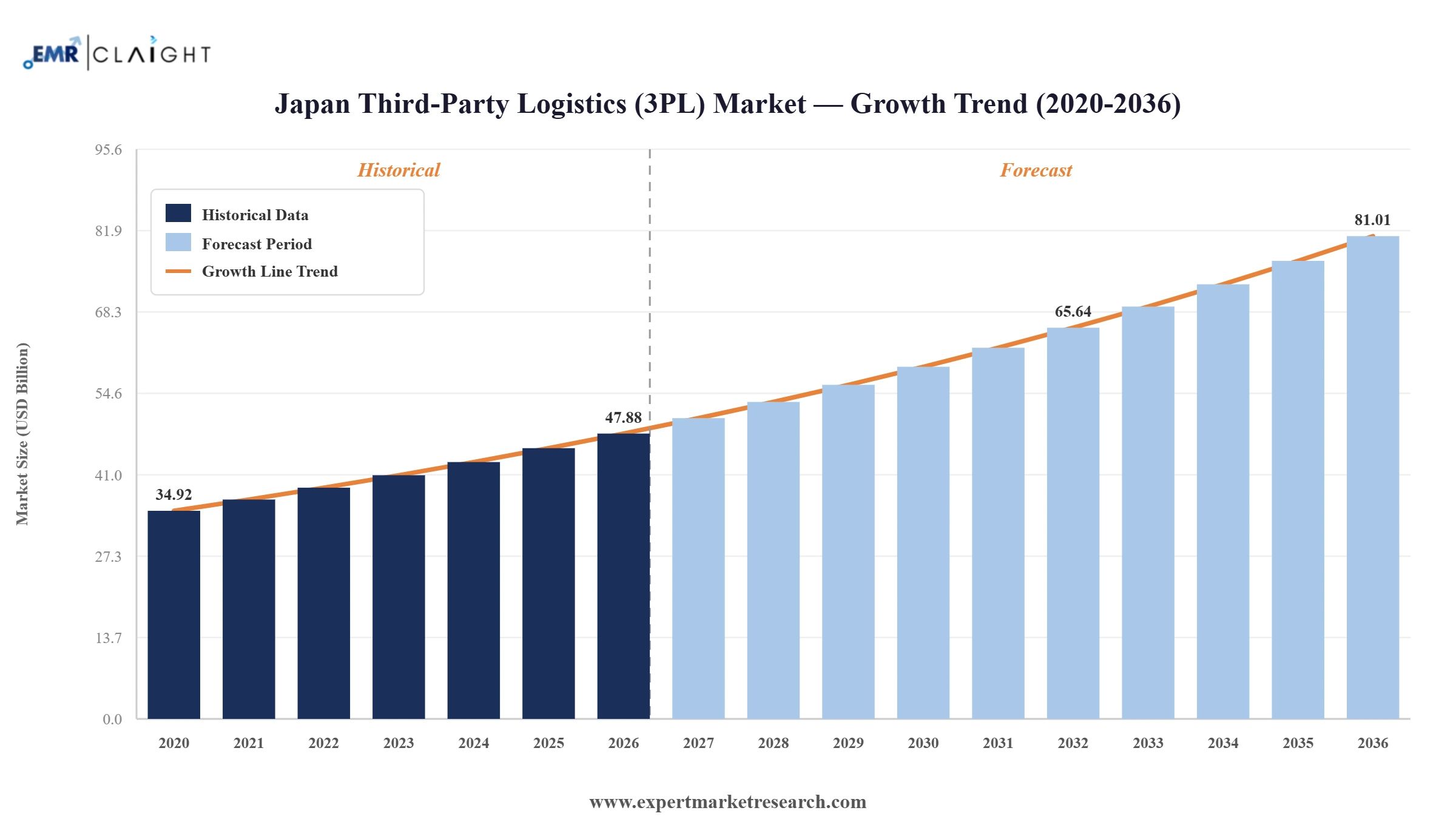
The Japan third-party logistics (3PL) market attained a value of USD 45.43 Billion in 2025 and is projected to expand at a CAGR of 5.40% through 2035. The market is further expected to achieve USD 76.87 Billion by 2035. Japan’s 3PL opportunity is increasingly centered on compliance-enabled network optimization. The 2026 Logistics Efficiency Act requires certain large operators and shippers to submit medium- and long-term plans and regular reports, creating a stronger commercial case for outsourced partners that can measure loading efficiency, waiting times, handling productivity, and network performance while coordinating transportation, warehousing, and data flows across supply chains.
The regulatory environment is simultaneously creating greater demand for professional logistics management. From April 2026, certain large shippers and logistics operators became subject to requirements under Japan’s revised Logistics Efficiency Act, including medium- and long-term planning and periodic reporting. Meanwhile, Japan’s domestic B2B e-commerce market reached JPY 514.4 trillion in 2024, up 10.6% year on year, with the B2B e-commerce ratio rising to 43.1%. These developments are increasing the need for 3PL providers capable of integrating physical logistics with digital planning, inventory visibility, compliance, and multimodal transportation, thereby boosting the Japan third-party logistics (3PL) market value.
Innovation in Japan’s 3PL market is increasingly focused on autonomous logistics, AI-enabled planning, warehouse automation, and energy optimization. In 2026, LOGISTEED advanced its energy-management demonstration to support electrification across logistics operations, while its SSCV system received certification for automated pre- and post-operation checks. Meanwhile, Japan’s logistics policy is promoting automated transportation, logistics DX, standardized pallets, mechanization, and autonomous driving through FY2030. These developments are encouraging 3PL providers to integrate transportation management, warehouse technologies, operational safety, and energy monitoring within unified platforms. Such innovation can improve asset utilization, reduce manual workloads, strengthen compliance, and create scalable logistics models for manufacturers, retailers, and healthcare companies.
Japan’s 3PL market faces constraints from persistent logistics labor shortages, rising operating costs, and limited transportation capacity, particularly for long-distance road freight. These pressures can increase delivery costs and make it challenging for providers to maintain service levels. To address these challenges, 3PL companies are increasingly adopting AI-enabled route optimization, warehouse automation, standardized loading systems, and digital transportation management to improve productivity. Greater integration of railways and coastal shipping for long-haul movements can also reduce dependence on road freight, while relay transportation can improve driver utilization. Shared-user warehouses and collaborative transport networks can further increase asset utilization and help providers manage infrastructure costs more efficiently, thereby boosting the Japan third-party logistics (3PL) market developments.
Read more about this report - REQUEST FREE SAMPLE COPY IN PDF
NIPPON EXPRESS HOLDINGS entered into a capital and business partnership with Instalimb on September 14, 2026, alongside additional investment through the NX Global Innovation Fund. Instalimb uses AI and 3D-printing technologies to manufacture prosthetic devices and plans expansion across emerging markets. NX Group has already supported the company through inventory warehousing in India and international transportation of 3D printers and materials. The partnership aims to strengthen global supply-chain capabilities covering manufacturing, procurement, inventory management, international transportation, and local distribution.
PT. Kintetsu World Express Indonesia received the Best Customs Broker Award from the Tanjung Priok Port Customs Office on July 28, 2026. The recognition highlights KWE’s customs-clearance and compliance capabilities in Indonesia, an important market within Japanese companies’ international supply chains. The award reinforces KWE’s ability to support customers with customs-related requirements alongside freight forwarding and logistics services. Its established compliance expertise and regional operating network can help Japanese manufacturers manage cross-border movements and regulatory complexity across Southeast Asian supply chains.
DHL Supply Chain Japan and Toho Holdings signed an MOU on June 4, 2026, to develop an advanced healthcare logistics platform in Japan. The collaboration combines Toho Holdings’ domestic pharmaceutical distribution network and Good Distribution Practice expertise with DHL’s global logistics network and Life Sciences and Healthcare capabilities. The partnership will focus on manufacturer logistics, clinical-trial logistics, pharmaceutical distribution, and integrated one-stop solutions. The initiative highlights the growing importance of specialised, compliant logistics infrastructure for Japan’s pharmaceutical and healthcare supply chains.
Yamato Logistics India opened the NH8 (Sidhrawali) Logistics Center in Haryana on January 8, 2026, making it the Yamato Group’s largest overseas logistics base. The approximately 24,900-square-metre facility provides contract logistics services and is strategically located near industrial clusters, an inland container depot, and Delhi International Airport. It is designed to support manufacturers expanding production in India and emerging markets across the Middle East and Africa. The facility strengthens Yamato’s ability to provide integrated logistics solutions connecting manufacturing operations with domestic and international supply chains, thus shaping the trends of the Japan third-party logistics (3PL) market.
Japan’s revised Logistics Efficiency Act began imposing additional requirements on designated large shippers and logistics operators from April 2026, including medium- and long-term planning and periodic reporting. The regulatory shift is significant for 3PL providers because customers increasingly need measurable evidence of loading efficiency, reduced waiting and handling times, and better transportation utilization. Providers that combine transportation execution with analytics, reporting, and compliance support can therefore expand beyond conventional freight outsourcing. For B2B customers, the ability to generate standardized operational data is becoming part of the value proposition, particularly for manufacturers and large retailers managing multiple carriers and distribution facilities.
In March 2026, the government approved legislation promoting relay transportation, in which multiple drivers share long-distance movements to reduce individual driver burdens. At the same time, Japan’s government is promoting logistics DX, automated transportation, standardized pallets, and modal-shift initiatives. This environment supports 3PL providers that can combine road transportation with rail and coastal shipping rather than treating each mode as a separate service. The opportunity is particularly relevant for industrial shippers requiring reliable long-haul capacity while maintaining delivery schedules and controlling exposure to driver availability.
METI reported that Japan’s B2C e-commerce market reached JPY 26.1 trillion in 2024, while merchandise e-commerce alone reached JPY 15.2 trillion. Food, beverages, and liquor generated JPY 3.12 trillion of merchandise e-commerce, while apparel reached JPY 2.80 trillion. These volumes create requirements extending beyond transportation into order processing, inventory positioning, packaging, returns, and delivery coordination. For 3PL providers, the opportunity is to develop sector-specific fulfillment models rather than simply adding warehouse capacity. Retail and consumer-product customers increasingly require logistics networks capable of handling fluctuating order profiles while maintaining service-level commitments across dense urban and regional delivery markets.
In June 2026, DHL Supply Chain Japan and Toho Holdings signed an MOU to develop an advanced healthcare logistics platform combining Toho’s domestic distribution and GDP expertise with DHL’s global logistics capabilities. The collaboration covers manufacturer and clinical-trial logistics as well as one-stop pharmaceutical distribution solutions. This illustrates how pharmaceutical and healthcare supply chains are creating demand for 3PL services involving controlled handling, traceability, specialized distribution, and regulatory compliance. The opportunity extends beyond conventional warehousing because healthcare customers increasingly require logistics providers to integrate domestic networks with international supply-chain capabilities and specialized operational controls.
Japan’s government is explicitly supporting logistics DX, standardization, automation, mechanization, autonomous driving, and drone logistics through its medium-term logistics program. In 2026, LOGISTEED also launched an energy-management demonstration aimed at accelerating electrification in logistics, while its SSCV automated roll-call system received certification for automated pre- and post-operation checks. Such developments show that technology adoption is expanding from warehouse equipment toward fleet management, workforce productivity, energy optimization, and operational safety. For 3PL companies, integrated data platforms can improve asset utilization while creating differentiated services for customers seeking measurable productivity gains.
The Expert Market Research’s report titled "Japan Third-Party Logistics (3PL) Market Report and Forecast 2026-2035” offers a detailed analysis of the market based on the following segments:
Market Breakup by Service
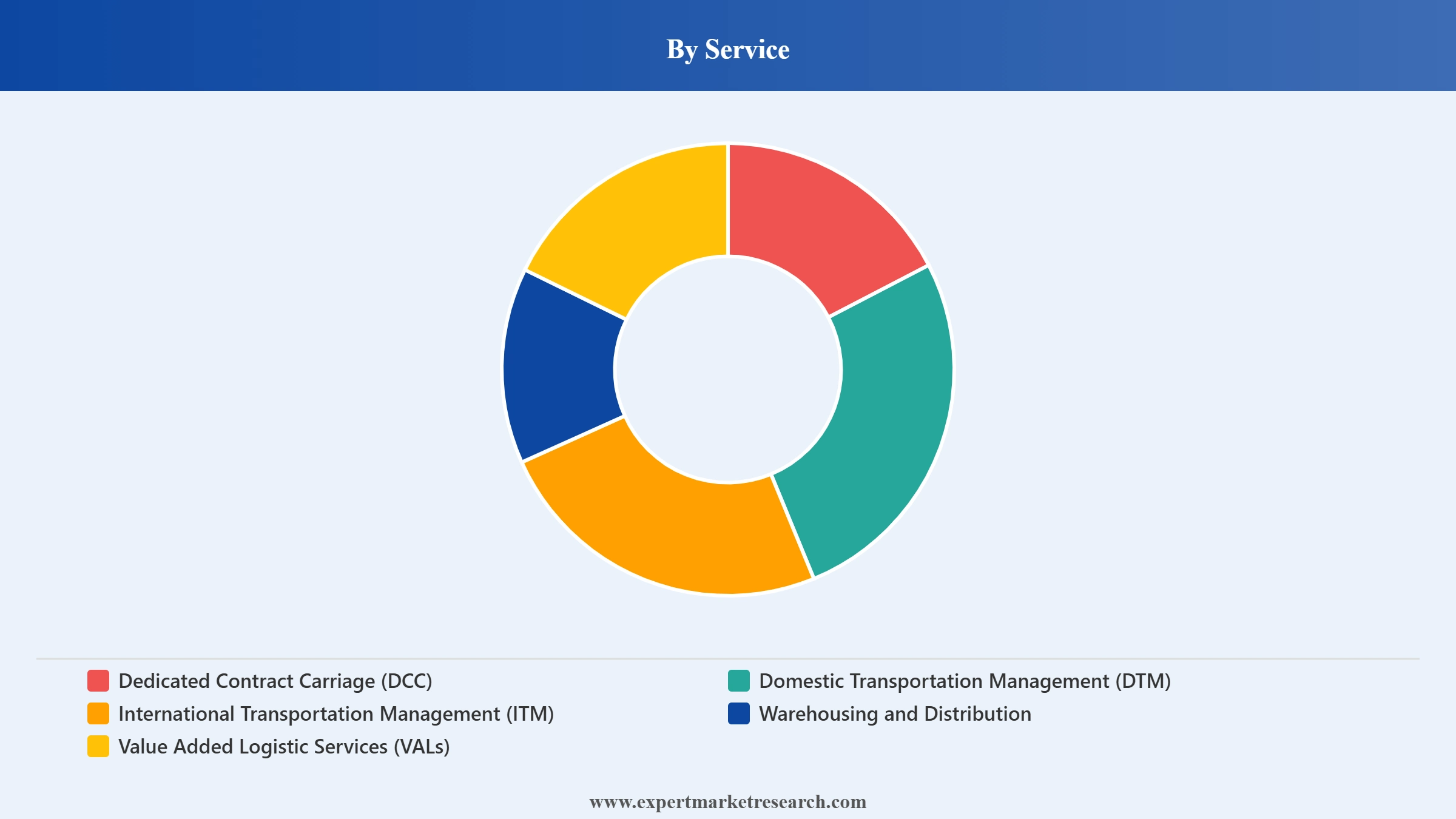
Key Insight: The service structure of Japan’s 3PL market is broadening from transportation outsourcing toward integrated supply-chain management. Dedicated Contract Carriage (DCC) remains relevant where manufacturers and large distributors require predictable fleet availability, while Domestic Transportation Management (DTM) gains importance as customers seek coordinated carrier selection and route planning. International Transportation Management (ITM) benefits from Japan’s highly trade-oriented manufacturing base and the increasing complexity of cross-border supply chains. Warehousing and Distribution is supported by e-commerce, inventory decentralization, and the need to position products closer to customers. Meanwhile, Value Added Logistic Services (VALs) are becoming increasingly important as providers add packaging, labeling, kitting, customs support, reverse logistics, and specialized handling. Japan’s 2026 logistics policy places strong emphasis on standardization, DX, GX, and supply-chain resilience, encouraging customers to select providers capable of integrating several services rather than purchasing isolated transportation functions.
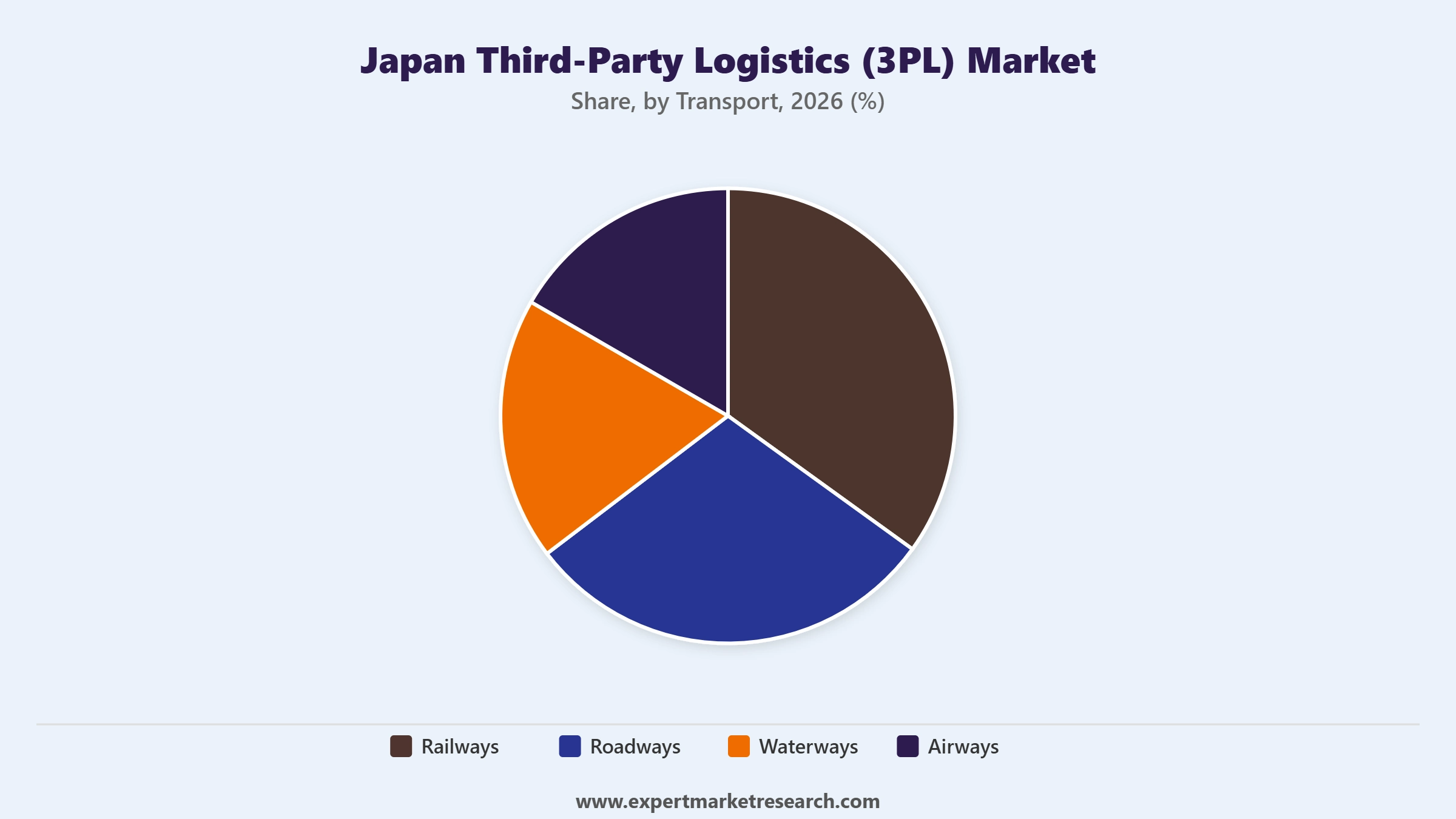
Market Breakup by Transport
Key Insight: Japan’s 3PL transport mix is increasingly being designed around complementary modes. Roadways remain central to domestic distribution because they provide the flexibility required for regional and final-mile movements. Railways are gaining strategic relevance as shippers seek alternatives for long-distance freight under labor and capacity constraints. Waterways remain important for heavy industrial commodities and long-distance domestic movements. MLIT data show that coastal shipping represented approximately 38% of domestic freight transport on a ton-kilometer basis in FY2024, while road transport accounted for approximately 59%. Airways serve high-value, time-sensitive, pharmaceutical, electronics, and international shipments. The growing role of modal integration means 3PL providers increasingly need to coordinate road, rail, sea, and air rather than optimize individual transport modes independently.
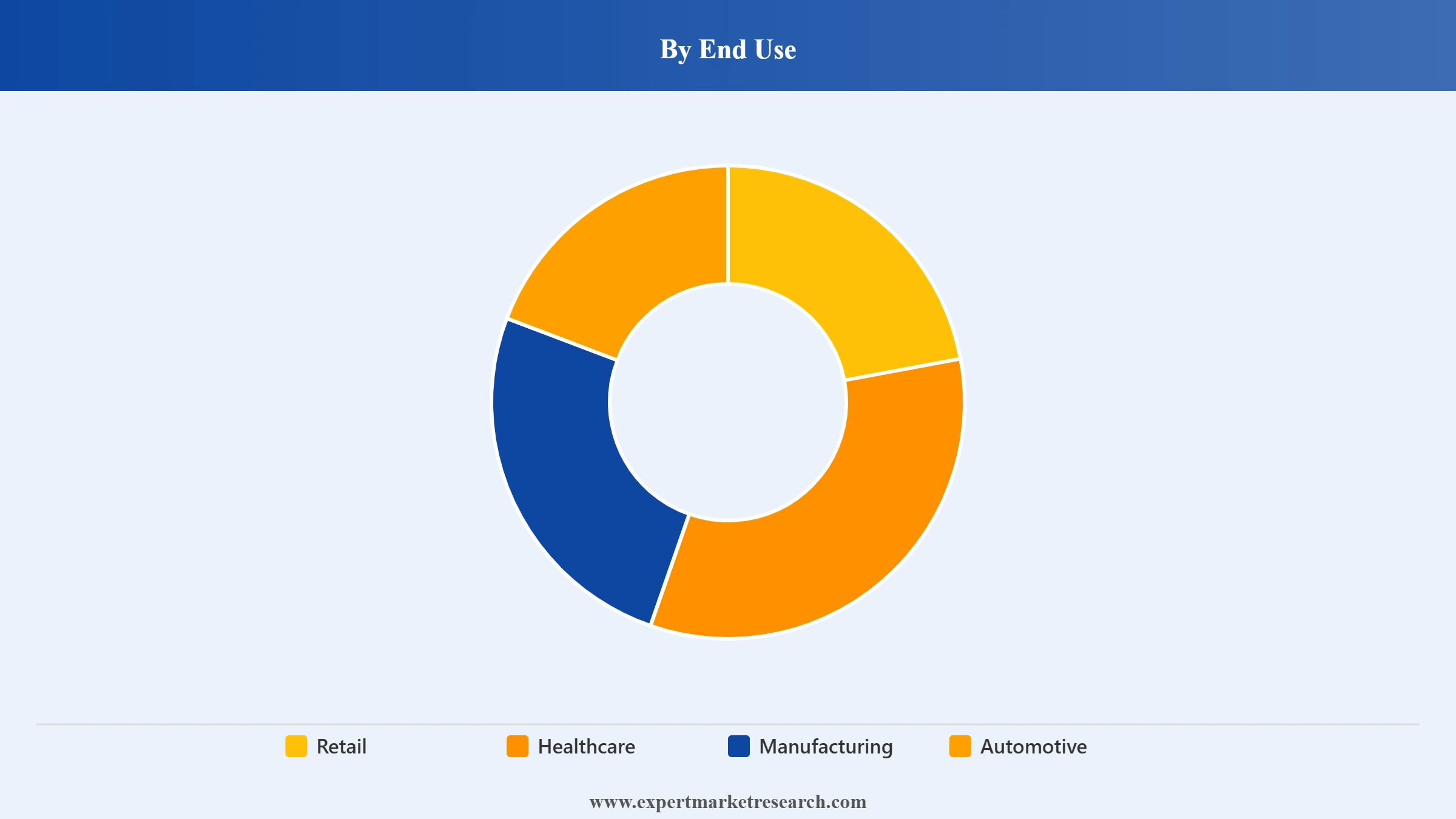
Market Breakup by End Use
Key Insight: The Japanese 3PL market serves a highly diversified customer base, with Retail, Healthcare, Manufacturing, Automotive, and Others generating different logistics requirements. Retail customers increasingly require fulfillment, inventory positioning, returns, and delivery coordination, while healthcare customers demand controlled handling and traceability. Manufacturing requires inbound materials management, plant logistics, warehousing, and outbound distribution. Automotive logistics is characterized by high coordination requirements for components, sequencing, and production continuity. The broader “Others” category includes food, chemicals, electronics, industrial equipment, and other specialized industries. Japan’s B2B e-commerce market reached JPY 514.4 trillion in 2024, up 10.6% year over year, demonstrating the enormous scale of commercial transactions requiring increasingly digitalized logistics processes. This supports demand for 3PL providers capable of tailoring logistics architecture to individual industry workflows, thus driving the demand in the Japan third-party logistics (3PL) market.
Read more about this report - REQUEST FREE SAMPLE COPY IN PDF
Warehousing and distribution is positioned as the dominant service segment because it sits at the intersection of inventory management, fulfillment, transportation coordination, and customer delivery. Japan’s 2024 B2C e-commerce market reached JPY 26.1 trillion, while merchandise e-commerce reached JPY 15.2 trillion, increasing the need for strategically located inventory and fulfillment infrastructure. The segment also benefits from manufacturers outsourcing storage, order preparation, and distribution activities to improve network flexibility. For 3PL operators, integrated warehouse management systems, automation, inventory visibility, and multi-client facilities can increase asset utilization while supporting customers with variable order volumes. Such developments will thus boost Japan third-party logistics (3PL) market trends in the long run.
Read more about this report - REQUEST FREE SAMPLE COPY IN PDF
Value added logistic services are gaining momentum as Japanese companies increasingly seek logistics partners capable of performing activities beyond physical transportation and storage. Services such as packaging, labeling, kitting, returns management, customs coordination, and product preparation can reduce the number of suppliers managed by a customer. The opportunity is reinforced by Japan’s logistics policy emphasis on supply-chain optimization, standardization, and digital transformation. Demand is particularly relevant for electronics, healthcare, automotive components, and consumer products where logistics providers can customize processes around product specifications rather than offering standardized freight movements alone.
Roadways represent the dominant transport segment because they provide the network flexibility necessary for domestic pickup, distribution, regional replenishment, and final-mile delivery. MLIT data for FY2024 show that automobiles accounted for approximately 59% of domestic freight transport on a ton-kilometer basis, compared with about 38% for coastal shipping. Road transport also connects manufacturing sites, warehouses, ports, rail terminals, and retail facilities, making it essential even when customers adopt multimodal strategies. For 3PL companies, the key opportunity is therefore not simply fleet expansion but better route planning, load utilization, relay transportation, and integration with alternative modes.
Read more about this report - REQUEST FREE SAMPLE COPY IN PDF
The railways have the potential for accelerated strategic implementation due to Japanese logistics parties reacting to limitations in long-distance truck transportation and labor shortages. Government initiatives are pushing towards mode switch and logistics standardization, whereas the policy framework of 2026 focuses on increased productivity and supply chain sustainability. The government has also initiated actions aimed at increasing use of rail transport and coastal shipping as an alternative to truck transport. For 3PLs, rail enables the integration of regular trunk shipments and road transport for picking and deliveries, especially in case of stable industrial movements.
Manufacturing is positioned as the dominant end-use segment because Japan’s industrial economy requires extensive inbound, plant, warehousing, and outbound logistics coordination. METI’s industrial production statistics cover a broad manufacturing base spanning machinery, transport equipment, chemicals, metals, electronics, food, textiles, and other industries. Manufacturers increasingly outsource logistics functions where external providers can coordinate multiple transportation modes, consolidate shipments, manage inventory, and support international distribution. The manufacturing segment is also well suited to contract logistics because production schedules require predictable material flows and high operational continuity. These requirements create opportunities for 3PL providers with specialized industry knowledge and integrated control systems, thus shaping the demand in the Japan third-party logistics (3PL) market.
Read more about this report - REQUEST FREE SAMPLE COPY IN PDF
The healthcare sector is experiencing rapid growth due to the fact that the pharmaceutical and medical supply chain requires higher compliance, traceability, handling control, and specialization compared to traditional logistics. The DHL Supply Chain Japan partnership with Toho Holdings for the month of June 2026 focuses on manufacturer logistics, clinical trial logistics, and pharmaceutical logistics. This is an indication that healthcare logistics platforms are emerging, which incorporate both domestic and international logistics. For 3PLs, there is the opportunity to grow through temperature sensitive logistics, GDP logistics, special inventory logistics, and visibility services.
Japan’s 3PL demand is concentrated around the country’s principal industrial, commercial, and population centers, with the Kanto region representing a major logistics hub because of its concentration of corporate headquarters, manufacturing activity, ports, airports, retail demand, and consumer markets. Tokyo and surrounding prefectures support dense distribution networks requiring high-frequency transportation, fulfillment, warehousing, and inventory coordination. The scale of Japan’s e-commerce market reinforces this concentration: domestic B2C e-commerce reached JPY 26.1 trillion in 2024. For 3PL operators, the Kanto market is therefore strategically important for multi-client facilities, urban fulfillment, cross-docking, and technology-enabled transportation management, thereby directly boosting the Japan third-party logistics (3PL) market regional growth.
Other industrial corridors are also becoming increasingly relevant as companies diversify logistics networks and seek alternatives to concentrated trucking routes. The Chubu region benefits from automotive and advanced manufacturing activity, while Kansai provides a major commercial and industrial base. Coastal and port-linked logistics are especially important because domestic shipping carries approximately 38% of freight transport on a ton-kilometer basis, according to FY2024 MLIT data. Northern and western regions can also benefit from modal-shift initiatives as 3PL providers develop more integrated rail, road, and coastal networks. The government’s FY2026-FY2030 logistics policy explicitly promotes supply-chain resilience, standardization, DX/GX, and transportation efficiency, supporting investment across regional logistics infrastructure.
Leading Japan third-party logistics (3PL) market players are aiming to strengthen growth by expanding integrated logistics capabilities, improving warehouse productivity, and adopting automation, artificial intelligence, IoT, robotics, and advanced supply-chain management systems. Companies are investing in strategically located distribution centres and technology-enabled warehouses to improve inventory visibility, order accuracy, fulfilment speed, and delivery efficiency. They are also expanding value-added services such as packaging, kitting, reverse logistics, e-commerce fulfillment, and temperature-controlled logistics to address increasingly specialized customer requirements across manufacturing, retail, healthcare, automotive, and consumer goods sectors.
Japan third-party logistics (3PL) companies are pursuing strategic partnerships, international expansion, and customised end-to-end supply-chain solutions to strengthen customer retention and capture new business. With Japan's logistics industry facing labour shortages and increasing operating costs, providers are focusing on automation and network optimisation to improve scalability while maintaining service quality. Sustainability is another growth focus, with companies developing lower-emission transportation, energy-efficient warehouses, and consolidated delivery models. These initiatives enable providers to differentiate their offerings while responding to changing customer expectations and regulatory requirements.
Established in 2022, NIPPON EXPRESS HOLDINGS, INC. is headquartered in Tokyo, Japan, and operates the NX Group. Its 3PL offerings include warehousing, distribution-centre and transfer-centre management, inventory management, value-added processing, transportation, e-commerce fulfilment, service-parts warehousing, warehouse digitalisation and end-to-end supply-chain solutions. Its USP is its extensive multimodal logistics capability and global network, combined with industry-specific expertise, digital visibility, automated warehouse solutions and the ability to integrate transportation, storage and supply-chain management.
Established in 1919, Yamato Holdings is headquartered in Tokyo, Japan. Its 3PL capabilities cover contract logistics, warehousing, transportation, fulfilment, freight forwarding, customs clearance and integrated supply-chain support. Through its corporate logistics network and group companies, Yamato provides end-to-end services from warehousing to transport and delivery, including B2B, B2C and cross-border e-commerce logistics. Its USP is its extensive domestic logistics infrastructure, nationwide TA-Q-BIN network, flexible delivery capabilities and integration of contract logistics with forwarding and last-mile operations.
Established in 1970 and headquartered in Tokyo, Japan, Kintetsu World Express provides international integrated logistics covering air and sea freight forwarding, land transportation, customs brokerage, warehousing and logistics services. Its 3PL offering supports end-to-end supply chains by combining transportation, storage, distribution processing and related logistics functions. Its USP is its global network, with nearly 700 offices across more than 300 cities, together with specialised expertise across air, sea and land transportation, enabling customers to develop integrated logistics solutions for international B2B supply chains.
Established as Deutsche Post in 1995 and headquartered in Bonn, Germany, Deutsche Post is part of the DHL Group, whose DHL brand was founded in 1969. Its 3PL offering is centred on DHL Supply Chain, providing warehousing, transportation, value-added services and customised contract-logistics solutions, complemented by freight forwarding, express and e-commerce logistics. Its USP is its international scale, integrated supply-chain capabilities and ability to combine standardised logistics services with customer-specific solutions across more than 220 countries and territories.
Other key players in the Japan third-party logistics (3PL) market include SG Holdings Co. Ltd. (Sagawa Express Co., Ltd.), Yusen Logistics Co., Ltd, Alps Logistics Co. Ltd, Nichirei Corp, LOGISTEED, Ltd, and Fukuyama Biagi Logistics Inc, among others.
*Please note that this is only a partial list; the complete list of key players is available in the full report. Additionally, the list of key players can be customized to better suit your needs.*
Download the sample report to explore Japan third-party logistics (3PL) Market Size, competitive dynamics, segmentation, and Japan third-party logistics (3PL) Market trends 2026. The full study provides detailed insights into the Japan third-party logistics (3PL) Market forecast 2026-2035, including service, transport, end-use, regional, and competitive analysis to support informed B2B strategy, investment, and expansion decisions.


Upto 15% Off
USD
$2499 $2249
$3999 $3599
$4999 $4249
$5999 $5099


*While we strive to always give you current and accurate information, the numbers depicted on the website are indicative and may differ from the actual numbers in the main report. At Expert Market Research, we aim to bring you the latest insights and trends in the market. Using our analyses and forecasts, stakeholders can understand the market dynamics, navigate challenges, and capitalize on opportunities to make data-driven strategic decisions.*
In 2025, the market reached an approximate value of USD 45.43 Billion.
The market is projected to grow at a CAGR of 5.40% between 2026 and 2035.
The market is estimated to witness a healthy growth during 2026-2035 to reach around USD 76.87 Billion by 2035.
Key strategies driving the Japan third-party logistics (3PL) market include warehouse automation, digital supply-chain management, route optimisation, strategic partnerships, expansion of fulfillment networks, and adoption of AI and IoT technologies. Providers are also focusing on sustainable logistics, value-added services, and flexible solutions to meet evolving customer requirements.
The various services include dedicated contract carriage (DCC), domestic transportation management (DTM), international transportation management (ITM), warehousing and distribution, and value-added logistic services (VALs).
The major transportation methods include railways, roadways, waterways, and airways.
The major end uses are retail, healthcare, manufacturing, automotive, and others.
Key players in the market are Nippon Express Holdings Inc, Yamato Holdings Co., Ltd, Kintetsu World Express, Inc, Deutsche Post AG (DHL), SG Holdings Co. Ltd. (Sagawa Express Co., Ltd.), Yusen Logistics Co., Ltd, Alps Logistics Co. Ltd, Nichirei Corp, LOGISTEED, Ltd, and Fukuyama Biagi Logistics Inc, among others.
Key challenges in the Japan third-party logistics (3PL) market include rising labour and transportation costs, driver shortages, stringent logistics regulations, limited warehouse capacity, complex last-mile delivery requirements, and the need for greater digitalisation. Providers also face pressure to improve operational efficiency, visibility, flexibility, and sustainability.
Explore our key highlights of the report and gain a concise overview of key findings, trends, and actionable insights that will empower your strategic decisions.
| REPORT FEATURES | DETAILS |
| Base Year | 2025 |
| Historical Period | 2019-2025 |
| Forecast Period | 2026-2035 |
| Scope of the Report |
Historical and Forecast Trends, Industry Drivers and Constraints, Historical and Forecast Market Analysis by Segment:
|
| Breakup by Service |
|
| Breakup by Transport |
|
| Breakup by End Use |
|
| Market Dynamics |
|
| Competitive Landscape |
|
| Companies Covered |
|
Datasheet
One User
USD 2,499
USD 2,249
tax inclusive*
Single User License
One User
USD 3,999
USD 3,599
tax inclusive*
Five User License
Five User
USD 4,999
USD 4,249
tax inclusive*
Corporate License
Unlimited Users
USD 5,999
USD 5,099
tax inclusive*
*Please note that the prices mentioned below are starting prices for each bundle type. Kindly contact our team for further details.*
Flash Bundle
Small Business Bundle
Growth Bundle
Enterprise Bundle
*Please note that the prices mentioned below are starting prices for each bundle type. Kindly contact our team for further details.*
Flash Bundle
Number of Reports: 3
20%
tax inclusive*
Small Business Bundle
Number of Reports: 5
25%
tax inclusive*
Growth Bundle
Number of Reports: 8
30%
tax inclusive*
Enterprise Bundle
Number of Reports: 10
35%
tax inclusive*
How To Order

Select License Type
Choose the right license for your needs and access rights.

Click on ‘Buy Now’
Add the report to your cart with one click and proceed to register.

Select Mode of Payment
Choose a payment option for a secure checkout. You will be redirected accordingly.
Strategic Solutions for Informed Decision-Making
Gain insights to stay ahead and seize opportunities.

Get insights & trends for a competitive edge.

Track prices with detailed trend reports.

Analyse trade data for supply chain insights.

Leverage cost reports for smart savings

Enhance supply chain with partnerships.

Connect For More Information
Our expert team of analysts will offer full support and resolve any queries regarding the report, before and after the purchase.
Our expert team of analysts will offer full support and resolve any queries regarding the report, before and after the purchase.
We employ meticulous research methods, blending advanced analytics and expert insights to deliver accurate, actionable industry intelligence, staying ahead of competitors.
Our skilled analysts offer unparalleled competitive advantage with detailed insights on current and emerging markets, ensuring your strategic edge.
We offer an in-depth yet simplified presentation of industry insights and analysis to meet your specific requirements effectively.




