

Consumer Insights
Uncover trends and behaviors shaping consumer choices today
Procurement Insights
Optimize your sourcing strategy with key market data
Industry Stats
Stay ahead with the latest trends and market analysis.
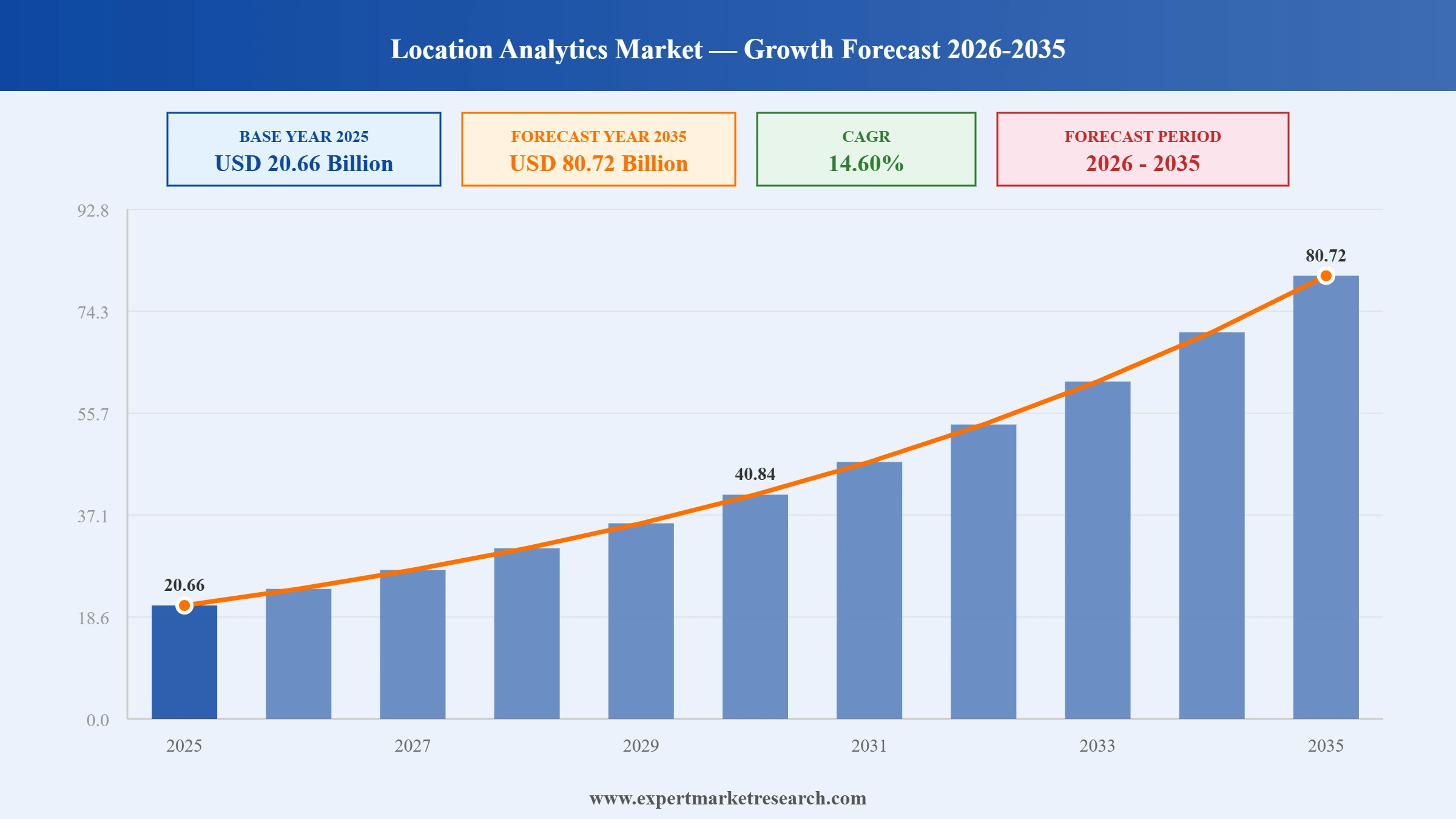
The global location analytics market attained a value of USD 20.66 Billion in 2025 and is projected to expand at a CAGR of 14.60% through 2035. The market is further expected to achieve USD 80.72 Billion by 2035. The growing adoption of smart infrastructure initiatives and mobility intelligence platforms based on artificial intelligence is driving the need for location analytics solutions that enhance operations management, site selection, and resource optimization.
There are two major trends fueling the growth in enterprise-level requirements for location analytics tools. On one hand, the location analytics market observes an increasing spread of omnichannel retailing networks, which drives companies to implement location analytics solutions that optimize catchment area analysis and target customers effectively. Another factor of enterprise-level adoption of location analytics technologies is the increasing proliferation of connected devices within industrial enterprises, resulting in huge amounts of geospatial data.
The location analytics market is currently undergoing significant changes, as tech players advance from mapping and geospatial solutions. In October 2025, Google expanded its geospatial solution with the integration of advanced location intelligence features via Google Maps Platform. These allow businesses to utilize mobility patterns, demographics data, and behavioral insights for effective location decision-making and planning. This development indicates how location-based planning is gaining popularity within retail, logistics, and smart city initiatives.
Location analytics software providers are now focused on embedding AI and edge computing within their technologies. Companies such as Esri, HERE Technologies, Oracle, and Precisely are investing in innovative geospatial technologies aimed at optimizing asset management, decreasing transport costs, and improving engagement. Location intelligence enables retail chains to assess store performance, identifying potential gaps within consumer coverage areas. In addition, logistics firms are being able to leverage geospatial analytics for optimization of routes and monitoring of deliveries, accelerating demand in the location analytics market. For example, in June 2026, Clearwater Analytics launched AI-powered investment tools, enhancing institutional workflow efficiency, risk management, and transparency.
Read more about this report - REQUEST FREE SAMPLE COPY IN PDF
| Global Location Analytics Market Report Summary | Description | Value |
| Base Year | USD Billion | 2025 |
| Historical Period | USD Billion | 2019-2025 |
| Forecast Period | USD Billion | 2026-2035 |
| Market Size 2025 | USD Billion | 20.66 |
| Market Size 2035 | USD Billion | 80.72 |
| CAGR 2019-2025 | Percentage | XX% |
| CAGR 2026-2035 | Percentage | 14.60% |
| CAGR 2026-2035 - Market by Region | Asia Pacific | 16.8% |
| CAGR 2026-2035 - Market by Country | India | 17.7% |
| CAGR 2026-2035 - Market by Country | China | 16.1% |
| CAGR 2026-2035 - Market by Deployment Type | On-Demand | 20.4% |
| CAGR 2026-2035 - Market by Services | Customer Experience Management | 16.6% |
| Market Share by Country 2025 | Japan | 4.2% |
Location intelligence technology from Azira was developed to help brands understand consumer travel patterns and enhance their marketing campaigns. Therefore, companies have the ability to create analytics tools that leverage data collected through mobility platforms and use it to make better decisions.
Dataplor developed a global platform to provide place-level intelligence for companies. Such developments in the location analytics market encourage organizations to be able to utilize this technology to get information on locations and opportunities for expanding internationally.
Area Analytics from TomTom makes use of traffic data visualization to derive deeper insight on mobility issues in order to inform planning and decision making. Hence, other businesses can merge traffic data with mobility data and other geospatial information in order to develop advanced analytics platforms for urban and commercial planning.
Radar launched an AI-based location context platform which enables businesses to make automatic decisions based on geographic and behavioral data in real time. Businesses can infuse their location analytics platforms with AI capabilities, leveraging such developments in the location analytics market.
Artificial Intelligence is being incorporated into the latest generation of location analytics software solutions due to companies' need for prediction rather than map-based information. The leading vendors in the location analytics market are introducing machine learning models to predict how consumers will move, the demand for infrastructure, and the threats to the supply chain. For example, in March 2026, Spatineo launched an AI-powered GIS search tool, accelerating geospatial data discovery, analysis, and workflow efficiency. On the other hand, government agencies use AI-geospatial technologies to enhance urban planning, forecasting, and the development of disaster readiness programs.
The rise of smart city initiatives is another trend which drives the demand in the location analytics market. The governments are actively implementing digital infrastructure projects based on real-time geospatial intelligence needed for transportation and utility purposes. For example, according to the estimates of the European Commission, more than 100 cities within Europe participate in smart city projects aimed at achieving sustainability and digital transformation. These needs are fulfilled by the introduction of location analytics platforms incorporating satellite images and IoT sensor data along with other predictive analytics techniques. In February 2024, NEC launched enhanced smart city solutions, strengthening geospatial intelligence, video analytics, and data-driven urban management.
Location intelligence solutions are being used extensively by retailers for better store expansion and engagement with customers. Brands can use this technology to analyze demographic trends, movement patterns, and competition within the area before making any investment decisions. Leading retail companies are starting to adopt mobility intelligence technologies to discover gaps in the market and optimize their current store networks. Companies like HERE Technologies are launching several new products and services to help businesses gain a better understanding of consumer movements, reshaping the entire location analytics market trends and dynamics. Government population data and census records are also integrated into such platforms to assist in better decision-making. In May 2026, SiteZeus launched Atlas, an AI-powered site selection platform, enhancing location analysis, forecasting accuracy, and expansion decision-making.
Location intelligence solutions are becoming indispensable components of modern transportation and logistics systems. Companies in the location analytics market are developing geospatial intelligence solutions that enhance route optimization and improve visibility into fleets. Such initiatives are supported by governments' investments in smart transportation systems and digital infrastructure upgrades. For example, the United States Department of Transportation actively encourages companies and agencies to implement various smart mobility solutions to address traffic and transportation challenges. Several leading technology organizations are launching real-time analytics platforms for analyzing mobility data. Demonstrating such shifts, in June 2026, C.H. Robinson launched Lean AI Engineer, automating supply chain operations, improving performance, efficiency, and real-time decision-making.
As digital twin technology evolves, opportunities for the growth of the location analytics market seem to emerge. Infrastructure managers are using spatial analytics and digital models of their assets in order to boost the process of maintenance and operational performance. Many countries in Asia and Europe are implementing digital infrastructures initiatives that use location intelligence in city development. Firms like Oracle and Esri are developing cutting-edge technologies aimed at connecting location analytics to digital twin systems. It enables businesses to track their assets, make future predictions, and foresee possible threats. In April 2026, Trinity launched InsightsEDGE Digital Twins, enabling always-on AI intelligence, customer simulation, and faster life sciences decision-making.
The Expert Market Research's report titled “Global Location Analytics Market Report and Forecast 2026-2035” offers a detailed analysis of the market based on the following segments:
Market Breakup by Component
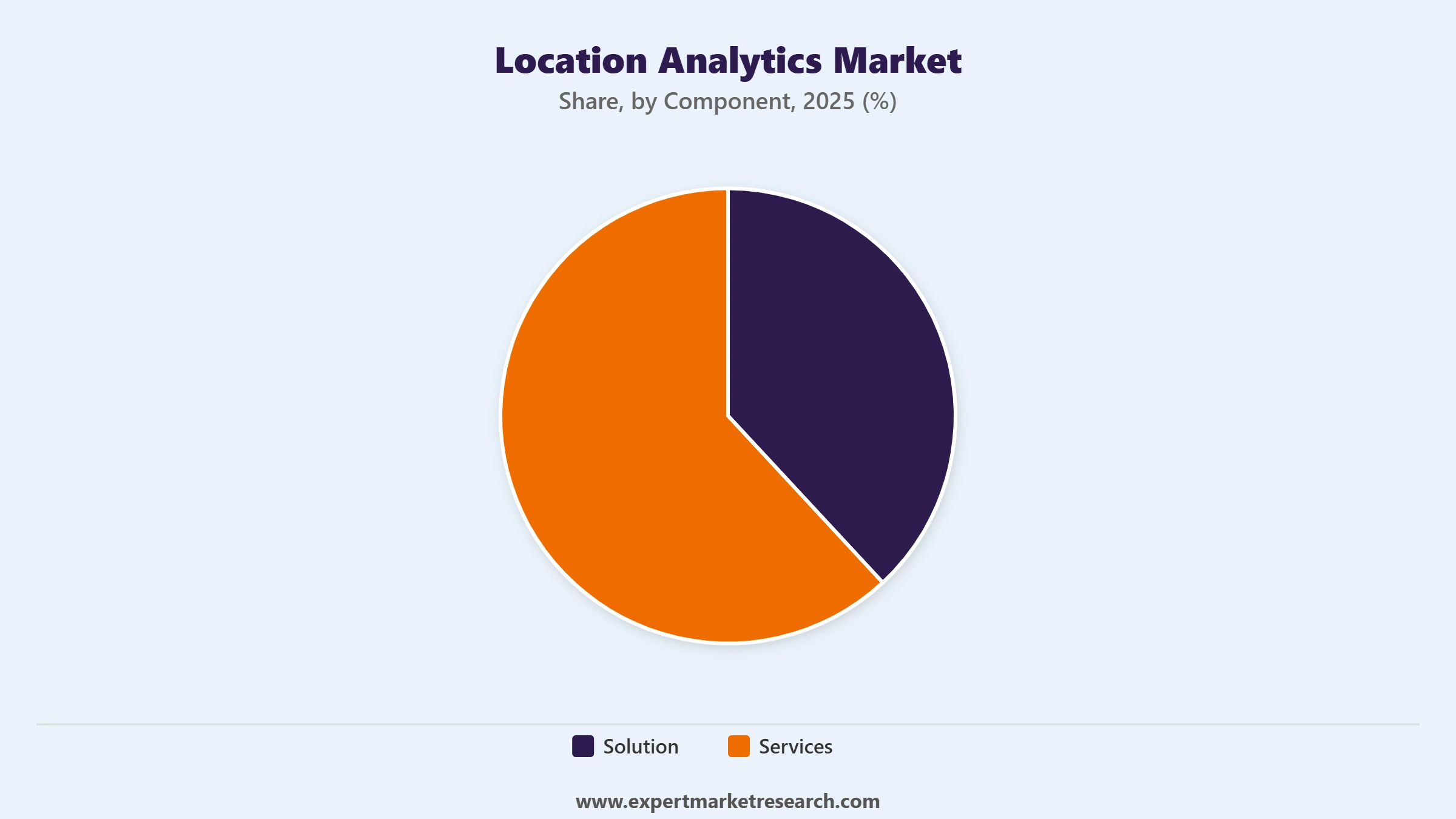
Key Insight: The location analytics market ecosystem is driven by a blend of technology and expertise. The solutions segment remains market-leading owing to the fact that companies require cutting-edge platforms capable of integrating various data points from the location-based space and delivering insights to help make better business decisions. These solutions have immense value as far as the applications in planning, forecasting, and optimization in various industries are concerned. The services segment, on the other hand, is experiencing tremendous growth since enterprises require assistance in implementing and managing location-based platforms. In November 2025, Space Shift developed Eclipse Band technology, enhancing SAR satellite data quality, accuracy, and geospatial analytics capabilities.
Market Breakup by Deployment Type
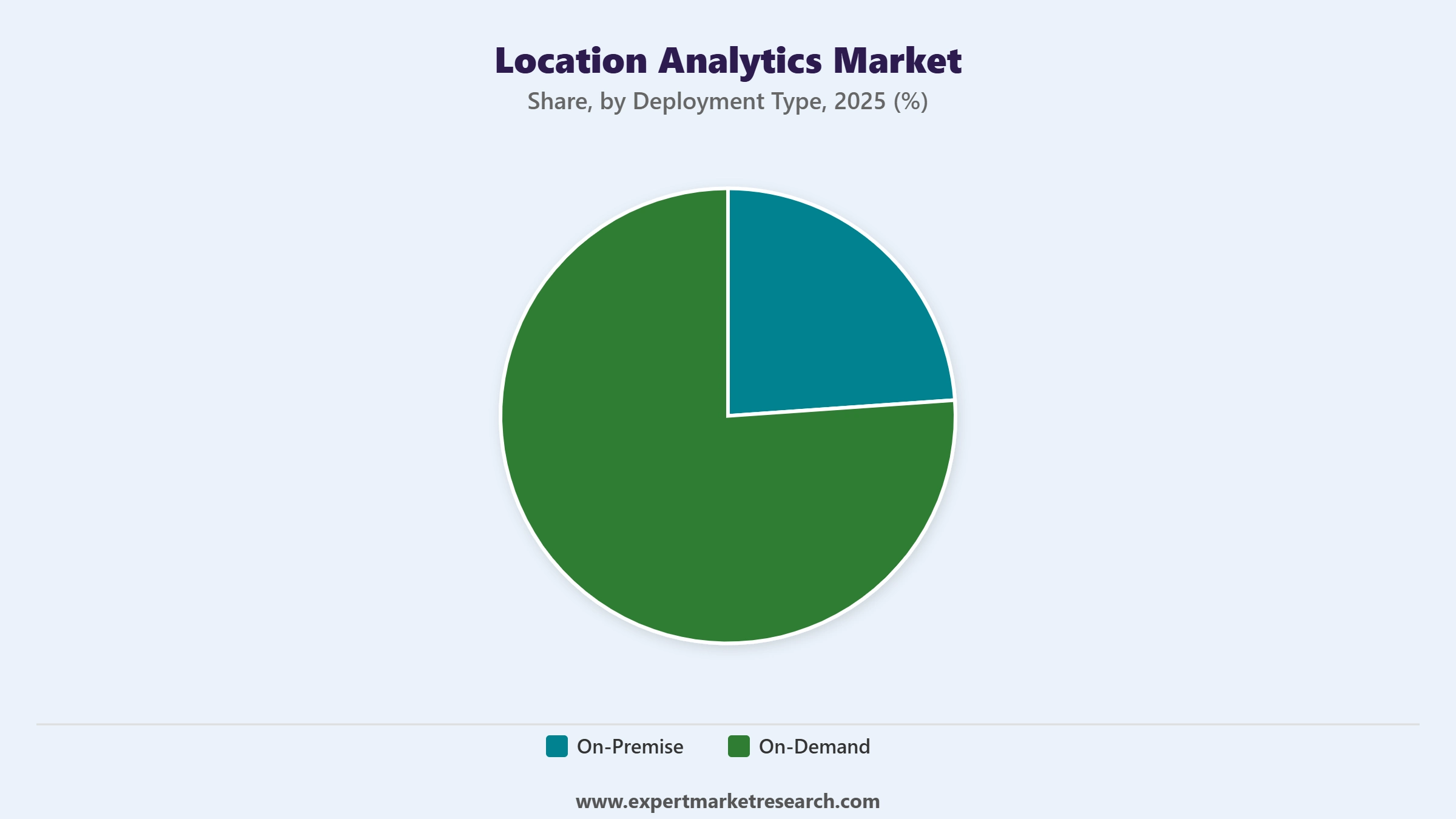
Key Insight: The preferences in deployment depend on the focus areas of operational importance as well as risk concerns. Premise-based approaches continue to be relevant for those enterprises that need extensive personalization, compliance requirements, and full control of sensitive information resources. Premises-based implementations are especially useful when there is a need for higher levels of security and stability. On-demand implementations are expanding their share in the location analytics market since they provide more flexibility, easier accessibility, and smaller requirements for infrastructure management. Agile business approaches drive more enterprises to adopt cloud-based computing environments.
Market Breakup by Location
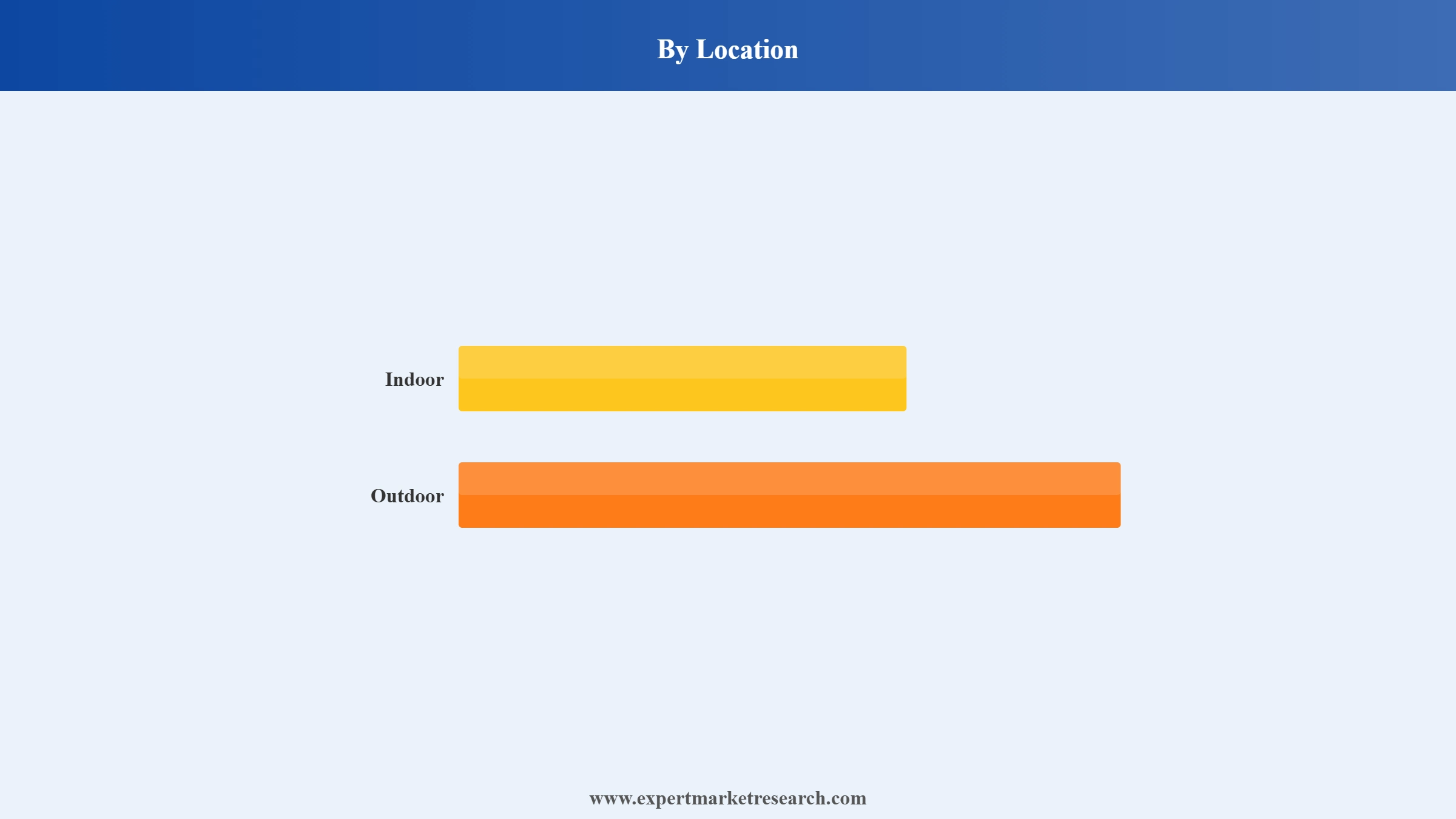
Key Insight: Location segmentation is characterized by different priorities. Outdoor analytics is crucial since it plays a vital part in mobility analytics, logistics optimization, geographical planning, and management of infrastructure systems. The capability of outdoor analytics to facilitate decision making on a large scale and within broad geographical territories makes it invaluable for many sectors. On the other hand, indoor analytics is gaining significant traction in the location analytics market since companies are increasingly concerned about efficient operations inside closed environments like warehouses, offices, hospitals, and business premises. The rise of smart facilities and the need for asset tracking is helping fuel adoption in this domain.
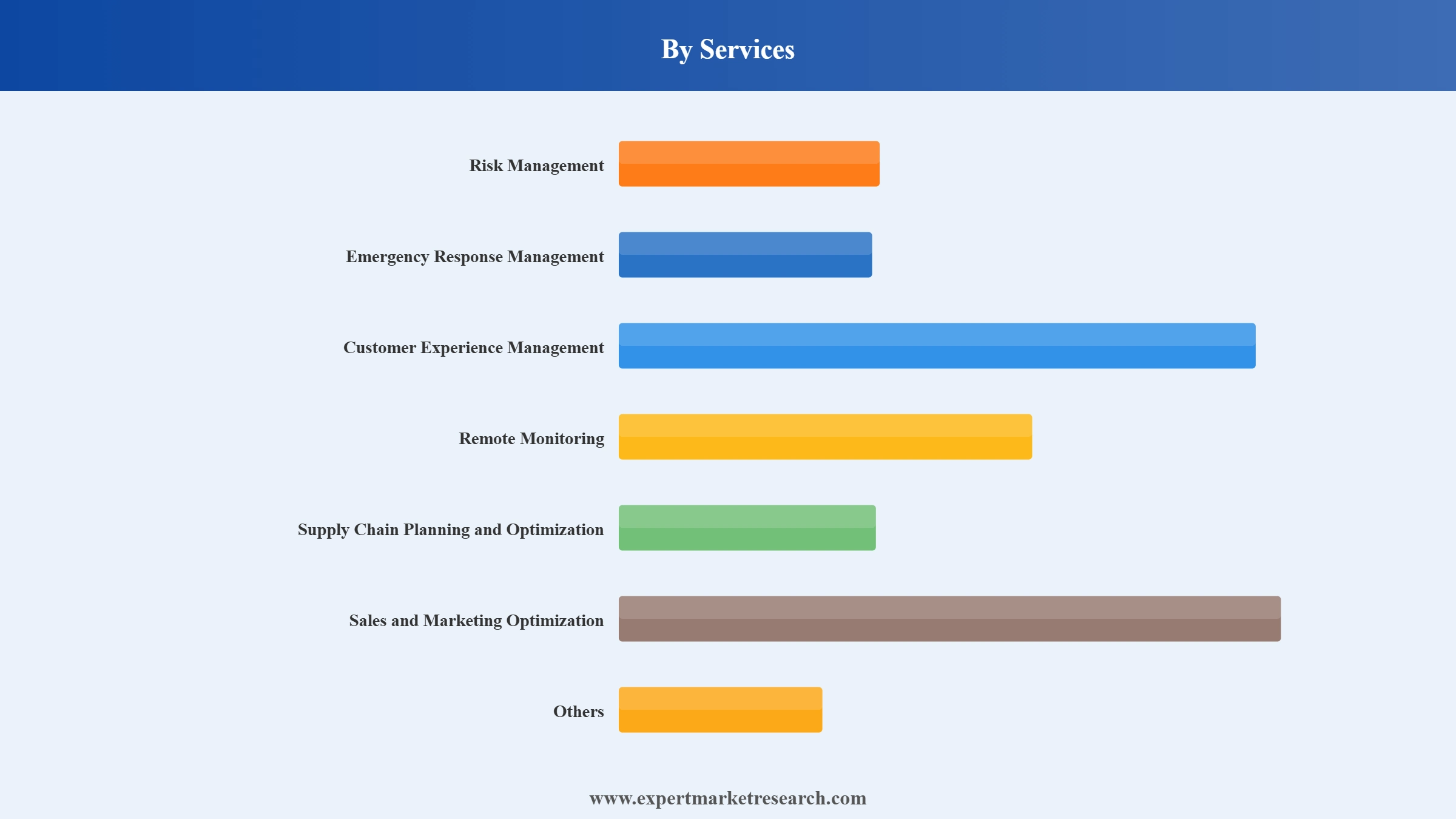
Market Breakup by Services
Key Insight: As per the location analytics market report, application programs built around services are continuously evolving as companies come up with newer uses for geospatial intelligence. The sales and marketing optimizations represent the most prominent category due to the increased reliance on geographical analysis for making decisions related to customer acquisition and growth of markets. Supply chain planning and optimization is witnessing rapid adoption as businesses aim for better visibility within their distribution channels. Risk management assists with better planning, whereas emergency response management ensures preparedness.
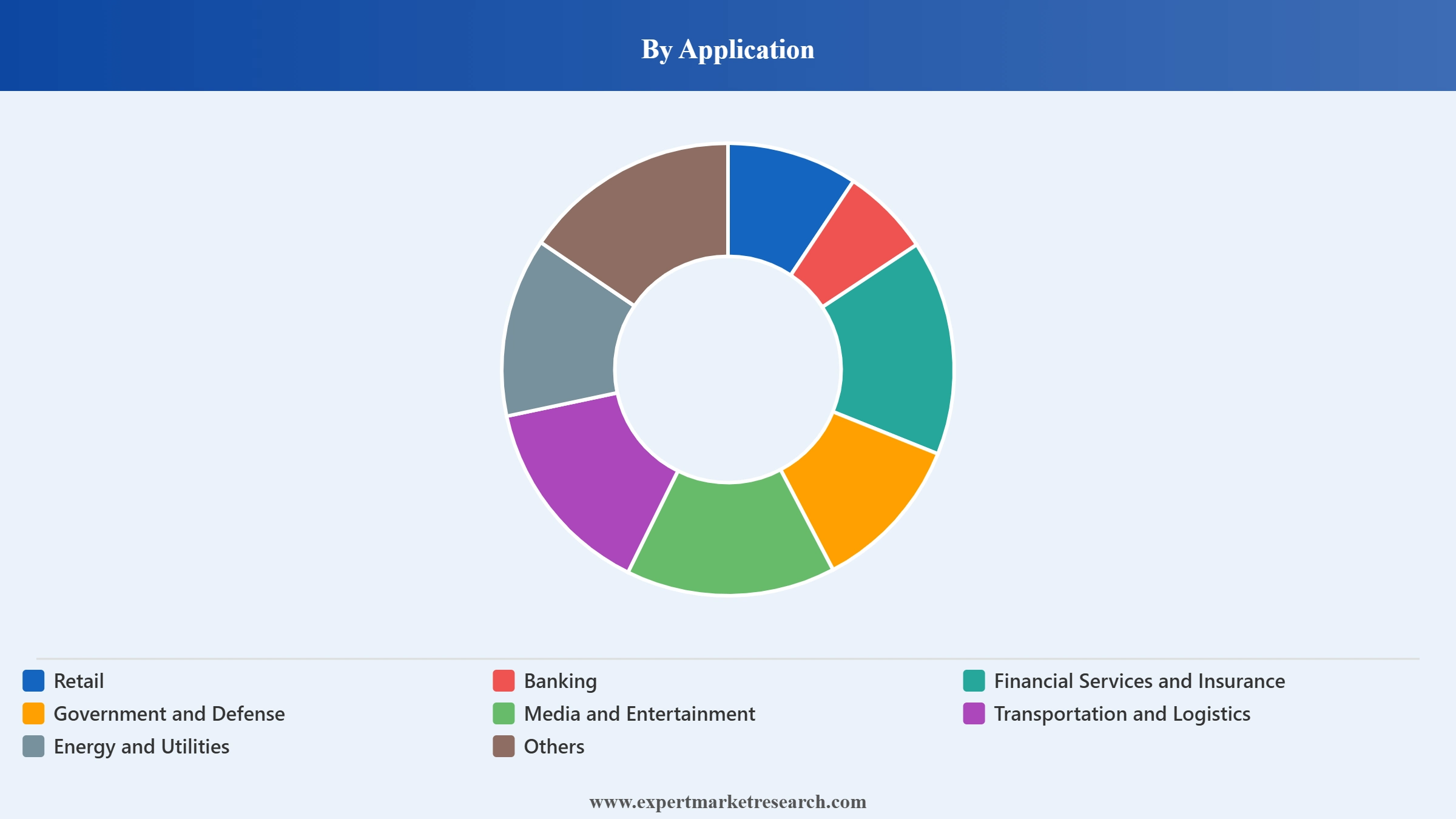
Market Breakup by Application
Key Insight: Examples of trends in the application of technology provide evidence of the widespread utility of the technology across various industries. The retail industry continues to make up for the highest share in the location analytics market value since geographic data provides key insights in regard to customer interaction, business expansion, and revenue. Transportation and logistics are becoming major application areas since companies focus on maximizing efficiency and visibility in their supply chains. Financial institutions also benefit from this technology as a tool for conducting risk and customer assessments. The defense and government sectors rely on the technology for planning and security purposes.
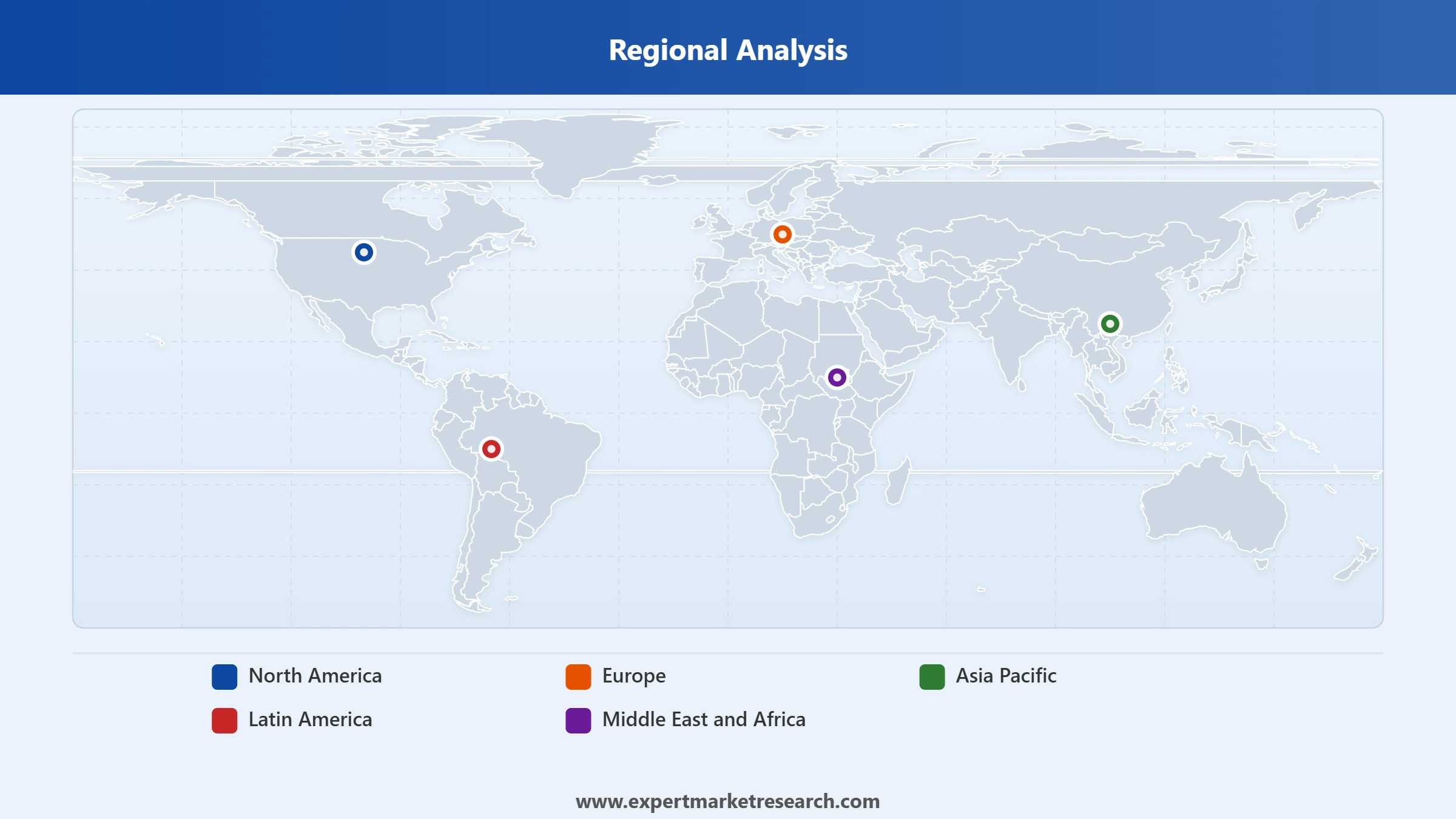
Market Breakup by Region
Key Insight: North America dominates the global location analytics market owing to high adoption rates in enterprises, mature technology ecosystems, and rising demands for advanced analytics. The Asia Pacific witnesses the fastest growth as a result of digital transformation, infrastructural and urban developments. In Europe, growth can be attributed to the adoption of smart infrastructure and efficiency improvements. The growth in Latin America is seen through increasing digitization in enterprises and logistics improvement. Investments in smart cities and infrastructures drive the growth of the Middle East and African market.
Read more about this report - REQUEST FREE SAMPLE COPY IN PDF
By component, the solution category registers the largest share of the market due to enterprise-wide analytics adoption
The solution category holds the leading position in the location analytics market, as businesses look for an all-in-one platform for analysis of spatial, demographic, mobility, and operational datasets. Businesses are increasingly opting for solution providers that deliver location analytics software enabling site selection, network planning, customer intelligence, and asset management. In addition, providers are constantly updating their offerings by improving the quality of mapping engines, artificial intelligence-based forecasts, and visualizations in order to increase the effectiveness of businesses. The ability to turn location data into insights makes solution platforms indispensable for various businesses, including those in the retail, logistics, infrastructural, and public sectors. For example, in May 2026, Gotransverse launched a BI analytics solution, delivering real-time monetization intelligence, revenue visibility, and business performance insights.
Read more about this report - REQUEST FREE SAMPLE COPY IN PDF
In addition, the services category is showing high rates of growth in the location analytics market due to the increasing need for professional help in deploying, integrating, customizing, and optimizing location analytics platforms. In many cases, businesses do not have internal knowledge about geospatial analysis and therefore require additional assistance in using location analytics platforms properly. Due to the complexity of location datasets and more sophisticated forms of geospatial analysis that now involve AI and ML technologies, businesses find it beneficial to cooperate with experts in the field.
On-premise deployments account for the dominant share of the market due to stronger data governance requirements
The on-premise segment holds a considerable share in the location analytics market revenue since firms dealing with sensitive information opt to control their data and be fully compliant with the required regulations. Government agencies, military establishments, banks, and infrastructural entities continue allocating finances to build location analytics in-house. On-premise solutions provide flexibility in customizing systems according to the needs of individual businesses and ensure easy integration into an organization's current IT system. Owning and managing sensitive geospatial data and ensuring compliance with internal security regulations plays a significant role in encouraging adoption.
Read more about this report - REQUEST FREE SAMPLE COPY IN PDF
On-demand solutions continue gaining popularity among business enterprises looking to benefit from analytics services but not invest in building the infrastructure for such activities. With the emergence of cloud computing, it is becoming much easier for organizations to analyze geospatial data without having to invest in establishing data centers. In addition, businesses appreciate the convenience of accessing analytics remotely while collaborating with others in different locations and implementing systems quickly. Technology providers continue improving the analytics abilities offered by cloud-native platforms, thereby accelerating the location analytics market penetration. For example, in May 2026, CTRLS BharathCloud launched a sovereign cloud center, supporting AI workloads, data sovereignty, secure infrastructure, and enterprise digital transformation.
By location, outdoor analytics leads growth in the market through extensive mobility intelligence usage
Outdoors location analytics emerges as the leading category due to its adoption in various sectors including transport, retail, logistics, urban planning, and management of infrastructure services. The need for outdoor geospatial intelligence is critical in monitoring movement trends, measuring the performance of locations, optimizing the routes of delivery of goods, and evaluating geographical opportunities. Through advances in mapping solutions and satellite location systems, the performance of outdoor location analysis is becoming more efficient. Enterprises are applying outdoor location intelligence insights to facilitate strategic planning efforts and initiatives aimed at increasing efficiency. For example, in January 2024, CEMTICS deployed a new geo-location analytics platform for AIS Thailand, enhancing location intelligence, customer insights, and operational decision-making.
Read more about this report - REQUEST FREE SAMPLE COPY IN PDF
On the other hand, indoors location analytics is also contributing to the location analytics market revenue as organizations require intelligence concerning activities that take place within their premises. For instance, businesses are leveraging indoor location analysis to optimize resource allocation in commercial properties, track assets and staff, as well as increase interaction with customers. Moreover, there is an increasing demand for indoors location intelligence in the management of smart buildings and intelligent infrastructure. In such a scenario, indoor location intelligence becomes critical in providing precise information about movement trends within organizations' facilities.
By services, the sales and marketing optimization category dominates the market through location-driven customer targeting strategies
Sales and marketing optimization takes up the largest share in the location analytics market revenue due to the growing trend in the use of location intelligence for understanding customer behavior and designing more effective market penetration strategies. Businesses are using geographical analytics to discover opportunities in different locations, determine consumer concentration levels, and enhance marketing processes. Location intelligence provides retailers, service providers, and franchise owners with opportunities to improve their customer acquisition and retention practices. Investing in location analysis is important for businesses because it translates to a significant competitive advantage, which explains why sales and marketing optimization remain the most popular application of GIS services. In December 2025, Uberall launched GEO Studio with AthenaHQ, helping multi-location brands improve AI search visibility and recommendations.
Read more about this report - REQUEST FREE SAMPLE COPY IN PDF
The fast-growing application is represented by the supply chain planning and optimization category that is propelling the location analytics market expansion. The current economic environment makes companies focus on becoming more operationally resilient and cost-effective. The need to enhance logistics and improve transport efficiency means that many organizations are using location intelligence in their supply chain operations. Geographical analytics helps companies to spot weaknesses in transportation systems, analyze regional demand patterns, and optimize routes. In the modern highly-complex business environment, it is becoming extremely important to have a better understanding of geographical factors impacting supply chain management.
By application, the retail category captures the dominant market share through advanced consumer behavior analysis
The retail industry is witnessing the highest uptake as companies adopt location analytics to drive expansion strategies, target customers, and assess the performance of stores. Geospatial intelligence is used by firms in the retail sector to examine foot traffic, uncover underserved markets, and make appropriate network planning decisions, broadening the location analytics market scope. Location analytics can help in personalizing marketing campaigns and forecasting demands as well. The connection between consumers' behaviors and geographic variables offers retailers a considerable competitive edge in an intensely competitive environment. For example, in July 2025, RADAR launched RADAR+, an AI analytics platform delivering real-time retail intelligence, inventory visibility, and operational optimization.
Read more about this report - REQUEST FREE SAMPLE COPY IN PDF
The segment of transportation and logistics is witnessing robust growth in the location analytics market owing to rising need for operational efficiency and visibility. Logistic companies are turning to location analytics to improve their routes, optimize the performance of their fleets, and enhance reliability. Geospatial intelligence in real time allows companies to address disruptions effectively while cutting costs at the same time. E-commerce activity and more complicated networks are driving the adoption process. Companies require location intelligence to ensure that they remain agile and deliver superior services to their customers. Demonstrating this shift, in May 2026, Loop launched its Logistics Data Platform, enabling AI-driven automation, decision intelligence, and enhanced supply chain visibility.
North America clocks in the leading market share through advanced enterprise analytics adoption
North America accounts for the largest share in the global location analytics market owing to the widespread adoption of digital technologies such as AI in location-based systems by retailers, logistics firms, governmental agencies, and banks. Firms in this region are investing extensively in location analytics tools that integrate geospatial technology and AI to enable effective planning and analysis. Additionally, the presence of key technology players and highly developed cloud infrastructure helps fuel the growth in this region.
Read more about this report - REQUEST FREE SAMPLE COPY IN PDF
The Asia Pacific location analytics market is expected to witness the highest CAGR over the forecast period owing to increasing initiatives from firms and governments in implementing digital transformation programs. Rising urbanization and development of smart cities and infrastructure is increasing the demand for location intelligence services in the Asia Pacific region. Firms from industries such as transportation and retail are increasingly implementing geospatial intelligence systems for their operations and analysis. Increasing investment in cloud infrastructure and technology is expected to boost adoption further. For example, in October 2025, Airtel Business partnered with Swift Navigation, launching centimeter-level spatial precision solutions for autonomous, logistics, and smart-city applications.
The competition in the market continues to evolve with a concentration on artificial intelligence, real-time geospatial intelligence, predictive analytics, and cloud-native deployment. Most of the location analytics companies are developing platforms that integrate mobility data, demographic intelligence, satellite imaging, and operational datasets into decision-making frameworks. Industry-specific products for retail, transportation, finance, utilities, and governmental sectors are being developed and offered by vendors to improve accuracy in planning and operations. Partnerships with cloud computing vendors, telecom firms, and data aggregation companies are continuing to be an important aspect of the competitive landscape.
The deployment of automated analytics engines, which might eliminate the need for human analysis and speed up decision making in business, are areas of investment. Market opportunities are expected to arise due to smart city programs, digital twin applications, connectivity initiatives, and enterprise interest in location analytics. Subscription-based revenue models are expected to be important among location analytics market players, along with enhanced capabilities in cybersecurity and regulatory compliance.
Founded in 1976, with headquarters in Cary, North Carolina, United States of America, SAS Institute offers analytics and geospatial intelligence software to enterprise-level clients. Location-based decision-making is facilitated by using analytics and risk assessment software, customer intelligence, and process optimization software offered by the company. SAS platforms are utilized in government organizations, banking institutions, insurance companies, and retail companies.
Founded in 1989, with headquarters in California, United States, Oracle is an active player in the location analytics market, providing its clients with cloud infrastructure, spatial databases, and analytics software for enterprises. This allows clients to combine geospatial intelligence with operational data for better decision-making related to planning and optimization.
Founded in 1975 and having headquarters located in Redmond, Washington, United States, Microsoft offers location analytics services through its Azure environment, mapping technologies, and AI analytics solutions. Microsoft assists companies in managing location data on a large scale, as well as aiding digital transformations of businesses. Its solutions are implemented in various industries including transportation, retail, smart infrastructure, and logistics.
Founded in 1911 and having headquarters located in Armonk, New York, United States, IBM supplies location intelligence services through analytics, artificial intelligence, and hybrid cloud solutions. IBM offers various assistance to companies interested in gaining insight into the processes taking place within their organization, such as managing infrastructure and assessing risks.
Other key players in the market include Cisco Systems Inc., Environmental Systems Research Institute Inc. (Esri), Pitney Bowes Inc., Galigeo SAS, and Alteryx, Inc., among others.
*Please note that this is only a partial list; the complete list of key players is available in the full report. Additionally, the list of key players can be customized to better suit your needs.*
Unlock the latest insights with our location analytics market trends 2026 report. Discover regional growth patterns, consumer preferences, and key industry players. Stay ahead of competition with trusted data and expert analysis. Download your free sample report today and drive informed decisions in the market.


Upto 15% Off
USD
$2499 $2249
$3999 $3599
$4999 $4249
$5999 $5099


*While we strive to always give you current and accurate information, the numbers depicted on the website are indicative and may differ from the actual numbers in the main report. At Expert Market Research, we aim to bring you the latest insights and trends in the market. Using our analyses and forecasts, stakeholders can understand the market dynamics, navigate challenges, and capitalize on opportunities to make data-driven strategic decisions.*
The global location analytics market reached a value of USD 20.66 Billion in 2025.
The market is projected to grow at a CAGR of 14.60% during the forecast period of 2026-2035.
The major drivers for the market include adoption of the technology by major companies, growing utilisation of the Internet of Things (IoT), rise in the development of network infrastructure and sales of consumer electronics, and rising investments by key market players.
The rising demand for the technology from the growing retail sector and growing demand for location-based services are expected to boost the market growth.
North America, Europe, the Asia Pacific, Latin America, and the Middle East and Africa are the major regions in the location analytics market.
The leading components of location analytics market are solution and services. Solution can be sub-divided into geocoding and reverse geocoding, data integration and ETL, reporting and visualisation, thematic mapping and spatial analysis, among others whereas services are segmented into consulting, integration and deployment, support and maintenance.
The major deployment types in the market are on-premises and on-demand.
Indoor and outdoor are the significant locations in the market.
Risk management, emergency response management, customer experience management, remote monitoring, supply chain planning and optimisation, sales and marketing optimisation, among others are the major services in the market.
The major application segments for the location analytics market include retail, banking, financial services and insurance, government and defence, media and entertainment, transportation and logistics, energy and utilities, among others.
The major players in the market are SAS Institute Inc., Environmental Systems Research Institute, Oracle Corporation, Microsoft Corporation (NASDAQ: MSFT), IBM Corporation (NYSE: IBM), Cisco Systems Inc., Pitney Bowes Inc., Galigeo SAS, and Alteryx, Inc., among others.
Explore our key highlights of the report and gain a concise overview of key findings, trends, and actionable insights that will empower your strategic decisions.
| REPORT FEATURES | DETAILS |
| Base Year | 2025 |
| Historical Period | 2019-2025 |
| Forecast Period | 2026-2035 |
| Scope of the Report |
Historical and Forecast Trends, Industry Drivers and Constraints, Historical and Forecast Market Analysis by Segment:
|
| Breakup by Component |
|
| Breakup by Deployment Type |
|
| Breakup by Location |
|
| Breakup by Services |
|
| Breakup by Application |
|
| Breakup by Region |
|
| Market Dynamics |
|
| Competitive Landscape |
|
| Companies Covered |
|
| Report Price and Purchase Option | Explore our purchase options that are best suited to your resources and industry needs. |
| Delivery Format | Delivered as an attached PDF and Excel through email, with an option of receiving an editable PPT, according to the purchase option. |
Datasheet
One User
USD 2,499
USD 2,249
tax inclusive*
Single User License
One User
USD 3,999
USD 3,599
tax inclusive*
Five User License
Five User
USD 4,999
USD 4,249
tax inclusive*
Corporate License
Unlimited Users
USD 5,999
USD 5,099
tax inclusive*
*Please note that the prices mentioned below are starting prices for each bundle type. Kindly contact our team for further details.*
Flash Bundle
Small Business Bundle
Growth Bundle
Enterprise Bundle
*Please note that the prices mentioned below are starting prices for each bundle type. Kindly contact our team for further details.*
Flash Bundle
Number of Reports: 3
20%
tax inclusive*
Small Business Bundle
Number of Reports: 5
25%
tax inclusive*
Growth Bundle
Number of Reports: 8
30%
tax inclusive*
Enterprise Bundle
Number of Reports: 10
35%
tax inclusive*
How To Order

Select License Type
Choose the right license for your needs and access rights.

Click on ‘Buy Now’
Add the report to your cart with one click and proceed to register.

Select Mode of Payment
Choose a payment option for a secure checkout. You will be redirected accordingly.
Strategic Solutions for Informed Decision-Making
Gain insights to stay ahead and seize opportunities.

Get insights & trends for a competitive edge.

Track prices with detailed trend reports.

Analyse trade data for supply chain insights.

Leverage cost reports for smart savings

Enhance supply chain with partnerships.

Connect For More Information
Our expert team of analysts will offer full support and resolve any queries regarding the report, before and after the purchase.
Our expert team of analysts will offer full support and resolve any queries regarding the report, before and after the purchase.
We employ meticulous research methods, blending advanced analytics and expert insights to deliver accurate, actionable industry intelligence, staying ahead of competitors.
Our skilled analysts offer unparalleled competitive advantage with detailed insights on current and emerging markets, ensuring your strategic edge.
We offer an in-depth yet simplified presentation of industry insights and analysis to meet your specific requirements effectively.




